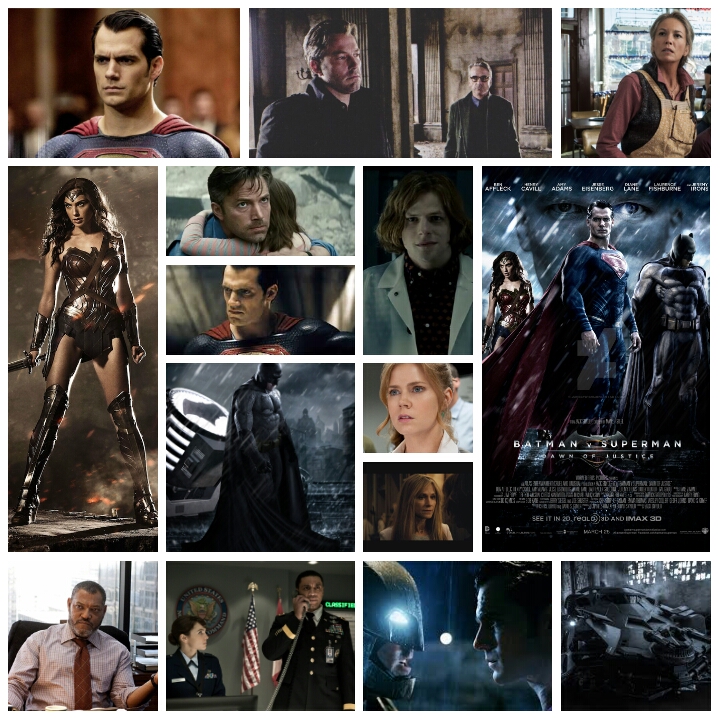
Batman Vs. Superman: Dawn Of Justice. Wow. Where to even start. What a symphony of scorched earth heroics, a two and a half hour maelstrom of thundering action, introspective gloom and very current vibes of apocalyptic dread. I’m not sure if I was watching an entirely different film from some of these bitter bottomed critics who are maiming it with inaccurately nasty reviews. Balls to them. Zach Snyder should be proud of this achievment, for in the face of both ruthless odds and rabid fans who would make any one of us piss down our legs at the thought of ‘getting it right’, he has mounted a titanic epic of a superhero flick, hitting all the right notes and fuelling both casual moviegoers and salivating super fans with a rekindled love for comic book films. A much welcomed grit and violent edge creeps into the proceedings here, a tone which Snyder has a passion for and is incredibly deft with. We begin with a visually arresting opening credit sequence, which Snyder previously perfected to hair raising brilliance in Watchmen, a ten minute opus set to Bob Dylan. Here he inter cuts shots of young Bruce Wayne, both discovering the prophetic swarm of bats and on the fateful night of his parents murder, a sequence done over a thousand times in film, but never quite with the inventive flair used here. We then arrive with adult Bruce (Ben Affleck) in Metropolis right as it’s being ripped to shreds by the Def Jam smackdown match of Superman (Henry Cavill) and Zod (Michael Shannon). There’s eerie shades of 9/11 as Bruce darts through the ashen rubble, attempting to save the employees in one of his towers. One senses the fear and rage in Wayne right off the bat (pun intended). He glowers in seething fury at the man of steel, primally threatened and haunted all over again by loved ones he couldn’t save a second time around. This film addresses the ludicrous amount of destruction that Superman wrought upon Metropolis in several ways. Political nerve endings are fried as Senate and State alike get hostile towards the god in the red cape. No one is more aggressive than Batman, though. This brings me to Affleck as Batman. Without a doubt my favourite cinematic incarnation of the caped crusader, and his debonair counterpart to date. Yes, even more so than Bale. Nolan’s The Dark Knight is still tops for me, but the portrayal of Batman by Bale didn’t strike as harmonious a chord with me as Affleck. It just didn’t feel like pure Batman, it was real world Batman. Affleck feels much more rooted in the comics, and God damn it all if he isn’t the most savage, violent Bats to come our way, well… ever. I’ve always been bothered by the nagging fact that Batman refuses to kill. Even in in a beatdown he could easily inadvertently cause death, so why bother trying? Here, he doesn’t go out of his way to deliberatly kill, but he sure has no problem brutally breaking bones and stabbing his adversaries without an iota of faux-noble hesitation. That’s the kind of Batman I want to see. Fuming, fired up and full of rage demons that erupt into fantastic action scenes. One sequence involving a room full of thugs is just jaw dropping and probably my favourite sequence of the film, even over the titular smackdown with Superman. There’s an earthy, simplistic take to him as well, with a modest suit that gives nods to Frank Miller and even Batman: The Animated Series. He is by far the elemental force that the character should be, and the part of the film that I connected with most. I hope he gets his standalone film real soon. Henry Cavill has grace and intuition as Superman, and a surprisingly earthly aura as Clark Kent, in a fit about Batman’s vigilante tactics. He’s the outsider here, an orphaned deity truly trying to do his best in a world that often shuns him in fear. He was never my favourite superhero, or even on the list, but Cavill combined with Snyder make him a force to be reckoned with, and a hero I can get behind. The two eventually meet in a remarkably choreographed clash of the titans, a duel that really only lasts a few minutes and isn’t central theme, which raises questions in my head about the first part of that title. Their fight is composed of Batman’s hard hitting, blunt force physicality pitted against Superman’s fluid, elegent invincibility which is satisfyingly put to the test by the appearance of a certain green mineral we all know about. The James Cameron-esque suit Batman wears for the fight is a grinding wonder that looks like it weighs a metric ton and could level buildings alongside the man of steel. The combat feels urgent, from the gut and roars into action perfectly. Of course, that isn’t where the fireworks stop, but I ain’t sayin any more than that. Gal Gadot is truly wonderful as Wonder Woman, I also can’t wait for her solo outing, and wish she’d been in the film more. Her much talked about entrance is the definition of crowd pleasing, and will make you cheer in approval, which I did out loud. She’s endlessly gorgeous, and has the toughness to go along with it, a great casting decision by anyone’s tally. Jesse Eisenberg wowed me as a young, jittery Lex Luthor, in what is probably the most clinically insane portrayal thus far. Forget bumbling Gene Hackman and hammy Kevin Spacey, this guy seals it for me. There’s a true madness to his Lex, which when given enough money and resources can have cataclysmic results. It’s a villain to remember, and Eisenberg exudes palpable danger from every pore, his psychopathic sheen of logic barely shrouding the mania beneath. Jeremy Irons is a more restrained, jaded Alfred who is still unconditionally supportive of Wayne, but is reaching the end of his rope which is tethered to pure world weariness. He gets some of the only humerous bits of the film, albeit of dry, brittle variety. Amy Adams is reliably terrific, her eyes pools of perception that mirror the horror and spectacle of the events through the mind of a human, with every ounce of nerve and courage as those around her that have superpowers, or expensive toys. Diane Lane is weathered wisdom and maternal compassion as Martha Kent, nailing her scenes with the small town, kindhearted patience that a film this noisy deserves, tipping the scales to provide occasional serenity in the eye of the hurricane. Kevin Costner makes a brief appearance in one of the films numerous and often confusing dream sequences. He was a highlight in Man Of Steel, and brings the same baleful, gruff adoration here, in a wonderful but brief scene with Clark. Laurence Fishburne is another source of rare humour as the perpetually exasperated Perry, CEO of the Daily Planet. Aggravated and cheeky, he commands every frame he’s in and had me chuckling no end. Holly Hunter has forged a career of playing no nonsense hard asses, here a ballbreaking US Senator here who shares a moment of distilled intensity with Luthor proving that Superhero films can have some of the best written dialogue. Harry Lennix makes great use of said writing too as the steely Secretary Of Defense. Callan Mulvey and Scoot McNairy are memorable in supporting turns. Listen hard for Patrick Wilson and Carla Gugino, and look for a certain ocean dwelling dude in the briefest of moments. Jeffrey Dean Morgan also has a cameo that’s almost too good to be true. Hans Zimmer and Junkie XL, who was so top notch with Mad Max: Fury Road, combine efforts for a score that knocks it out of the park and several miles further. Batman has a soul rousing battle cry of an overture, with subtle shades of Zimmer’s work on the Nolan films, built upon to give us something truly unique and fitting for the character. Lex Luthor is accompanied by a fitful cacophony of strings that sound like the Arkham Asylum charity orchestra having a collectively unnerving seizure. My favourite riff though I think is for Wonder Woman, a deviously disarming jaunt that strays from the grandiose, baroque theme and feels wickedly subversive, getting you just so pumped for her character. Zimmer’s work on Interstellar made it my top score of 2014, because he leapt out of the box of his usual tricks and gave us something we’d never heard from him before. Here he shreds that box with ingenuity and creative output, a varied, explosive piece that assaults your ears splendidly. My one concern with the film was a dream sequence midway through concerning Batman, and anyone who’s seen the film knows what I’m talking about. I’m sure comic book fans have some point of reference or context regarding it, but the casual viewer doesn’t, and a little more explaining would have been nice. I will say though it showcases Batman in an entirely new light which took me off guard nicely. This is what a superhero movie should be, plain and simple. Big, bold, audacious, stirring and full of high flying action, dastardly villains, conflicted heroes clashing like the ocean tides and a sense of pure adventure. Forget what the critics are saying, this one comes up aces in all categories and is a perfectly wonderful start to the stories of a group of characters that I look forward to seeing in many a film to come. Especially Affleck’s Batman.
Tag: movie review
OCEAN’S TWELVE – A REVIEW BY J.D. LAFRANCE

After the commercial failures of Full Frontal and Solaris in 2002, there was pressure on Steven Soderbergh when he announced that his next film was to be the sequel to the wildly successful Ocean’s Eleven (2001), to not only come up with a box office hit but to also outperform the previous film. With big budget, star-studded casts like the one in Ocean’s Twelve (2004), there is always the danger of having them look too smug and self-indulgent instead of having fun along with the audience. Ocean’s Eleven managed to straddle this line quite well, resulting in an entertaining popcorn movie. Soderbergh kept his cast in check, never letting them go too far over-the-top and shooting it with a style that was always interesting to watch. The big question for the sequel was if he could pull off the same feat without repeating himself too much. Ocean’s Twelve ended making less than its predecessor (but still a lot of money) and cost more while also dividing critics but in some ways I find it a better film.
Danny Ocean (George Clooney) is supposed to be retired and enjoying domestic bliss with Tess (Julia Roberts). However, old habits die-hard and the lure of pulling heists is always calling. She catches him casing a jewelry story on their anniversary. To make matters worse, Terry Benedict (Andy Garcia) is still hot on their trail, tracking down all of the original eleven and letting them know, in his own casually menacing way, that he wants the $160 million, plus interest, that they stole from him in Ocean’s Eleven, and in two weeks time. The montage of him doing this mirrors the one in the first film where Danny and Rusty recruited their crew. If Benedict was an imposing figure in the first film, Andy Garcia makes him even more of a threatening presence in this montage by doing little except exude menace with his eyes and the all-business tone of his voice.
So, Danny gets everybody back together to figure out what to do. Obviously, they need to pull another job but they are too high profile in the United States, so they go to Europe and cross paths with a truly formidable opponent and rival master thief known as the Night Fox (Vincent Cassel), a bored French playboy. He’s jealous of Danny’s status as the world’s greatest thief and is out to prove that he’s the best by having the both of them go after the same thing: the Faberge Imperial Coronation egg. Vincent Cassel plays the Night Fox as an ultra-confident, cocky man in such a way that you want to see Danny and company knock him down a peg.
Ocean’s Twelve ups the difficulty level for our heroes even more by having most of the crew neutralized leaving only Basher (Don Cheadle), Linus (Matt Damon) and Virgil (Scott Caan) left to pull off an impossible heist. So, they bring in Tess to pose as, well, Julia Roberts. Unfortunately, another major movie star is staying at the same hotel, which only adds to the meta aspect. Said movie star gamely plays a fictional version of himself. The scene where he meets Tess as Julia Roberts is very amusing as Damon and Roberts act all star-struck in front of him. It is also interesting in that the meta aspect that was present in Ocean’s Eleven is made even more explicit – something that turned off some critics and audiences but I think works extremely well because Soderbergh isn’t having a cutesy cameo of a movie star for the sake of it but actually incorporating them into the plot and making them an integral part of the scam.
If the first film was about Danny’s redemption by reconciling with Tess, then Ocean’s Twelve is about Rusty’s (Brad Pitt) redemption by reconciling with his past love, Isabel Lahiri (Catherine Zeta-Jones), a determined and quite beautiful Interpol agent. Like Danny’s feelings for Tess potentially compromising his involvement in the heist in Ocean’s Eleven, Rusty’s feelings for Isabel leaves him potentially vulnerable in Ocean’s Twelve. To her credit, Catherine Zeta-Jones fits right in with the European vibe, maintaining just the right mix of determination in nailing Danny and his crew and vulnerability when she’s with Rusty. Their relationship elevates the film ever so slightly above the standard heist story and the conclusion of her subplot is surprisingly emotional and poignant – the highpoint of the trilogy and something you don’t expect from a film like Ocean’s Twelve, which is essentially a feature-length lark.
Matt Damon demonstrates excellent comic timing in this film and is the real stand-out of this strong cast. Early on, Linus asks Rusty if he could have more to do this time out and this moment comes across as quite self-reflexive. It’s as if Damon were almost asking if he could have more screen time in the film itself. In some respects, he is the group’s stammering conscience. There is an amusing scene where Linus, Danny and Rusty meet a contact by the name of Matsui (Robbie Coltrane) for a potential job. Danny, Rusty and Matsui all speak cryptically, which leaves poor Linus totally confused. Damon plays the scene so well as he looks desperately to his cohorts for help or some sort of clue as to what he should say. Put on the spot, Linus finally responds by quoting lyrics from “Kashmir” by Led Zeppelin to hilarious effect.
While doing a press conference in Rome during the promotional tour for Ocean’s Eleven, Steven Soderbergh fell in love with the city and over dinner with producer Jerry Weintraub began thinking about the story and structure for a sequel. He got the idea to set it in Europe and was so inspired that he started writing down ideas. After returning to Los Angeles, Weintraub discovered George Nolfi’s screenplay, entitled Honor Among Thieves, about the greatest thief in America going up against his equal in Europe. It was originally developed for John Woo to direct but Weintraub sent the script to George Clooney, Brad Pitt and Soderbergh. The director came up with the basic idea for the film and thought that it “would be more fun if Twelve was the movie in which everything goes wrong from the get-go.” He ended up merging Nolfi’s script with his own ideas. Soderbergh saw this film as more emotional, character-driven and complicated on a narrative level than the first one.
Prior to the start of principal photography, which lasted 77 days, Julia Roberts found out that she was pregnant and Soderbergh incorporated it into the script. He also met with Vincent Cassel at the 2003 Cannes Film Festival and asked the actor if he would be interested in being in Ocean’s Twelve. He agreed without reading the script because he trusted someone with a reputation like Soderbergh’s. Once filming began, the production spent ten weeks globetrotting all over the world with stops in Chicago, Amsterdam, Paris, Monte Carlo, Lake Cuomo, and Rome. Principal photography concluded with four weeks on three Warner Brothers soundstages in L.A.
Once again Soderbergh keeps the pace brisk and breezy, making the two-hour running time fly by. Like its predecessor, Ocean’s Twelve is beautifully shot with atmospheric lighting and saturated color as evident in the bright yellow that permeates Isabel’s Europol lecture or the green lighting that illuminates the underwater sequence during a heist that Danny and his crew pull off, or the red lighting that dominates the nightclub where Rusty and Isabel meet. Most of the film takes place in Europe and Soderbergh adopts the look of a European film from the 1960s, which also applies to the eclectically groovy soundtrack from David Holmes that evokes a ‘60s Euro-lounge vibe. The director even described the film’s aesthetic as “the most expensive episode of a ‘60s television show ever.” He and Holmes agreed that the score would be completely different from Ocean’s Eleven in order to complement the different look and feel.
Soderbergh is an excellent visual storyteller and this is evident in several scenes that he depicts without any dialogue, instead resorting to music married to visuals that conveys exactly what’s going on. He understands the kind of movie he’s making and doesn’t try to be too cute or wink knowingly at the audience, instead focusing at the task at hand: making a confident, entertaining movie. Granted, Ocean’s Twelve is no Traffic (2000), and it’s not meant to be, but you could do a lot worse with two hours of your time.
B Movie Glory with Nate: Down, aka The Shaft
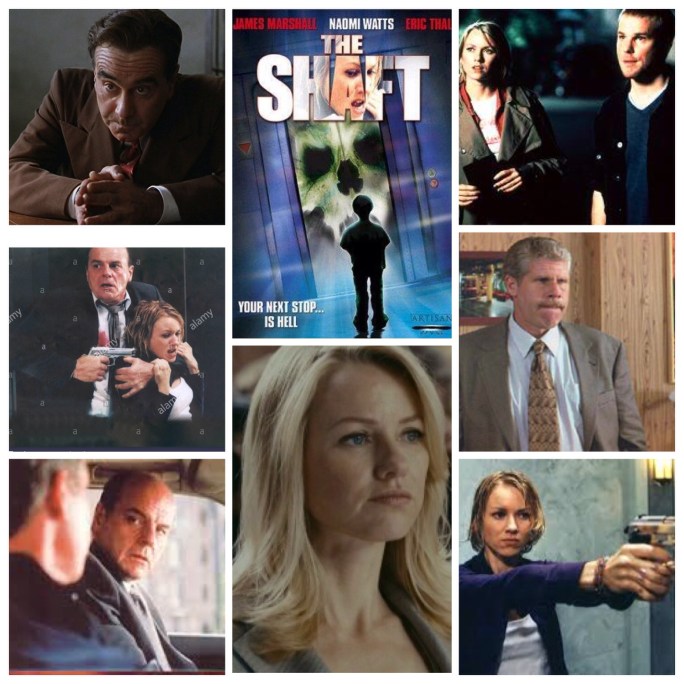
Ever briefly get stuck in an elevator thats messing with you, malfunctioning and seems to almost have a mischievous mind of its own? That’s the premise of Down, also known as The Shaft. It concerns an elevator in a huge residential/office building that has gone homicidally haywire. It traps, drops and tricks people no end, raising and lowering the interior temperature to dangerous effect and generally just being a great big meanie. No one seems so know what’s going on with it though, especially the mechanic who installed it (Twin Peak’s James Marshall). The incidents accumulate, attracting a perky tabloid reporter (Naomi Watts having a ball) who makes up all kinds of tall tales to explain the situation in sensationalistic terms. This infuriates the CEO of the elevator company (now there’s a job title) played by a snarky Ron Perlman who gets a rant towards Marshall that walked in from a way better script (which leads me to believe it was the spawn of Perlman’s legendary improv skills). There’s also a cop played by Dan Hedeya who can’t seem to figure it out wither. The truth is a lot more interesting than you might expect and has nothing to do with ghosts or spirits at all, but centers around a deranged research scientist (Michael Ironside, whacked out to kingdom come). It’s not the least bit scary, but it’s worth a watch simply for the fact that it’s a movie about a fucking elevator that kills people lol. Cujo and Christine ain’t got nothing on this bitch. The scene where a gaggle of pregnant ladies enter the thing is just priceless in its blatantly gross out manner. Fun, fun stuff and great research to embarrass Watts with sometime down the road if you ever find yourself interviewing her on the red carpet hehe.
Swordfish: A Review by Nate Hill
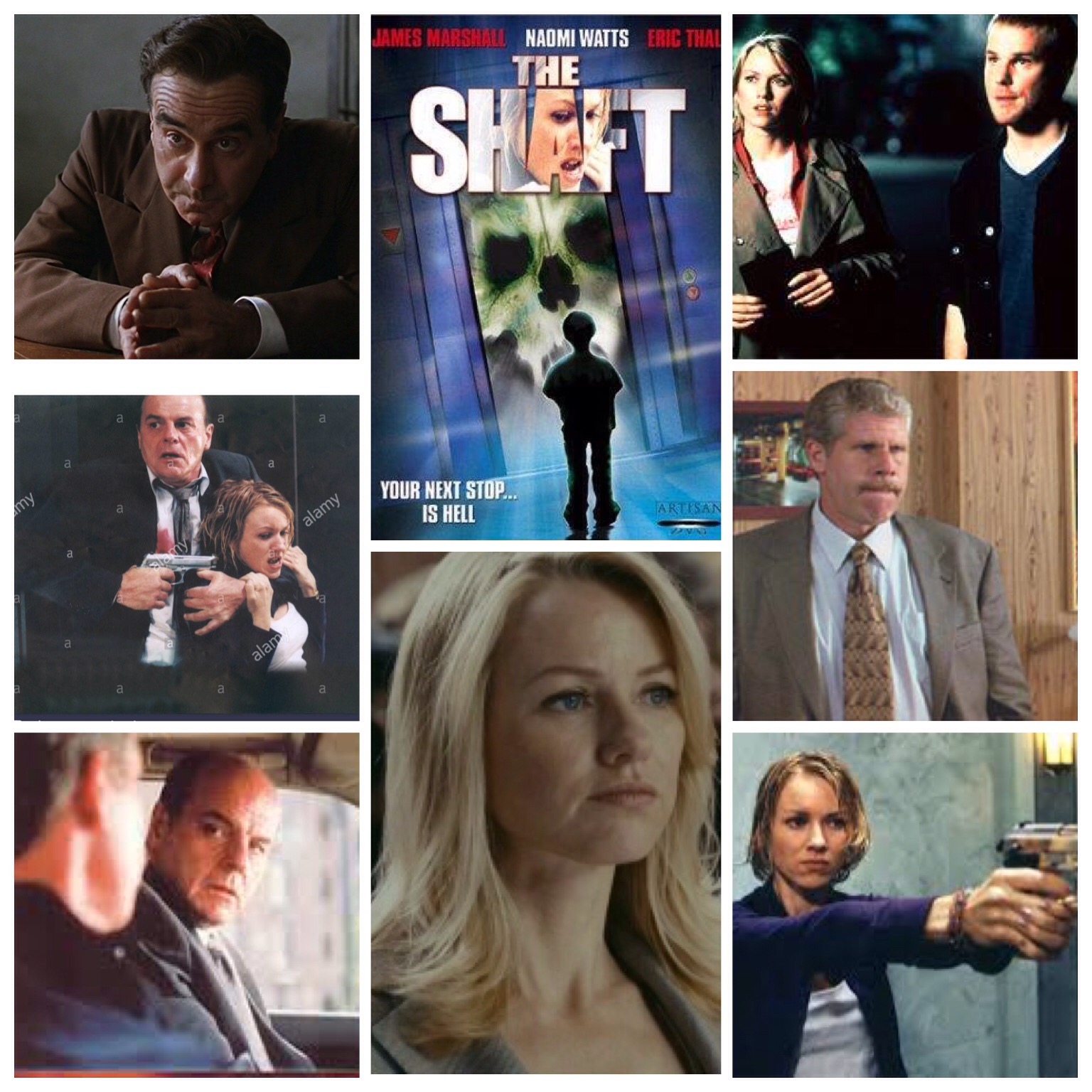
Swordfish tries so hard to be cool, and save for a few moments of smirking silliness, it is pretty goddamned cool. The early 2000’s still carried lingering, reminiscent elements of the 90’s, the super cyber hacker archetype included. The cyber hacker is played by two types of people: basement dwelling, Mountain Dew drinking chatter boxes and virile, sexy supermodels. The latter is employed here, personified by Hugh Jackman as Stanley, a sly devil who can hack into almost anything effortlessly, but has been caught and never allowed to touch a computer again. Enter Gabriel (John Travolta), a silver tongued arch villain out to steal all the money and priceless artifacts he can hope to ever own. Although Travolta isn’t as truly off the rails as in some of his villain roles, the amiable charm he puts forth here is but a ruse to cloud the monster beneath. He’s a very bad man, putting Stanley’s loved ones in jeopardy and forcing him to work computer wizardry for ill gotten riches. Gabriel has a girlfriend named Ginger (Halle Berry, never sexier) who walks a moral tightrope between the two alpha males, torn between roguish indifference and and her conscience. Stanley is also hounded by an FBI Agent (Don Cheadle), with whom he has a tumultuous past. The film resists goin completely by the motions, lulling you just to the border of entropy and then throwing something surprising from a direction you didn’t look in. My favourite scene of the film shows Travolta giving a monologue on bank robbery etiquette, complete with a reference to Sydney Lumet’s Dog Day Afternoon, confirming the fact that this flick has a strong script to go with its pyrotechnics. He flexes his sonic directorial muscles in an especially extraordinary action sequence involving a bus and a helicopter that will seriously make your finger hover over the replay button. Vinnie Jones is an ambassador of cool, in a lively turn as Gabriel’s head thug. Sam Shepherd has fun as a corrupt Senator. There’s also fine work from Zachary Grenier, Tim Dekay, William Mapother, Rudolph Martin and Drea De Matteo. Director Dominic Sena comes from music video land, having also helmed the priceless Nic Cage Bruckheimer-fest Gone in 60 Seconds, as well as the fallout brilliant psycho road thriller Kalifornia. Here he doses the flash and sizzle of 60 seconds with the hard hitting violence of Kalifornia, presented in a story guaranteed to raise a pulse. It’s also got pretty much the coolest poster of 2001. I dare you to find a cooler one, go ahead. Oh, and Travolta’s manscaping here deserves its own spinoff film.
OCEAN’S ELEVEN – A REVIEW BY J.D. LAFRANCE

“Ocean’s Eleven was my opportunity to make a movie that has no desire except to give you pleasure, where you surrender without embarrassment or regret.” – Steven Soderbergh
Fresh from the one-two success of Erin Brockovich (2000) and Traffic (2000), Steven Soderbergh made a conscious decision to shift gears and make a purely entertaining film for a major studio. He managed to convince movie stars George Clooney (whom he had already worked with on Out of Sight) and Brad Pitt to take major cuts in their multi-million dollar salaries and headline a remake of the Rat Pack heist film Ocean’s Eleven (1960). With Clooney and Pitt on board, Soderbergh was then able to get an impressive cast including the likes of Matt Damon and Julia Roberts (both of whom also agreed to take pay cuts) and avoid having his film come across as nothing more than a vanity project for a bunch of smug movie stars. On the contrary, Ocean’s Eleven (2001) is a slick heist film in the tradition of The Sting (1973) in the sense that you know the outcome (the good guys win) but the fun is in how they get there as Soderbergh utilizes every stylish technique that he has available at his disposal.
Daniel Ocean (Clooney) has just been released from prison and is eager to return to his high-end criminal enterprises. He sets his sights on Las Vegas with plans to rob three prestigious casinos: the MGM Grand, the Mirage, and the Bellagio, all of which keep their considerable sums of money in an ultra-secure hi-tech vault controlled by Terry Benedict (Andy Garcia) who, incidentally, is currently dating Danny’s ex-wife Tess (Roberts). It’s not going to be easy and so, with the help of his good friend and ace fixer Rusty Ryan (Pitt), they recruit nine experts to help them pull off a near-impossible heist. In addition to the heist, which serves as the main plot, Ted Griffin’s screenplay expertly weaves in a subplot involving Danny attempt to reconnect with Tess.
This film oozes cool right from the opening credits that play over a fantastic shot of the Atlantic City skyline at night accompanied by funky trip-hop type music by Northern Irish disc jockey David Holmes. We meet Rusty wasting his time teaching young movie stars (Holly Marie Combs and Topher Grace among others making fun of themselves) to play cards. We meet him in Hollywood with a cool groove playing over his establishing shot. This sequence is a bit of meta fun as we see Pitt, one of the biggest movie stars on the planet, teaching other movie stars playing a parody of themselves being totally clueless at playing poker only to eventually be hustled by a bemused Danny. Soderbergh even slides in a few sly inside jokes, like Danny asking Topher Grace if it’s hard to make the transition from television to film, which, of course, is exactly what Clooney did. Or, how Grace gets mobbed by autograph hounds while Clooney and Pitt are completely ignored.
One of the best sequences in the film is when Danny and Rusty recruit their crew. The scene where they convince Reuben Tishkoff (Elliott Gould) to bankroll their operation is a wonderful example of how expositional dialogue being delivered in the right way by the right actor can be entertaining and informative as Elliott Gould does a fantastic job of warning Danny and Rusty of just how dangerous Benedict is. From there, each character that Danny and Rusty approach is given their own introduction that briefly and succinctly highlights their unique skill and distinctive personality traits. Linus Caldwell (Damon) is an up-and-coming pickpocket with uncanny dexterity. There’s the Malloy brothers, Virgil (Casey Affleck) and Turk (Scott Caan), two drivers by trade with one of them having an affinity for remote controlled devices and a perchance for bickering and irritating each other, which provides a good source of humor. Livingston Dell (Eddie Jemison) is an electronics expert in the area of surveillance. Basher Tarr (Don Cheadle) is a demolitions expert with Don Cheadle sporting an obviously exaggerated Cockney accent. Yen (Shaobo Qin) is a diminutive top-of-the-line acrobat that can get in and out of any tight space. Finally, there is Saul Bloom (Carl Reiner), a retired flimflam man coaxed back into action by Rusty. Each actor is given at least one scene, often more, to come front and center and do their thing and this is done in a way that doesn’t distract you from the story at hand, which is quite an accomplishment with such a large cast.
David Holmes expertly mixes jazz, funk, soul and hip hop in a way that evokes groovy trip hop or acid jazz but in a retro way that evokes Quincy Jones circa the 1970s. The often-fat bass lines give certain musical cues a confident swagger. There is also plenty of Hammond organ and vibraphone looped to give a lounge-y kind of vibe at times. Later on in the film, Holmes brings in strings and brass to accentuate the romantic subplot between Danny and Tess. Holmes also incorporates songs, like Elvis Presley’s “A Little Less Conversation” to fantastic effect. This came out of watching the original Ocean’s Eleven as Holmes explained in an interview, “Then I tried to think of ways to identify with what was going on – with it being a contemporary film, how to be original, but set within the heart of Las Vegas. Which is where the Elvis song ‘A Little Less Conversation’ came about, because obviously Elvis had a really strong affiliation with Las Vegas, and that track has a very contemporary feel.”
Steven Soderbergh read Ted Griffin’s screenplay in an afternoon in January 2000. The next day he called producer Jerry Weintraub and told him he wanted to direct the film. What he liked about the script was that it didn’t evoke the original 1960 version but “had this one foot back in the heyday of the studio star-driven movie, like Howard Hawks or George Cukor.” Soderbergh had always been drawn to heist films because, “the conflicts are so clear and dramatic. This seemed to be everything that you want a big Hollywood film to be, on the script level.” He had just made two dramas – Erin Brockovich and Traffic – and wanted to make a fun movie. To prepare for shooting Ocean’s Eleven, he watched Ghostbusters (1984) because he was impressed at “that sort of physical scale [that] feels so tossed-off, with such understated performances and obvious generosity among all the performers.” He also studied films by David Fincher, Steven Spielberg and John McTiernan because they knew how to “orchestrate physical action the way I like to see it.” He looked at how these filmmakers used lens length and height, camera movement and editing, as well as, “how they used their extras, how they structured movements within shots that carried you to the next movement and the next.”
Soderbergh got George Clooney involved and half-jokingly told him, “let’s make it an Irwin Allen movie, where they used to have 10 stars.” Originally, the director considered casting Luke and Owen Wilson, Bruce Willis, and Ralph Fiennes as the villain. Once Clooney was on board, they got the rest of the cast to commit at radically reduced rates, starting with Brad Pitt. However, during filming, the cast stayed in their own 7,000-square-foot villas at the Bellagio. Before shooting, Soderbergh told his cast, “Show up ready to work. If you think you’re just going to walk through this, you’re mistaken. If anybody gets smug, we’re dead.” Soderbergh wanted to shoot in the Bellagio, the MGM Grand and the Mirage – an impossible feat for more mere mortals; however, Weintraub had the connections and the clout to make it happen. The production was allowed to shoot on the floor of the casinos during the day, which nobody is given access to and the casino bosses even shut down entire pits for Soderbergh to shoot in. This allowed the director to design shots that were complicated and large in scale.
Soderbergh wanted the lighting for Ocean’s Eleven to be based in reality and to look like it wasn’t lit at all – not a problem in Las Vegas, a place overloaded with every kind of light imaginable. At times, Soderbergh would add some color to enhance the mood for dramatic purposes in order to put the audience inside the world of the film. He also realized that the locations played a large part in the plot and was interested in showing as much of the environment as possible. One challenge Soderbergh faced was the logistics of filming big dialogue scenes with Danny and his crew in a visually interested way. He had a lot of people in confined spaces and didn’t want these scenes to be boring. So, he attempted to frame shots that clearly established where everyone was while also giving them enough depth and geometry to make the characters interesting to look at.
In a nice touch, Ocean’s Eleven never waxes nostalgic about the original film but instead is wistful about Las Vegas as it was in the 1960s when the casinos were still run by the Mob and had yet to be corporatized and Disney-fied. This is reinforced in one of the motivations Danny has of robbing Benedict. It’s not just that he’s dating his ex-wife but Benedict also recently demolished one of the last old school casinos left in Vegas. Unlike Benedict, Danny respects the past and recruits Reuben and Saul, veteran con artists whose heyday was the ‘60s. It’s great to see Soderbergh giving actors like Gould and Reiner screen-time in a major studio film. These guys don’t work nearly enough and their performances in Ocean’s Eleven are a potent reminder of how good they can be if given the right material and the opportunity. Entrusted with only his second major studio film with an A-list budget, Soderbergh effortlessly orchestrates a fun, engaging popcorn movie like an old pro that has been doing this for their entire career.
The Red Riding Trilogy: A Review by Nate Hill
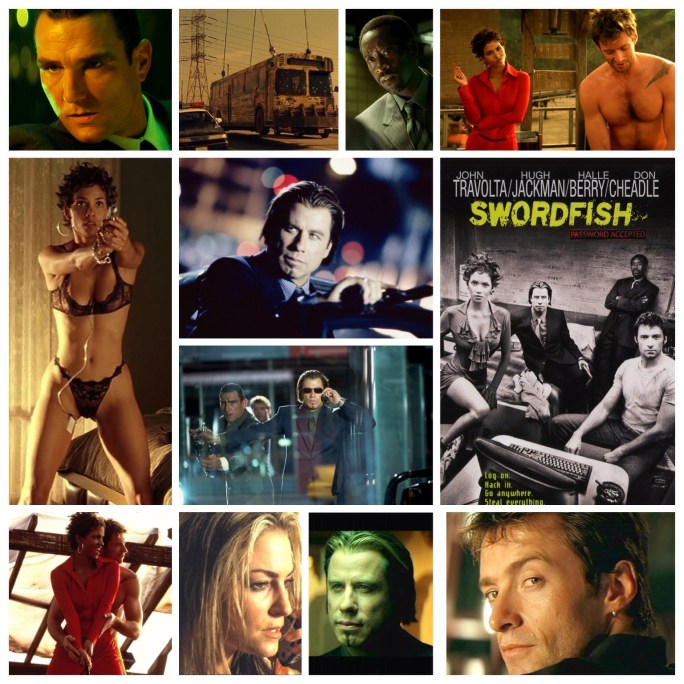
The Red Riding Trilogy is one of the most dense, absolutely impenetrable pieces of work I’ve ever seen, let alone attempted to dissect with my clunky writing skills. It’s also fairly horrifying, as it chronicles the tale of the Yorkshire Ripper, an elusive and mysterious serial child killer who terrorized this area of Britain through the late 70’s and early 80’s. Viler still are the strong implications that very powerful people, including the brass of the West Yorkshire police, made every disgusting attempt to cover up the crimes and protect the killer, who’s murders included that of children. It’s a brave move by UK’s Channel 4 to openly make such notions obvious within their story, and commendable the level of patience, skill and strong ambition in the undertaking is quite the payoff, whilst simultaneously taking a toll on you for sitting through it. The sheer scope of it must be noted; it’s separated into three feature length films, each vastly different in setting, character and tone, and each blessed with a different director. The filmmakers even went as far as to film the first, which is set in 1974, in 16mm, the second in 35mm being set in 1980 and the third makes a leap to high definition video and takes place in 1983. Such a progression of time is a dismal reflection of the sticky corruption which clings to societies, decaying them stealthily over years, and the few keen individuals who will not let the truth die as long as there is a glimmer of uncertainty. Now, if you asked me exactly what happens over the course of this trilogy, who is who, what has happened to which characters and who is guilty, I simply wouldn’t be able to tell you. It’s a deliberatly fractured narrative told through the prism of dishonest, corrupt psyches and has no use for chronology either. Characters who you saw die in the first film show up in the subsequent ones, actors replace each other in certain roles, and there’s just such a thick atmosphere of confusion and despair that in the 302 minute running time I was not able to make complete sense. I think this is a great tactic to help you realize that the film means to show the futile, cyclical nature of reality, as opposed to a traditionally structured story with a clear cut conclusion. Events spiral into each other with little rhyme or reason, until we feel somewhat lost, knowing full well that terrible events are unfolding in front of our eyes, events that are clouded and just out of our comprehensive grasp in a way that unsettles you and makes you feel as helpless as the few decent people trying to solve the case. One such person is an investigative reporter searching for the truth in the first film, played by Andrew Garfield. He stumbles dangerously close to answers which are promptly yanked away by the sinister forces of the Yorkshire police, brutalized and intimidated into submission. He comes close though, finding a lead in suspiciously sleazy real estate tycoon Sean Bean, who’s clearly got ties to whatever is really going on. The level of willful corruption demonstrated by the police is sickening. “To the North, where we do what we want” bellows a chief, toasting dark secrets to a roomful of cop comrades who are no doubt just as involved as him. The kind of blunt, uncaring dedication to evil is the only way to explain such behaviour, because in the end it’s their choice and they know what they’re doing. Were these officers as vile as the film depicts in the real life incidents? Someone seems to think so. Who’s to know? Probably no one ever at this point, a dreadful feeling which perpetuates the themes of hopelessness. The second film follows a nasty Police Chief (David Morrissey) who is bothered by old facts re emerging and seems to have a crisis of conscience. Or does he? The clichéd cinematic logline “no one is what they seem” has never been more pertinent than in these three films. It’s gets to a point where you actually are anticipating every single person onscreen to have some buried evil that will get upturned. A priest (Peter Mullan is superb) shows up in the second film only to be involved in dark turns of the third. Sean Bean’s character and his legacy hover over everything like a black cloud. A mentally challenged young man is held for years under suspicion of being the Ripper. A disturbed abuse survivor (wild eyed Robert Sheehan) seeks retribution. A Scotland Yard Detective (Paddy Considine) nobly reaches for truth. Many other characters have conundrums of roles to play in a titanic cast that includes Cara Seymour, Mark Addy, Sean Harris, James Fox, Eddie Marsan, Shaun Dooley, Joseph Mawle and more. The process in which the story unfolds is almost Fincher – esque in its meticulous assembly, each character and plot turn a cog in a vast machine whose purpouse and ultimate function are indeed hard to grasp. I need to sit down and watch it at least two more times through before the cogs turn in a way that begins to make sense to me, and a measurable story unfolds. It’s dark, dark stuff though, presenting humanity at its absolute worst, and in huge quantities too, nightmarish acts that go to huge levels of effort just to produce evil for.. well, it seems just for evil’s sake, really. The cast and filmmakers craft wonderful work though, and despite the blackness there is a macabre, almost poetic allure to it, beauty in terror so to speak. It’s rough, it’s long, it’s dense and it thoroughly bucks many a cinematic trend that let’s you reside in your perceptive comfort zone, beckoning you forth with extreme narrative challenge, an unflinching gaze into the abyss no promise of catharsis at the end of the tunnel. There’s nothing quite like it, I promise you.
Rapid Fire: A Review by Nate Hill
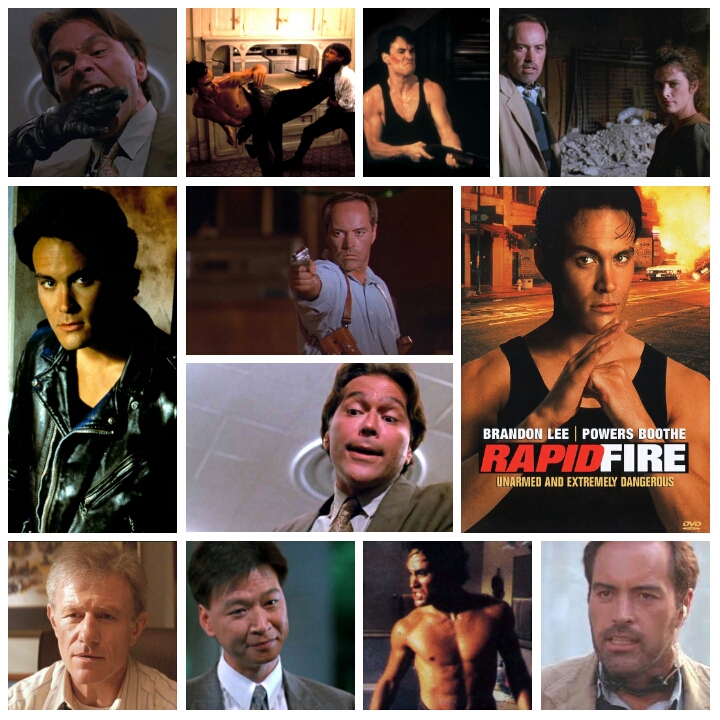
Along with the classic The Crow, Brandon Lee made few other films before his heartbreaking accidental death. His natural charisma and likeability he brought to action hero roles, accenting the tough guy qualities with an angelic vulnerability, was tragically cut short by the incident. However, Rapid Fire is a gift to fans of both Lee and the action genre alike. It’s a little further away from the notoriety of The Crow, but packs a fuming punch of martial arts, gunplay and tough talking character actors strutting their stuff to a tune that any fan of the genre can hum along to. Lee plays Jake, a young college student with turmoil in his past, haunted by an incident involving a loved one in the Tienemen Square disaster. During a visit to Chicago, he inadvertently witnesses a brutal gangland murder perpetrated by drug kingpin Tony Serrano (Nick Mancuso). This immediately puts him in the hot seat and pretty much on his own after the federal agent assigned to him (Raymond J. Barry) betrays him. His only hope lies with grouchy, paternal Chicago Detective Mace Ryan (Powers Boothe) who is on his own rampaging crusade to bring down the drug trade. Jake merely wants to survive and get out of the mess he’s found himself in. Together they punch, kick, shoot and strategize their way out of getting offed by the mafia, and kick some serious scumbag ass along the way. Lee is ultimate protagonist material: his strong points arise out of the soft touch, never being brash or hogging the screen, always serving up a helping of humble that make the ass kicking resonate tenfold. Boothe is pricelessly grumpy as the haggard detective, showing brief but unmistakable glimpses of the bruised warrior’s heart beneath, rekindled by his bond with Jake. Mancuso is like a rabid pit bull let off the chain as Serrano, a truly untethered piece of geniune psychopathic anarchy. But that’s him, always the under sung wild card who lights up his scenes with wild eyed tenacity. Chinese acting legend Tzi Ma also clocks in as a heroin dealer with a short temper, looking very young which is even made into a meta joke itself. It’s pure uncut action, somehow feeling like more thanks to Lee’s incredible presence, as well as Boothe and Mancuso adding their own lively brand of spice to an already simmering stew. Essential viewing for any action disciple.
B Movie Glory with Nate: Death Race 2
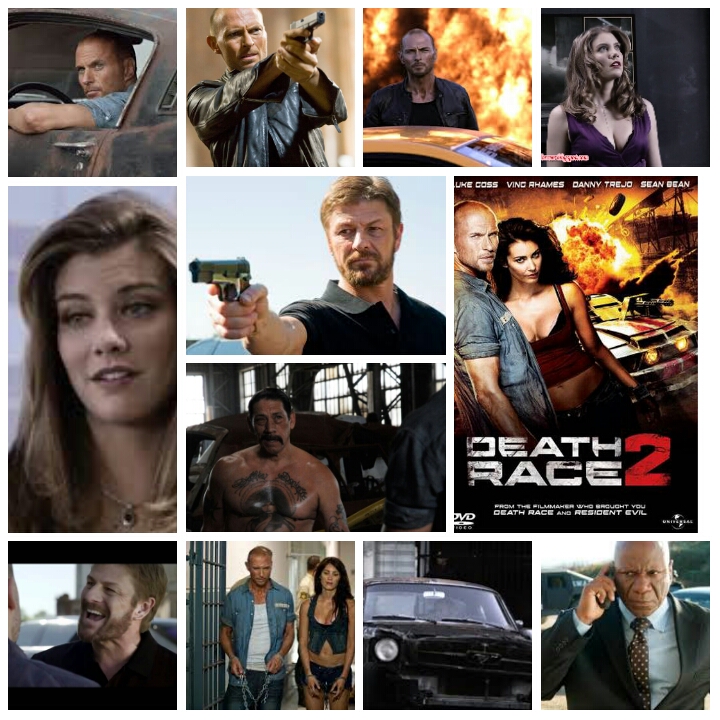
Death Race 2 is one of those sequels that is a little more colorful and off the wall than the first one, and less gloomy. Death Race tried a bit too hard to play it straight and serious, and while still a gnarly flick, I personally have to give the edge to this one simply for coming a little closer to the trashy mark that the genre begs for. Any franchise with a title like Death Race has just got to have a touch of camp, some balls out B-movie action and a good dose of pulp. This one is actually a prequel, now that I think about it, taking place in the same penitentiary that the first film did, a year or so before Jason Statham’s arrival. It follows the origin of Carl Lucas (Luke Goss), who would go on to be the masked driver known as Frankenstein in the original film. Lucas starts out as a getaway driver and thief for ruthless mobster Marcus Kane (Sean Bean). When a heist gone wrong lands him in Terminal Island prison, he’s introduced to ‘Death Match’, bloody gladiatorial fare instigated by a random prison fight caught on camera and broadcasted online. The prison warden Weyland (Ving Rhames) has his moral doubts, but in swoops opportunistic corporation head September Jones (Lauren Cohan) with a sociopathic agenda to turn simple combat events into all out vehicular warfare, with state of the art machines and artillery, all privately funded. Since this genre exists in a world without anyone, government or other, to protest, Death Race is born. The rules go that if you win a certain amount of races, you go free. Kane has his own plans on the outside though, making a pretty penny off of Lucas and his driving, cruelly trying to keep him inside. Bean is a cut and dry psycho as Kane, relishing in the kind of nasty arch villain skin that action films have to offer. Goss has always had a heart and level of gravitas along with his physical intensity (his villain in Blade 2 is still legendary), which he brings out in Lucas. Danny Trejo comes along for the ride as Goldberg, Lucas’s mechanic. The first Death Race was solid, but a bit monochrome in the personality department. This one lets its freak flag fly, getting down and dirty with the bone crunching violence, and thundering motor mayhem. It sinks a level below the first one, which is sometimes a great thing for a particular franchise. It knows how over the top it needs to be, and is all the better for it.
David Lynch’s Twin Peaks Fire Walk With Me: A Review by Nate Hill
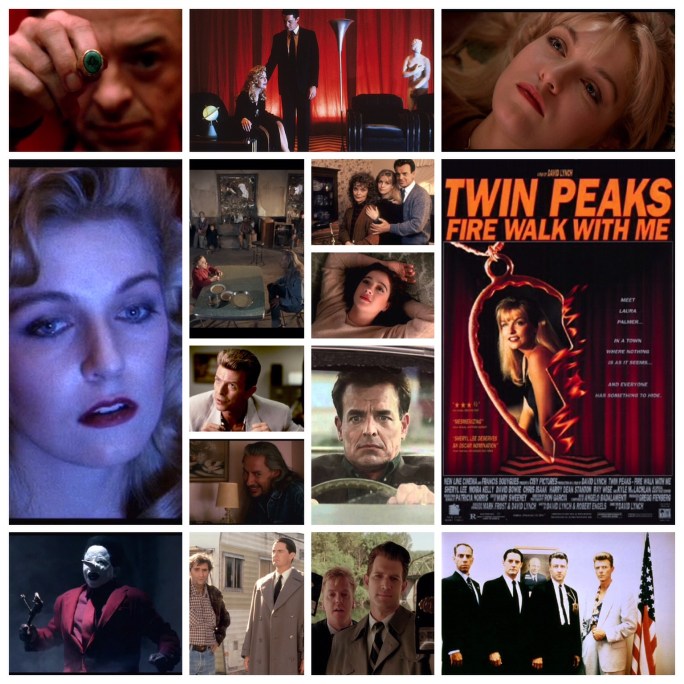
David Lynch’s big screen prequel/sequel to his television phenomenon Twin Peaks departs from the shows light, kooky and benignly eccentric sensibilities. It starts at the more surreal, dark atmosphere which sometimes materialized in the show, especially in the last episode, and plunges headlong down a rabbit hole of sex, murder, mysteries, federal agents, parallel universes, psychological torment, otherworldly spirits, supernatural phenomena, incest, more cups of coffee (Im not even kidding, there’s a scene where a stressed out looking Harry Dean Stanton makes a ‘cup of good morning America’), and above all, Laura Palmer. The beautiful, mysterious homecoming queen we only saw as a corpse in the series comes to wild, screaming life in this film, and what a performance from the gifted Sheryl Lee. She perfectly captures the menace, hurt, confusion, hope, torment and wild desperation of Laura, in a towering, stunning performance. Ray Wise is equally magnificent as Leland Palmer. Angelo Badalamenti switches up the tone as well, letting the beautiful Laura theme and the classic Twin Peaks tones only play in limited, selective fashion. His theme for the film is a powerfully dark, otherworldly melody which lulls you right into the film’s deep velvet grasp and haunts you in ways you can’t describe. The angel of the Roadhouse, Julee Cruise, gets another tune to croon as well, and it might just be my favourite of the bunch. Laura tearfully looks on as Cruise intones ‘Questions In A World Of Blue’, a transfixing lament that seems to be meant for her alone. Lynch is a true master of the subtle touch, and you’d have to read many an online forum as well as watch the film and the show several times to pick up on all the hidden implications and shrouded ideas that aren’t readily presented to you in a traditional narrative. That inaccessibility and refusal to play by the rules by serving things straight up is difficult for many people to get their heads around. To me though it’s such a fascinating way to tell a story. He doesn’t necessarily leave everything open to interpretation, he just hides the answers in a bewitching blanket of surreality, subtlety and dream logic, challenging the viewer to think using the unconscious mind and intuition to feel your way through the story, as opposed to tallying up facts and plot turns to analytically arrive at your cinematic destination. Perhaps this is why he meticulously oversees many of the DVD releases for his films, leaving out scene selections and unnecessary bells and whistles. The story matters most to him, in singular, unbroken form, a segment of his soul encapsulated on film in one cohesive effort, like a dream caught unawares by the lens. Fire Walk With Me was unfairly bashed, booed and downright critically clobbered for its stark and outright changes from the shows lighter tones, as well as its leaving out of some of the more popular characters that fans loved. Although this is jarring, I feel like Lynch has distilled all the elements in the show that mattered the most to him, and woven a gorgeous, seductive tapestry of pure Twin Peaks ‘feel’ and spectacle, as a loving gift to the fans who truly get it and are open to the wilder ideas explored briefly in the show. The film expands greatly on the ominous Black Lodge, and it’s dwelling spirits, including the strange Tremonds, the one armed Mike, and the little red suited Man From Another Place. The killer demon Bob is very prevalent in this film, and if you thought he was scary in the show, well.. His scenes in this are downright soul shatteringly. Moira Kelly makes a softer, doe eyed version of Donna Hayward, which I quite liked. Miguel Ferrer returns as the cynical wise-ass Albert, Lynch as the hard of hearing FBI boss Gordon Cole, as well as Heather Graham, Grace Zabriskie, Eric DaRe, Madchen Amick, Peggy Lipton, etc. Newcomers to the Twin Peaks mythology are great as well, including Chris Isaak and Kiefer Sutherland as more FBI agents investigating the case of Teresa Banks in Deer Meadow, Jurgen Prochnow as a trapped soul in the spirit world, and a confused looking David Bowie as an agent who has been mired in the time bending fog of the spirit world long enough to render him brain fried. It’s a love letter to the fans, really, but one that doesn’t compromise an inch and is every ounce a Lynch picture, capturing the director at his most creative adventurous. He strives to plumb the depths of human behaviour and the forces beyond our perceptions which govern and influence from other planes. Seeing these tricky themes explored so rawly in a film based upon a TV show that had heavy roots soap opera and an often lighthearted tone only garnished with the disturbing elements in the film can be hard to swallow, which is no doubt the reason for the sour reception upon release. The film has stood the test of time and aged wonderfully though, seen by many grateful, loving fans as a dark dream straight from the heart, and a perfect film. If one is willing to accept the changes in tone and ambiguous, challenging nature of Lynch’s storytelling (which I love!) then Fire Walk With Me is a sumptuous, gorgeous looking, vital piece of the Twin Peaks world, and in my mind Lynch’s masterpiece.
B Movie Glory with Nate: Hurricane Smith
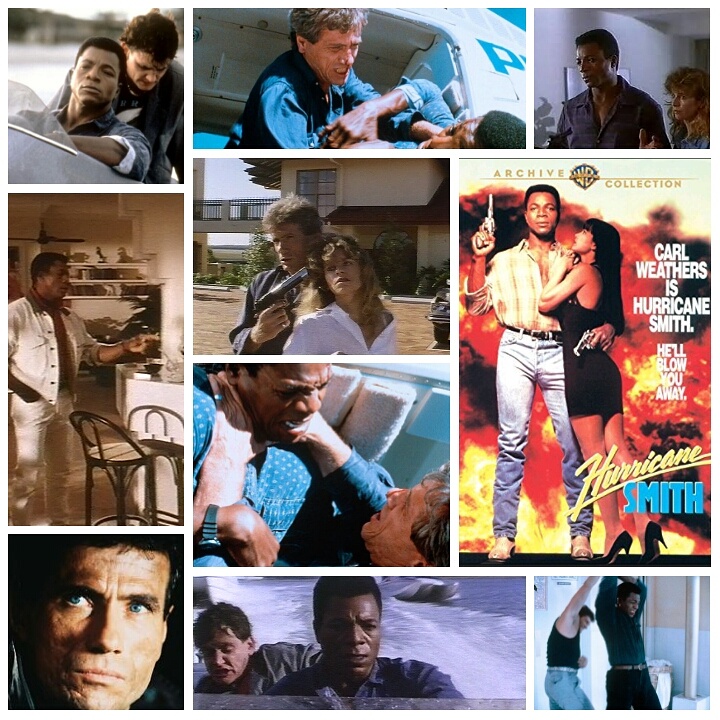
Buckle up and watch built badass Carl Weathers head down under to take on vicious Australian criminals in Hurricane Smith, a blast of saxophone laced, trashy 80’s cheese that hits every beloved cliche in perfect chiming key. Weathers is an valued staple to the action genre, a memorable part of Predator and of course his thundering turn as Apollo Creed in the Rocky films. Along with his obvious commanding physicality, he has a likeability that lends itself nicely when it comes to playing heroes out for retribution. His character got the nickname Hurricane after he pulled a friend out of a falling building during the titular meterological event, cementing him as a tough guy worthy of carrying a ninety minute action flick on his shoulders. Hurricane is off to Australia, in search of his sister who has recently gone missing. He stumbles right into the midst of a hornet’s nest of a criminal organization, led by Charlie O Dowd (Jurgen Prochnow), a stunningly evil pimp and drug runner. Prochnow loves to paint his villains in broad, garish strokes and he downright outdoes himself here, careening through a performance of wanton carnage and positively dripping malice. Hurricane is a massive thorn in his side, dismantling his operation in every attempt to learn what happened to his sister. He gets romantically involved with a kindly hooker (Cassandra Delany) leading to the obligatory 80’s slow dance sex scene that everyone waits for in these type of flicks. There’s bullets, car chases, an action scene on a helicopter and all kinds of trademark B movie lunacy. Weathers makes a damn good hero. Prochnow is one hell of a wicked villain. Fun stuff.