Michael Apted’s Thunderheart

Thunderheart is a terrific effort that coasted by to fine reviews back in the 90’s and has since not only aged well but earned just a smidge of cult status. It’s a politically charged, racially themed, hard boiled mystery thriller set in and around a troubled Sioux Native Reservation in the badlands of South Dakota. Val Kilmer is the rookie FBI agent assigned to the case, and here’s the kicker: he’s a halfbreed, part American, part Native, and as such the stakes couldn’t be higher or the moral ground more complex for an investigation that’s anything but routine. Politically charged and full of dead ends, red herrings and setups, it’s a knockout of a flick that genuinely keeps you guessing. Kilmer’s character has two mentors, which I saw as the conflict that exists within him from being both a white American lawman and and having Native blood. His senior partner Sam Shepherd is the cynical, jaded hard edge of the bureau, a persona he himself is starting to cultivate, while motorbike riding, salt of the earth Native reservation cop Graham Greene calls attention to his past, the land he’s now on and the people that came before. There’s a lot of ancestral memory tied into the story too, as we see him have visions from hundreds of years ago that guide him through the dangerous and unpredictable mystery he’s trying to solve. Fred Dalton Thompson has a bit as the senator who sends the two agents out there to see what’s up, and character actor Fred Ward is nasty business as a local mercenary who’s perpetually up to no good and almost seems to be based on a real life individual, uncanny that. It’s pulp that makes you think, and has a beating heart behind every bit of intrigue, a film that’s long been underestimated but has a lot more to say than the lurid action movie cover art might suggest. Highly recommended.

-Nate Hill
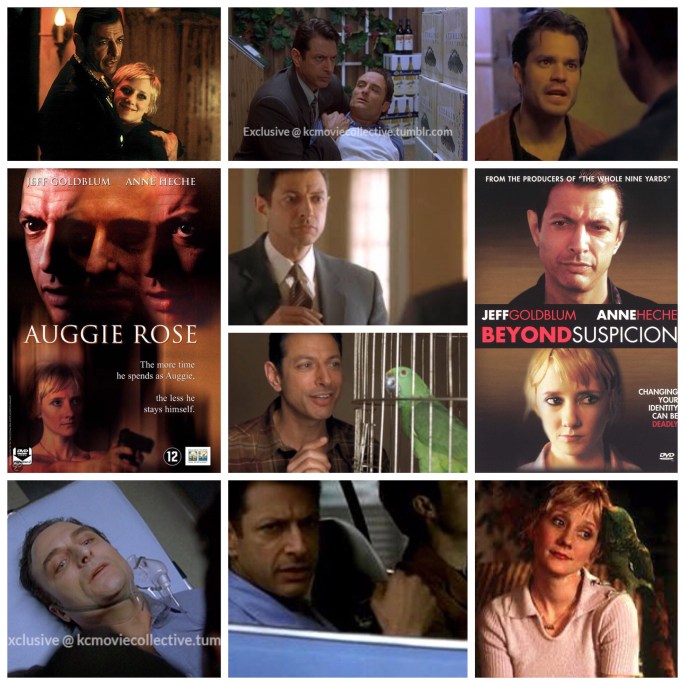
Auggie Rose aka Beyond Suspicion

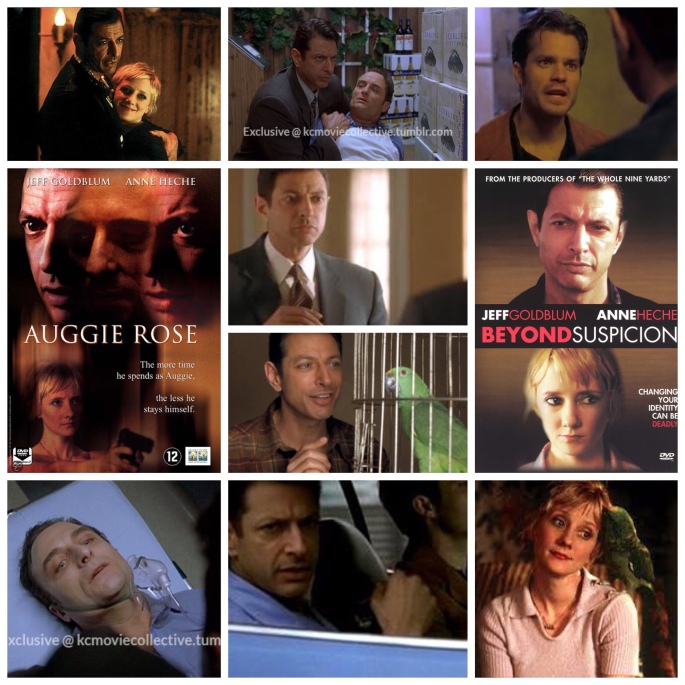
I’ve always had issues with Auggie Rose, a creepy, bizarre Jeff Goldblum vehicle released under the far less ambiguous title ‘Beyond Suspicion’ on DVD. Misguided is kind of the word for the script they’ve taken on here, it’s a story that tries to say something about self identity and loneliness but just sort of makes you feel mounting uneasiness and not in the good way. The actions of Goldblum’s protagonist are pretty uncomfortable and unconscionable, which probably isn’t what they were going for, but there you go. He plays a boring insurance salesman who lives the kind of bland, grey life you’d expect someone in that profession to live, until recently paroled ex-con Auggie Rose (a short lived Kim Coates) happens to die in his arms. The man had been keeping up long and intimate pen pal communication via letters with a girl (Anne Heche), who he’s never met, and Goldblum finds one of these letters on him. So what does he do? Instead of finding her and telling her the sad news like a normal guy would, he assumes Auggie’s identity and picks up with her where the letters left off, which is so wrong in so many different ways, man. Worse, he’s got a girlfriend of his own (Nancy Travis) who he hides all this from, until it goes so far that the police get involved and the whole thing snowballs into an unhealthy, self destructive, damaging turn of events. Even *worse* is the ending, which I won’t spoil except to say it’s the biggest cop out this side of War Of The Worlds and is a story beat that is as forced and artificial as Phil Hartman’s million dollar smile. If you’re going to make a movie as terminally dark as this, don’t try and cloak it in a would be ‘happy resolution’ because ‘audiences won’t like it’. Don’t worry, they’re not going to like it anyways, because it’s just bad, but at least go the mile it takes to end the story in a place as warped as it’s inciting incident suggests. It’s far better to see how choices and actions like this lead to grim consequences, not to give the impression that there’s a light at the end of the tunnel after being so selfish and creepy towards others. Gah. It’s a shame that Goldblum agreed to do this because he’s an inherently likeable guy onscreen and comes off as weird, this kind of borderline sociopath character needs an actor like Kevin Spacey, who just carries a vague creep factor with him by default, (especially these days). There’s a collection of supporting talent including Timothy Olyphant, Richard T. Jones, Max Perlich, Jack Kehler, J.E. Freeman and Nick Chinlund, but they’re mostly given humdrum, not especially noteworthy roles. Coupled with the troubling story arc, it’s just a pretty drably mounted production anyways, and doesn’t serve to excite or provoke reactions other than to disturb the audience, and like I said before, not in any kind of good way. Yuck.

-Nate Hill

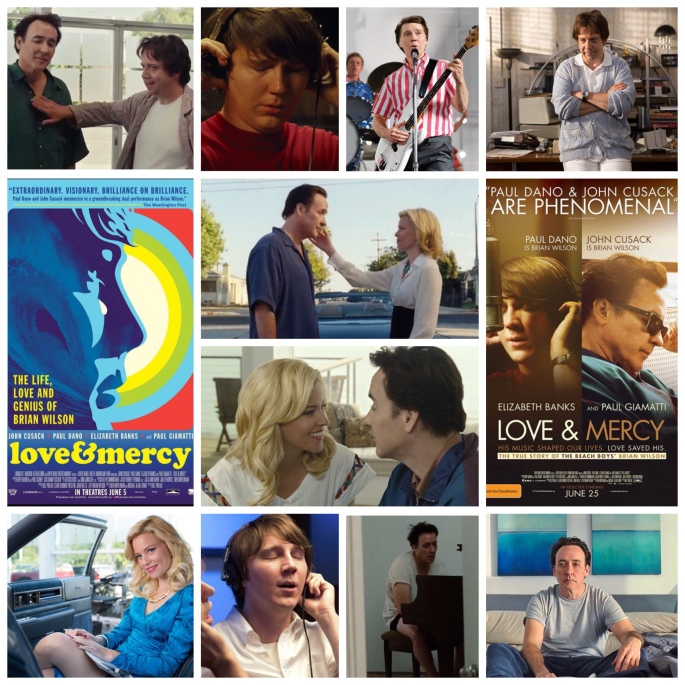
Bill Pohlad’s Love & Mercy

I’m not what’d you’d call a Beach Boys fanatic other than loving their most recognizable hits since I’ve listened to music, but Bill Pohlad’s Love & Mercy tells a story that just needs to be told and could grip anyone with its love, suffering, perseverance and genius, genius in the form of the band’s troubled but brilliant lead singer Brian Wilson, played here in a duo of encore performances by Paul Dano and John Cusack, both giving what may be the finest work of their careers. For those who are unaware (like myself before watching this), Wilson suffered a lengthy psychotic break that ran alongside a good portion of his career, brought on by many things including stress, fame and the ongoing psychological/physical abuse from his father (Bill Camp here), who did double duties as the group’s manager. Getting fully acquainted with rock bottom and finding himself alone later on in life, he was thrown from the frying pan into the fire when he went under the care of unconventional, deranged psychiatrist Gene Landy (Paul Giamatti, terrifying), and found himself victim not only to his own demons, but a new external one trying to take advantage of him. By chance he met kind Cadillac salesgirl Melinda Ledbetter (Elizabeth Banks), the two seem to have fallen in love almost instantly, and it took her kindness, patience and determination to save him from almost certain death in Landry’s nefarious hands. I’m going on the assumption that what we see here in the film is as close to the true story as possible, because the events are too specific and jarring to have been made up. Early scenes show Dano as a young, vibrant Wilson, hard at work on an experimental opus project that would eventually drive somewhat of a wedge between him and his band mates. The later segments with Cusack, interspersed via meticulous editing, are both a love story and a horror story, as we witness Melinda and him fall for each other, while lecherous Landy does everything he can to keep them apart. Giamatti plays the guy full tilt crazy, a dangerously obsessed scumbag whose actions are so damaging to Wilson that you want to cave his head in with a rock. Cusack is wonderful, putting quiet soul into the work and keeping the heartbreak and hurt of his former years on a dimmer so we don’t forget, but see a new, brave soul try to rise from the ashes. If this might be their best work, it’s certainly the case for Banks, I’ve never felt more connected to a piece of her work. She’s attentive, playful, compassionate and low key brilliant as Melinda, Brian’s rock, guardian angel and eventual love of his life. There are gaps in the story, as many of the no doubt horrific times are either left to our imagination or only suggested at, but that gives this unbelievable, all too true story all the more power. It’s inspiring, to see someone go through all that heartache and strife and come out of it still kicking. It’s also one of the most intelligent and empathetic movies to address the subject of mental illness in some time, using a compassionate, frankly implemented lens to tell Brian’s story and illustrate his complicated condition. Along with the obvious inclusion of many Beach Boys hits, some mid-composition, there’s a gorgeous original score by Atticus Ross that accents the emotional scenes between Brian and Melinda perfectly. One for the biopic books, and a story worth taking the time to listen to.

-Nate Hill

Sacha Gervasi’s Hitchcock

I feel like a lot of people were expecting a vast, loosely paced biopic from Sacha Gervasi’s Hitchcock, but what they really got was a tight, sardonic, laser focused and surprisingly emotional look at the relationship with his wife Alma (Helen Mirren), during the making of Psycho, and the monumental struggle it took in bringing the now iconic horror film to being. It’s about adjusting your expectations really, and keeping them in check, and you can enjoy what is one of the best films of that year. Meticulously casted with a galaxy of brilliant actors, royally mounted in terms of production design and costume (Oscar shamefully glossed over it in those categories) and written with brittle, whip-crack wit by John J. McLaughlin, it’s a treat for cinema lovers and Hitchcock junkies alike. Anthony Hopkins plays the old goat as a stubborn, eccentric, obtuse man, a filmmakers who is so fascinated by the universal revilement he’s met with upon pitching Psycho that he morbidly just has to see the production through, even if it means friction from all angles including Alma, the studio, the censorship board and everyone in between, not to mention mortgaging his snazzy mansion in the process. It’s an interesting look at one of the most important mile markers in the horror legacy, the dawn of the slasher film and Hollywood’s begrudging shift from camp to lurid exploits in the fright flick, which saw Alfred gleefully starting the snowball effect with Psycho. James D’arcy is uncannily perfect as Anthony ‘Norman Bates’ Perkins, Scarlett Johansson captures the virility and charisma of Janet Leigh magnetically, and Jessica Biel does great work as Vera Miles, looking almost unrecognizable. Hitchcock based the character of Norman Bates on famed serial killer Ed Gein, and as such the filmmakers have him appear to Hopkins in ghostly fashion, played grimly and excellently by character actor Michael Wincott, a supernatural stylistic flourish that some hated for its gimmickry but I found a neat, provocative touch. The cast gets deeper with work from Toni Collette, Danny Huston, Ralph Macchio, Richard Portnow, Michael Stuhlburg, Frank Collison and Kurtwood ‘Red Forman’ Smith as a crusty chairman of the censorship board. Hopkins slithers expertly into the prosthetic makeup and opaque personality of the character, clearly having a mischievous blast and cutting loose from some of the more laconic roles he’s done, it’s one of his most engaging performances. Sure it’s not a grand old biopic of the guy, spanning years and leaping multiple story arcs, but I found the intimate focus on his marriage and Psycho to be deliberate, riveting and well deserving of any audience’s attention, especially for fans of that era of Hollywood. A winner.

-Nate Hill

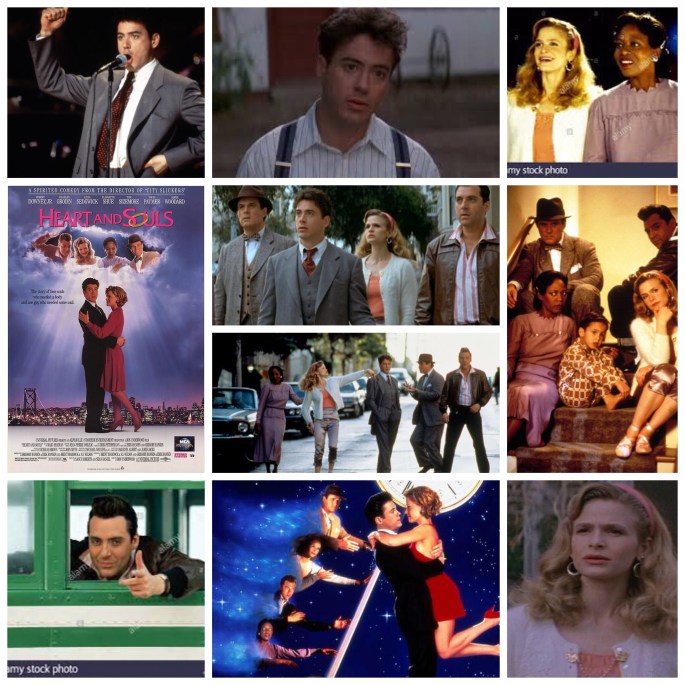
Ron Underwood’s Heart & Souls

Ron Underwood’s Heart & Souls is a lovely forgotten gem from the early 90’s, a metaphysical comedy drama with an all star cast and a heartwarming storyline with just the right amount of tear jerking moments, one of which is really affecting. They say that some people become civil servants in the afterlife, but in this movies case they are social workers, or rather guardian angels. Young boy Thomas thinks he has four imaginary friends who accompany him everywhere, but they’re really the ghosts of four wayward souls whose unfinished business on earth has caused them to linger and provide their service to the living. Shy would be singer Harrison (Charles Grodin), grieving mother Penny (Alfre Woodward), regret filled waitress Julia (Kyra Sedgwick) and guilt ridden petty thief Milo (Tom Sizemore) hang out with young Thomas for years until he grows a bit older, their debt to heavenly society is apparently paid and they move on from him, which is truly a heart wrenching scene to watch the poor kid go through. They seem to have forgotten the most important thing though: resolving their own unfinished issues in this plane, and return some thirty years later to find a now grown up Thomas (Robert Downey Jr.) and get his help in putting their troubles to rest. Seeing very grounded, down to earth Downey as a stern businessman in the midst of stormy issues with his girlfriend (Elizabeth Shue) suddenly be faced with the four childhood chums he thought were figments is hysterical and played for all the laughs one would hope. It’s also played for emotional resonance too though, as he learns about the childlike nature he left behind and regains his dormant sense of wonder, and humour. Each of the four of his friends is played brilliantly by these actors, all with their own important story and part to play in the lives of each other, as well as Downey’s. Director Underwood gives it the lighthearted, cloudy sentiment and humour it needs, but still let’s the moments of sorrow land effectively too, finding that balance between joy and heartache nicely. This one is lost a bit to the ages, but always holds up as a timeless romantic fable, well acted and perfect to brighten up the mood of any TV room.

-Nate Hill

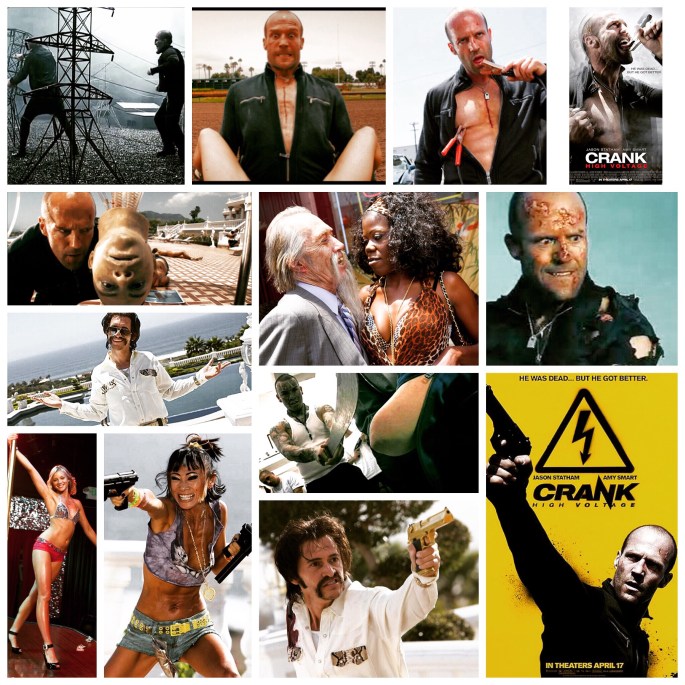
Neveldine/Taylor’s Crank 2: High Voltage

If you took Grand Theft Auto, The Looney Toons, bath salts, nitroglycerin, raw adrenaline, a bucket of piss, a spoonful of vinegar and a few ounces of C4 and chucked them all in a blender, you’d have something almost as utterly fucked as Neveldine/Taylor’s Crank 2: High Voltage, a sequel that leaves the first film somewhat in the dust, and if you’ve seen their initial Crank effort, you can imagine what a sheer feat that is. Cheerfully racist, unapologetically sexist, hedonistic in heaps and fully committed to being as mean, sleazy and batshit as movies can get, it turns an action movie into something truly out there. Jason Statham is the invincible Chev Chelios, a contract killer who gets put through the wringer when pretty much the entire organized crime faction in Los Angeles decides they want him dead. In the first film it was adrenaline that kept him going and here it’s electricity. Saddled with a weird synthetic heart, he’s on a mad roadrunner odyssey to get his original ticker back from legions of gangsters who want to sell it on the black market or transplant into the body of a weird old goat of a Triad boss called Poon Dong, played by David ‘do anything for a paycheque’ Carradine. Statham is a trooper, getting every part of his body fully zapped by all kinds of dangerous objects, engaging in shameless public sex once again with his spunky girlfriend (Amy Smart), this time in the middle of a horse racetrack. Explaining the plot is pointless because things just sort of… happen, in their own madcap way and it’s really hard to keep up with the kind of deranged marathon this thing runs. A frenzied strip club owner (the late Corey Haim) a thoroughly psychotic Asian hooker (Bai Ling), Chev’s ever loyal off-the-books Doctor (Dwight Yoakam) and all manner of punks, freaks, mafiosos and maladjusted urban monsters make appearances. Clifton Collins Jr. is equal parts terrifying and hilarious as El Huron, a flamboyant Cholo boss hellbent on killing Chev, but not before a few sadistic sideshow games first. The real heroes here are Neveldine and Taylor, two hyperkinetic ringmasters who aren’t afraid to get absolutely mental in their filmmaking process, injecting every bit of madness, mayhem and debauchery they can stuff into the script. Strippers getting shot in the tits and leaking silicone everywhere, a Mexican vato slicing off parts of a Chinese rival gang member and gleefully saying “check it out.. sushi!”, a severed head kept alive in a fish tank and a Godzilla inspired animated interlude are all but a taste of the bizarre pitstops this film makes on its hyper-violent, coked out flight path towards breaking the sound barrier. It’s either your thing or it isn’t, I mean I wouldn’t show it to my grandparents, it’d be a monumental exercise in tolerance for anyone with views that verge on conservatism. But fuck if it ain’t impressive for just for how far past the stratosphere it goes though, it’s like the first Crank film fell asleep, had a fever dream about itself and then this thing was birthed from that vision out of the death of a neutron star, mid explosion. I’ll stop because I’m running out of adjectives for ‘crazy’.

-Nate Hill

Broken Lizard’s Super Troopers 2

Broken Lizard’s Super Troopers 2 has the monumental task of being one of those sequels that comes around so far after the fact that it has to do something different than it did the first time around. It does that. It also has to live up to fan expectations without just retreading all the same paths and taking the easy, self derivative route. It also does that, and quite successfully too. I’ll just clear the air: I loved it, I thought it was a fucking blast, and hit all the right notes you’d expect and wish for. It’s different than the first, amping up the rowdy, maniacal tone even further and going for broke, but never exhausting itself or getting too shrill. It’s been a good long while since the first, and the gang has naturally managed to get themselves fired from their Vermont city cop gigs following an incident involving Fred Savage, who I only know as the mole guy from Goldmember. The main event here is the discovery that a small Canadian town is actually on American soil, so the Vermont governor (Wonder Woman) hires crusty Captain O’Hagen (Brian Cox, having as much of not more fun than he did the first round) to rally his troops and oversee the transfer of power, which includes a trio of buffoonish Mounties (Will Sasso, Hayes Mcarthur and Vancouver’s own Tyler Labine), a manic Rob Lowe, sexy Emanuelle Chriqui, a rogue grizzly bear, copious amounts of narcotics, throwbacks to jokes from the first that actually work, endless jabs at the metric system and all manner of… shenanigans. I think us Canadians can get an extra kick out of it seeing ourselves represented in the most hilarious, over the top fashion you can imagine, exaggerated accents and all. The three Mounties have a demented running joke regarding Danny DeVito that had me choking on my beer. Rob Lowe has an inspired gift for comedy and sending up his own image, his casting here was a brilliant move. As for Rabbit, Ramathorn, Foster, O’Hagen, Mac and ever ridiculous Farva, I got both misty eyed and nostalgic seeing them raising hell, causing shit and being the beloved idiots we remember so fondly, back to give us second helpings of their consistently funny, always surprising brand of eclectic humour. There’s a couple priceless cameos in the prologue that I won’t spoil but I’ll say that it was awesome to see ma boy Clifton “Whup ass fajitas” Collins Jr. show up in the Broken Lizard multiverse. It amazes me that they’d even need to crowdfund something by this troupe, because from the first Troopers flick to Beerfest to The Slammin Salmon, these guys are just riotous and some of my favourite comedic filmmakers in action these days, I really hope this skyrockets them to the big leagues once again.

-Nate Hill

John Wick: Chapter 2

John Wick: Chapter 2 expands nicely on a mythology that we caught a glimpse of from behind the shadowy curtain of assassin’s anthropology in the first film, a fantastic meld of stylish world building and hyper violent, stunts driven action that saw Keanu Reeves come blasting back onto the big screen in probably the best role so far of his career. Chapter 2 has one big challenge to face though: the first one was driven by the fact that those fuckers killed his dog, and the man’s subsequent bloodlust over it. That was the crux, the catalyst, the reason we cheered so loudly each time he maimed or mauled someone. Now, I don’t need an excuse like that to watch an antihero slaughter people, but some might, and the dog thing just propelled him forward faster and furious…er. What’s the catalyst here? Well, they destroy his house. Not quite the emotional kick in the nuts you get from seeing a beagle murdered, but it seems to be enough to light Wick’s fuse again, so there you go. He’s faced with a figure from his past here, some fruitcake of an Italian mobster (Ricardo Scamarcio) who wants him to come out of retirement and kill his powerful sister (Claudia Geroni) to ensure his seat at a revered council table of international crime figures. It’s basically John Wick’s Eurotrip, as he treks across the pond to kill more goons and thoroughly destroy more night clubs and other such convenient set pieces than you can shake a stick at, before returning back to New York for an ultra-violent third act. John Leguizamo, the always awesome Ian McShane, Lance Reddick, Bridget Moynahan and David Patrick Kelly all reprise their wicked cool roles, whilst Common, Ruby Rose, Peter Serafinowicz and Franco Nero create new characters that flesh out this fascinating world of killer’s mythology even further. The film is special though for two important reunions for Reeves that give wonderful callbacks to earlier in his career: the prologue sees Wick ferociously reclaim his stolen car from Abram Tasarov (Peter Stormare) the more gregarious brother of Viggo, villain from the first film. Reeves and Stormare played Constantine and Lucifer in the underrated 2005 comic book adaptation, where they faced off with just as much menace and charisma we see in their little bit here. It’s also a reunion for Neo and Morpheus, because Laurence Fishburne shows up as the godlike Bowery King, a rooftop dwelling, pigeon keeping derelict who runs a vast crime syndicate that all disguise themselves as dishevelled hobos. It’s wonderful references like these that pack the pedigree with solid gold and moments to remember, not to mention it’s just a worthy sequel, a slam bang screamer of an action flick and a great time all round. Bring on Chapter 3, and I request an Al Pacino villain turn so we can get nostalgic for The Devil’s Advocate all over again.

-Nate Hill

Jim Sheridan’s Dream House

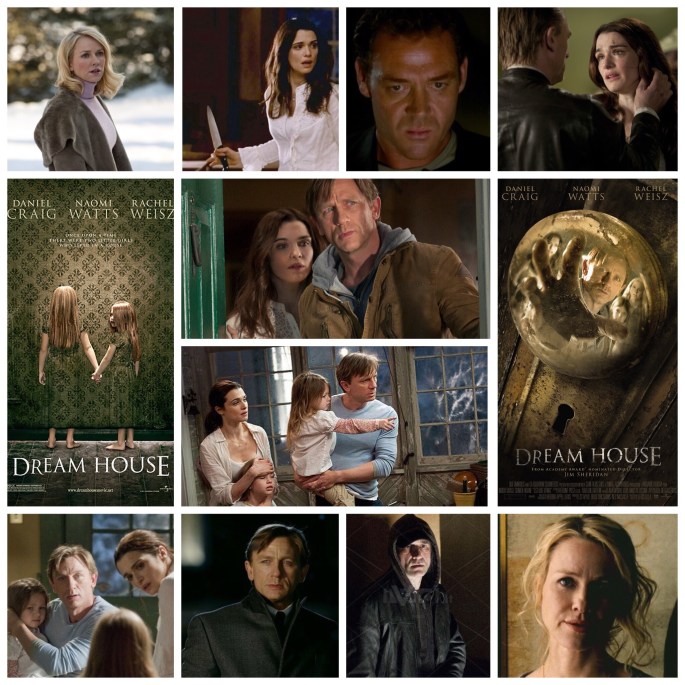
Imagine the potential for a concept like Dream House, and then look at how badly, how royally they fucked up the script and eventual film that came after. It’s like someone had a really cool idea for a thriller that could have been something great in the vein of Shyamalan or Hitchcock and it just ended up a flat, lifeless, boring exercise in.. well… not much. Sadder still is the talented, first rate cast stuck in it, and when you consider the director has a heavily Oscar nominated film from back in the day under his belt, it boggles the mind. Okay, maybe the last two points are unfair, artists sometimes don’t have control over what projects cross their desk, but I would have jumped ship at the premiere if I were them, paycheque in hand. The premise is certainly interesting: a publisher from New York (Daniel Craig) moves with his wife (Rachel Weisz) and two young daughters to a quaint manor in quiet New England to get away from it all. The house, naturally, has a troubled past and is sorta kinda haunted, in one of those twisty roundabout ways I can’t say without spoiling the whole deal (*cough* The Others). Craig has to solve the mystery of a brutal crime that took place in his new home, avoid freaky stalkers that seem to follow his family, and with the help of a kind, benevolent neighbour (Naomi Watts), figure out just what’s going on. There is a twist, that shows up midway through the film instead of near the end and because of that feels entirely like a silly gimmick once we know, a misjudged pacing decision if there ever was one. The thing that sucks is there are well done aspects; the acting from everyone is great, the cinematography and production design beautifully done, it’s just story that takes a nose dive, and almost right off the bat, too. The payoff and resolution for such an ‘out there’ setup just feels dry and voided of the mysticism and otherworldly spookiness that the film set you up with, and the result is you just feel cheated. Not even capable actors like Elias Koteas as a shady hitman and Marton Csokas as an even shadier businessman can bring antagonists with enough life into the fold, and their thankless presence is wasted. After this film I kind of wish I watched it again without any sound or subtitles on like a silent version, because the imagery and visual element is too good to be wasted on a script as badly drawn and executed as this.

-Nate Hill

John Krasinski’s A Quiet Place

John Krasinski’s A Quiet Place surprised me by investing more in its fright flick concept than just shrieking banshee monsters and a flurry of hastily shot chase action/close calls. For a film that focuses so much on hearing and an auditory mood-scape, Krasinski is an excellent visual storyteller and as far as first time directors go, should be very proud. Not to mention the fact that he tells a human story amongst the horror, one that actually gets us feeling closer to the characters until we really give a shit when they’re being hunted by the screamers. It doesn’t hurt that he and real life wife Emily Blunt give two breathlessly alive performances that paint a dual portrait of parents who will stop at nothing to protect their children. Sometime in a desolate future, vicious predators of unknown origin (could the brief shot of a newspaper clipping claiming “meteorite hits in Mexico” have anything to do with them?) invade the world and slaughter humans en masse. They’ve got mutant ear drums that can hear a wood-bug sneezing from sixty miles out, but they’re also blinder than Stevie Wonder. Using your inside voice, or no voice at all if possible, is an imperative mantra for Krasinski and clan, as they must exist in monk worthy silence for fear of being run down by these things. The trailers tend to spoil a lot of things, and I guess marketers think that just because a sequence is in the prologue that people wouldn’t want it to still be left a surprise, but oh well. Early on there’s a tragedy that causes kind of a rift in the family, particularly between Krasinski and his deaf daughter (Millicent Simmonds, brilliant work). Flash forward a year or so and he’s built an impressive rural stronghold for his family on an abandoned farm, complete with grain silo watchtowers and a homemade electric light alarm system. It’s this innovative and careful design that sets it apart from other horror flicks that just go for the throat without and character development or world building to draw you in. Eventually the screamers do come for them, in one long extended night from hell that plays out like the most stressful chain reaction of mishaps you could imagine, with enough suspense to bring on a heart attack. I call them screamers, and I read one review on Facebook whining that they’re the same CGI clicking beasts in every other horror flick these days, but I think that’s an unfair assessment. They’re neatly rendered and have a clearly visible biology to explain their uncanny sense of sound, and I never once tuned out or felt removed from the atmosphere while watching them. The human element is well done and treated with care here, and while I can’t quite understand why they would decide to have a baby, which are notoriously loud individuals, in a world that’s gone so badly to shit (maybe they couldn’t find condoms when scavenging abandoned towns), they’re resilience and love for their children are brought fiercely to life by the two actors, who knock it well out of the park. You gotta love Marco Beltrami’s original score too, which is shadowy and ominous in one instance and switches gears quickly to orchestral catharsis when needed. A real surprise out of horror-town, this one was, and one of the best I’ve seen so far this year. Oh, and try to find a more badass, adrenaline soaked ending scene to a film so far this year, I dare ya.

-Nate Hill