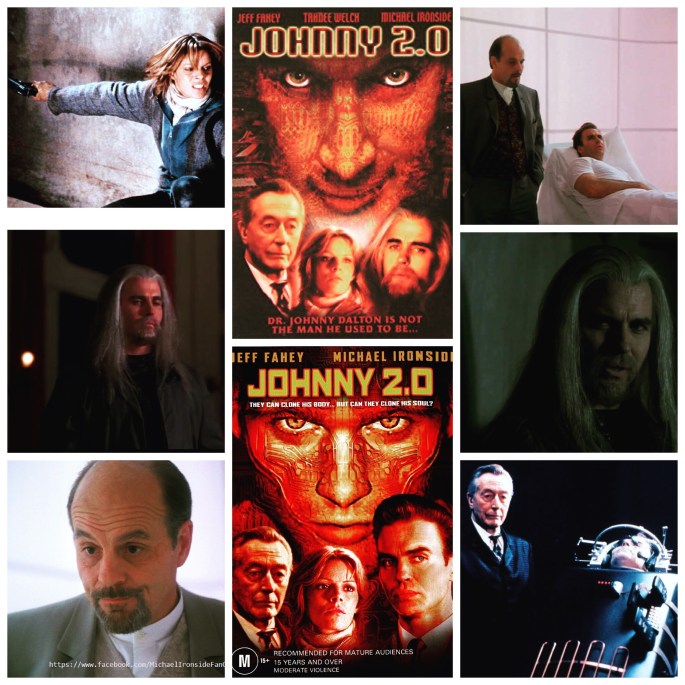
B Movie Glory: Johnny 2.0


It’s always fun to come across genuinely intelligent science fiction films, especially when you go into them expecting a half assed, clunky yawn, which happens frequently. Johnny 2.0 is an overlooked little cyber-punk gem in an unassuming release package, a thinking man’s sci-fi story that could have easily gone the other way, but contains enough inspired creativity to rise above the muck. Jeff Fahey plays Johnny Dalton, a genetic researcher whose facility is attacked by activists. Waking up from the disaster he is stunned to find that he’s not Johnny at all anymore, but a clone who has been in cryo for 25 years, awakened now for one purpose: set out across a post apocalyptic wasteland to retrieve the original Dalton and smoke out a web of conspiracies that have hatched over the years. There’s all sorts of really intriguing ideas at play here including MRI memory mapping, organic tracking suits, genetic reconfiguration and personalized holograms, a wealth of scientific world building that earns this film its stripes in the artistic departments. Fahey is excellent, as is a noble Michael Ironside, Tahnee Welch and John Neville. Super solid storytelling, ideas worth exploring, an impressive level of design and atmosphere achieved despite the limited funds, there’s not too much you can say about this one that is not the highest of praises. 

-Nate Hill

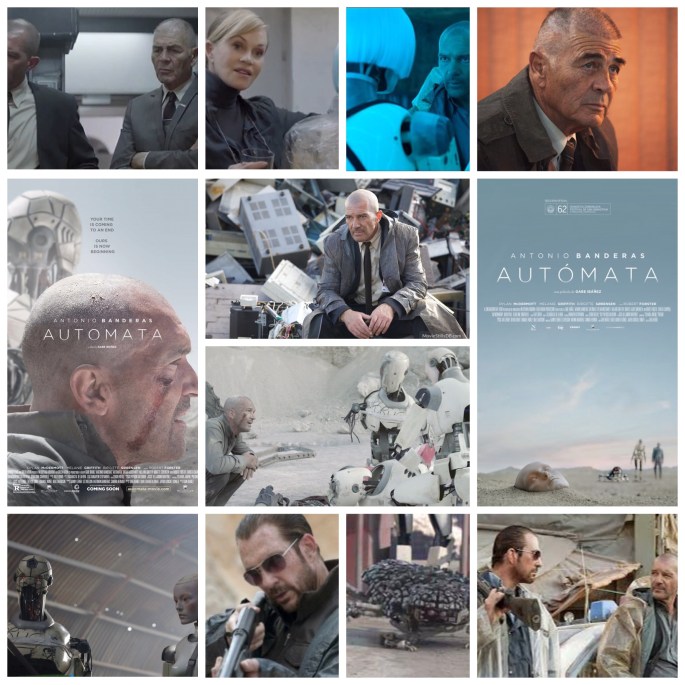
Gabe Ibáñez’s Automata 


Gabe Ibáñez’s Automata had the misfortune of being released in the shadow of another film concerning robotics and artificial intelligence, Ex Machina. It’s hard to compete with the kind of hype that film generated back in 2015, and as such it kind of slipped through the cracks. It’s a shame because there’s much about that’s striking, stylized and fascinating, despite being a bit too elaborate for it’s own good. Drenched in a rainy neon Blade Runner atmosphere, it follows a bleak story involving insurance investigator Jacq Vaucan (a bald, somber Antonio Banderas) as he navigates a broken world ravaged by solar storms that have whittled down the human populace to around twenty million. Robots have been employed to rebuild the dying infrastructure, and Jacq keeps tabs in case any of them violate their primary directive, under the stewardship of his boss (Robert Forster). When rogue police officer Wallace (Dylan McDermott is dynamite) shoots a robot he claims was trying to alter itself, Jacq surmises that there’s a ‘clocksmith’ out there trying to give them minds of their own. It’s all very vague and we never really have anything more than illusory whispers or half explained concepts to go on, but these matters find him and the company’s nasty head of security (Tim McInnerney) venturing far out into the desert where a faction of robots, led by Javier Bardem no less, have grossly deviated their protocol and are evolving into… something else. Banders’s once wife Melanie Griffith does double duties as a creepy liaison in their case and the voice of a sympathetic sex slave-bot who plays a key role. I’m not entirely sure what the story arc is supposed to be, as it’s often muddled and dense, but it seems confident that it has one, and isn’t just flying blind into Euro experimental abstract mode as some scenes suggest. It has a point to make, it’s just wrapped that up in enigmatic fashion and cloaked any sense of linear exposition in blankets of atmospheric ambient sound, deliberately indistinct story beats and strangeness. I’m okay with that to an extant, as there’s plenty to enjoy visually, especially with the robots and their design, but many won’t be and will want more than just machine dreams without a manual to guide them. I for one enjoyed the memorable image of bald, parka clad Banderas hunting primordial androids in a washed out, used up wasteland. All that’s missing is a score by Vangelis or Tangerine Dream.  

-Nate Hill

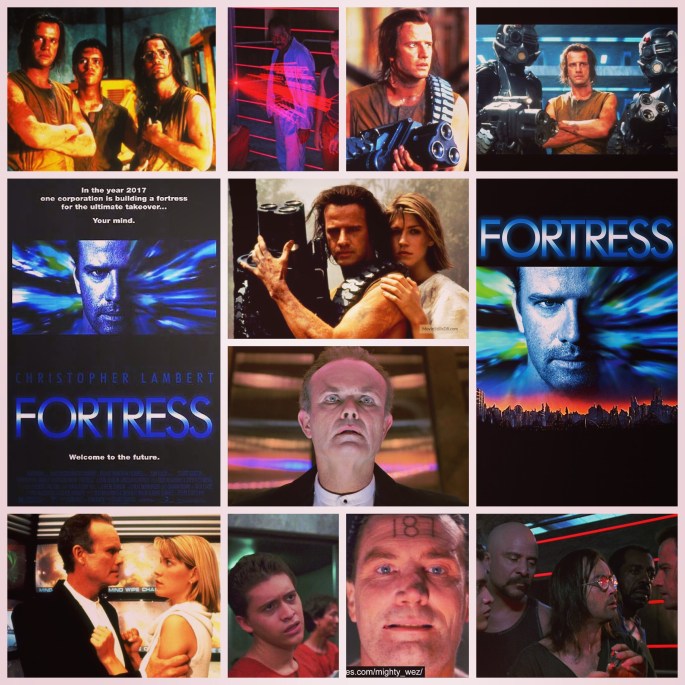
Stuart Gordon’s Fortress


Stuart Gordon’s Fortress is one of the more overlooked dystopian sci-fi thrillers of the 90’s, and despite somewhat being a B-movie, it holds its own in pretty much every department. Quality story, terrific acting (even from the king of stilted delivery himself, Christopher Lambert) and a story with more depth than the poster or marketing might suggest. Lambert plays an unfortunate man on the run with his wife (Loryn Locklin) in an America of the future where having more than one child per mother is prohibited. They’re both nabbed trying to make a break for Mexico, locked away in a horrific prison called Fortress, a place where science has run amok and all kinds of neurological and biological experiments are performed on the inmates under the steely direction of evil Director Poe (Kurtwood Smith). Fortress is an unorthodox nightmare where basic rights are replaced by those of cattle or worse, and no one is safe from micro implants, mind alteration and all sorts of fun stuff. Lambert plans an elaborate escape with the help of various inmates including Vernon Wells, the late Tom Towles, Jeffrey Combs and Clifton Collins Jr., all putting in excellent and varied performances. The scene stealer is Kurtwood Smith though, who is usually cheeky, psychotic or sarcastic in his work. Taking on the type of role that typically goes to a Malcolm McDowell type guy, he tackles a character that is the farthest thing from sympathetic you could find and sort of turns that on its head, making him seem very much human in one galvanizing piece of acting work. You can label this type of thing second tier or low budget, write it off or not take it seriously, but the fact remains that many of these efforts are works of art in their own right, beautifully crafted adventure stories set in universes more vibrant and imaginative than our own, stories just to the left left of normal and full of schlock, machines, creature effects and smoke machines. Gordon is a master in this arena (remind me to tell you about Space Truckers one day), a creative force to rival Roger Corman and the like. Fortress is my personal favourite in his stable, and one shouldn’t underestimate its entertainment value and ability to hold up decades later. Oh and also, this suffers from an adorable condition I call Blade Runner Syndrome™, in which the far off year the film’s timeline exists in has been caught up to by our own trajectory, making the films future look like our past. This film’s specific year? 2017, as you’ll see in the poster above. That means that right now, Lambert and Smith are duking it out in that clandestine compound somewhere out there. Cool thought. 

-Nate Hill

Mindscape: Anna 


Mindscape, given the less tantalizing title ‘Anna’ upon release, is a thinking person’s thriller, and perhaps a little bit too much so. In the near future, or perhaps some alternate reality, some humans have evolved into pseudo clairvoyants who can enter the memories of other people and interact with their subjects within them. This talent has been trademarked by law enforcement, who employ ‘memory detectives’ to psychologically resolve conflict or retrieve otherwise out of reach information. Mark Strong is one such man, but his talents have dimmed a bit following the deaths of his family and a crippling stroke. Hauled out of retirement by his former boss (Brian Cox, sly as ever), he finds himself tasked with navigating the labyrinthine mind of Anna (Taissa Farmiga) a girl accused of murder and deemed a potential sociopath pending diagnosis. The film is deliberately dense and elliptical, not standard Hollywood fare at all, which is nice to see, but it also trips just a little bit on its own cognitive aspirations, especially in the third act. It’s one of those pieces that’s less like The Cell, and more like Vanilla Sky or Danny Boyle’s Trance (two absolute favourites of mine) where so much of the story wades through muddy mindgames that at a certain point we think to ourselves ‘well who’s to say if any of this is actually real if it’s gotten so complex’, and indeed it’s very difficult to piece together what has transpired here, especially with a conclusion that would require multiple viewings to even get an inkling. It’s stylish as all hell though, given a clinical, steely grey palette punctuated by flourishes of startling red to show the capacity for violence lurking just out of sight within the opaque and enigmatic human psyche. The acting is top tier as well; Strong is reliably committed and intense, Farmiga is deeply disconcerting as the most fascinating and ambiguous character, showing blossoming talent that I look forward to seeing more of, while Cox steals his scenes as per usual. The film trips over itself a few times and like I said, overly convoluted, but it’s one mesmerizing effort for the most part, albeit after a second or third viewing. 

-Nate Hill

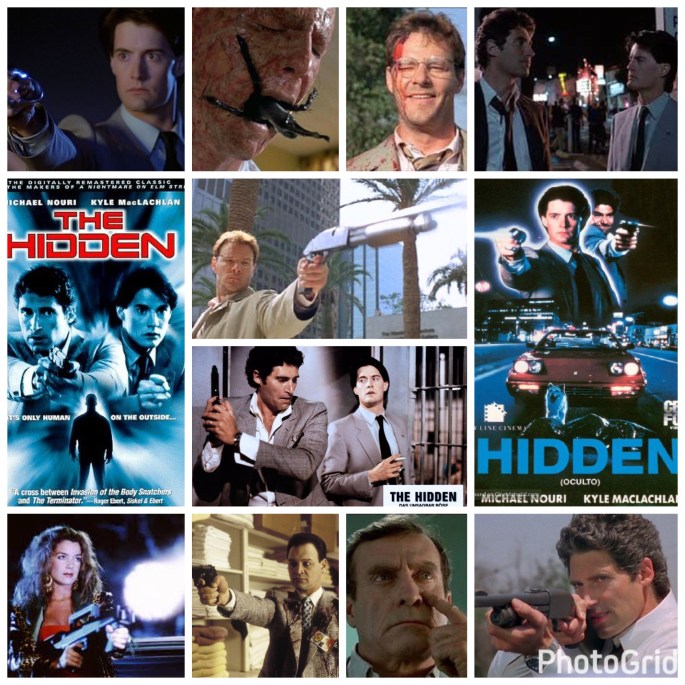
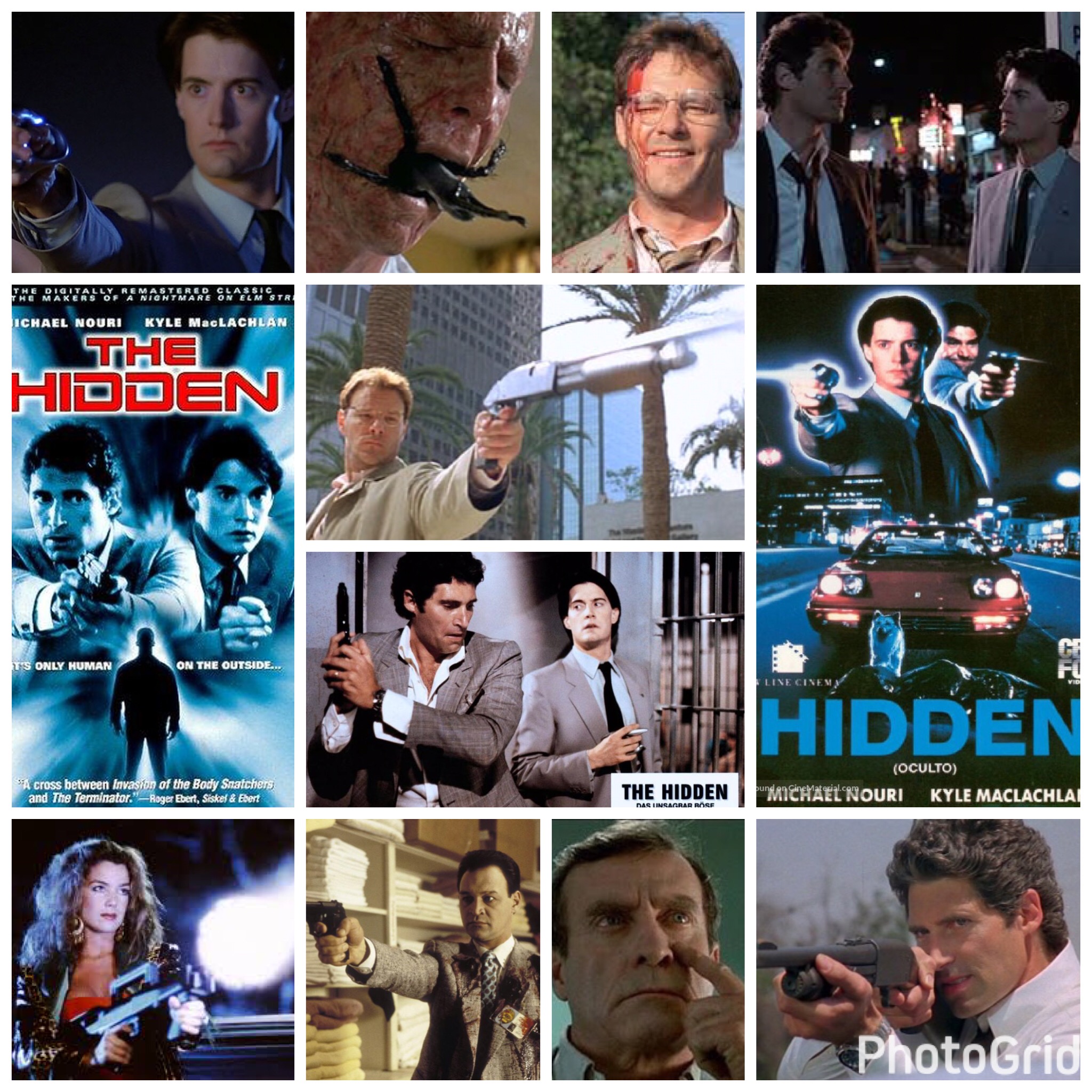
The Hidden


The Hidden is the kind of flick that makes you sit back, sink a little deeper into the couch, take a long swig of lager and nostalgically murmur “they don’t make ’em like they used to.” Maybe I was just born in the wrong era, but the 80’s and 90’s just seemed to hurl forth so many winners, unbridled genre bliss that only got better with age, worth the revisit every time. The effects were practical, the stories were told with love, care and inspiration and the action was real, hard hitting and built to last. This film one opens with what can literally only be described as a cinematic version of Rockstar’s Grand Theft Auto; we see a well dressed, determined man (Twin Peak’s Chris Mulkey in batshit mode) rob a bank, obliterate several police officers with a big honkin’ shotgun, steal a Ferrari, drive said Ferrari through a busy park, smoke a dude in a wheelchair at over a hundred clicks, lead the entire police force on an apocalyptic highway chase and cheerfully get ventilated in a hailstorm of bullets upon careening through their barricade. Case closed, right? Not for a mysterious FBI Agent (Kyle MacLachlan) who arrives out of nowhere and commandeers the case from the leading detectives (Ed O Ross and a wicked sharp Michael Nouri). MacLachlan knows something the force doesn’t, let alone would ever believe: there’s an alien running around inhabiting human bodies a là Body Snatchers, and going on hedonistic tirades of the worst possible behaviour, hence the shotgun tantrum in the opener. How does he know this, you ask? Because he himself is an alien in a Kyle suit, intrepidly pursuing the other one from a distant galaxy to halt it’s destructive shenanigans forever. It’s a premise that could have opened the door to all sorts of ooey gooey creature effects, but the film minimizes on those, choosing a few key moments to show the slime, and focuses mainly on glass shattering, guns blazing action, a neat recipe of three parts action with a tablespoon of yuck, if you will. MacLachlan, still very young at the time, anchors his performance with emotional heft, amusing aloofness and the necessary grit that can be found in his iconic portrayal of Agent Dale Cooper on Twin Peaks, and I was reminded more than a few times of that character while watching him in this. As the extraterrestrial nutjob moves from host to host, blowing everything up and leaving a trail of massacred people in it’s wake, the two of them race at every turn to catch up, and it’s Nouri who finds the seething anger one must get watching an outsider roll up and stamp all over someone else’s territory. The alien isn’t interested in world domination, resources or assimilation, it just wants to fuck shit up and have a good time, man. Blasting rock n’ roll music, gorging itself on steak dinners, stealing every Ferrari it can get it’s hands on and raiding the police evidence room for all kinds of heavy artillery, this thing doesn’t slow down for a second. This is the only film I know that paints off-earth visitors quite like this, just a gleeful, anarchic adrenaline junkie asshole, and I admire the brutal honesty, because I know of quite a few morons who would probably engage in the exact same behaviour, should they ever find themselves incognito and without consequences on an unassuming, far away planet. This one is pure screaming fun the whole way through, and should be every bit as iconic as other sci fi tales that are remembered more prolifically. Watch for the tiniest Danny Trejo cameo, playing (guess what) a prison inmate.  

-Nate Hill

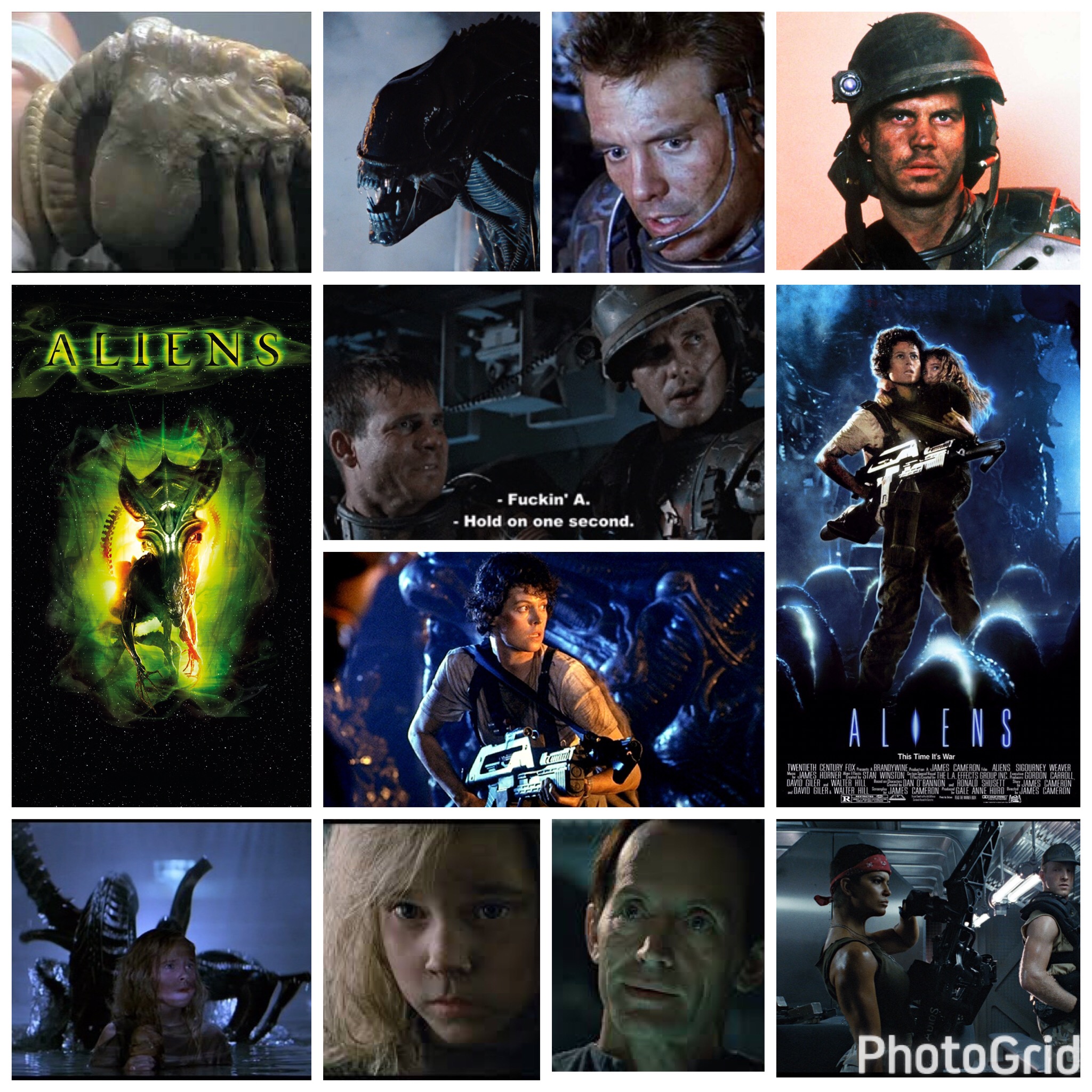
James Cameron’s Aliens 


Each of the four Alien films has their own distinct and noticeable personalities. Ridley Scott’s original creeping horror show is a tense, streamlined, gracefully vicious film that slinks along at its own pace, not unlike the resident feline Jonesy who wondered about on the spaceship Nostromo back then. If Alien has the qualities of a cat, James Cameron’s Aliens has those of a rambunctious puppy dog, a rip snortin, go get em action backyard barbecue knockout that runs up and gives the audience a big wet slimy kiss. All animal metaphors aside (I’m running out of oh-so-clever ways to open my reviews, ok? Been at this shit for two years now), Cameron’s film is an undisputed classic, still jaw dropping to this day, even after what feels like hundreds of viewings, nostalgic yet fresh in different ways every time, and simply one of the best films ever made. It’s the gold standard for creature feature sci fi too, and while many argue whether or not it in fact outdid Scott’s original white knuckler, I can’t bring myself to be petty and pick favourites out of the quadrilogy, I love them all for a whole bunch of reasons. Aliens picks up quite a while after the catastrophic events of the first, with Ripley floating around in that cryo-pod for way too long, until she happens to cruise past earth, crossing the vision of the Weyland/Yutani corporation once again. Because they always make astute, well thought out choices, they decide to send a research team, accompanied by a very reluctant Ripley and a group of hoo-rah, bull in a China shop colonial marines to far off industrial exomoon LV-426, where they have lost communication with the settlers. After a brief, clammy build up, all hell breaks loose, and we get to see the full impressive extent of Cameron’s skill as a visual storyteller, as well as the oh-so-gooey, inspire practical effects work that brings those gorgeous Xenomorph beauties to snarling life. The cast is the epitome of badass, as we are constantly reminded of by Bill Paxton’s Hudson, the film’s resident squirrel who gets hilariously skittish when things get dicey (“game over, man!” Will never not out a big, Paxton sized grin on my face), but who heroically holds his own once he gets his sillies out. The other side of that coin is Corporal Dwayne Hicks (Michael Biehn, never slicker), cool as ice, shaken by nothing, including an atmosphere entry landing that would make Alfonso Cuaron pee himself, but doesn’t come close to disturbing Hick’s afternoon nap. Every Alien team must have an artificial human, some of which are trustworthy, and some not. Lance Henriksen’s Bishop is as solid as they come, never losing his head (despite being reduced to a puddle of spilt dairy product) and sticking by Ripley’s side until the bitter, hectic end. Ripley herself is a little older, a little wiser and a lot tougher, her intensity calcified into grit after losing her daughter, and given somewhat of a surrogate in the form of Newt (Carrie Henn) an orphaned child who has survived months living like a rodent in the air ducts. “They mostly come at night… mostly” she eerily warns Ripley. Oh boy, do they ever. LV-426 is positively teeming with them, and they show up to provide speaker shattering, pixel scattering action like only Cameron can do. The facehugger in the room sequence is still one of the most terrifying sequences in any film, and serves to make you hate Weyland weasel Burke (Paul Reiser) with that deep loathing reserved for the scummiest traitors in film. The final thirty minutes of the film are a showcase of action cinema, and it’s amazing to think they pulled off the Queen fight without any cgi back then, a slam-bang marvel of a climax that fires on a thousand cylinders, and to this day has never been topped. That goes for the film too. It’s *the* action sci-fi film, and as close to perfection as you can get.  
-Nate Hill

Edge Of Tomorrow


-Nate Hill
Tom Cruise, dare I say, has been making really decent stuff these days, some of which is downright brilliant. Oblivion had its moments, carried on wings of an M83 score that was better than the film itself (hello Tron Legacy syndrome), Jack Reacher was solid badassery all round, but Edge Of Tomorrow is just pure class and could almost be considered an instant classic. I waited a long time to finally see it, because in most cases a pg-13 sci fi blockbuster starring Tom would be cause for me to cruise right on by in the Netflix/on demand lineup and pick something else. The reviews were uncommonly good though, and so I inevitably went for it. I’m sorry I waited, because it’s flat out spectacular. What makes it so? Well, it is everything I described above. A sci fi, blow ’em up blockbuster starring Tom Cruise, packed to the gills with action, aliens and stuffed with more Independence Day fireworks than you can shake a stick at. The catch? It has the plot, script and character development to match. This is one seriously thought out story, with heroes who don’t start off that way, conflict among the ranks of characters and genuine, honest to god arcs. You can hurl all the cash you want at a film and blow up as much shit as you can, but if you don’t have those core elements of story in place, and well so, you’ll end up with a hollow piece of vapid space garbage (like that Independence Day sequel). No, this one earns its stripes, opening up during a chaotic intergalactic war between humans and a formidable alien race, who are winning fast and stamping out any hope for our race. Cruise plays a weaselly military PR puppet who talks shit but has never seen a moment of actual combat, until he’s thrown directly into it by chance, with neither skills nor experience to keep him afloat. Stuck in a Groundhog Day esque time loop (I won’t spoil the how and why, but it’s a wicked smart premise that logically plays out), our coward gradually gains what it takes, day by day, to become a hero and save the planet. It takes a lot of dying and starting over though, each day beginning in the same fashion, the possibilities ripe for him to finally get that perfect round and win the day. Emily Blunt, that adorable badass, plays the most adorable badass thus far in her career, a resilient and vulnerable valkyrie who’s rage at the marauding fiends burns through terrifically, providing moments of grit, warmth and humour as needed. Bill Paxton plays a gung-ho military honcho with the same gee whiz charm that made Pvt. Hudson (Aliens, for you plebs) so memorable, and Brendan Gleeson does a third act encore as another General who takes a fair bit of convincing to get onboard with their plan. It’s so much fun you never want it to end, the high concept used for all it’s worth, supported by truly inspired creature design, detailed steam punk style weaponry and old school Hollywood fanfare rationed out in deliciously measured portions, resulting in that perfect recipe, an effects driven crowd pleaser with the brains to back it up. Who knew they could still make that? It’s a thing of beauty. 

Morgan: A Review by Nate Hill


Morgan is one of the slickest genre flicks I’ve seen in recent years, finely tuned like a barbed wire tightrope, full of nasty surprises, throat ripping action and that ever present ethical turmoil that hangs about in any films that deal with artificial humanoid beings. It’s only weakness is exactly that stylistic strength: it’s so tight and streamlined that one occasionally feels like the scales tip in the favour of style over substance, but it’s a minor quibble when you take a step back and look at just how entertaining and fired up this piece is. The filmmakers are minimally concerned with the moral grey areas that cloning wades into, and subsequent philosophical pondering, but more than anything they just want to pull the ripcord and blast full throttle into an adrenaline soaked, R-rated sci-if tale with vague aspects of a character study. The title refers to Morgan (The Witch’s Anya Taylor-Joy in a performance both terrifying and heartbreaking), a genetically engineered humanoid girl held at a secluded facility alongside researchers, one of which she has just had a violent incident with. The corporate honcho (Brian Cox in a sly, all too brief honcho) dispatches a cold, clinical asset in the form of Kate Mara, sent to assess the situation and implement any measures necessary. She is an outsider, a callous bicep who flexes at the whims of the company. The researchers and handlers, however, are not. They have grown up around Morgan, invested time and, somewhat unwisely, emotion into her and will stop at nothing to ensure her survival. Paternal Toby Jones, opinionated Jennifer Jason Leigh and compassionate Rose Leslie prove to be a formidable armada against Mara’s evaluation, and tensions arise. Morgan has her own cloudy agenda though, and whether by flawed design, ghost in the shell syndrome or pure survival instinct, proves to be the greatest danger of all. She experiences people at their best, worst and most enigmatic, and her startling behaviour is a reflection of all of it, and a sobering example of humanity’s pitiful inability to perfect the creation of artificial life, at least in this film’s universe anyway. From Mara’s threatening presence, to an intense evaluation from a particularly nasty psychiatrist (Paul Giamatti overacting so hard he almost sucks the set dec up into his orbit), it’s no wonder Morgan snaps. Now when she snaps, the film more or less whips all its chips on the table, flips said table and hulk slams it two floors down. All subtlety and thought provocation kind of get left in the dust as everything careens towards an especially visceral climax, and that’s okay, as long as it doesn’t leave you feeling underwhelmed. I kind of had the intuition it was going to take the rambunctious root overall, and took comfort in the fact that it at least somewhat focused on the delicate aspects earlier on. It’s a well oiled machine, impeccably casted, given just enough pathos to keep our sentimental sides invested, and more than enough visceral hullabaloo to get our pulses dancing, all set to a score both thundering and graceful. Great stuff. 

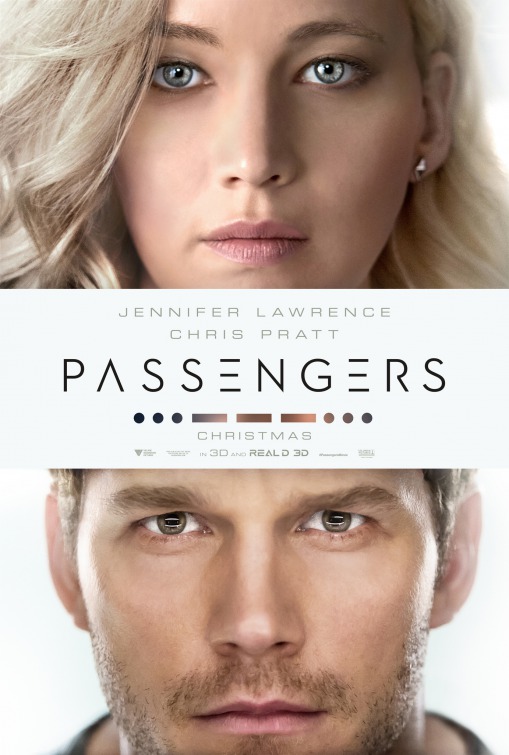
PASSENGERS by Ben Cahlamer

Homesteading.  Many years ago, when land was plenty, the government offered it to people who were willing to till the soil, grow some crops.  Perhaps raise a family.  It was not an easy life.  In fact, you could probably retire today and still be tilling soil.

What in the world does this have anything to do with Morten Tyldum’s (“The Imitation Game”) new sci-fi film, “Passengers”?

Very little or quite a bit; it really depends on your point of view.  The intent of the government was to get people to become productive because they had no other choice:  they were cornered into a unique way of life that not everyone is cut out for.

In Jon Spahits’ (“Doctor Strange”, “Prometheus”) script, the meaning of homesteading, “a lifestyle of agrarian self-sufficiency as practiced by a modern homesteader or urban homesteader,” equally applies to the 5000 corporately-sponsored passengers aboard the Starship Avalon, destined for the colony planet Homestead II.

The trick is that the journey is so long, everyone on board is in hibernation and the state-of-the-art starship is on auto-pilot.  An engineer, Jim Preston (Chris Pratt) is woken up alone with no explanation and no one to communicate with.  He is eventually joined by author Aurora Lane (Jennifer Lawrence). As the only two souls awake on board the ship, they fall in love but not before disaster strikes.  Michael Sheen, Laurence Fishburne and Andy Garcia co-star.

Spahits’ script should have checked all the right boxes:  characters are well-fleshed out; the set-up was strong; social issues are at the forefront. The focus strayed from sci-fi-adventure to kitschy sci-fi-adventure-romance, where the romance just didn’t cut it. Preston’s reason for being woken up is clear; the emotional side of isolation became a focus instead of allowing his skills to move the character and the narrative forward, leading to the intended romantic angle; a wasted effort considering Jennifer Lawrence’s Lane tried too hard to remain in control, though her reasons for that become clear after a meltdown.  Had Fishburne phoned his performance from Earth, it would have been more convincing then what unfolded on the screen.  In homage to a Kubrick classic, Michael Sheen stole the show; but his role in a pivotal moment just fell flat.  Tight editing by Oscar-nominated editor Maryann Brandon (“Star Wars:  The Force Awakens”) keeps the pacing on track.

The script notwithstanding, there is one redeeming reason why this should be viewed on as big a screen as possible: the special effects.  In the tradition of Kubrick’s “2001: A Space Odyssey” and Scott’s “Alien”, Tyldum executes a strong, detailed technical look.

From the symmetry of the Avalon to the look and feel of the interior corridors, the hibernation pods, the stars and space around the ship, everything has a very real or visceral feel about it and visual effects supervisor Erik Nordby rose to the challenge brilliantly.  The effects are supported by strong cinematography from the Oscar-nominated Rodrigo Prieto (“Brokeback Mountain”).  His attention to every detail, from lighting of cavernous interior spaces, to changing reflective lighting and exterior shots in space, Prieto’s work only enhances the visual impact.

Oscar-nominated film composer Thomas Newman (“Bridge of Spies”, “Skyfall”) resonates with the luxuriousness of the Aurora and the allure of space exploration.  Some of his dramatic riffs didn’t exactly jive with the onscreen action, but his music served the film well.

“Passengers” had all the right ingredients for a stellar show, its ambition steeped in “Titanic”.  Instead, its ‘Lost in Space’ meets ‘The Love Boat’ with all the drama that that entails.

For the intricately detailed technical effects work, “Passengers” is Recommended.  Aaron Spelling is probably rolling over in his grave.
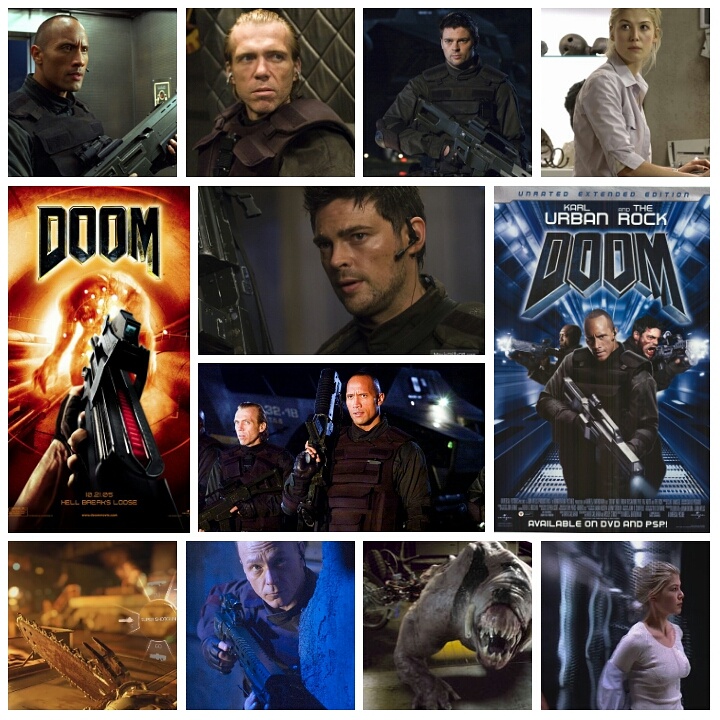
Doom: A Review by Nate Hill 

Despite not having a whole lot to do with the video games, Doom is still a rush of schlock and awe silliness, getting more fun and ridiculous in equal amounts near it’s nonsensical ending. Karl Urban and The Rock are the tough guys for the job when it comes to scoping out a Martian research base that’s accidentally opened up a portal to hell, unleashing all kinds of lovely things. Rock is Sarge, stoic commander of this unit, and Urban is John Grimm (he lives up to his last name) a battle scarred badass who has personal stake in fighting these monsters. His sister (Rosamund Pike) is a scientist on the base, and is now in a great deal of danger. After a neat Google Earth type zoom in on the Martian surface (ironically the only shot in the film that suggests they’re even on the red planet), it’s off to dank corridors, vast bunkers and beeping control panels, an Aliens-esgue siege on horrors of the dark that quickly goes sideways on them. It’s run of the mill stuff save for one stroke of brilliance: a pulse racing first person shooter sequence that showcases a POV of Urban shooting, slashing and chain-sawing his way through alien flesh. It’s a bold move that pays off immensely and is quite fun. The rest of their team is forgettable except for Richard Brake as Portman, the loudmouth A Hole of the bunch, a refreshingly animated performance in a roomful of muted, grim characters. The monster from the game shows up, a hulking hell pig nicknamed Pinky that tirades it’s way through everything until Urban gives it what for. This ain’t no great flick, but as far as video game movies go, you could do way worse. There’s definitely enough gore for the hounds, and it’s adequately stylish in presentation.