William Gibson’s Johnny Mnemonic

Keanu Reeves can somehow make almost any story, no matter how ridiculous, seem sober and coherent, but Johnny Mnemonic kind of takes the cake. A weird, messy, hyperactive fusion of classical cyber punk elements and 90’s B movie sensibilities (Ice T cements that vibe early on) it’s not a good film but certainly an interesting one that makes a loony impression. Reeves is Johnny, a data courier in a world of trafficked information stored in people’s brains, wanted by all sorts of undesirables including the Yakuza, surrounded by a a throbbing underground rock soundtrack and more cacophonous screensaver special effects than The Lawnmower Man. Reeves looks slick as ever and treats the material with due diligence, but the best and most effective performance comes from Dolph Lundgren as an aggressive freak dubbed the Street Preacher, a platitude spouting baddie who is endlessly fun to watch and stands as one of the actor’s best and most idiosyncratic creations. Henry ‘scream my lines’ Rollins cements the rock vibe as a weirdo doctor who tinkers with Johnny’s brain some, Dina Meyer plays his sidekick and pseudo love interest, and watch for Udo Kier as a corrupt diva of a nightclub owner. This film is fun enough from some angles, but for a SciFi film revolving around intel stored in one’s brain, the whole thing is pretty fucking brainless. There’s cool exposition detailing how Johnny needs to wipe certain chunks of memory like his childhood to make room for more bytes of black market info, but it’s never really shown how this affects his character. The whole thing is a blast of arbitrary, technicolour sound and fury that doesn’t really sit still long enough to think much on what it’s about, which is fine I suppose if all you want is fireworks. I will give it props for some inventive production design and gorgeous costumes though, but too little too late. One scene in particular kind of sums it all up, with Johnny having a full on emotional meltdown temper tantrum in some back alley over the fact that he doesn’t get to spend nights in a five star hotel with top class hookers. One could almost see his exasperation mirroring Reeves at having to play part in something so silly as this. Chill out Keanu, only four more years to go until you headline one of the best, most influential science fiction films ever made.

-Nate Hill
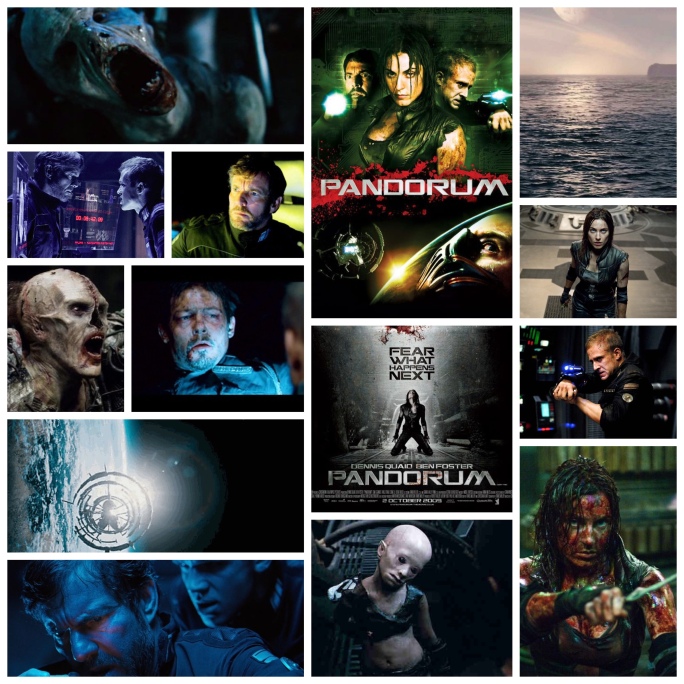
Christian Alvert’s Pandorum

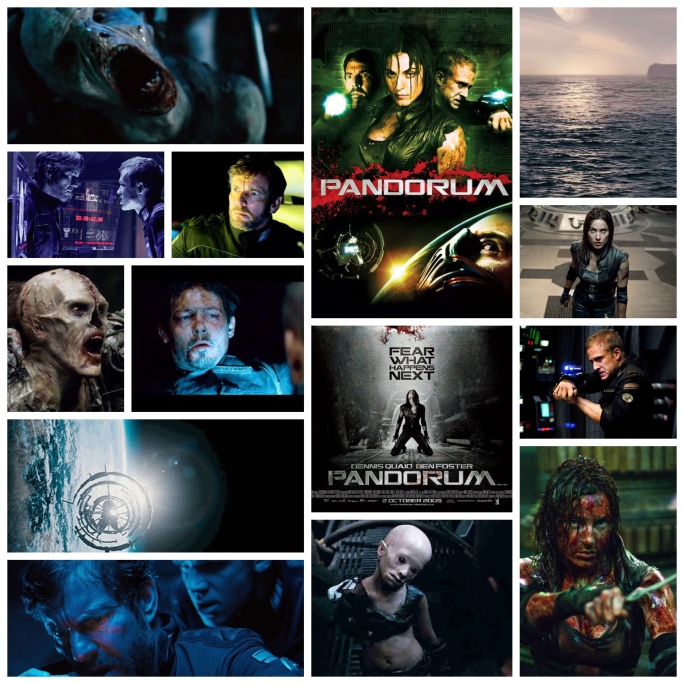
I can understand that a bleak, disturbing SciFi horror like Pandorum didn’t connect well with Hollywood audiences or generate a lot of income, but it’s a shame because it weaves an intelligent, beautifully shot, truly scary dark dream of psychological paranoia, freaky ideas and tense, claustrophobic set pieces. Helmed by Christian Alvert, a German director best known for unconventional horror films, this was never going to be a flashy, familiar feeling big budget thing, which many probably didn’t expect. Ben Foster and Dennis Quaid are Payton and Bower, two astronauts who awaken on a giant derelict spaceship with severe amnesia and the unsettling feeling that their mission has gone horribly wrong. After a bit of exploring they find out just *how* wrong. Terrifying, monstrous humanoid creatures hunt any survivors through dim, clanging corridors that echo Ridley Scott’s Alien. Payton encounters two initially hostile nomads (Antje Traue and Cung Le) who he must band together with. Somewhere deep inside the ship, the reactor starts to fail. Another mentally unstable survivor (Cam Gigandet) is found by Quaid and starts to dangerously unravel. Gradually the secrets of what happened are revealed along with the reason for the presence of these creatures, which I won’t call aliens because they’re not. This is brutal, grim stuff that isn’t light watching or easy on the senses, it’s a skin crawling deep space nightmare of a film and a tough piece, no kidding. But it’s smart, tightly wound storytelling with fantastic acting (especially Quaid who rarely gets to go this bonkers crazy) and a plot that races along like some intergalactic nightmare until the final revelation, a thunderclap that lets us breathe again for the first time in over an hour. The title itself refers to a fictional psychotic disorder in which one believes the mission is cursed and becomes a delusional nut-job with destructive behaviour, the mental byproduct of extended space travel. This ties neatly into the very real dangers aboard the ship as reality shifts for these characters and their narratives become unreliable. A brilliant piece of SciFi horror filmmaking, a film that still hasn’t gotten its proper due. Get the Blu Ray, it looks fresh, crisp and darkly dazzling.

-Nate Hill

Marvel’s Ant Man & The Wasp

Among all the razzle dazzle that is the Marvel Cinematic Universe, my favourite series going right now has to be Ant Man. There’s something so relatable about the underdog superhero who’s just a regular guy with a criminal record and a daughter to raise and isn’t some alien from way out there or a snarky billionaire. I love all the quantum realm elements, the trippy SciFi surrealism reminds me of 80’s stuff like Joe Dante or Spielberg and the large/small scale action sequences are hilarious, played up even more in Ant Man & The Wasp, a sequel that blasts further into new ideas, develops the characters more and has a lot more fun than the already brilliant first outing, or at least I did anyways. Paul Rudd’s Scott Lang is under house arrest for two years after an unauthorized trip to Germany, which provides both obstacles and a running joke when Dr. Hank Pym (Michael Douglas) and Hope Van Dyne (Evangeline Lilly) need him to wear the Ant Man suit once again and help them find Pym’s missing wife (Michelle Pfeiffer) who got herself stuck in the Quantum Realm decades before. Pretty much everyone is back for the ride again, including Scott’s merry band of thieves (TI, Michael Pena and David Dastmalchian), his ex wife (Judy Greer) and her husband (Bobby Cannavale) as well as others. I loved this film because nowhere in it is there a sense of menace or an edge, usually something I embrace in superhero movies, but I was looking for something light, feel-good and benign. Even the antagonists are on the easygoing side; Laurence Fishburne is a salty old colleague of Pym’s, Walton Goggins plays his black market tech dealer with that frivolous southern charm and even Hannah John-Kamen’s Ghost, who’s in a perpetual state of (wait for it) ‘molecular disequilibrium’, is just a damaged girl trying to make things right. We won’t speak of the jarring mid credits sequence that now has me demanding an Ant Man 3, which better happen soon. These first two and particularly this one are pleasant, gung-ho SciFi comedies that make the most of terrific visual effects, Rudd’s natural charisma and a retro feel. Something about Douglas and Pfeiffer flying around in Ant suits together and blasting through the quantum realm just has me missing the same sort of films they used to star in in their heyday. This is a throwback to that sort of thing, and I love it to bits.

-Nate Hill

Resident Evil: The Final Chapter

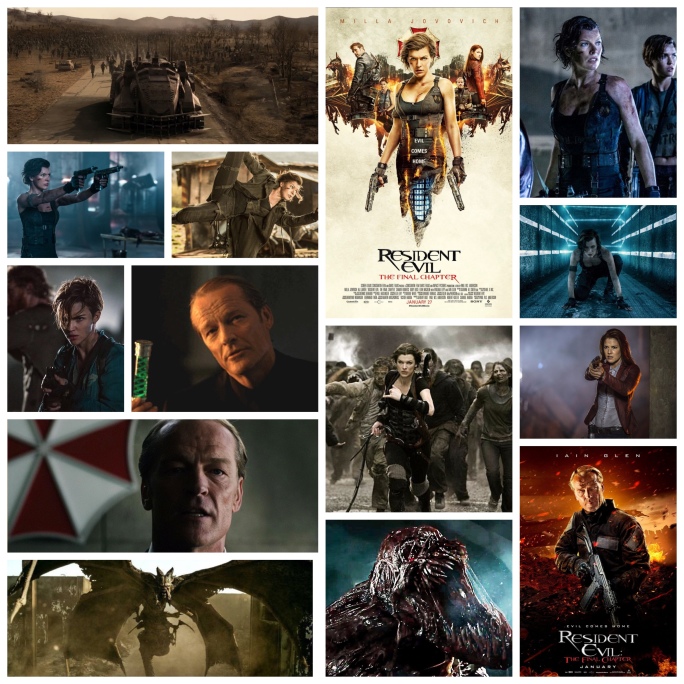
Raise your hand if you think that Resident Evil: The Final Chapter is going to indeed be the last film in the franchise. I have this sneaky feeling they’ll pull a Friday The 13th and just cheerfully keep on trucking after this one as if they never said the buck would stop here. Or not, maybe they’ve gotten their sillies out for real, I mean this is the sixth film. Either way works for me, I kind of love these things. Say what you want about them (I’ve literally heard it all), they do wonders when you get a craving for action/horror with wall to wall carnage and not a minute spent on plot beyond the obligatory five minute hyper stylized recap at the beginning of each one, narrated by Milla Jovovich’s endlessly endearing, sultry voiced super warrior Alice. The first three films are the closest this series has been to what you might call ‘down to earth.’ There was the claustrophobic zombie siege thriller, the urban outbreak sci-fi horror and then the post apocalyptic Mad Max esque third entry. After that… they truly went balls out and kind of just had a free for all of decimated cities, giant monsters and more excessive bloody special effects than the franchise had seen before, until they arrived here. The good news is that this has more of a story than the last two did by far, and although doesn’t concretely wrap up this insane runaway train of a franchise, it does serve to cap off what we’ve seen so far and even includes a few narrative surprises that sort of don’t have to play by the rules of logic considering they threw them out the window like four films ago, but it’s nice to see the wheels turning anyways. After being betrayed by evil Albert Wesker (Shawn Roberts) in DC, Alice pursues deranged megalomaniac Dr. Isaacs (Iain Glen, even more fun here than in Game Of Thrones) back to the Hive in Raccoon City where it all started in hopes of taking down the impossibly powerful Umbrella Corporation and finding a cure for the T Virus. Cue a deafening roar of tank chases, grisly zombie hordes, medieval style sieges in a derelict city, furious hand to hand combat, flying bat dragon things, other giant monsters and Jovovich in hysterical old age makeup at one point, which is part of the film’s big surprise. Milla is a trooper with these films and seems to never run out of steam, as countless other actors come and go, she’s the constant and the series wouldn’t be the same without her. I enjoyed the stuff about Umbrella’s backstory and events dating back before the first film, but they really just serve to bring on more frenzied R rated action set to Tool-esque hard rock music, which is fine by me. These films are either your thing or they’re not, but they’re definitely their own thing, that’s for sure. Nothing like the games anymore, or even the borderline restraint of the first film, they have carved out their of very bizarre niche in the realm of action/horror. Fun times.

-Nate Hill

Disney’s John Carter Of Mars

If Disney had kept the much more alluring title ‘John Carter Of Mars’ instead of hacking off the last bit and just keeping the dude’s name, I feel like Andrew Stanton’s John Carter would have had a better chance in marketing and taken flight, because it’s not even near as bad a film as people would have you believe. In fact, it’s a gorgeous, beautifully told, elaborate retro science fiction dream and a flat out great film. I suppose it’s kind of like Waterworld, where a film tanks so badly that people start to confuse bad numbers with bad quality and a whole negative stigma is whipped up around it. Speaking of Waterworld, another great film, John Carter bears similarities in production design and visual atmosphere, albeit set on Mars for most of the duration. Based on a series of books by Edgar Rice Burroughs believed to be some of the earliest works of literary SciFi, Taylor Kitsch plays John Carter, an ex Civil War badass who finds himself whisked away to Mars through a dimensional cave portal out in the desert, propelled on an adventure with warring clans, giant alien yeti beasts, a princess (Lynn Collins), humanoid extraterrestrials led by a green Willem Dafoe, an adorable little dog/toad/road-runner animal and more. This is one of those old school epics that doesn’t just hire a few leads and a gaggle of supporting players but turns a whole casting agency upside down, shakes it and signs any actors that fall out, and as a result we get a jaw dropping lineup that includes Samantha Morton, Polly Walker, Thomas Haden Church, Ciaran Hinds, Jon Favreau, James Purefoy, Daryl Sabara, Mark Strong, Don Stark, Bryan Cranston as a crusty cavalry general and Dominic West in full Shakespeare mode as an evil Martian prince. Oh, Ross from Friends is apparently in there somewhere too but I’ve never been able to spot him, keep your eyes peeled though. The plot at base level is a fish out of water story as John adjusts to the planet (seeing him mess around with the gravitational field is so much fun), bonds with Dafoe and his tribe of Tharks, takes on giant furry Pokémon things in an intergalactic gladiator arena and casts his gaze starward, wondering if he’ll ever see his blue planet again. A few convoluted subplots get in the way including Mark Strong’s weird metaphysical warlock priest dude, but for the most part this a propulsive, rollicking, operatic space adventure with special effects that won’t quit and a real sense of wonder. Why this flopped so bad is anyone’s guess and it’s a shame because when this happens people tend to focus more on the event of its release and that perceived failure more than the film itself, and the legacy gets clouded. Forget the losses a studio with billions in couch change ‘suffered,’ forget any bad press or skewed marketing and just enjoy the film on its own, because it’s one for the ages.

-Nate Hill

The Forgotten

The Forgotten is a well wrought twilight zone type thriller that does indeed seem to be forgotten these days, or at least not held in high regard when I go back and look at reviews upon release. Julianne Moore stars as a mother who is suddenly told one day that her young son never existed, and all traces of him seem to have vanished. Then her husband (Anthony Edwards) seems to forget they were ever married. She searches desperately for any clues that would help prove that the life she had was once real, and she’s lead to the father of her son’s former friend (Dominic West), who can’t remember his daughter and seems to never have had one. It’s a terrifying premise when you consider both the helplessness she feels in the situation and implications of some supreme higher power that is playing sick games with people’s lives for… whatever reason. This is apparent when a mysterious man (Linus Roache) begins following her and her psychiatrist (Gary Sinise) seems to subtly know more than he lets on. Moore and West are terrific as two desperate parents whose love for their children proves a force to be reckoned with against whatever is out there manipulating their realities. Whatever it is, the film wisely remains very vague about exactly what’s going on and who is behind the curtain, relegating any explanation to a few very well placed jump scares that will rattle your shit up and some half whispered dialogue that’s cut short by aforementioned scares in order to keep the mystery intact. There’s a chilly, subdued vibe to both the performances and atmosphere, always as if someone or something out there is watching the whole thing. Nothing benchmark or crazy in terms of thrillers but a solid entry into the supernatural mystery box. Recommended.

-Nate Hill

David Lynch’s Dune

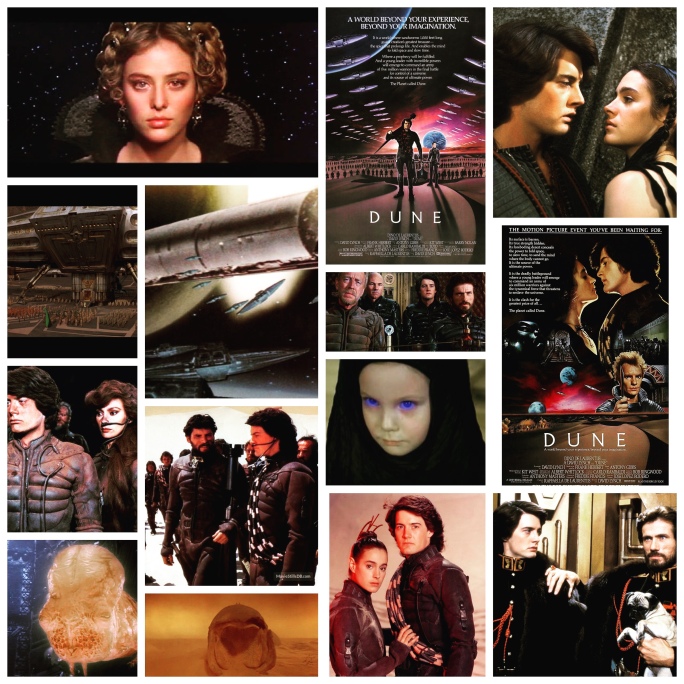
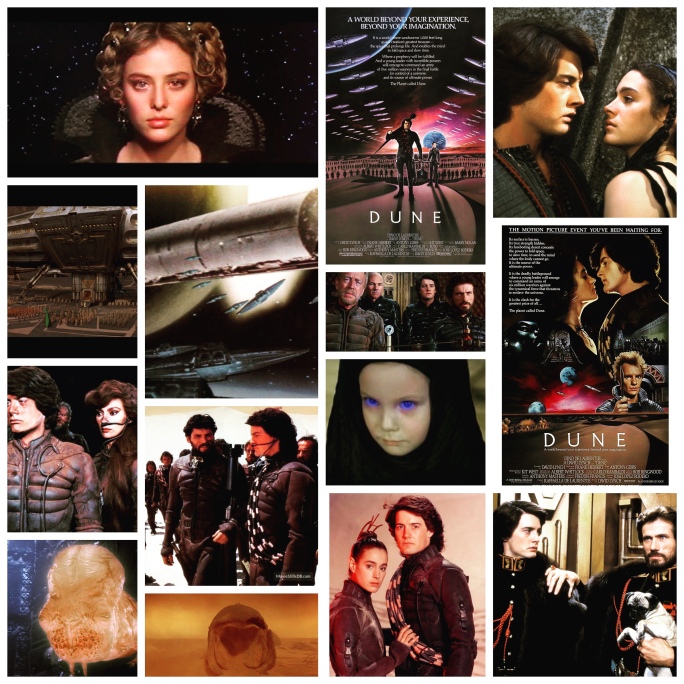
David Lynch’s Dune is a great film despite what critics, moviegoers, the general consensus and Lynch himself would have you believe. It’s obvious that heavy editing turned it into something of a pacing quagmire, scenes are truncated, oddly conceived voiceovers are added, and yadda yadda. Doesn’t matter. This is still an exquisitely crafted, beautifully atmospheric space opera that takes full advantage of production design, casting, special effects and music, I loved every damn minute of it. I’ve recently been reading Lynch’s semi autobiography and it seems clear that that money shark producer Dino De Laurentiis had final cut and just couldn’t reconcile letting the runtime go past two and a quarter hours. Shame, as there was no doubt way more that we could have seen, but what’s left is still magnificent. I haven’t read the books so I can’t speak for any lapses as far as that goes, but what we have here is a sweeping science fiction fantasy saga about warring royal families, shifting alliances and metaphysical forces all revolving around the desert planet Arrakis, where an invaluable spice is mined and fought over by all. Duke Leto Atreides (Jurgen Prochnow), his wife Lady Jessica (Francesca Annis) and their son Paul (Kyle Maclachlan) travel far across the universe from their home world of Caladan to oversee Spice harvesting and production. Buoyant, herpes afflicted fatso Baron Harkonnen (the inimitable Kenneth McMillan takes scenery chewing to a whole new level) seeks to usurp and steal the operation for his house. So begins a series of wars, betrayals and no end of staggeringly staged set pieces and baroque, abstractly conceived production design that Lynch & Co. slaved over for years to bring us. The sand worms are a visual marvel, as are the gold and silver spaceships, the interiors of which feel both lushly industrial and gleamingly regal. Maclachlan and Lynch had their first team up here, the first of many, and the young actor is a magnetic lead, handling the arc well from a naive prince to a desert outlaw who wins over the leader (Everett McGill) of the indigenous tribe of Arrakis and falls in love with their princess (Sean Young, somehow *even* sexier here than she was in Blade Runner). Lynch has amassed an unbelievable cast here, an epic laundry list of names including Patrick Stewart, Max Von Sydow, Jose Ferrer, Linda Hunt, Virginia Madsen, Alicia Witt, Dean Stockwell, Brad Dourif, Freddie Jones, Jack Nance and more, all excellent. Sting is in it too and I have to say that his is the only performance that’s campy in a bad way instead of good, you should see him leering at the camera like he’s in a second grade play. One of the film’s greatest strengths is the original score by Toto, who dial back their trademark rock vibe and produce something atmospheric and elemental in the vein of Vangelis or Tangerine Dream. Their main theme is distinct and oddly melancholic and the rest is synthesis style, beautiful work. I don’t know what to tell you about the whole editing debacle, I mean I guess if De Laurentiis hadn’t have had to swing his dick around Lynch may have had his three plus hour cut, but would that really have been better, or would there have then been a complete lack of pacing and progression ? Who knows, but the way it is now, admittedly there’s a lack of complete coherency and one can tell certain scenes are missing while others languish and take up too much running time, but the issues are nowhere close to as disastrous as the swirling reputation around this film suggest. I’m just so stoked on it now because I avoided it for years thinking it was some giant cinematic mistake a lá Battlefield Earth. Not a chance, and I think many people are just being a bit dramatic, because this is a showstopper of a fantasy epic and I loved it to bits. Just bought the Blu Ray off Amazon a minute ago, excited for many revisits.

-Nate Hill

The King has risen: A Joyous Appraisal of AQUAMAN

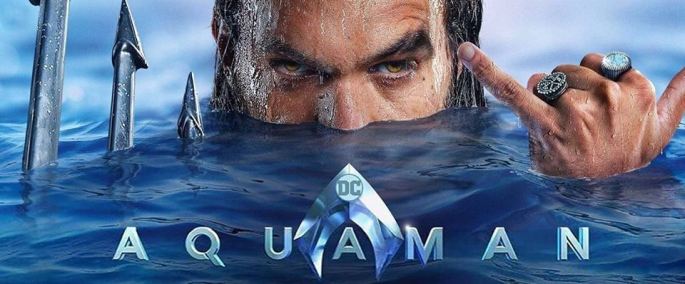
Now the dude in the video above isn’t singing about the movie I caught today (and I’m not denying the fact that that is a damn tasty burger he has there) but his song along in the words of the film’s charismatic lead: “That was awesome,” is kinda how I feel right now.  Yes folks, despite any negative press you’ve heard, read, whatever – Aquaman is a feast – a thrilling adventure that really transported me. Not merely into the sumptuous and glorious undersea kingdoms created by the filmmakers involved – but back to the fun, exuberant times I ‘used’ to have at the movies – before the dark clouds engulfed us, trapping us in the forgotten seas where the dark creatures of the trench started forcing us to feed on one franchise after the next. Dark, moody, brooding, shit. That is not the joy I remember in that magnificent dark place we call the cinema – where worlds merge and the magnitude of the movie-maker’s vision takes me into it’s care, placing me, willingly, under it’s spell.

What a spell indeed, let me tell you. James Wan had me when I read his response to a question regarding the tone of Aquaman: “I’m a film fan, I’m a product of the 1980s and 1990s, and a lot of people have said that  Aquaman has a very 1980s quality to it. Especially the high-fantasy of the 1980s, like Flash Gordon and Krull.”

DSC_9698.dng

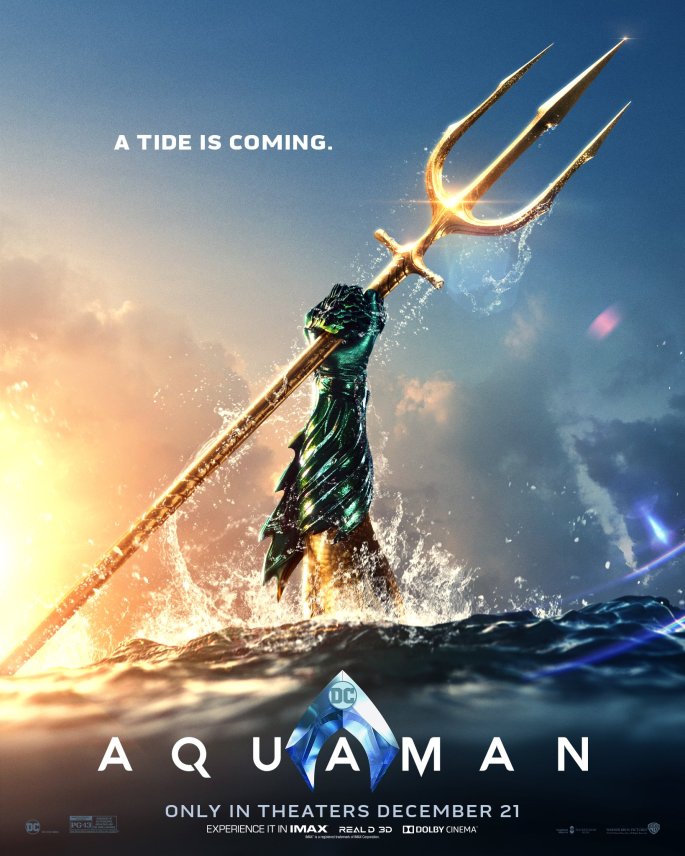
Flash Gordon meets Krull! Vibrant, fantastical, magical world building on a big canvas. I don’t chiefly give to much of a fiddler’s fart about the MCU or the DCEU and their never ending cavalcade of chicanery, but, when I read Wan’s response to that question I was, hands down, not missing this picture. And it’s become a common phrase of late – “see it on the biggest screen possible” – but, meh, they’re right. Aquaman is a big picture, so that’s the best advice I can give.

aquaman__2018____japanese_poster_by_williansantos26_dct9sqg-pre

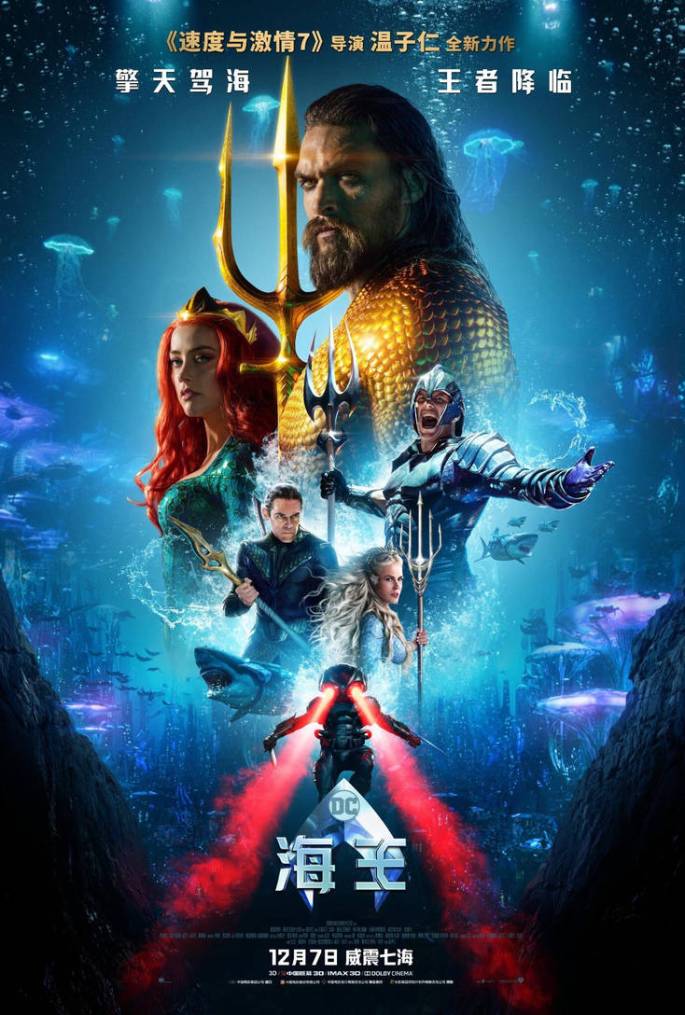
The cast are wonderful in their parts, and I get the feeling they understand the kind of ride they’re crafting. The exposition is fluid like the oceans that dominate the movie. You feel carried along on a current if excitement and wonder as the story advances. But, one the best parts truly, in terms of constructing this film which Wan did so masterfully, is that he simply shunned the Marvel formula of tying it together with all that has come before – a line of dialogue sorted that out. It’s a freeing maneuver that allows this exciting director to do what he does best, which is to flex is visual muscles and take us into a world that makes anything James Cameron has done thus far seem a little flaccid. The production design, the gliding camera, the effortless action. Oh my God – I love it.

aquaman-poster

Momoa brings a grand juxtaposition of the boy unwilling to take up his trident, mixed with a guy just playin’ it cool. His nonchalant approach is great, and I caught myself smiling at his delivery more than once. He is supported by strong players all. Patrick Wilson’s power-mad dictator, Dolph Lundgren on his seahorse (sorry, sea dragon). Willem Dafoe, always dependable, Nicole Kidman, getting better with age (love that fish suit), Amber Heard, feisty-sexy, badass Black Manta and hell, his dad is Jake ‘the Muss’ for Christ’s sake – and he can drink Fishman under the table.

It’s a whale of a tale I tell you lads, a whale of a tale that’s true. ‘Bout the flappin’ fish and a mother’s love – stoppin’ a deep sea war with the shores above. I’d swear by my tattoo if I had one but put simply – scintillating, sensational, spectacular. Home might be calling, but they’ll need to leave a message ’cause I’ll be out . . . watching Aquaman . . . again. GO SEE IT NOW!

As always, dig your movies . . .

flat,750x1000,075,t.u1

That Dude in the Audience.

Steven Soderbergh’s Solaris

Concept: Steven Soderbergh’s Solaris is not a remake of the 70’s version but a separate adaptation of the novel by Stanislaw Lem, existing as its own vision of that story. Many people ripped on this as being an inferior retread of Andrei Tarkovsky’s strange, deliberately slow film (which didn’t work for me). Now bear with me: in my humble and frequently disputed opinion, Soderbergh’s is not only the better film but the definitive version of this story. It’s shorter, less theatrical, far more accessible but in the end it’s timbre simply struck a far more resonant chord with me, and I never argue with that intuitive barometer. This version is also slow, but finds a hypnotic, mesmeric cadence to the story of psychologist Chris Kelvin (George Clooney), his deceased wife Rheya (Natascha McElhone) and the mysterious sphere of luminescence, the planet Solaris. Kelvin has been called there by his friend and colleague Gibarian (Ulrich Tukur) after some… odd things start happening to the astronauts aboard, and it’s here on this quiet, near abandoned space station that he undergoes an intense, otherworldly and very personal metaphysical journey that is catalyzed by the forces of the planet sparkling below them and deepened further by the difficult, unexplored regions of human psyches and behaviour. The planet below has a habit of resurrecting Kelvin’s wife who died years before and placing her on the station with him. Why? Who can say, but it certainly provides everyone involved with all sorts of dilemmas both internal and external, starting with the nature of love, loss and grief. This version of Rheya is clearly not Chris’s wife, but a copy made by the planet based on his memory, mental images and unresolved emotions surrounding her. He struggles at first to see this, then he does. She too struggles at first with existential confusion, and comes to a similar realization, with heartbreaking results. This film is thoughtful and ponderous even by Science Fiction standards, there isn’t a single action scene or anything like that, it is solely character based, atmospheric storytelling that draws you in ways some people have forgotten film is capable of. Clooney is at his most vulnerable here, the charm, affability and mile wide smile nowhere in sight. This is a man whose grief has come back full circle to him, and the haunted, staggered reaction upon seeing his wife again for the first time is my favourite work he has ever done. McElhone is an actress who rarely gets the chance to exercise her full potential, but this is a career best for her, she goes to some places that are hard to get to, and her methods of getting there in her obvious scene prep and meditative focus are beautiful to behold. The scenes near Solaris are interlaced with their complicated, stormy yet devoted relationship years prior, which is the lynchpin and mapping schematic that Solaris later draws on for… whatever it thinks it’s doing. Composer Cliff Martinez often works with Soderbergh, and their collaboration here is succinct and tandem, the soft, rhythmic electronic beat pulsing along to images of sleek, still hallways of the station and the vividly coloured planet below, holding secrets that seem just out of reach. The film questions not only love and life but the way human beings perceive each other, whether a tangible person can exist based only upon someone’s dimming memory of them, and what part exactly does the soul play in all of this. “We don’t have to think like that anymore”, Rheya lovingly reassures Chris when he worriedly questions the semantics of Solaris’s plan. Opaque is the nature of this story, but through it we are invited to feel our way to truths that hide behind the swirling pulsars adorning Solaris and the ongoing relationship between these two lovers who are star crossed in more than just a metaphorical sense. Complex, difficult themes to be sure, but it’s all dealt with in organic, rapturous fashion as Soderbergh lets glances, body language, music and affection tell the story instead of heaps of dialogue or obvious beats. A love story wrapped up in a gorgeous musical tone poem gilded by an intelligent, thought provoking science fiction story that questions the essential, reaches for answers in unconventional ways and does things with film that the medium was meant for. One of my top ten favourite films ever made, and up there with the very best Sci Fi’s out there.

-Nate Hill

Robert Zemeckis’s Contact

Robert Zemeckis’s Contact is a periodically good film that suffers from over-length, clutter and sideshow syndrome, as in it doesn’t trust itself to stick to the effective core story without throwing in all sorts of other hoo-hah just for for the sheer hell of it. At two and a half hours it feels more stretched than Bilbo did before leaving the Shire, and would have been way better off slicing out a good half hour to streamline. What does work is really captivating though, especially a fantastic Jodie Foster in a performance of striking determination as a woman who never loses the sense of wonder she had as a child, and strives to make contact with anyone that may be out there in the vast universe. Of course her efforts meet budget cuts, skepticism and sneers from the government and fellow colleagues like Tom Skeritt’s prestigious researcher, a sadly one note character whose allegiance turns on a dime when she actually receives a message from a faraway galaxy. Speaking of one note characters, get a load of chest puffing James Woods as an obnoxious NSA prick with all the depth a kitchen sink has to offer. John Hurt fares better as an eccentric billionaire who offers Foster funding and support, as does always terrific David Morse as her father. Matthew McConaughey is sorely miscast as a spiritual man and love interest, William Fichtner is excellent as her loyal colleague and friend, Jena Malone great as nine year old Jodie Foster, while Jake Busey, Angela Bassett and a whole armada of unnecessary tabloid celebrity cameos show up too, leading right up to Bill Clinton, who I’m convinced is an alien himself. The thing is, so much of the film is just commotion and nonsense, geared towards wowing audiences instead of trusting the fact that they’ll be at ease with just Foster’s story, which is the connective tissue. The elaborate and drawn construction of a machine based on alien blueprints, pesky religious extremists, theological fanfare that falls flat and incessant faux tv newsreel footage that buzzes around like unwanted house flies and kills the atmosphere, there’s too much in the way. My favourite scene of the film takes place somewhere deep in the universe Foster has travelled to through a wormhole, in which a mysterious being tells her that “human beings are capable of such beautiful dreams, and such terrible nightmares”, a sentiment that parts the clouds and gives the story clarity, as does her arc, relationship with her father and desire to know what’s out there, who we are as a race and where we came from, and it’s in that wonder that the film finds its strength. Much of the rest is just lame earthbound noise.

-Nate Hill