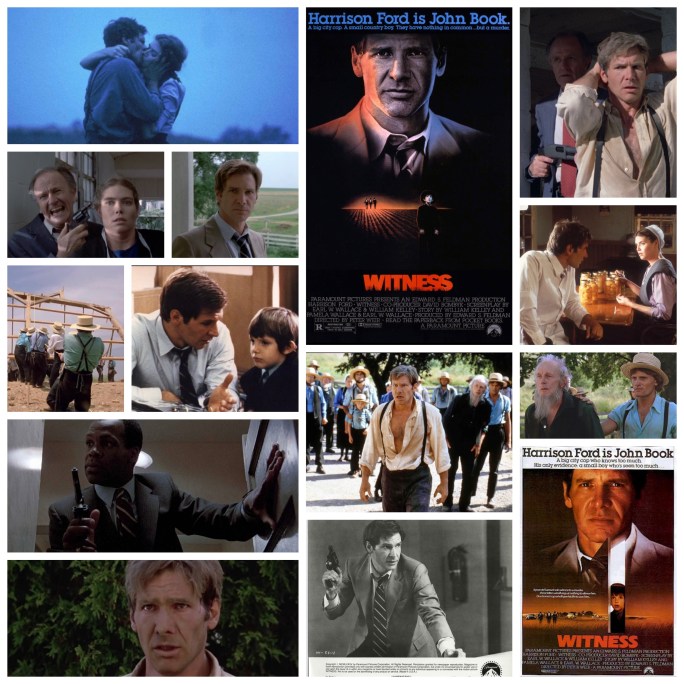
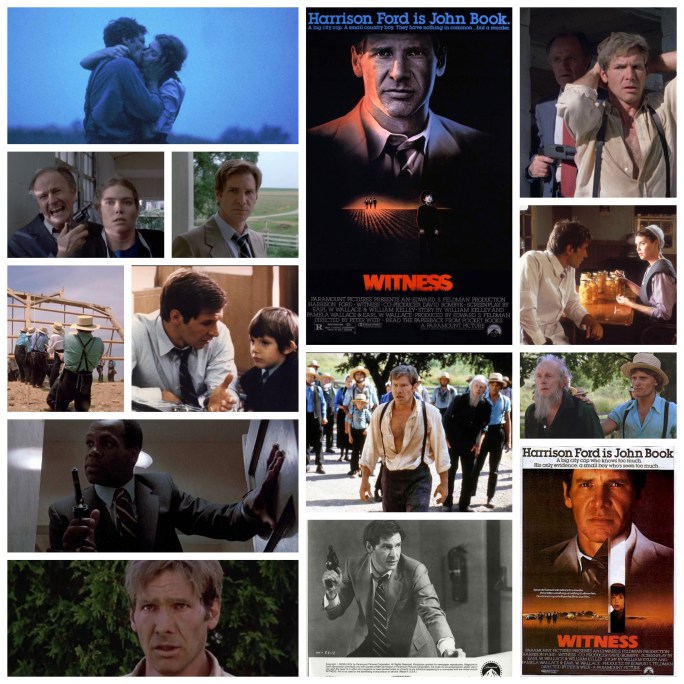
Peter Weir’s Witness

Witness is one of those films that in the hands of a less inspired director could have turned out to be pretty run of the mill thriller stuff, but they gave the script to Peter Weir, and he’s made a career out of films that could be called just about anything but run of the mill. This is essentially a fairly grounded tale of big city detective Harrison Ford undercover in Amish country to protect a young boy (Lukas Haas) who accidentally saw a cabal of corrupt cops murder someone in cold blood. It’s a fish out of water tale, it’s got budding romance, hot blooded action and even some comedy here and there. But there’s also this lyrical, esoteric atmosphere Weir brings to every project that really makes it something special. There’s a danger present in the Amish community, or rather the threat of such as seen in the long grass of the fields or sensed on the fringes of their village where the tree line looms. There’s a blessed calm as Ford learns the ways and customs of these folk and gets close with the daughter (Kelly McGillis) of one of their elders (Jan Rubes, a scene stealer) but alongside that there’s this restless, inexorable foreboding that these evil officers of the law could turn up at anytime and turn the calmness into a storm to follow. They eventually do, of course, and are played by the fearsome likes of Josef Sommer and Danny Glover, arriving like phantoms to herald a showdown of stealth and gun violence that is Western to its core but still stings with the grit of an urban cop flick. I love this film not so much for the story or script (both of which are just fine) but for the *feeling* it evokes, the ambience spun onscreen by Weir and composer Maurice Jarre, whose work here is ecstatically beautiful. There’s an extended sequence where we see the Amish folk building a barn and it’s a simple enough task, but something about the dutiful way Weir films it coupled with an almost grandiose passage of Jarre’s music makes it come alive in a way that not many scenes of its nature do in film. And always, lurking in the background, is the fear that danger is on its way, a sustained distillation of unease that helps to make this a gorgeous, effective thriller and all round great film.

-Nate Hill

Phillip Noyce and Harrison Ford’s Jack Ryan: Patriot Games and Clear & Present Danger

Tom Clancy’s Jack Ryan has had a few iterations over the decades, the last two of which were sadly lukewarm efforts, but for my money Harrison Ford and Philip Noyce gave the best version with the explosive double feature of Patriot Games and Clear & Present Danger. Star studded across the board, gifted with long runtimes, huge budgets and intelligent scripts, these are two enduring espionage films that I always have a place for on my DVD shelf and always tune in to if I come across them on TV. Ford is a heroic presence in cinema, and although his actions as Ryan are violently intrepid, he gives the character an unsure edge and resounding vulnerability that is always compelling and offsets the intrigue as great character work. This guy is an analyst after all, not a field agent and the portrayal should reflect that.

Patriot Games kicks off with Ryan in a brutal personal war against a rogue faction of the IRA, a tense conflict that reaps collateral damage on both sides. The two constant characters who ground both Ford and Ryan are his boss and mentor Greer (James Earl Jones) and his wife Cathy (Anne Archer), they keep him humble, human and sympathetic amongst all the chaos and political intrigue. Sean Bean is scary good here as Miller, renegade Irish operative whose plans are foiled early on by Jack, prompting him to swear bloody revenge on his whole family in a courtroom scene that is as chilling as Bean has ever been. Paranoia sets in as countless attempts are made against his and his families life, and even reassuring words from an IRA honcho (Richard Harris) who denounces Miller can’t set Ryan at ease. Only the eventual confrontation puts an end to it, which we get in a spectacular nocturnal speedboat chase across a Maryland harbour. The talent includes Thora Birch as Jack’s daughter, J.E. Freeman, Patrick Bergin, James Fox, Polly Walker, Bob Gunton and a young Samuel L. Jackson.

Clear & Present Danger sees the headstrong US President (Donald Moffat, never one to not devour dialogue like a good steak) declares war on marauding cartels from South America, another conflict that Ryan gets thrown into headlong both on location and back on the home front. Their leader (Miguel Sandoval) is a hotheaded moron, but the real danger lurks in Felix Cortez (Joaquim De Almeida, a spectacularly nasty villain), advisor, assassin and deadly power behind the throne who has ideas of his own. This entry is slightly more epic and action centric but the homeland espionage is played up too, particularly in the corrupt actions of two impossibly sleazy suits back in Washington played by Henry Czerny and Harris Yulin. They are so good in their roles they almost steal the film, especially Czerny as the ultimate prick and absolute last person you’d want making decisions for their country. Ford is less seething than he was in the very personal conflict of Patriot Games, but no less resourceful and violent when he needs to be. Willem Dafoe fills the boots of John Clark, a Clancy staple character and ruthless tactical agent who sometimes functions as a one man army. Further work is provided by Benjamin Bratt, Raymond Cruz, Dean Jones, Ann Magnuson, Patrick Bauchau and Hope Lange.

These two are not only great action spy films but to me represent an oasis of 90’s filmmaking that has never been replicated. Enormous casts, every dollar of the budget onscreen, timeless original scores (courtesy of James Horner here), vivid action set pieces, equal parts focus on story and action, no CGI in sight, character development and all round consistency in craft and production. I grew up with these two classics, watched them countless times with my dad and will always tune right back in whenever they’re around.

-Nate Hill
Jan De Bont’s Speed

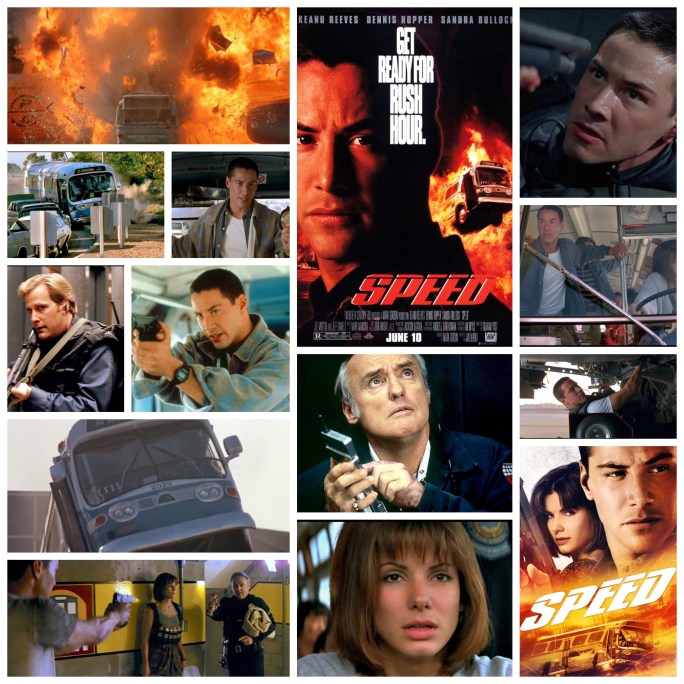
“Pop quiz, hotshot!!” Most action films are comprised of beats, wherein there are exciting sequences and then lulls in between to catch our breath and collect ourselves, but the beauty of Jan De Bont’s Speed is that as soon as the central premise is delivered to the narrative, pretty much every beat is action, the concept airtight in terms of any breathing room creeping in, and that’s one reason why I think it’s endured as a such a classic in the genre.

Dennis Hopper plays yet another wild eyed lunatic here, and it’s scary to think that his mad bomber Howard Payne was once a decorated LAPD officer. He’s now a very pissed off ex police officer who has gone psychotic and started blowing shit up all over the city, attracting the attention of daredevil super cop Jack Traven (Keanu Reeves). Howard gets elaborate when he decides to rig a city bus with a device that will blow it the fuck to bits of the driver slows down past fifty miles per hour, and from then on in the film barely stops to grab a coffee, take a piss or collect its thoughts. Howard masterminds the whole deal from a secret surveillance lab, Jack races to board the bus and defuse the bomb and intrepid civilian Annie (Sandra Bullock) takes over the wheel after the driver has a heart attack. Reeves and Hopper play off each other like flint and steel, it’s a hero villain smackdown for the ages between a rock steady officer of the law and a probably once great detective who has lost his mind but none of his wily nerve. Keanu and Sandra also have great romantic chemistry too but it’s underplayed and sort of seems natural, which isn’t always easy to pull off. Throw in Joe Morton, Beth Grant, Glenn Plummer, Alan Ruck, Hawthorne James, Richard Schiff, Veronica Cartwright and scene stealer Jeff Daniels as Keanu’s charismatic senior partner and you’ve got one hell of an ensemble.

This was one of the first R rated action cookouts I was allowed to see (hell, I think I even saw it before Die Hard) and it still blows my mind as much today as it did back then. The stunts and set pieces are all unbelievable and so kinetically explosive its a wonder that talented cinematographer Andrej Bartkowiak could keep his lenses following them. Everything with the bus on freeways and overpasses is extraordinary (that heart-stopping bridge gap!) but don’t even get me started on the balls out underground subway crash that blows the lid off any sound system it touches. A classic.

-Nate Hill
Paul Greengrass’s The Bourne Ultimatum

I’ve said before in reviews that it’s pretty much impossible to pick a favourite from the initial trilogy of Bourne films, and I stand by that. They’re somehow completely their own thing as separate entries and also a synergistic entity together as well, using Moby’s propulsive song Extreme Ways to jet into each new chapter.

Paul Greengrass’s The Bourne Ultimatum brings Matt Damon’s arc as super-spy spy to a gong show of a close in New York City after breathless jaunts through London and Madrid. By this time Bourne has had so much trauma inflicted on him and lost so much that he’s almost in devil-may-care mode, but something in him senses that despite recalling a whole bunch lost memory, there’s still a few pieces of the puzzle that need to fall into place, starting with the interrogation of an ill fated British reporter (Paddy Considine). This puts corrupt wings of the CIA onto his trail once again, with evil David Strathairn filling in for evil Brian Cox and evil Chris Cooper before him. It’s a vicious cycle of selfish, narcissistic shirt tuckers trying to cover their asses while innocent people all over the globe die needlessly, and Bourne’s mounting anger has never been more understandable than here. Joan Allen returns as stern but sympathetic Pam Landy, Scott Glenn brings leathery charm as the agency’s duplicitous director and watch for Corey Johnson, Daniel Bruhl, Albert Finney and Edgar Ramirez as a rival asset dispatched to hunt him who is the first of his kind to show a glimmer of humanity. Julia Stiles also returns as Nicky Parsons, an integral person in the saga, her work in all three films is underrated as a restless portrait of guilt over past actions and patient resolve to do better with each new decision, I wish she’d get more complex roles like this because she’s so great.

Greengrass got a lot more kinetic and hyped up (the shaky cam is a turn off for some) than Doug Liman did with Identity, the first chapter. The hectic vibe serves to illustrate Bourne’s stormy, frayed mental climate and works for me, as does Damon’s ferocious performance. The stunt work and action set pieces are flat out spectacular, especially the explosive bike derby in Spain and the tense cell phone tag sequence in London’s crowded financial district. Like I said I can’t really pick a favourite, this is as close to a completely cohesive trilogy you can get, but this one was my dad’s top pick of the three so I suppose it has that edge going for it. As far as the other two that exist outside this trilogy… that’s a story for a far less glowing review. Ultimatum, however, is solid gold.

-Nate Hill
Steven Knight’s Serenity

I’m not sure why an imaginative, original concept film like Steven Knight’s Serenity got the unanimous critical beatdown it did, but I didn’t find it anywhere close to as bad as I’d heard it was. It’s uneven as all hell, bizarrely staged and written like a soap opera gone postal, but in a sea of sequels and remakes it goes a long way that they even tried something this ‘out there.’ Like a warped bastard child of Black Mirror and the sultriest stuff that Brian DePalma has to offer, this one plays out on a specifically fictitious Florida destination known as Plymouth Island, a place where reality might not quite be as it seems.

Matthew McConaughey gives another intense, haggard turn as Baker Dill, a commercial fisherman reduced to ferrying tourists around to catch tuna with his even more intense second mate Duke (Djimon Hounsou in Cajun mode). Baker spends his days banging local beauty Constance (Diane Lane in yet another role that’s beneath her) and trying to catch a giant rogue tuna he’s nicknamed Justice. Anne Hathaway shows up in a blond dye job, squarely in femme fatale mode as his ex wife who has married one tyrannical, abusive monster played by Jason Clarke in a performance that I genuinely was confused whether to find hilarious or be terrified by. Hathaway wants Baker to take hubbie out fishing and feed him to the sharks, Baker wants nothing to do with either of them and Clarke wants to get hammered, insult everyone and do some other things I dare not repeat here. It’s a lurid, noirish snake-pit of sweaty sex, deception and indecent human behaviour, but there’s something more high concept going on beneath the film of scum on the upper layer of the script. A mysterious suit (Jeremy Strong) pursues Baker around and there’s just this gnawing feeling that what’s happening isn’t quite… real, at least in the traditional sense. That’s all I’ll say in that arena.

McConaughey isn’t doing anything revolutionary here and the hangdog, lady’s man drunk is nothing new for him, but he puts on a good show and is clearly having fun. Hathaway and Lane curl around the dialogue like the pros they are and do fine as well. Clarke is something else though, and has to be seen to be believed. He’s a misogynistic, blustery, abusive, hard drinking lunatic who seems to be channeling Lee Majors, Lee Marvin and The Devil all in the same note. I can’t tell if it’s great character work or more a bull in a china shop scenario, but he certainly makes an impression.

This isn’t a great film and certainly seems at odds with itself, I’ll concede that. The reality bending, the sleazy noir and some surprising sentimental notes later on all seem to be culled from various other sources and sort of clash onscreen in the same film. But there’s something so alluring about the ambition of this thing, the sheer ludicrous dedication to a concept that seems more at home in the Twilight Zone than a big budget theatre release. Nevertheless, I wasn’t bored once during it and it’s well made, scored (unusual, invigorating composition from Benjamin Wallfisch) and acted into oblivion by the ensemble cast, all clearly self aware and having a blast. This thing got royally shredded by everyone and their mother upon release, prompting me to put off watching it for quite a while. Safe to say it was unfairly assessed, I found it to be a good time.

-Nate Hill
PRISONERS (2013)

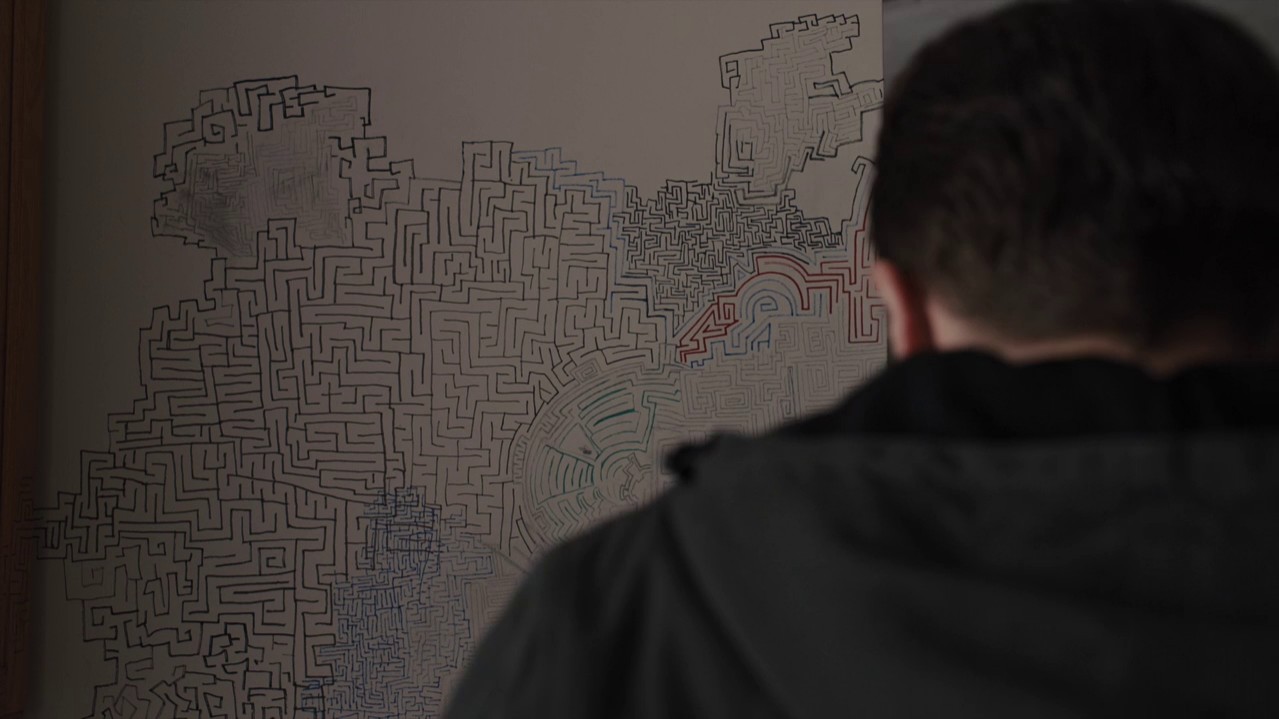
“If goodness is order, evil must be disorder, the straight path or the maze…” – Eugene Ionesco

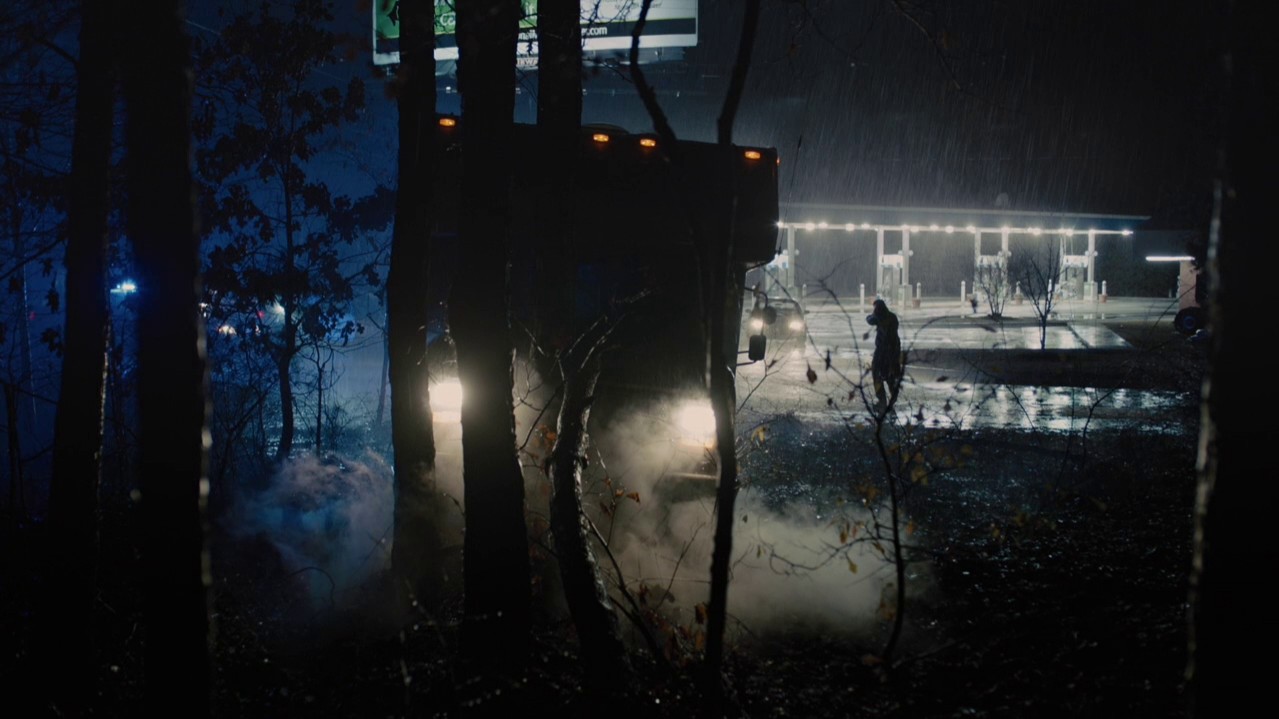
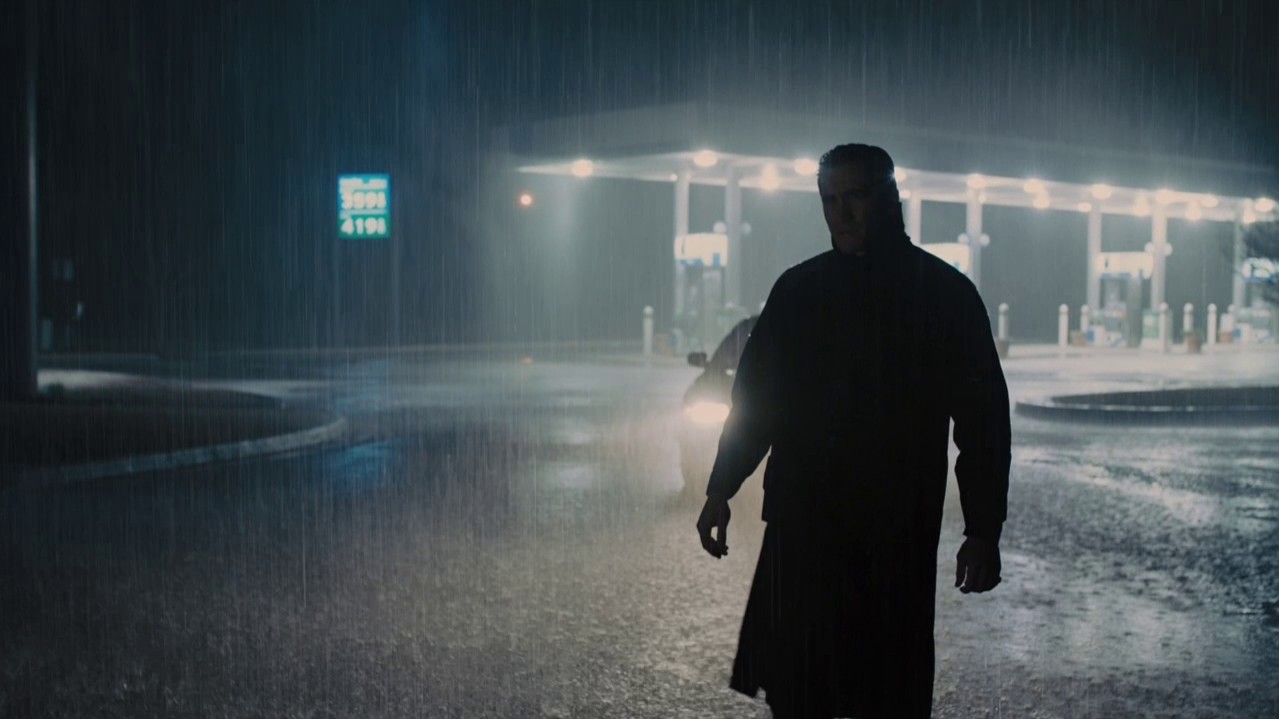
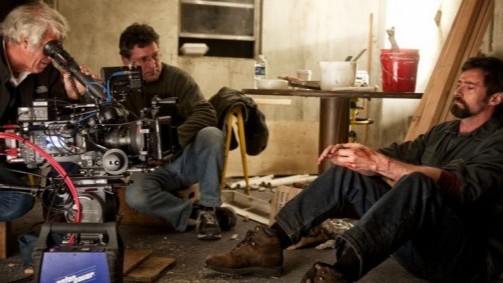
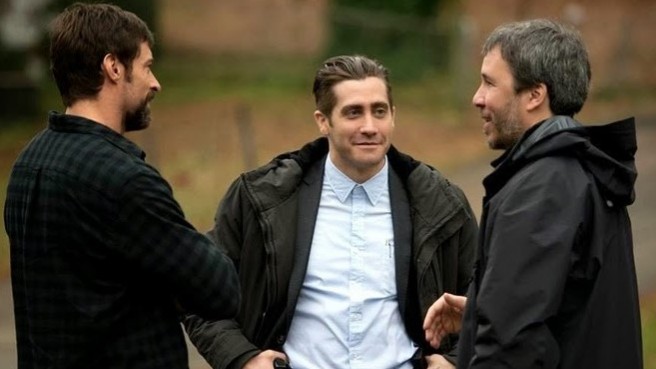
In 2013, when the oh so talented French-Canadian film director, Denis Villeneuve (Sicario, Arrival, etc) paired with the triple BAFTA and long awaited Oscar winning cinematographer, Roger Deakins (EVERYTHING) for Prisoners, a cinematic masterpiece was born. I can only imagine how Aaron Guzikowski (Contraband, Papillon) must’ve felt knowing his script had fallen into the hands of greatness. And can we talk about that hypnotic score by none other than the late, great Jóhann Jóhannsson (Sicario, Mandy) that’s been playing on a loop as I write this??

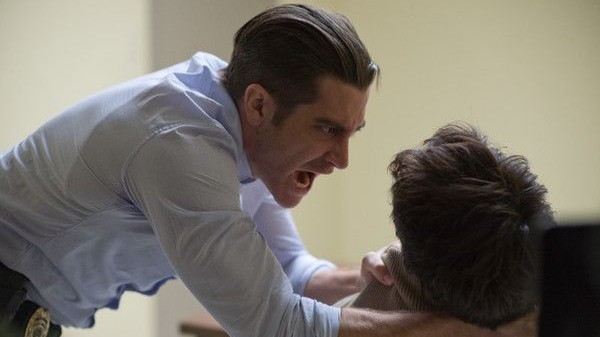
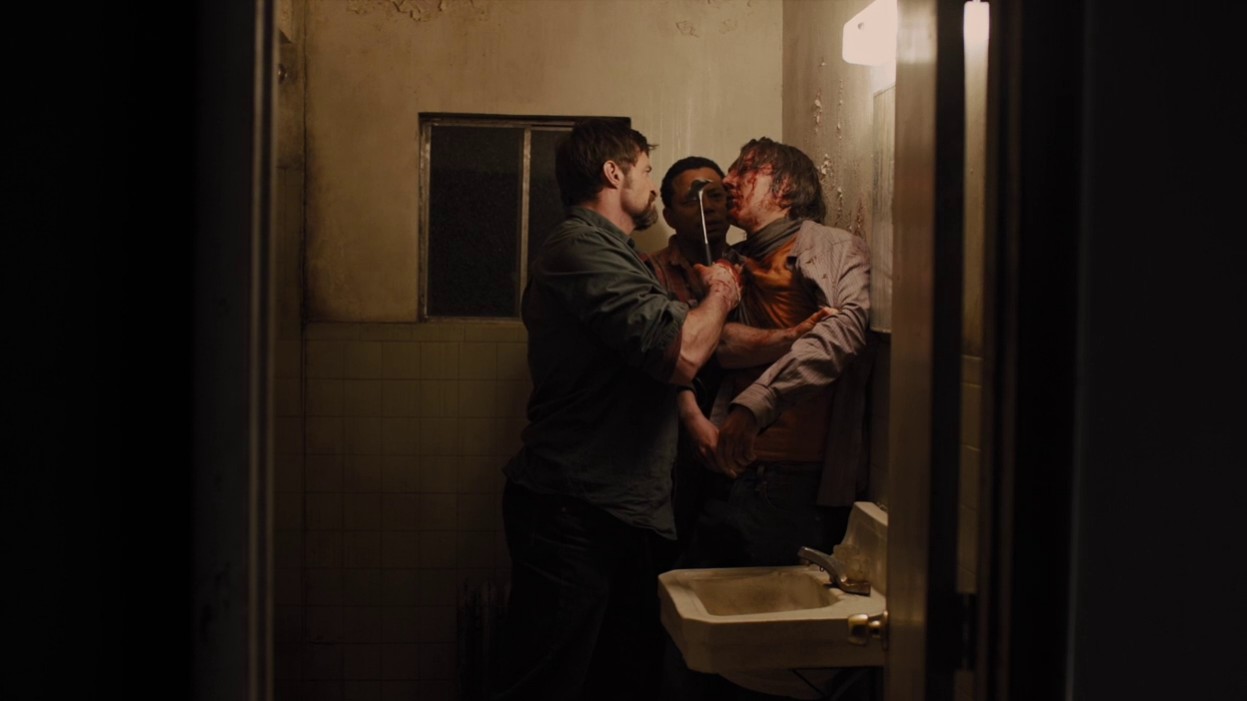
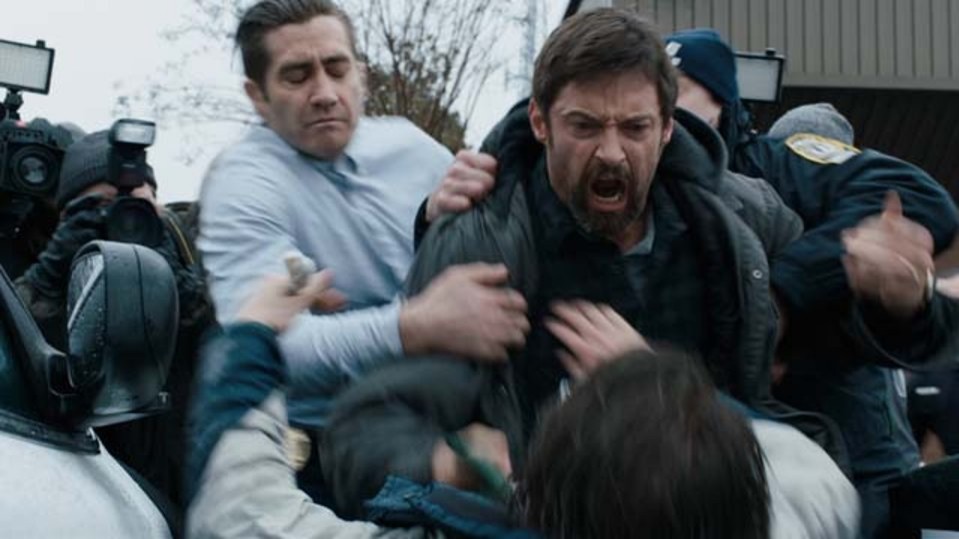
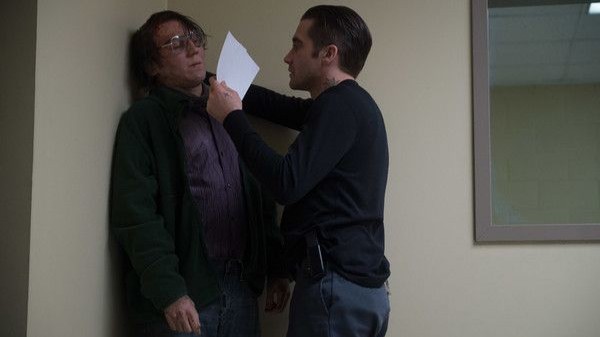
I, for one, am a BIG fan of movie violence and Prisoners doesn’t shy away from delivering a heavy dose of it. However, with its consistent tone, it is only violent when it needs to be and delivers it with realism. The outbursts of rage burgeon from Keller Dover (Hugh Jackman) as he finds himself lost within his own mental labyrinth between morality and retribution. A man who will stop at nothing to find answers about his missing daughter, even if it means ruthlessly torturing Alex Jones (Paul Dano), a suspect released due to the fact that he has the IQ of a 10 year old boy and yet seemingly still knows pertinent information about the case.

They didn’t cry until I left them” – Alex Jones

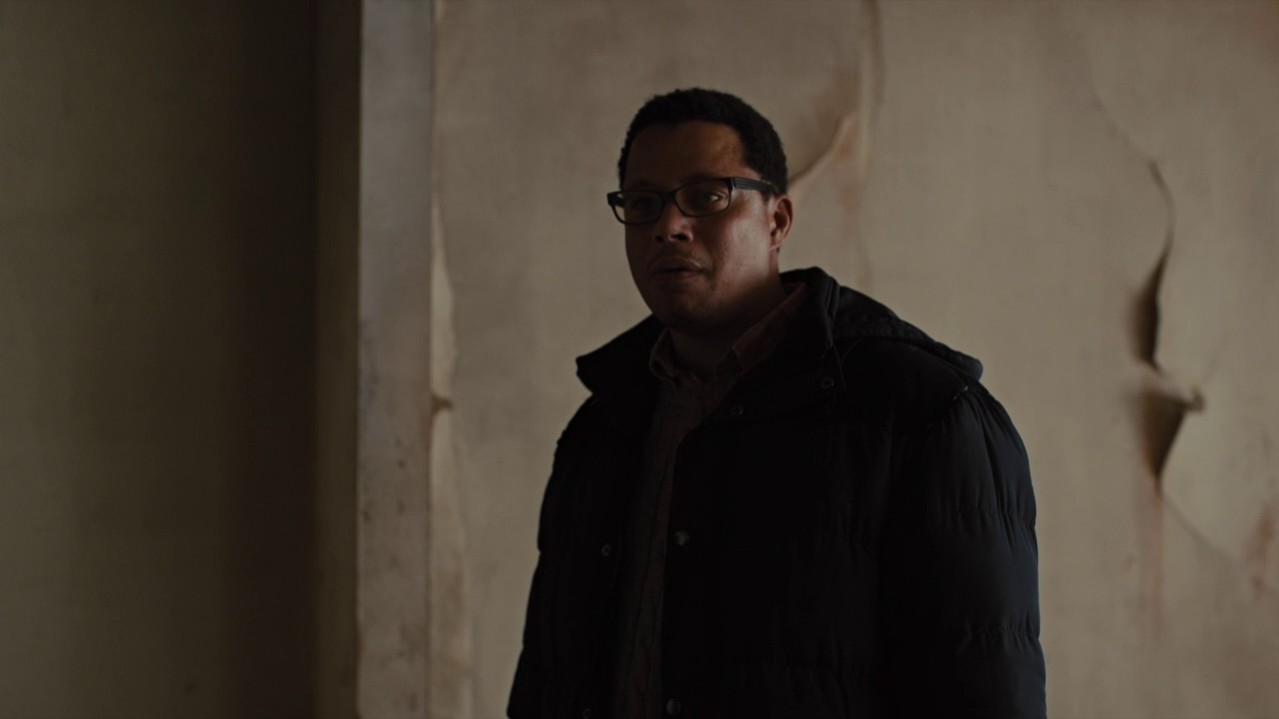
Franklin Birch (Terrence Howard) personifies what’s at stake for Keller in relation to his deeper conscience. As Franklin remains true to his wife and stands by his family, we see Keller start to lose grip with reality, drifting further away from his family through drinking and becoming more focused on his new….um….extracurricular activity.

No light gets in, barely enough
room to sit down inside.
The shower still works, but we
control it from out here. I
rigged the water heater, so it
either comes out scalding or
freezing.
– Keller Dover

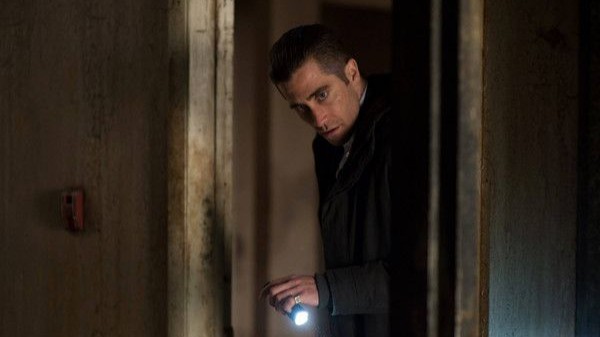
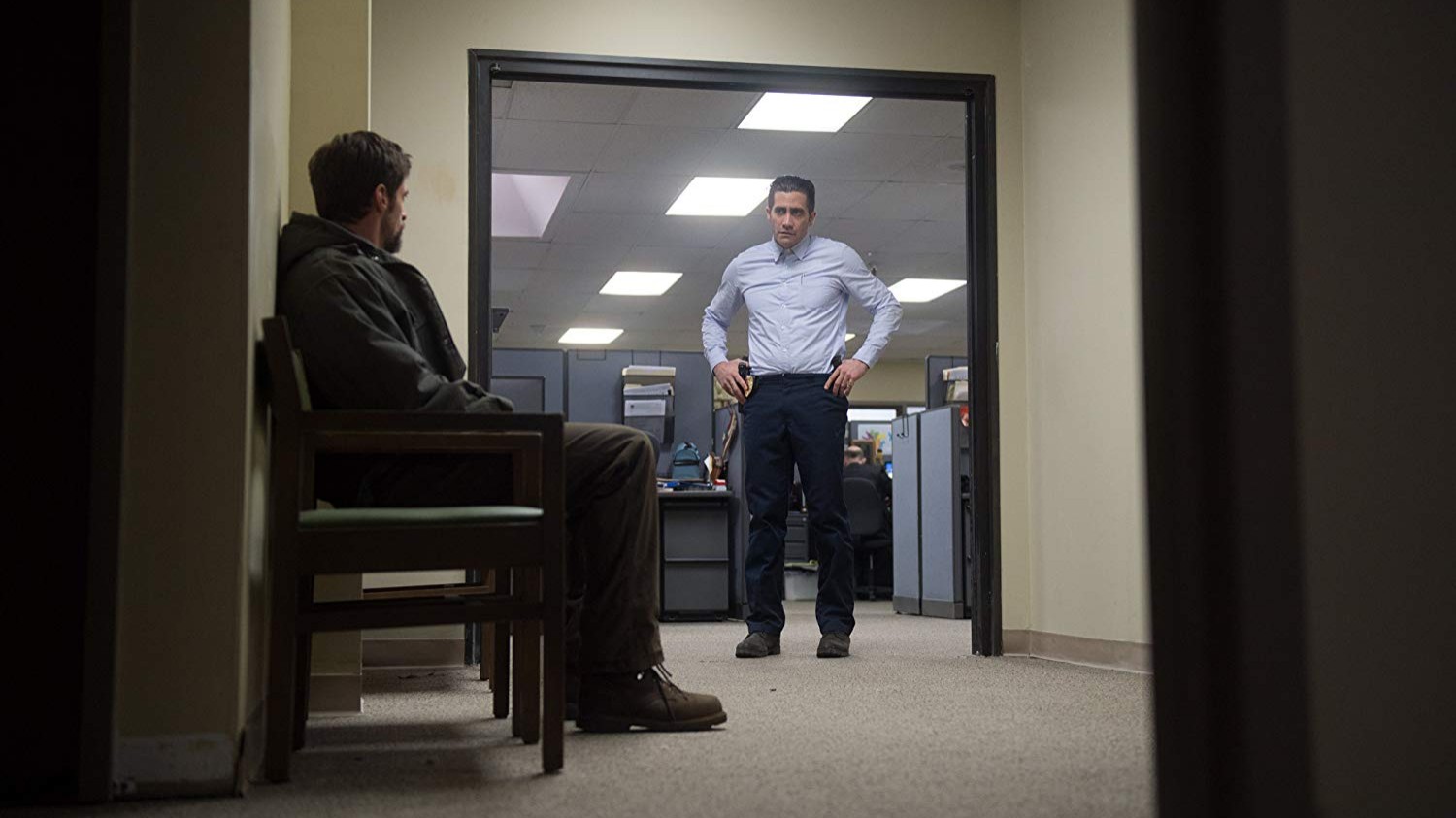
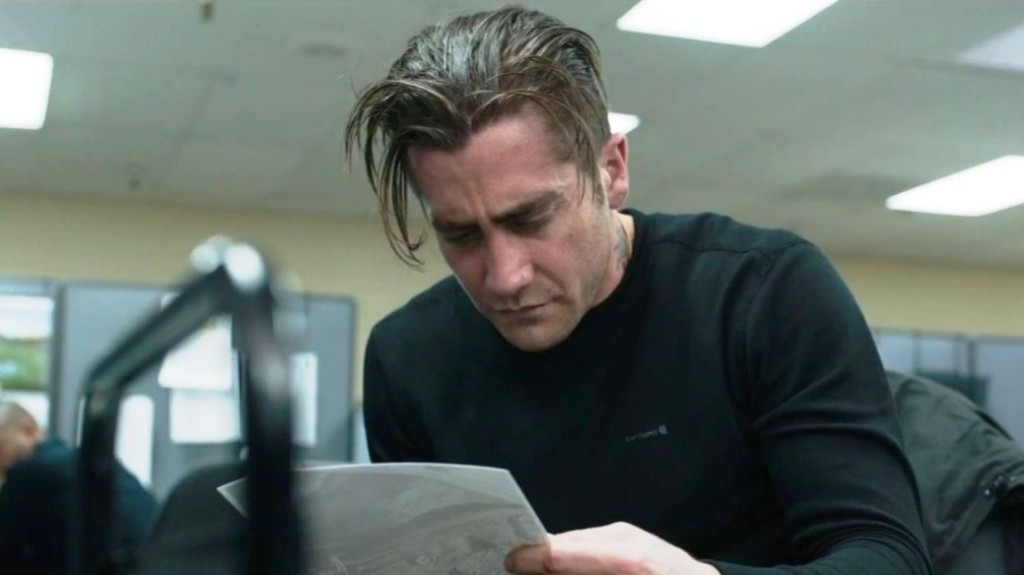
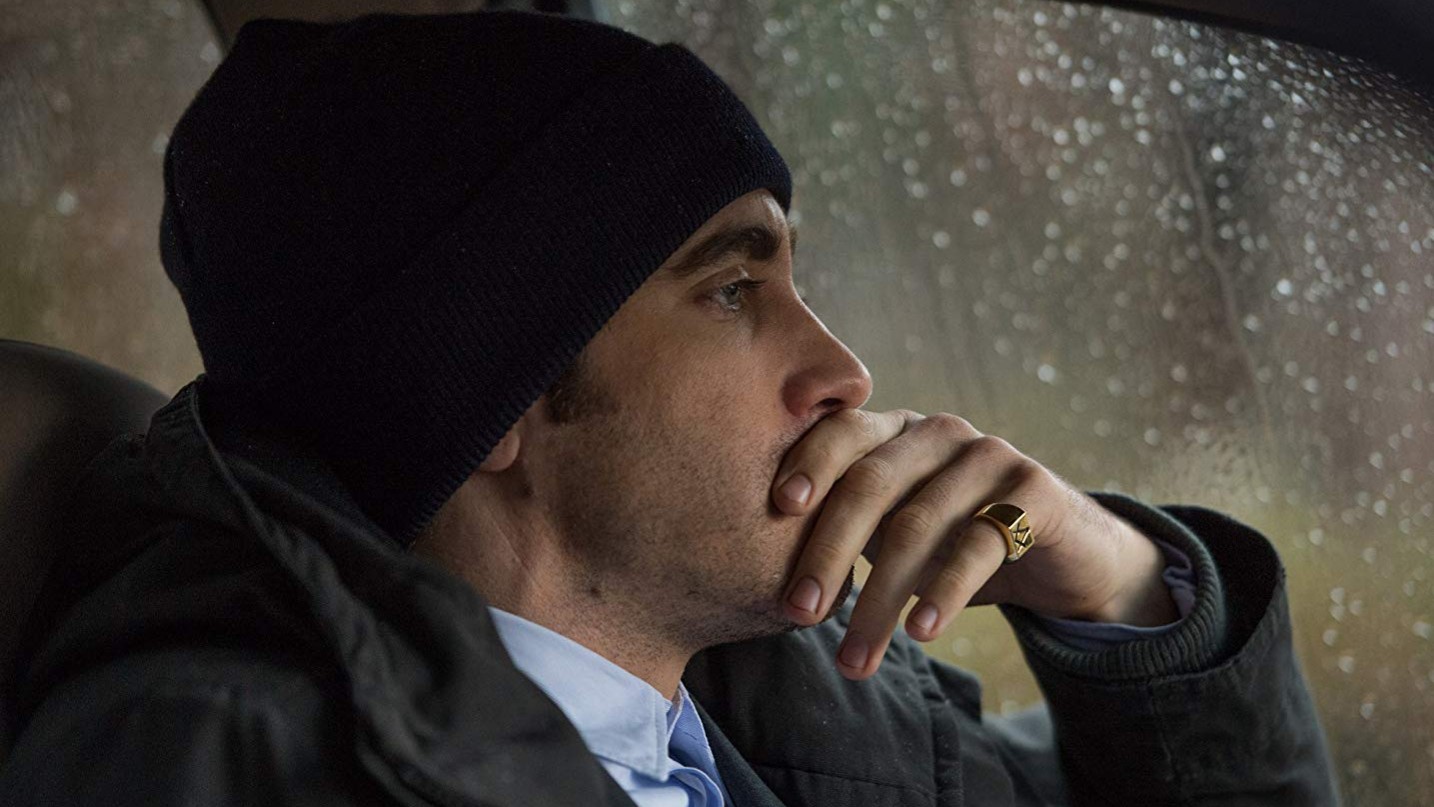
And then let’s talk about Detective Loki (Jake Gyllenhaal). One of Gyllenhaal’s best performances, in my opinion...but what’s with that blue shirt buttoned all the way up throughout the whole movie??

His daunting angst is made visually apparent by a nervous tick and cold exterior especially when given the case of the two missing girls. His steadfast level of professionalism is tested when dealing with the grief-stricken, emotionally deranged Keller. Loki seems to internalize everything, which makes his few emotional outbursts all the more unsettling. His obsession with this particular case makes him briefly question his own sanity but he eventually succeeds at piecing together this tumultuous puzzle.

In closing, I give this film a ten out of ten and if you haven’t seen it yet then I highly recommend you set aside two and half hours of your life to do so. I absolutely adore these types of hard boiled movies and greatly appreciate this type of material. Why not create more films at this caliber instead of the onslaught of sequels, trilogies, and remakes upon remakes?? If I see another Disney cartoon made into a live action movie my nightly bloodlust will overflow into my days. I’ll feel lethal, on the verge of frenzy. I think my mask of sanity is about to slip….

From the incredible cinematography, to the masterful direction and captivating performances, Prisoners will forever be one of my top film picks.

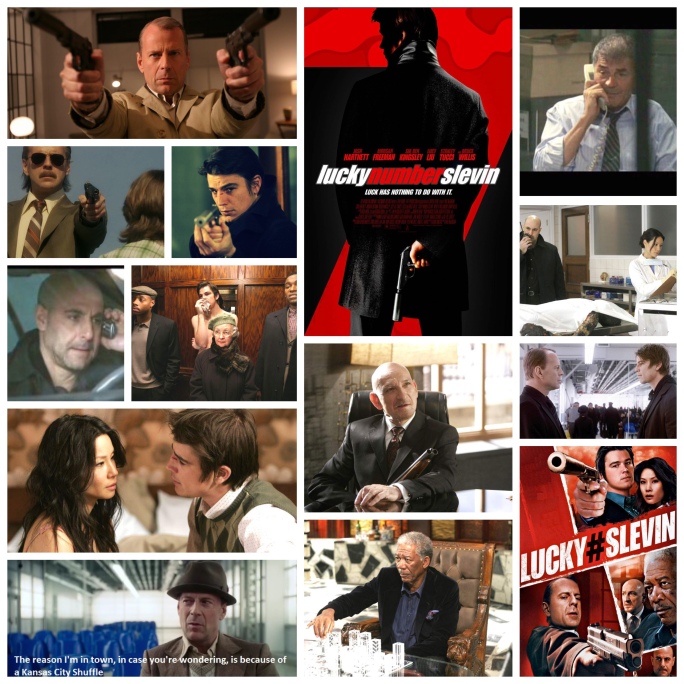
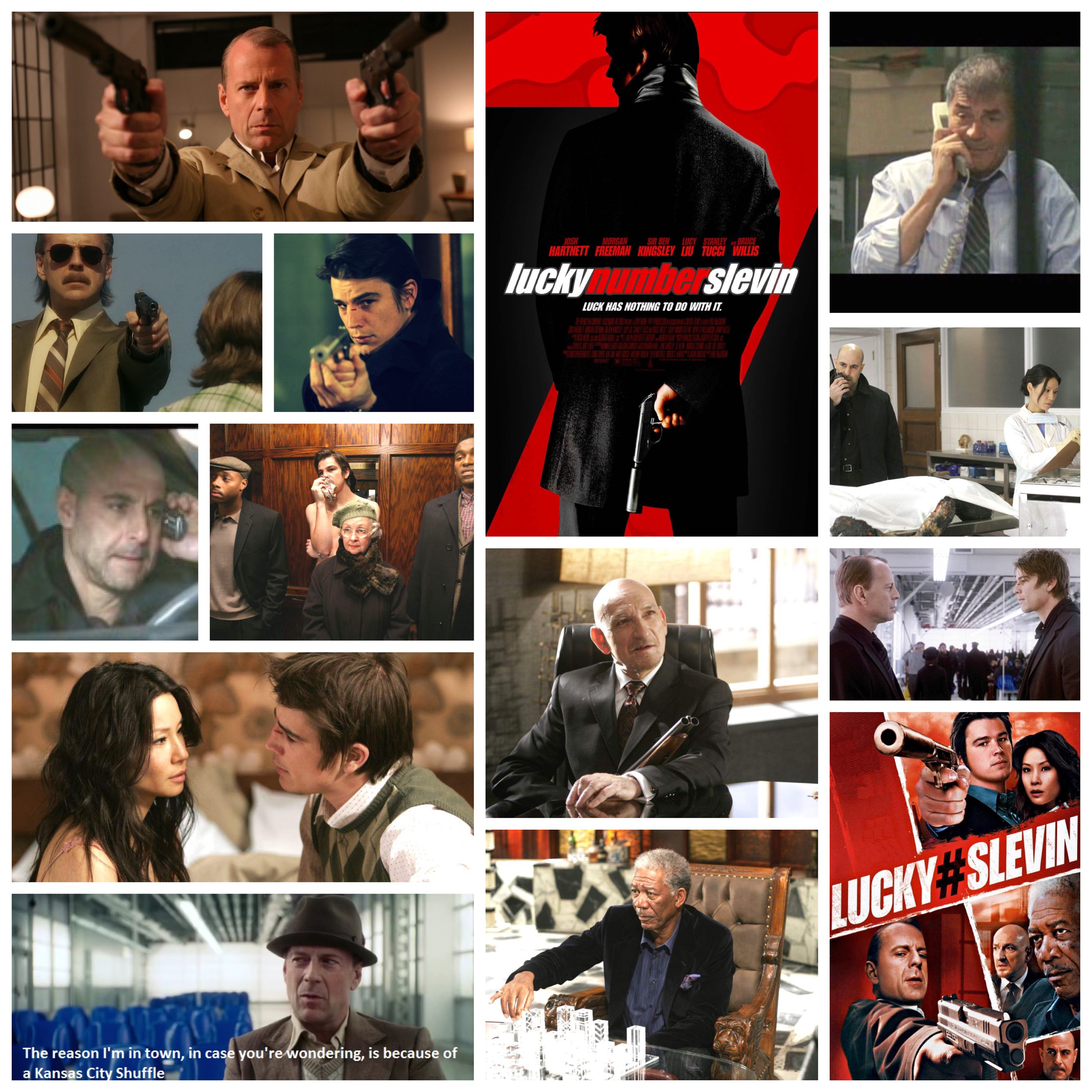
Paul McGuigan’s Lucky Number Slevin

Like Bruce Willis’s cranky hitman Goodkat assures us in the sleepy opening to Paul McGuigan’s Lucky Number Slevin, this is a story that pulls the rug out from under you big time, going left when you look right and anchoring the very glib, cavalier crime shenanigans in something solid and emotional in the eleventh hour. It’s a wild, wacky film that borrows from others and often gets sidetracked by itself, but it’s also one of the most stylish, ambitious and beautifully made crime dramas of the last few decades, and has become an all time favourite for me.

Josh Hartnett plays the mysterious Slevin, a hapless dude who is constantly mistaken for an even more hapless dude named Nick Fisher. Fisher is in a lot of trouble, owing large gambling debts to feuding NYC mobsters The Boss (Morgan Freeman) and The Rabbi (Ben Kingsley), debts which now forfeit to Slevin simply because he’s consistently in the wrong place at the wrong time. Then there’s the overzealous, shady NYPD cop (Stanley Tucci in mean mode) shadowing him, plus the bubbly girl next door (Lucy Liu) who tags along in his adventures in mistaken identity. It’s all very overelaborate, convoluted and long winded, but it’s part of what makes the thing so magical. Characters often use ten words where two will do, employ quirky anecdotes, monologue and show their pithy eccentricities, it’s an oddball script by Jason Smilovic that makes for one labyrinthine ride through New York City’s peculiar underworld dating back to the 70’s. The actors are having an absolute blast here and we get further work from Mykelti Williamson, Cory Stoll, Danny Aiello, Peter Outerbridge and more. A standout is the great Robert Forster in a cameo as a cop who delivers more exposition in one single scene than I’ve seen in some entire films, he’s a great enough actor that he fills a seemingly inconsequential role with wit and personality.

McGuigan is a stylist who throws colour and pattern into the mix even when the scene doesn’t call for it, to great effect. Why shoot in a drab warehouse or monochromatic apartment when you can douse your set in kaleidoscope design just for the sheer hell of it? It works, the offbeat production design serving to illustrate and accent a very strange, often hilarious yet ultimately human story. Much of the film is near cartoon level neo noir that doesn’t dig two deep, but there are three scenes, and I can’t be specific here without spoiling, that anchor it straight into the ground, provide an emotional core and make something heartfelt cut through the tomfoolery. Many people wrote this off as just silliness, but that’s lazy criticism 101. This is a fantastic film, full of many things to love. It’s probably Hartnett’s best work in a very eclectic career and his romantic chemistry with Liu (also superb) is patiently developed and adorable to see. Freeman and Kingsley eat up the dialogue like wisened old alligators and have a blast playing their arch villains. Willis is darkly charismatic and empathetic when he needs to be, stealing every scene. A classic for me.

-Nate Hill

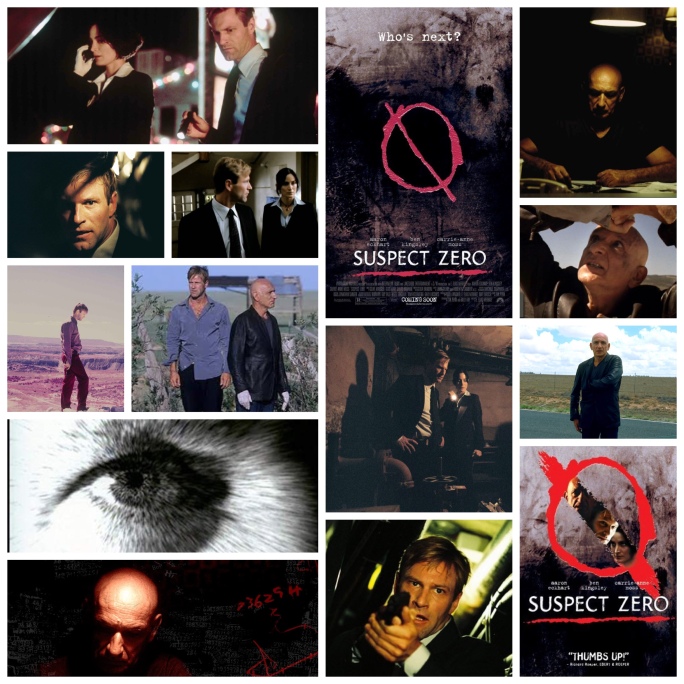
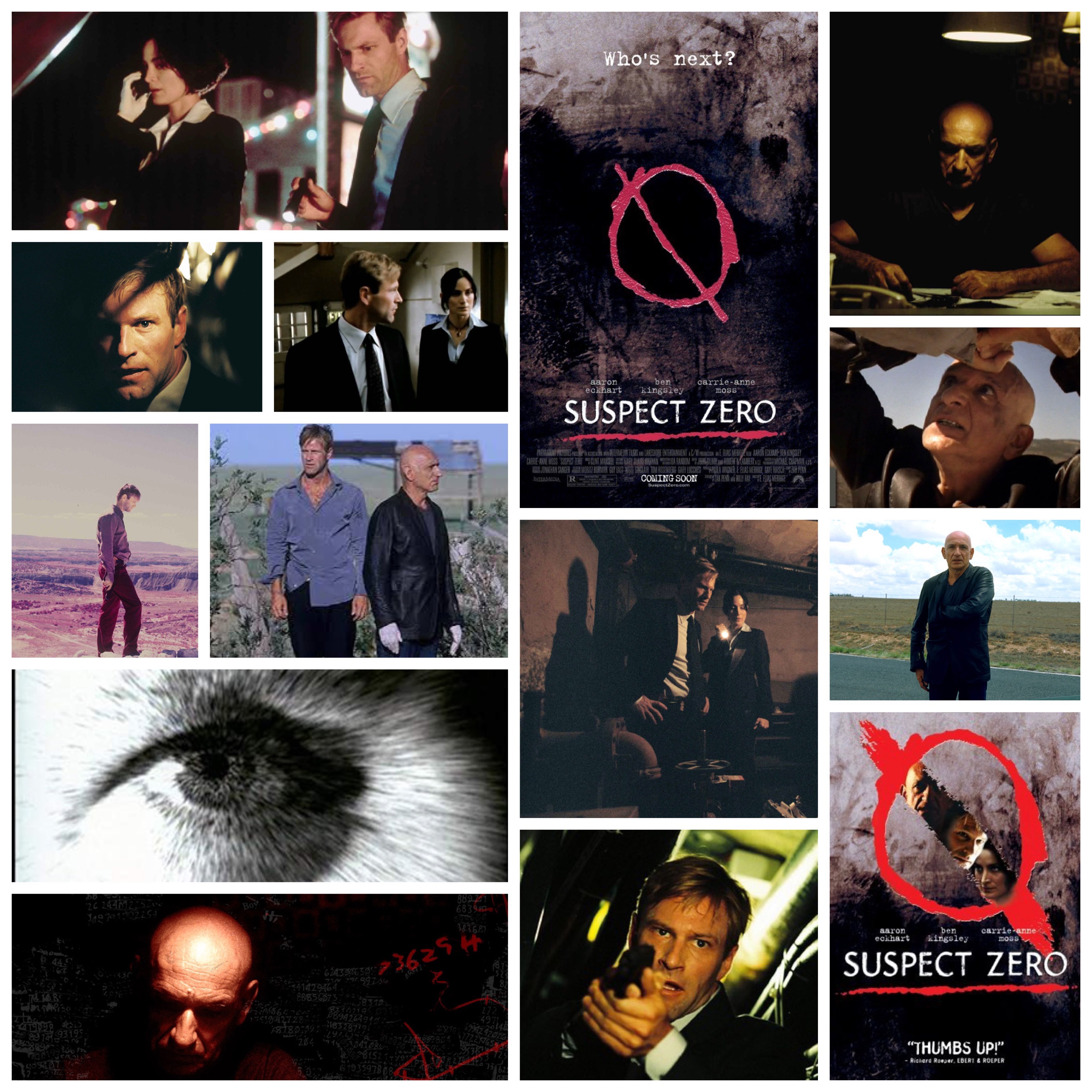
E. Elias Merhige’s Suspect Zero

E. Elias Merhige’s Suspect Zero is an interesting piece for me. Although it’s almost universally looked at as a failure, a shell of what it could have been, I’m crazy about it the way it is and think they did a fantastic job. It has a bit of a muddy past: Zak Penn wrote the script back in the 90’s, after which it gained much interest from the likes of Tom Cruise, Ben Affleck and others. It took until 2004 to finally get the film made, resulting in a version that many frown upon and consider a shitty film. Balls to them.

This is a grim, eerie serial killer chiller with an atmosphere thick enough to slice with a razor, and one extremely unsettling lead performance from a haggard, haunted Ben Kingsley. He plays Benjamin O Ryan, an ex FBI agent. Or is he? He’s efficiently hunting down and murdering random people (or are they?), leaving vicious visual calling cards and deliberately leaving victims lying on state lines to ensure the Bureau’s involvement. In particular he takes a shine to raw boned Agent Mackleway (Aaron Eckhart), leaving specific clues for him. O Ryan employs a metaphysical method of finding his victims, using an old psychic technique from a scrapped program the feds once explored. This gives extreme stylist Merhige a reason to throw sketchy, disconcerting images, sounds and editing into the fray, providing a visually and aurally chafing experience. Merhige is infamous for making the surreal, experimental shocker ‘Begotten’, and he brings the same stark, discomforting qualities to the proceedings here. I’m reminded of another experimental director who brought a near elemental aesthetic to an otherwise grounded serial killer flick: Tarsem Singh with his brilliant psychological fantasy ‘The Cell’. Suspect Zero is the grimy, fragmentary cousin to The Cell’s grandiose beauty. There’s also traces of Sev7n, Silence Of The Lambs, Millennium and more, yet the film finds its own groove and never sinks into derivative gestures. Composer Clint Mansell ditches his trademark celestial tones for something truly unique, a dread soaked nightmarish lullaby that gives the film an otherworldly tone to linger in dreams.

From Kingsley’s unnerving introduction hunting down a stranger on the interstate to his haunted, sympathetic final moments you get a feel for this extreme character that only this actor can give, infusing O Ryan with a zen like resolve that’s perforated by the psychological damage within. Eckart shows brittle desperation and blesses his performance with a touch of noir, which is appropriate to the film. Harry Lennix, Kevin Chamberlain, Frank Collison, William Mapother, famed writer Robert Towne and Carrie Anne Moss all give great work too. If you can forgive a few instances of murky plotting and one or two cheap plot turns, you’ll hopefully enjoy this as much as I do. It really deserves better attention and praise than it has gotten so far.

-Nate Hill

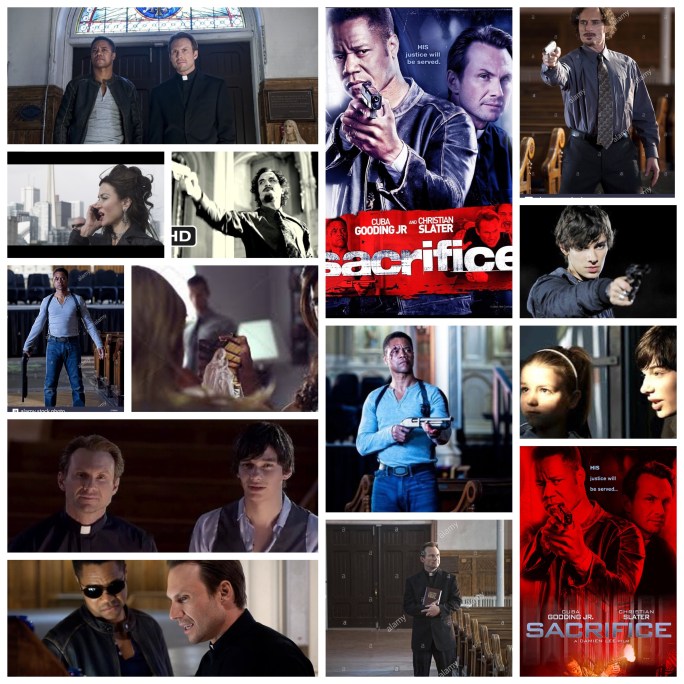
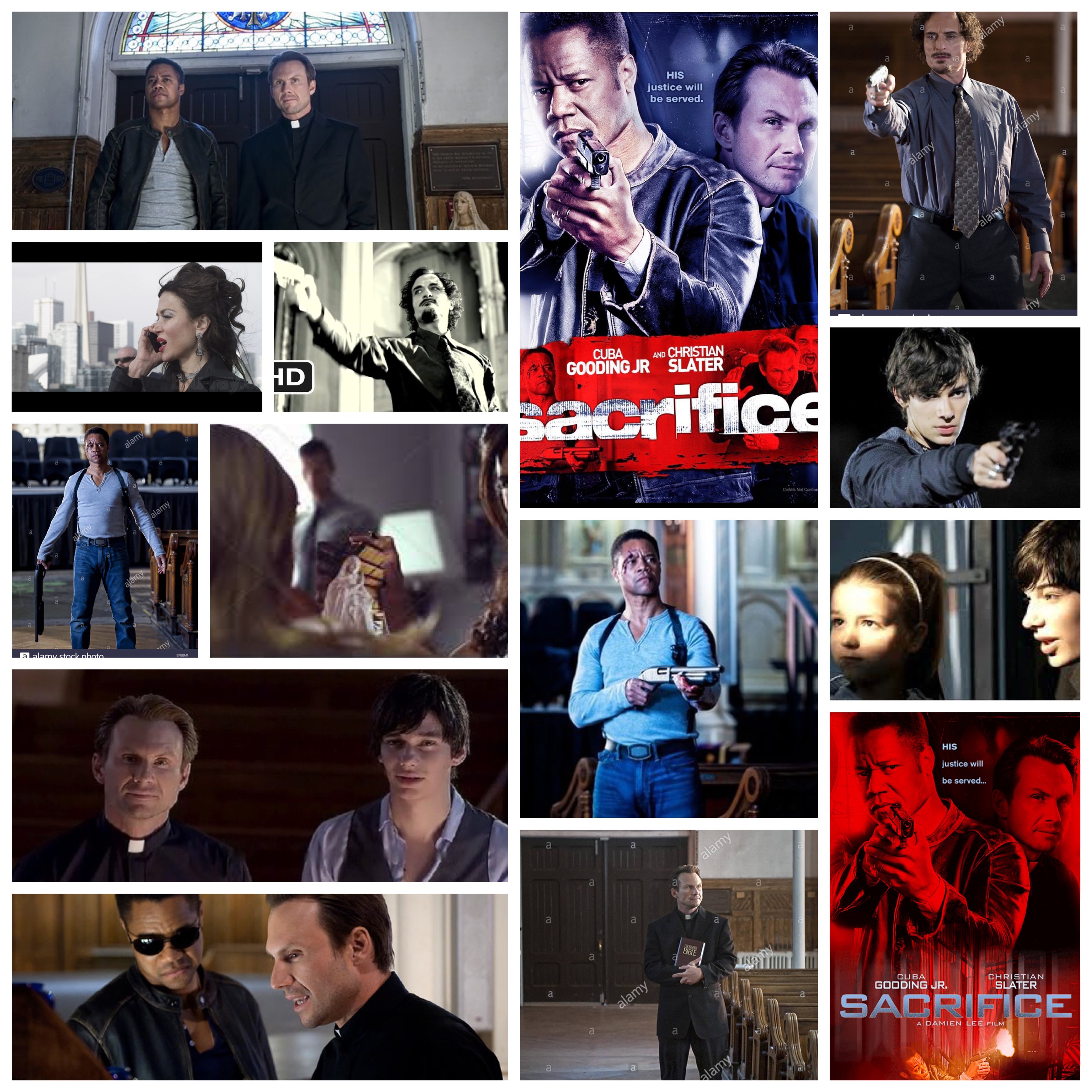
Damien Lee’s Sacrifice

An attempt was made with Damien Lee’s Sacrifice, but the efforts result in a weird, tonally bonkers slog through low rent noir that has you wondering what just happened. It’s one in a long series of Cuba Gooding Jr. cheapies and although definitely not the worst (Hardwired with him and Val Kilmer proudly holds that title) it falls short of being something coherent or memorable.

Gooding plays a tough but damaged undercover Narc in Toronto’s criminal netherworld, a good man with a dark past who seems to attract danger and bad luck. When a young defector (Devon Bostick) of the city’s nastiest heroin smuggling rig leaves his five year old sister in his care while he tries to put things right with dangerous employers, Gooding’s reflexes and morality are put to the test, and old memories of his own wife and kid are dredged up. Christian Slater plays a priest buddy, one of those men of the cloth who isn’t above picking up heavy artillery and capping a few bad guys when needs must, which is about all the actor gets to do here, but it’s a good scene worth sticking it through some muck for. Kim Coates eases into well travelled villain waters as the kingpin of the drug ring, who has a curiously well developed romantic subplot with the madam of a whorehouse (Laura Daans) he owns. Coates and Daans show up together markedly often if you follow such patterns (nerd alert on my part) and the two have chemistry but their scenes here, although good, are out of place and seem to be blueprints for a sequel to another Damien Lee film they both starred in, which I’ll get to in my next review.

Lee does mostly indie dramas and low key art house stuff, sensibilities which show up here in abundance. But when you’re hired to direct a cop/crime flick with Cuba Gooding Jr and Slater it may be pertinent to stick to well worn tropes and an appropriate tone, the dramatic aspects sort of slow the whole thing down and make it feel weirdly paced. Still, the performances are there, the story is clear and it’s entertaining enough. Oh, and it’s nice to see a film that’s not only shot but *legit set* in a Canadian city for once.

-Nate Hill

The Running Man

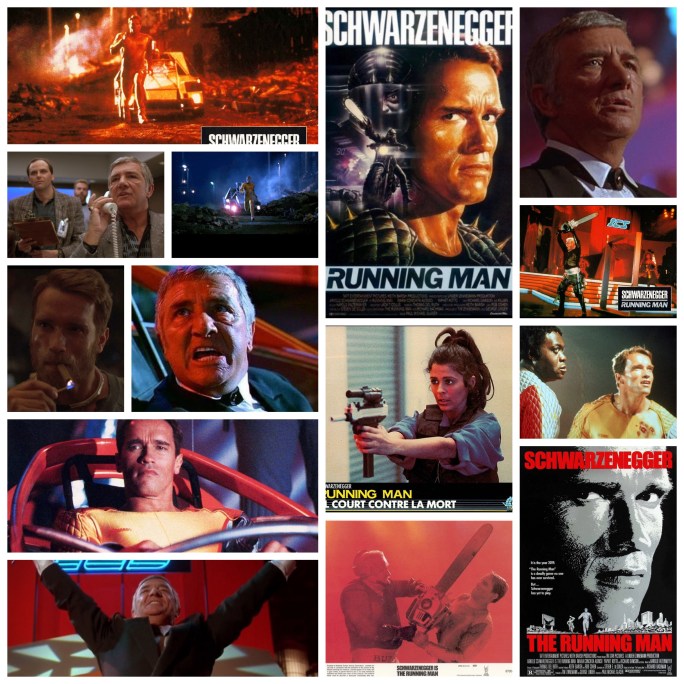
The Running Man is some silly ass shit, but it’s done with so much adorable enthusiasm, blinding 80’s neon and deafening ultra violence that it kinda wins you over. Plus it has one humdinger of a villain who, lets face it, gives the film most of its personality. Based on a Stephen King novel (albeit under his sheepish Bachman pseudonym), this takes place in one of those austere, glumly lit fascist hellscapes where there’s rubble everywhere, helicopters relentlessly thrum overhead and humanity has devolved to its worst. This is set in the year 2019 and although they undershot the level of depravity they imagined we’d sink to at this point, they sure as fuck weren’t far off the mark. Arnold Schwarzenegger stars as Ben Richards, a military man who is framed for heinous war crimes and forced to compete in the world’s most popular game show, a sadistic tournament called The Running Man where convicts are hunted down on live television by paid pro wrestler looking freak shows. This is all masterminded by an egotistical sociopath called Killian, played by real life former game show host Richard Dawson in what has to be one of the most inspired pieces of casting out there. It’s fun watching Ahnuld and slightly less athletic pal Yaphet Kotto get saddled with hilarious spandex onesies and shunted down a luge course from hell where they’re faced with such looming monsters as Subzero, Buzzsaw and Dynamo, who Arnie naturally begins dispatching in clever, gruesome ways followed by those obligatory one liners. It’s not a thoughtful film and the dystopian nightmare it establishes at the outset is never established on nor explored, mostly we just get sound, fury, profanity and extreme carnage as the game plays out about as loudly as any could get. The production design is so 80’s you could stick it in a time capsule, from dancing chicks with perms to synth music to Jesse Ventura himself in full roid-rage mode. Dawson is the soul of it all though and it wouldn’t be the same film without him, he steals the show as the ultimate evil ringmaster and has charisma that makes you laugh and want to knock his teeth down his throat in the same instance. Not the best of 80’s Arnie, but a fun, hectic ride through futuristic sci-fi.

-Nate Hill