Frank Marshall’s Arachnophobia

Scared of spiders? This is the perfect movie for you and no it’s not Eight Legged Freaks. Seriously though if you’re one of those people who are mortally, terminally and irrationally afraid of them then Arachnophobia will flare up just that kind of reaction. It’s produced by Spielberg too so it has that special kind of ‘menace in 80’s suburbia’ feel, this isn’t some cobwebby haunted house or fearsome jungle setting, this is killer spiders in the small town California which is all the more disarming. There is a jungle set prologue though because we gotta see just how these things did make it to Cali and you can thank scientist Julian Sands for that when he accidentally lets a breed of deadly arachnids hitch a lift in a coffin back to the states. There they slowly but surely begin to breed and wreak havoc on unsuspecting townsfolk until they’re basically everywhere. Jeff Daniels steps in for hero duty as a doctor who just moved into town and is getting a pretty suspect first impression of the area thanks to these creatures. It’s up to him and an intrepid posse to take them on while evading their deadly bites in the process. John Goodman shows up and steals the film as a boisterous, beer swilling exterminator who knows a maximum threat when he sees one and breaks out the non FDA approved methods for dispatching them. His character provides the film with levity and laughs as a kind of cross between Chris Walken’s kooky exterminator in Mouse Hunt and one of the Ghostbusters. This film is actually terrifying because it isn’t just giant spiders like in Harry Potter or The Hobbit and they’re not CGI or schlocky like countless other horror films, there’s actual craft and artistry put in and they use real spiders too so it’s pretty gnarly. There’s one scene where Daniels and his family are in the middle of the living room and there’s spiders literally everywhere.. the couch, ceiling, walls, appliances, floor… covered. We all know that feeling of seeing just one of them somewhere over in a corner, now amplify that by like a thousand. Yeah. It’s a great fright flick that never gets too gooey or gory and always maintains humour amidst the horror.

-Nate Hill

Rob Zombie’s 3 From Hell

It’s been roughly fifteen years since Rob Zombie blasted onto the horror scene with his brilliant exploitation block party The Devil’s Rejects, and has now followed it up with 3 From Hell, a long awaited continuation following the further adventures of the murderous, hilarious, never boring Firefly clan. So, does it live up to Rejects? Well… no, but what could? Is it a good film? Hell fucking yes it is and although it’s arguable whether or not a third outing with these characters was necessary, in my eyes it was always more than welcome. Zombie is an inexplicably hated filmmaker and his detractors always make me laugh in their abject refusal to concede that he knows what he’s doing within the genre. It’s fine if it ain’t your thing, it’s all cool if his style doesn’t jive with yours, but whether or not he’s a talented, imaginative horror filmmaker just isn’t up for debate in my opinion.

So the Firefly family survived their Peckinpah standoff with the cops, which if you’ve seen Devil’s Rejects you’ll agree is a move both audacious and sheepish on Zombie’s part. Incarcerated indefinitely and placed squarely on death row, Otis (Bill Moseley), Baby (Sheri Moon Zombie) and Captain Spaulding (Sid Haig) make no end of trouble for the buffoonish warden (Jeff Daniel Phillips) and his harried staff. Otis stages a violent prison break (reminiscent of Oliver Stone’s Natural Born Killers, I might add) with the involuntary help of Danny Trejo’s Rondo, a character who met an even more finality laden death in Rejects but nonetheless hilariously appears here without even a scar. Once he and Baby are free from their bonds they hook up with their equally murderous and profane half brother Winslow Wolfman Foxworth Coltrane (Richard Brake, Zombie’s newest muse) and take a road trip down to Mexico. There they wade themselves into as much hedonistic debauchery as they can until, once again, trouble comes looking for them.

So the main thing here is how does this hold up when placed alongside the other two in the trilogy and I’ll be the first to admit it’s the weakest of the three. It’s the least grimy, shocking, hallucinatory and overall spiked with madness too. But it’s also the most laidback and straightforward outing, which I can appreciate. It feels like a hangout film with instances of horror, a wistful afterthought to wash down the glory days and carnage of its predecessors. If there’s one thing that *is* crazier than the other two though its Baby; she has a caged animal, untethered ferocity here that even alarms Otis, who remarks that she’s way more nuts than he remembers her, which is quite the statement coming from him. Anywho they are surrounded by Zombie’s beloved, customary and always welcome bunch of forgotten character actors from the 60’s, 70’s and 80’s including Richard Edson, Dee Wallace, Clint Howard, Daniel Roebuck, Lucinda Jenny, Sean Whalen, Richard Rhiele, Barry Bostwick, Duane Whitaker and Austin Stoker who we lovingly remember as the Sheriff in John Carpenter’s Assault On Precinct 13. As most of you know the great Sid Haig passed away very recently and had been ill for a while before that, so his appearance here is sadly limited to a single scene, but it’s a loving send off from Zombie and a terrific if brief swan song for Sid and Spaulding alike. Was this film absolutely necessary? Of course not, Rejects had the perfect poetic justice ending and this story would have been fine if the buck continued to stop there. Am I grateful for a continuation and appreciative of it? You bet I am. Zombie shows talent again in writing simultaneously funny and scary scenes, crafting beautifully grungy production design and drawing you into this world. I almost saw this as a hazy fever dream had by the Fireflies as they are getting shot to bits at the end of Rejects, like a Jacob’s Ladder type foresight into a future that never happened in the final moments of thought before death. It’s a nice final outing with these lovable, hateful psychopaths and a good time overall.

-Nate Hill

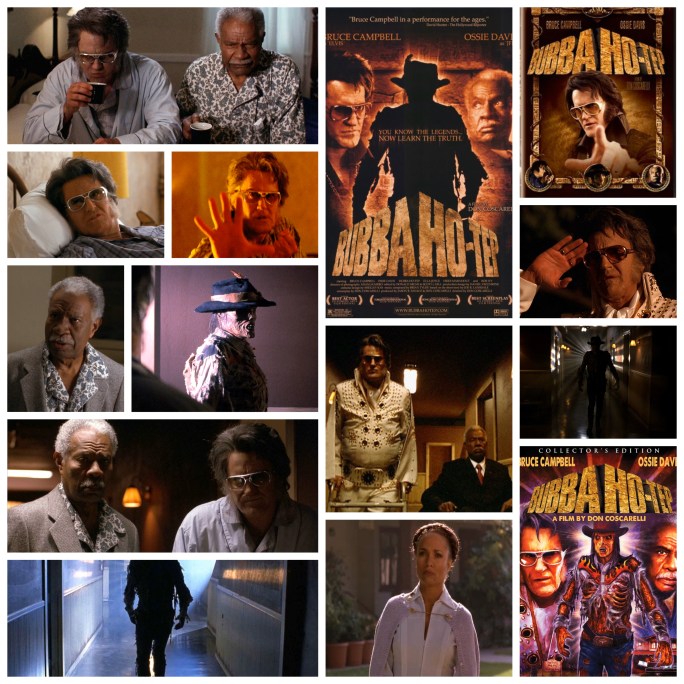
Don Coscarelli’s Bubba Ho Tep

You don’t often find films as special as Don Coscarelli’s Bubba Ho Tep. On paper it sounds kinda out there: an aging Elvis Presley (Bruce Campbell) and an African American JFK (Ossie Davis) battle an evil ancient cowboy mummy in their Texas care facility while reminiscing about days gone by. The premise alone could lead anywhere but Coscarelli’ & Co infuse it with black comedy, surprising pathos and some cool, creaky practical creature effects for one eclectic package. Campbell is that rare actor who is always dynamic no matter wat the role or project, but this may be the peak of his career, Evil Dead aside of course. His soulful yet cantankerous take on The King is a brilliant, sad, hilarious and meaty performance that goes to some surprisingly personal places, when he isn’t trying to kill vicious little scarab beetles. Davis is wonderful in a role that’s tough to imagine let alone pull off, as a grumpy old ex president who is adamant that the government forced him into a pigment alteration process so no one would believe he’s JFK. Coscarelli’s process sees these two elderly gents in a fight not only for their own survival but for their collective redemption too and the swaggering, soul sucking Mummy can almost be seen as the Grim Reaper himself coming for them, eliciting some eleventh hour personal revelations and last minute soul searching that provides the film with its warmth and humanity. As JFK wistfully remembers what he did right and wrong in the White House he resolutely says “We did the best we could in the time that we had.” Elvis recalls what it was like to permanently exit fame by switching places with an impersonator and what led him to the decision, “it wasn’t the same anymore, the girl I loved was gone and the rest of them were just girls..” In a film whose main antagonist sucks souls through people’s assholes it’s interesting to find such a rich, deep gravity and inwardness to the these two essentially outlandish characters. That’s what I find so beautiful about this film though; It’s undoubtedly a horror flick, one of the most inspired and imaginative variety. But within there’s also a touching, believable summation of two men’s lives and an achingly affecting look at how they rage against their inevitable end one last time. Brilliant film.

-Nate Hill

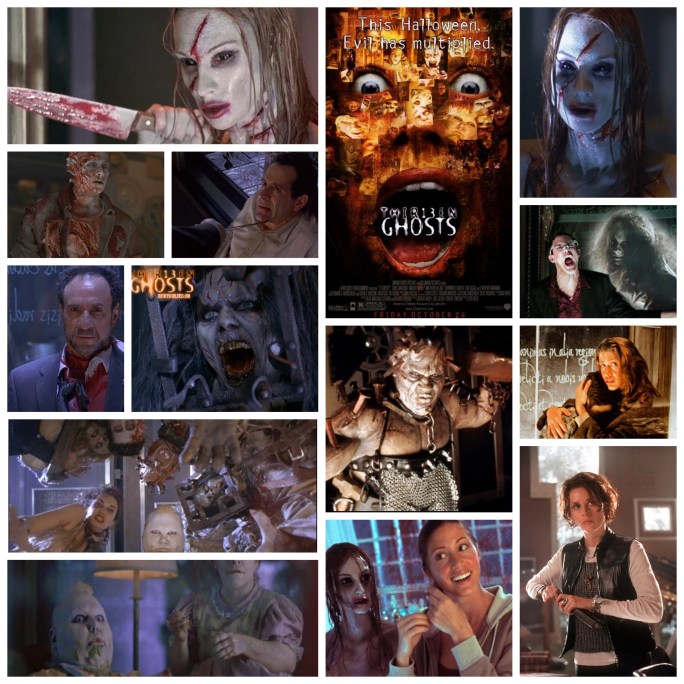
Steve Beck’s Thir13en Ghosts

Thirteen Ghosts is one weird fuckin movie. It’s the closest thing I can think of to a direct movie version of the haunted houses you find at carnivals, which is good for carnivals but not really handy for keeping up a story that makes any bloody sense. I would have loved it if the my just completely abandoned attempts at logic and made this a full music video or something but no, they just had to get the exposition cannon out and needlessly blast us all. At least it looks great.

The ‘story’ goes as follows: the nephew (Tony Shaloub) of a creepy old billionaire (F. Murray Abraham) has inherited his giant old haunted mansion and the thirteen vicious ghosts the reside within it, specifically in big glass cubes engraved with special incantations so they’ll stay put. Of course they don’t, and when the nephew invites a bunch of folks over to observe these spectres with special Ghost Vision Goggles they all get loose and start terrorizing everyone no end. Among the cannon fodder are Matthew Lillard, Shannon Elizabeth and Embeth Davidtz who is just as far above lowbrow shit like this as Shaloub and Abraham are.

Now my words so far may suggest that I dislike this film, but that’s not the case. I love it despite knowing full well that it’s wanton trash. The whole thing is a ludicrous theme park of crashes, bangs, loud metal and pandemonium not helped much by chainsaw editing, frenetic music cues, bombastic performances and hilarious special effects. The design, names and makeup of the thirteen ghosts are actually quite inspired, from a great big fat murderous adult baby to an angry, beautiful spurned lover and more. This is part of a trio of films that I have unofficially dubbed the ‘ Warner Brothers late 90’s/early 2000’s heavy metal chaotic horror remake’ trilogy alongside Ghost Ship and House On Haunted Hill. They’re not effectively scary, subtle or otherwise anything close to what horror should be. But for clanging, rambunctious background noise and stark, surreal imagery at a Halloween party they do the trick, this one especially wth all its baroque weirdness.

-Nate Hill

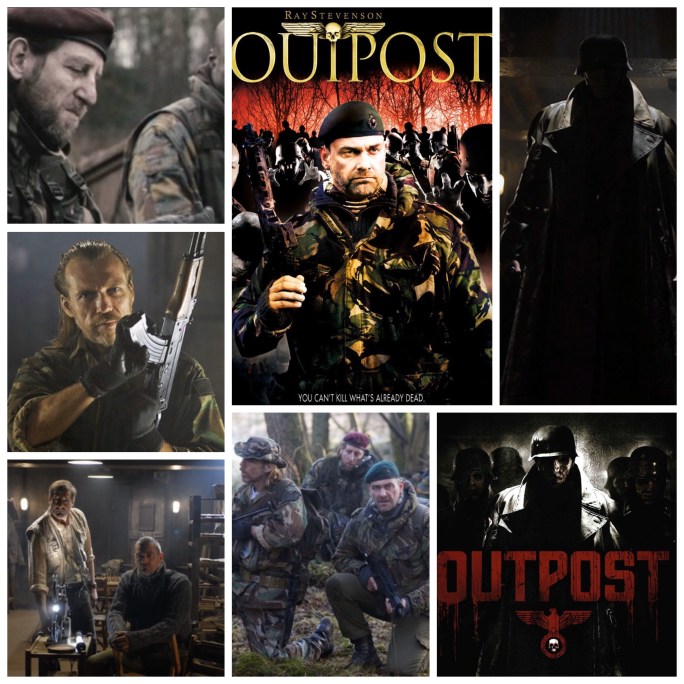
B Movie Glory: Steve Barker’s Outpost

The rate that teams of mercenaries seem to run into ghosts, creatures and demons seems to be awfully high in cinema but I guess their jobs take them to some pretty dark corners of the world where anything could be lurking. In Steve Barker’s Outpost the dark corner is an abandoned WWII bunker in Eastern Europe, the team is a hard scrabble bunch led by Ray Stevensen and Richard Brake and the gathering menace is… well you’ll see.

This one is cool because these guys are essentially trapped between one bad scenario and a severely worse one. As bloody war rages above them on the surface, they descend deeper into this long forgotten bunker for refuge and discover that naturally they aren’t the only ones down there. For the most part it chooses atmosphere over gore as the menacing forces gradually encroach on them surrounded by ghostly mist and they realize that this is one right corner they can’t just shoot their way out of. Stevensen has a great stalwart screen presence and heads up this dirty dozen style posse nicely, while Brake also provides his usual sly charisma. There’s a sequel out there by the same director no less but I haven’t seen it so I can’t recommend yet. This however is a chilly good time, a serviceable action horror that doesn’t go too far overboard or become obnoxiously silly but reins it in just enough.

-Nate Hill

Boogeyman

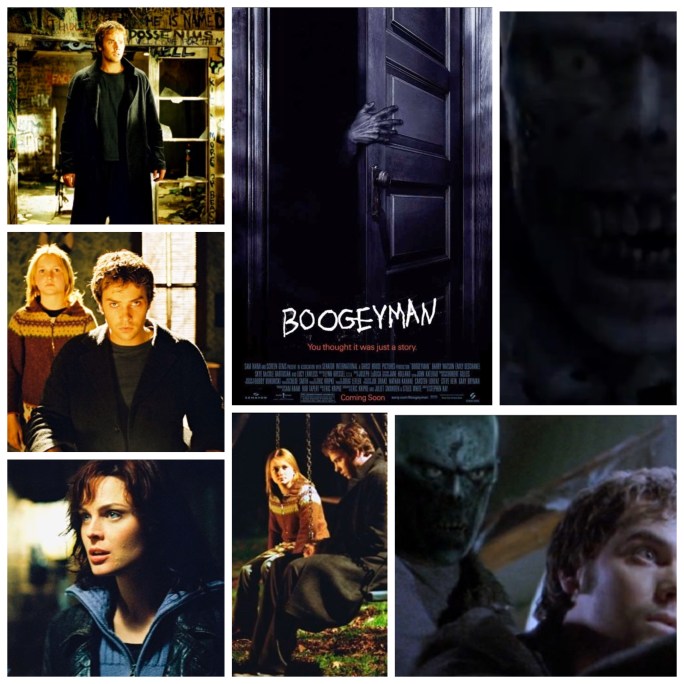
Boogeyman probably wouldn’t scare me too much these days but to sheltered thirteen year old Nate in iMax back then this was fucking traumatizing. I haven’t seen it since and I might keep it that way because the raw nostalgia still kicks in whenever I see the poster in a streaming queue or the DVD in stores and I feel like if I revisited now, that magic would dissipate quickly.

So obviously the Boogeyman is real here and has chosen to terrorize a family seemingly at random, scarring a young boy for life by snatching his father away in the middle of the night in a chilling prologue. Flash forward years later and the boy grows up into a man played by onetime heartthrob Barry Watson, who I only remember from this and Ocean’s Eleven where he’s playing poker with Topher Grace and Brad Pitt. He decides to visit the old town and dilapidated house he grew up in to confront his fears and prove that it was all in his head, but of course it wasn’t and the boogeyman comes roaring back into his life to create all kinds of fresh hell.

I enjoyed the lack of backstory and explanation for this thing… he’s not some vengeful ghost with an origin montage in the third act, they just never even bother to say anything more than he’s simply a boogeyman thing, and there’s both power and potency in that. There are numerous effective jump scares from what I remember and some welcome turns from genre regulars Lucy Lawless, Emily Deschanel and Skye McCole Bartusiak. Like I said it’s been so long since I saw this, I only saw it once but let me tell you at that age it fucked me right up. Such would most likely not be the case now but oh well. I’ll hold onto the memory I have of seeing it theatrically.

-Nate Hill

In Memory of Robert Forster: Nate’s Top Ten Performances

Robert Forster passed away yesterday and the realms of Hollywood, television, exploitation and indie features will never be the same. This was a guy you knew even if you didn’t know his name, a pillar of supporting performances for decades, a man who radiated talent and charisma even if he was only onscreen for three minutes of any given production. My buddy saw him in an airport once but couldn’t think of his name for months and it drove us both nuts for awhile. He described the fellow as a “world weary detective type with kind eyes and a vaguely sad demeanour.” We eventually figured out who he meant when I kept showing him a rogues gallery of IMDb profile pictures to try and solve the conundrum, but my point is that this was a guy whose essence and persona just sticks with you no matter the role or project. I will miss him dearly and revisit many of his excellent performances again but for now here are my top ten favourite:

10. Steve Yendel in the Nelms Brothers’ Small Town Crime

The ultimate pissed off dad, Steve takes quirky revenge on the assholes who killed his daughter in this violent but good natured black comedy, teaming up with a persnickety pimp (Clifton Collins jr) for some off the books war games. “I wanna tie them to the back of my Bentley, drag them around a bit.” His delivery of that pithy little sentiment is both droll and priceless.

9. Marshall Sisco in ABC’s Karen Sisco

Not the first Elmore Leonard adaptation on this list sees him playing father, mentor and friend to Carla Gugino’s badass federal Marshall Karen Sisco in this televised version. Dennis Farina and Jennifer Lopez played these roles in Steven Soderbergh’s Out Of Sight and rocked it but Robert and Carla find their own laidback, easygoing groove and have terrific chemistry. Word of warning though this show was never released onto DVD and is absent from any streaming services anywhere (which someone should really do something about) so basically your only hope is chopped up versions on YouTube.

8. Burt in Elizabeth Chomko’s What They Had

Forster frequently finds himself in gritty genre stuff so I always get in line when he does something gentler like this hilarious and heartbreaking family drama. He’s brilliant here as a patriarch whose wife (Blythe Danner) is slipping into dementia. He’s nonchalant about it while his kids (Hilary Swank and Michael Shannon) unravel. His refusal to admit that she’s slowly losing herself is sort of sad and funny at the same time and the performance is perfectly pitched between the two.

7. Detective Murphy in Paul McGuigan’s Lucky Number Slevin

His character here is only onscreen for a minute or two but he’s got the biggest monologue in a film already thick with dense dialogue, and the dump truck level of exposition he delivers is something to see as he nails it while giving his idiosyncratic NYC cop role attitude to spare even though none of the dialogue is even about him. If you’ve seen the film you know what a brilliant, labyrinthine house of twists it is and he gets to impart the final wisdom that brings the narrative home, subsequently leaving a lasting impression amidst many other quirky performances.

6. Detective Harry McKnight in David Lynch’s Mulholland Dr

Another quick cameo but one of the finest moments of eerie gravitas in the film. As a horrific limo crash kicks off the films inciting incident, Harry and his partner (Brent Briscoe, another Lynch favourite who is no longer with us) stand by the roadside and look out over the nocturnal LA dreamscape, wondering just what happened. The quiet, contemplative look in his eyes suggests many mysteries to come without saying anything, and his scene remains one of the films most atmospheric and memorable.

5. Arthur Petrelli in NBC’s Heroes

He always rocked the kinder roles but did some wicked nasty villain turns too, here playing the utterly evil and sociopathic ringleader of the troubled Petrelli clan. Not above terrorizing and murdering his own family for incredibly nefarious gains, he heads up the mysterious corporation that is pretty much responsible for most of the shitty things that happen on the show. Underplaying for chilling effect, he was essentially the big bad of the entire series run and wielded it wonderfully.

4. Scott Thorson in Alexander Payne’s The Descendants

Another aging family man looking after an ill wife, he plays father in law to George Clooney’s grieving real estate tycoon in a wonderfully emotional and intimate interpersonal drama. He doesn’t approve of his son in law and makes it very clear in a series of wry commentaries that lead to a confrontation that the actor gives the power of an open wound.

3. Sheriff Frank Truman in David Lynch’s Twin Peaks: The Return

Taking over the character in spirit from Michael Ontkean but also playing a new rendition of the upright lawman archetype, Robert plays Frank as a straight arrow who has begun to dim and get a bit weary. He’s a thoughtful man, a tired husband and you can sense a spiritual crisis in him when things begin to get weird because this is Twin Peaks and they inevitably must. One of my favourite scenes in the entire Peaks saga is a pine rimmed computer popping out of his desk so he can skype Doc Hayward (Warren Frost) on his fishing trip about vital information and share pleasantries while he’s at it. It’s such a lovely scene full of light and goodness, Robert’s contribution to the Peaks world is really something special.

2. Jake Nyman in Paul Chort’s American Perkekt

This is a weird one but essential because the director wrote this role specifically for Forster and he’s absolutely fucking terrifying in it. Jake is a psychiatrist, or says he is anyways, but he’s on a demented road trip where every decision is determined by the flip of a coin, and with each flip he seems to lose his grip on sanity a bit more. The final act sees him completely go over the edge and terrorize a drifter (Fairuza Balk) into submission. It’s a very strange film with many characters and has that oddball ‘psycho indie road flick’ vibe but his performance is the sickened heart of it and he really lets that ripcord of uninhibited mania go.

1. Max Cherry in Quentin Tarantino’s Jackie Brown

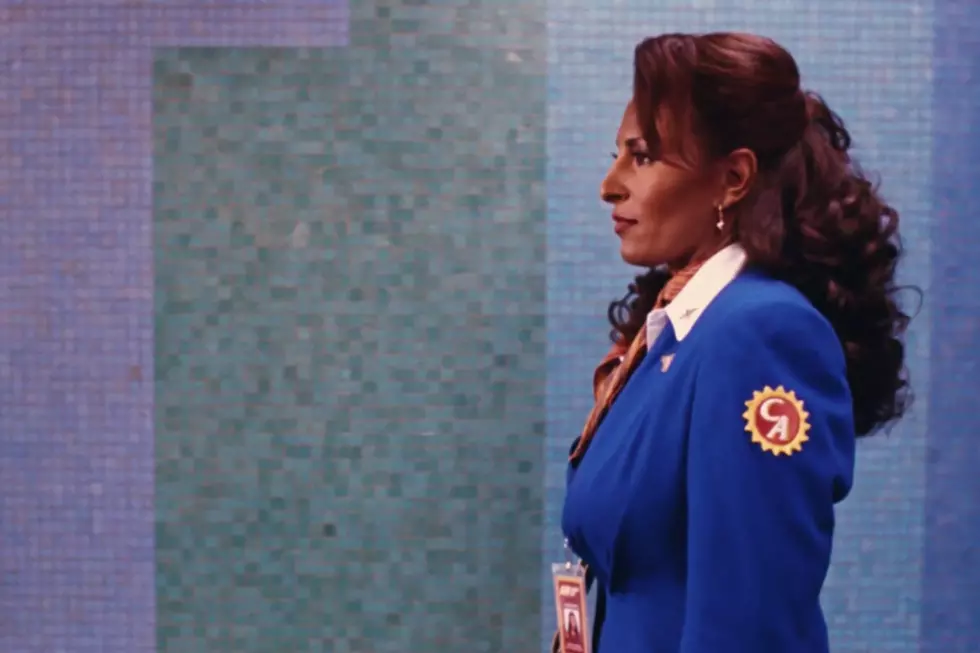
The crown jewel of his career saw Tarantino revive his Hollywood career to play bail bondsman Max, a keen Everyman who is deeply in love with Jackie (Pam Grier) from the moment he lays eyes on her and determined to help her escape homicidal gun runner Ordell (Samuel L. Jackson). The pacing of both the film and particularly his performance really sells this story, you can watch the wheels turning as he observes characters around him interact, and the blossoming look of adoration on his face when he sees Jackie for the first time is truly remarkable.

Thanks for reading and please feel free to share your favourites from Robert’s fantastic career!

-Nate Hill

Quentin Tarantino’s JACKIE BROWN

Following the cinema changing smash of PULP FICTION, marking the first and last time (so far) in his career, Quentin Tarantino adapted a property by someone else By adapting Elmore Leonard, Tarantino made the story and his characters his own, by using a set story and characters, he populates each character with his hallmark casting and colors in Leonard’s dialogue with his own Tarantinoisms. JACKIE BROWN has long been hailed Tarantino’s most “mature” work, and in a sense, that is a more than a fair assessment.

Tarantino’s cast is rather remarkable in this picture. He changes the name and skin color of Leonard’s heroine by casting Pam Grier in her finest role that acts as both a callback continuation of some of her most seminal 70s characters and an empowering role of fierce feminism. Robert Forster, another mainstay of forgotten roles in cinema gets cast in one of Tarantino’s best characters, Max Cherry, the stoic bail bondsman who assists in Grier’s caper.

Image result for jackie brown 1997

Michael Keaton and Robert De Niro are magnificent in meaty roles that act as respective undercards in their rich canon of characters; it truly is a shame that Tarantino never worked with Keaton and De Niro again, because he gets unique performances out of them, that is tremendously underrated. And of course, Samuel L. Jackson gets a very Sam Jackson role, and he is such a magnificent son of a bitch to watch in the film. Bridget Fonda has never been better or sexier.

Image result for jackie brown 1997

Tarantino crafts a film populated with older actors, giving us a pulpy crime caper, where the action is moved forward by dialogueless characters, Forster and De Niro’s total dialogue probably would take up three pages in the screenplay, through their reactions, stares, and movements very much move the film along. The cunning screenplay foregoes Tarantino’s violent nature, through the guise of character progression.

Tarantino’s love for the dangerous and sexy heroine is on full display in this film. Pam Grier’s take on the role that she’ll more than likely be remembered for is phenomenal, and she shifts back and forth between manipulating the bad men in the film and falling for her sidekick, Forster.

Related image

The reason this film is deemed Tarantino’s most mature is that the film laminates stoicism through Grier and Forster. The film is about living with mistakes, living long enough to know your limitations, and how to survive. All these characters have lived a life of struggle and hardship well before the cameras start rolling. The film builds up and cascades into an emotional moment between two genre actors that get dropped into a mainstream, highly polished film and that is such a beautiful thing.

Tim Burton’s Corpse Bride

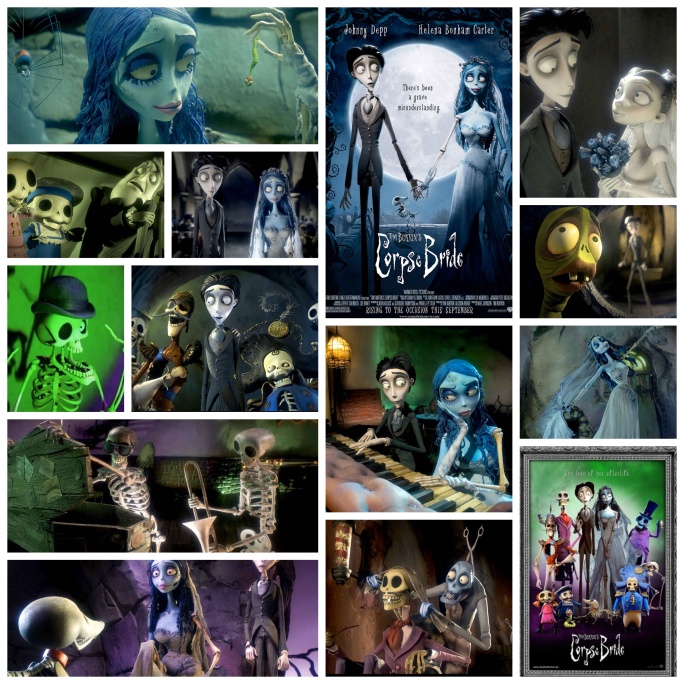
I feel like Tim Burton’s Corpse Bride doesn’t get nearly enough love and praise for what a wonderful film it is. The acclaim and lasting impression really stuck to Burton and Henry Selick’s A Nightmare Before Christmas and rightly so, but this is every bit as inspired, packed with catchy tunes, casted with beloved actors and filled with gorgeous stop motion splendour. Plus it’s the keystone Johnny Depp/Helena Bonham Carter outing for me because even though we only get their voices the animation is tailored to each respective essence and we feel their physical presences heavily in spirit.

Depp voices Victor Van Dort, a spindly, nervous creation who’s about to be pressured into one of those delightful old arranged Victorian marriages by his domineering parents (Tracey Ullman and Paul Whitehouse). The bride to be is Victoria Everglot (Emily Watson) and wouldn’t you know it they actually do fall in love despite circumstances, which is a nice subvert of the trope that I enjoyed. There’s always gotta be a third though and she arrives in the form of the titular Corpse Bride (Bonham Carter), a deceased girl brought back to life when Victor practices his vows in the local cemetery. This sets in motion a chain of fantastical, macabre, adorable and altogether brilliant set pieces, musical numbers, fight scenes, rich and thoughtful character relations and visual genius like a big old animated Halloween parade.

The cast is stacked too, full of beloved Burton regulars like Albert Finney and Joanna Lumley as Victoria’s crusty, aristocratic parents, Christopher Lee as a cantankerous undead vicar, Richard E. Grant, Michael Gough, Deep Roy and Danny Elfman himself as a rambunctious spooky skeleton called Bonejangles who fronts an undead jazz band. Hell there’s even a worm that looks and sound like the great Peter Lorre which I couldn’t tell if was done deliberately but if so bravo. This thing doesn’t even breach ninety minutes but it’s so full of life, death, colour, incident, song, music, dance and joy that it seems way longer than it actually is. It’s also got a grounded maturity in the way we see this completely ridiculous yet somehow very touching love triangle unfold, and by the end you really feel for Carter’s Corpse Bride and empathize with her situation. A technical marvel, a beautifully told tale and one of Burton’s very best.

-Nate Hill

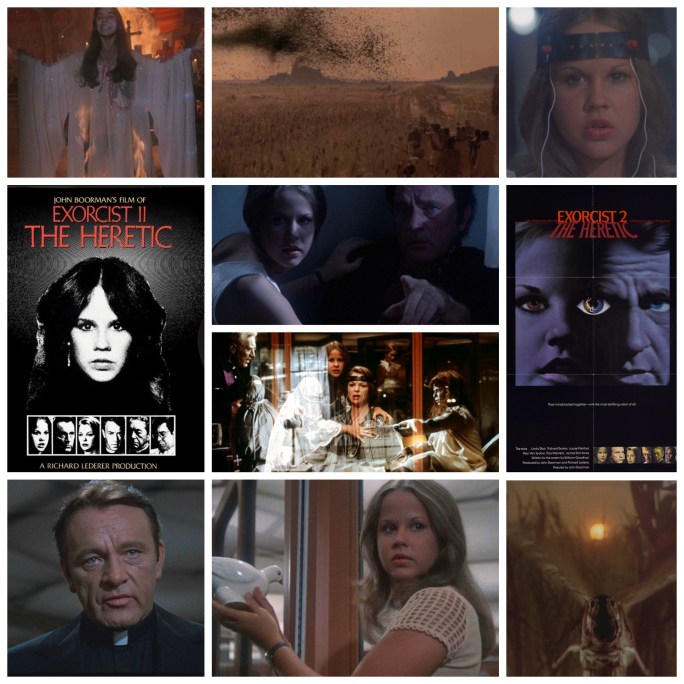
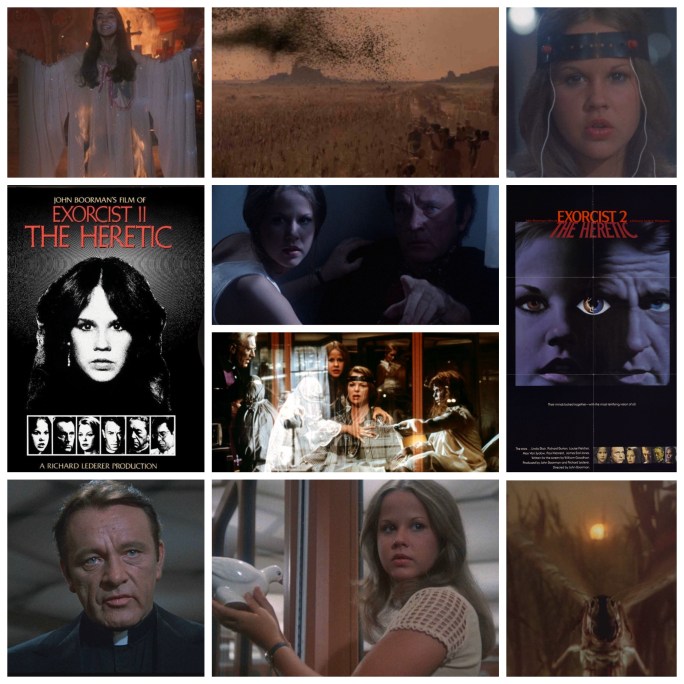
John Boorman’s Exorcist II: The Heretic

Calling Exorcist 2: The Heretic a horror movie is a bit of a stretch, but anyways. The only heretics to be found here are the studio heads that green-lit this script and the nimrod who edited it. This is a an embarrassment to the power of the first film and a weird (not in a cool way), hectic, inexplicable piece of wanton disarray. I don’t usually give out and certainly never enjoy these lashings but this one knows good and well what it did and had it coming.

Directed by John Boorman (who also did the solid Deliverance and the masterful Emerald Forest so maybe we shouldn’t fault him entirely here), this sees a now teenage Regan McNeil (a now teenage but still baby faced Linda Blair) afflicted once again by that pesky demon, or sorta kinda. The Vatican wants answers as to what happened to their first two dudes and so they send an investigative priest (Richard Burton) who teams up with Regan and her psychiatrist (Louise Fletcher) to stir some shit up. This all runs parallel to an expansion on Father Merrin’s (Max Von Sydow) exploits in Africa battling the very same demon and I know it’s supposed to all make some sort of intrinsic sense but the thing feels like it was written on an etch-a-sketch and edited with a jackhammer.

So what actually works? Well the film looks great, from Regan’s aggressively postmodern penthouse apartment to the spooky crags and mud huts of Africa. The visual atmosphere is great and permeates everything. And what doesn’t work? Pretty much everything else, really. Blair doesn’t have the same magnetism she had as a kid and both her lines on the page and her delivery feel detached and flat. The great Ennio Morricone takes scoring detail but I’m not sure what he was on that day because what he comes up with here is… I dunno. Where atmospherics should have been employed he’s used a soundboard of wails, howls, hollers, hoots and other nondescript aural diarrhea to the point where it’s laughable and distracting. The hypnotism and African stuff sort of work in isolated fashion but in terms of tying a coherent story together they’re used in a completely nonsensical way and there’s just so many “huh?” moments in the plot. I’m not sure what went wrong here but I’m sure there’s a reasonable story behind the mess, perhaps one more interesting than the actual film itself. Probably, because I feel like doing taxes would be more interesting and less confusing than this thing. Stick to the classic first one or also excellent third instead.

-Nate Hill