THOR: A Retrospective by Joel Copling

Rating in Stars: *** (out of ****)
Cast: Chris Hemsworth, Natalie Portman, Tom Hiddleston, Rene Russo, Anthony Hopkins
Director: Kenneth Branagh
MPAA Rating: PG-13 (for sequences of intense sci-fi action and violence)
Running Time: 1:54
Release Date: 05/06/11

The screenplay for Thor alternates between two narratives dissimilar in tone but that converge into something quite enjoyable. This isn’t an origin story, per se, in that our hero is introduced, gains powers, and faces a foe. Screenwriters Ashley Edward Miller, Zack Stentz, and Don Payne establish the world from which our hero hails as one that has long existed and been inhabited by many people. It’s clever, actually, the way they establish that our hero has what we humans might consider super-human powers but aren’t unique on his world, then remove the hero’s powers and banish him to Earth, where he is still considered a fish out of water.

He is also played with rugged, handsome charm by Chris Hemsworth in a performance not of a character who comes out of a professional production of a William Shakespeare play but of one who lives the caricature. He speaks with a tenor and inflection of an actor playing to the room on purpose. It’s a solid performance because it still manages not to cross over into that caricature. Everyone here speaks in such a manner, from his father Odin (Anthony Hopkins, who adds more than a bit of credence to a role only he could play) to his fellow soldiers to his brother Loki (Tom Hiddleston).

Thor and Loki may be brothers, but each has been courted for the throne when Odin decides to pass on the duties. Just before the Allfather crowns a prideful Thor, however, a breach of their battlements occurs. The Frost Giants, an ancient race with whom Odin once did battle before reaching a truce, seemingly break their promise never to intervene in Asgard again. The traitor in their midst is none other than Loki, who obviously wants the throne to himself. Further, he wants to revenge himself upon Odin when he discovers his true parentage. He manipulates the situation to force Thor into action against the Frost Giants on their homeland of Jotunheim (a well-mounted action scene, despite the darkness of the setting, which uses a form of combat that mixes well with a kind of physical humor), which drives Odin to remove his powers and banish him (and his hammer, called Mjolnir) from Asgard.

Thor arrives on Earth in the middle of a sandstorm, discovered and taken in by Jane Foster (Natalie Portman), an astrophysicist whose team of fellows includes Darcy (Kat Dennings, clearly having a ball and whose mangling of the title of Thor’s hammer is particularly amusing) and Dr. Erik Selvig (Stellan Skarsgård). Jane’s work is confiscated by S.H.I.E.L.D., the government entity whose job is secretive and whose suspicion regarding Thor’s place of origin is strong. The segments on Earth are amusing enough but pale compared to those on Asgard (or, indeed, within the Bifrost, a gateway to the Einstein-Rosen Bridge that connects to Earth and other realms and is guarded by Idris Elba’s commandingly still Heimdall). This is most evident in one of the two climactic action setpieces, the one on Earth ultimately adding up to little more than a showdown between Thor and a giant, metallic beast controlled by Loki.

It leads directly into the showdown between the two brothers that holds a lot more in the stakes department as all of the tension between them comes to a head (Hiddleston’s every line is like a slickly oiled thing) and Thor must make a rash decision. It also helps that the richly detailed Einstein-Rosen Bridge is the backdrop of the sequence, because the film’s strength of juxtaposing such melodrama against effects work is also highlighted in the sequence. Director Kenneth Branagh’s liberal use of Dutch angles and his capturing of the gold-plated mansions that populate Asgard are compelling elements to create this world. It isn’t much, but it separates Thor from the films that proceeded it in the Marvel Cinematic Universe. It isn’t unique, per se, but it is something.

B Movie Glory with Nate: Death Race 2

image

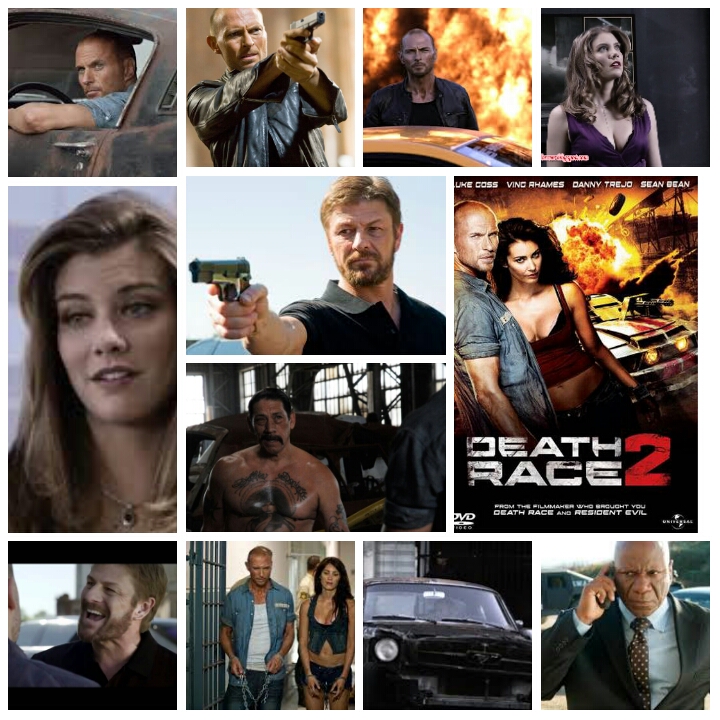
Death Race 2 is one of those sequels that is a little more colorful and off the wall than the first one, and less gloomy. Death Race tried a bit too hard to play it straight and serious, and while still a gnarly flick, I personally have to give the edge to this one simply for coming a little closer to the trashy mark that the genre begs for. Any franchise with a title like Death Race has just got to have a touch of camp, some balls out B-movie action and a good dose of pulp. This one is actually a prequel, now that I think about it, taking place in the same penitentiary that the first film did, a year or so before Jason Statham’s arrival. It follows the origin of Carl Lucas (Luke Goss), who would go on to be the masked driver known as Frankenstein in the original film. Lucas starts out as a getaway driver and thief for ruthless mobster Marcus Kane (Sean Bean). When a heist gone wrong lands him in Terminal Island prison, he’s introduced to ‘Death Match’, bloody gladiatorial fare instigated by a random prison fight caught on camera and broadcasted online. The prison warden Weyland (Ving Rhames) has his moral doubts, but in swoops opportunistic corporation head September Jones (Lauren Cohan) with a sociopathic agenda to turn simple combat events into all out vehicular warfare, with state of the art machines and artillery, all privately funded. Since this genre exists in a world without anyone, government or other, to protest, Death Race is born. The rules go that if you win a certain amount of races, you go free. Kane has his own plans on the outside though, making a pretty penny off of Lucas and his driving, cruelly trying to keep him inside. Bean is a cut and dry psycho as Kane, relishing in the kind of nasty arch villain skin that action films have to offer. Goss has always had a heart and level of gravitas along with his physical intensity (his villain in Blade 2 is still legendary), which he brings out in Lucas. Danny Trejo comes along for the ride as Goldberg, Lucas’s mechanic. The first Death Race was solid, but a bit monochrome in the personality department. This one lets its freak flag fly, getting down and dirty with the bone crunching violence, and thundering motor mayhem. It sinks a level below the first one, which is sometimes a great thing for a particular franchise. It knows how over the top it needs to be, and is all the better for it.

ZACK SNYDER’S BATMAN V. SUPERMAN: DAWN OF JUSTICE — A REVIEW BY NICK CLEMENT

batman v superman

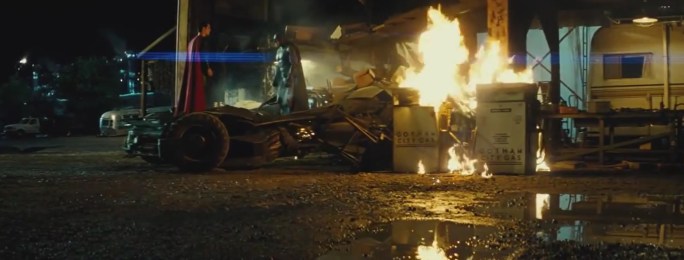
Wow. Rarely have I ever experienced such a divide between my personal thoughts on a film, and seemingly every single paid “critic” who has presumably seen the same film as I. Are people having a laugh? Are they being obtuse for some unknown reason? The last time something happened like this was during the release of Ridley Scott’s diamond-cut masterpiece The Counselor, and before that with Michael Mann’s expressionistic tour de force Miami Vice and Tony Scott’s avant-garde Domino; throw in the last two films from Terrence Malick as well. On repeated occasions, I simply don’t understand what film most people seem to have been watching or say that they’ve seen. Don’t get me started on this asinine argument that Batman V Superman: Dawn of Justice isn’t “fun.” It may not be YOUR idea of fun, but for people who like their superhero stories gritty and dark and thoughtful, this movie is beyond fun. To be perfectly honest, it’s absolutely astonishing on almost every single level, especially given how routine and homogenized most blockbusters have become. You don’t hire filmmaker Zack Snyder to be “safe.”

I’ve said it before and I’ll say it again – he’s a visual genius. He understands the inherent power of the cinematic image and he exploits it for all it’s worth. Film is a visual medium, first and foremost. I understand that it all starts with a script, but films are not books, and for me, the power of the image will always supersede that of the spoken word. And because Snyder’s images are so consistently mind-blowing, people love to forget how he almost always pays attention to story and character and motivation; he’s not uninterested in his screenplays despite what so many love to report. And best of all, and most rare, he challenges his comic book material in ways that you rarely see, especially in Batman V Superman: Dawn of Justice. Though definitely not a direct sequel to his smashing and rousing Man of Steel, this new film picks up in the immediate aftermath of the events of that 2013 blockbuster (and in my favorite sequence of the film during the Battle for Metropolis), and over the course of two and half hours, expands on Snyder’s vision and idea of realism within the scope of the fantastical, continuing down a purposefully humorless path through the revisionist corners of the DC universe.


3

This film is playing by Snyder’s rules, rules that borrow a tad from Frank Miller’s graphic novels and other bits of comic book inspiration, but make no mistake, this is Snyder totally unleashed. So, if you’re not a fan of his overly dynamic visual style, then you aren’t likely to respond well to this heavy and sometimes nightmarish piece of action filmmaking. This is a dark looking film, heavy on nighttime action with rain-soaked skylines and a striking sense of noir running through its very fabric. After the bright daylight action sequences of Man of Steel, Snyder decided to desaturate his images, suggesting a level of death and despair that has hit both Gotham and Metropolis. I’ve been enamored with Snyder’s aesthetic ever since his brilliant reimagining of Dawn of the Dead, which is easily my favorite modern horror film of the last 20 years. 300 was a pop-art explosion that broke new stylistic ground and Watchmen sits at the very top of the pile of films inspired by graphic novels. Sucker Punch is lusciously composed and severely underrated, and I happen to think “that owl movie” is really fun and unlike any other “kid’s movie” out there (visually it’s alive in ways that few films could ever dream of being). But it was Man of Steel that really set my world on fire, and now that he’s been given the keys to the expanded DC universe, I am overwhelmingly excited to see where he takes these various characters and to observe his glorious visual style progress even further. Batman V Superman: Dawn of Justice is as bold of a superhero film that I can think of, a movie that takes chances with its material, and succeeds greatly as a result.

2

I am not going to spoil the plot. There’s a lot to dissect, the focus is split evenly between Batman and Superman, and there are some really well integrated teasers and Easter eggs that will inform future movies in this particular universe. From the trailers, it’s been made clear what you should generally expect, but because this film is super dense (being confused by many as “overstuffed”) and packed with characters and incidents and numerous plot strands, I’d rather people just experience it. Your preconceived notions of these characters and their origins and histories will be tested all throughout this film, and I seriously applaud the entire creative team for boldly taking risks with iconic characters and imagery and making it their own thing. I will say that I do wish the film had simply been called Dawn of Justice, as it’s both more concise and slick, and it better represents the overall scope to the proceedings. The titular smack down, while no doubt viscerally and visually impressive and narratively clever, comprises maybe 10 minutes of screen time, with so much more of greater importance occurring during the film. It’s not a throwaway, this bout of the titans, but rather, feels more like a series of intense disagreements rather than genuine fear or hatred of each other. I thought I maybe knew the driving force that would pit Batman and Superman against each other, so it was a pleasant surprise to see my expectations upended. It’s also abundantly clear that Snyder wanted a longer film, as the pacing does feel strange in a start-stop manner in spots, and I noticed in a few instances where it was obvious that some connective tissue had been removed. There’s a 30 minute longer director’s cut coming out on Blu-ray, so it’ll be interesting to see what the suits at WB felt needed to be trimmed. It just strikes me as odd that Snyder would have conceived of a close to three hour cut without knowing for sure if WB would allow him to release his vision as is; didn’t the suits, at the script and development level, realize how long and how packed of a film they were getting involved with?

1

And when it comes to the action, Snyder doesn’t disappoint. There’s a sense of weight to the big fight between Batman and Superman, and there’s one beat of action at the mid-way point which felt positively surreal, something that I truly didn’t expect. And that opening sequence is a true wowser, showing Bruce Wayne racing through the exploding streets of Metropolis, with Superman and Zod ripping stuff apart; it’s a bird’s eye view of total destruction and it’s scary and thrilling in equal measure. Snyder, as always, has a field day with slow motion techniques, but in general, keeps his camera calm and steady, allowing for some seriously awesome widescreen compositions that blast the eyeballs on multiple occasions. While I am not particularly fond of lead characters doing battle with all CGI monstrosities (there was a certain level of disinterest during the climactic battle with Doomsday), I was pulled back into the film by the emotional content, which hits some rather shocking notes towards the last act.

Snyder and screenwriters David Goyer and Chris Terrio were definitely interested in mixing up the formula, throwing a lot of stuff against the wall with almost all of it sticking, and allowing for multiple viewings to truly unlock all of this film’s many secrets. The thunderous and at times operatic musical score from Hans Zimmer and Junkie XL takes cues from Man of Steel and becomes something larger and at times even more epic, with a triumphant musical cue waiting for Wonder Woman during her battle entrance. Thematically, it’s a rich film, with both superheroes getting a chance to battle their inner demons all throughout, with the surprising maternal connection to the both of them being explored in a unique fashion; call it a “Tale of Two Martha’s.” Batman V. Superman: Dawn of Justice is a beast of a movie, and nothing like The Dark Knight trilogy from Christopher Nolan, with Snyder going out of his way to separate his version of Batman from Nolan’s, as he was wise to do. And the film also feels like a big departure from Man of Steel in many respects, much darker and more forbidding.

2

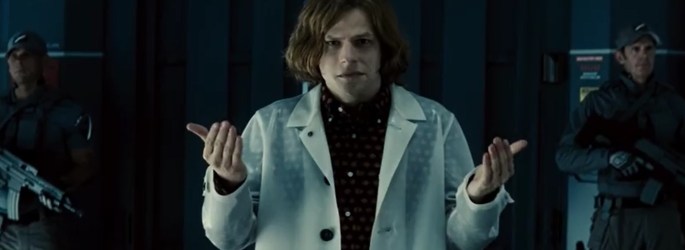
The performances are all uniformly excellent, with Ben Affleck cutting a hardened pose, both emotionally and physically, as Batman/Bruce Wayne. This is a very different Batman, more heavily armored and ready for battle than ever before, with a distinct lack of caring for the overall outcome of his adversaries. Snyder likes his superheroes to kill their bad guys, not hurt them with force. Henry Cavill embodies exactly what a modern Superman should be, bringing both nobility and an incredible sense of stoicism to the role; hopefully we’ll see a bit more of Clark Kent in upcoming films. Gal Gadot is sexy and heroic in equal measure as Wonder Woman, and I can’t wait to see her in action during her standalone film. She seemed EXCITED to be getting in on the big-battle action in the final act which was very cool to see. Jessie Eisenberg plays this new-fangled Lex Luthor with the proper amount of absurd glee that’s needed for this type of role, going appropriately over the top but never losing grasp of his character’s edgy megalomania. Jeremy Irons is all class as a more weathered version of Alfred, and he gets the film’s best lines of dialogue. Amy Adams brings that signature pep back to the role of Lois Lane, and while she’s not neglected, I hope there’s another standalone Superman film to focus more on her relationship with Clark and Superman. And Holly Hunter and Laurence Fishburne both get some really good moments; same goes for the terrific Scoot McNairy.

But the star of the show here is Snyder and his absurdly talented cinematographer Larry Fong, who literally peels your head wide open and blasts the screen with one insanely composed image after another. I grew up in a DC Comics household. Superman, Batman, Wonder Woman – these were my favorite characters, the ones I became obsessed with as a tyke. So, to see the DC Universe explode in such a fabulous way on screen, I feel tremendously lucky to have films like Nolan’s The Dark Knight Trilogy and Snyder’s mesmerizing Man of Steel ready in my Blu-ray arsenal. And with Batman V. Superman: Dawn of Justice, the flood gates have been smashed wide open for more adventures with these decidedly darker superheroes.

3


David Lynch’s Twin Peaks Fire Walk With Me: A Review by Nate Hill

  
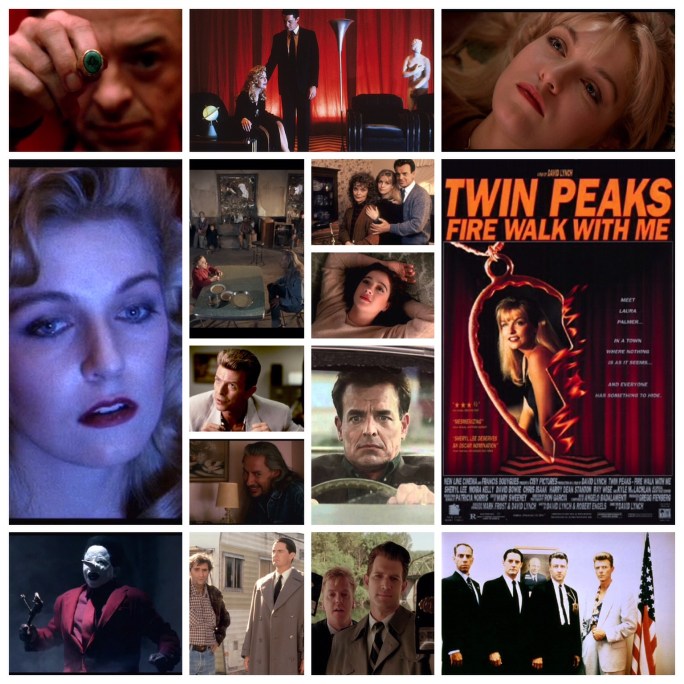
David Lynch’s big screen prequel/sequel to his television phenomenon Twin Peaks departs from the shows light, kooky and benignly eccentric sensibilities. It starts at the more surreal, dark atmosphere which sometimes materialized in the show, especially in the last episode, and plunges headlong down a rabbit hole of sex, murder, mysteries, federal agents, parallel universes, psychological torment, otherworldly spirits, supernatural phenomena, incest, more cups of coffee (Im not even kidding, there’s a scene where a stressed out looking Harry Dean Stanton makes a ‘cup of good morning America’), and above all, Laura Palmer. The beautiful, mysterious homecoming queen we only saw as a corpse in the series comes to wild, screaming life in this film, and what a performance from the gifted Sheryl Lee. She perfectly captures the menace, hurt, confusion, hope, torment and wild desperation of Laura, in a towering, stunning performance. Ray Wise is equally magnificent as Leland Palmer. Angelo Badalamenti switches up the tone as well, letting the beautiful Laura theme and the classic Twin Peaks tones only play in limited, selective fashion. His theme for the film is a powerfully dark, otherworldly melody which lulls you right into the film’s deep velvet grasp and haunts you in ways you can’t describe. The angel of the Roadhouse, Julee Cruise, gets another tune to croon as well, and it might just be my favourite of the bunch. Laura tearfully looks on as Cruise intones ‘Questions In A World Of Blue’, a transfixing lament that seems to be meant for her alone. Lynch is a true master of the subtle touch, and you’d have to read many an online forum as well as watch the film and the show several times to pick up on all the hidden implications and shrouded ideas that aren’t readily presented to you in a traditional narrative. That inaccessibility and refusal to play by the rules by serving things straight up is difficult for many people to get their heads around. To me though it’s such a fascinating way to tell a story. He doesn’t necessarily leave everything open to interpretation, he just hides the answers in a bewitching blanket of surreality, subtlety and dream logic, challenging the viewer to think using the unconscious mind and intuition to feel your way through the story, as opposed to tallying up facts and plot turns to analytically arrive at your cinematic destination. Perhaps this is why he meticulously oversees many of the DVD releases for his films, leaving out scene selections and unnecessary bells and whistles. The story matters most to him, in singular, unbroken form, a segment of his soul encapsulated on film in one cohesive effort, like a dream caught unawares by the lens. Fire Walk With Me was unfairly bashed, booed and downright critically clobbered for its stark and outright changes from the shows lighter tones, as well as its leaving out of some of the more popular characters that fans loved. Although this is jarring, I feel like Lynch has distilled all the elements in the show that mattered the most to him, and woven a gorgeous, seductive tapestry of pure Twin Peaks ‘feel’ and spectacle, as a loving gift to the fans who truly get it and are open to the wilder ideas explored briefly in the show. The film expands greatly on the ominous Black Lodge, and it’s dwelling spirits, including the strange Tremonds, the one armed Mike, and the little red suited Man From Another Place. The killer demon Bob is very prevalent in this film, and if you thought he was scary in the show, well.. His scenes in this are downright soul shatteringly. Moira Kelly makes a softer, doe eyed version of Donna Hayward, which I quite liked. Miguel Ferrer returns as the cynical wise-ass Albert, Lynch as the hard of hearing FBI boss Gordon Cole, as well as Heather Graham, Grace Zabriskie, Eric DaRe, Madchen Amick, Peggy Lipton, etc. Newcomers to the Twin Peaks mythology are great as well, including Chris Isaak and Kiefer Sutherland as more FBI agents investigating the case of Teresa Banks in Deer Meadow, Jurgen Prochnow as a trapped soul in the spirit world, and a confused looking David Bowie as an agent who has been mired in the time bending fog of the spirit world long enough to render him brain fried. It’s a love letter to the fans, really, but one that doesn’t compromise an inch and is every ounce a Lynch picture, capturing the director at his most creative adventurous. He strives to plumb the depths of human behaviour and the forces beyond our perceptions which govern and influence from other planes. Seeing these tricky themes explored so rawly in a film based upon a TV show that had heavy roots soap opera and an often lighthearted tone only garnished with the disturbing elements in the film can be hard to swallow, which is no doubt the reason for the sour reception upon release. The film has stood the test of time and aged wonderfully though, seen by many grateful, loving fans as a dark dream straight from the heart, and a perfect film. If one is willing to accept the changes in tone and ambiguous, challenging nature of Lynch’s storytelling (which I love!) then Fire Walk With Me is a sumptuous, gorgeous looking, vital piece of the Twin Peaks world, and in my mind Lynch’s masterpiece. 

DOUGLAS TRUMBULL’S SILENT RUNNING — A REVIEW BY NICK CLEMENT

silent running

A triumph of imagination more than overall execution though certainly not without more than one sequence of bravura filmmaking, Douglas Trumbull’s ultra-ambitious sci-fi oddity Silent Running is a relic of 70’s cinema, made clean again by the advances of modern day Blu-ray technology. Back in the day, I would passively watch this movie on cable with extra-wide-eyes as a youngster, but seeing it now, I’ve realized how ahead of its time the central message was, and how interested it was in character and personality rather than needless action or explosions. Trumbull, the special effects guru who assisted Stanley Kubrick on 2001: A Space Odyssey, Terrence Malick on The Tree of Life, Steven Spielberg on Close Encounters of the Third Kind, Ridley Scott on Blade Runner, and Robert Wise’s Star Trek: The Motion Picture and The Andromeda Strain, was and still is a pioneer in the art modern special effects and in-camera photographic techniques, and he was given the chance by Universal pictures to create something entirely his own (albeit on a ridiculously low budget of $1 million dollars!). You can tell that he’s not the world’s greatest director, and while Bruce Dern’s performance is certainly passionate and committed, I don’t think it’s a stretch to say that Trumbull wasn’t an “actor’s director.” But what Trumbull may have lacked in experience he made up for in the creativity and style department.

After drafting a treatment for Silent Running, screenwriters Mike Cimino(!), Steven Bochco(!), and Deric Washburn(!) fleshed out the screenplay, which centers on the idea that sometime in the future, all the world’s plant life has become extinct, with the last remnants preserved and sent out into the solar system inside massive geodesic bio-domes, complete with animal life and fresh water, in the hope that one day they can be returned to Earth and life can again become sustainable. The film takes an anti-corporate slant when Dern, the ship’s constantly sweating botanist/scientist/astronaut, defies the orders of his greedy superiors who want the environmental experiment terminated in favor of sending the massive ships back into money-making routines. Dern commandeers his ship, fights it out with the other scientists, and blasts off for the rings of Saturn, all with the help of three robots who appear to be prototypes of TARS and CASE from Christopher Nolan’s Interstellar.

After evading the enemy, Dern keeps the ship out of contact, hence the title Silent Running, and tries to keep the forest life in the bio-dome up to speed with the robots acting as his helpers. The film then turns into something more quiet and introspective than I ever remembered, with Dern making a perilous journey through Saturn’s rings (shades of 2001 here galore), and then learning that his reforestation idea may not be attainable because of limited resources aboard his ship. He also develops an interesting relationship with his robot buddies. The limited budget shows in many areas, but when the ideas are this interesting and at times profound, I can excuse the lack of slickness in some of the technical departments. And considering the age that this film was crafted during, and with such a small budget, the film is something of a miracle. Nolan CLEARLY must love Silent Running, because he totally cribbed from this film (and from The Right Stuff) while making his magisterial science-fiction epic Interstellar, and it’s awesome to see that Trumbull’s work has continued to inspire a wide variety of current filmmakers.

TRAINSPOTTING – A REVIEW BY J.D. LAFRANCE

00-32-14

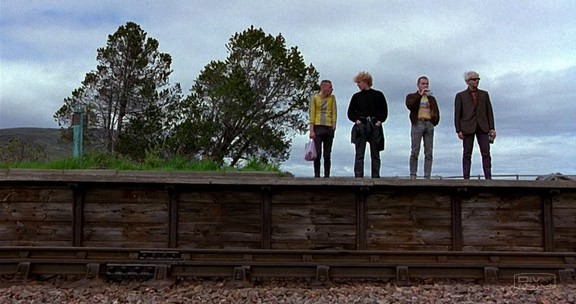
Trainspotting flew out of the gates in 1996 and took the world by storm, first causing a sensation in the United Kingdom, and then moving on to the United States bolstered by a soundtrack that mixed classic rockers (Lou Reed, Iggy Pop) with contemporary ones (Blur, Primal Scream). Audiences couldn’t get enough of this gritty, often funny, sometimes harrowing tale of Scottish heroin addicts. Based on Irvine Welsh’s edgy cult novel of the same name, Trainspotting was adapted by a trio of filmmakers – director Danny Boyle, screenwriter John Hodge and producer Andrew Macdonald – who had previously collaborated on the nasty suspense thriller Shallow Grave (1994).

They chose just the right passages from the novel and proceeded to capture the spirit of what Welsh was trying to say without judging the characters. This resulted in the film getting into trouble as some critics felt it glorified drug addiction. The film takes an unflinching look at the lives of a group of drug addicts and shows why they do drugs — the highs are so unbelievably amazing. However, Trainspotting also shows the flip side: death, poverty and desperation, which lead to stealing, lying and cheating just to get more drugs. Regardless, the film was a commercial and critical success, spawning all sorts of imitators and influencing countless other U.K. filmmakers to go through the door that it kicked open.

The six-minute prologue does a brilliant job of introducing a group of Scottish drug addicts as seen through the eyes of one of them — Mark “Rent Boy” Renton (Ewan McGregor). His friends include a speed freak motormouth named Daniel “Spud” Murphy (Ewen Bremner), a suave ladies’ man, Simon “Sick Boy” Williamson (Jonny Lee Miller), straight-edged Tommy MacKenzie (Kevin McKidd) and sociopath Francis “Franco” Begbie (Robert Carlyle). Each one of them has their own distinct personality that each actor vividly brings to life. This prologue also sets the tone for the rest of the film as it starts literally on the run with Renton and Spud being chased by the cops to the pounding strains of “Lust for Life” by Iggy Pop (before it became overused thanks to countless commercials using it bizarrely out of context) as Renton’s voiceover narration talks about his “sincere and truthful junk habit.”

The energetic camerawork — fasting moving tracking shots (that recall Mean Streets) as Spud and Renton run from the police and the freeze frames (reminiscent of GoodFellas) with title cards identifying each character is an obvious stylistic homage to Martin Scorsese. Like many of his films, Trainspotting is bursting at the seams with energy and vitality that is very engaging. The prologue does its job by immediately grabbing our attention and drawing us into this world populated by colorful characters. After 30 minutes of showing the incredible highs of shooting heroin where we’re caught up in the euphoria of it with Renton and his friends, director Danny Boyle starts to show the ugly side, starting with the death of fellow junkie Allison’s baby due to neglect.

From there, Renton and Spud get arrested for stealing with the former going into a rehab program while the latter goes to jail but not before Renton takes one more hit and promptly overdoses in a surreal bit where he sinks into the floor and is taken to the hospital by taxi seen mostly from his zonked out point-of-view to the strains of “Perfect Day” by Lou Reed. However, Trainspotting’s heart of darkness is the sequence where Renton goes through the horrors of withdrawal and his reality becomes warped by hallucinations of Allison’s dead baby and his friends. Ewan McGregor really does a fantastic job of conveying Renton in the depths of a painful and terrifying withdrawal.

John Hodge’s screenplay masterfully distills Welsh’s novel to its essence and includes some of its most memorable dialogue. From Renton’s famous “Choose life” monologue (“Choose life … But why would I want to do a thing like that? I chose not to choose life: I chose something else. And the reasons? There are no reasons. Who needs reasons when you’ve got heroin?”) to Sick Boy’s “Unifying Theory of Life” speech (“Well, at one time, you’ve got it, and then you lose it, and it’s gone forever.”), Trainspotting has insanely quotable lines. This helped it develop a loyal cult following over the years that continues to champion the film even to this day. And yet what resonates most is its honesty. The film doesn’t sugarcoat its message and it isn’t preachy about it either. There is an ironic detachment that transforms it into a playful black comedy mixed with gritty drama and surreal sequences.

It doesn’t hurt that this excellent material is brought to life by a fantastic cast of then relative unknowns (especially to North American audiences). Ewan McGregor has the toughest role in the film playing an unrepentant junkie while also acting as the anchor that the audience identifies with and the character that the rest of the cast revolves around. It is a tricky balancing act because Renton does things that make him unlikable and yet we still root for him because of McGregor’s charisma. Fresh from his role as an American computer user in Hackers (1995), Jonny Lee Miller plays Sick Boy, Renton’s best mate but someone who lacks “moral fiber” despite his vast knowledge of Sean Connery. He ends up taking advantage of his friend in a dodgy scheme and Miller does a nice of showing how Sick Boy went from best mate to scheming con man.

Robert Carlyle is also great as the completely unhinged Begbie. The scene where he recounts a colorful story about playing pool (“I’m playing like Paul-Fuckin’-Newman by the way.”) and dealing with his cocky opponent (“You ken me, I’m not the type of cunt that goes looking for fuckin’ bother, like, but at the end of the day I’m the cunt with a pool cue and he can get the fat end in his puss any time he fucking wanted like.”) perfectly captures the essence of his character. Begbie gets his kicks from starting up trouble. As Renton puts it, “Begbie didn’t do drugs either. He just did people. That’s what he got off on; his own sensory addiction.” Carlyle has a frightening intensity and an unpredictability that is unsettling and exciting to watch. Ewen Bremner completes the core group of characters as the not-too bright Spud. He has a good scene early on when, hopped up on speed, he goes to a job interview with the notion of sabotaging it without appearing to. It’s a tricky tightrope that Bremner handles expertly.

Trainspotting also features one of the best contemporary soundtracks with an eclectic mix of British music from the likes of Primal Scream, New Order, Blur and Underworld, and from America, Iggy Pop and Lou Reed. The music veers back and forth from the adrenaline-rush of Iggy Pop’s “Lust for Life” to the faux spy music by Primal Scream to the drugged-out mellow mood music of “Perfect Day” by Lou Reed. Taking a page out of Scorsese’s book, the filmmakers use the music as signposts by conveying the transition of guitar-driven rock in the 1980s to the acid house music scene in the 1990s.

Producer Andrew Macdonald first read Irvine Welsh’s novel Trainspotting on a plane in December 1993 and felt that it could be made into a film. He turned it on to his filmmaking partners, director Danny Boyle and screenwriter John Hodge in February 1994. Boyle was excited by its potential to be the “most energetic film you’ve ever seen – about something that ultimately ends up in purgatory or worse.” He convinced Welsh to let them option the rights to his book by writing a letter stating that Hodge and Macdonald were “the two most important Scotsmen since Kenny Dalglish and Alex Ferguson.” (legendary European football player and manager, respectively, from Scotland) Welsh remembered that most people interested in optioning his book, “wanted to make a po-faced piece of social realism like Christiane F or The Basketball Diaries.” He was impressed that Boyle and his partners wanted everyone to see the film and “not just the arthouse audience.” Welsh agreed to sell the rights to them.

In October 1994, Boyle, Hodge and Macdonald spent a lot of time discussing which chapters of the book would and would not translate onto film. Hodge adapted the novel, finishing a first draft by December, while Macdonald secured financing from Channel 4, a British television station known for funding independent films. According to the screenwriter, his goal was to “produce a screenplay which would seem to have a beginning, a middle and an end, would last 90 minutes and would convey at least some of the spirit and the content of the book.”

Pre-production on Trainspotting began in April 1995. When it came to casting the pivotal role of Mark Renton, Boyle wanted somebody who had the quality “Michael Caine’s got in Alfie and Malcolm McDowell’s got in A Clockwork Orange”: a repulsive character with charm “that makes you feel deeply ambiguous about what he’s doing.” Boyle and Macdonald were impressed with the performance Ewan McGregor had given in their previous film, Shallow Grave, and cast him in advance. Ewen Bremner had actually played Renton in the stage adaptation but agreed to play the role of Spud because he felt “that these characters were part of my heritage.” Boyle had heard about Jonny Lee Miller playing an American in Hackers and was impressed with him when he auditioned by doing a Sean Connery accent. For the role of Begbie, Boyle thought about casting Christopher Eccleston who had been in Shallow Grave but asked Robert Carlyle instead. The actor said, “I’ve met loads of Begbies in my time. Wander round Glasgow on Saturday night and you’ve a good chance of running into Begbie.”

Once cast, Ewan McGregor shaved his head and lost 26 pounds. To research the role, the actor actually considered taking heroin but the more he read and learned about it, the less he wanted to do it. Then, he went to Glasgow and met people from the Carlton Athletic Recovery Group, an organization of recovering heroin addicts. He (and several other cast members) took classes on how to cook up a shot of drugs using glucose powder.

With a budget of $2.5 million, Trainspotting was shot during the summer of 1995 over seven weeks. The cast and crew moved into an abandoned cigarette factory in Glasgow. Due to the rather small budget and limited shooting schedule, most scenes were shot in one take with the effects done practically. For example, when Renton sank into the floor after overdosing on heroin, the crew built a platform above a trap door and lowered actor McGregor down.

When Trainspotting was shown out-of-competition at the 1996 Cannes Film Festival, it received a standing ovation. Once Miramax Films picked it up for North America, Macdonald worked with them to sell the film as a British answer to Pulp Fiction (1994), flooding the market with postcards, posters, books, soundtrack albums, and a revamped music video for Iggy Pop’s’ “Lust for Life” directed by Boyle.

Trainspotting has aged surprisingly well considering it was one of those zeitgeist-defining movies of the ‘90s. It also set the tone and style of later British exports, opening the floodgates for films like the nasty crime drama Twin Town (1997), the hyperactive rave culture comedy Human Traffic (1999) and the films of Guy Ritchie. In an interview for The Guardian, Boyle said, “Has it dated? I can’t tell you that. I am alarmed sometimes by how young the people are who say they’ve seen and loved Trainspotting, so it might have lost an edge it once had. Shallow Grave looks dated, fashion-wise, but Trainspotting has an abiding style.”
PTS PRESENTS WRITERS WORKSHOP with WILLIAM WISHER

WISHER POWERCAST

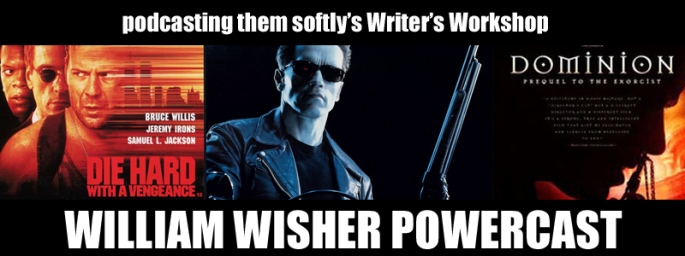
Wisher BrosnanPodcasting Them Softly is beyond excited to present a chat with screenwriter and producer William Wisher, who co-wrote The Terminator and Terminator 2: Judgment Day with James Cameron. William also collaborated with director John McTiernan on The 13th Warrior, he wrote the screenplay to Judge Dredd, and collaborated with Paul Schrader on Dominion: Prequel to the Exorcist. He’s also a contributor to the Die Hard franchise as screenwriter and producer, while also making some extremely memorable film appearances. He’s got a new film with Pierce Brosnan coming out later this year called I.T. and he’s working on a new action film with director John Moore called Come Hell or High Water, which based on the title alone, suggests something epic! He’s also a well known script doctor, which is an intriguing area of the business that both Frank and I are fascinated with. This is a fun, extremely informative chat with lots of interesting bits and pieces about the business and some of the biggest franchises ever to hit the screen. We hope you enjoy!
J.C. CHANDOR’S A MOST VIOLENT YEAR — A REVIEW BY NICK CLEMENT

a most violent year


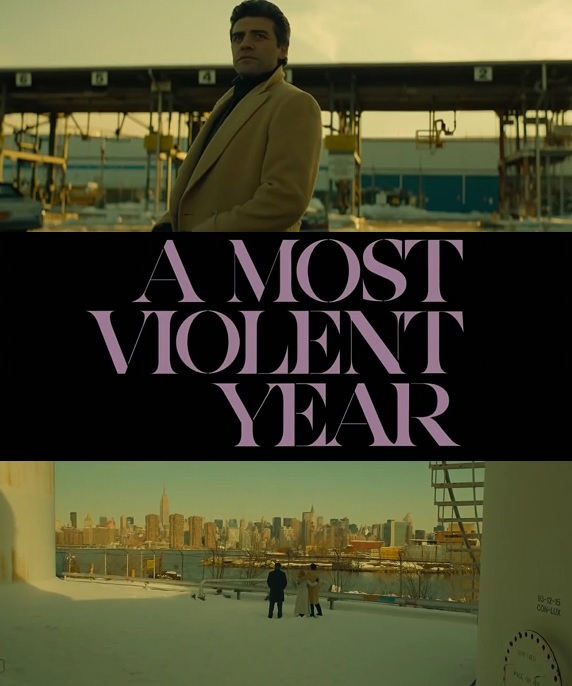
How does a (mostly) honest man working in a thoroughly corrupt industry stay on the right side of the tracks? What’s wrong with cutting corners and being shady if all of your competitors are taking extra, morally questionable steps to ensure their success? What drives people to do the things they do? These are only some of the questions that the thematically rich film A Most Violent Year covers in an intimate, very 70’s way. Writer/director J.C. Chandor (Margin Call, All is Lost) summons the ghost of Sidney Lumet with this down and dirty, early 80’s NYC fable consisting of businessmen, politicians, cops, wives, children, and the constantly shifting dynamics between men of power and those who are needed to allow that power to continue and thrive.

Every character in this slow-burn drama (with a tad of melodrama thrown in at the end) is out to get their own; everyone has an agenda and enormous reasons for wanting the things they want. When one character asks another in this beautifully written story about ethics and morals: “Why do you want this?” the question takes on multiple meanings. And when the character answers with simply: “I don’t understand your question” you know that this is a film that isn’t interested in black and white notions of good and bad, but rather, the gray areas that separate us from doing right and wrong.

A Most Violent Year carries a metaphorical title that extends more to the atmosphere of NYC in the early 80’s then it does to constant violent action, which is something that this talky, low-key, and wonderfully observed movie is most definitely not interested in. Yes, you get some fantastic foot chases and one sensational, hair-raising car chase that echoes the POV hell-ride in James Gray’s The Yards (another Lumet homage), but A Most Violent Year is all about the distinct performances and the pungent writing and the burnished, dark, early morning and late night cinematography from shooter-of-the-moment Bradford Young. His work here is elegant and smoky, all browns and blacks and golds with splashes of orange and red for accent. I loved looking at every image in this movie.

Oscar Isaac was sensational as Abel Morales, a man trying to run a home heating-oil company with his wife Anna (a juicy, sexy Jessica Chastain, playing the ultimate snake-in-the-grass), and always attempting to run an honest business without cutting too many corners. Interesting in that he’s always being “mostly good,” Abel knows he could call his wife’s gangster father for support in any number of ways (someone is jacking his oil tankers and beating up his salesmen and drivers; people are waiting for him outside his new mansion in the late hours of the night with pistols, etc.) but he doesn’t want to do that. And despite probably knowing that his wife is more than meets the eye in any number of respects, he keeps his head up, doesn’t ask too many questions, and lets the assorted pieces to his complicated business puzzle take shape. By the end of this tense and gripping drama, if you loved it as much as I did, you’ll want to know more about what happens to the various characters as the screen fades to black – I know I did.

BATMAN V SUPERMAN: DAWN OF JUSTICE: A Review by Joel Copling

Rating in Stars: ***½ (out of ****)
Cast: Ben Affleck, Henry Cavill, Amy Adams, Jesse Eisenberg, Jeremy Irons
Director: Zack Snyder
MPAA Rating: PG-13 (for intense sequences of violence and action throughout, and some sensuality)
Running Time: 2:33
Release Date: 03/25/16

Batman V Superman: Dawn of Justice finds two super-egos doing battle and a megalomaniac who wants to control the situation for his own perceived glory. It’s as simple as that, really, except that that’s also far from simplistic. This film, as written by Chris Terrio and David S. Goyer, is an act of reconstructive revisionism of every concept we have of the characters in the surtitle. By the end, we also have our perception challenged with regards to the assembly of the league hinted at in the subtitle. This is not a movie that panders to its target audience (many of which may be unsatisfied by some of its risks and downright nuttiness), nor does it seem tailor-made, despite the obvious fact that it is, to lead to further sequels.

This Bruce Wayne is a haunted orphan whose parents’ deaths have taught him a surprising lesson about the ways of the world, and this Batman is a vigilante driven by rage. Ben Affleck’s performance as the man outside of the suit is a genuinely good one because of a focus that is borderline-cruel in nature, and his relationship with Alfred (Jeremy Irons) is uneasy at best. Inside the suit (which is bulkier and more metallic here, with a voice modulator), the actor is mostly asked to call upon his physicality, but it’s a trick that works. The title fight is a brutish and brutal one because, to put it informally, the guy is just freaking huge.

This Kal-El is an angry god. He trudges on in both of his alternate identities–that of Clark Kent, intrepid reporter alongside his girlfriend Lois Lane (Amy Adams, who unfortunately exists to be the damsel in distress here) for the Daily Planet, and Superman, the man in the blue suit and red cape who is seen here from one angle as a savior (Cinematographer Larry Fong consistently frames his entrances as that of a Jesus Christ figure), from another as a threat (A senator played by Holly Hunter calls hearings that are meant to put him on trial both legally and in a public forum), and from an indecisive third as something in between (A certain astrophysicist expands his idea of humanity’s smallness to reckon the existence of life elsewhere)–and Cavill’s stoic performance is still quite good here. The carnage that ended Man of Steel and another sequence here set in Africa that ends in more lost lives are the catalysts, and that is where our story starts.

The film re-frames the attack on Metropolis to be viewed from the ground as Bruce drives frantically through the streets to evacuate one of his company’s campuses. Death and terror–the film’s own reckoning of a 9/11-type attack–rain down around him as Kal-El and Zod (Michael Shannon) face each other. Fast-forward 18 months, and we find the Batman’s rein of vengeful justice catching the eye of both Kal-El, who questions the Batman’s motivation and methods, and Lex Luthor (Jesse Eisenberg in a strange performance–fittingly so), who has cottoned on pretty quickly to the real identity of both figures and wants to cause a rift. He also wants to unleash a kind of doomsday upon them, because, well, he’s insane.

The final confrontation between the Batman, Superman, and the mucous monster that Lex hath wrought (interrupted by a neat appearance from Gal Gadot as Wonder Woman) perhaps plays with the generic in a way that what proceeds it does not (The flashes of images of three other heroes certainly does, with their odd placement), but for a while, the climax keeps with the complex existential and philosophical battle going on here. Yes, the action sequences are well-conceived and executed (though the 3-D presentation doesn’t help what largely takes place in the dark) by director Zack Snyder, but they and, for that matter, the central question of who would win this fight are a secondary, even tertiary, concern. Instead, Batman V Superman: Dawn of Justice continues its immediate predecessor’s plan to pave a new path for these particular heroes in a way that feels starkly different to another group currently dominating the box office, and it’s a very intriguing step, indeed.

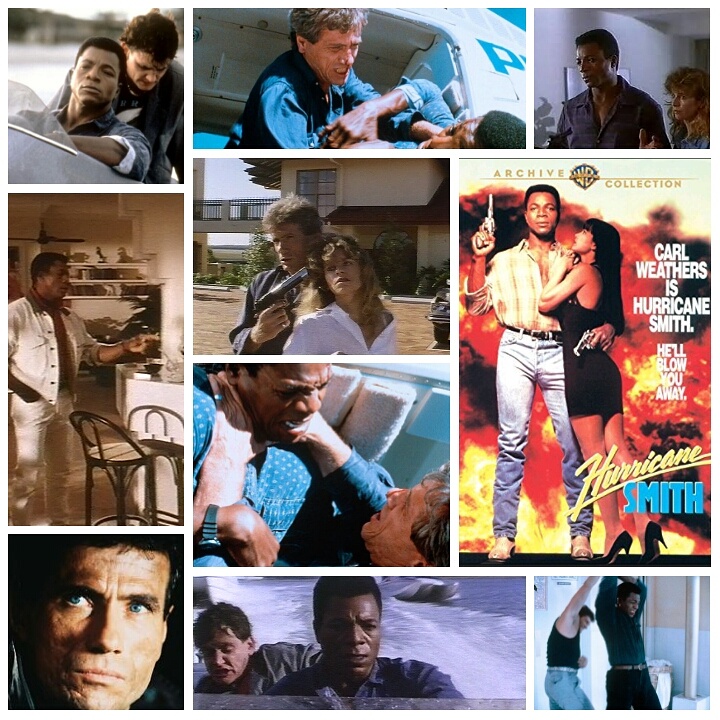
B Movie Glory with Nate: Hurricane Smith

image

Buckle up and watch built badass Carl Weathers head down under to take on vicious Australian criminals in Hurricane Smith, a blast of saxophone laced, trashy 80’s cheese that hits every beloved cliche in perfect chiming key. Weathers is an valued staple to the action genre, a memorable part of Predator and of course his thundering turn as Apollo Creed in the Rocky films. Along with his obvious commanding physicality, he has a likeability that lends itself nicely when it comes to playing heroes out for retribution. His character got the nickname Hurricane after he pulled a friend out of a falling building during the titular meterological event, cementing him as a tough guy worthy of carrying a ninety minute action flick on his shoulders. Hurricane is off to Australia, in search of his sister who has recently gone missing. He stumbles right into the midst of a hornet’s nest of a criminal organization, led by Charlie O Dowd (Jurgen Prochnow), a stunningly evil pimp and drug runner. Prochnow loves to paint his villains in broad, garish strokes and he downright outdoes himself here, careening through a performance of wanton carnage and positively dripping malice. Hurricane is a massive thorn in his side, dismantling his operation in every attempt to learn what happened to his sister. He gets romantically involved with a kindly hooker (Cassandra Delany) leading to the obligatory 80’s slow dance sex scene that everyone waits for in these type of flicks. There’s bullets, car chases, an action scene on a helicopter and all kinds of trademark B movie lunacy. Weathers makes a damn good hero. Prochnow is one hell of a wicked villain. Fun stuff.