Cary Jo Fukunaga’s Maniac

Cary Jo Fukunaga’s Netflix show Maniac is to date the only one I’ve ever binged in one sitting. It’s fucking magic. I slept in and got to work late today because I just had to finish the thing last night. The one word that comes to mind with this is unique. It’s a science fiction comedy drama stroke of cosmic brilliance that draws on everything from Kafka to Michel Gondry to Cloud Atlas to Inception to Kubrick and many others, but not for one moment does it feel derivative, and there is, and I mean this, nothing out there quite like this. If you’ve seen a trailer or read a blurb, you’ll know it stars Emma Stone and Jonah Hill as two participants in a mysterious pharmaceutical drug trial, and indeed that is the launching pad for this strange, wonderful story infused with cassette futurism and dream logic, but oh just wait and see how deep, how multilayered and complex it becomes with each passing minute. After two opening episodes that burn sort of slow but are very important for developing character and establishing tone and setting, this hallucinatory, multi dimensional odyssey of self discovery and awakening constantly surprises the viewer by shirking narrative standards, constructing a script that feels fresh and untrodden, like a dimly lit path where anything could jump out at any second and all the well travelled beats have been cast away. Hill and Stone are unparalleled here, each playing a score of different characters throughout time and space and doing things with their work that I’ve never seem come from them before. Despite this being a fantastical show that traverses many internal worlds and has a whole host of dazzling special effects to showcase, above all it is an extremely thoughtful, often very dark psychological exploration of these two beings, the technology around them and how it may be used to map the human mind. Justin Theroux brings humour and eccentric humility as the neuro-chemist who is running the drug trial, Sonoya Mozuno is brilliant as his intuitive, chain smoking second in command and the cast is fleshed out by the likes of Hank Azaria, Josh Pais, Julia Garner, Geoffrey Cantor, Rome Kanda, Billy Magnusson, Glenn Fleshler, Joseph Sikora and more. Joining them are also veteran actors Sally Field and Gabriel Byrne in key roles, both of whom I love and haven’t seen in anything substantial for quite some time, they really shine here. I’m aware that this is loosely based on a Norwegian series of the same name, but honestly Fukunaga has used that as a drawing board and universally expanded the premise into something really special, original and magnificent. The central realms of the drug trial that Hill and Stone experience are the main show and the template used to plumb depths of the human condition, but just as vital is the story unfolding in the lab with Theroux, Mizuno and Sally Field, a slightly satirical look at how technology has started to approach the borders of the human soul, and even blur some lines there. I hope this gets traction, exposure and the high praise it deserves in the community. This is the best thing in any medium I’ve seen so far this year, and I can’t wait for countless revisits.

-Nate Hill

Kurt Wimmer’s Ultraviolet

I feel sorry for everyone and anyone involved with the disaster that is Kurt Wimmer’s Ultraviolet, because it has to be one of the worst films of the century. Wimmer also made Equilibrium, which is excellent, but this seems to be like the stylistic antithesis of that, everything that worked right subtly and in moderation there has been employed at a furiously excessive level here. The entire thing looks like it was shot against a green screen and then rendered sloppily by a roomful of monkeys. Poor Milla Jovovich has been a trooper through some crap in her career but this has to be the ultimate embarrassment, she’s stuck playing some pseudo vampire warrior chick who babbles in monotonous inner monologues about nothing in particular and crashes her way through sword fights and stunt work like she’s fighting her hardest to escape the film and go make another Resident Evil movie, right after she fires her agent. Set in some dystopian future world where viruses reign supreme and blah blah, she’s protecting some kid (Cameron Bright) who lives in a carry on suitcase (literally, it’s like a Harry Potter tent), from a big bad megalomaniac villain (Nick Chinlund does his best, but man is the writing bad) who wants to use his blood or DNA for something blah blah. The great William Fichtner sheepishly mumbles his way through a supporting turn that adds nothing but ineffective exposition because I still have not a clue what happened. Every action set piece has the numb, ineffectual scream of mediocrity, and your eyes glaze over quicker than Milla whips her katana around at nothing. At first I thought this was a failed anime adaptation a lá Aeon Flux or something, but nope, Wimmer has the sole writing credit. I’ll always love the guy for Equilibrium, but man he struck out big time with this giant fucking pile of excremental detritus. The only plus side? Milla is smoking hot as usual.

-Nate Hill

David S. Goyer’s The Unborn

There’s a lot of ideas running around in David S. Goyer’s The Unborn, ideas that a terrific cast do their best with but ultimately this was one big WTF of a letdown, a boring waste of time that deserved better execution than it got. It’s essentially another Exorcist retread, given a twist, with Odette Yustman (whatever happened to her? She was sort of like Megan Fox Lite) playing a girl who is tormented by something called a Dybbuk, some sort of mythological Jewish entity but also just a fancy way of saying demon. It has something to do with her unborn twin who never made it past utero, her institutionalized mother (Carla Cugino, wasted in a heavily cut role) as well as history dating back to Joseph ‘Angel of Death’ Mengele, the infamous Nazi surgeon who had an obsession with twins, a theme that also plays on here. This thing haunts and eventually possesses her, until she finds help from two priests played by Gary Oldman and Idris Elba, in roles beneath their talent. There’s one nicely written scene where she and her boyfriend (Cam Gigandet, who can’t act to save his life) ponder the universe and all its terrors while in bed that would have been better brought to life by different actors. Various scenes show her interaction with her loving father (James Remar), but they’re underdeveloped and feel edited. Mostly it’s just her running from freaky scuttling apparitions, loose plot threads hanging about like wires in an abandoned warehouse and just.. bleh. There’s definitely something there in terms of brainstorming script ideas, but they screwed it up big time by making a haphazard, boring, generically glossy PG-13 dud instead of putting some actual style, personality and genuinely frightening elements in. Big ol’ missed opportunity. It’s a shame, because there’s some neat, spooky special effects thrown at the wall here that deserve a better film, and I’d expect better from Goyer too. Oh well.

-Nate Hill

Gore Verbinski’s Mouse Hunt

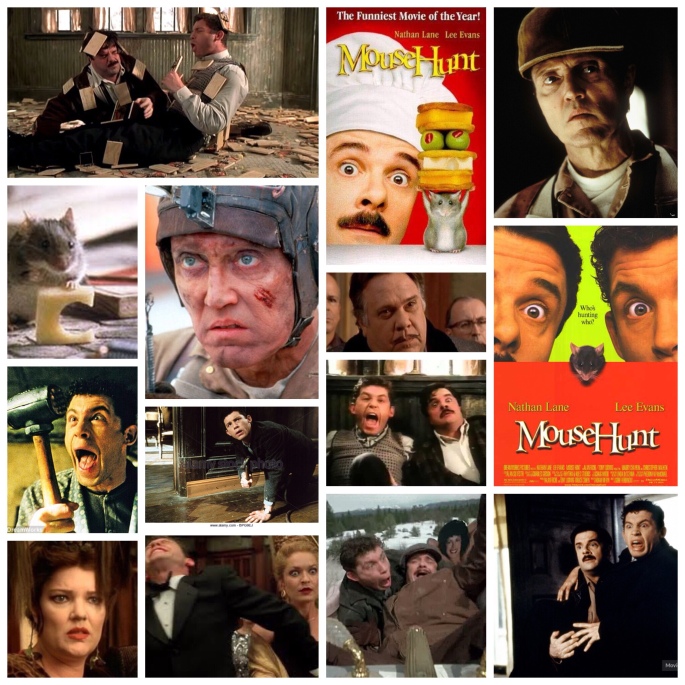
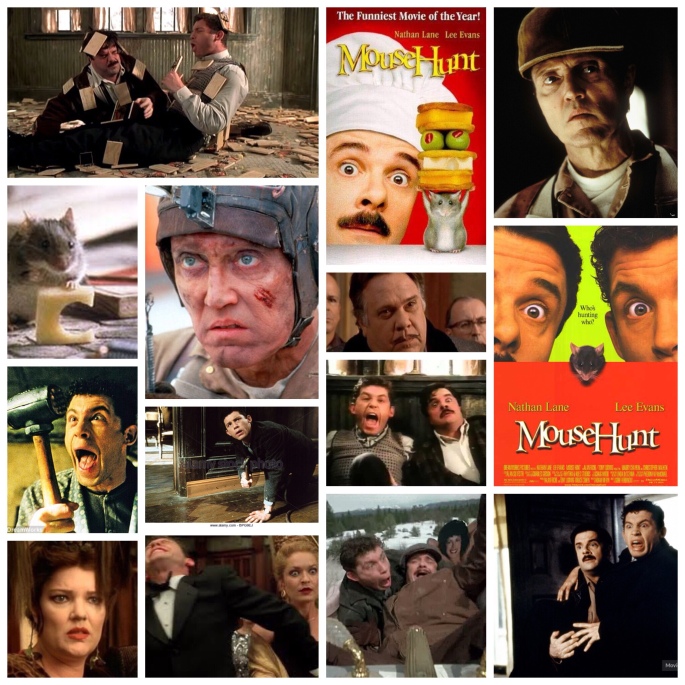
I will never not rave about Gore Verbinski’s Mouse Hunt. Although built around a concept that’s clearly meant to be a kids movie, Gorebinski is a stylistic maverick who whips it up into something weird, warped and at times definitely in the realm of adult humour. Nathan Lane and Lee Evans channel Laurel and Hardy as the Smuntz brothers, two severely idiotic brothers who inherent a creaky old mansion from their deceased father (A spooky William Hickey, literally looking like he has both feet, both arms and several other appendages already in the grave). When the two of them find themselves homeless and the manor turns out to be worth a fortune, luck seems to favour them. Only problem is, the house has one very stubborn tenant, a four inch mouse who not only refuses to leave, but royally fucks up their renovation plans at every turn in a dizzying parade of slapstick mayhem that would have Kevin from Home Alone Running the other way. The concept may seem dumb, but there’s just no denying that this is a smartly written, deftly comedic film laced with all kinds of verbal gags, visual grandeur and wit, disguised as a children’s screwball comedy. All kinds of oddball actors show up including scene stealing Maury Chaykin as a bratty real estate mogul, Michael Jeter, Ian Abercrombie, Vicki Lewis, Ernie Sabella, Debra Christofferson and more. My favourite has to be Christopher Walken as an exterminator who takes his job hysterically seriously, it’s like the twilight zone watching his mental state unravel as the mouse constantly one ups him and he loses his shit. This isn’t your average fast paced comedy either, where every set piece is geared towards specific dialogue and visual details aren’t important. Production designer Linda DeScenna has outdone herself in creating a gorgeous, lived in atmosphere and burnished 1930’s palette full of subtle gimmicks and menacing, almost Tim Burton style visuals, while writer Adam Rifkin fires off wry satirical jokes and jabs every other line and creates a wonderfully off colour, unique script. Some of the set pieces get so raucous you feel like you’re in a Looney Toons vignette, stuff like flying bathtubs, a psychotic cat, a flea bomb with near nuclear capabilities, a vacuum cleaner filled with explosive poo, a room filled with hundreds of mouse traps (done practically without CGI, I might add), an auction that quite literally brings down the house and so much more. Far fetched, you might say? Definitely, but that’s the film’s magic, and it pays off to just go with it’s crazy vibe. It kills me that this wasn’t received well critically, because it’s something fresh, something smart in the comedy genre that doesn’t insult its audience and so much more than just ‘that mouse movie.’ A classic in my book.

-Nate Hill

Adrian Lyne’s Fatal Attraction

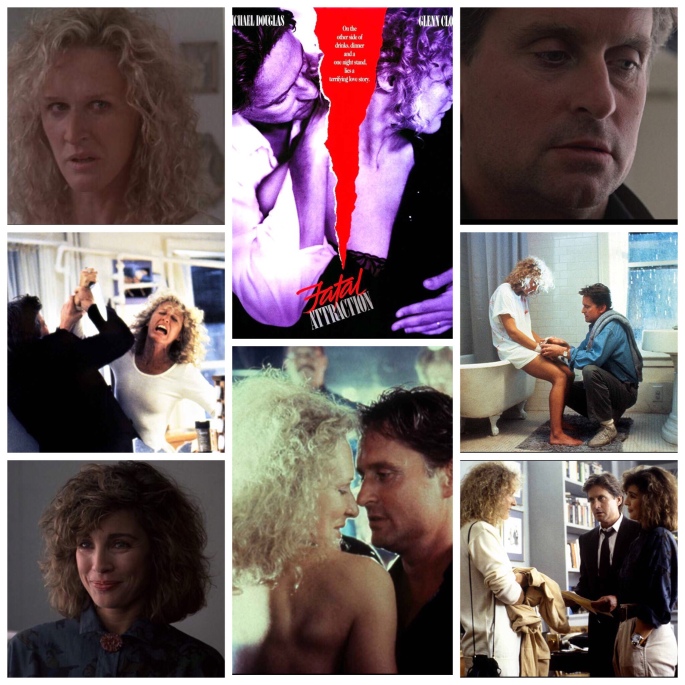
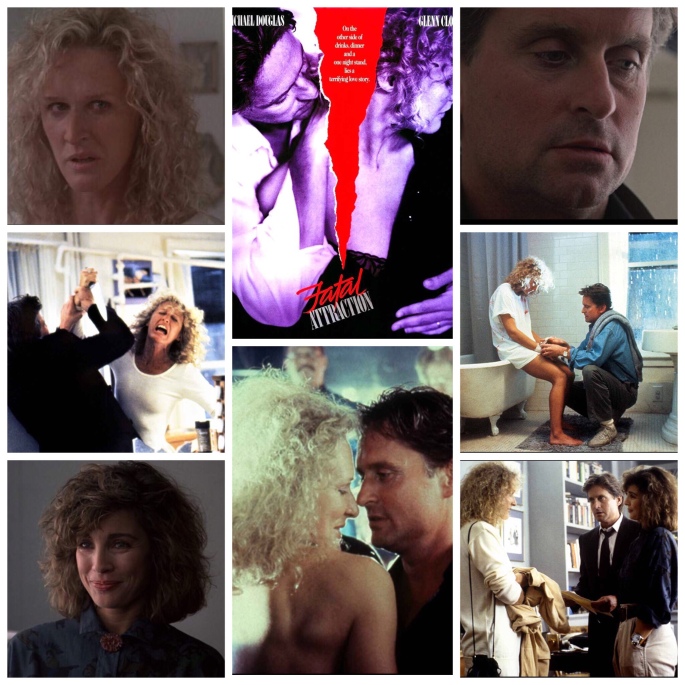
Adrian Lyne’s Fatal Attraction left me both a uneasy and appalled. Billed as a sleek, sexy psychological thriller, it showcases Michael Douglas and Glenn Close in an ugly, disturbing cautionary tale regarding adultery and lies, and although well acted it came across as really misguided to me. Keep in mind I didn’t see it way back when, I only got around to it recently to see what all the fuss is about and because I like Lyne’s other work (check out Jacob’s Ladder for an *actual* psychological thriller), so I don’t have yesteryear nostalgia for it. Michael Douglas always seems to be at the whim of women scorned, be it the calculating femme fatale (Sharon Stone in Basic Instinct), the power tripping boss (Demi Moore in Disclosure), the scheming lover (Gwyneth Paltrow in A Perfect Murder), or the hag ex wife (Kathleen Turner in War Of The Roses). Here the female character is startlingly real as opposed to archetypical caricature, splendidly portrayed by Glenn Close but… she’s stuck in the wrong narrative, a lurid, nasty exercise in cheap scares and exploitation that isn’t remotely kind to either character and has no idea what tone or outlook it wants to take. Douglas has a one night stand with her, having no idea who she is or where she comes from, which is already ill advised. Worse? He’s married, to poor Anne Archer, and has both a kid and an adorable bunny rabbit, which obviously doesn’t last long the way the film is headed. Soon after he rejects her further advances, she gets clingy, unstable and downright scary, but here’s the thing: this is obviously a girl who is very sick, as he finds out later, and not just some thinly written psycho-sexual serpent like in many of these films. How does he react? Well, instead of calling authorities or getting help as soon as one, maybe two of those red flags go up, he aggressively spurns her a second time, and has no coherence or intuition to fix the situation, plus he’s a little bitch who wants to keep his indiscretion secret at all costs. I understand that thriller guidelines dictate logic right out the window, but Close’s performance is too realistic and fascinating to be quick-sanded in such a silly, insulting story. Not to mention the fact that once the final act has rolled around, she has devolved into a rabid slasher villain and the script has ceased to care about any semblance of character at all. If the pieces fit a little better with this one, it might have worked, but as is I found myself wishing the whole time that they would ditch the ridiculous storyline and do a serious spinoff of her character. A tasteless misfire.

-Nate Hill

Shane Black’s The Predator

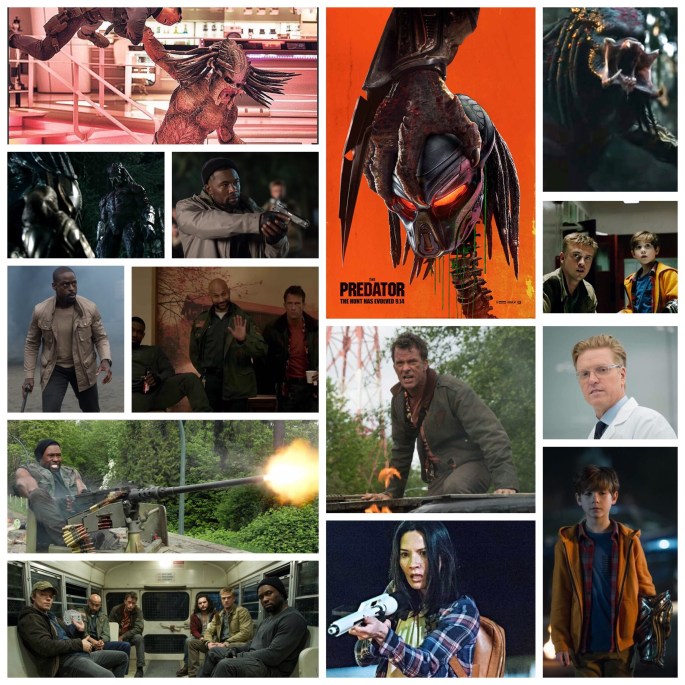
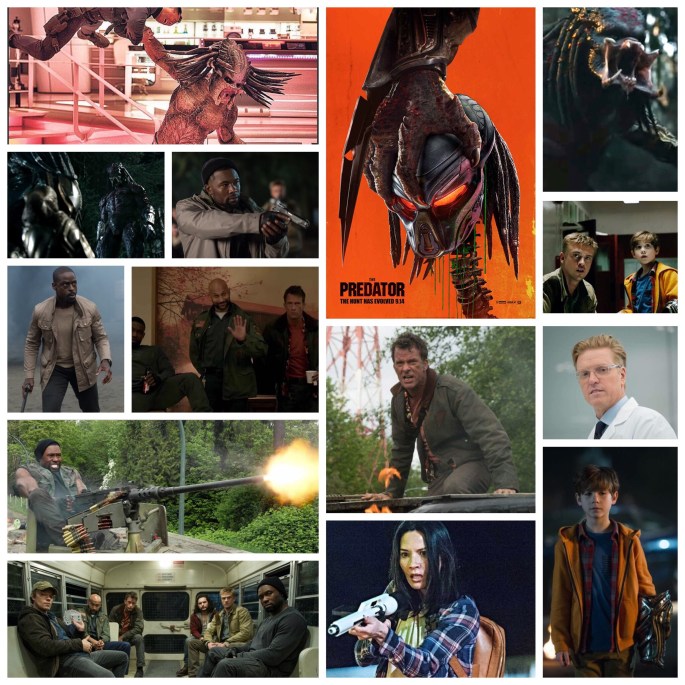
So.. Shane Black’s The Predator. Haters gonna hate I suppose, but I really don’t get the negativity thrown this one’s way, it’s a shit ton of fun. Admittedly a stark departure from any other film in the franchise, Black’s signature is to brand things with an irreverent comedic stamp, and they should have realized that when they handed over the torch to him. This is Predator in American suburbia, a much smaller film than those before, but no less gory, imaginative or propulsive, and certainly nowhere close to as disappointing as I’ve read in some of these hilarious reviews. After a jungle set opening that mirrors John McTiernan’s original classic both visually and musically, a device worn by one of the Predators gets accidentally mailed to the young son (Room’s Jacob Tremblay) of the military sniper (Boyd Holbrook, channeling 80’s Michael Biehn nicely) who managed to kill one of them, all hell breaks loose when the rest of the creatures come looking for it, and intergalactic war hits the home front. Holbrook is placed on a prison bus populated by the Loonies, disgraced ex soldiers with PTSD who serve as the perfect rogue unit to abscond with the bus and take on the aliens using guns, bad jokes, a constant stream of profanity and eccentric personalities. Elsewhere, Olivia Munn’s super scientist makes educated guesses about both the intentions and biology of the Predators, eventually joining forces with the Loonies. It’s madcap and almost has an adult Amblin vibe which actually works quite well. Scene stealer Sterling K. Brown makes an oddball villain as a snarky Fed with his own agenda, while Jake Busey slyly plays the son of his dad’s Uber Predator hunter from the 1990 sequel. Now, the Loonies are as off colour a bunch as you’d expect to see in a Shane Black flick, but for me their weird chemistry and crudeness worked. Keegan Michael Key is the coked up comic relief, a guy who punctuates every awkward silence with a severely raunchy joke, Alfie Allen is underwritten but present, Trevente Rhodes scores big as Nebraska Williams, a chain smoking ex CO who is the brains of the bunch. My favourite performance of the film is Thomas Jane cast way against type as Baxley, who suffers from Tourette’s except when the plot requires him to steadily hold a firearm. I’ve read a lot of people call his character insensitive and I’m not sure what they’re drawing from, I have a family member who has Tourette’s and Jane’s work here is one of the most realistic depictions I’ve seen on film, it’s probably just all the other comedic commotion around him that accents it. Alongside Jane, I really like Munn, who obviously doesn’t look the part of a brainy scientist but fully gets the vibe here and has a lot of fun with her role. The Predators themselves seem bigger, louder and more vicious than before, often seen in broad daylight, with nastier attitudes and, at one point, speaking in plain English albeit via translator. Their part of the story is definitely far fetched but has imagination and thought put into it. They’re less the hunters here (except for that eleven foot tall motherfucker) and more like space spies with their own private feud going on. This has obviously been a divisive film so far.. I’ve heard a buddy say that it’s ‘one of the worst movies he’s ever seen.’ I can’t imagine that’s anything but overzealous overkill, it’s not an instant classic or anything but it was bloody fun, entertaining stuff. Honestly, my only complaint? It wasn’t long enough. There are areas that feel patchy and I imagine that’s where this studio interference I keep hearing about took place, and although it doesn’t come close to ruining the movie, I’d really love to see a director’s cut from Black at some point. But what we got was a solid blast of a film from where I’m sat. I mean, you get a guy like Shane Black to make a Predator film, it’s not like this is some gun for hire, he’s his own specific artist and is going to make the thing his way. Studio cuts aside, he’s done a slam bang job here, an action horror comedy sci-fi hybrid that feels as retro as it should while injecting new life and flavour into the mythos. Call me crazy, I guess.

-Nate Hill

Paul W.S. Anderson’s AVP: Alien Vs. Predator

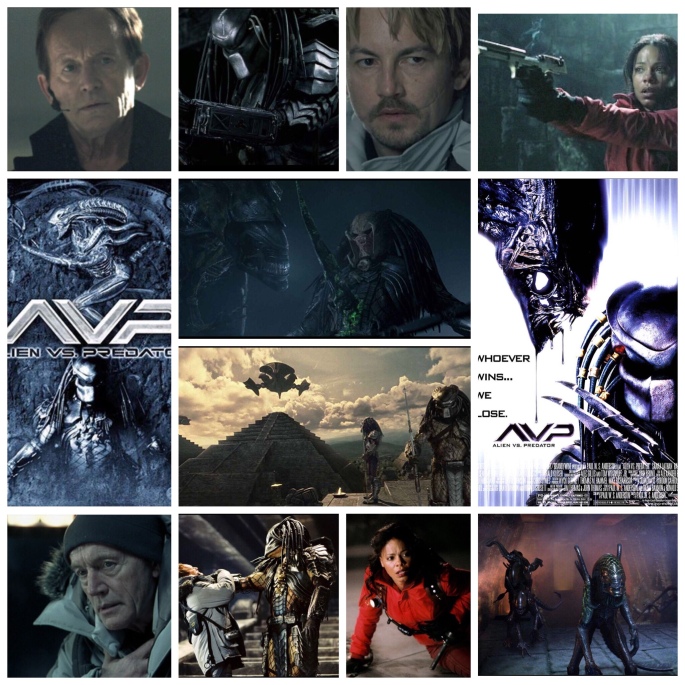
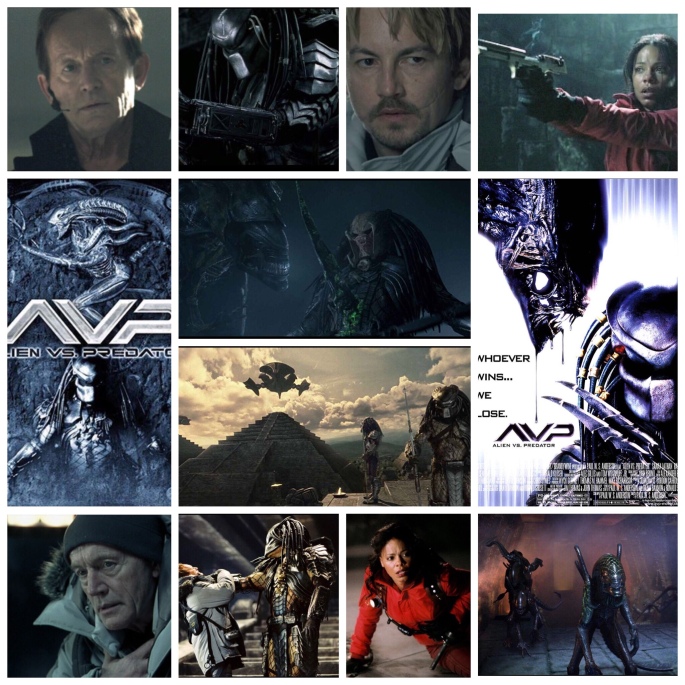
Here’s the thing: much of what is needed was in place to make an epic, badass Alien/Predator crossover flick. They had a solid premise, a director with a sure footing and visible background in horror, an able cast with a genre/franchise titan as a callback to earlier entries, and all the special effects they could want at their disposal. So how did AVP: Alien Vs. Predator end up being an oven roasted, inexcusable slice of shit? Well, script and execution I suppose, the whole thing just has a murky, suspiciously rushed feel to it and no trace of memorable pedigree at all. However, to me their first mistake and cardinal sin was to rate the thing PG-13. These are two intense, extremely graphic and gruesomely violent horror franchises, and as such any amalgamation should, of anything, step up the carnage, so whoever had final say as far as that goes should have a face-hugger attached to every orifice of their body. So what does work? Well, Lance Henriksen for one, but he has a history of being the best thing about many films he’s been in and it’s hard for him not to shine through any amount of muck. He plays the dying CEO of infamous Weyland Yutani corporation and gives all the grit and gravity he can amongst a flurry of inconsequential CGI. Recruiting a team of scientists and mercenaries, he plans to descend into an Antarctic pyramid where centuries ago, the mythic Yautjas and the primal Xenomorphs had a Royal Rumble. Star Sanaa Lathan is actually great as the ‘final girl’ of sorts in this slasher game, other team members include Ewan Bremmer, Raoul Bova and Tommy Flanagan, but most are lost in the confusion, poorly written or forgotten entirely. The battle scenes are haphazard and sloppy, the dialogue barely there and the colour scheme is this kind of shitty, subdued blue-hue nonsense with no personality it’s own, like an icy deodorant commercial that just happens to have monsters in it. Many people blame director Anderson, but who really knows. People forget that he’s responsible for the first Resident Evil film which is solid, gutsy horror and has the type of energy meant to be found here, as well as Event Horizon, one of the scariest, well wrought sci-fi/horror flicks of the century, so he was a reasonable candidate to helm this. In any case, it’s a big ol’ mess, a titanic wasted opportunity and a dark stain on both respective legacies. There’s a sequel which I haven’t seen, but it’s probably just as wretched.

-Nate Hill

Robert Rodriguez’s Predators

I like to call it Robert Rodriguez’s Predators despite the fact that he only has a producer’s credit, but his influence is all over it, plus the presence of Danny Trejo. This is one solid flick though, and definitely holds up against the first two films. The premise could even be said is more innovative than before, because as with any sequel or update, the story must evolve and break new ground, a feat they’ve outdone themselves with here. The Predators have taken it upon themselves to kidnap the roughest, toughest individuals of the human race and set them loose on a giant planet designed to be a game preserve, and have their fun. Adrien Brody does tense vulnerability to a T as a special ops badass, joined by an Israeli soldier (Alice Braga), a Russian spetznaz operative (Oleg Taktarov), an ex cartel enforcer (Danny Trejo), a psychotic maximum security inmate (Walton Goggins), an African rebel (Mahershala Ali), a disgraced Yakuza (Louis Ozawa Changchien) and… Topher Grace, whose involvement gradually becomes clearer. They’re forced to band together against a squadron of specialized hunters who pursue them, complete with the vicious wildlife native to this planet. It’s incredibly cinematic, brutally entertaining stuff, and the actors give it their all, including Laurence Fishburne as a crazy dude who’s been alone on this world a few too many years. Standout scenes include the chilling moment these poor folks reach the crest of a hill, spot two giant suns in the alien sky and realize they’re not in Kansas anymore, as well as a knockout showdown between the Yakuza and a giant predator that eerily mirrors Sonny Landham’s Billy making a final stand in the original film. Atmospheric, well casted, acted and shot, a solid action horror funhouse that lives up to the Predator legacy.

-Nate Hill

“I’m not fallin’ all over myself to talk about much anywhere, Jack.” Manhunter Revisited – by Josh Hains

“He who fights with monsters should be careful lest he thereby become a monster. And if thou gaze long into an abyss, the abyss will also gaze into thee.”
– Friedrich Neitzsche

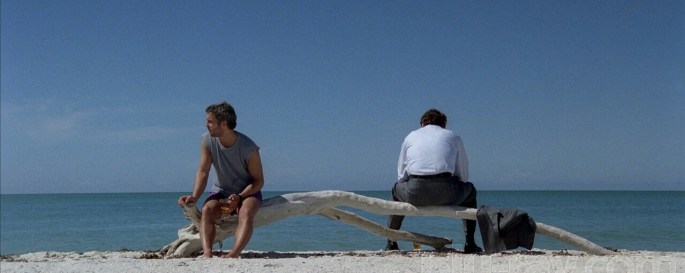
Will Graham doesn’t want to take the job Jack Crawford is offering, and we can hardly blame him. We are able to infer that whatever happened to him was of such a horrific nature that it caused his retirement from the FBI as a criminal profiler. We later learn in little bits and pieces (and not in an unnecessary prologue; I’m looking at you, Red Dragon) that a confrontation with the cannibalistic serial killer Dr. Hannibal Lecktor left him physically scarred from presumably gruesome injuries, and mentally broken. Through his body language and the stern, almost melancholic tone of his voice, we discern his reluctance, his unpreparedness, and we can sense the deep pain broiling beneath his calm surface. His peaceful existence in Marathon, Florida with his wife Molly (Kim Griest) and son Kevin is now on the brink of being shattered, all thanks to Jack’s perseverance. All it takes for him to crawl back into darkness is one look at a photograph of the deceased Leeds family, and the knowledge that he can help track down this one last psychopath, as if catching the killer will somehow put to rest his own inner demons from his years as a profiler. Easier said than done.

I revisited Manhunter on September 4th, over two years since the last time I’d seen it in March of 2016, and have given myself these last twelve days to absorb the film all over again. I had forgotten that for all of the darkness, despair, and violence, Manhunter is a beautifully photographed film, particularly during the opening scenes that establish Will’s moral quandary, and the serene dream sequence that occurs when Will falls asleep on a plane later in the picture. Even if Manhunter was somehow a genuinely awful movie, I believe I’d still remember those jaw droppingly gorgeous images conjured up by director Michael Mann and the director of photography Dante Spinotti. It certainly helps that I was watching it in high definition.

We later see that Will Graham (William Petersen) was indeed unprepared for this final job when he comes face to face with Dr. Lecktor in his cell, and experiences some manner of anxiety attack that sends him rushing out of the colossal building he’s incarcerated in. I recognized as with previous viewings, that unlike other interpretations of Lecter (spelled “Lecktor” only here in Manhunter, and spelled “Lecter” in the books by author Thomas Harris, and the other films and television shows) that reach for grandiose heights with the kind of theatricality one might expect from a Broadway production, Dr. Lecktor as played by the great Brian Cox, is a mild mannered, relaxed, everyman take on the character. He’s undoubtedly a psychopath, but his menace doesn’t come though in how he speaks but rather in what is spoken. This approach makes him all the more chilling than later versions because we know from human history that many of the most vile beings who have ever walked this earth, walked upon it in a manner as calmly, politely, and “normally” as Lecktor presents himself to be. What’s more frightening to you, reader: the Lecter you know is crazy before he’s ever opened his mouth because he practically smells of insanity, or the Lecktor you never suspect is insane until you’ve awoken under his knife?

Of course, no serial killer thriller is complete without the law enforcement affiliated lead, here personified with a palpable depth and a grounded everyman quality by William Petersen, in a performance as subdued and internalized as Cox’s Lecktor. Petersen never once strays into any kind of territory that would evoke feeling of his performance appearing fake or forced. He’s as natural as they come, and were it not for the knowledge that he is in fact, merely behaving for the screen, one might assume from his naturalism in Manhunter, To Live And Die In L.A., and CSI: Crime Scene Investigation, that maybe he’s the real deal, a cop turned actor like his co-star in Manhunter, the late Dennis Farina. Farina, who was a police officer in the Chicago Police Department’s burglary division for 18 years before Michael Mann used him as a consultant on his feature film debut, Thief (for which Farina also had a small role as an enforcer), turns in an equally as grounded, and entirely believable and authentic performance as Jack Crawford.

And then there’s the cause of Will’s return to profiling, the serial killer dubbed “The Tooth Fairy” for the bite marks he leaves on the bodies of his victims post mortem, better known to us as Francis Dollarhyde (Tom Noonan, who also has a small role in Mann’s Heat). His height and implied strength make him an imposing figure, though he’s also a shy little boy tucked away inside this monstrous shell, afraid to show his cleft palate, and obsessed with William Blake’s painting “The Great Red Dragon and the Woman Clothed in Sun”, later witnessed in a horrific scene with one of Dollarhyde’s victims, the sleazy reporter Freddy Lounds (the great Stephen Lang). That same painting has inspired an alternate personality borne out of his psychopathy he calls “Great Red Dragon”, which comes to life when he seemingly can’t control urges of both violent and sexual natures. Thanks in large part to Noonan’s eerie performance, and the subtle writing of Dollarhyde by Mann himself, the thin line between compassion and love, witnessed in intimate moments between Dollarhyde and blind co-worker Reba McClane (Joan Allen) with whom he starts a relationship with, and uncontrollable murderous rage, is narrower than the edge of a piece of paper, creating a figure all the more real and subtly terrifying.

It wouldn’t be a Michael Mann film without a memorable score or the use of a popular song, and Manhunter is no exception, complete with a thrilling, pulsating score from Michael Rubini, and The Reds, and the incredibly effective, memorable use of Iron Butterfly’s “In-A-Godda-Da-Vida” during the climactic confrontation between Dollarhyde and law enforcement led by Graham and Crawford. The use of Red 7’s “Heartbeat” over the credits offers up a welcomed upbeat conclusion to an otherwise dark picture.

In my revisitation of Manhunter, I took note of something that I had noticed the very first time I saw Manhunter in my teens (at the very least 11 years ago), and that has stuck with me ever since: the scene when Will visits the Leeds family home to scour the crime scene for clues to their murders, which is also where I came intonthe movie all those years ago when I caught it on television. This interpretation of Will Graham doesn’t just stand in the bedroom of the deceased Mr. and Mrs. Leeds and state into a tape recorder what he thinks occurred, like later versions. He scans the room before he ever says a word, his eyes circling the room from left to right, his mind at work taking in all of this visual information and formulating his idea of what happened simultaneously. When he’s done absorbing the scene, he speaks, low and taking his time, telling us how he thinks they died, and more, in full graphic detail. While we thankfully never bear witness to the events that actually occurred, we move onto the next scene with a clear understanding of what more than likely happened, without the sensation that we just listened to an unnecessarily long exposition dump. It’s a bone chilling scene, given the terrible subject matter, but an effective one we might not soon forget.

I’ve also come to recognize as I’ve grown older, that this same scene also conveys what it is about Will’s brilliant skillset as an FBI criminal profiler that compelled Jack Crawford to ask Will to step out of retirement to help him capture this one last criminal in the first place; to knowingly pull him out of paradise only to thrust him into a personal hell that endangers his family and himself. And why Will Graham said okay.

B Movie Glory: Into The Grizzly Maze

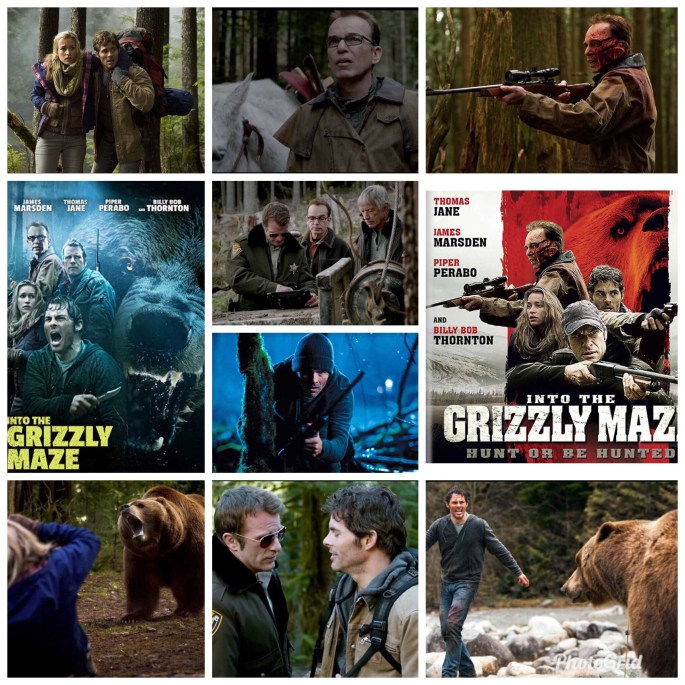
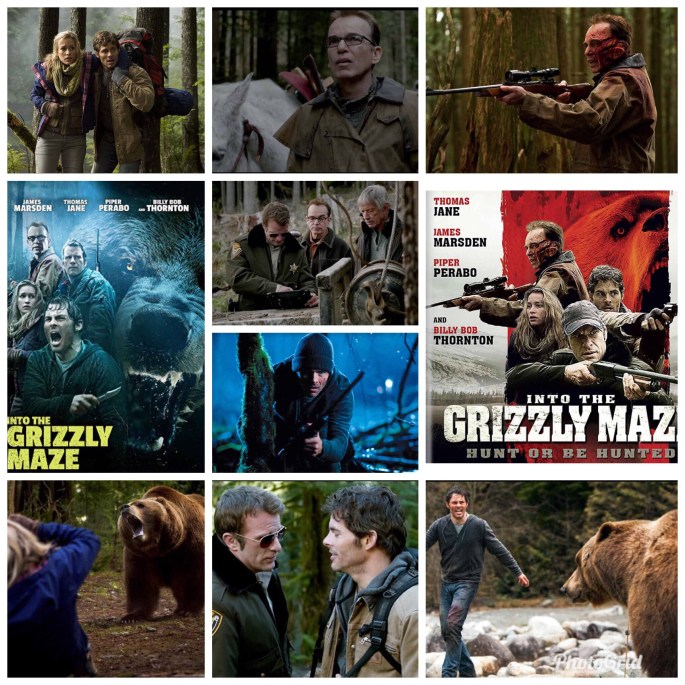
I’ve never seen potential, cast and atmosphere so wasted like I did in Into The Grizzly Maze, there’s just no excuse for dicking up such a great premise like they did here. Originally titled Red Machine, which is way better anyways, it concerns various characters chasing down a monstrous rogue grizzly bear somewhere in the Pacific Northwest (actually Vancouver, naturally). These folks include ex con James Marsden, his park ranger brother Thomas Jane, Sheriff Scott Glenn, poacher Adam Beach and miscast Billy Bob Thornton as some sort of guru bear hunter. The character and writing are almost all flat, which amazes me because I’d be hard pressed not to write at least some engaging dialogue for a cast this badass, but nope. Marsden is as bland as sandpaper, Jane seems bored to tears, Thornton is so misplaced even his coat looks uncomfortable, Glenn is more grizzly than the bear but is underwritten, while Piper Perabo has a classic thankless chick role that’s beneath her talents. Seemingly immortal actor Bart The Bear is used effectively here but he can’t carry a film on his own and as a result the only truly memorable things are the beautiful locations and a particularly gruesome bit of makeup where half of Thornton’s face is literally slashed to ribbons, nice touch that. This seems to be a vague rehash of a 70’s bear flick that, from the looks of it, is probably eons better than this TV movie level garbage. Shame, as we’ll probably never see this cast together again. Avoid.

-Nate Hill