Joel Copling’s Top Ten Revisited: 2014 Edition–Films #9 and #10

Hindsight can shift one’s view of one’s favorite films from a given calendar year quite a lot. So the idea is pretty simple: How would my top ten of 2014 look right now? For the next five days, I will be pick two films per day that might make up my list of the best ten films I saw from that year (and will be doing this for each previous year in the coming month).

10.) THE LEGO MOVIE (directed by Phil Lord and Christopher Miller)

Creative potential is when our heroes venture to a land of brightly colored, delightful beings and structures called Cloud Cuckooland. Creative follow-through is when that trip becomes an excuse to see LEGO likenesses of Michelangelo the painter and Michelangelo the teenage mutant ninja turtle, Dumbledore and Gandalf, the members of the 2002 NBA All-Stars and the Sixteenth United States President on a rocket-engine version of his statue’s chair, and, of course, a pirate that boasts a shark for an arm. It’s clear that writing/directing duo Phil Lord and Christopher Miller’s modus operandi when it came to the The LEGO Movie was to approach the titular, block-shaped toys with a childlike innocence. That’s without reckoning the film’s surprising amount of heart and a genuinely innovative visual style that mimics stop-motion animation.

9.) IDA (directed by Pawel Pawlikowski)

Co-writer/director Pawel Pawlikowski’s quiet but highly effective study of the divide, sometimes blurry, between rigor and liberty personifies itself in our heroine’s story. She has moved from the strict patterns of a convent to the looser pleasures of her aunt’s apartment, along the way severing the ties of her former life for one that must grow accustomed to outside life. But that’s too simple for Pawlikowski and co-screenwriter Rebecca Lenkiewicz, whose characters (greatly aided by performances from Agata Kulesza and Agata Trzebuchowska) are complex and revealing in more than one way. Rarely before has the literal act of a young woman letting down her hair so subtly revealed truths about that woman. Reminding of a modern-day Bergman effort and sporting some truly striking, black-and-white photography, Ida is one that sneaks up on the viewer.

BATMAN V SUPERMAN: DAWN OF JUSTICE–A REVIEW BY TIM FUGLEI

batman-v-superman pts main pic

Joss Whedon and Zack Snyder are endlessly different auteurs, but I feel like the pair should share a cup of coffee soon, perhaps a hug or two while they’re at it.  There aren’t many humans on the planet who have been charged with launching and maintaining massive cinematic empires based on well known comic book superheroes, and the pressure to not only land a billion dollar big fish in the studio boat but set sail for a five to ten year plan of interconnected blockbuster releases can be nothing short of isolating.  When Whedon stuck the critical, audience and box office landings with The Avengers, he was immediately drafted into the Marvel Studio army to oversee the next “phase” of their media empire (i.e. ghost write on three films and create a television pilot) and of course make a sequel that could best the success of his previous film, merely one of the Top 5 box office champions of all time.  Snyder, on the other hand, found much more mixed results with Man Of Steel, Time Warner/DC’s attempt to launch a parallel universe with their own well known and beloved characters.  It made money but didn’t garner the broad acceptance and confidence that the studio hoped it would, although to be fair, Warner Brothers has clumsily juggled two of the most popular characters in comic book history for several decades now.  Whedon went on to pour his heart and sensibility into Avengers:  Age Of Ultron, which made huge piles of cash but left the internet sourly arguing its merits or lack thereof, and now Snyder is faced with similar angry cybermobs as Batman V Superman:  Dawn Of Justice hits theaters this weekend.  The number of levels at which an audience can find fault with this kind of exercise is almost unlimited, but Snyder, much like Whedon, has poured his soul into the exercise and come up with an epic, challenging and entertaining film.

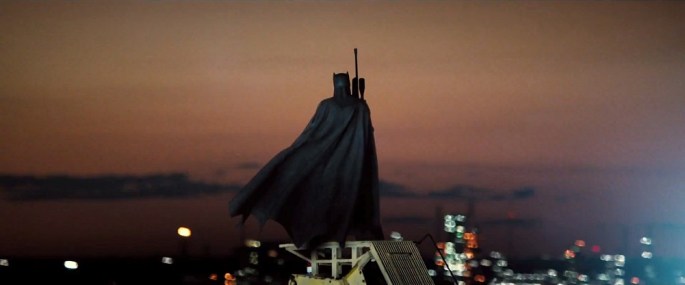
As if helming a film called Batman v Superman:  Dawn of Justice wasn’t daunting enough for the director, he and writers David Goyer and Chris Terrio get to retell the origin story of Bruce Wayne, one that has literally been told almost countless times on screens large and small.  Snyder wisely dives right in, crafting one of his signature slow motion montages filled with pristine imagery in a wordless opening credit sequence that properly sets the stage for the smoldering rage of Ben Affleck’s very Dark Knight, scored with devastating beauty by Hans Zimmer.  Then we’re transported to Metropolis as Superman and General Zod waged their destructive day long war, but we now see the events from the angle of Bruce Wayne, who finds himself almost completely helpless in trying to rescue his employees from one of many collapsing buildings.  As if the Batman wasn’t already a walking, breathing grudge, the anger he now feels for these godlike aliens is etched across his face in almost every shot of the film and echoed through his wholly uneasy dreams.  Affleck’s lantern jaw and frequently unsung acting chops have rarely been put to better use—he’s the first Batman we’ve seen who, in keeping with many iconic iterations of the character from the comic books, is a perpetual rage engine, always fighting the feeling of helplessness that was imprinted on his soul the night his parents died with an angry grimace and an eager fist.

Batman-V-Superman-Trailer-Rifle-Rooftop-Cape

At this point, and certainly from some of the marketing, one would think this isn’t a true sequel to Man Of Steel; far from it, I’d argue that this is one of the finest Superman films to date.  The questions raised by his seemingly limitless abilities and complete lack of oversight from any authority flow from the first act of the movie through the finale, and the consequences of wielding such power are explored not only through his conflict with Batman but via the truly mad yet thorough schemes of Alexander Luthor, played with cunning charm and more than a hint of barely contained insanity by Jesse Eisenberg.  Henry Cavill, sporting an impressive jawline himself, continues to bring grace to a young, evolving Superman, starting the film as a bedrock of confidence bordering on cockiness but soon finding himself put through many degrading tests and sacrifices by the time the closing credits crawl.  Each new challenge to his invulnerable physique and seemingly unimpeachable mission chips away at the Man of Steel like no other film has ever dared to, and it’s something of a marvel to behold.

I’d be remiss to leave out mention of Wonder Woman, although her crowd pleasing action beats of the third act and a bit of cat and mouse with Bruce Wayne in the early going are fun but ultimately slight.  Back to the laundry list of world building Snyder was handed by the studio, we are also given quick introductions to several other iconic DC characters, which starts to make the whole endeavor feel a bit wobbly on its narrative axis but fortunately doesn’t tip it over.  It’s no secret that this director is divisive; I’ve found his career thus far to be a mixed bag, and despite a predilection towards enjoying anything featuring the guy who can leap tall buildings in a single bound, found Man of Steel to be uneven in many departments.  Fortunately Batman v Superman plays like a synthesis of all of the good things Snyder is capable of, with many of the bad ones left behind in his older films.  There’s gorgeous imagery, such as the sublime sight of one of our heroes gracefully landing with a rescued woman in Juarez or a young crime victim being buoyed upwards by a flock of bats; his partnership with DP Larry Fong has never been stronger.  Hans Zimmer continues his brilliant work in the series, bringing back some of his stellar themes from Man of Steel and adding fantastic new ones for Bruce Wayne, Batman and Luthor.  And while the film takes its time to let the characters interact through other means than violence, when it’s time for action Snyder’s muscular talents for that end of the story are on full, swaggering display.  Much like the successful comic book films over at that other studio often do, the filmmakers here reach back into a treasure trove of DC comic book stories to put together an epic romp of a tale, and even have the chutzpah to visually nod to multiple previous big screen iterations of these heroes.  And, as noted earlier, Snyder is continuing the story of Superman, allowing the character to grow, be challenged, suffer doubt and loss, and really become quite a bit more interesting to observe than this indestructible Dudley Do-Right often is.  Like many other fans of this growing franchise, I can hardly wait to see what direction they take the character in next.


JONATHAN DEMME’S RICKI AND THE FLASH — A REVIEW BY NICK CLEMENT

ricki and the flash

There isn’t a role that Meryl Streep can’t absolutely knock out of the park. It’s kind of crazy. She’s just as believable as Margaret Thatcher or Julia Child as she is portraying a fading music star in Jonathan Demme’s charming dramedy Ricki and the Flash. Well observed and written with sass and sensitivity by Diablo Cody, the film is that rare medium budgeted studio picture that’s about family and people and human interaction and words and thoughts and feelings. Kevin Kline is around for some great supporting moments and comical pot smoking, but the entire picture is stolen by Mamie Gummer, playing Streep’s estranged daughter, who is emotionally devastated over the recent collapse of her marriage, and still hurting from years of motherly inactivity. If you want a film about characters and their emotions and how we’re all human beings who are capable of mistakes, this is the film for you; not a CGI image in sight.

The story focuses on the broken nature of families when divorce is involved, and how when one parent, in this case Streep, disappears into their own private world, the effects can be long lasting on their children. Demme is one of the most humanistic of filmmakers I can think of, and as usual, there’s an effortless sense of grace that accompanies every sequence in this intimate film. Music, as always, plays a large part to the narrative and general cinematic atmosphere; in another life, Demme was likely some sort of rock ‘n roll star. And the film confirms, yet again, as if we needed to be reminded, how versatile and engaging Streep is as a performer, taking a potentially totally unsympathetic character and filling the edges with moments of personal reflection that might not have existed on the page. A mild sleeper hit in the theaters, this is the sort of film that will find a long life on cable and on disc. Also – some nice Rick Springfield POWER.

Rapid Fire: A Review by Nate Hill

image

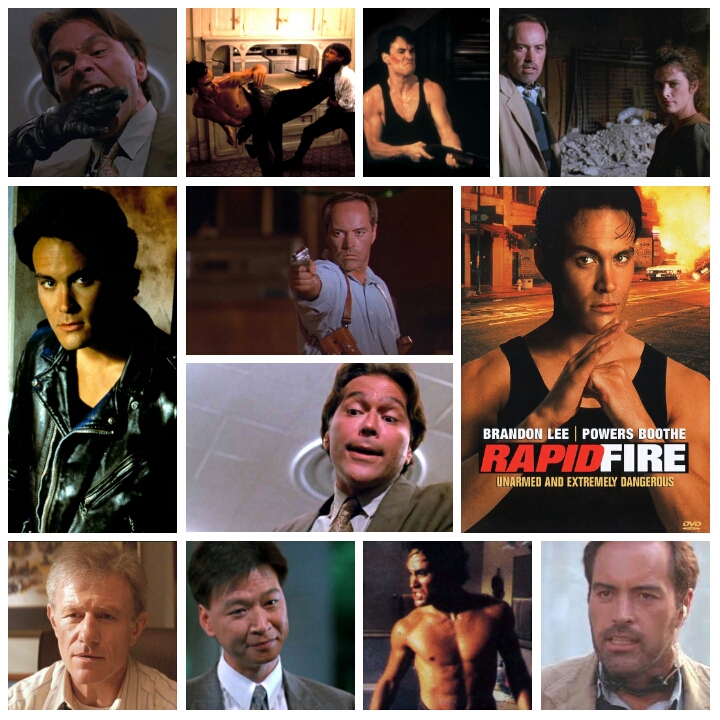
Along with the classic The Crow, Brandon Lee made few other films before his heartbreaking accidental death. His natural charisma and likeability he brought to action hero roles, accenting the tough guy qualities with an angelic vulnerability, was tragically cut short by the incident. However, Rapid Fire is a gift to fans of both Lee and the action genre alike. It’s a little further away from the notoriety of The Crow, but packs a fuming punch of martial arts, gunplay and tough talking character actors strutting their stuff to a tune that any fan of the genre can hum along to. Lee plays Jake, a young college student with turmoil in his past, haunted by an incident involving a loved one in the Tienemen Square disaster. During a visit to Chicago, he inadvertently witnesses a brutal gangland murder perpetrated by drug kingpin Tony Serrano (Nick Mancuso). This immediately puts him in the hot seat and pretty much on his own after the federal agent assigned to him (Raymond J. Barry) betrays him. His only hope lies with grouchy, paternal Chicago Detective Mace Ryan (Powers Boothe) who is on his own rampaging crusade to bring down the drug trade. Jake merely wants to survive and get out of the mess he’s found himself in. Together they punch, kick, shoot and strategize their way out of getting offed by the mafia, and kick some serious scumbag ass along the way. Lee is ultimate protagonist material: his strong points arise out of the soft touch, never being brash or hogging the screen, always serving up a helping of humble that make the ass kicking resonate tenfold. Boothe is pricelessly grumpy as the haggard detective, showing brief but unmistakable glimpses of the bruised warrior’s heart beneath, rekindled by his bond with Jake. Mancuso is like a rabid pit bull let off the chain as Serrano, a truly untethered piece of geniune psychopathic anarchy. But that’s him, always the under sung wild card who lights up his scenes with wild eyed tenacity. Chinese acting legend Tzi Ma also clocks in as a heroin dealer with a short temper, looking very young which is even made into a meta joke itself. It’s pure uncut action, somehow feeling like more thanks to Lee’s incredible presence, as well as Boothe and Mancuso adding their own lively brand of spice to an already simmering stew. Essential viewing for any action disciple.

CAPTAIN AMERICA: THE FIRST AVENGER: A Retrospective by Joel Copling

Rating in Stars: ** (out of ****)
Cast: Chris Evans, Hayley Atwell, Tommy Lee Jones, Hugo Weaving, Sebastian Stan
Director: Joe Johnston
MPAA Rating: PG-13 (for intense sequences of sci-fi violence and action)
Running Time: 2:05
Release Date: 07/22/11

The problem that plagues Captain America: The First Avenger is what has plagued many a story of the origin of a superhero: a lack of variation. The film might boast impressive, art-deco production design, a blustery music score that pairs well with the hero behind whom we are supposed to rally, and an intriguing villain whose actor gives a pretty committed performance. But everything else here, including our hero in both modes of unassuming Everyman and nondescript Savior, is bland, from the way the screenplay by Christopher Markus and Stephen McFeely shoves him unceremoniously into a generic external conflict to the way it examines his accommodation to a bigger, more built body and strength by way of an extended montage set to a theme song.

Before he dons the stars-and-stripes-studded costume as Captain America, he’s Steve Rogers (Chris Evans), a scrawny kid applying for the United States Army in spite of asthma that disqualifies him. He battles on in his attempt, though, applying in five different states because of a righteous desire to join those who are dying for a cause that he feels is a worthy one. In other words, he’s not unlike every soldier who joins the military with a sense of gumption, but there’s something about him that is admirable. Evans’s performance embraces this sense of patriotic duty through earnestness, but the writing of the character is bland (There’s the word again).

When he puts on the suit (at first, rather fittingly as a commercial for the armed forces), he becomes a dull superhero, too. That happens after he is approached by Erskine (Stanley Tucci), a doctor who has been working for an organization (whose members include Dominic Cooper as Howard Stark, and yes, that surname jumps out at you for a reason) that is developing a serum to create a soldier with heightened abilities and strength in the fight against the Nazis. Col. Phillips (Tommy Lee Jones, whose deadpan is in full swing here) believes that Erskine’s being silly choosing such an underdog, the British agent Peggy Carter (Hayley Atwell) is convinced by his attitude, and Steve just wants to save his best friend, “Bucky” Barnes (Sebastian Stan), when his battalion goes missing.

The major threat here is Johann Schmidt, one of the more insane followers of Adolf Hitler’s playbook, who is in search of a mysterious, glowing artifact that will grant omnipotence and power his own weapons with enough force to vaporize all who enter his path. He’s an interesting villain in theory, but the only thing in practice that works is Hugo Weaving’s performance, which is in turn mostly notable for being a perfect impression of Werner Herzog. There is little or no tissue connecting Steve to Schmidt (whose human face is only a façade for a maimed profile that looks like Voldemort but turned all red) until their climactic showdown.

It’s an act of undermining the impact of the sequence, and that then goes for the entire climax, during which we get very little cleverness with regards to choreography (We’ve been here and seen this before) and a lot of to-do in director Joe Johnston’s staging that is of little consequence. The film does gain some surprising mileage from Steve’s budding romance with Peggy before the final scene forces them apart by several decades (Credit must be given to the sorrowful final line), because it’s only in the budding stages. But Captain America: The First Avenger proves only to be the latest familiar origin story–nothing more and maybe a bit less.

THOR: A Retrospective by Joel Copling

Rating in Stars: *** (out of ****)
Cast: Chris Hemsworth, Natalie Portman, Tom Hiddleston, Rene Russo, Anthony Hopkins
Director: Kenneth Branagh
MPAA Rating: PG-13 (for sequences of intense sci-fi action and violence)
Running Time: 1:54
Release Date: 05/06/11

The screenplay for Thor alternates between two narratives dissimilar in tone but that converge into something quite enjoyable. This isn’t an origin story, per se, in that our hero is introduced, gains powers, and faces a foe. Screenwriters Ashley Edward Miller, Zack Stentz, and Don Payne establish the world from which our hero hails as one that has long existed and been inhabited by many people. It’s clever, actually, the way they establish that our hero has what we humans might consider super-human powers but aren’t unique on his world, then remove the hero’s powers and banish him to Earth, where he is still considered a fish out of water.

He is also played with rugged, handsome charm by Chris Hemsworth in a performance not of a character who comes out of a professional production of a William Shakespeare play but of one who lives the caricature. He speaks with a tenor and inflection of an actor playing to the room on purpose. It’s a solid performance because it still manages not to cross over into that caricature. Everyone here speaks in such a manner, from his father Odin (Anthony Hopkins, who adds more than a bit of credence to a role only he could play) to his fellow soldiers to his brother Loki (Tom Hiddleston).

Thor and Loki may be brothers, but each has been courted for the throne when Odin decides to pass on the duties. Just before the Allfather crowns a prideful Thor, however, a breach of their battlements occurs. The Frost Giants, an ancient race with whom Odin once did battle before reaching a truce, seemingly break their promise never to intervene in Asgard again. The traitor in their midst is none other than Loki, who obviously wants the throne to himself. Further, he wants to revenge himself upon Odin when he discovers his true parentage. He manipulates the situation to force Thor into action against the Frost Giants on their homeland of Jotunheim (a well-mounted action scene, despite the darkness of the setting, which uses a form of combat that mixes well with a kind of physical humor), which drives Odin to remove his powers and banish him (and his hammer, called Mjolnir) from Asgard.

Thor arrives on Earth in the middle of a sandstorm, discovered and taken in by Jane Foster (Natalie Portman), an astrophysicist whose team of fellows includes Darcy (Kat Dennings, clearly having a ball and whose mangling of the title of Thor’s hammer is particularly amusing) and Dr. Erik Selvig (Stellan Skarsgård). Jane’s work is confiscated by S.H.I.E.L.D., the government entity whose job is secretive and whose suspicion regarding Thor’s place of origin is strong. The segments on Earth are amusing enough but pale compared to those on Asgard (or, indeed, within the Bifrost, a gateway to the Einstein-Rosen Bridge that connects to Earth and other realms and is guarded by Idris Elba’s commandingly still Heimdall). This is most evident in one of the two climactic action setpieces, the one on Earth ultimately adding up to little more than a showdown between Thor and a giant, metallic beast controlled by Loki.

It leads directly into the showdown between the two brothers that holds a lot more in the stakes department as all of the tension between them comes to a head (Hiddleston’s every line is like a slickly oiled thing) and Thor must make a rash decision. It also helps that the richly detailed Einstein-Rosen Bridge is the backdrop of the sequence, because the film’s strength of juxtaposing such melodrama against effects work is also highlighted in the sequence. Director Kenneth Branagh’s liberal use of Dutch angles and his capturing of the gold-plated mansions that populate Asgard are compelling elements to create this world. It isn’t much, but it separates Thor from the films that proceeded it in the Marvel Cinematic Universe. It isn’t unique, per se, but it is something.

B Movie Glory with Nate: Death Race 2

image

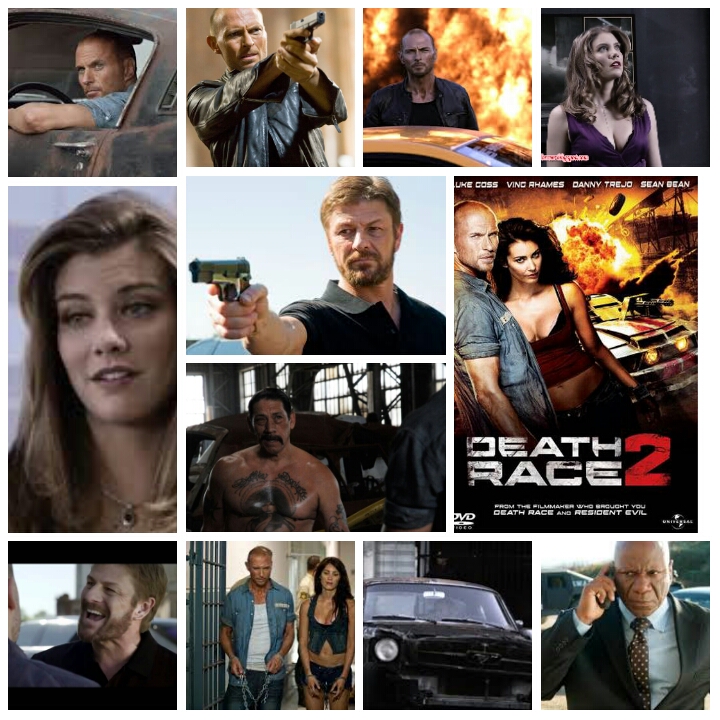
Death Race 2 is one of those sequels that is a little more colorful and off the wall than the first one, and less gloomy. Death Race tried a bit too hard to play it straight and serious, and while still a gnarly flick, I personally have to give the edge to this one simply for coming a little closer to the trashy mark that the genre begs for. Any franchise with a title like Death Race has just got to have a touch of camp, some balls out B-movie action and a good dose of pulp. This one is actually a prequel, now that I think about it, taking place in the same penitentiary that the first film did, a year or so before Jason Statham’s arrival. It follows the origin of Carl Lucas (Luke Goss), who would go on to be the masked driver known as Frankenstein in the original film. Lucas starts out as a getaway driver and thief for ruthless mobster Marcus Kane (Sean Bean). When a heist gone wrong lands him in Terminal Island prison, he’s introduced to ‘Death Match’, bloody gladiatorial fare instigated by a random prison fight caught on camera and broadcasted online. The prison warden Weyland (Ving Rhames) has his moral doubts, but in swoops opportunistic corporation head September Jones (Lauren Cohan) with a sociopathic agenda to turn simple combat events into all out vehicular warfare, with state of the art machines and artillery, all privately funded. Since this genre exists in a world without anyone, government or other, to protest, Death Race is born. The rules go that if you win a certain amount of races, you go free. Kane has his own plans on the outside though, making a pretty penny off of Lucas and his driving, cruelly trying to keep him inside. Bean is a cut and dry psycho as Kane, relishing in the kind of nasty arch villain skin that action films have to offer. Goss has always had a heart and level of gravitas along with his physical intensity (his villain in Blade 2 is still legendary), which he brings out in Lucas. Danny Trejo comes along for the ride as Goldberg, Lucas’s mechanic. The first Death Race was solid, but a bit monochrome in the personality department. This one lets its freak flag fly, getting down and dirty with the bone crunching violence, and thundering motor mayhem. It sinks a level below the first one, which is sometimes a great thing for a particular franchise. It knows how over the top it needs to be, and is all the better for it.

ZACK SNYDER’S BATMAN V. SUPERMAN: DAWN OF JUSTICE — A REVIEW BY NICK CLEMENT

batman v superman

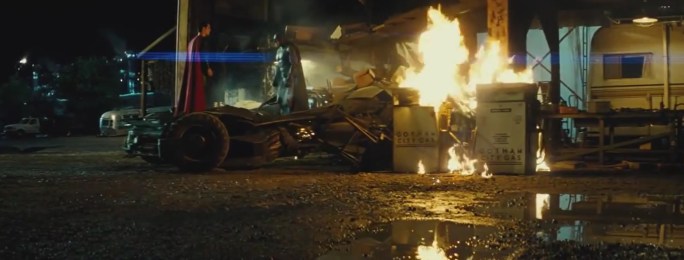
Wow. Rarely have I ever experienced such a divide between my personal thoughts on a film, and seemingly every single paid “critic” who has presumably seen the same film as I. Are people having a laugh? Are they being obtuse for some unknown reason? The last time something happened like this was during the release of Ridley Scott’s diamond-cut masterpiece The Counselor, and before that with Michael Mann’s expressionistic tour de force Miami Vice and Tony Scott’s avant-garde Domino; throw in the last two films from Terrence Malick as well. On repeated occasions, I simply don’t understand what film most people seem to have been watching or say that they’ve seen. Don’t get me started on this asinine argument that Batman V Superman: Dawn of Justice isn’t “fun.” It may not be YOUR idea of fun, but for people who like their superhero stories gritty and dark and thoughtful, this movie is beyond fun. To be perfectly honest, it’s absolutely astonishing on almost every single level, especially given how routine and homogenized most blockbusters have become. You don’t hire filmmaker Zack Snyder to be “safe.”

I’ve said it before and I’ll say it again – he’s a visual genius. He understands the inherent power of the cinematic image and he exploits it for all it’s worth. Film is a visual medium, first and foremost. I understand that it all starts with a script, but films are not books, and for me, the power of the image will always supersede that of the spoken word. And because Snyder’s images are so consistently mind-blowing, people love to forget how he almost always pays attention to story and character and motivation; he’s not uninterested in his screenplays despite what so many love to report. And best of all, and most rare, he challenges his comic book material in ways that you rarely see, especially in Batman V Superman: Dawn of Justice. Though definitely not a direct sequel to his smashing and rousing Man of Steel, this new film picks up in the immediate aftermath of the events of that 2013 blockbuster (and in my favorite sequence of the film during the Battle for Metropolis), and over the course of two and half hours, expands on Snyder’s vision and idea of realism within the scope of the fantastical, continuing down a purposefully humorless path through the revisionist corners of the DC universe.
 

3

This film is playing by Snyder’s rules, rules that borrow a tad from Frank Miller’s graphic novels and other bits of comic book inspiration, but make no mistake, this is Snyder totally unleashed. So, if you’re not a fan of his overly dynamic visual style, then you aren’t likely to respond well to this heavy and sometimes nightmarish piece of action filmmaking. This is a dark looking film, heavy on nighttime action with rain-soaked skylines and a striking sense of noir running through its very fabric. After the bright daylight action sequences of Man of Steel, Snyder decided to desaturate his images, suggesting a level of death and despair that has hit both Gotham and Metropolis. I’ve been enamored with Snyder’s aesthetic ever since his brilliant reimagining of Dawn of the Dead, which is easily my favorite modern horror film of the last 20 years. 300 was a pop-art explosion that broke new stylistic ground and Watchmen sits at the very top of the pile of films inspired by graphic novels. Sucker Punch is lusciously composed and severely underrated, and I happen to think “that owl movie” is really fun and unlike any other “kid’s movie” out there (visually it’s alive in ways that few films could ever dream of being). But it was Man of Steel that really set my world on fire, and now that he’s been given the keys to the expanded DC universe, I am overwhelmingly excited to see where he takes these various characters and to observe his glorious visual style progress even further. Batman V Superman: Dawn of Justice is as bold of a superhero film that I can think of, a movie that takes chances with its material, and succeeds greatly as a result.

2

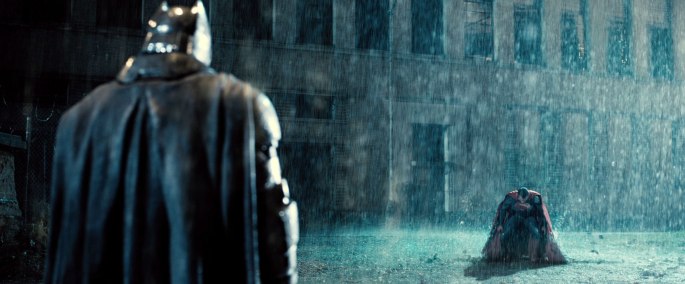
I am not going to spoil the plot. There’s a lot to dissect, the focus is split evenly between Batman and Superman, and there are some really well integrated teasers and Easter eggs that will inform future movies in this particular universe. From the trailers, it’s been made clear what you should generally expect, but because this film is super dense (being confused by many as “overstuffed”) and packed with characters and incidents and numerous plot strands, I’d rather people just experience it. Your preconceived notions of these characters and their origins and histories will be tested all throughout this film, and I seriously applaud the entire creative team for boldly taking risks with iconic characters and imagery and making it their own thing. I will say that I do wish the film had simply been called Dawn of Justice, as it’s both more concise and slick, and it better represents the overall scope to the proceedings. The titular smack down, while no doubt viscerally and visually impressive and narratively clever, comprises maybe 10 minutes of screen time, with so much more of greater importance occurring during the film. It’s not a throwaway, this bout of the titans, but rather, feels more like a series of intense disagreements rather than genuine fear or hatred of each other. I thought I maybe knew the driving force that would pit Batman and Superman against each other, so it was a pleasant surprise to see my expectations upended. It’s also abundantly clear that Snyder wanted a longer film, as the pacing does feel strange in a start-stop manner in spots, and I noticed in a few instances where it was obvious that some connective tissue had been removed. There’s a 30 minute longer director’s cut coming out on Blu-ray, so it’ll be interesting to see what the suits at WB felt needed to be trimmed. It just strikes me as odd that Snyder would have conceived of a close to three hour cut without knowing for sure if WB would allow him to release his vision as is; didn’t the suits, at the script and development level, realize how long and how packed of a film they were getting involved with?
1

And when it comes to the action, Snyder doesn’t disappoint. There’s a sense of weight to the big fight between Batman and Superman, and there’s one beat of action at the mid-way point which felt positively surreal, something that I truly didn’t expect. And that opening sequence is a true wowser, showing Bruce Wayne racing through the exploding streets of Metropolis, with Superman and Zod ripping stuff apart; it’s a bird’s eye view of total destruction and it’s scary and thrilling in equal measure. Snyder, as always, has a field day with slow motion techniques, but in general, keeps his camera calm and steady, allowing for some seriously awesome widescreen compositions that blast the eyeballs on multiple occasions. While I am not particularly fond of lead characters doing battle with all CGI monstrosities (there was a certain level of disinterest during the climactic battle with Doomsday), I was pulled back into the film by the emotional content, which hits some rather shocking notes towards the last act.

Snyder and screenwriters David Goyer and Chris Terrio were definitely interested in mixing up the formula, throwing a lot of stuff against the wall with almost all of it sticking, and allowing for multiple viewings to truly unlock all of this film’s many secrets. The thunderous and at times operatic musical score from Hans Zimmer and Junkie XL takes cues from Man of Steel and becomes something larger and at times even more epic, with a triumphant musical cue waiting for Wonder Woman during her battle entrance. Thematically, it’s a rich film, with both superheroes getting a chance to battle their inner demons all throughout, with the surprising maternal connection to the both of them being explored in a unique fashion; call it a “Tale of Two Martha’s.” Batman V. Superman: Dawn of Justice is a beast of a movie, and nothing like The Dark Knight trilogy from Christopher Nolan, with Snyder going out of his way to separate his version of Batman from Nolan’s, as he was wise to do. And the film also feels like a big departure from Man of Steel in many respects, much darker and more forbidding.

2

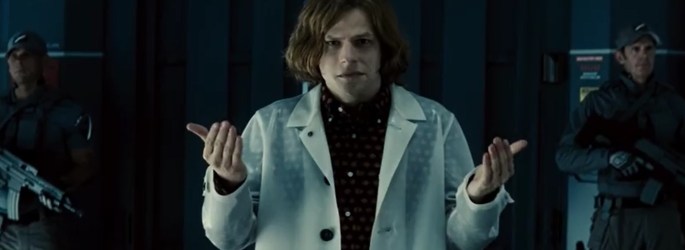
The performances are all uniformly excellent, with Ben Affleck cutting a hardened pose, both emotionally and physically, as Batman/Bruce Wayne. This is a very different Batman, more heavily armored and ready for battle than ever before, with a distinct lack of caring for the overall outcome of his adversaries. Snyder likes his superheroes to kill their bad guys, not hurt them with force. Henry Cavill embodies exactly what a modern Superman should be, bringing both nobility and an incredible sense of stoicism to the role; hopefully we’ll see a bit more of Clark Kent in upcoming films. Gal Gadot is sexy and heroic in equal measure as Wonder Woman, and I can’t wait to see her in action during her standalone film. She seemed EXCITED to be getting in on the big-battle action in the final act which was very cool to see. Jessie Eisenberg plays this new-fangled Lex Luthor with the proper amount of absurd glee that’s needed for this type of role, going appropriately over the top but never losing grasp of his character’s edgy megalomania. Jeremy Irons is all class as a more weathered version of Alfred, and he gets the film’s best lines of dialogue. Amy Adams brings that signature pep back to the role of Lois Lane, and while she’s not neglected, I hope there’s another standalone Superman film to focus more on her relationship with Clark and Superman. And Holly Hunter and Laurence Fishburne both get some really good moments; same goes for the terrific Scoot McNairy.

But the star of the show here is Snyder and his absurdly talented cinematographer Larry Fong, who literally peels your head wide open and blasts the screen with one insanely composed image after another. I grew up in a DC Comics household. Superman, Batman, Wonder Woman – these were my favorite characters, the ones I became obsessed with as a tyke. So, to see the DC Universe explode in such a fabulous way on screen, I feel tremendously lucky to have films like Nolan’s The Dark Knight Trilogy and Snyder’s mesmerizing Man of Steel ready in my Blu-ray arsenal. And with Batman V. Superman: Dawn of Justice, the flood gates have been smashed wide open for more adventures with these decidedly darker superheroes.

3


David Lynch’s Twin Peaks Fire Walk With Me: A Review by Nate Hill

  
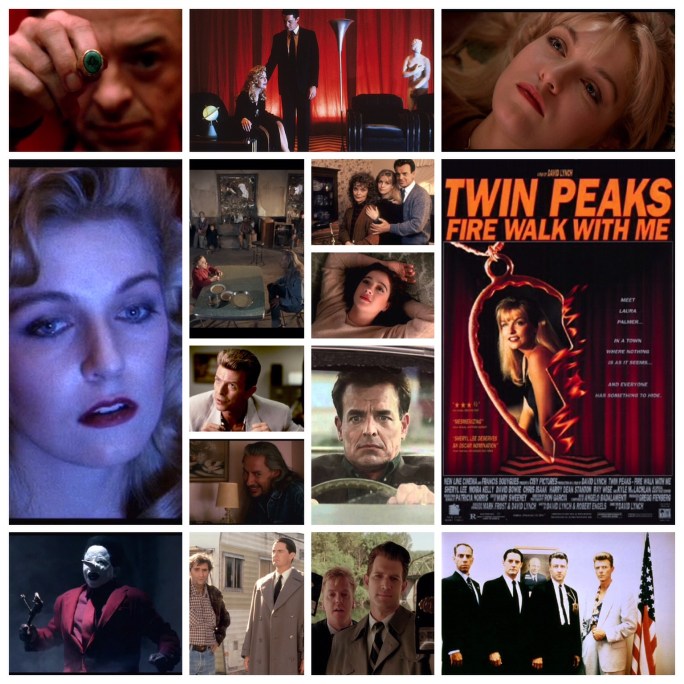
David Lynch’s big screen prequel/sequel to his television phenomenon Twin Peaks departs from the shows light, kooky and benignly eccentric sensibilities. It starts at the more surreal, dark atmosphere which sometimes materialized in the show, especially in the last episode, and plunges headlong down a rabbit hole of sex, murder, mysteries, federal agents, parallel universes, psychological torment, otherworldly spirits, supernatural phenomena, incest, more cups of coffee (Im not even kidding, there’s a scene where a stressed out looking Harry Dean Stanton makes a ‘cup of good morning America’), and above all, Laura Palmer. The beautiful, mysterious homecoming queen we only saw as a corpse in the series comes to wild, screaming life in this film, and what a performance from the gifted Sheryl Lee. She perfectly captures the menace, hurt, confusion, hope, torment and wild desperation of Laura, in a towering, stunning performance. Ray Wise is equally magnificent as Leland Palmer. Angelo Badalamenti switches up the tone as well, letting the beautiful Laura theme and the classic Twin Peaks tones only play in limited, selective fashion. His theme for the film is a powerfully dark, otherworldly melody which lulls you right into the film’s deep velvet grasp and haunts you in ways you can’t describe. The angel of the Roadhouse, Julee Cruise, gets another tune to croon as well, and it might just be my favourite of the bunch. Laura tearfully looks on as Cruise intones ‘Questions In A World Of Blue’, a transfixing lament that seems to be meant for her alone. Lynch is a true master of the subtle touch, and you’d have to read many an online forum as well as watch the film and the show several times to pick up on all the hidden implications and shrouded ideas that aren’t readily presented to you in a traditional narrative. That inaccessibility and refusal to play by the rules by serving things straight up is difficult for many people to get their heads around. To me though it’s such a fascinating way to tell a story. He doesn’t necessarily leave everything open to interpretation, he just hides the answers in a bewitching blanket of surreality, subtlety and dream logic, challenging the viewer to think using the unconscious mind and intuition to feel your way through the story, as opposed to tallying up facts and plot turns to analytically arrive at your cinematic destination. Perhaps this is why he meticulously oversees many of the DVD releases for his films, leaving out scene selections and unnecessary bells and whistles. The story matters most to him, in singular, unbroken form, a segment of his soul encapsulated on film in one cohesive effort, like a dream caught unawares by the lens. Fire Walk With Me was unfairly bashed, booed and downright critically clobbered for its stark and outright changes from the shows lighter tones, as well as its leaving out of some of the more popular characters that fans loved. Although this is jarring, I feel like Lynch has distilled all the elements in the show that mattered the most to him, and woven a gorgeous, seductive tapestry of pure Twin Peaks ‘feel’ and spectacle, as a loving gift to the fans who truly get it and are open to the wilder ideas explored briefly in the show. The film expands greatly on the ominous Black Lodge, and it’s dwelling spirits, including the strange Tremonds, the one armed Mike, and the little red suited Man From Another Place. The killer demon Bob is very prevalent in this film, and if you thought he was scary in the show, well.. His scenes in this are downright soul shatteringly. Moira Kelly makes a softer, doe eyed version of Donna Hayward, which I quite liked. Miguel Ferrer returns as the cynical wise-ass Albert, Lynch as the hard of hearing FBI boss Gordon Cole, as well as Heather Graham, Grace Zabriskie, Eric DaRe, Madchen Amick, Peggy Lipton, etc. Newcomers to the Twin Peaks mythology are great as well, including Chris Isaak and Kiefer Sutherland as more FBI agents investigating the case of Teresa Banks in Deer Meadow, Jurgen Prochnow as a trapped soul in the spirit world, and a confused looking David Bowie as an agent who has been mired in the time bending fog of the spirit world long enough to render him brain fried. It’s a love letter to the fans, really, but one that doesn’t compromise an inch and is every ounce a Lynch picture, capturing the director at his most creative adventurous. He strives to plumb the depths of human behaviour and the forces beyond our perceptions which govern and influence from other planes. Seeing these tricky themes explored so rawly in a film based upon a TV show that had heavy roots soap opera and an often lighthearted tone only garnished with the disturbing elements in the film can be hard to swallow, which is no doubt the reason for the sour reception upon release. The film has stood the test of time and aged wonderfully though, seen by many grateful, loving fans as a dark dream straight from the heart, and a perfect film. If one is willing to accept the changes in tone and ambiguous, challenging nature of Lynch’s storytelling (which I love!) then Fire Walk With Me is a sumptuous, gorgeous looking, vital piece of the Twin Peaks world, and in my mind Lynch’s masterpiece. 

DOUGLAS TRUMBULL’S SILENT RUNNING — A REVIEW BY NICK CLEMENT

silent running

A triumph of imagination more than overall execution though certainly not without more than one sequence of bravura filmmaking, Douglas Trumbull’s ultra-ambitious sci-fi oddity Silent Running is a relic of 70’s cinema, made clean again by the advances of modern day Blu-ray technology. Back in the day, I would passively watch this movie on cable with extra-wide-eyes as a youngster, but seeing it now, I’ve realized how ahead of its time the central message was, and how interested it was in character and personality rather than needless action or explosions. Trumbull, the special effects guru who assisted Stanley Kubrick on 2001: A Space Odyssey, Terrence Malick on The Tree of Life, Steven Spielberg on Close Encounters of the Third Kind, Ridley Scott on Blade Runner, and Robert Wise’s Star Trek: The Motion Picture and The Andromeda Strain, was and still is a pioneer in the art modern special effects and in-camera photographic techniques, and he was given the chance by Universal pictures to create something entirely his own (albeit on a ridiculously low budget of $1 million dollars!). You can tell that he’s not the world’s greatest director, and while Bruce Dern’s performance is certainly passionate and committed, I don’t think it’s a stretch to say that Trumbull wasn’t an “actor’s director.” But what Trumbull may have lacked in experience he made up for in the creativity and style department.

After drafting a treatment for Silent Running, screenwriters Mike Cimino(!), Steven Bochco(!), and Deric Washburn(!) fleshed out the screenplay, which centers on the idea that sometime in the future, all the world’s plant life has become extinct, with the last remnants preserved and sent out into the solar system inside massive geodesic bio-domes, complete with animal life and fresh water, in the hope that one day they can be returned to Earth and life can again become sustainable. The film takes an anti-corporate slant when Dern, the ship’s constantly sweating botanist/scientist/astronaut, defies the orders of his greedy superiors who want the environmental experiment terminated in favor of sending the massive ships back into money-making routines. Dern commandeers his ship, fights it out with the other scientists, and blasts off for the rings of Saturn, all with the help of three robots who appear to be prototypes of TARS and CASE from Christopher Nolan’s Interstellar.

After evading the enemy, Dern keeps the ship out of contact, hence the title Silent Running, and tries to keep the forest life in the bio-dome up to speed with the robots acting as his helpers. The film then turns into something more quiet and introspective than I ever remembered, with Dern making a perilous journey through Saturn’s rings (shades of 2001 here galore), and then learning that his reforestation idea may not be attainable because of limited resources aboard his ship. He also develops an interesting relationship with his robot buddies. The limited budget shows in many areas, but when the ideas are this interesting and at times profound, I can excuse the lack of slickness in some of the technical departments. And considering the age that this film was crafted during, and with such a small budget, the film is something of a miracle. Nolan CLEARLY must love Silent Running, because he totally cribbed from this film (and from The Right Stuff) while making his magisterial science-fiction epic Interstellar, and it’s awesome to see that Trumbull’s work has continued to inspire a wide variety of current filmmakers.