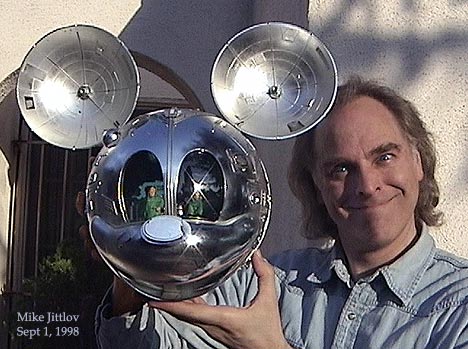
We’re off to see the Wizard: An Interview with Mike Jittlov by Kent Hill

disney_satellite_jittlov

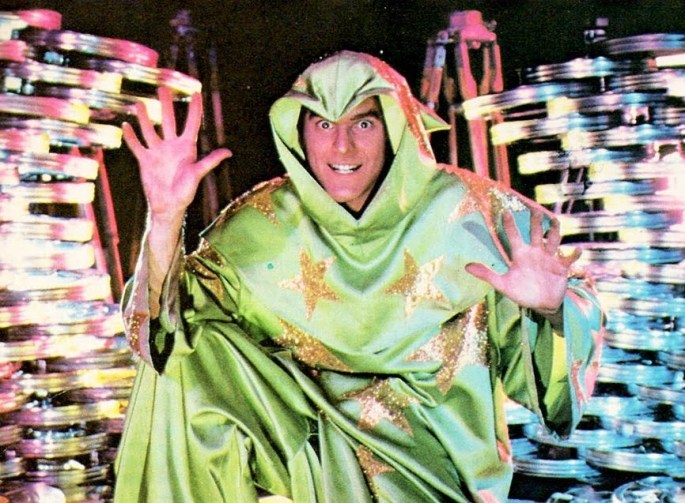
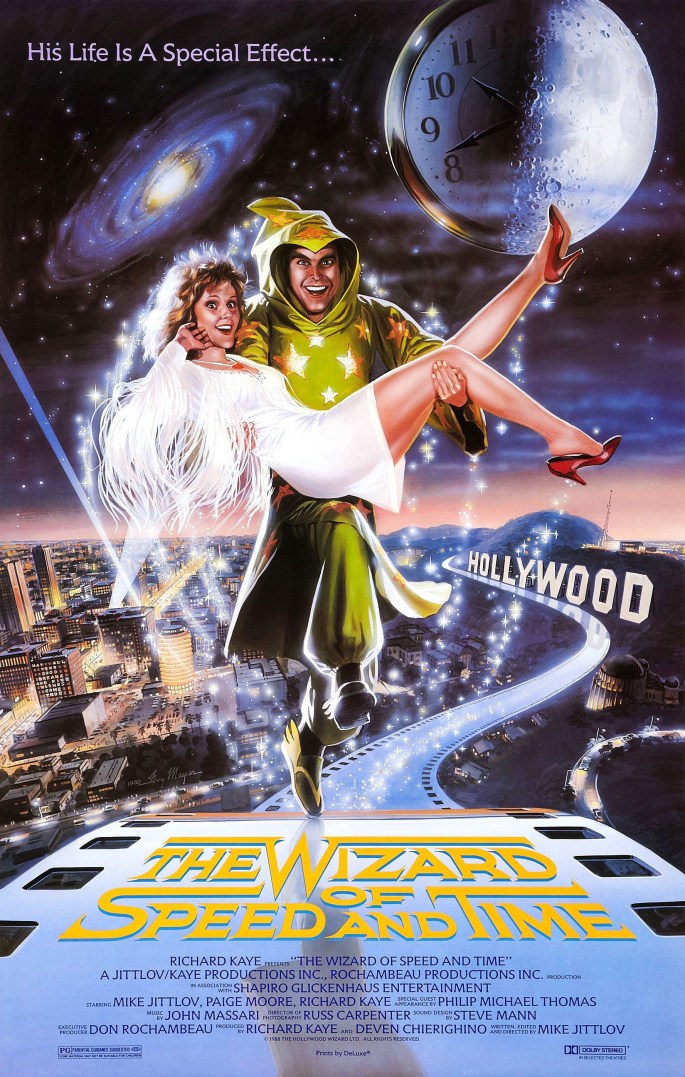
There are relics from the days of VHS that have endured. They ultimately found they’re following on video and developed significant interest to warrant subsequent Director’s Cuts and Special Edition releases on DVD and Blu-ray. Some – but not all. Such is the curious case of The Wizard of Speed and Time.
39286323_10155733825962467_6006250702458847232_n

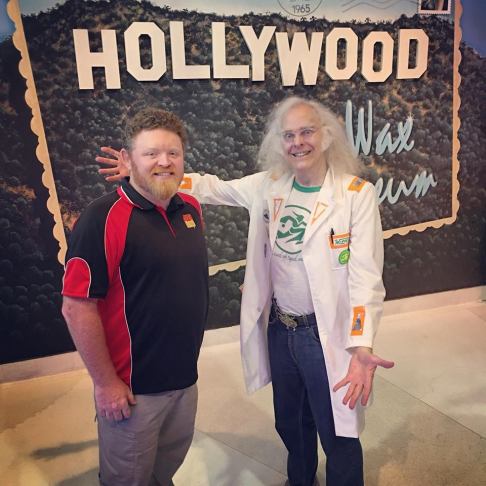
Like my friend and talented filmmaker, Wade Copson, put it (and I quote): “Once upon a time, in a Video Store open down the road from our house, I was searching the titles for a movie about people making movies. I stumbled across a VHS with a shiny cover called The Wizard of Speed and Time.”

Just like Wade, I discovered TWOSAT in a similar fashion. There had been a few covers with that reflective material employed to catch the eye – another, off the top of my head, was The Wraith.


But did you know TWOSAT wasn’t supposed to be a feature? Long before Robert Rodriguez was the one man movie-making machine, Mike Jittlov was doing it all. The Wizard was being compiled to be Mike’s show reel, in essence a calling card to display his incredible array of talents and his mastery of each and every facet of film-making.

But like all stories, there’s a villain. In Hollywood those against you for the own financial gain always seem to have a habit of landing on their feet while leaving your dream in tatters. Mike has been fighting against speed and time ever since and is now, at last, in a place where he finds himself still with the will to see The Wizard be restored to the state in which the artist (Jittlov) always intended it to be seen.

It was after Wade asked me one night, some time ago, if I was familiar with TWOSAT. The spark went off in my head; “Could I get in touch with Mike Jittlov?” Firstly because I too am a fan of The Wizard, but also because I thought he would make an incredible guest.
MV5BZjlhYzE5MzMtNWEyNC00OGEyLTk2OWMtYjMxNTI0OTU4MjVjXkEyXkFqcGdeQXVyMTQxNzMzNDI@._V1_

Ironically the first thing I found online was an interview from a British film website where the journalist, when asked how he had managed to track down Jittlov, simply said, “His phone number is on his website. I waited until the time it suggested was best to call and I phoned him – we ended up talking for an hour.”

“Could be that easy?” So I followed suit. Went to the website (which had not be updated in quite some time by the looks of things), got the number, waited till the time suggested – and made the call. Sure enough, there on the end of the line was Mike Jittlov. He had no interest in being interviewed because of prior misrepresentation, but he agreed to talk to me (and we talked for over an hour). I didn’t pause the recorder – if for any reason it was because this was perhaps the closest I’d ever get to The Wizard – the recording would be a memento.

But Mike did consent to allow me to share this with you fine folks. I have cut parts of the discussion that I feel are too personal to be revealed in this arena, and have kept the film-making side of our chat for your listening pleasure. As a fan first I was extremely nervous and thus mumbled my way through it but, what can I tell you, if you have not seen TWOSAT, get out there. YouTube is your best bet for easy access, though it is a different cut when compared to the VHS edition.

I’ll say it here publicly Wade, you a one lucky boy and I hope in a future episode to record Wade’s tales from meeting with The Wizard himself. Till then I have my experience to share, I still have my copy of the film, and last but not least I have a little prayer – let Mike Jittlov finish his work O Lord, so that the world might at last see The Wizard in all his glory….


SUPPORT THE RESTORATION OF THE WIZARD’S SOUNDTRACK HERE:


https://www.indiegogo.com/projects/the-wizard-of-speed-and-time-soundtrack-on-vinyl#/

So I met this guy who worked on Street Fighter by Kent Hill

18698523_1539020299442774_8030655704099509755_n

So there I was, peddling my wares. A heapin’ helpin’ of the ideas I had for movies were dying slow, dusty deaths on shelves and in draws until a friend suggested that I should simply write them all as books.

Supanova is what we have Down Under instead of Comic Con, and it was on day one of said Con that I sat, anxious, for there were no takers. Books with no pictures seemed about as welcome in that place as a sign stating: Cosplayers will be shot!

Still I kept the faith and soon enough I noticed folks were coming around. The awesome cover art and weird juxtaposition of genres were beginning to grab attention. Soon this cool cat with steampunk attire and weaponry approached the bench. To my surprise he bought a book and then, as is often the case when talking to me, the conversation quickly shifted to the topic of movies.

It was in that moment the guy, out of the blue, told me he had worked on Street Fighter – a film generally regarded as one of those tiresome ‘video game’ movies. Big, expensive, lead weights that treated the box office like the iceberg that sank the Titanic.

Sue me, okay, I gotta soft spot for Street Fighter man, it’s a guilty pleasure – plus I was intrigued, as I often am, to hear behind the scenes stories.

People line up at these Cons and spend ridiculous sums of money to get celebrity autographs. It’s money they could save, let me tell you, if folks would just hang around til the end of the day – or come in really early. It’s this tactic that saw me meet Chewbacca and have a coffee with Nick Frost for a grand total of zero dollars. So to these types I must have appeared bonkers when I asked Daryl Zimmermann for his autograph. A guy that had worked on a film most of the kids walking the floor that day, I’m pretty sure, had no idea existed.

street-fighter-movie-poster-15x21-in-1994-steven-e-de-souza-jean-claude-van-damme

So Daryl, shocked as I supposed he must have been, signed the back of a card I had in my wallet. And he’s a top bloke I tell you – as well as being a man who worked on a movie I happen to like.

If you haven’t seen Street Fighter, now’s your chance. It’s written and directed by the guy who wrote Die Hard and stars Van Damme, back when he had more cocaine than brains (apparently). I have already interviewed Zengief, who gave me a few stories from in front of the camera. But, Daryl played his part in the movie too (see E. Honda Vs Zengief clip above) …


The Man behind The Dark Knight rises by Kent Hill

CuQh_UoXEAAzFpe

How did this wonderful film slip through the cracks? There was little to no word about this utterly enthralling and compelling story about the ‘other’ man behind the bat.

I admit to you now – I was in the dark. While comics were a staple of my formative years, as that time receded, my interest had diminished to ‘casual’  by the early 2000’s. Even then I was far from what you would refer to an an aficionado. Comics were flame bursts in the dark. Most of mine were not pristine, and I collected them by the bundle when my Grandmother would take me along with her to the Book Exchange and allow me to parlay a stack of her used paperbacks for a pile of superhero awesomeness.

But, back to the topic at hand. I read comics without much regard for who created them (that attention to detail I reserved for my first obsession, the movies). I was there to indulge, pure and simple. Still, as our awareness grows, so do we seek out ever greater detail – the mechanics that make our preferred mode of escapism tick and thus our experience is enriched and the depths of our interest continue to descend into the pop culture sea that abounds, seemingly fathomless.

Such is the story brought to life by Don Argott and Sheena M. Joyce. Like the equally incredible Searching for Sugar Man before it, Batman & Bill traces the steps of the elusive Bill Finger – the man who, in case you didn’t know, co-created Batman with Bob Kane. And, like Sugar Man, the plot, which on the surface might seem to have a logical conclusion, just keeps unraveling as the real life seeker of justice, Marc Nobleman, tracks down and lets the sun shine brightly on the life, labors and legacy of Finger.

MV5BYjYzZjc2ZTQtYmQyYy00NTk5LThmMTItNWQyNzk3MjNkYzEwXkEyXkFqcGdeQXVyMzYxOTQ3MDg@._V1_

Now I’m not going to spoil this at all. You must, must, must seek out this glorious unfolding of a sad, arduous, but ultimately triumphant saga which is predominantly about rewriting history, but at its heart there is a drum that beats and reminds us to stand tall in the face of adversity, and the film depicts this, in the form of the mammoth uphill battle to place Finger’s name next to Kane’s as a creative force behind one of the truly monolithic heroes from the realms of illustrated storytelling.

All I will say is that the end broke me up like Field of Dreams always manages to. Yes, strong men also cry, to quote The Big Lebowski, but you’ll walk away from this film ever changed and with a sense of pride having seen honor restored, a name reclaimed and a final note so satisfying it’ll touch your heart.

Read the book, see the film, and as for right now enjoy my chat with the extraordinary team who have captured beautifully this tale of a watchful protector who fought with a pen mightier than any sword to see the ‘other’ man behind the Dark Knight, rise…


https://www.hulu.com/press/show/batman-and-bill/

https://www.sbs.com.au/ondemand/video/1360261187749/batman-and-bill (for Aussie viewers only)

https://www.amazon.com/Bill-Boy-Wonder-Secret-Co-Creator/dp/1580892892


Steven Soderbergh’s Solaris

Concept: Steven Soderbergh’s Solaris is not a remake of the 70’s version but a separate adaptation of the novel by Stanislaw Lem, existing as its own vision of that story. Many people ripped on this as being an inferior retread of Andrei Tarkovsky’s strange, deliberately slow film (which didn’t work for me). Now bear with me: in my humble and frequently disputed opinion, Soderbergh’s is not only the better film but the definitive version of this story. It’s shorter, less theatrical, far more accessible but in the end it’s timbre simply struck a far more resonant chord with me, and I never argue with that intuitive barometer. This version is also slow, but finds a hypnotic, mesmeric cadence to the story of psychologist Chris Kelvin (George Clooney), his deceased wife Rheya (Natascha McElhone) and the mysterious sphere of luminescence, the planet Solaris. Kelvin has been called there by his friend and colleague Gibarian (Ulrich Tukur) after some… odd things start happening to the astronauts aboard, and it’s here on this quiet, near abandoned space station that he undergoes an intense, otherworldly and very personal metaphysical journey that is catalyzed by the forces of the planet sparkling below them and deepened further by the difficult, unexplored regions of human psyches and behaviour. The planet below has a habit of resurrecting Kelvin’s wife who died years before and placing her on the station with him. Why? Who can say, but it certainly provides everyone involved with all sorts of dilemmas both internal and external, starting with the nature of love, loss and grief. This version of Rheya is clearly not Chris’s wife, but a copy made by the planet based on his memory, mental images and unresolved emotions surrounding her. He struggles at first to see this, then he does. She too struggles at first with existential confusion, and comes to a similar realization, with heartbreaking results. This film is thoughtful and ponderous even by Science Fiction standards, there isn’t a single action scene or anything like that, it is solely character based, atmospheric storytelling that draws you in ways some people have forgotten film is capable of. Clooney is at his most vulnerable here, the charm, affability and mile wide smile nowhere in sight. This is a man whose grief has come back full circle to him, and the haunted, staggered reaction upon seeing his wife again for the first time is my favourite work he has ever done. McElhone is an actress who rarely gets the chance to exercise her full potential, but this is a career best for her, she goes to some places that are hard to get to, and her methods of getting there in her obvious scene prep and meditative focus are beautiful to behold. The scenes near Solaris are interlaced with their complicated, stormy yet devoted relationship years prior, which is the lynchpin and mapping schematic that Solaris later draws on for… whatever it thinks it’s doing. Composer Cliff Martinez often works with Soderbergh, and their collaboration here is succinct and tandem, the soft, rhythmic electronic beat pulsing along to images of sleek, still hallways of the station and the vividly coloured planet below, holding secrets that seem just out of reach. The film questions not only love and life but the way human beings perceive each other, whether a tangible person can exist based only upon someone’s dimming memory of them, and what part exactly does the soul play in all of this. “We don’t have to think like that anymore”, Rheya lovingly reassures Chris when he worriedly questions the semantics of Solaris’s plan. Opaque is the nature of this story, but through it we are invited to feel our way to truths that hide behind the swirling pulsars adorning Solaris and the ongoing relationship between these two lovers who are star crossed in more than just a metaphorical sense. Complex, difficult themes to be sure, but it’s all dealt with in organic, rapturous fashion as Soderbergh lets glances, body language, music and affection tell the story instead of heaps of dialogue or obvious beats. A love story wrapped up in a gorgeous musical tone poem gilded by an intelligent, thought provoking science fiction story that questions the essential, reaches for answers in unconventional ways and does things with film that the medium was meant for. One of my top ten favourite films ever made, and up there with the very best Sci Fi’s out there.

-Nate Hill

Sergio Corbucci’s DJANGO

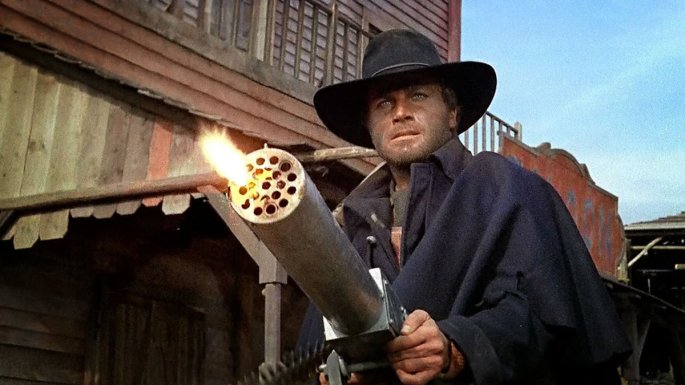
There is an inherent perversion that comes with Sergio Corbucci’s 1966 masterpiece, DJANGO, that is incredibly alluring. The coffin dragging masochistic antihero saves a women in distress, only to bring her to a town in deep dilapidation that is the battleground between Mexican federales and a group of red hooded Christian zealots. The film has an innate ability to transcend the norms of cinematic violence, sexual liberation, and religious faux pas to create a truly unique film that not only acts as a genre setter, but a template for the “hero” to come up victorious yet still accrue the vengeance of his previous transgressions.

Franco Nero’s performance as the mysterious stranger is a revelation. He’s part Paul Newman with his steely blue eyes and movie star looks and part Clint Eastwood with his ominous presence that is a visual embodiment of the shadow of an axe that looms. He gives a command performance that is filled with a confidence that can dwarf mostly any performance it is stacked up against. Nero’s economy of movement is mesmerizing as he fills the frame with his stoically soft and strategic physicality.

The film intentionally leaves little to the imagination. The violence is projected right on screen, forcing the audience to be culprits in the tale of bloody revenge and sacrifice. The shock value of the film, while tame by current standards remain a stark reality of what pushing cinematic boundaries used to be. The film is not self righteous or heavy handed in its messaging. It is solely an entertaining film that operates in extreme shades of grey that tiers off its villains, uniting its world to overcome the overarching villain of oppression coddled by greed.

Luis Bacalov’s score and title theme, which has populated many Tarantino films and used as the title theme for DJANGO UNCHAINED, is as big a star of the picture as Nero and Corbucci’s visceral brutality towards its characters. The main theme is triumphant and empowering, yet the trials Django has to endure are a combination of wrong place at the wrong time and acting as swift and appropriate justice to those who are on the opposite side of his post Civil War machine gun.

The narrative capsizes in the final act by stripping Django of his ability and forces not only the hero, but the audience as well, into a tense and ultimately rewarding showdown in a graveyard. The film’s ultraviolence and commentary is not for everyone, but one of the purposes of its existence is to invert and pervert the heroes journey. While the viewer is unaware of Django’s previous encounters and misgivings; what is certain is that he’s a force to be reckon with and one of the most dangerous and satisfying lone wolves to be on screen.

Tony Scott’s Domino

Domino is Tony Scott’s fire roasted, charbroiled, turbo charged masterpiece. I’ve seen it over fifty times and every time I seem to enjoy it more. It’s pure unfiltered Scott, free from the nagging pressures of the studio, financed by his own company, a loving treatise of pure style and breakneck kamikaze energy that doesn’t let you breathe for a second. It’s loosely based on the life of Hollywood baby turned rough and tumble bounty hunter Domino Harvey (Keira Knightley), daughter of actor Laurence Harvey. She leaves the 90210 world of rich snobs and gilded mansions to pursue a grittier path, in the form of restless underground law enforcement. Now, the film sheepishly admits it’s not entirely based on a true story before the credits even start, so as long as you know that much of it is fantasy going in, you won’t feel cheated. Knightley is a pissed off, sparking roman candle in the role of her career, shedding the dainty image and going full furious grunge, giving Domino an alternative edge and damaged pathos that fuels much of the film’s kinetic energy. Mickey Rourke plays her grizzled boss Ed Moseby, a veteran bounty hunter with a trail of violence behind him, who’s weary and tough in equal parts. Rourke fires on all cylinders, giving some of his simultaneously hilarious, heartbreaking, badass and best work. Edgar Ramiraz plays scrappy Choco, third musketeer and eventual lover to Domino with fiery Latin charisma. Christopher Walken, weird mode fully activated, waltzes in as a reality TV producer with the attention span of a ferret on chrystal meth, Mena Suvari as his squirrelly assistant, Lucy Liu as a prim, OCD afflicted federal agent who verbally spars with Knightley in flash forwards, Delroy Lindo is excellent as their bail bondsman handler Claremont Williams, and there’s scuzzy work from Dale Dickey, Lew Temple, Macy Gray, Monique, Dabney Coleman, Jacqueline Bisset, Jerry Springer and more. Just to sample some of the esoteric weirdness that goes hand in hand with the hard boiled crime elements, Tom Waits has a beautifully perplexing cameo as a spiritual wanderer who has a mysterious meeting with Domino and her friends in the Mojave desert, imparting some prophetic truth to them that only Scott and the sand dunes are in on. This is the kind of film that grabs you by the collar and hurls you down an asphalt horizon of hallucinatory camera work, brings you an intricate, lurid story of true crime gone wrong, and a balls to the wall depiction of life at its fastest, wildest and most out of control, as only the maestro of such things, Scott, can bring you. Domino, at least in this film, lives a crazy life that culminates in a hellish Mexican standoff and subsequent shootout atop a Space Needle-esque Vegas casino, a fitting way for a Scott film to come full circle and certainly not the first time he’s ended one in that situation. He uses cinematic magic to create visual poetry here, his sucker punch editing, nebulous display of scorched out colours, thunderous symphony of sound design and hectic, buzzing aesthetic isn’t for everyone but it’s something truly unforgettable and a style wholly his own, I truly miss the guy and believe he was one of maybe the ten best filmmakers to ever work in Hollywood. This is by far his best film, definitely his most personal and also the most arresting vision he’s ever sculpted, it will leave you haunted, pummelled, fired up and deliciously puzzled. Domino ironically says in voiceover near the end, “I’ll never tell you what it all meant”. Scott tells you, in his own special way, and if you’re tuned in to his otherworldly frequency you’ll treasure this masterwork as much as I do, and will continue to for years to come.

-Nate Hill

The Fugitive

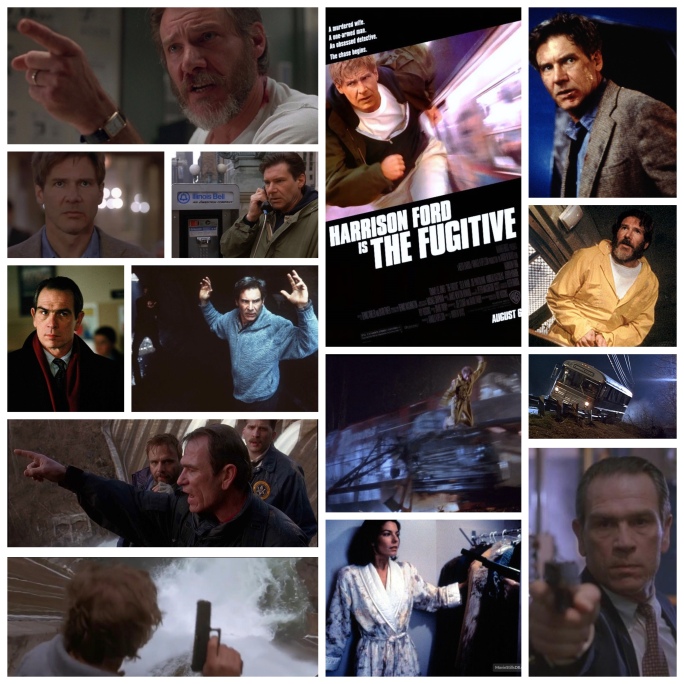
What motifs, when implemented well, make for an effective thriller? The wrongly accused man whom no one believes, the dogged pursuer who engages in ruthless indifference, the chaotic statewide manhunt, the methodical quest to clear one’s name, the righteous anger when the time for confrontation arrives. The Fugitive employs all of these and more almost effortlessly, and is as close to a perfect thriller as I can think of. It’s not just that the film is so exciting every step of the way, not just that the stunts are pulled off flawlessly or that every cog in the story’s mechanism turns believably, its simply that Harrison Ford plays Dr. Richard Kimble as so relatable, so likeable and engaging that all the stuff I mentioned before, whether or not executed well, actually matters. The lynchpin scene that hooks us in occurs early on when a dipshit Chicago police detective (Ron Dean, who would go on to get shot in the face by Harvey Dent later in his career) bluntly interrogates Kimble after his wife is found murdered. Ford plays it it straight up, his raw reaction at being accused of something so unthinkable sears the screen, and as he pounds the table and pleads with them to “find this man”, we are immediately and unconditionally on his side, a lot to pull off in one scene but Ford is up to it and this may be his best performance ever. After that it’s a careening adrenaline rush of a chase film as the prison bus Kimble is on is hit by a speeding train, one of the finest pieces of blow-shit-up staging I’ve ever seen, propelling the man on a relentless ditch effort to find the mysterious one armed man who actually killed his wife (a far too short lived Sela Ward) and exact retribution. Tommy Lee Jones is a walking stick of C4 as US Marshal Sam Gerard, it isn’t so much his job to track down Kimble as it is his compulsion, the man is a calculating force of nature. Although put in Kimble’s path as the obstacle, the script treats him and his team with respect and intelligence, they’re not just mindless drones to keep plot and action sailing but fully formed human beings who start to unravel the mystery right alongside the good doctor. The film hurtles along from stunt to crash to chase to brutal fistfight and these sequences have since become iconic, especially that fiery sonic boom of a crash and the legendary standoff between Ford and Jones set in a storm drain leading off of a raging river dam hundreds of feet below. Everything just works in this film; Ford supplies charisma, subtle humour and inspires empathy all while kicking serious ass and evading capture in ways that would make Jason Bourne jealous, Jones chews scenery in the best way possible and is every bit the worthy adversary and eventual sympathizer, while Jeroen Krabbe, L. Scott Caldwell, Daniel Roebuck, Joe Pantoliano, Andreas Katsulas, Tom Wood, Richard Rhiele, Nick Searcy and Jane Lynch all provide excellent work. Julianne Moore shows up in what appears at first to be a cameo as a suspicious nurse, but she was originally written in for a larger role as a new love interest for Kimble. The film cut her scenes and abandoned this subplot, a very wise move as it would have cheapened his arc and gone the cliche route. Simply put, this is a classic and a textbook example of the magic possible in the action/adventure/thriller genres. Brilliant.

-Nate Hill

John Huston’s THE MAN WHO WOULD BE KING

John Huston’s THE MAN WHO WOULD BE KING is a cinematic feat. It’s a remarkable fable, tracking two adventures who trek deep into a dangerous land with the design of ruling a region where white men have not set foot since Alexander the Great. The film encompasses engrossing performances, a tremendous score, a taut script, and awe inspiring photography all engineered and guided by Huston, one of cinemas filmmaking titans.

Sean Connery and Michael Caine headline the film as a pair of former British soldiers whose exploratory ambitions are offset by their primal brutality yet softened by their chemistry and wry offbeat humor. Christopher Plummer is the narrative anchor of the film, he acts as the narrator as well as the audience to Caine retelling his adventure with Connery. The two of them are a remarkable pair in the film, they bring their pre-existing screen personas and mesh them together and fuse a relationship that grows and blossoms throughout the film, until they reach their breaking point and bid one another an emotional farewell.

The picture is more than just an exhilarating adventure, it morphs into a cautionary tale of demigods and false prophets; the dark desire of man to transcend into a God. Caine and Connery propel the film forward, their performances are as raw as they are touching. Yet what truly makes this film remarkable is that it exists in a period of film where epics were truly epic. It’s shot on tangible locations, it is populated with indigenous people playing indigenous people; an air of authenticity is created and immediately accepted by the audience.

The craftsmanship of the film cannot be understated. The practicality is wonderful, from the sets to the costumes and beyond. The locations are as exotic as they are ominous; spanning sandy dunes and tribal villages to the vast snowy mountains, to their endgame – a civilization untouched by the outside world for centuries, a beautifully dilapidated holy site filled with treasure and dangerous mystique.

While the story is fun and entertaining, it cascades into a heartbreaking and bittersweet ending as the rise and fall of the pair’s conquest quickly erodes into a breathtaking climax where ramifications of greed and lust for power comes full circle and the characters are dealt with not just appropriately but poetically as well. THE MAN WHO WOULD BE KING is that underappreciated Hollywood epic that somehow found a way during the counterculture and rage against the machine films of the 70s.

Barry Levinson’s Bandits

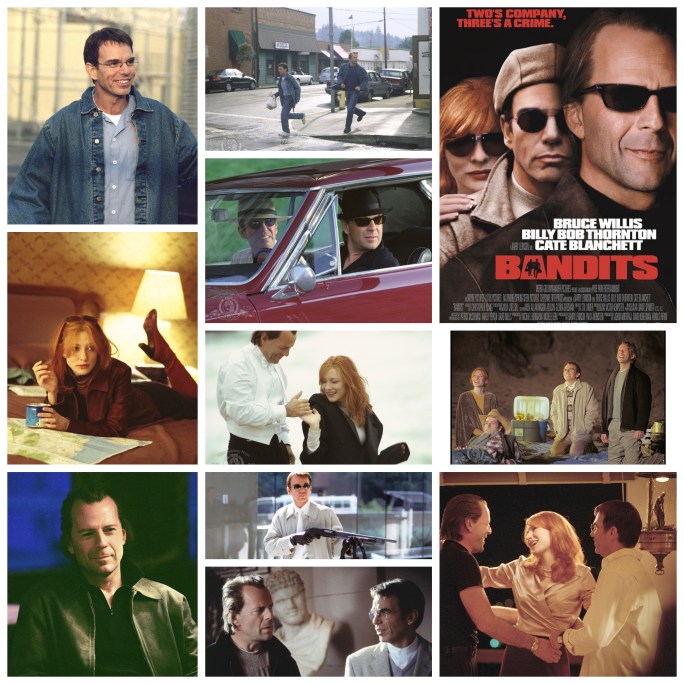
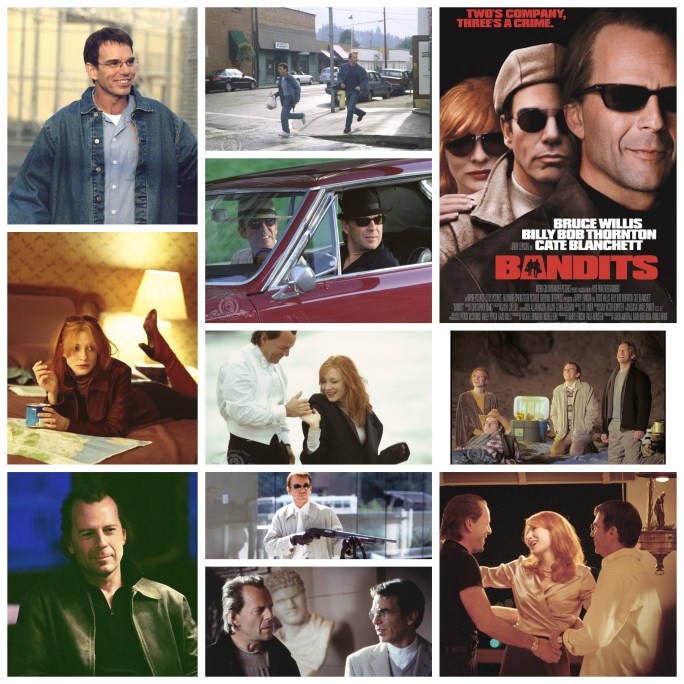
Every once in a while a quirky indie style film slips through the studio system disguised as a star powered blockbuster, and usually isn’t met with the best reception. Such is the case with Barry Levinson’s Bandits, a buddy crime flick by way of an oddball love triangle marketed as Elmore Leonard/Tarantino type fare but emerging as something way more stream of consciousness and weird. Bruce Willis and Billy Bob Thornton play two slippery, bickering bank robbers who bust out of prison using a cement truck (that’s a new one) and continue their nationwide spree of larceny and mayhem, but none of that is even close to as violent or intense as it sounds. There’s a schoolboy charm to these two and every hostage they take, every bank they knock over is a breeze, feeling like a pleasant, quaint experience. Eventually a bored housewife (Cate Blanchett) tags along and they both fall for her, causing friction in a few ways. The three actors are perfect for each other; Willis is the cocky ladies man who has tunnel vision and doesn’t think too hard or too far ahead, Thornton ditches his usual alpha male snake shtick for a jittery, sweet natured hypochondriac fellow and their camaraderie is irresistible. Blanchett is never not in top form and it’s easy to see how a girl like her could stray into their lives, eventually becoming very important to both. Now, anyone looking for taut action scenes, an intricate plot or specifically verbose, showboaty dialogue will be disappointed. As penned by Twin Peaks writer Harley Peyton, most of the character interaction has a spontaneous, free flowing aesthetic and feels improvised half the time, which I loved. As for plot, the bank robber framework simply serves to see these guys meander around beautiful Oregon hanging out and talking with each other, with only a few succinct, clear cut set pieces. This is a film about what happens in between the action scenes or the robberies, about quiet situational humour, quirky romance and organic conversation. It’s tough to adjust to and nothing about the DVD artwork suggests how odd and airy the film will be, but if that’s your bag then you’ll love it. It drags a tad in the third act but pulls together nicely for a cheeky resolution to their story, and is overall an enchanting piece of comedic crime by way of impromptu theatrics. Loved it.

-Nate Hill

Robert Zemeckis’s Contact

Robert Zemeckis’s Contact is a periodically good film that suffers from over-length, clutter and sideshow syndrome, as in it doesn’t trust itself to stick to the effective core story without throwing in all sorts of other hoo-hah just for for the sheer hell of it. At two and a half hours it feels more stretched than Bilbo did before leaving the Shire, and would have been way better off slicing out a good half hour to streamline. What does work is really captivating though, especially a fantastic Jodie Foster in a performance of striking determination as a woman who never loses the sense of wonder she had as a child, and strives to make contact with anyone that may be out there in the vast universe. Of course her efforts meet budget cuts, skepticism and sneers from the government and fellow colleagues like Tom Skeritt’s prestigious researcher, a sadly one note character whose allegiance turns on a dime when she actually receives a message from a faraway galaxy. Speaking of one note characters, get a load of chest puffing James Woods as an obnoxious NSA prick with all the depth a kitchen sink has to offer. John Hurt fares better as an eccentric billionaire who offers Foster funding and support, as does always terrific David Morse as her father. Matthew McConaughey is sorely miscast as a spiritual man and love interest, William Fichtner is excellent as her loyal colleague and friend, Jena Malone great as nine year old Jodie Foster, while Jake Busey, Angela Bassett and a whole armada of unnecessary tabloid celebrity cameos show up too, leading right up to Bill Clinton, who I’m convinced is an alien himself. The thing is, so much of the film is just commotion and nonsense, geared towards wowing audiences instead of trusting the fact that they’ll be at ease with just Foster’s story, which is the connective tissue. The elaborate and drawn construction of a machine based on alien blueprints, pesky religious extremists, theological fanfare that falls flat and incessant faux tv newsreel footage that buzzes around like unwanted house flies and kills the atmosphere, there’s too much in the way. My favourite scene of the film takes place somewhere deep in the universe Foster has travelled to through a wormhole, in which a mysterious being tells her that “human beings are capable of such beautiful dreams, and such terrible nightmares”, a sentiment that parts the clouds and gives the story clarity, as does her arc, relationship with her father and desire to know what’s out there, who we are as a race and where we came from, and it’s in that wonder that the film finds its strength. Much of the rest is just lame earthbound noise.

-Nate Hill