Jonathan Glazer’s Under The Skin

People often say that Jonathan Glazer‘s Under The Skin is one of those films you’ll either love or hate, and while I understand the stark precautionary sentiment, I think there’s more shades of grey than a knee-jerk reaction towards either side of the fence. I loved what the film did with sound, atmosphere, imagery and expectations. I hated how it made me feel overall. Detached. Alienated. Confused. Uneasy. Cornered by otherworldly stimuli. For what it’s worth, that’s most likely the intention behind the whole thing, and I applaud the genius in achieving a goal of exquisite discomfort, but I doubt anyone could blame me when I say that it’s a film I’ll watch once, and only once. Glazer goes for less of a conventional narrative and more of a dread inducing screensaver aesthetic, moving glacially through a series of events that seem to be both cohesive and just out of reach, toying with audience perception for a mood piece that is the cinematic equivalent to a particularly intense bout of disassociation. Scarlett Johannesson is as scary and sexy as one could get, playing some type of alien creature on a quiet, merciless rampage in various areas of Scotland. Seducing, destroying and stockpiling the pilfered essences of several unfortunate dudes who wander into her proverbial spiderweb, she, or rather ‘it’, eventually experiences some kind of inner awakening and undergoes a paradigm shift clearly brought on by her ongoing affiliation with those strange and sneaky creatures called human beings. If I’m being vague, it’s on purpose; there’s no gift wrapped cliff-notes for this baby, it’s something that makes its imprint on you in a language too illusory to impart in words. I’m reminded of other science fiction films like Darren Aronofsky’s Pi or E. Elias Merhige’s Begotten in the sense that most of what we see, hear and feel is not pleasing to the senses at all. Many heady sci-fi films are engineered to elicit positive emotional response from an audience, via a cathartic score, engaging production design and very human stories. Films like this, and the aforementioned, go out of their way to come across as cold, uncomfortable and stranded in a mist of off-putting hysteria. It’s a bold move whenever it happens. In the case of this film, it’s to give us a sense of what it must be like for an alien being to be thrown in with our lot here on earth. From the shrill, rhythmically jagged score by Mica Levi, to Scarlett’s alluring menace, to the murky nocturnal photography to the half mumbled daze of near incoherent dialogue, it’s all there to move us several planes away from ‘normal’, and get under our skin (hey that’s the title). Does it work? One hundred percent, and kudos, as it’s as scarily disorienting as they come. Is it pleasant moviegoing? Miles from it, it’s a beast built to provoke a reaction, and if you don’t like what it bristles up in you, you won’t hastily rewatch it anytime soon. I know I won’t.

-Nate Hill
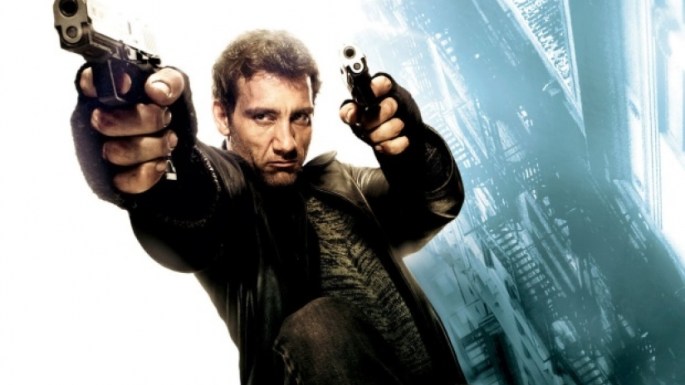
“Do we really suck, or is this guy really that good?” : An Interview with Michael Davis by Kent Hill (PART 1)

michael-davis-1465395106

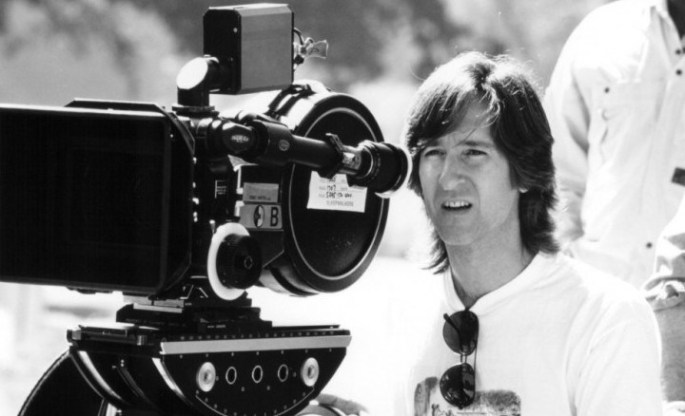
I really love this gig. I really do. I’ve had the distinction of being able to converse with many a hero and much admired artist over my time at PTS. There have though, been a few surprises along the way – and this was one of them.


I have long wanted to chat with Michael Davis. Part of it, and I’m sure you’ll agree having seen his films, that here is a man who went from making 100 Women to writing and directing the most-excellent, ballet of bullets that is Shoot ‘em Up. And you just need a few minutes of talking with Michael to understand how this was possible.

They say Scorsese has a machine-gun-mouth. Well listening to Michael is like standing next to Jesse Ventura firing Ol’ Painless. And – WOW – what a delight, the frenetic and passionate electricity that this man generates in infectious.


Michael’s initial overview of the birth of his career is one of the most entertaining I’ve ever heard. From his beginnings as a storyboard artist, to various writing assignments (don’t say Double Dragon out loud), to his eventual directorial debut; it’s a madcap movie marathon coming at you – at high speed!


Our conversation was so enthralling, so engaging, that I would be doing my guest a severe injustice to cut even a moment of it. So I shall be presenting it to you as a trilogy. Each section I promise is as entertaining as the last. So, don’t touch that dial, and prepare yourself to experience the filmmaking personification of the perfect storm that is . . . Michael Davis . . . . . . PART 1.

shoot-em-up-8


“CHEESEBURGERS, NO BONES!” : An Interview with Mick Garris by Kent Hill

Garris1

It took a while to get a hold of Mighty Mick – but I’m glad I had the patience. See Mick Garris is one helluva talented man. His passage through the movies is a veritable plethora of Amazing Stories – apart from the show-of-the-same-name where he achieved career lift off.

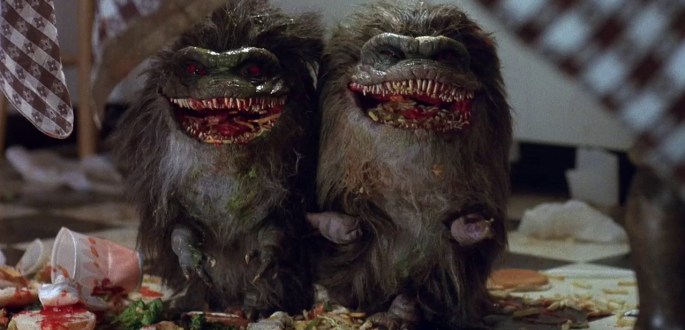
Since those early days he has gone on to become a prolific writer, director, producer, author, podcaster – the list goes on. He made me laugh with Critters 2, he was the writer of The Fly 2, which was one of the only times a film has forced me bring up my lunch, and he has conducted wonderful and insightful interviews with fellow filmmakers – some, sadly, that are no longer with us.

Through it all Mick remains the soft-spoken gentleman with a passion for his work and cinema in total. He has had a long successful run of adapting the works of Stephen King for the screen. I have vivid memories of sitting through, night after night, his extraordinary adaption of The Stand. This he beautifully followed up with further adaptions of Bag of Bones and The Shining, in which King adapted his own book, and which Mick credits as one of the best screenplays he’s ever read.

He was instrumental in bringing together the Masters of Horror as he was composing the elements which formed great movies either under his pen, or benefiting from his exquisite direction. Follow this link ( https://www.mickgarrisinterviews.com/  ) to Mick’s site and check out the bona fide feast of delights for cineastes he has on offer. As I said to the man himself, “You have a lot of fingers in a lot of pies, and I can’t wait to cut me a slice of whatever you serve up next.”

So, without further ado,  it is my privilege to present to you . . . the one, the only . . . Mick Garris.

Highlander 2: The Quickening

I have no words for Highlander 2 other than ‘what in the actual fucking fuck.’ I can’t call it Russell Mulcahy’s Highlander 2 because the poor guy tried to have his name removed from the credits, and who could blame him, really. In fact, it’s so thoroughly godawful it shouldn’t even be called Highlander, either. It’s ‘Movie X’, fit only for quarantine and to be blasted off into space so the folks on fictional planet Zeist can keep it. I love the first Highlander, it’s a camp cult rock n’ roll sci-fi sleeper classic, and any sequel would have large shoes to fill. What can be found here? Time travel. Outer space. An artificial ozone layer. Autistic porcupine alien assassins. Michael Ironside ripping off Clancy Brown’s beloved Kurgan villain so blatantly it hurts. Christopher Lambert in old age makeup that looks like it inspired Jackass’s Bad Grandpa. A Sean Connery montage visiting a tailor set to the William Tell Overture. I know all these ingredients could potentially brew up an even zanier cult classic than the original, but nope, no sir. This movie is a badly told story with scant context and zero continuity in both connective tissue to the first film and finding any organic roots of it’s own. Lambert’s Connor McLeod appears to be both old, young and somehow from a different planet, oh and he helped build a synthetic ozone layer to protect earth, a subplot both arbitrarily drawn up and coincidentally concocted around the same time as Total Recall came out, which I’m sure is just one big coincidence, ho ho. Ironside plays some radical called Katana who travels to earth and through time (wat) to kill Connor because there can be only one, a mantra that the film also happily dismantles in its earnest quest to bury the legacy of the first film in confusion and custerfuckery. I won’t even begin to describe Virginia Madsen’s haphazard love interest, a ‘scientist’ who winds up in bed with McLeod like minutes after she’s met him and seen him reverse age randomly and get young again. I’ve heard that Lambert would only do the film if Connery did too, and that the pair formed a bond working on the first film. The studio would have been better off just pitching their bucks in for the two of them to take a fishing trip together, no cameras involved, and save us all the headache.

-Nate Hill
Gary Fleder’s Things To Do In Denver When You’re Dead

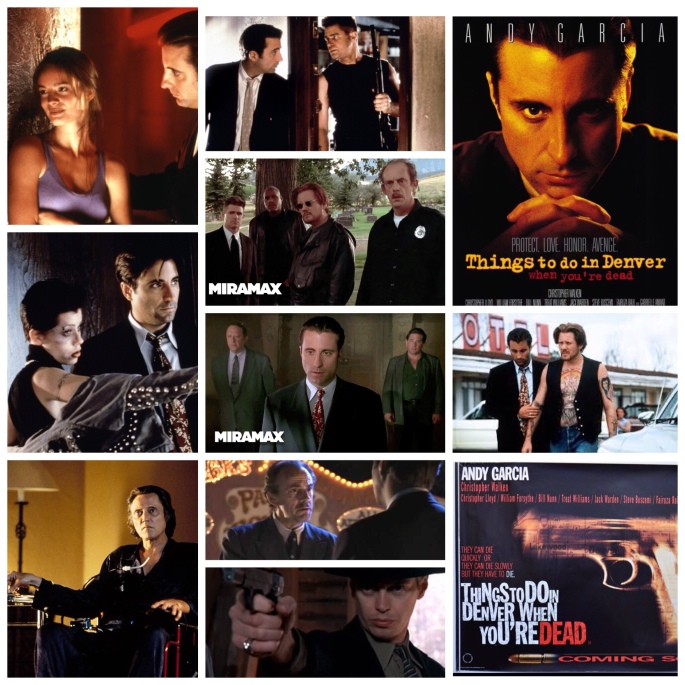
The 90’s was a heyday of hard boiled, ultraviolent film noir, a ripple effect that can undeniably be traced back to Quentin Tarantino’s Pulp Fiction, however it’s silly to say that they all are derived from that film, because plenty of them have their own distinct groove and flavour. One such flick is Gary Fleder’s Things To Do In Denver When You’re Dead, a mouthful of a title that serves as harbinger to one of the most idiosyncratic, verbally flamboyant scripts Hollywood ever produced, penned by Scott Rosenberg. They scored the cast to back it up too, for a beautifully melodramatic neo-noir pulp opus that should be as legendary as any of the household name films to come out of that era. Andy Garcia is the definition of slick as Jimmy The Saint, an ex mobster on the straight and narrow who’s pulled back into the game by The Man With The Plan (Christopher Walken) his former employer and the most dangerous crime boss in all the land. Hired to scare the piss-ant boyfriend who stole Walken’s son’s girl, Jimmy rounds up a crew that shouldn’t be trusted to watch a junkyard. Pieces (Christopher Lloyd, brilliant) is a diseased old porn shop owner, Easy Wind (Bill Nunn), tough guy with a heart of gold Big Bear Franchise (William Forsythe) and Critical Bill (Treat Williams) the psychopathic wild card who uses his day job at a mortuary as an anger outlet by pummelling the corpses like punching bags. Of course they royally fuck up the job, and Walken places scary, symbolic ‘hits’ on each of them. The clock ticks as they all try to either leave town or face the music, but Jimmy is the one with something to lose as he’s fallen in love with elegant, posh rich girl Dagney (Gabrielle Anwar). The script could have easily gone for just colourful carnage and glib posturing, but there’s real, palpable gravitas to the character relations, especially between Jimmy and Walken, who’s history is hinted at and brought to complex life by the two pros. This is Walken at his weirdest and wildest, confined to a spooky wheelchair and locked up in a guarded, dimly lit estate like Count Dracula. There’s a touching subplot involving wayward hooker Lucinda (Fairuza Balk, always terrific) that brings out the dormant humanity in hardened Jimmy. The cast here really is a marvel, and includes Don Cheadle and Glenn Plummer as a couple of loudmouth criminals, Jack Warden, Jenny McCarthy, Tiny Lister, Marshall Bell, Bill Cobbs, Michael Nicolosi, and Steve Buscemi as a freaky hitman named Mr. Shhhh, because he shoots first and doesn’t ask any questions at all. The dialogue is unique and flows from the actors like urban Shakespeare, it’s one of the coolest scripts ever written, and serves not just to be slick for the sake of it, but use jive and jargon to bring forth character naturally, and effortlessly provide buoyancy to the story. One of the great hidden gems out there. Boat Drinks.

John Carpenter’s Escape From New York

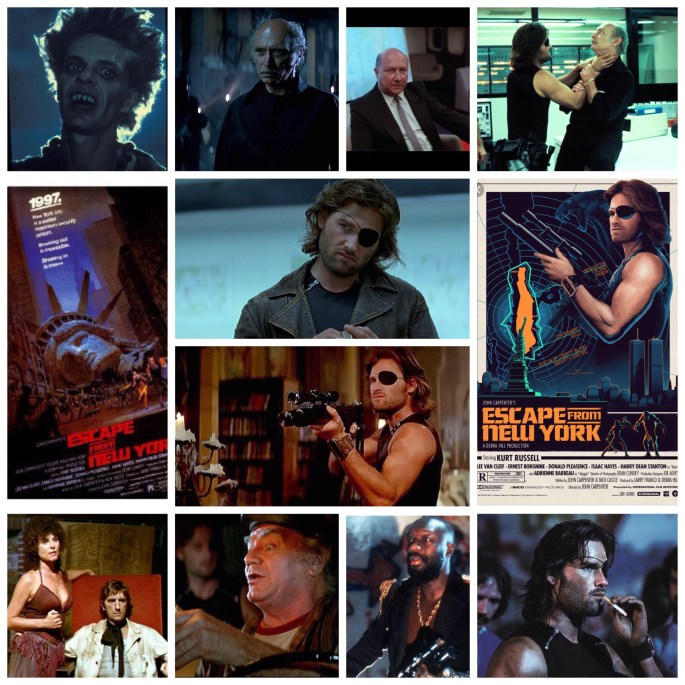
John Carpenter’s Escape From New York is lean mean, brawny and one of the director’s best efforts, one of his leaps into non horror territory and a high concept, exploitation template that has become so iconic that he’s had to sue one production for literally copying and pasting. More iconic still is growling Snake Plissken, a nasty, uncooperative, maladjusted piece of work that has calcified into both a genre titan and one of Kurt Russell’s most instantly recognizable, badass characters. Plissken is basically a villain transplanted into the protagonist’s seat, where he gets to shake up the formula and push the boundaries of being an antihero nicely. By now everyone knows the story. The President (Donald Pleasence) ejects out of Air Force One and crash lands in futuristic NYC, now a giant penitentiary housing unwanted criminals from all over, cordoned off from the rest of the world. Snake is sent in by General Hauk (Lee Van Cleef is a sadistic snake in his own right) as a ‘fight fire with fire’ ditch effort, given twenty four hours to retrieve POTUS at an extraction point and implanted with a microchip that will blow him into hamburger helper if he doesn’t make his deadline. Cue explosions, car chases, wicked stunts and set pieces galore, done in Carpenter’s careful, tactile, authentic and slightly non-Hollywood manner. The guy just has a knack for taking formulaic premises and giving them a just-south-of-normal spin, his own flavour and one that makes cult classics that are built to last. Adrienne Barbeau, Isaac Hayes, Ernest Borgnine, freaky Frank Doubleday, Charles Cyphers, Tom Atkins and good old Harry Dean Stanton all provide standout support. My favourite aspect of the film is the original score, composed by Carpenter himself, of course. It’s a spooky, atmospheric riff that’s akin to the music in The Thing, and just has this synth-y way about it that transports you to the specific time and place of the film flawlessly, it’s a showcase example of an auditory mood board. No remake could ever touch this, it’s too idiosyncratic and special to be updated, and the sooner studios realize their never ending goose chase to capture lightning in a bottle twice is a fool’s errand, the sooner we’ll get back on track and make original contemporary films that will becomes genre classics in the future, just like this. I love Plissken’s final act of brutal rebellion, a reminder that this is not a nice guy we’re dealing with here, but one who plays by his own rules and shirks the standards, much like Carpenter himself. I imagine Plissken’s reaction to news of a remake would be similar, if not more hotheaded, than that final, lethal sleight of hand prank he pulls on a government that stabs him in the back. Solid gold.

-Nate Hill
The Farrelly Brothers Dumb & Dumber To

I might catch some royal shit for this, but I loved Dumb & Dumber To, the Farrelly Brother’s decade’s later follow up to pretty much one of the best comedies of all time. It’s different; meaner, raunchier, a tad more meta and way less down to earth than its predecessor, it seems to be almost universally projectile vomited upon by critics and loyal fans alike. Fuck em if they can’t take a joke, because there’s no arguing that this one isn’t funny. In bad taste? Sure, but so was the original in its own 90’s way. Less charming? Maybe, but suck it up. Discontinuous to the nature of the leads in the original? Granted,

but it’s been like twenty years and the filmmakers/actors have changed as artists. Bereft entirely of valuable, effective humour? Not a chance. Just be thankful we got something to erase the pungent memory of Dumb & Dumberer, a prequel wholly undeserving of the legacy’s name. Jim Carrey and Jeff Daniels are a little older and a little more leathery, but they’re still Harry and Lloyd, the two dim witted pioneers of mid 99’s gross out humour and buddy comedy shtick, resurrected for a brand new adventure. After a prologue where Harry rescues Lloyd from a care facility (that catheter is a wince moment), they’re off to find Harry’s daughter (Rachel Melvin) who he spawned with the notorious Freida Feltcher, brought to life by none other than Kathleen Turner in full hoe mode, she’s a face I haven’t seen in movies for years. There’s a half baked crime melodrama unfolding around them just like in the first one, and just like then, they’re too dumb to get what’s going on, a running joke that villains Laurie Holden and Rob Riggle (doing a double shift) carry amiably enough, but they’re no Joe Mental or Nicholas Andre, let’s be real. The highlight for me was when Harry and Lloyd bumble their way onstage at a TED Talk-esque (updating set pieces for a new millennium) as judges, and hurl moronic criticism at every invention that graces the desk. It’s not the same as the original but it’s been years, after all. The Farrelly’s have always been about distasteful, raunchy, whacked out humour that aims low and beats the laughs out of you, which is exactly what I found to be on display here. Vastly undervalued.

-Nate Hill

Alex Garland’s Annihilation

Alex Garland’s Annihilation is a stunning, incredible, awe inspiring and strikingly unique piece of work. It’s the kind of film that has you leaving the theatre and wanting to run up to strangers on the street passing by, shout how great it is in their faces and promptly buy them a ticket of their own. It’s reassuring that smart, dazzling big budget science fiction still thrives in Hollywood, and projects like this build upon and terraform the preexisting genre to produce things previously unseen, stories that wear their influences upon their sleeve whilst simultaneously hitting you as something you’ve never conceived in your wildest fever dreams. It’s also not the film you might be expecting from trailers and descriptions so far, in the best possible way. Is it about a team that heads off into a strange, quarantined area to investigate a possible extraterrestrial presence? Yes, but not really. Is it a clever blend of Alien-esque horror and trippy, delirious cosmic futurism? Sort of, but that’s just the tip of a very large, very deep iceberg surrounded by a wall of scintillating effervescence dubbed ‘The Shimmer’ by wary scientists and the military. It’s into this enshrouded no man’s land that biologist Natalie Portman and a team of professionals with nothing to lose venture, and where the film really kicks off. Every character has some kind of inner trauma which has caused them to self destruct in their own ways, an unnerving theme that Garland holds up to his audience like a prism and explores with equal scrutiny. Portman has never been better, changed by the disappearance of her soldier husband (Oscar Isaac) and eerily drawn to The Shimmer. Jennifer Jason Leigh is Ventress, coldly stoic and freakily collected as team leader. Tessa Thompson caught my eyes with her fiery work in both Westworld and Thor: Ragnorak, she’s purely haunting here as the detached, withdrawn and highly intuitive Josie, nailing her final scene with earth shattering poise. Gina Rodriguez burst onto the scene with her excellent work in Deepwater Horizon and is pure dynamite here as Josie, the emotional firebrand of their troupe, giving the character’s eventual meltdown scene a remarkably authentic edge. These four actresses pull the tapestry of the film’s narrative together with their collective and individual work ; they’re nothing short of superb. Garland has found a way to express otherworldly phenomena in an artistic and scientific way that no other filmmaker has yet achieved. The images are breathtaking, the visual effects beyond top tier, the ideas are ambitious and reach full on for the stars, and the whole deal should be the gold standard of genre films at the multiplex. I’ll say no more, and let you discover it for yourself. Oh but I have to mention Geoff Barrow and Ben Salisbury’s score, an indescribable auditory experience that reaches dreamy levels of expressive percussion in the third act. Ok, I’m done, just go see it right now.

-Nate Hill
Nicolas Roeg’s Eureka

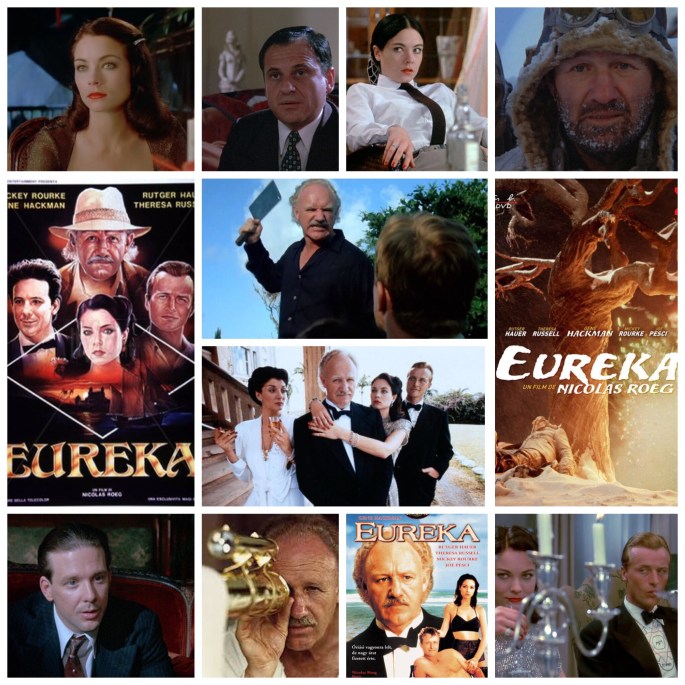
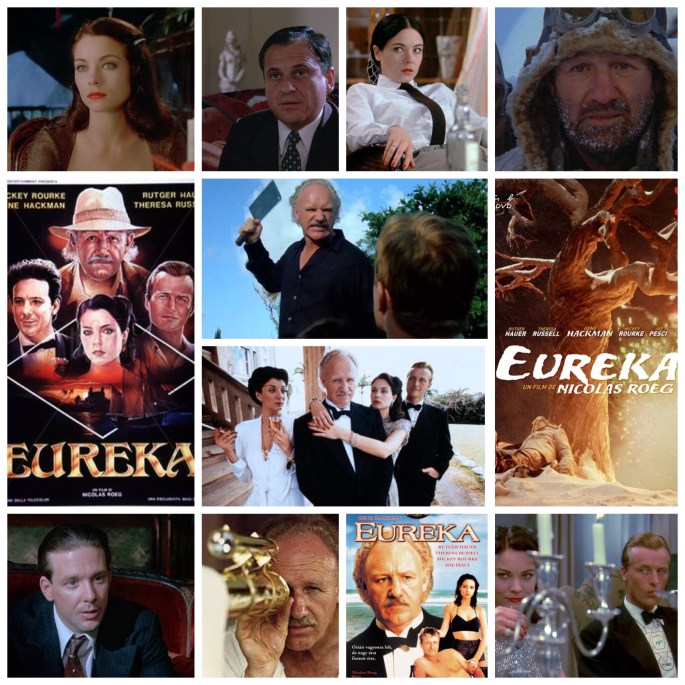
Nicolas Roeg’s Eureka is one of the strangest films I’ve ever seen, and I mean that in more of a disturbing way as opposed to a compliment. It’s a story that could have been given the straight n’ narrow Hollywood biopic treatment, and instead plays like the loudest, most disconcerting fever dream you’ve ever had, and you find yourself wondering how such a straightforward story can just seem so *odd*. A lurid meditation on greed and a balls-out cautionary tale for people who think that money can buy happiness, most of it focuses on Gene Hackman’s stubborn prospector Jack McCann, who after striking gold in a melodramatic Yukon set prologue, retires to his own Caribbean island to languish in riches. Life is anything but happy for him though, as his troublesome daughter (Theresa Russell) has brought along her scheming boyfriend (Rutger Hauer), who clashes with McCann right off the bat. Hauer is a no good schmooze with his hands in a bunch of dirty pies, Russell is headstrong and belligerent, and soon McCann becomes paranoid, angry, volatile and wrapped up in his own deluded mind. It also doesn’t help that a crime syndicate from Miami wants to build a casino on his island, an idea he abhors. They’re headed up by Joe Pesci and Mickey Rourke, two memorable faces who are ultimately eclipsed by the volcanically intense and overbearing performances from our three leads. This is an ugly, brutal picture of human beings at their utter nadir of social interaction and mental well being, a swirling maelstrom of malcontent that circles the toilet boil and plummets down the drain to a graphically violent conclusion from which there is no respite or glimmer of catharsis. I kind of get what Roeg was going for, but he’s so tonally off kilter and tries to hammer it home with such pulverizing, unnecessary force that we feel too shellshocked to get any sort of real message from the thing. The acting is quite impressive though, credit where credit is due. Hackman has never been more terrifying, Hauer is sleaze served a la flambé and Russell has a staggering courtroom monologue that should be in record books for most lines memorized in a single take, not to mention be up for acting awards all over the board. Bring a strong set of nerves to this one, and be prepared for little payoff after you sit through the depravity it has to offer.

-Nate Hill

B Movie Glory: Stranger By Night

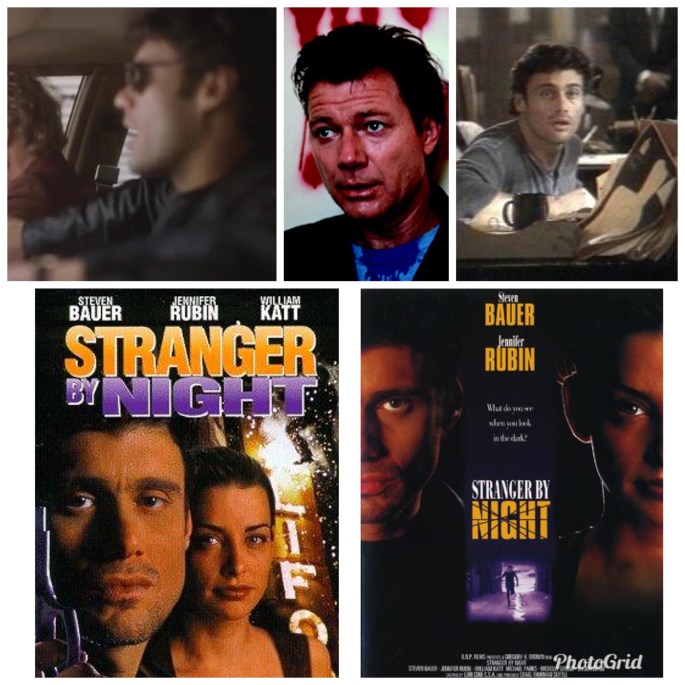
Stranger By Night is an all but forgotten cop thriller starring Steven Bauer, a charismatic actor who, after a showcase role in Brian DePalma’s Scarface and a handful of other prolific 90’s appearances, fell from grace into the netherworld of direct to video releases, like so many other former heavy hitters. This one sits above the bilge water because of a uniquely psychological angle towards the ‘killer terrorizing an urban neighbourhood’ motif, a great central performance from him and some memorable scenes. Bauer his precinct are looking for a murderer, but the kick is that he has a sketchy mental mindset, experienced weird blackouts, fits of rage an missing hours, which not only makes tracking down any suspects difficult, but always puts the crosshairs of suspicion on him. He’s an unreliable protagonist who means well but keeps getting sabotaged by his own demons, a theme played up nicely. The story involving the killer is fairly run of the mill, but anything to do with his character developments is cool stuff, especially in an introspective conversational has with his father (J.J. Johnston). There’s another cop played by the great Michael Parks, but the underwritten role is wasted on an actor meant to shine, but at least the production benefits from his credit. This one is low key, but I enjoyed the exploration in character for Bauer, as well as a hectic opening montage that sets the maniacal tone.
-Nate Hill