The New Daughter

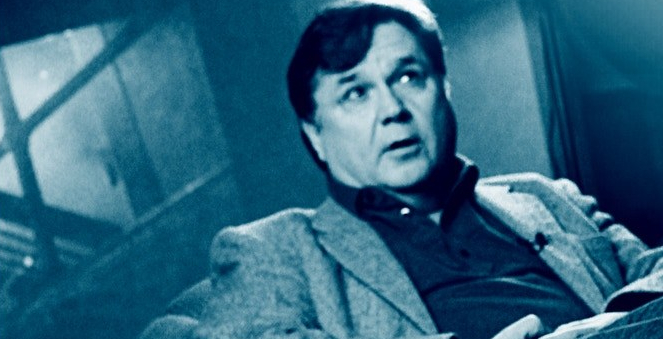
The New Daughter is an odd one, a creepy Kevin Costner vehicle that almost seems like an M. Night Shyamalan idea that didn’t quite take flight from the drawing board. Nevertheless it’s a good enough time at the movies, and there’s genuinely skin crawling moments too. Costner, in solemn mode, plays a father who relocates to South Carolina with his kids. As if an obligatory adjustment period isn’t bad enough, soon his teenage daughter (Pan’s Labyrinth’s Ivana Baquero, skillful but an odd choice to play all American white boy Kevin’s daughter) starts acting strange, and I mean Stranger than your usual garden variety brand of pubescent restlessness. There’s something out there in those rural woods, something that’s drawing the girl’s attention and slowly start possessing her. Father Costner is creeped out and desperate, seeking help from anyone he can, including a professor of far flung urban legend mythology (Noah Taylor), the creepy previous owner of his new home (screen legend James Gammon in his last living film role) and his kid’s foxy local schoolteacher (Samantha Mathis). It’s a spooky enough little flick, albeit cobbled together from several other better movies. There’s creature effects later on that score some points, and atmospheric cinematography, but ultimately it’s average, middle ground material.

-Nate Hill

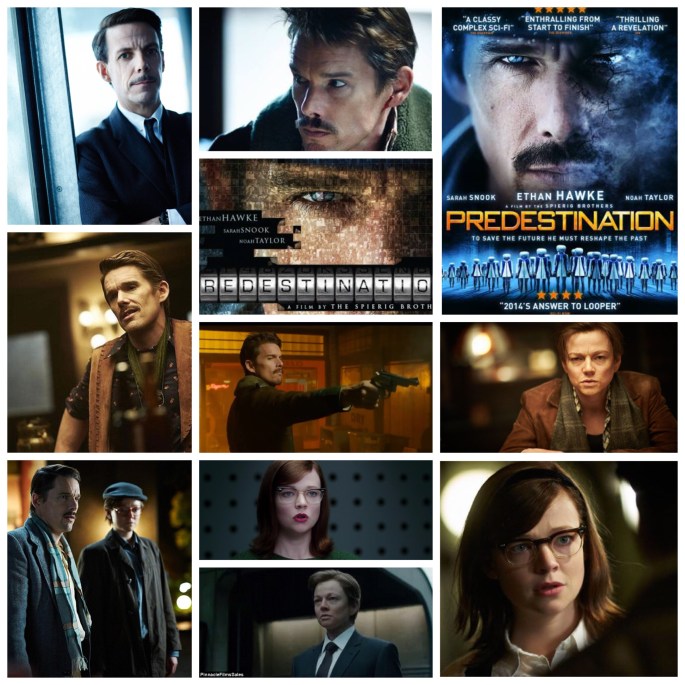
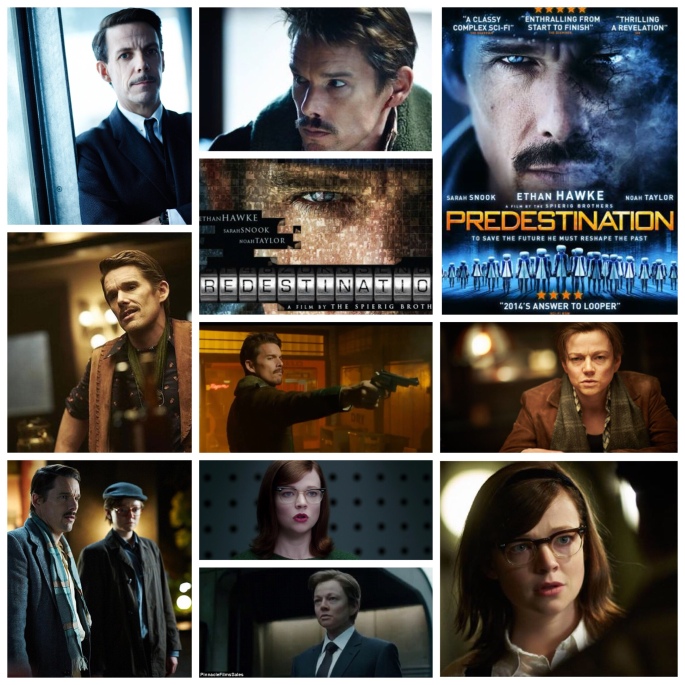
The Spierig Brother’s Predestination

It’s tough to say much about Predestination without giving away the tantalizing, thinking man’s dream of a story, but I will say that I’m sorry it flew under my radar until now, because it’s one of the most thought provoking, intelligent and wicked sharp films to come along in decades. There’s a special place in my collection for each and every movie in the time travel sub-genre, I love those thematics to death and imagine my surprise when I finally caught up to this one two years after it’s release and discovered it’s my favourite in the genre by a mile. Innovative. Beautifully made. A guessing game for the ages. Plot revelations that glue your jaw to the floor. Two staggering central performances from Ethan Hawke and mesmerizing newcomer Sarah Snook. Hawke plays a temporal agent working for a mysterious handler (Noah Taylor doing an even slier rift on his Vanilla Sky character), his job being to jaunt through time and stop murders before they happen. If that sounds generic, familiar or a path well trodden, therein lies the irony because it is anything but. Any preconceived notions of a flashy, slick thriller will be decidedly dismantled once you chow down on this beauty of a story, unwrapping each twist and turn of the narrative like a present. Hawke is an actor I never used to take seriously, I always just thought of him as the kid cop from Training Day. He’s surprised me in recent years though, deliberately picking fascinating scripts and knocking it well out of the park with his performances. Sarah Snook is an Aussie up and comer who does an absolute encore here in a heartbreaking, multifaceted performance that should have gotten her awards recognition. This is the first film on record to tackle some previously taboo subjects regarding the concept of time travel, ideas that everyone has no doubt thought about but Hollywood has been too chicken to explore thus far, so props to these storytellers. Also, if you thought time travel flicks were elliptical and paradoxical until this point, you ain’t seen nothin’ til you’ve seen this one. It’s also just a brilliant, emotional, daring story told in a soaring cinematic fashion that stirs thoughts and pulses throughout.

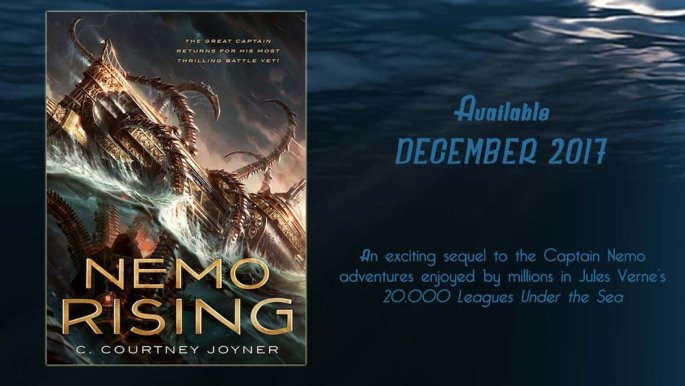
20,000 Leagues of Cinema and Literature: An Interview with C. Courtney Joyner by Kent Hill

51A1E+schsL._UX250_

C. Courtney Joyner is a successful writer/director/novelist. He was a zombie in a Romero movie, he hangs out with L.Q. Jones and Tim Thomerson, he was once roommates with Renny Harlin and made the breakfasts while Harlin got the girls. It makes me think of Steve Coogan’s line from Ruby Sparks, “how do I go back in time and be him.”

Truth is we are the same in many instances. We’re just on different sides of the globe and one of us is in the big leagues while the other is at the scratch and sniff end of the business. But we both love movies and fantastic adventures. We both wrote to the filmmakers we loved long before the director became celebrity. We both longed for more info from behind the scenes – long before such material was in abundance.

He grew up in Pittsburgh, the son of a doctor and a reporter. He came of age in the glory days of monster movies and adventure fiction. Then he headed west and after college it wasn’t long before his writing caught the attention of producers and thus a career was spawned.

Spending those early years working with Charles Band and his company, Empire, Joyner was prolific, and soon the writer became a director. All the while he was working on a dream project, a work we all have in us, that he was fighting to bring into the light.

It was a love of Jules Verne and the “what if” type scenario that gave birth to the early version of the story that would become his current masterwork Nemo Rising; a long-awaited sequel, if you will, to 20,000 Leagues under the Sea.

His story would go through several incarnations before finally reaching the form into which it has now solidified. Swirling around him were big blockbuster versions which never quite surfaced. Names like Fincher and Singer and stars like Will Smith were linked to these big dollar deals.

trancers-3-deth-lives-movie-poster-1992-1000231140

Unfortunately even Joyner’s long-form TV version came close, but didn’t get handed a cigar. So at a friend’s insistence he wrote the book and his publisher, in spite of the property being linked at that time to a screen version that fell apart, agreed to still put the book out.

Thus Joyner’s Nemo has risen and at last we can, for now, revel in it’s existence. I believe it is only a matter of time before it shall acquire enough interest – and the new major playing field – the field of series television may yet be the staging ground for Courtney’s long-suffering tribute to the genius of Verne and the thrilling enigma of a character known as Captain Nemo.

nemo4

Long have I waited to chat with him and it was well worth the wait. So, here now I present my interview with the man that director Richard Lester (The Three Musketeers, Robin and Marion, Superman II)  once mistook for a girl that was eagerly interested in film.

Ladies and Gentlemen . . . C. Courtney Joyner.


The Way of the Samurai Cop: An Interview with Matthew Karedas (Hannon) by Kent Hill

samurai_cop_sd3_758_426_81_s_c1washington_joe

You’re all familiar with the concept “so bad, it’s good” I’m guessing? If you’re not then I’m here to tell you that there is a thriving sub-genre enjoying the hell out of life just beyond the fringes of your current viewing tastes. Now, some might say that these are the lands where bad films go to die – but I say it is not so. You just have to look a little harder, you have to look with better eyes than the ones in your head that only see the mainstream and everything that floats down it. Remember shit rolls down hill too.

And you’ll be told that films like Space Mutiny, Troll 2 and The Room are only enjoyed by small minded juveniles that still think farts are funny. You’ll be told to stick with the cinema of the Golden Age, heck even the Silver Age – but what ever you do – stay away from the counterfeit Peso Age.

199131ca71d81b1e05dcd3778d9a3c2bimage-1-e1457863617363

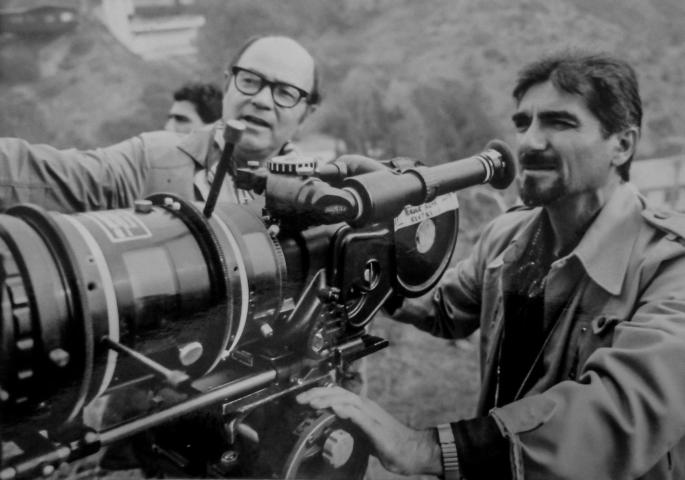
If these are the voices that dictate your viewing pleasure then you best take off. This story ain’t for you. The cinema of Amir Shervan (top) and Gregory Hatanaka (bottom) is beyond your realm of understanding. For these guys play in the sandbox where bad is beautiful and lunacy equals legendary. These are the men who created the Samurai Cop.

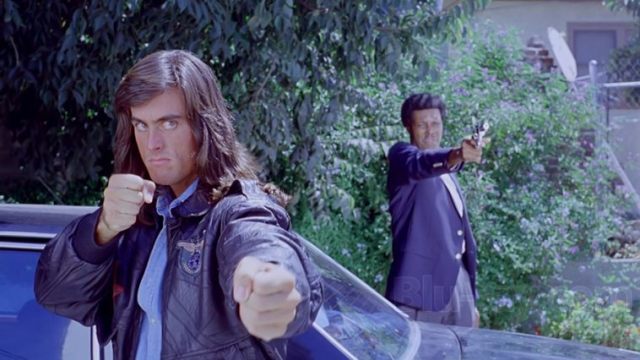
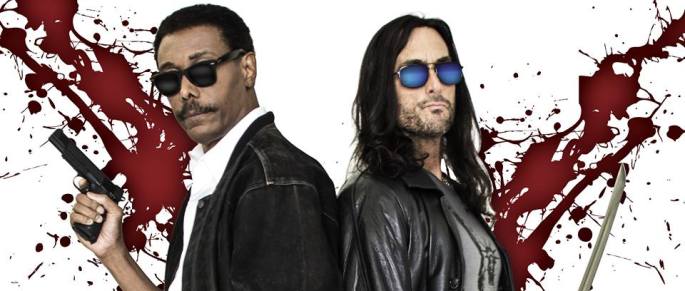
In 1991 a ex-Stallone body guard and a trained New York actor strapped on the guns and a bad wig and took their place in cinema history. The film was Shervan’s tribute, some might say, to the American action film. What he made had bad acting, stilted action, a whole lot of tits, ass and Robert Z’Dar, blended with a mighty helping of stupid courage.

Then – just like that – the film vanished, along with its star.

1100x620_mullets-noscale

vlcsnap-3203-01-25-07h44m19s518

Cut to 25 years later and a new filmmaker, inspired by the newly uncovered brilliance of Samurai Cop, decides to get the old band back together and make a sequel. Only problem being . . . the Samurai Cop is missing, presumed dead.

But Matthew Karedas (formerly Hannon) was just chillin’. He’d grown tired of jumping through Hollywood’s hoops and so, he got a real job and took the time to raise his young family. It was one of Matt’s daughters that saw the word on the web of her father’s supposed death and told him he should post word – tell the world the Samurai Cop Lives!

So he did, and the rest dear friends is history. Samurai Cop 2 : Deadly Vengeance was released around the world to adoring fans and took its long-awaited seat beside the awesome original. Nearly all the cast returned, along with some new faces. One genius stroke was the casting of fellow “so bad, it’s good” megastar Tommy Wiseau (The Room). The meeting of Karedas (Hannon) and Wiseau on screen being equaled only by the scene from Michael Mann’s Heat, which saw the powerhouses of Pacino and De Niro square off.

So, kick back with me now as we sit down with the Samurai Cop himself to learn about the past, chat about the future, shoot the breeze on the subjects of bad acting and equally bad wigs . . . and of course hear all about rubbing shoulders with Tommy Wiseau. Ladies and Gentlemen I proudly present . . . Matt Hannon (Karedas), The Samurai Cop.

Ron Howard’s Backdraft

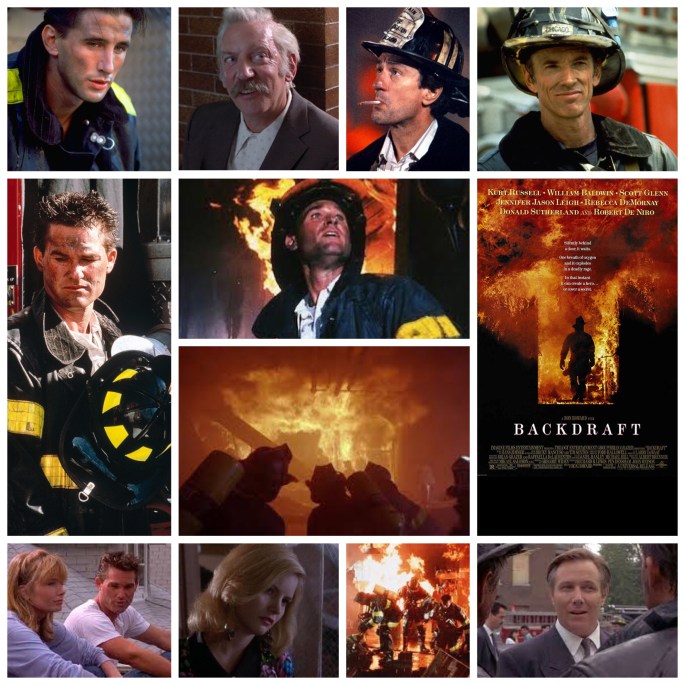
Ron Howard’s Backdraft is all you could want in a big budget Hollywood picture, and more in the sense that it combines a handful of genres for one big opus that’s bursting at it’s seams with family drama, romance, mystery, psychological thrills (of the deliciously heavy handed variety) and no shortage of shit blowing up. As far as firefighter films go, this is probably where the buck stops as far as I’m concerned. Stuff like Ladder 49 came and went without much lasting impression as I’m sure the Josh Brolin one from this year will too, but Backdraft man, it’s an action classic that’s endured and aged remarkably well over the years. It opens with a bang as a Chicago team thunders into action set to a score by Hans Zimmer that could wake the dead. This intro serves as a showcase moment for what’s to come, as we meet two brothers who are fiercely competitive, each scarred by there fireman father’s (Kurt Russell) untimely demise. The older (also Russell) is a headstrong bull with self destructive tendencies, while the younger (William Baldwin) does his best to live up to the family name by struggling through the academy. That’s the framework for a story that’s brimming with characters and subplots, as any Hollywood epic should be. Robert Deniro steals the show as a gruff, old school arson investigator who’s seen a few deadly fires in his time, and keeps a close watch on psychopath firebug Donald Sutherland, who himself gives a thoroughly chilling performance. Scott Glenn is rough ‘n tough as veteran fireman Axe, Jennifer Jason Leigh is Baldwin’s flame in a role that’s uncharacteristically safe for the daring actress, while Rebecca De Mornay is terrific as Russell’s ex-wife. Ohh and J.T. Walsh steals every scene as a dubious politician. What a cast. The film is big, bold and noisy, with a visual and auditory aesthetic that will give any home theatre system a pounding. Zimmer’s score is seriously awesome, a grandiose, emotional, booming concoction that stands as both one of his best and most underrated. This is one of the old fashioned, pure bangers of unbridled cinematic escapism that can’t be beat, replicated or watched too many times.

-Nate Hill

It’s time to see The Last Jedi . . . again: A Review by Kent Hill

I am stunned. I am still. I am at a loss for words. I have just come from seeing The Last Jedi, and really all can muster is . . . it is a miracle.

I am going to try and avoid spoilers but I may fail, so, if you haven’t seen the movie stop reading now.
lastjedi17

A long time ago in a galaxy far, far away, I was young and Star Wars was new. I don’t think I came out of that dark room in which I saw the first film, and the person that did – he certainly wasn’t the same kid who walked in. A long time have I watched, looking away, to the future, to the horizon, watching, what we who were there from the beginning will come to remember as, the saga of the Skywalkers.

I had read other reviews, seen teasers and trailers. The clever thing is though . . . this movie doesn’t go the way you think. Throw all the theories out of the window, forget all you know – or think you know. Breathe, just breathe. Now, sit back and watch The Last Jedi.

last-jedi-luke-lightsaber

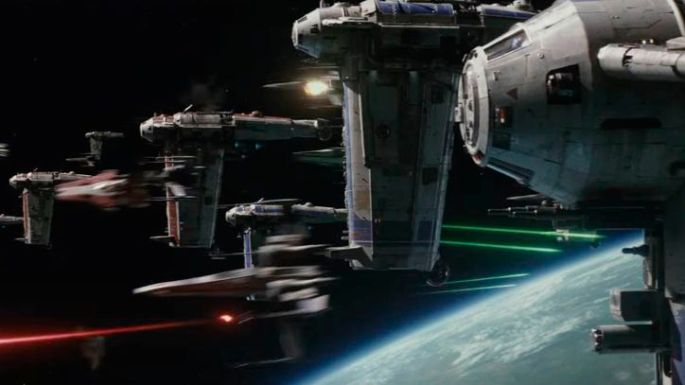
We begin in a fury, in the heat of battle. Good versus evil, a staple of the Star Wars movies. Then it goes wrong and the good guys will lose. Because, as you’ll discover, this time round, it isn’t about winning and losing. It’s about existing. It’s a beautiful sentiment at the heart of this picture. Saving, indeed savoring, the things we love the most.

After all, what have we all been doing since 1977. Savoring this thing we love right? Mr. Johnson captured that so well. In fact, when it was all over, Bill Pullman’s line from Independence Day popped into my head, “He did it – the sonofabitch did it.”

Star-Wars-The-Last-Jedi-000025

Abrams had the easy assignment if you think about it. He had to wake the force up. That’s not hard when you’ve got legions of fans awaiting to listen. The hard task is the difficult second album – trying like hell to be the one that strikes back. And, for my money, for this trilogy, for this time round – this is the new Empire Strikes Back. It can’t be the original – nothing will top that, but TLJ stands shoulder to shoulder with it.
landscape-1509112223-luke-skywalker-this-is-not-going-to-go-the-way-you-think-star-wars-the-last-jedi-trailer

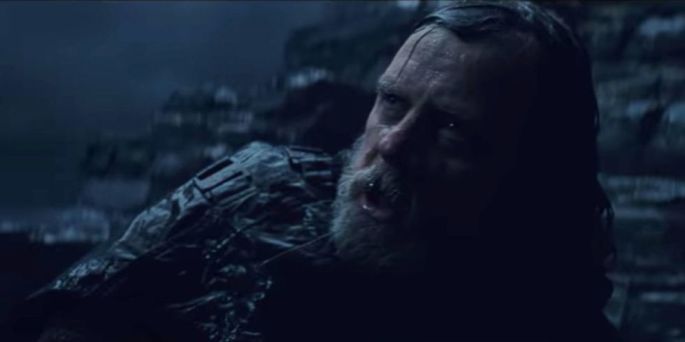
I think I have remarked a number of times to friends and family about what I thought the first words might have been out of Luke’s mouth back where Mr. Abrams left us in 2015. What he does retort with is better than a line or a speech, and it’s one of many moments of levity that the movie needed. I heard the voice of Irvin Kershner in my mind, talking about injecting humor into Empire. He was right then, as Mr. Johnson was right now. It is all about balance – the dark rises and the light to meet it.
leia-poe

Two reviews I read prior to going in brought up two interesting points. One which I thought was kinda confirmed, whilst the other was dispelled. The first was that TLJ was almost like Empire in reverse. I found this to be, for me, delightfully true, and I’m surprised at how well that formula worked. Where Abrams was criticized for leaning to heavily on the crutch of A New Hope, Johnson seems to have avoided the problem by simply changing direction, which he does quite often. Be prepared.

Abrams surprisingly followed this theory to success with the first of the new Star Trek films, however grossly ignoring it for his own sequel. But it is well, not only if he stepped away from the director’s chair for fear of this, but that fresh eyes often make all the difference. I enjoyed Looper, but when they said that guy is going to not only write but direct Episode VIII, I was like half interested, half fearful.
45e55b_e19b8e0d44e046c798091435487695d9~mv2

But we shouldn’t fear, should we. Fear leads to anger, anger leads to hate and hate leads to suffering.

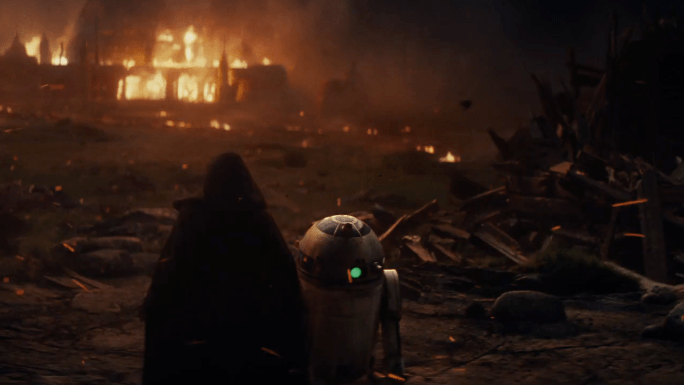
Another element I like about TLJ is the fact that, more so than The Force Awakens, this felt like not only handing over the torch, but just throwing it away. I love how in the backgrounds of these movies we see the remnants of Star Wars past. From Rey’s junkyard home, to Luke’s X-Wing beneath the waters surrounding his fortress of solitude – even in Rogue One there is that giant fallen statue of a Jedi; the only true way to keep something going in this life is to keep it fresh and expose it to constant reinvention.

There’s lots of fun new creatures. LOVE THOSE PORGS! There’s some fun new locales. Mr. Williams musical voice sings a few new tunes and lovingly reminds us of a few old ones. The action is breathless, the reversals effective and plentiful. There are great revelations and many new questions.

Oh Look. You see what’s happened? I started off wanting to write a review and here I now find the need to be silent again. There is nothing I can tell you that you should ultimately listen to, except this: I have never seen a more beautiful journey that does as each new day does for us all; beginning and ending, staring off to the horizon, watching the rising and or setting of that bright sphere at the center of our galaxy.

When I was younger than I am now, I felt like Luke Skywalker, gazing off into those twin suns and longing for the next day, for the journey ahead. It is fitting then that TLJ comes now, and I am a much older man. You’ll know the moment when it comes. The twin suns will set and maybe, just maybe, your heart will swell as mine does even now, and I am at a loss for words. TLJ has touched me in a way I’ve not experienced in the cinema for a while now – and I am the better for it.

The-Last-Jedi-Landscape-Poster-

So if you have seen the movie, I hope you enjoyed it – were thrilled by it. For those of you for whom this is their first Star Wars experience, rejoice, there’s more out there to discover – more still to come. For those who haven’t seen it – man, get away from this screen and get down to your local theatre real quick – what’s the matter with you?

It is fitting that the last line belongs to a certain character, and speaking of said line, it echoes my sentiments exactly:

In The Last Jedi, “We have everything we need – right here.”

Star-Wars-The-Last-Jedi-Behind-The-Scenes-0975-2

Man On Fire (1987)

You’d have to dig a bit to discover that Man On Fire with Denzel Washington is actually a remake, or rather another version of a book that’s out there somewhere, but there is indeed film from 87’ bearing the same title and basic plot outline, albeit with a heavy dose of melodrama. Swap out Denzel and Chris Walken for Scott Glenn and Joe Pesci, Mexico City for Italy and Tony Scott’s neo-punk visual aesthetic for a more stone-faced, straightforward approach and you’ll have some idea. It’s a passable film, but instantly pales with any comparison to Scott’s outing, which is a masterpiece and one of the best films of the century. Glenn is Creasy, a mopey ex CIA soldier who gets a job from buddy Pesci protecting a wealthy businessman (Jonathan Pryce) and his family, mostly driving their precocious young daughter (Jade Malle) around. The two are rocky at first, begin to bond, she’s kidnaped and Creasy wages war on the criminals who took her with an arsenal of firepower provided by Pesci. At ninety minutes it’s a little too short for any of this to be developed properly, or proportionately so to other elements, but it works well enough. The strongest bits are the early scenes where they make friends, brought to life by Glenn’s warm smile and Malle’s emotional curiosity. The final act of revenge feels oddly rushed, awkward and too overblown to justify the lack of action we get, it should have been more hot blooded and sustained. It’s still a decent piece though, with the distinct cast doing fine work, especially Pesci who is volatile and unpredictable, almost stealing the film from Glenn. Nothing compared to Scott’s version, but worth a look.

-Nate Hill

Andreas Prochaska’s The Dark Valley

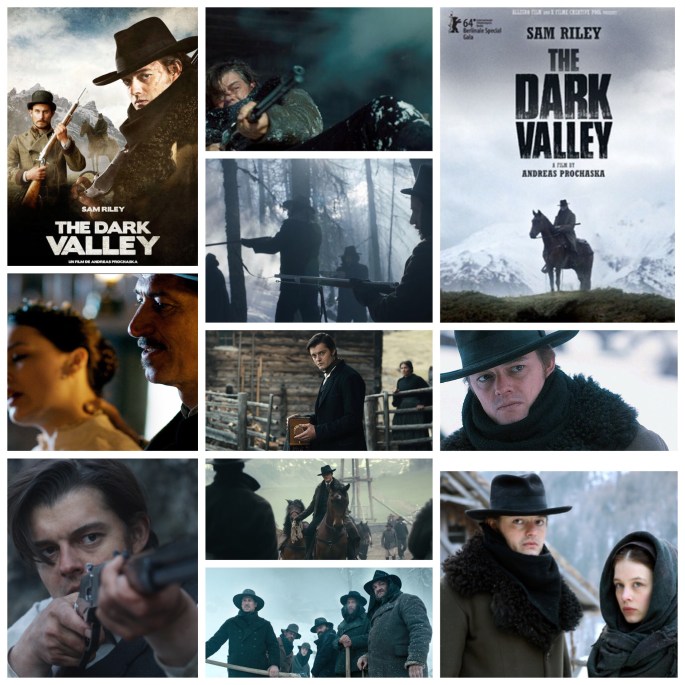
Andreas Prochaska’s The Dark Valley is a dark, grimly paced Euro-western that could have been a great one if only the script was as tight and polished as it’s musical and stylistic elements. Shot in the Italian mountains, it looks absolutely alluring in every single frame, blessed with a stoic tough-guy performance from Sam Riley as a mysterious stranger bent on revenge and a soundtrack full of odd, against-the-grain yet distinct choices. It looks, sounds and feels evocative, but the story that should go alongside and string it all together is just too loosely woven, and as such, interest is lost. Riley’s stranger is not really welcome in the alpine town, especially by the Brenners, a local crime family that rule the roost. It’s a harsh winter, and pretty soon bodies start piling up, victims of an unseen assailant the townspeople just assume is the Stranger. There’s a backstory to the whole thing, some great atrocity committed by these folk decades earlier, and while all the information was presented, in both exposition and flashback, it just didn’t have the emotional payoff or clear-cut grandiosity that a western like this should, especially one as dramatic in every other area. The dubbing over of the German actors doesn’t help one bit either, a choice which I will never, ever support. Subtitles all the way, man. Anyways, Riley is as awesome as ever, it’s really sad that he doesn’t make more films, he’s got a dark star quality that immediately classes up any film he shows up in. The cinematography is top shelf, with a stunning backdrop of mountains all round, detailed period-appropriate production design and costume work. Music is a strong point, with a neat opening credit rendition of Nina Simone’s Sinner Man, and there’s a climactic gunfight that leaps off the screen in bold strokes. It’s just a little less than it should be in areas where the stakes needed to be way higher and draw us into the story, so that when the operatic violence comes, it has heft beyond just looking cool and leaving us nothing to invest our care in. Good stuff, if incomplete.

-Nate Hill

Ted Demme’s Life

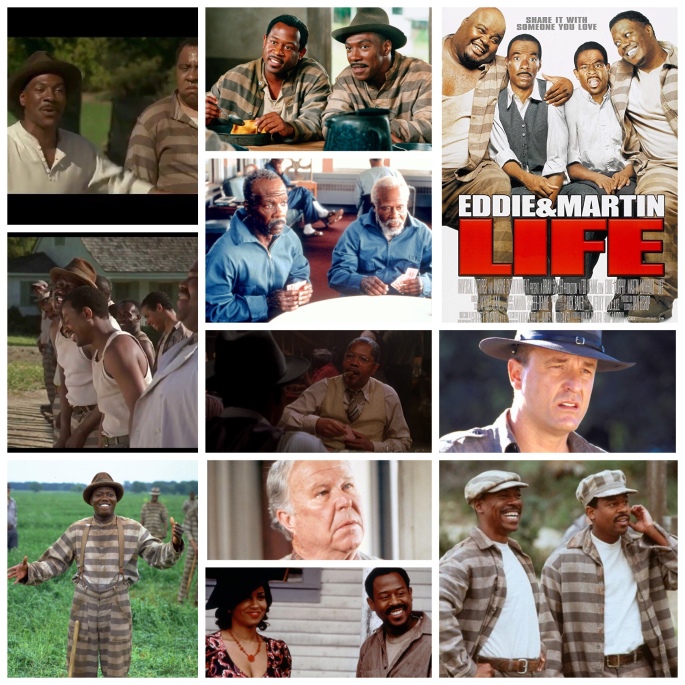
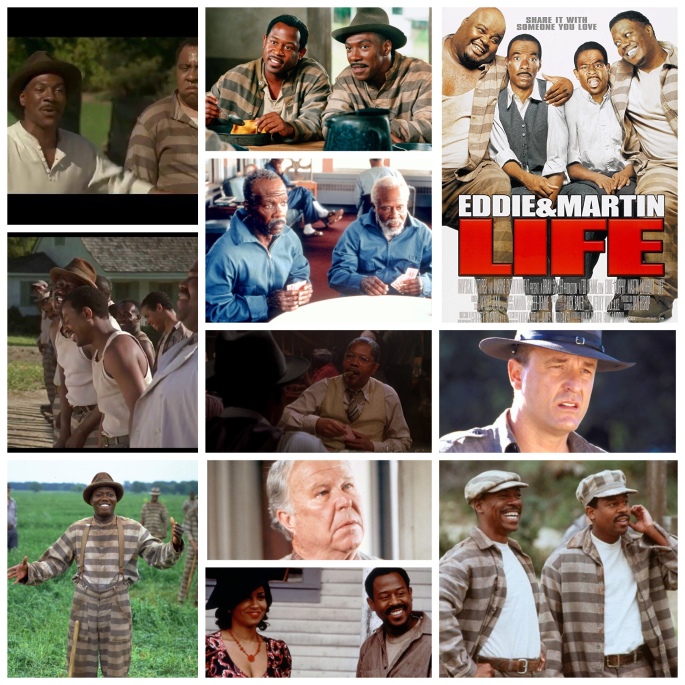
Ted Demme’s Life is a hard one to classify or box into genres, which may have been why it didn’t do all that great at the box office and subsequently slipped through the cracks, a result that often befalls ambitious, unique films that people aren’t ready to surrender to. Part comedy, part tragedy, all drama infused with just a bit of whimsy, it’s a brilliant piece and one of the most underrated outings from both of it’s high profile stars, Eddie Murphy and Martin Lawrence. It seems fitting that the two lively, cartoonish cowboys of comedy should share the screen, and it’s lucky they got such a wicked script. In the roaring twenties, Murphy is smooth talking petty thief Ray, Lawrence is hapless, hot blooded bank teller Claude, and the pair couldn’t be more suited or dysfunctional towards each other. Brought together for an ill fated moonshine run bankrolled by a nasty NYC Gangster (Rick James), things go wrong in the most auspicious of places a black man could find himself during that time: Mississippi. Framed for the murder of a local conman (Clarence Williams III) by a psychotic, corrupt Sheriff (Ned Vaughn), they’re given life in prison by the judge, and this is where their peculiar adventure really begins. Put under the supervision of a violent but oddly sympathetic corrections officer played awesomely by Nick Cassavetes, the two wrongfully convicted, hard-luck fellows spend their entire adult life and most of the twentieth century incarcerated… and that’s the film. Squabbling year by year, making a whole host of friends out of their fellow convicts and never losing their sense of humour, it’s the one of the strangest narratives I’ve seen, and somehow works wonders in keeping us glued to the screen. Supporting the two leads is a legendary ensemble including Ned Beatty as warm hearted superintendent, Anthony Anderson, Bernie Mac, Bokeem Woodbine, Barry Shabaka Henley, Heavy D, Don Harvey, Noah Emmerich, Obba Babatundé, Sanaa Latham, R. Lee Ermey and more. Murphy and Lawrence have never been better, shining through Rick Baker’s wicked old age makeup in the latter portion of the film, and letting the organic outrage and frustration towards their situation pepper the many instances of humour, accenting everything with their friendship, which is the core element really. The film’s title, simple as it, has a few meanings, at least for me. Life as in ‘life in prison’, in it’s most literal and outright sense. Life as in ‘well tough shit, that’s life and it ain’t always pretty,’ another reality shared with us by the story. But really it’s something more oblique, the closest form of explanation I can give being ‘life happens.’ There’s no real social issues explored here, no heavy handed agenda (had the film been released in this day and age, that would have almost certainly been a different story), no real message, we just see these events befall the two men. They roll with each new development, they adapt and adjust, they learn, they live. In a medium that’s always being plumbed and mined for deeper meanings, subtext and allegories, it’s nice to see a picture that serves up the human condition without all those lofty bells and whistles. Their story is random, awkward, unpredictable, never short on irony, seldom fair, often tragic, and ever forward moving. That’s Life.

-Nate Hill

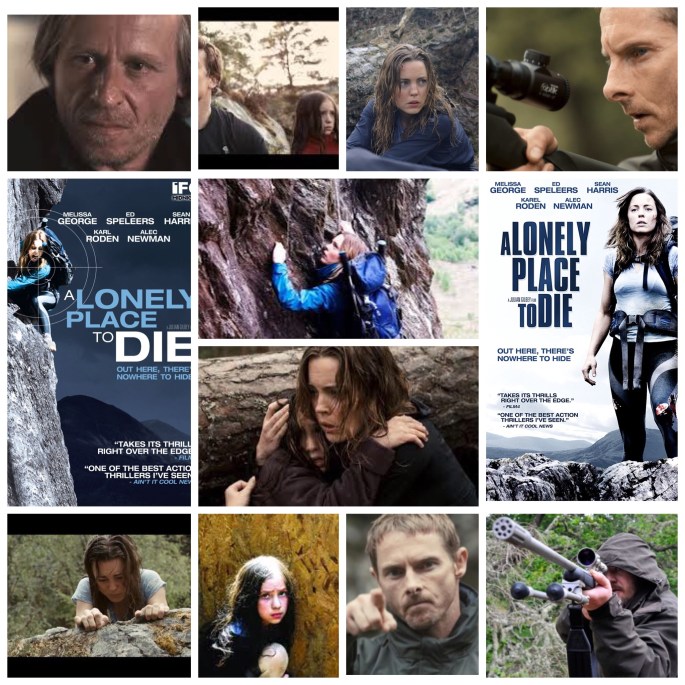
Indie Gems: A Lonely Place To Die

You know when you’re on some wilderness trip, out of your element, and all these crazy, far flung ‘what if’ scenarios enter your head, but they never happen? In A Lonely Place To Die, one of them does, to hapless hiker Melissa George and her friends. Traversing the Scottish highlands, the group hears an eerie crying coming from a random ventilation pipe in a remote area, and unwisely digs below ground to investigate. Imprisoned in a seriously creepy bunker is a young Eastern European girl, alone and afraid. So begins their waking nightmare trying to find out where she came from, pursued by all kinds of nasties and forced to kill or be killed to protect her. There’s a horde of British thugs including resident creeper Sean Harris, a faction of powerful Russian spooks led by intense Karel Roden, and all manner of psychos adding to the hubbub. As a breathless chase thriller it works wonders, with more than a few impeccably stages set pieces that orchestrate suspense well. There’s violence too, as Melissa is forced to dispatch the heinous baddies in terrifically gory ways, and fighting tooth and nail to protect the girl. The plot moves in a familiar direction as far as her backstory goes and loses momentum in resolution, but they had to wrap it up logically I suppose. The film is best when it goes full on crazy, and gets into borderline horror mode, it’s got a loopy sense of violence about it that is the strongest quality.

-Nate Hill