Steven Soderbergh’s Ocean’s Eleven

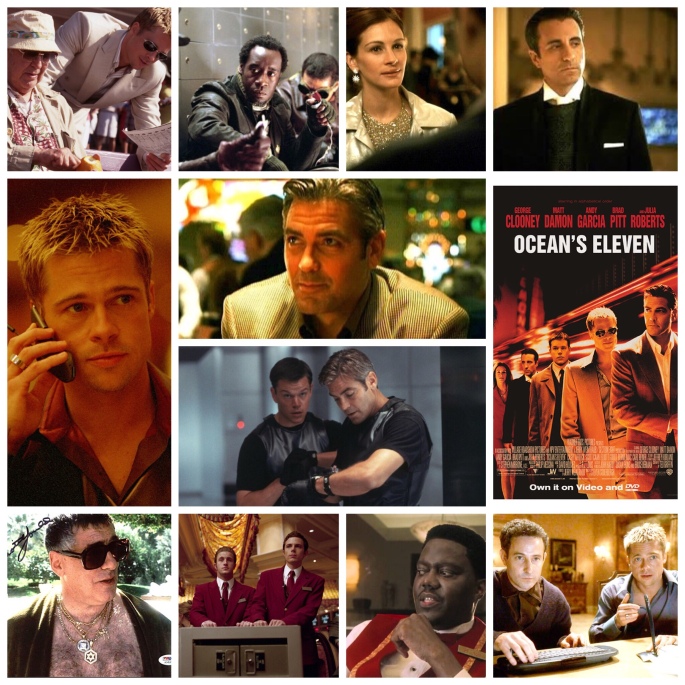
I’ve seen Steven Soderbergh’s Ocean’s Eleven so many times I couldn’t count on the hands I have, or all twenty two of those attached to the gaggle of slick, fast talking lounge rats who pull of the most laidback, easygoing casino heist in Vegas history. Most heist flicks have a breathless cadence and at least one high powered action sequence. Not this baby. It’s like the weekend R&R of robbery films, the classy brunch of crime stories. Hell, even Heat, as hypnotic and subdued as it was, had gunplay here and there. It’s in that refusal to get its hands dirty, the insistence on a relaxed, pleasant vibe that has made it the classic it is today. George Clooney and Brad Pitt are iconic now as ex jailbird Danny Ocean and fast food enthusiast Rusty, two seasoned pros who plan to take down tycoon Terry Benedict (Andy Garcia, looking and sounding more constipated than a police commissioner at a 420 rally) and his three giant casinos. To do this, they round up the most eclectic bunch of scoundrels this side of the wild bunch, including fussy, flamboyant businessmen Elliot Gould, slick card shark Bernie Mac (“might as well call it white jack!”), twitchy techie Eddie Jamison, dysfunctional petty thief Matt Damon, eternally squabbling wheelmen brothers Casey Affleck and Scott Caan, acrobatic guru Shaobo Qin, rowdy safecracker Don Cheadle (with a piss poor attempt at a cockney accent, I might add) and grizzled grifter Carl Reiner. Oh, and a sultry Julia Roberts as Danny’s ex wife, because no caper flick would be complete without the high stakes and charm of a woman involved. What a pack. The logistics and steps of their plan have a labyrinthine feel to them, especially the sheepish twist that seems just easy enough to work and just far-fetched enough to earn friendly chuckles. Soderbergh did his own cinematography for this, which explains why the vision here is so singular and unforgettable; he shoots Vegas like a subdued nocturnal dreamscape full of fountain soaked vistas, dazzling light displays and ornate casino floors, and directs his actors with all the lithe, cordial and cucumber cool personas of the born n’ bred Vegas characters you can spot whilst on vacation there. Ebert wrote of this, “Serious pianists sometimes pound out a little honky-tonk, just for fun.. this is a standard genre picture, and Soderbergh, who usually aims higher, does it as sort of a lark.” Oh, Roger. This is my main pet peeve with film criticism and analysis: the distinct differentiation between ‘genre fare’ and ‘high art’, a snooty attitude that devalues both forms and axes a rift into a medium that at the end of the day, is all storytelling. Some of Soderbergh’s best films (this, Out Of Sight and last year’s Logan Lucky) are exercises in storytelling without the burden of subtext or lofty behind the scenes ambition, and are somewhat the better for it. Rant over. In any case, this is style, charm, wit and lovable caper shenanigans done just about as best as they could, and remains one of my favourite films of this century so far.

-Nate Hill

Just wild about Larry: An Interview with Steve Mitchell by Kent Hill

Error
This video doesn’t exist

Steve Mitchell has been on quite a ride. Having begun in the world of comics, he has the distinction of inking the very first book by a guy you might have heard of . . . Frank Miller. But being in New York with all his friends heading west, Steve, after forging an impressive beginning to his career, took a phone call one night from his another friend and filmmaker Jim Wynorski. Jim wanted an opinion on an idea that, if he could make it work, they might be able to get the picture made. From that conversation a film would be born. It was the cult classic Chopping Mall.

Steve-Mitchell-1-600x671

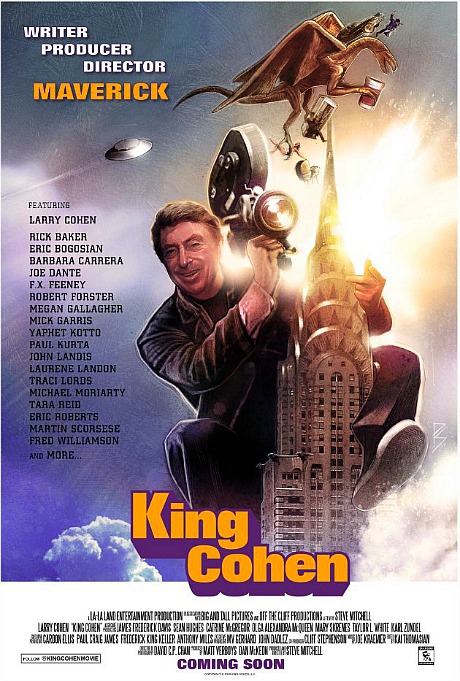
So like Horatio Alger before him, he went west and continued writing for both the worlds of film and television. The fateful moment would come one day while looking over the credits of the legendary maverick auteur, Larry Cohen, on IMDB.  Astounded by the length and breadth of Cohen’s career, Steve saw an opportunity to possibly make a documentary that would chronicle the life and exploits of the successful filmmaker.

kingcohenposterB

After receiving a blessing from the man (Larry) himself, Steve set about the mammoth undertaking of  not only pulling together the interviews with Cohen’s many collaborators, all of the footage of his many works , but also the financing to bring these and the countless other elements together to form KING COHEN: The Wild World of Filmmaker Larry Cohen.

This truly insightful and utterly entertaining look at the, thus far continuing, career of Cohen is the passion project of a man with whom I share a kinship. Not only for the stories behind the men who make the movies, but also how the films we know and love were pieced together with money, dreams, light, shadow and the technical tools which help capture and refine the many wondrous adventures we as cinema goers have been relishing since our very first experiences.

King Cohen Fantasia 2017-thumb-430xauto-67916

KING COHEN is a great film made by a really great guy, and it is my hope, as it is Steve’s hope, that you enjoy the story of Larry Cohen, but also come away from watching the film wishing to then seek out and discover the movies contained within that you may have only experienced for the first time as part of the documentary. The films of the filmmaker that inspired Steve’s film in the first place. (that’s a lot films)

Enjoy…

Steven Soderbergh’s Out Of Sight


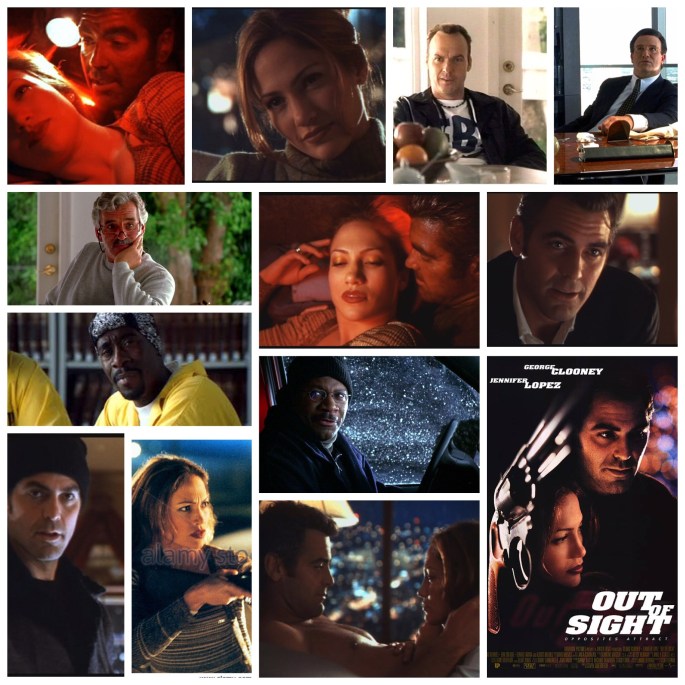
No one does the breezy, goodnatured crime drama like Steven Soderbergh, and after rewatching his 1998 romantic caper Out Of Sight, I’ve realized it’s my favourite of his films by a mile. The easygoing love story between George Clooney’s hapless career criminal Jack Foley and Jennifer Lopez’s feisty federal Marshall Karen Sisco is a pairing for the ages, and the two not only smoulder up the screen with their obvious presence, but have effortless chemistry in spades and know how to sell the romance until you feel that tug on the ol’ heartstrings when the stakes are raised. It doesn’t hurt that cinematographer Elliott Davis beautifully frames each encounter with them, the best being a gorgeous airport dinner where the two croon out Elmore Leonard’s savoury, measured dialogue against a snow laden Tarmac outside, the perfect romantic ambience. Foley is a trouble magnet, embroiled in scheme after scheme with his older, wiser partner Buddy (Ving Rhames). After their dipshit pal Glen (a stoned Steve Zahn) gets them mixed up in a plot to rob a pompous Wall Street millionaire (Albert Brooks) via some truly nasty jailbird thugs from their collective past (Don Cheadle provides the film’s only true dose of menace amongst the charm), all hell breaks loose and against odds, Jack and Karen find themselves falling in love. Elmore Leonard’s scripts always seem to find their way to great directors (Barry Sonnenfield made magic with Get Shorty), richly varied casts (Jackie Brown is an ensemble for the time capsule) and end up as films that are simply timeless. Dennis Farina mellows out as Karen’s concerned ex-cop father, Luis Guzman does his grimy cholo rat shtick, and watch for Catherine Keener, Nancy Allen, Isiaah Washington, Paul Calderon, Viola Davis, an uncredited Michael Keaton playing none other than his Jackie Brown character (an Elmore Leonard cinematic universe!) and a surprise cameo right at the end that I won’t spoil except to say it sets up any potential sequels nicely. The whole deal rests on Lopez and Clooney’s shoulders though, and they’re nothing short of mesmerizing. It’s a rag tale romance, classy but down to earth, two beautiful souls from very opposite sides of the tracks who generate sparks and circle each other like cosmic magnets. Stuck together in the trunk of a speeding car, they discuss life, love and films, reminding us that no romance is alike to another and the best way to start off something like that is perhaps on the wrong foot and in the least imagined circumstances possible. Like any love story it knows that a pinch of sadness is necessary to balance the bittersweet recipe and tweak our emotions just right. A career best for George, Jennifer and Steven and a film worthy of classic status. 

-Nate Hill

HE IS NED: An Interview with Max Myint by Kent Hill

2015 was the year. I was in Brisbane, Queensland, Australia at our version of San Diego’s Comic Con: SuperNova. I was there peddling my books but, in the booth next to mine, something amazing was afoot.

A giant banner held the image of the famous, or perhaps infamous Australian bush-ranger Ned Kelly; transformed and repackaged as vigilante, looking battle-damaged and bad-ass holding the severed head of a zombie in one hand and a loaded pistol in the other.

21462269_523374954669770_8595548598230947278_n

That image invoked more than history and cultural iconography. It spoke to me as a concept so simple, yet compellingly cinematic. He is one of our country’s most treasured pieces from the past in a fresh guise and pitted against a dark, futuristic dystopia where the undead have evolved and formed a society in which humanity is not only a minority, but is being systematically wiped out.

Max Myint leads the creative team, spearheading, if you will, the rise of this epic saga of the man called Ned. A talented writer, sculptor and world-builder, the gutsy, gritty dark realm that he has helped usher in is about to explode on November 10. In the midst of the stench of rotting flesh and the searing of metal is something that commands attention. I for one can’t wait to see Ned’s rise and rise continue, and Max and his talented team blast this thing out into the masses . . . and watch it catch fire.

The living have surrendered…

Except for one man…

They call him Ned!

https://www.facebook.com/Iamnedcomic/

https://podcastingthemsoftly.com/2016/08/04/not-yet-a-major-motion-picture-but-hopefully-one-day-an-interview-wit-the-creators-of-the-man-they-call-ned-by-kent-hill/

Mimi Leder’s The Peacemaker


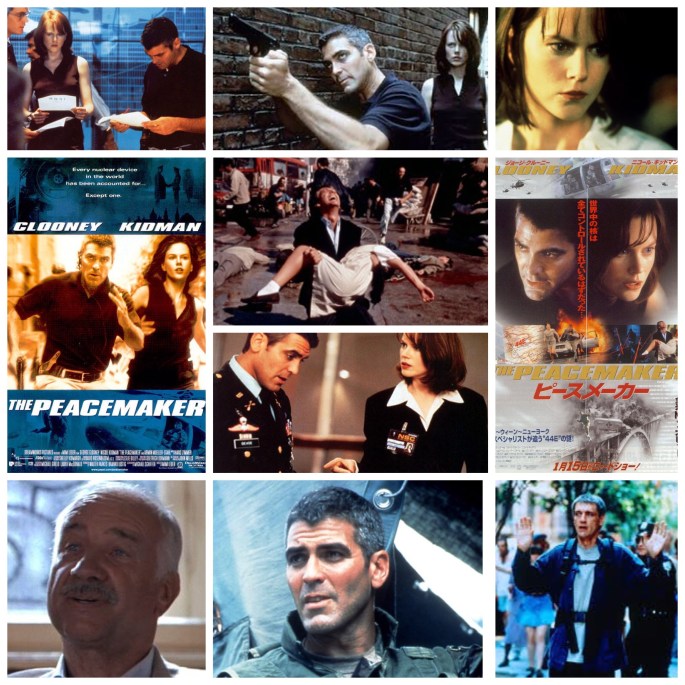
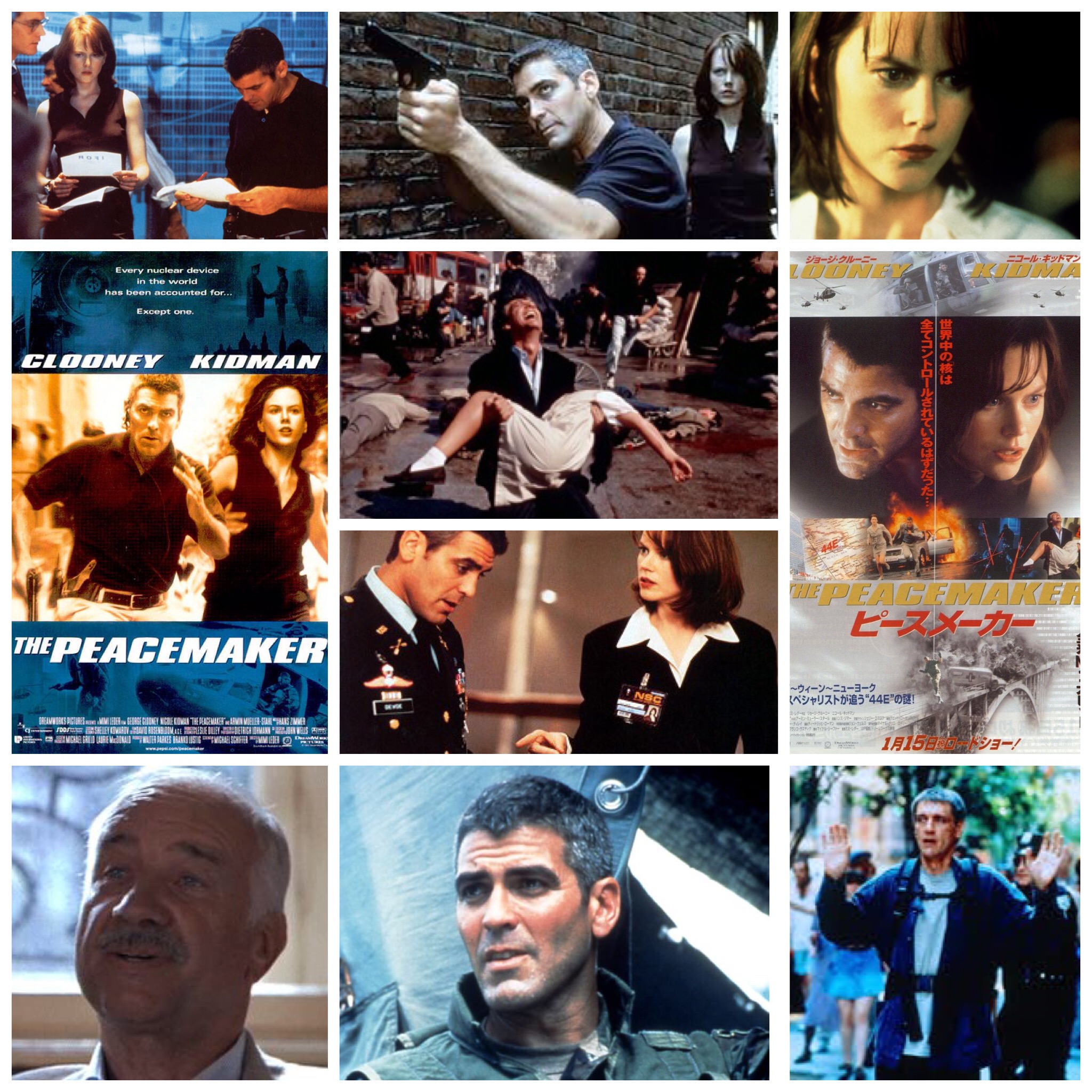
Despite being a fairly dull film overall, Mimi Leder’s The Peacemaker has a few redeeming qualities that almost put it up there with other far better efforts in the wartime espionage subgenre, namely a terrific score from Hans Zimmer and one of the most flat out badass George Clooney actions scenes you’ll find anywhere in his career. It’s a shame the film you find these qualities in is a heavy handed, by the motions anti-terrorism headbanger that says and does nothing we haven’t seen a million times over. Clooney is the seasoned military man, on a globetrotting mission with Nicole Kidman’s intuitive agency analyst, tracking down several Russian nukes that were lifted off a train somewhere in Europe during a painfully static opener. There’s a radical out there played by French actor Marcel Iures, hiding as a piano teacher of all things, biding his time till he gets to go kaboom somewhere stateside and get revenge for some horrendous misdeed against his family. He’s actually the most interesting character, thanks to Iure’s obvious talent and the near sympathetic light they’ve painted his character in. The film is so by the numbers it’ll put you to sleep though, and the positively supersonic score from Zimmer feels like it deserves a better film. Still, you can’t go wrong with the sequence just after a droning car chase where Clooney has T-boned the baddie’s ride and trapped him inside. George promptly steps out, walks over and empties an entire fucking clip into this guys face, it’s pretty much the coolest thing the he’s ever done onscreen. Too bad the film as a whole couldn’t keep up with the organic, intimate level of energy infused into this one moment, we could have gotten something memorable. 

-Nate Hill

“Half of America just lost their Facebook.” – A Gravity review by Josh Hains

I love Gravity. Love, love, love it. L-O-V-E IT!

I mean, the unseen force that keeps us pinned to the ground so we don’t tumble about and float away into the depths of space. That Gravity. So thankful for it. As for the film, I love it too. You don’t even know.

Now let’s be perfectly honest with ourselves and admit, Gravity is kind of a difficult film to write a review about because there isn’t much of a story or plot for me to pick apart meticulously.

Russians blow up one of their own satellites and the fallout causes debris to collide with the several other satellites including American ones, as well as the Explorer space shuttle and its crew who are working on the Hubble Space Telescope. Two crew members, biomedical engineer Dr. Ryan Stone (Sandra Bullock), a newbie to space, and veteran astronaut Lt. Matt Kowalski (George Clooney), are the only survivors, and must make their way back to Earth without the assistance of Mission Control in Houston, who has gone offline thanks to those satellites getting trashed. That’s it. I’m not kidding, that’s all there really is to it. That’s so simple a caveman could write a review about it. No offence to cavemen.

I’m actually pretty glad there’s not much plot to the film. There was a time when a lack of plot could get a film places, when people didn’t care if a film had the most intricately layered plot, as long as it entertained the hell out of them, and they’d put it upon a pedestal high above other films, giving it some kind of a legendary status in cinema history. Like Blade Runner. Today, a film without much plot often gets ripped to shreds by critics before the audience has even seen the film, automatically creating a negative aura that engulfs the flick and rapidly builds an unwarranted bias and stigma toward the film. Just look what’s happened to Disney’s Tomorrowland. Original ideas aren’t enough for some people, blah, blah, blah, the film looks amazing if you ask me.

Wait…Gravity was one of the best reviewed films of the 2013 season? And it won Best Director, Best Cinematography, Best Film Editing, Best Original Score, Best Sound Editing, Best Sound Mixing, and Best Visual Effects at the 86th Annual Academy Awards? Oops. Guess I’m late to the party.

Gravity might not have much plot, but that isn’t even the slightest of a hinderance for this full throttle space thriller. In fact, the lack of plot actually works in its favour, allowing ourselves the opportunity to take in all the wondrous sights and sounds, rather than shovelling mountains of unnecessary exposition and plot-stuffings down our throats. Right from the first frames of the film, it’s evident moviegoers are in for a visual treat, thanks in large part to Emmanuel Lubezki’s uber-detailed cinematography, and the all-to-real CGI effects that make up I’d say about 98% of the film’s visual content – only the actors and their suits are real, to my knowledge. Again, this isn’t at all a hinderance, although at varying moments through the course of the film the two leads had a CGI sheen to them. I can only assume this was entirely intentional, given that this obscure look found its way into the final cut. The film is rich with detail, from the finest stubble on Kowalski’s chin that can be made out perfectly despite the camera being several feet away from the character, to the awe inspiring other-wordly view of our home planet; the detail is pronounced, immaculate, and gorgeous. Seriously, Gravity couldn’t look anymore beautiful than it already does. Can you believe me that their visors are CGI? Neither could I, they look so damn real.

In space, no one can hear you scream. In Gravity, sound is everything. From the thunderous score enhancing the urgency of the thrill-a-minute perilous sequences, to the subtleties of the character’s breathing as their oxygen levels dip. Between the stunning cinematography melded with the extremely lifelike visuals effects wizardry, and the moody music and pitch-perfect sounds effects, Gravity becomes an elevated immersive cinematic experience you have to see to believe. Simply hearing about the film or watching it’s then-popular trailer is not enough, you genuinely have to sit back and allow the ride to envelop you completely. If you’re into that sorta thing.

In terms of acting, in several elongated sequences strung throughout the film, we don’t get to see the actors faces as much as we get to hear them. Bullock’s Stone leans toward the panic-stricken side of things, being that she’s a space newbie and all, and she’s distressed enough from early in the film until the final frames to have next to no oxygen for an albeit short duration of the film, which is a bad thing in case you were wondering. Anytime something goes wrong, and believe me, the shit hits the fan (Murphy’s Law is in full, vibrant effect here), she goes into panic mode and can’t seem to keep her cool or maintain some semblance of self control, which again, is expected because she’s a…newb!On the other hand, Clooney’s Kowalski is the calm, cool professional. He maintains as much control as is feasible within the confines of their situation, but never overreacts or panics. He’s always cool, calm, collected, and does his absolute best to assist Stone and help calm her down at various points so she doesn’t use up all her oxygen. I couldn’t help but notice at a later point in the film, when Kowalski gives a motivational push to Stone, that George Clooney has possibly the most soothing male voice I’ve ever heard from a mainstream Hollywood actor. After the rigorous endurance test that is the early portion of Gravity, he actually calmed me down with his inspirational words of wisdom, I shit you not. In three noteworthy moments I don’t want to spoil for anyone who might not have sen Gravity, both actors, with little dialogue and very little of their faces available for our viewing pleasure, convey melancholic aspects of themselves without diving headfirst into sentimentality. These moments feel genuine and organically constructed, never once ringing falsely, and thus constructing raw moments of compassion we feel for their respective characters.

A hot topic surrounding the film has been the scientific accuracy of the picture, with everything from zero gravity to deceleration being scrutinized by the general public (why are people who know nothing about space given the time of day?), along with astronauts and Astrophysicist Neil DeGrasse Tyson. Tyson, after his viewing of the film, took to twitter to debunk some of the film’s key aspects, some of which were scientifically accurate, and some of which were simply movie mumbo-jumbo. The film’s director, Alfonso Cuarón, as stated that he is aware the film is not always scientifically accurate, but that these inaccuracies were necessary for the sake of the story. That’s something I can abide by.

As a whole, sure, Gravity has zip for a story. Nada, nothing, right?. But sometimes, watching a film isn’t about whether you’re sucked in by the story or not, but how the film affects you on a visceral, deeply psychological and emotional level. Sometimes, the best films don’t require the brains to navigate through overlong dialogues and meticulously crafted story lines, but rather, the sight to bear witness to the greatness being displayed before your very eyes. But a great film can’t be measured by such things, even though I’ve taken the time to acknowledge them. That’s what I love about cinema, it’s not about how great the story was, or how terrifically riveting the performances were, or how the special effects looked or the way the music rings through your ears. No, a great film is measured by how it makes you feel deep down in those places you don’t talk about at parties. A great film is measured by how deep it reaches you. How deeply it hits you square in the gut like a shotgun blast at point blank range, or how it sinks into the furthest recesses of your heart and makes you long for its company. Or how intimately it affects your mind, and resurrects your love for fine filmmaking. A great film can push the world and all its complications to the side, put you at ease, and take the time to entertain the living shit out of you, if only for a short time.

In Gravity’s case, it took just one incredible moment in a tremendous motion picture to make my jaw hit the floor with its beautifully rendered view of the Earth and the astronauts working near it.

And I’ve gotta admit one thing: can’t beat the view.
TOMORROWLAND – A REVIEW BY J.D. LAFRANCE

tomorrowland-2015-trailer-disney-britt-robertson

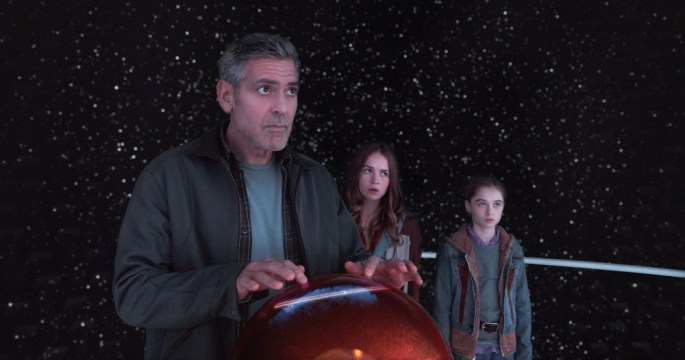
In this cynical and jaded world in which we live in idealism and optimism are often mistakenly equated with naiveté or stupidity. This may explain why Tomorrowland (2015) tanked so spectacularly at the box office and was roasted over the coals by critics. Based on the Walt Disney theme land of the same name, the film champions dreamers and creativity. Hoping for a repeat of the successful adaptation of the Pirates of the Caribbean ride into a wildly popular movie franchise, the studio brought in director Brad Bird, fresh from the box office hit Mission: Impossible: Ghost Protocol (2011), screenwriter Damon Lindelof (Prometheus), and cast George Clooney to anchor the film in a supporting role opposite Britt Robertson (The Longest Ride) as the young lead. The studio certainly had all the right elements in place but dropped the ball when it came to marketing Tomorrowland, which is staggering when one realizes how many millions of dollars were spent promoting it in a cryptic way that was completely unnecessary. After all the dust has settled and the post-mortems have been made, the question remains, is the film any good? Obviously, the answer is very subjective. I, for one, loved it.

The film starts in the past – the 1964 New York World’s Fair to be exact as young John Francis Walker (Thomas Robinson) gets off a bus lugging a track bag containing a jetpack he invented. Frank shows it to a man named David Nix (Hugh Laurie) with the hopes of winning $50 in a contest. Alas, Frank admits that his invention doesn’t exactly work. Nix asks him what its purpose is and how would it make the world a better place to which the young boy responds, “Can’t it just be fun? … Anything’s possible.” Nix doesn’t understand what that means and Frank tells him, “If I was walking down the street and I saw some kid with a jetpack flying over me I’d believe anything’s possible, I’d be inspired. Doesn’t that make the world a better place?”

Therein lies the film’s central theme and overriding message: anything is possible if you have the imagination to think of something and the perseverance to make it happen regardless of those that tell you no. Armed with this determination and a small pin with the Tomorrowland logo on it, given to him a by little girl named Athena (Raffey Cassidy), Frank sneaks aboard the “It’s A Small World” ride and finds himself transported to a futuristic cityscape known as Tomorrowland. It’s a wondrous utopia that Bird takes us briefly through when Frank, with the help of a robot and a moment of well-timed clumsiness, gets his jetpack to work and flies around so that we (and he) can admire this shiny chrome and glass paradise.

After this brief teasing taste of this world, we are taken back to the present and meet Casey Newton (Robertson), a young woman that uses gadgets she assembled to delay the demolition of a NASA Launchpad thereby prolonging the inevitable loss of employment that will befall her father (Tim McGraw), an engineer. Casey is a dreamer that believes “the tiniest of actions could change the future,” as she tells her little brother Nate (Pierce Gagnon). She explains to him that it is hard to have ideas and it is easy to give up.

During the day, Casey endures classes taught by doom and gloom teachers and is surrounded by apathetic classmates. At night, she continues her one-person crusade to save her dad’s job until she’s finally caught in the act and arrested. Her father bails her out and among her possessions she finds a Tomorrowland pin. Touching it instantly transports her to the futuristic place; however, it only lasts for a few minutes and then no longer works. Naturally, she wants to experience more of this world and finds a store in Houston, Texas that claims to have a pin for sale. The store turns out to be a trap and Casey is rescued by Athena who looks like she hasn’t aged a day since 1964. She promises to take Casey back to Tomorrowland and save it, adding cryptically, “They built something they shouldn’t have.” In order to do so, they have to travel to Pittsfield, New York where Frank (Clooney), now all grown-up, lives like some crazed recluse, and has the ability to transport them to Tomorrowland. It won’t be that easy because Frank is no longer the optimist he once was; he’s now a bitter man existing on the fringes of society.

Britt Robertson plays the film’s protagonist and has the difficult challenge of portraying an irrepressible optimist surrounded by cynics without coming off as a caricature. She does this by instilling Casey with a passion for adventure fueled by curiosity and imagination. There is a sincerity to her performance that feels genuine while also having a knack for physical comedy, like when she figures out what the pin does through trial and error, and verbal comedy, like when Casey first meets Frank and they trade insults.

Not usually cast in summer blockbusters, George Clooney is excellent as a man who has given up hope and lost his idealism. His world-weary crabbiness acts in sharp contrast to Casey’s youthful optimism and their initial scenes together have an amusing tension as she isn’t sure if he can be trusted and vice versa. As the film progresses and they spend more time together, Casey begins to chip away at Frank’s cynicism.

Hugh Laurie plays the film’s antagonist, but wisely doesn’t portray him as such. Nix believes in what he’s doing is right and that’s what makes him dangerous. Laurie brings just the right amount of condescension to the role so that you want to see Casey and Frank defeat him. Raffey Cassidy plays quite the scene-stealer as Athena, with her posh British accent and direct way of talking. Her diminutive stature also makes her an unlikely action hero and yet she gets to jump around, beating up evil robots. Athena, Frank and Casey make for odd traveling companions as they go from Florida to New York to France.

Thanks to Claudio Miranda’s atmospheric cinematography and the best visual effects money can buy, Tomorrowland is a visually stunning film. Naturally, the Tomorrowland scenes, populated by people flying around in jetpacks, hovering trains and rockets, is the most impressive-looking, but a close second is Paris where Miranda bathes the Eiffel Tower in warm light as it is transformed into a massive Steampunk vehicle fueled by Nikola Tesla’s technology. When post-mortems were conducted on why Tomorrowland failed commercially and critically, one reason cited was that not enough time was spent in the titular place. This seems rather odd when we are given substantial teases early on and then the last 40 minutes takes place entirely in the futuristic city. There is something to be said for the less is more approach and the screen-time devoted to Tomorrowland is just right.

While most films are largely immune from film criticism these days, especially with the passing of Roger Ebert, writers just don’t have the influence they had many years ago, some reviewers foolishly attempted to argue that Brad Bird’s film, along with his others, espoused the beliefs of notorious conservative thinker and writer Ayn Rand. Other critics rose to the film’s defense and rightly pointed out that Bird wasn’t inspired by Rand but actually Walt Disney, which make much more sense.

If anything, Tomorrowland’s high profile commercial demise only confirms in the minds of Hollywood studio executives’ minds that to bankroll original films is folly and that they should go on cranking out reboots, remakes and sequels. One can already see this in Bird’s next gig – a return to the safe confines of Pixar to make a sequel to his beloved animated film The Incredibles (2004). It is also disheartening to see a film featuring a smart, resourceful female protagonist fail, especially in the current climate where Hollywood insiders scrutinize the success of every aspect of a film (or lack thereof) and analyze what it means.

XXX TOMORROWLAND MOV JY 0179 .JPG A ENTThat being said, Bird and his collaborators should be commended for getting this passion project made. Tomorrowland exists and will have the chance to outlive its detractors, where its box office failure will eventually mean little, and go on to inspired like-minded dreamers that find themselves identifying with Casey as opposed to the Nixs of the world. Bird’s film is a rare wakeup call against the negativity that permeates our culture, from the doom and gloom headlines that dominate any given news cycle to fashionable pessimism that permeates our culture.


The Men Who Stare At Goats: A Review by Nate Hill 

Stephen Lang Week: Day 2 
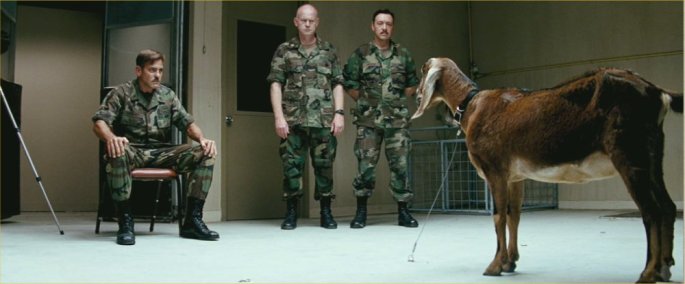
There’s a scene early on in The Men Who Stare at goats where hapless General Dean Hopgood (Stephen Lang) attempts a platform 9 & 3 quarters style sprint towards a solid wall, in attempt to use ‘psychic abilities’ he is being taught at a hush-hush military base. He smashes headlong into it, and in the most deadpan drawl, mutters “damn” in all seriousness. This one moment sort of sums up the absurd vibe that thrums throughout the whole film. It’s kind of like a Coen Brothers thing; you either get it or you don’t. This film isn’t quite as hilarious as it’s sister, Burn After Reading, but damn if it doesn’t try, and come out with some really weird and memorable stuff. It’s colorful hogwash that the cast sells with the enthusiasm of a drunken used car salesman, and speaking of cast, wow there are a lot of heavy hitters playing in the sandbox here. George Clooney, in yet another of his patented lovable goof roles, plays Lyn Cassidy, a former US Army nutjob who claims to have been a part of a clandestine program called the New Earth Army, employing paranormal powers in their missions. Bemused journalist Ewan McGregor is shanghai’d into following him on a mad goose chase to find out if any of his stories are true, but mostly just to babysit him, as he’s kind of a walking disaster. Ineptitude reaches a breaking point when we meet pseudo hippie Bill Django, played by Jeff Bridges who channels every other oddball role he’s done for maximum effect. Bill headed up the program until he got stymied by opposing official Larry Hooper (Kevin Spacey), a tight ass skeptic with no patience for such silliness. In fact, one must have a huge tolerance for such silliness to sit through this, and a sense of humour just south of normal to appreciate what it has to offer. I have both, and greatly enjoyed it, despite being thoroughly bewildered. Watch for Stephen Root, Glenn Moreshower, Rebecca Mader, Nick Offerman and good old Robert Patrick in a cameo as some sort of vague spy dude. A clown show to rival a high school play, no doubt, and I mean that as a compliment. 

THE MEN WHO STARE AT GOATS – A REVIEW BY J.D. LAFRANCE

bt7ul3laqprvmupqkhqw

George Clooney is one of those versatile actors that can easily go back and forth between big budget studio films like Ocean’s Eleven (2001) and smaller, more personal independent films like Good Night, and Good Luck (2005). One gets the feeling that given his preference, he’d much rather make the latter than the former but he’s smart enough to know that doing the occasional studio film gives him the opportunity to make smaller films. One glance at the cast list for The Men Who Stare at Goats (2009) and you would assume that it was a studio film with the likes of Clooney, Jeff Bridges, Ewan McGregor, and Kevin Spacey involved. It’s the offbeat premise, however, that could only come from an indie film.

Inspired by Jon Ronson’s non-fiction bestseller of the same name, The Men Who Stare at Goats follows the misadventures of Bob Wilton (McGregor), an investigative journalist in search of a major story to cover. He stumbles across a secretive wing of the United States military called The New Earth Army, created to develop psychic powers in soldiers. These include reading the enemy’s thoughts, passing through walls, and yes, killing a goat by staring at it. While doing a story about a man (Stephen Root) who stopped the heart of his pet hamster with his mind for a local newspaper in Ann Arbor, Wilton finds out that this man used to be part of a top secret military unit of psychic spies in the 1980s. At least, that’s what he claims.

Understandably skeptic about the man’s abilities, Wilton learns about the former leader of the unit, Lyn Cassady (Clooney), “the most gifted psi-guy” who now runs a dance studio. After a co-worker dies suddenly and his wife leaves him for his editor, Wilton interprets these incidents to be a wake-up call and travels to the Middle East to cover the war. By chance (or is it?), while staying at a hotel in Kuwait, he runs into Cassady. This self-proclaimed Jedi Warrior (?!) tells Wilton about Project Jedi, a hush-hush assignment that cultivated Super Soldiers with super powers. Cassady’s technique for tapping into these powers involves drinking alcohol and listening to the music of classic rock band Boston.

Wilton learns all about this elite unit that combines “the courage and nobility of the Warrior” with “the spirituality of the Monk,” and follows in the footsteps of “the great Imagineers of the past”: Jesus Christ, Lao Tse Tung and Walt Disney. Wilton convinces Cassady to allow him to tag along during his mission in Iraq and the rest of the film plays out as a quirky road movie cum satire of war films.

George Clooney is quite good as the clearly bat-shit crazy Cassady. The actor plays the role seriously but you can see that insane glint in his eyes. It’s impressive how he is able to say some of his character’s ridiculous dialogue with a straight face. Clooney gets maximum laughs by playing it straight and is also not afraid to act silly when the situation calls for it. And it does in one of the film’s funniest set pieces during a flashback where Cassady’s New Age commanding officer (Bridges) loosens up the unit by having them spontaneously dance to “Dancing with Myself” by Billy Idol. It’s pretty funny seeing a bunch of uniformed soldiers, Clooney included, dancing their asses off.

Clooney is surrounded by a very impressive supporting cast. Jeff Bridges plays a peace-loving high ranking soldier, sort of the Dude if he had been drafted instead of dropping out of society. Kevin Spacey is the black sheep of the unit and jealous of Clooney’s powers. Meanwhile, Ewan McGregor is the naive reporter and audience surrogate. They all get their moments to show their stuff but the film really belongs to Clooney and his seriously wacky character.

After making serious political films like Syriana (2005) and Good Night, and Good Luck, it’s nice to see Clooney starring in a political satire that is funny but still has something to say as it shows the absurdity of the war in Iraq. This is evident in a scene where Cassady and Wilton narrowly escape a firefight between two competing security firms. The Men Who Stare at Goats falls under the truth is stranger than fiction category as it presents a story populated by eccentric characters and tall tales, some of which might be true. Regardless, it is an entertaining film with a wonderfully oddball sense of humor in the same vein as other memorable war satires like M*A*S*H (1970), Catch 22 (1970) and Three Kings (1999). Don’t be put off by the setting. Although it takes place in Iraq, The Men Who Stare at Goats is not weighed down by the baggage of this war.

Confessions Of A Dangerous Mind: A Review By Nate Hill


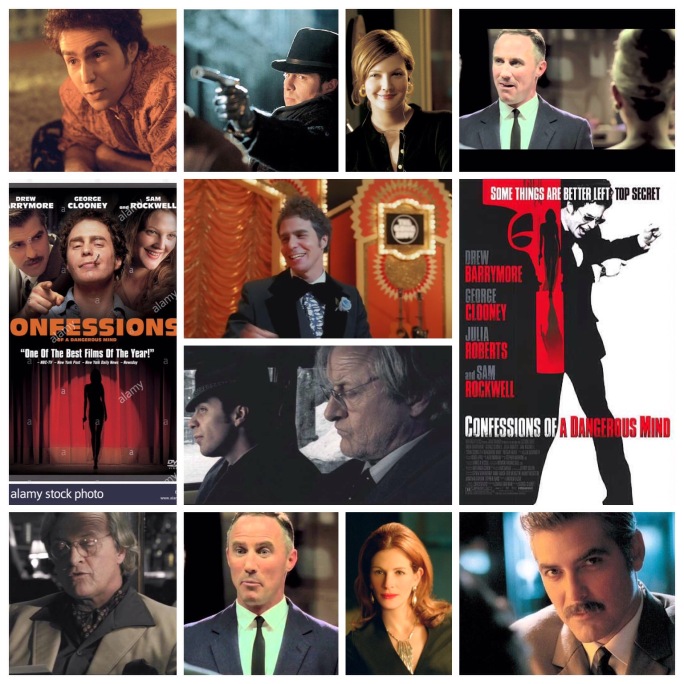
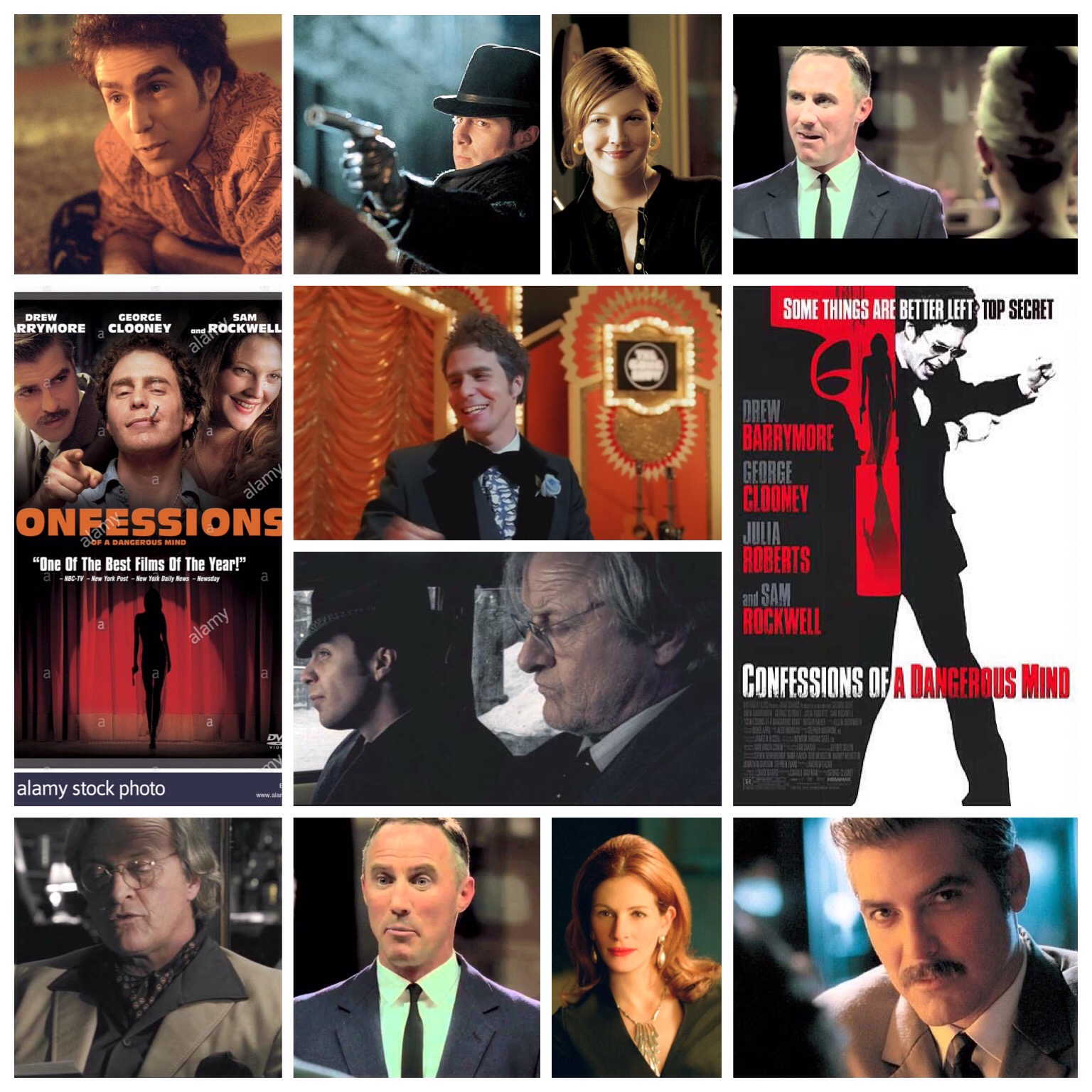
As soon as George Clooney built up enough clout and reputation in the industry to a point where he could make his own projects, he started to send some unique and refreshing stuff down an assembly line that needed some shaking up. Confessions Of A Dangerous Mind is such a curiosity, but it’s so specific and idiosyncratic that I can barely say what makes it so special. I can go over the plot, performances etc. and give the reader a general idea, but to get it you had to be there. I suppose that’s the case with all movies, this one just sort of has its own frequency that you have to be tuned into. For a square jawed leading man, Clooney sure busted the box open with this directorial effort, as well as a few others, all just as distinctive. A screenplay by Mr. Abstract himself, Charlie Kaufman, helps with making an impression as well. Sam Rockwell, who continues to prove himself as one of the best actors of his generation, plays Chuck Barris. Chuck was the brain child behind numerous gaudy television game shows in the 60’s, including the infamous ‘Dating Game’. Flippant creative output was his brand, but there was another side to him as well, a darker period in which he claimed to be recruited by the CIA to carry out cloak and dagger assassinations. Whether or not this was ever a factual part of his life is murky, but he certainly believes it to be true and has written extensively about it in the novel which Clooney based this on. The film deftly intersperses his life at the television network and the genesis of the programs with his training and eventual missions for the Company. It’s an odd contrast, but when you’re treated with Clooney’s dutiful storytelling and an extremely committed turn from Rockwell, it’s hard not to be drawn into it. Not to mention the supporting cast. Julia Roberts is cast against type as a lethal, sociopathic femme fatale who crosses paths with Barris more than a few times. Rutger Hauer mopes about as a loveable alcoholic operative who covers Barris’s back on a few assignments. Drew Barrymore spruces things up as a ditzy love interest, Michael Cera plays Chuck as a young’in, Clooney himself underplays his CIA handler, letting an epic moustache do the talking, and there’s cameos from Maggie Gyllenhaal, Brad Pitt and Matt Damon. At one point the film stops dead in its tracks for the funniest performance which hijacks a scene briefly, in the form of Robert John Burke as a maniacal censorship board hyena. Burke pulls the ripcord and delivers roughly 40 seconds of pure comedic genius that I could watch on loop, and is the only moment of its kind in the film. You’d think it’d offset tone, but in a film this organic and quirky, it simply serves as a garnish of hilarity. The whole thing has a Soderbergh feel to it (perhaps due to Clooney), a sharp, crystalline precision to the burnished cinematography from Newton Thomas Sigel, who previously wowed us with similar work on Blood & Wine, The Usual Suspects and Gregory Hoblit’s Fallen. His lens captures the melancholy accompanying Barris’s very strange path path in life with moodily lit frames, and pauses for the brilliant moments of absurd black comedy which seem to follow him around like the spooks he was always running from. A film with dual aspects that never tries to prove or disprove Chuck’s claims, but loyally tells the story the way he told it, guided by Clooney all the while. A little stroke of genius.