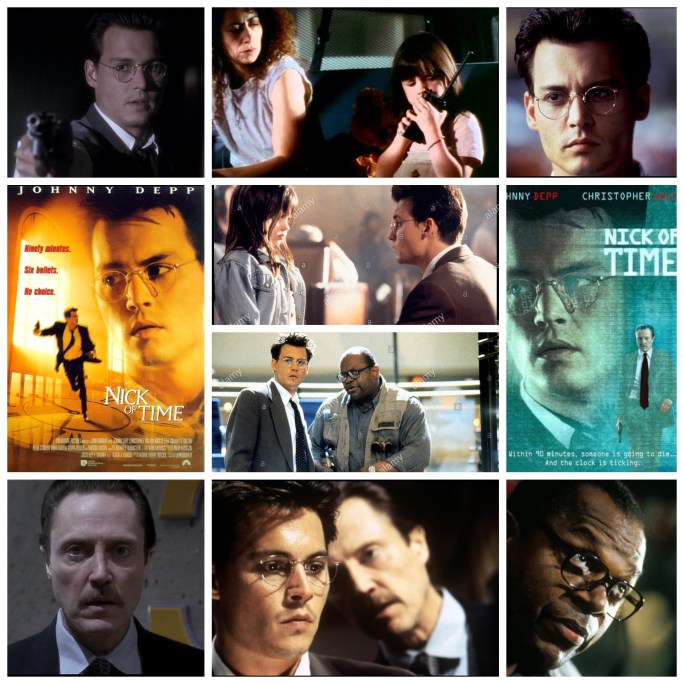
What if someone kidnapped one of your loved ones and informed you that if you don’t assassinate a politician within ninety minutes, they’d kill them? Johnny Depp finds out exactly how a situation like that would play out in John Badham’s Nick Of Time, a stylish real time thriller with fantastic performances and a high powered premise that is milked yet never overdrawn.
Depp plays what might be his most down to earth, Everyman role here as an a humdrum accountant travelling by train with his six year old daughter (Courtney Chase), until he’s targeted by a mysterious pair of shady characters pretending to be cops, and then his nightmare begins. Christopher Walken is a force of evil nature as Smith, a menacing assassin who snatches up Depp’s daughter, puts a gun in his hand and tells him to go shoot a visiting Governor (Marsha Mason) before she’s to speak at an evening rally. Why? Because a patsy was needed and he looked like the poorest sap getting off that train, apparently.
Because the film is set in real time and doesn’t hop around to a zillion different plot threads like 24 does, we get to see the big moments and the small, the suspenseful hills and the mundane valleys in between them as Depp either tries to make harebrained escaped in order to save his daughter and avoid killing someone, and when he simply catches his breath for a moment or grabs some downtime. He’s good in the role and we’ll likely never see him in something as middle of the road as this again in terms of what he’s casted in, which is mostly garish theatrical gimmicks these days. He plays it somewhat Hitchcock and it works well that way, especially with the opening credits that seem directly lifted from one of his films. Walken is adorned in a porn moustache and slick suit, doing that thing only he can do where he’s somehow terrifying and hilarious all in the same note, it’s one of his hallmark 90’s baddie turns and I love it. Roma Maffia is slightly goofy as his second in command, and there’s work from Peter Strauss, Gloria Ruben, Yul Vasquez, Bill Smitrovitch, G.W. Spradlin and scene stealer Charles S. Dutton as a verbose shoeshine dude who helps Depp out in a tight spot. It ain’t a be all end all thriller or anything super amazing but it fires up a good time for ninety minutes, plus Depp and Walken are pretty much watchable in anything. Great stuff.
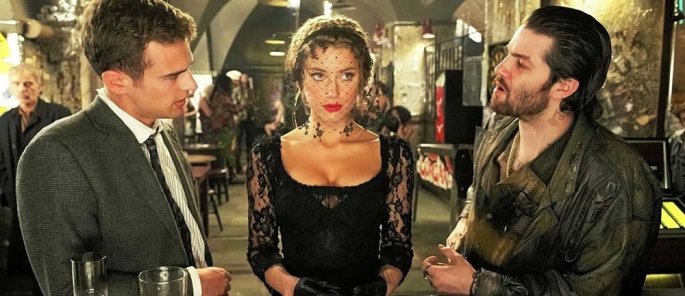
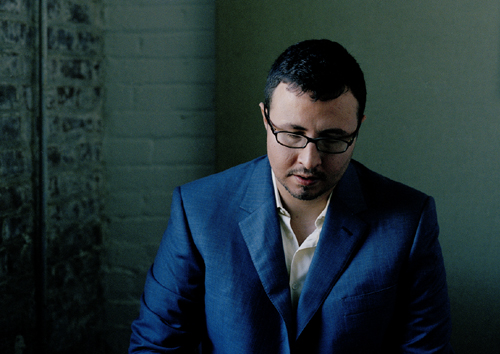
I must confess I am in the same boat as my learned colleague Mr. (Paul) Rowlands of money-into-light.com, when it comes to an interest in films marked by some form controversy. Well, not solely controversy, but the types of films that have been long-suffering passion projects finally seeing the light of day, or long overdue restorations of genuinely overlooked masterpieces that may or may not have suffered the same fate as the picture that I shall, in these words following, discuss. It is the wretched crime of the industry at large to present grand achievements in aborted states – the director’s vision left on the cutting room floor, or in the parlance of our times, designated to a file on some mass storage device.The embattled figure in this saga is filmmaker Mathew Cullen and his stunning debut, London Fields. A slick and stylish noir, bombarded by flashing images of humanity’s chaos, swirling around and serving as the world beyond that which we shall traverse with the movies’ delightful assortment of strange and sympathetic characters. Into the urban sprawl, at the center of this film’s universe, comes the melancholically-serene presence of Samson Young (Billy Bob Thornton), who we learn has traded his own stateside shithole for the shabby chic and eccentrically opulent abode of Mark Asprey – a disembodied Jason Isaacs.But this is not where our story begins. Our story begins with a murder.
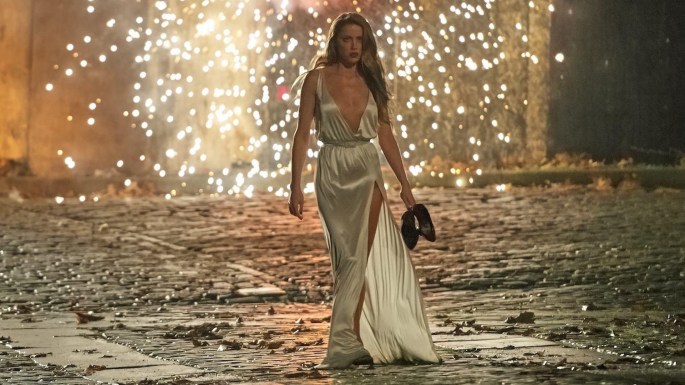
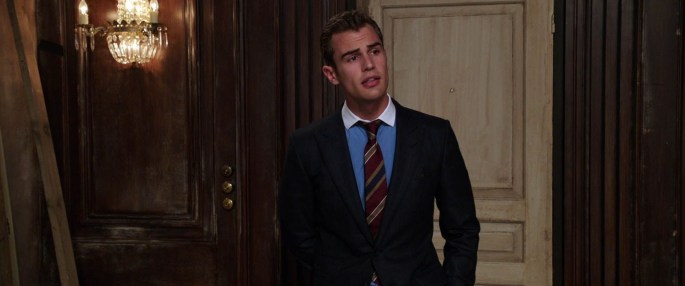
A death that was seen coming by its victim, along with the hook being that the killer remains faceless until the movies’ final moments when we discover exactly who our Keyser Söze is.So we have Thornton/Young, a man that has to live his stories. Being a natural voyeur, he soon becomes intrigued and infatuated if you will, by the astonishingly sexy and magnetic presence of Nicola Six (Amber Heard), whom I have enjoyed since she appeared in John Carpenter’s last effort, The Ward and again in the truly awesome guilty pleasure that is Drive Angry with the quintessential renaissance man himself, Nicholas Cage.She has power both in character and in substance. She is a woman who has flirted with the perilous, courting intrigue, danger, the playful and the despicable. And this it would seem is her last hurrah . Bringing into the final web she will spin the polished bravado of Guy Clinch (Theo James), and the personification of grotty goodness, Keith Talent – Jim Sturgess taking his Cloud Atlas Scottish football hooligan character to its apex.
These crotch-led power-mongers think they have our girl Six clocked and at their mercy. The key portion of that sentence being, ‘think’. Because this is all ruse, all part of Nicola’s game, indeed part of how Nicola (we take from the shards of back story given) has lived out her existence until its brutal, bloody climax. Young/Thornton watches and listens along as Six leads the boys into her little traps, playing each against the other in the midst of their own debauched and dysfunctional existences – Clinch’s disintegrating family life and Talent’s quest to become an all conquering champion of darts.If it all sounds a bit nutty (wait till you meet Chick Purchase), I say now, don’t be afraid. The juxtaposition of comedy, tragedy, sex, violence, a musical number and the bizarre nature of Nicola’s game is an easy pill to swallow. For the casual multiplex visitor, yeah, maybe not – but this is a picture that had me from start to finish and brought to mind fond memories of the time when it was my privilege to witness another spectacular director’s cut in the form of Wim Wenders’Until the End of the World – an equally luscious and absurdly-infectious cocktail of cinema.I have followed the press surrounding London Fields and waited for such an opportunity as I have thus been presented with, which is to experience the film as the director always intended it to be seen. This being the case, I have in the interim sought out and devoured Martin Amis’ gorgeous darkly comedic, mysterious murder source material and also the theatrical version. So, if these words I write carry any weight at all with you, please believe my sincerity when I urge you, nay, implore you – seek out this, the director’s cut of London Fields. It is a heartbreaking urban-dystopian twisted noir love poem that, thank God, exists for us all to watch, to ponder, to cinematically wolf-down. Bon appétit, dear viewer.
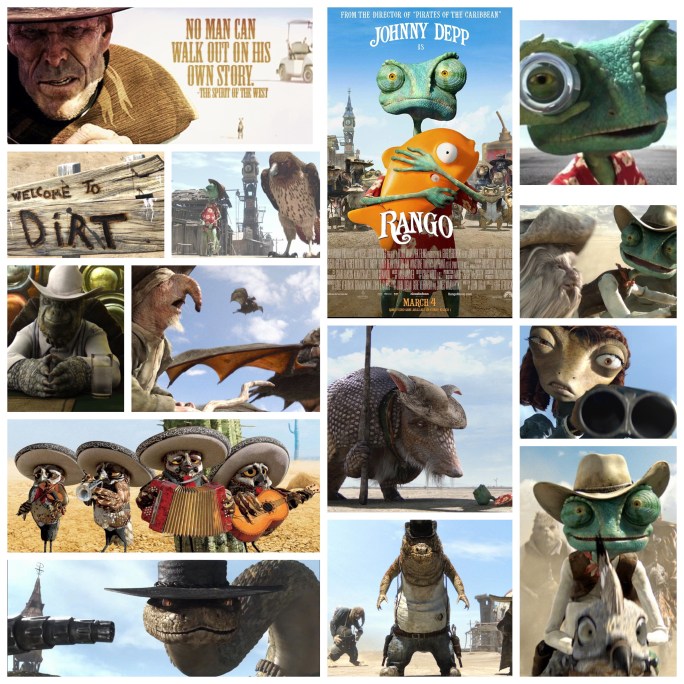
Gore Verbinski’s Rango is a wonder among animated films. Naturally the colourful, larger than life medium lends itself to the eyes, ears and hearts of children, which is the direction most of them take. But Rango presents a mature, raunchy, surreal, absurd spectacle rife with a mischievous buzz and peppered with laughs just bordering on the inappropriate, even though they’d go right over their heads anyway. This film broke the record for how many times my jaw hit the floor seeing what they could do with the visuals. It’s detailed, meticulous, gorgeously rendered and beautifully crafted, not to mention speckled with subtle references to other films, literary works and themes that Verbinski no doubt holds dear and uses to amplify the story nicely. Johnny Depp gives wit, endearing naivety and a sense of childlike wonder to his creation of Rango, a little lizard in the big desert, violently thrown from a car wreck into the greatest adventure of his life, and the archetypal heroes journey. He wanders through the baking Mojave desert into the town of Dirt, inhabited by sassy, loveable creatures modelled after all our favourite western characters and carefully constructed from the biological blueprint of wildlife in that area. He blunders his way into becoming the sheriff, and leads the whole town on a quest to locate their most sought after resource: Aqua. Verbinski directs with a snappy, take no prisoners sense of humour, throwing joke after joke after one liner after tongue in cheek nod at us, until we feel so bombarded with fantastic imagery, brilliant voice acting and just plain fun, that we more than feel like we’re getting our money’s worth. Each animal is beautifully designed, from the evil Rattlesnake Jake (Bill Nighy having a ball with a mini gun tail and evil amber eyes), to Beans (a fellow lizard and love interest for our scaly hero), to the sleazy mayor (Ned Beatty, that old turtle), to a rampaging band of bank robbing moles led by a blind Harry Dean Stanton. The cast includes everyone from Timothy Olyphant to Stephen Root, Ray Winstone, Abigail Breslin, Isla Fisher, Lew Temple, Ian Abercrombie, Gil Birmingham and Verbinski himself in multiple roles. There’s just so much going on here visually, from a dusty cameo by The Good, The Bad & The Ugly’s Man With No Name to eerie trees that wander the desert searching for water, a cameo from Hunter S. Thompson’s Raoul Duke and Dr. Gonzo themselves and don’t even get me started on the batshit crazy aerial chase scene set to a mariachi version of Ride Of The Valkyries. The film is so full of detail, beauty and ambitious artistry that it has taken me at least three viewings to feel like I’ve noticed every character, one liner and cheekily brilliant little touch. It’s that good. Among the whacky antics there’s a theme of owning up to ones identity, becoming responsible for people you save, and finishing the work or task you set out to do, lest you leave your legacy unwritten. A classic.
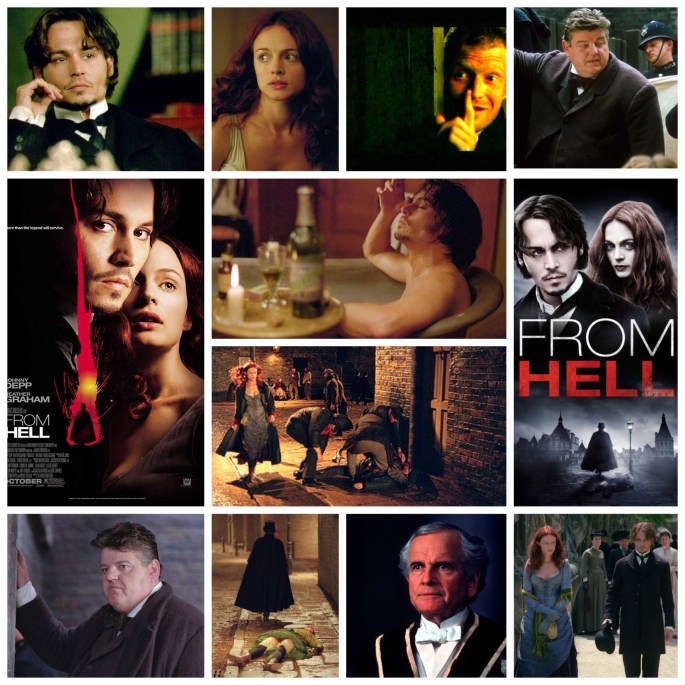
The Hughes Brothers’ From Hell is one one of the most opulently stylish horror films out there, and despite being a bit melodramatic in areas, it boasts a grim, severely menacing atmosphere which is mandatory considering it focuses on the Jack The Ripper murders in Victorian era London. Based on a drab graphic novel by the great Alan Moore, The Hughes have amped up both suspense and passion and could be accused of Hollywood-izing Moore’s work too much, but the guy just doesn’t write very adaptable material and some liberties have to be taken to make watchable films. This one works better on its own terms, a dark, blood soaked detective story starring Johnny Depp as Frederick Abberline, a brilliant opium addicted Scotland Yard inspector out to nab the Ripper, with the help of his trusty boss Sgt. Godley, played by a scene stealing Robbie ‘Hagrid’ Coltrane. As we all know, the Ripper murders were never really solved, so naturally here a fictitious conspiracy is whipped up, full of intrigue and corruption, but as many cluttered subplots there are flying about, the film’s strength lies in the eerie murders carried out in nocturnal London, and Depp’s very strong performance as the drugged out cop who won’t quit. Supporting work comes from lovely Heather Graham as prostitute and love interest Mary Kelly, Ian Holm as London’s top medical consultant as well as Jason Flemyng, Ian Richardson, Katrin Cartlidge, Ian McNeice, Sophia Myles, Dominic Cooper and scene stealer David Schofield as an evil East End pimp. Some of the fat could have been trimmed here to make this a shorter, more streamlined experience, but the visual element is so damn good that at the same time one can’t get enough of the lavish production design. This one succeeds in creating a lived in London with dimension and scope, as well as staging a very effective sense of dread and danger lurking around every corner of every cobblestone alleyway, the atmosphere is just unreal, as well as the supremely graphic gore that lets us plainly know that the Ripper wasn’t just messing about, he was an actual monster. Great stuff.
Slow Burn is just that, one of those dreary, stylized neo noirs about a low rent private investigator (Eric Roberts) who is on a case but seems only half interested, probably because the plot meanders around making little sense or holding less interest than a ruptured hull does water. Roberts is always engaging so it’s not all bad, plus there’s some eclectic cast members supporting him and an appearance from young Johnny Depp in what was one of his first roles, probably filmed in between takes of A Nightmare On Elm Street. Roberts is hired by a kooky New York artist (the great Raymond J. Barry) to investigate Depp’s stern rich parents (Beverly D’Angelo and Dan Hedaya), who may have some vague familial ties or be involved in a decades old scandal. Or are they? Do we care? Does it matter? It certainly didn’t matter to any potential distributors, as there seems to be literally no North American DVD release, I had to watch one of those choppy ten part YouTube versions. It’s interesting to see Depp and Roberts together in a few quick scenes, they are two legends of cool and it’d be nice to see them in something else together again. Overall though this is a particularly slow burn, and not a very enthralling one at that.
Those learning the craft of film-making nowadays shall have little to no experience with cutting film the old fashioned way. True – it was timing consuming, sometimes messy and fraught with peril – depending on your mastery. It was, however, also romantic. The trims at your feet, the smell of celluloid, the tactile nature of editing a movie . . . one splice at a time.
My guest, the distinguished editor Mick Audsley, has indeed been on Podcasting Them Softly before (https://podcastingthemsoftly.com/2016/11/25/pts-presents-editors-suite-with-mick-audsley/), and the lads did a bang-up job covering the breadth of Mick’s storied career. But, the doesn’t mean I can’t have a chat with him about a film that was not out at the time (Murder on the Orient Express), as well as the changing nature of the editing process, the evolution of the way people are enjoying their movies away from the confines of the cinema, plus our mutual admiration for the cinema of Kenneth Branagh. . . and much, much more.
Mick’s a gentleman, aside from being and exceptional craftsman, and please do check out all the great work he is doing over at his family owned and operated venture Sprocket Rocket Soho. Mick is continuing to contribute, educate and bring together all those with a passion for telling stories via the moving image.
I applaud anyone who makes their way on this crusade, some might say foolish crusade, to make a film. It can be a long, arduous, laborious. And thinking on that word laborious, now consider making a film that has to be stitched together using over 7 million photographs with animation techniques pioneered by Walt Disney on Snow White and the Seven Dwarves. No CGI. And I know that sounds sacrilegious in this day and age where a film without CGI is like a day without sunshine.
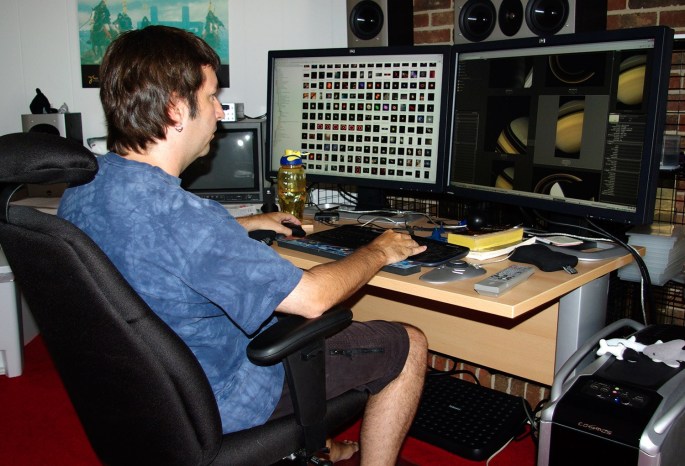
However, the film that Stephen van Vuuren has, albeit laboriously, constructed In Saturn’s Rings, is a unique master-work that is as beautiful and immersive on the small screen I watched it on as I can imagine it being played in its large format form.
Sparked by Cassini‘s arrival at Saturn in 2004 and the media’s lack of coverage, van Vuuren produced two films. Photos from space missions — including images of Saturn taken by Cassini — were included. But van Vuuren was not satisfied with the results so he did not release them.
While listening to the Adagio for Strings by Samuel Barber one day in 2006, van Vuuren conceived the idea of creating moving images of Saturn based on a pan-and-scan 2.5-D effect. The technique involves creating a 3-D perspective using still photographs.
After discussion with audiences at IMAX conferences, van Vuuren decided the film title Outside In (the title of the short version) was not a good match for the film’s sensibility. The Giant Film Cinema Association had been publicising the film and surveys it conducted supported this. It was during a discussion in 2012 about the film’s climax where he was describing Earth “in Saturn’s rings” that van Vuuren realized he had found his new title.
Although narration had originally been removed in 2009, by 2014 van Vuuren realized that a sparse narration was necessary for the film. This amounted to 5 pages and about 1200 words in total. After listening to many voice actors one stood out and he asked LeVar Burton (Star Trek: The Next Generation) to be the narrator for the film.
The culmination of these elements, plus a lot of hard work, has resulted in something that is essentially more than a film. Like Kubrick’s 2001 which inspired him, van Vuuren has crafted an experience of what it may by like to drift through the far reaches of space to the planet that has always been the physical embodiment of his childhood fantasies. And I for one am grateful he stuck to his guns and made a movie that, even though it’s not a tale from a galaxy far, far away, it is the universe at its most wondrous…
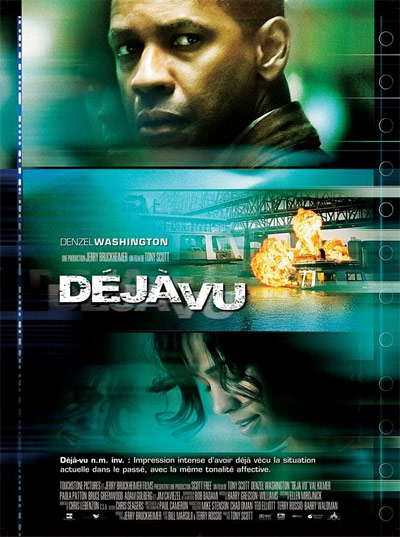
Initially I felt the same way about Déjà Vu as I did Gilliam’s12 Monkeys. Both of the inaugural screenings I attended were sullied by external forces which greatly influenced my mood during the viewings and thus, my opinion of the films.
But time, it was once said, is the ultimate critic. Under different circumstances I watched both films again, and, this time around, my feelings toward both movies were drastically adjusted.
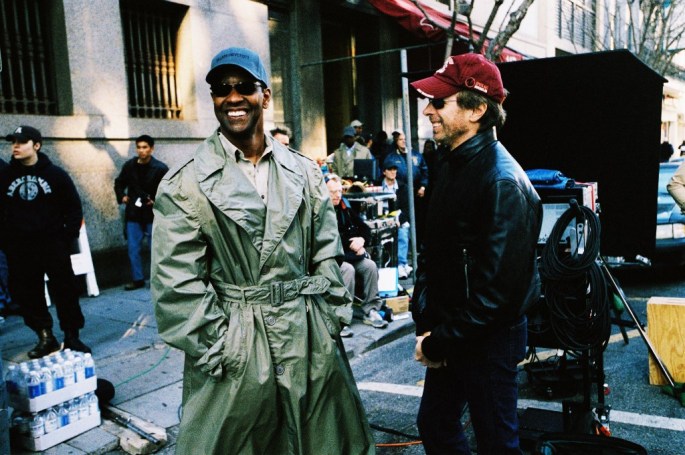
In several books on the art of screenwriting it is often put about that, if you cannot sum up the film you are writing in a single sentence, then you may want to rethink the plot. There is a great moment on the commentary track of this film in which the late, great Tony Scott admits that even he struggled to distill Déjà Vu into the logline form.
It’s a science-fiction/action/thriller/time-travel/romance in which the hero, Denzel Washington, meets the girl he will eventually fall in love with on the slab – dead as disco. Unbeknownst to him, he will eventually join a team that will, along with the help of a device that can see into the past, aid him in bringing her killer to justice. And it was from this humble yet intriguing premise that my guest, Bill Marsilii and his co-writer Terry Rossio constructed this rich, multi-layered tale which deserves more applause than some would proffer for its inventiveness and compelling real-world take on the age old time machine story.
???????????????????????????
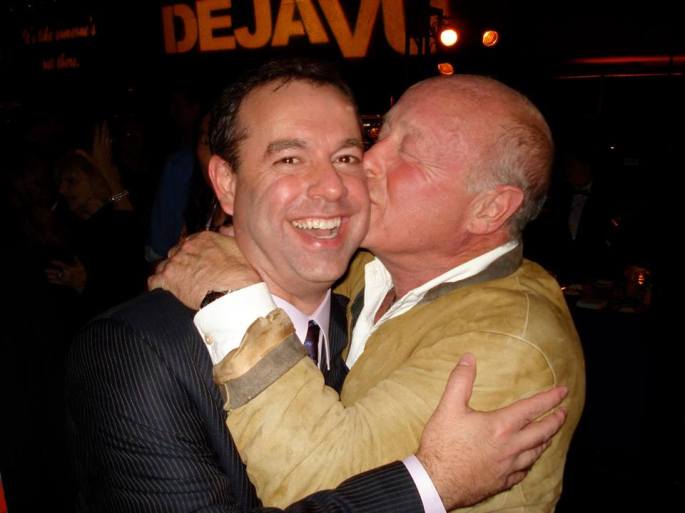
But what I uncovered as I spoke to Bill was far more than a series of behind the scenes anecdotes and your typical boy meets idea, boy turns idea into a screenplay, screenplay sells for big dollars, boy lives happily and successfully ever after in Hollywood kind of scenario.
And yes, while it is true that Déjà Vu is the highest earning spec script thus far, beating out other entries like Basic Instinct, Panic Room and The Last Boy Scout, the story of how Bill came to, not only the concept, but how the writing and selling of the script changed his life is just as compelling as anything Jerry Bruckheimer and Co. managed to get onto the screen.
This interview, at least for me, proved also to be somewhat of a masterclass in, not only screenwriting, but the ever painful and soul-crushing journey the writer must endure to actually sell the script. It’s about the luck, timing, persistence and internal fortitude that you must have sufficient quantities to survive the gauntlet that exists between the page and the screen.
Bill’s heart-warming, inspirational adventure to make it in the realm where dreams are brought to life with that strange blending of art, science and commerce – that ultimately no one can tell you how, when a film is successful, it all comes together in the perfect proportions to ensure success is on the menu – is a conversation that could have gone on and on.
I hope you’ll will enjoy some extended insights into Déjà Vu, but more than that, I hope you, if you are one of those dreamers still out there trying to write your own ticket to cinematic glory, that Bill’s wisdom you’ll take onboard and continue pounding away on those keys until fortune smiles and your efforts will be coming soon, to a theater near us…
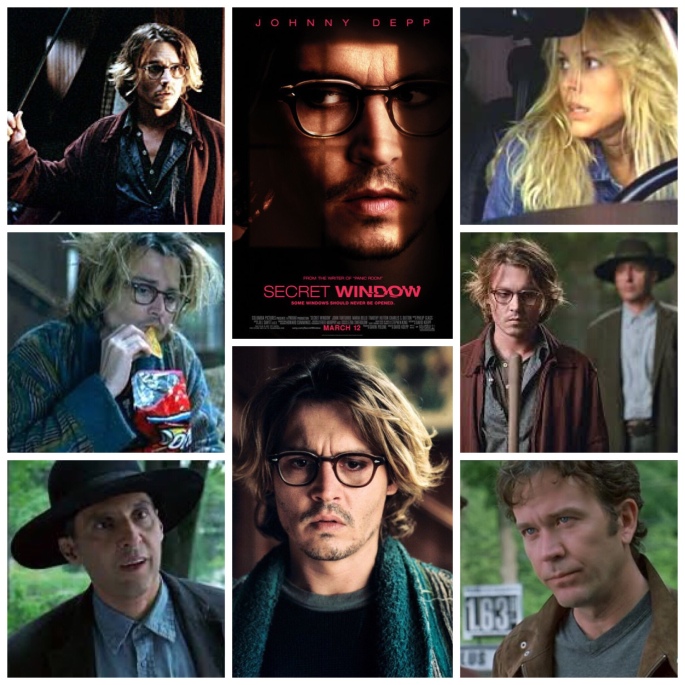
David Koepp’s Secret Window is a terrific little psychological chiller, with just the right doses of fright and camp. Based on a Stephen King short, it’s got everything you’d want in a little vignette from the master: secluded wilderness setting, paranoia, whacked out protagonist, cerebral mind games wrapped in a classically meta package, the story being about a writer itself. The problem with the film is that it has a twist, and in this day and age after the loss of cinema’s innocence, everyone and their mother has seen a film with some variation of the revelation that Window has to offer. But this is not the film’s problem, really, because it hails from a simpler time back in the late 90’s, early 00’s, when twists like that were still somewhat new. The Sixth Sense hype had barely died down, the new age of psychological horror hadn’t yet dawned and stuff like this seemed really fresh. This one is terrific on its terms though, and has a certifiably loony central performance from Johnny Depp as Mort Rainey, a depressed nut-job novelist who’s holed himself up in a cabin on a lake to cook up his newest book, but really he’s just there to mope about his wife (Maria Bello) leaving him for the considerably less dreamy Timothy Hutton. His bout of self loathing is interrupted when freaky stranger Shooter (John Turturro) shows up at his door and aggressively accuses him of plagiarism. Turturro plays the guy in a weird Amish getup and with enough menace in his southern drawl to rival his perverse lunatic Jesus from The Big Lebowski. Anywho, after that Depp descends into sketchy paranoia, unsure of what’s real, who’s real, who double-crossed who and who’s trying to get the better of him. Set in rural Maine as per usual, this is classic King and benefits a lot from Depp, who wisely chooses to make his performance fun, engaging and just cartoonish enough where other actors might try to be too realistic or serious. If you watch it these days in the wake of countless other thrillers that have filled the gulf of time between 2004 and now, you might not be all that impressed. Try and retain your sense of wonder in terms of the genre, you may have a blast. I always enjoy this one.
This film might not seem like a big deal to you. It could merely appear as another throwaway action flick on your regular streaming service – one that you glance at out of curiosity, and then move on. But I really loved SHOWDOWN IN MANILA, and here’s the reason why . . .
Once, a long time ago, in the age of wonder, they were these glorious palaces that we called, Video Stores. They were a veritable treasure trove for cineastes of all ages to come and get their movie-fix. They housed the cinema of the ages and best of all, there would be movies you could find there, that hadn’t played at a cinema near you.
These were the titles that were made specifically for this new medium of VHS. Like the drive-in before it, these stores needed product. Thus a new genre was born, and it was called Straight-to-Video. What arose were glorious movies, some of which, sadly, died along with their era. Awesome were the sci-fi, the horror, and specifically speaking now, the action movies that would appear on the shelves. And such action. Real, intense, dynamic and always in frequent supply. It was good versus evil in all its glory – the villains wore dark shades and the heroes carried big guns. So, it was while watching SHOWDOWN that I was hit by this wave of nostalgia, engulfed by memories of the golden age of home entertainment.
The plot of the film is simple. But isn’t that true of the best action flicks? The package is a beautiful cocktail of old and new, peppered with filmmakers wishing to deliver a splendid throwback, mixed with the stars that climbed to the dizzying heights of VHS stardom.
For those who know what I’m talking about, and even those that don’t, I say, go check out this little gem that is cut from the past, and at the same time, is polishing by the future. So, here now, I present a trio of interviews with the film’s stars Alexander Nevsky(The man on the rise), Matthias Hues(The action legend), and the man responsible for that important seed from which all great cinema grows, the script, Craig Hamman(the veteran screenwriter).
Alexander Nevsky is a Russian bodybuilder, actor, writer, producer. His life changed when he saw Arnold Schwarzenegger in Pumping Iron and that spark would light the fire which continues to burn bright. In 1994 Nevsky graduated from State Academy of Management (Moscow). In 1999 he moved to California. He studied English at UCLA and acting at the Lee Strasberg Theatre Institute. He has risen from a bit-part-player to an international action star the cannot be ignored. With his imposing intensity, versatility and personal drive, Alex, I believe, is poised to enter the arena of formidable action superstars – its only a matter of when.
Matthias Hues is a German-born actor and martial artist as well as being an action movie icon. He came to L.A. not knowing how to act or even speak English. The fateful moment would come when he joined Gold’s Gym and the establishment’s manager received a call from a producer who had just lost Jean-Claude Van Damme for his movie and needed a replacement. Matthias tested for the role, and he managed to convince the producers to give him the part despite having no prior acting experience. The movie, No Retreat, No Surrender 2, was a moderate success, but it opened the door. He is, of course, most recognized for Dark Angel, but has also played everything from a gladiator turned private investigator in Age of Treason to an aging hit-man in Finding Interest to a bumbling idiot trying to kidnap a rich kid in Alone in the Woods to a dancing lion tamer in Big Top Pee-wee. He’s even played a Klingon general in Star Trek VI: The Undiscovered Country.
Craig Hamann came up alongside another young aspiring filmmaker whose work would go on to define a generation. When he and Quentin Tarantino embarked upon the journey to make their own movie, My Best Friend’s Birthday, there was no telling then, where the road would lead. Well we all know where Quentin ended up, but Craig too has enjoyed a long and prosperous career that has been anything but ordinary. He’s a writer, former actor, that has watched the industry ebb and flow. He’s directed Boogie Boys, had encounters with Demonic Toys and of course, of late, he’s been a part of an action-thriller in Manila. Craig has other projects in the works, and with the company he keeps, these efforts are, I’m sure, set to explode and entertain. Yet he remains a humble gentleman with a passion for his work and a dedication that has seen him endure as a great veteran of the movie business.

 The embattled figure in this saga is filmmaker
  But this is not where our story begins. Our story begins with a murder.
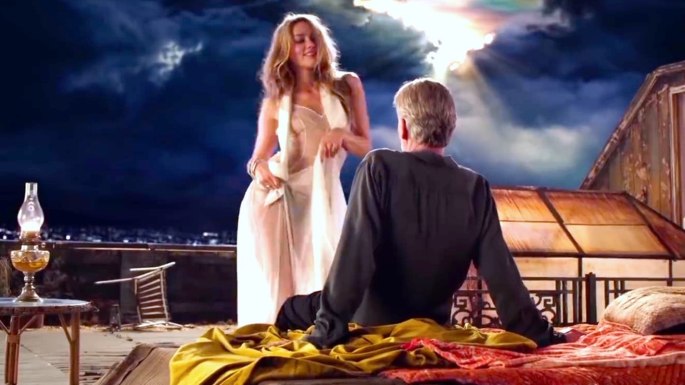 So we have Thornton/Young, a man that has to live his stories. Being a natural voyeur, he soon becomes intrigued and infatuated if you will, by the astonishingly sexy and magnetic presence of Nicola Six (
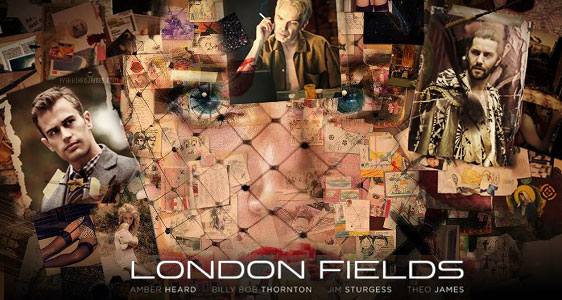 She has power both in character and in substance. She is a woman who has flirted with the perilous, courting intrigue, danger, the playful and the despicable. And this it would seem is her last hurrah . Bringing into the final web she will spin the polished bravado of Guy Clinch (
 If it all sounds a bit nutty (wait till you meet Chick Purchase), I say now, don’t be afraid. The juxtaposition of comedy, tragedy, sex, violence, a musical number and the bizarre nature of Nicola’s game is an easy pill to swallow. For the casual multiplex visitor, yeah, maybe not – but this is a picture that had me from start to finish and brought to mind fond memories of the time when it was my privilege to witness another spectacular director’s cut in the form of
  I have followed the press surrounding London Fields and waited for such an opportunity as I have thus been presented with, which is to experience the film as the director always intended it to be seen.
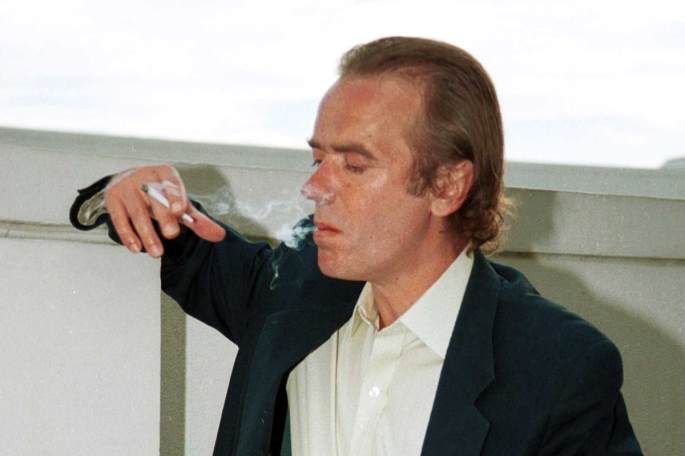 This being the case, I have in the interim sought out and devoured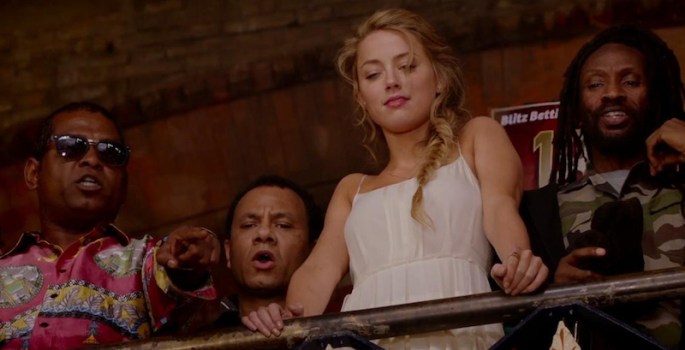














 Podcasting Them Softly