Knights be Damned: An Interview with Silvio Simac by Kent Hill

SilvioInterviewFeature-520x245

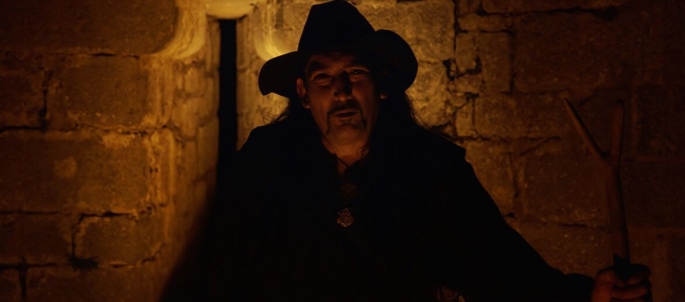
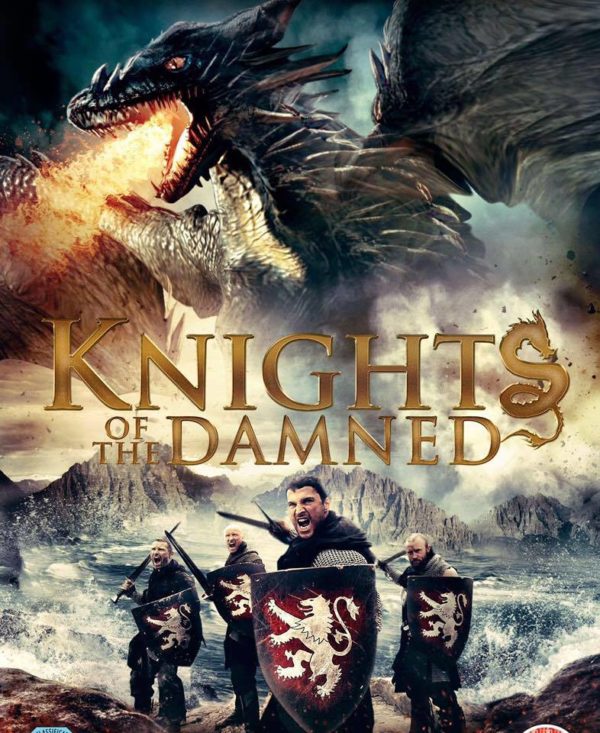
Knights of the Damned is a film of a type you don’t see much of any more. When I was a kid there were fantasy films by the country mile – with titles including Wizards of the Lost Kingdom, Sword of the Valiant, Hawk the Slayer, The Archer, Zu Warriors, Knight of the Dragon.

But then, like the Western before them, they dried up and have henceforth become sporadic and fleeting. Knights of the Damned marks a return which sees the fantasy genre clash with the zombie phenomena in a film which sees a band of returning nights having to fight their way back to the castle of their sovereign lord through dragons, sirens and dark alchemy which has caused the dead to rise and stalk the living.

It is an exciting throwback to those fantasy films I know and love, as well as being something fresh and a little bit different. So, thrilled I was to speak with the star of show, Silvio Simac. And, thrilled was I to learn that KOTD is the first installment in an epic trilogy. Silvio is no doubt a future action movie notable and comes to the Damned with a CV of great roles in a vast array of high-concept cinema.
KOTD2SS-600x733

So, for all you fantasy lovers out there that secretly yearn for a return to the heady days of high adventure – I won’t spoil it for you – check out Knights of the Damned now, and press play to listen to a fun interview with one of the knights most bold from days of old, whose mighty sword slashes the heads of those undead . . .
https://youtu.be/yYXz4zpOyXk

Silvio Simac 91

(Courtesy of Kung-Fu Kingdom.com)

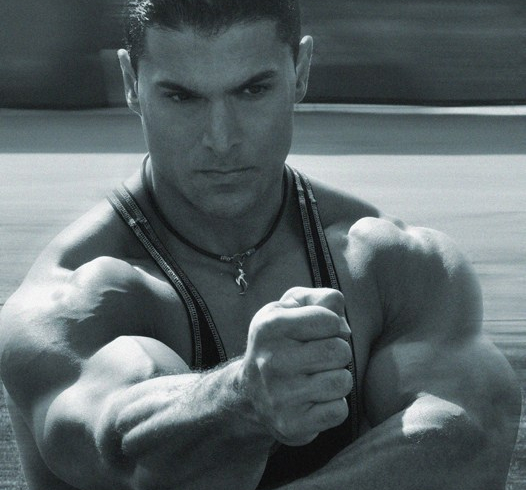
Silvio Simac is a Croatian-born British martial artist and actor who has enjoyed a long and varied three decade career with some outstanding achievements. These include being (multi-time) British, European and World Taekwondo champion. Aside from TKD, Silvio holds black belts in Choi Kwang Do, kickboxing, karate and combat self-defence. Having starred in numerous movies with such action superstars as Jet Li, Scott Adkins, Kane Kosugi and Jason Statham he also regularly attends martial arts and health-oriented seminars and conferences alongside such friends as Benny The Jet, Cynthia Rothrock, Michael Jai White, Don Wilson, Shannon Lee and many more! Silvio is widely respected by his peers for being a fount of martial arts knowledge and experience on training techniques, nutrition and philosophy; he remains a hardcore student of life, happily sharing and communicating what he’s learned with ease, covering those details that can be so easily overlooked by other teachers in this day and age.

Abel Ferrara’s King Of New York

Abel Ferrara’s King Of New York might simultaneously be Christopher Walken’s scariest, most intense and also withdrawn and detached performance, so idiosyncratically does he a draw his portrait of Frank White, a dangerous career criminal fresh out of the pen with high ambitions on ruling the NYC urban jungle, take no prisoners. It’s one of the moodiest, most dour crime films set in the big apple, but it finds a dark heart of bloody poetry, frighteningly funny menace and an ultimate resolution that has you undecided on whether crime really does pay. Walken’s Frank is a strange man, surprisingly introverted for a guy who commands an army and takes on rival gangsters for the control of city blocks, but it’s in the quiet, dangerous charm that he finds his effectiveness, and as crazy as he still is here, it’s a fascinating far cry from some of his more manic, well over the top turns. There’s three would-be hero cops out to get him by any means they can, cocky hotshot David Caruso (before his talents fell from grace with god awful CSI Miami), Ferrara veteran Victor Argo and a coked up Wesley Snipes. They go so far over the line trying to nail him that the only thing separating them from the crime element is a badge, which seems to amuse Frank as he eludes them at every turn. Walken’s merry band of assholes is an armada of gangbangers and drug chemists which include the likes of Steve Buscemi, Giancarlo Esposito, Paul Calderon, Roger Smith and a fearsome Laurence Fishburne as his first mate, young and rambunctious before his acting style gelled into something decidedly more cucumber cool (hello Morpheus). The violence and threat thereof is palpable, as Ferrara whips up a frenzy of boiling conflict that makes the epicentre of Hell’s Kitchen feel like the eye of a very angry hurricane, while still keeping the mood to a laid back thrum, it’s stylistic and tonal bliss the whole way through. Cinematographer Bojan Bazelli shoots the city with an oblong, lived in, hazed out and very un-cinematic feel, throwing us right into the dirty digs with this troupe of miscreants and crooked cops, while composer Joe Delia makes gloomy, haunted work out of the score, especially in Frank’s darkly poetic final scene. As for Walken, the man is a dynamo and this may be his best work to date. He makes Frank a harrowing demon with humanity that catches you off guard when it breaches the surface of his opaque, unreadable persona, a suave, psychotic spectre of the NYC streets who won’t go out unless it’s with a bang, and won’t ever back down on his way there.

A crime classic.

-Nate Hill

John Wick: Chapter 2

John Wick: Chapter 2 expands nicely on a mythology that we caught a glimpse of from behind the shadowy curtain of assassin’s anthropology in the first film, a fantastic meld of stylish world building and hyper violent, stunts driven action that saw Keanu Reeves come blasting back onto the big screen in probably the best role so far of his career. Chapter 2 has one big challenge to face though: the first one was driven by the fact that those fuckers killed his dog, and the man’s subsequent bloodlust over it. That was the crux, the catalyst, the reason we cheered so loudly each time he maimed or mauled someone. Now, I don’t need an excuse like that to watch an antihero slaughter people, but some might, and the dog thing just propelled him forward faster and furious…er. What’s the catalyst here? Well, they destroy his house. Not quite the emotional kick in the nuts you get from seeing a beagle murdered, but it seems to be enough to light Wick’s fuse again, so there you go. He’s faced with a figure from his past here, some fruitcake of an Italian mobster (Ricardo Scamarcio) who wants him to come out of retirement and kill his powerful sister (Claudia Geroni) to ensure his seat at a revered council table of international crime figures. It’s basically John Wick’s Eurotrip, as he treks across the pond to kill more goons and thoroughly destroy more night clubs and other such convenient set pieces than you can shake a stick at, before returning back to New York for an ultra-violent third act. John Leguizamo, the always awesome Ian McShane, Lance Reddick, Bridget Moynahan and David Patrick Kelly all reprise their wicked cool roles, whilst Common, Ruby Rose, Peter Serafinowicz and Franco Nero create new characters that flesh out this fascinating world of killer’s mythology even further. The film is special though for two important reunions for Reeves that give wonderful callbacks to earlier in his career: the prologue sees Wick ferociously reclaim his stolen car from Abram Tasarov (Peter Stormare) the more gregarious brother of Viggo, villain from the first film. Reeves and Stormare played Constantine and Lucifer in the underrated 2005 comic book adaptation, where they faced off with just as much menace and charisma we see in their little bit here. It’s also a reunion for Neo and Morpheus, because Laurence Fishburne shows up as the godlike Bowery King, a rooftop dwelling, pigeon keeping derelict who runs a vast crime syndicate that all disguise themselves as dishevelled hobos. It’s wonderful references like these that pack the pedigree with solid gold and moments to remember, not to mention it’s just a worthy sequel, a slam bang screamer of an action flick and a great time all round. Bring on Chapter 3, and I request an Al Pacino villain turn so we can get nostalgic for The Devil’s Advocate all over again.

-Nate Hill

Into the OTHERWORLD : An Interview with RICHARD STANLEY by Kent Hill

The-Otherworld-still3

It’s always a fascinating experience to sit down with Richard. The man is such a natural storyteller, with a unique perspective relating not only to cinema, but also to the world around him.

We caught up this time in the midst of bad weather, a troubled connection and, last but not least, a turbulent time in Richard’s beloved Montsegur. While our conversation touched upon this, along with the whys and wherefores of the situation, we eventually turned to movies. At this time it had been documented that Richard was again a part of an attempt to bring Moreau back to the screen – as a TV series. Having been hired by the same people that fired him during the doomed journey of his initial attempt, there seems to be, thanks to David Gregory’s documentary, a renewed interest in Richard’s take on his long-suffering passion project.

I did also bring up The Otherworld, which I had finally seen at the time. Stanley’s absorbing documentary-slash-ghost-story, and the myths and misconceptions surrounding it and ‘The Zone’ which forms the backdrop. Richard is steeped in the history of Montsegur and, flavored with his supernatural encounters, it is indeed a tale of great intrigue.

Also to we touched on, and I must say I highly anticipate, the writing of Richard’s autobiography. A project that was going smoothly until it was insisted, and initially resisted by its author, that a chapter be included on the subject of the collapse of Richard’s vision of Moreau. As thrilling a read as it will be – like I said Richard is a fascinating character – it will be equally riveting to finally have a recounting of the story from the embattled man at the center of the controversy.

Still, the future is full of possibilities, and I for one wait with inordinate eagerness for any and all of Richard’s creative endeavors to finally emerge . . . in whatever form they shall take.

Dust_1-840x461


The Farrelly Brother’s Osmosis Jones

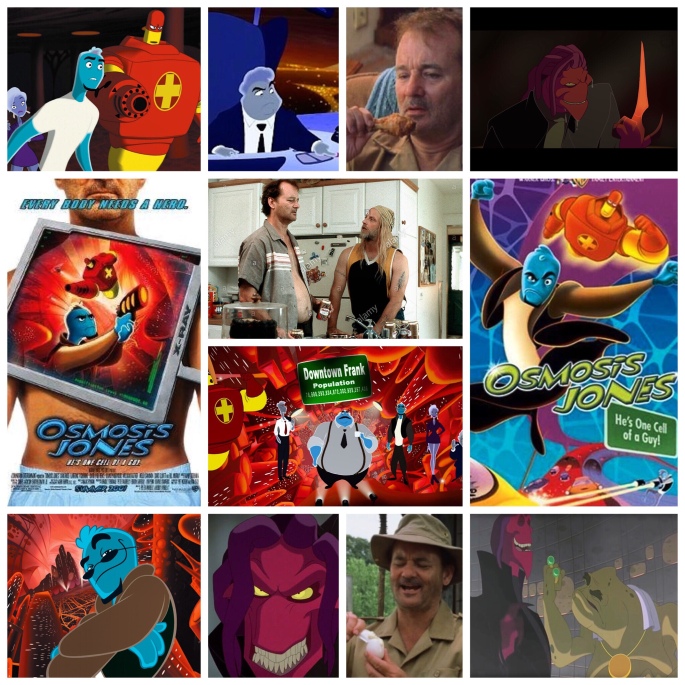
ScienceWorld once did a colourful exhibition called Grossology, in which various parts of human anatomy are presented in garish, cartoony displays. The Farrelly Brother’s Osmosis Jones reminds me quite a bit of that, an inspired, juvenile little creation that seems to have slipped through the cracks. Focusing on the human body, or rather one human body in the form of out of shape, sloppy schmuck Bill Murray, it’s one of those rare half live action, half animated flicks, a concept which I love but one that only works out if you do it right. It worked magic in Who Framed Roger Rabbit, it train-wrecked in Rocky & Bullwinkle, and went more middle of the road in stuff like Cool World and The Pagemaster. Here it works pretty damn well, if a little better on the animated side, where most of the focus is put anyways. Murray is Frank, a walking disaster whose lifestyle reflects the culmination of the Farrelly’s career in terms of utmost vulgarity. Zooming inside his body, a sassy technicolor world emerges, sentient forces living in infrastructure not unlike our own, albeit peppered with so many delightful jokes, gags (some which will kick the reflex into action) and word-plays it’s hard to keep up. Chris Rock plays a lively white blood cell cop who responds when Frank eats a hard boiled egg that’s home to a deadly virus, and runs all about the City Of Frank chasing it down, joined by a robotic cherry flavoured Cold Pill (David Hyde Pierce). City Hall is Cerebellum Hall in the Brain, the bowels resemble skid row, Mafia bacteria thugs reside in the armpit, and you get the idea. The imagination runs wild here, if a little grotesque in areas. The live action bits suffer in terms of writing and realism, they just feel like a queasy SNL skit and never have enough weight. It’s non stop fun when the animation kicks in though, a slightly off-Disney style that stimulates the screen visually and pops with every colour combination you can imagine. My favourite has to be Laurence Fishburne as Thrax, the deadly virus attacking Frank’s nervous system, a gangly, evil eyed freak who sports purple dreadlocks, a contagious Freddy Krueger style index finger and enjoys his job a bit too much. William Shatner is great as sleazy Mayor Phlemming too. It’s not as much fun as stuff like InnerSpace, and the live action clashes with the animated world in places where it should seamlessly mesh, but it has one admirable quality in spades: imagination. The jokes and ideas within Frank’s body are hurled at you a mile a minute, and you’d need to watch it at least twice to catch every little barb and dad-joke worthy pun. Good times.

-Nate Hill

A Nightmare On Elm Street 3: Dream Warriors


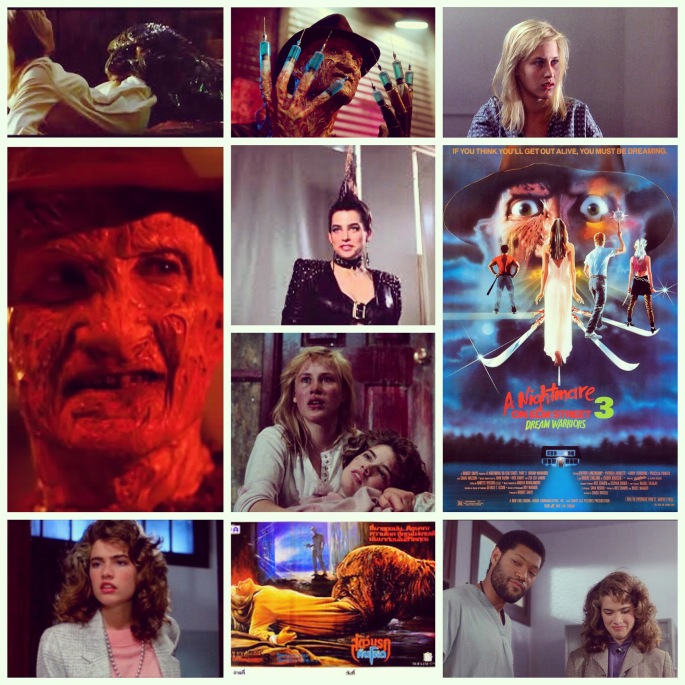
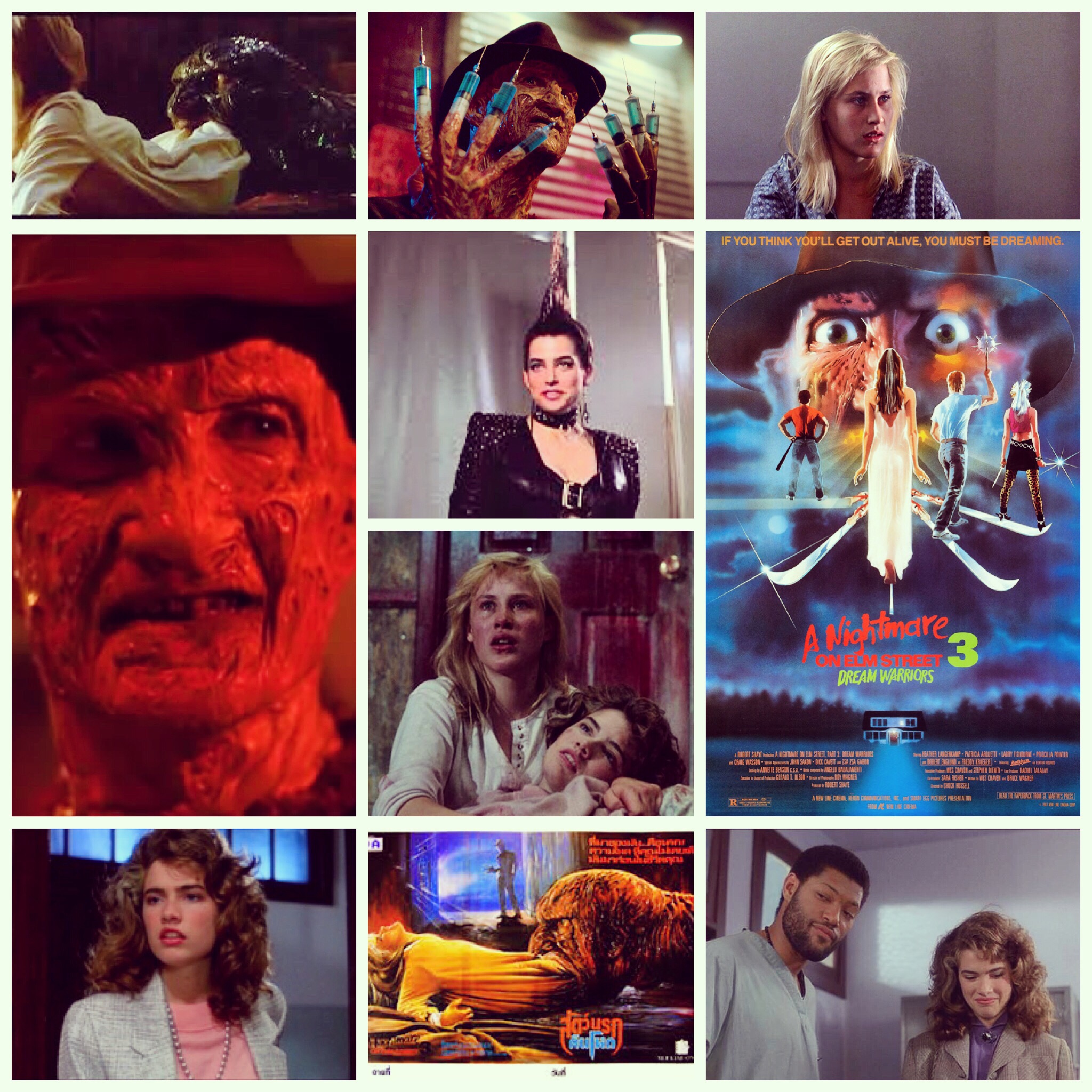
Although billed as pure horror, A Nightmare On Elm Street 3: Dream Warriors strays into fantasy as well and is a pure blast of fantastically diabolical special effects when it’s working in either genre. Around the middle of the franchise marks the place where Freddy Krueger began to turn into more of a cartoonish wise-guy from his original mainly silent phantom, but he’s still pretty foreboding here, as Robert Englund puts energetic work into both his funny and frightening sides. The cool thing about this flick is it’s ‘Goonies’ style aesthetic; several youngsters, committed to a mental facility for their insomniac ‘delusions’, do dream battle with Freddy, and it’s one of the few instances in a slasher film where victims get to fight back in some capacity, and as a unit. Patricia Arquette is wonderful as Kristen, leader of the pack and a fiercely vulnerable spirit, while a young Laurence Fishburne plays the kindly head nurse. It’s also a treat to see Heather Langenkamp return as brave Nancy Thompson, still out for Freddy’s head. The effects are dazzling, from Freddy’s remodelled syringe needle glove in one scene, to a giant pac-man version of his head attempting to eat a live person whole in another, it’s just imagination run wild in dreamland. The kills are still sufficiently gory too, if punctuated by his now classic growling one liners (“Bitch!”). It’s safe to say this is the best in the franchise barring the first film, it’s quite a bit of fun. Oh, and for a good hearty laugh, nothing beats the Dick Cavett/Zsa Zsa Gabor cameo featuring a priceless interruption from Freddy. 
-Nate Hill

Clint Eastwood’s Mystic River


Clint Eastwood’s Mystic River is one of the most gut wrenching, haunting, stressful experiences one can have watching a film, and I’m only talking about the first ten minutes so far. On a quiet 70’s era Boston afternoon, three young boys play street hockey near their homes. After writing their names in freshly lain concrete sidewalk, a sinister ‘police detective’ (John Dolan, who I can never ever see as anyone but this character, he’s that affecting) hassles them and tries to lure the youngsters away. Two of them are wise to his game and escape. The third does not. This crime spurs a ripple effect into the future for these boys, as we see them grow up into very different and equally troubled men. Jimmy (Sean Penn has never been better) is a small time hustler with anger issues, Sean (Kevin Bacon) a cop with his own demons and Dave (Tim Robbins), the boy who was successfully kidnapped and held all those years ago, is a fractured shell of a human whose damaged soul lashes against the whites of his eyes and prevents him from functioning normally. Malcontent comes full circle to find them once again when Jimmy’s young daughter (lovely Emmy Rossum) is found murdered, setting in motion one of the great tragedies you’ll find in cinema this century or last. Eastwood lets his actors quietly emote until the floodgates open and we see raw despair roil forth from three men who are broken in different ways, and how it affects everyone in their lives. Penn is tuned into something higher here, and I’ll not soon forget him arriving at the scene of his daughter’s murder. Robbins let’s the horror of buried trauma deep through the family man facade until we see the deformed psyche left beneath, while Bacon reigns it in for a performance no less memorable than the others. Marcia Gay Harden and Laura Linney are excellent as Dave and Jimmy’s wives, while Laurence Fishburne provides the faintest ray of humour as Sean’s partner. This is as much a murder mystery as it is an intense interpersonal drama, but the whole story is ruled by emotion; that burning need for revenge from several angles, the hollow pit of loss left behind when someone dies, the psychological scar tissue that trails in the wake of abuse, everything slowly coming to light as the grim, doom laden narrative unfurls. Tom Stern’s camera probes inlets along the harbour, sprawling neighbourhoods and hidden barrooms, Brian Helgeland expertly adapts the novel from Dennis Lehane and Eastwood himself composes a beautiful lament of a score, while the actors turn in galvanizing work. One of the finest films of the last few decades and not one you’re ever likely to forget, once seen. 

-Nate Hill

Dark Cities, Dark Futures, Dark Caves: An Interview with Bruce Hunt by Kent Hill

Young Bruce Hunt loved movies and blowing things up. This love, and learning the basics of the craft from film magazines of the period, would firmly cement in his mind the path on which he would travel. As it was said in a film that Bruce would later work on, “Fate it seems, is not without a sense of irony,” a teenage Bruce would encounter Academy Award winning special-effects artist Dennis Muren in a cafe in London.

1475781640944

It was Muren that would advise the dreamer to seek out an effects house in his native Australia for possible future employment and, after art school, that is what the talented Mr. Hunt would do. Working with small production houses on commercials his work would soon catch the eye of the founder of one of these companies, a man named Andrew Mason. It would be Mason, producing a film directed by Alex Proyas called Dark City, that would call on Hunt to bring his passion, and by then, professional eye for effects photography to his first big screen gig.

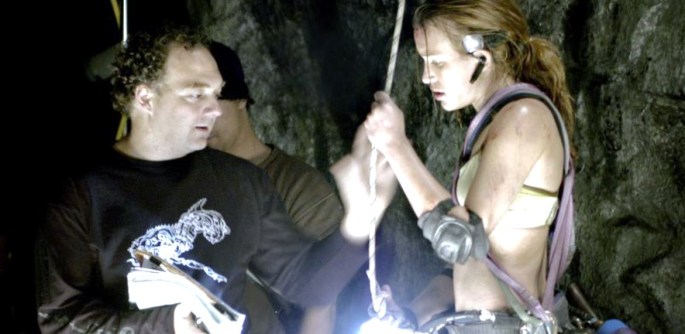
Work on another big flick would follow, as Mason would again tap Bruce and bring him to work on the Wachowski’s cinematic masterpiece The Matrix. There would be work on the film’s sequels before, at last, Bruce would sit in the director’s chair for The Cave, an adventure in deep terror. He would emerge from the darkness to work on Baz Luhrmann’s Australia only to descend again soon after for Guillermo del Toro’s Don’t be afraid of the Dark.

Through it all his love of the movies continues to drive him and, as you will hear, he has plans to get his visions back on that big screen, just as soon as he can. It was great to sit down with Bruce. Not only is he a filmmaker I admire, but it was great to just talk about movies with him.

If you don’t know his work then now is the time to check it out. But, if you already have and you’re a fan like me – then kick back and enjoy.

Ladies and gentlemen, I give you my good mate . . . Bruce Hunt

DO YOU SEE? Back to the Event Horizon with Philip Eisner by Kent Hill


image-w1280

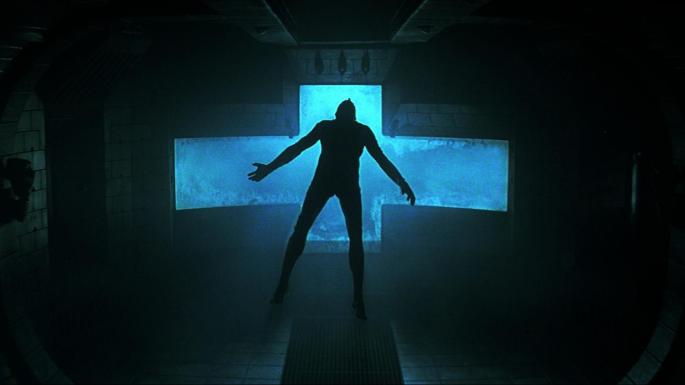
It was a good day for a movie. When is it not? I was home from university and had the agenda to go to a flick that started soon and looked good. Science fiction looked good and I had heard and read little about this new offering from the director of Mortal Kombat, the future impresario of  the Resident Evil franchise, Paul W.S. Anderson.

My buddy Paul was just coming out of the theatre, and as it happened he had just watched Event Horizon. I recall him being angry, “That’s shocking, terrible, grotesque,” he said. Well it’s been a while. But I certainly remember the look on his face and he was, for lack of a better word, mortified.

fd735ecee0c8ed2c8576669b71152e90

Now when someone tells you not to look at something, what’s the first thing you do? That’s right, you go check it out. I knew I was going to. I knew my friend to be no coward, so I was automatically intrigued by the prospect of seeing this movie that had gotten to him on such a visceral level. I recall him saying, before we parted company, “Don’t waste your time with it,” or something to that effect.

I bullshitted and said sure, don’t worry, I’m seeing a different movie. After that review I was definitely going inside, and the movie I encountered therein was really cool.

event-horizondddd

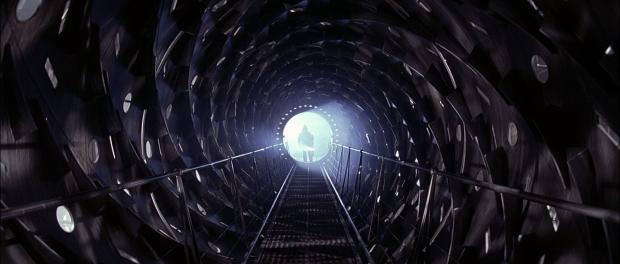
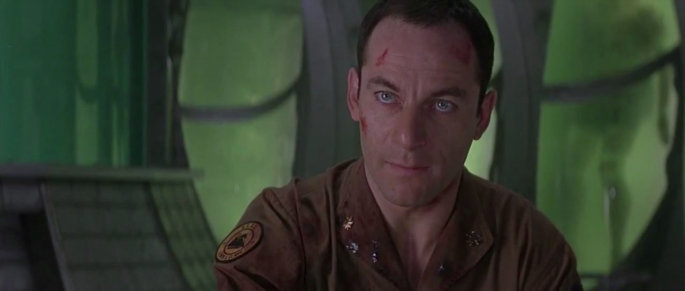
Coming out I felt satisfied. The movie worked on all levels. It was terrifying, impactful, funny at the right time, suspenseful, beautifully composed, strongly acted and above all, well written.

The world was not as socially connected at the time. Nor was it part of my complete breakfast during that period to track down and try to arrange interviews with the good people who make the movies.

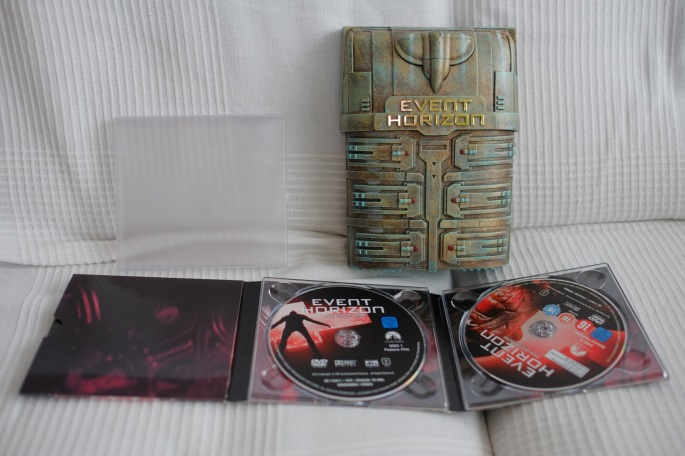
Behind the scenes material was scant at best, and Event Horizon, no one at the time could have known, would go on to become a cult favorite and get a really nice re-release with a handsome collector case and lots of juicy bonus features. There is a great documentary included, commentary and the likes. But there was little about the film’s author and the script is only a brief part of the BTS discussion.

untitledsssssss

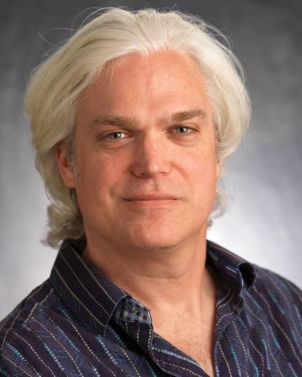
Fortunately the world has moved on and we are all now accessible via a myriad of networking tools. Thus it was my good fortune to finally get in touch with and interview the very excellent screenwriter and all-round gentleman Philip Eisner. The man who was once locked away with nothing but The Road Warrior for a week, was an absolute pleasure to interview.

I feel, like I often do, when talking to the makers of my favorite films, like I’m getting the commentary track that should be included with the feature. After all, it is the with the screenwriter that these journey’s begin.

As I like to keep things as informal as possible, our chat was not restricted to Event Horizon. We discussed Philip’s journey to writing, the genesis of the script, how sometimes you homage and other times steal, what he thought of Rogue One (’cause us Star Wars boys can’t help ourselves), how it’s easier to say “No” in Hollywood and much more.

I sincerely hope you’ll enjoy this interview as much as I did and, in case you have wanted to know more about the true gem that is Event Horizon, or were looking for an excuse to watch it, if indeed you haven’t already…

Well now folks . .  . you’ll see.

13-event-horizon

event-horizon-limited-edition_563549


PASSENGERS by Ben Cahlamer

Homesteading.  Many years ago, when land was plenty, the government offered it to people who were willing to till the soil, grow some crops.  Perhaps raise a family.  It was not an easy life.  In fact, you could probably retire today and still be tilling soil.

What in the world does this have anything to do with Morten Tyldum’s (“The Imitation Game”) new sci-fi film, “Passengers”?

Very little or quite a bit; it really depends on your point of view.  The intent of the government was to get people to become productive because they had no other choice:  they were cornered into a unique way of life that not everyone is cut out for.

In Jon Spahits’ (“Doctor Strange”, “Prometheus”) script, the meaning of homesteading, “a lifestyle of agrarian self-sufficiency as practiced by a modern homesteader or urban homesteader,” equally applies to the 5000 corporately-sponsored passengers aboard the Starship Avalon, destined for the colony planet Homestead II.

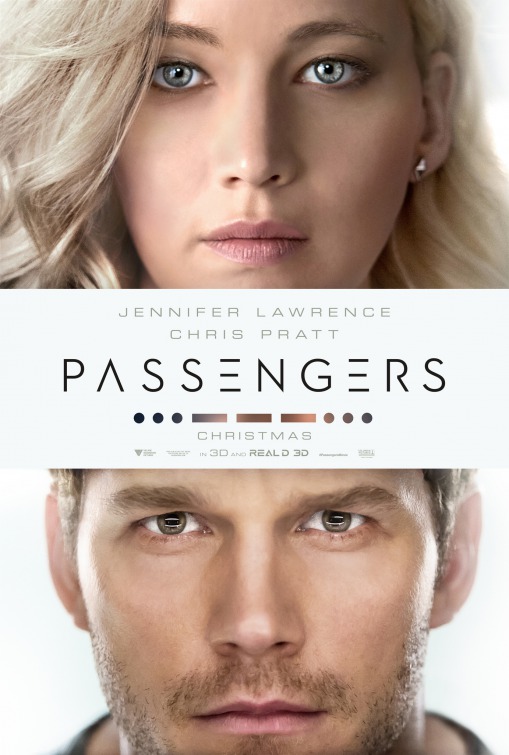
The trick is that the journey is so long, everyone on board is in hibernation and the state-of-the-art starship is on auto-pilot.  An engineer, Jim Preston (Chris Pratt) is woken up alone with no explanation and no one to communicate with.  He is eventually joined by author Aurora Lane (Jennifer Lawrence). As the only two souls awake on board the ship, they fall in love but not before disaster strikes.  Michael Sheen, Laurence Fishburne and Andy Garcia co-star.

Spahits’ script should have checked all the right boxes:  characters are well-fleshed out; the set-up was strong; social issues are at the forefront. The focus strayed from sci-fi-adventure to kitschy sci-fi-adventure-romance, where the romance just didn’t cut it. Preston’s reason for being woken up is clear; the emotional side of isolation became a focus instead of allowing his skills to move the character and the narrative forward, leading to the intended romantic angle; a wasted effort considering Jennifer Lawrence’s Lane tried too hard to remain in control, though her reasons for that become clear after a meltdown.  Had Fishburne phoned his performance from Earth, it would have been more convincing then what unfolded on the screen.  In homage to a Kubrick classic, Michael Sheen stole the show; but his role in a pivotal moment just fell flat.  Tight editing by Oscar-nominated editor Maryann Brandon (“Star Wars:  The Force Awakens”) keeps the pacing on track.

The script notwithstanding, there is one redeeming reason why this should be viewed on as big a screen as possible: the special effects.  In the tradition of Kubrick’s “2001: A Space Odyssey” and Scott’s “Alien”, Tyldum executes a strong, detailed technical look.

From the symmetry of the Avalon to the look and feel of the interior corridors, the hibernation pods, the stars and space around the ship, everything has a very real or visceral feel about it and visual effects supervisor Erik Nordby rose to the challenge brilliantly.  The effects are supported by strong cinematography from the Oscar-nominated Rodrigo Prieto (“Brokeback Mountain”).  His attention to every detail, from lighting of cavernous interior spaces, to changing reflective lighting and exterior shots in space, Prieto’s work only enhances the visual impact.

Oscar-nominated film composer Thomas Newman (“Bridge of Spies”, “Skyfall”) resonates with the luxuriousness of the Aurora and the allure of space exploration.  Some of his dramatic riffs didn’t exactly jive with the onscreen action, but his music served the film well.

“Passengers” had all the right ingredients for a stellar show, its ambition steeped in “Titanic”.  Instead, its ‘Lost in Space’ meets ‘The Love Boat’ with all the drama that that entails.

For the intricately detailed technical effects work, “Passengers” is Recommended.  Aaron Spelling is probably rolling over in his grave.