Tales of Enchantment, Aliens, Arthurian Legend and the Lone Ranger: An Interview with Edward Khmara by Kent Hill

Error
This video doesn’t exist

Edward Khmara grew up in California and had the desire to become an actor when he sold his first script and his career was set in motion.

20953522_10155553866626092_7928168128293857562_n

It was not the first script he’d written, but he was the one that got him noticed. It was a little film called Ladyhawke. But, as all first-time screenwriters know, once you make that sale, you have very little input into the journey your film will take from there.

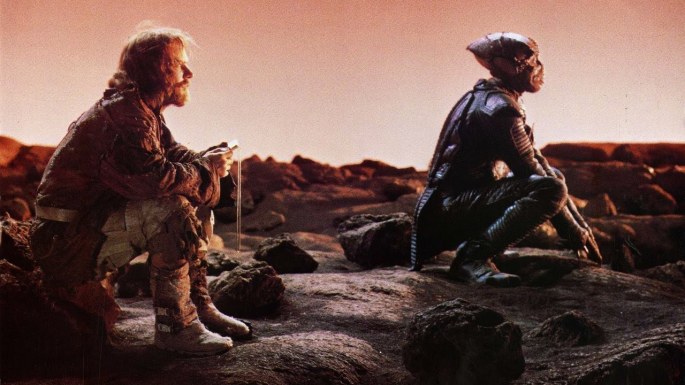
Still, now a screenwriter, Edward would go on to pen one of the truly great, often forgotten gems of the eighties, Hell in the Pacific in outer space: Enemy Mine. This time he would right in the middle of it all. From being on set, to being invited to watch dailies, to having to comfort his daughter after her terrifying encounter with a completely transformed Louis Gossett Jr. in his Drac make-up.

Like most folks who have worked in show business, Edward has known the lows as well as the highs. But those negative experiences didn’t discourage him as he charged ahead, tackling to legends. One in the form of a lavish television production with an all-star cast; Merlin would be the telling of Arthurian days solely from the perspective of the mythical wizard. Then of course there would be his work on the retelling of the life of another legend, one who achieved this status during his own lifetime, Bruce Lee.

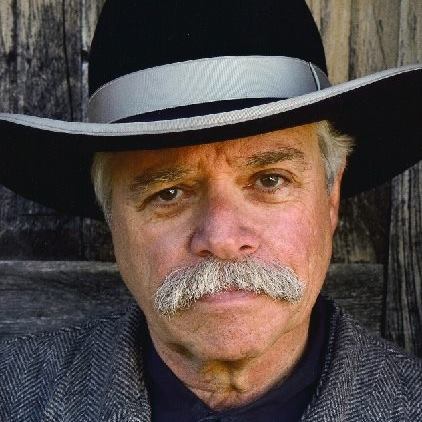
But one of the truly heart-warming moments of our conversation was chatting with Edward about him finally getting his shot at the profession he sought after before he took to the typewriter – his part in Gore Verbinski’s Lone Ranger.

A true gentleman of the old school, full of great tales and tremendous experiences – it was a real pleasure to interview him and now to present to you my conversation with the legendary screenwriter (and sometimes actor) Edward Khmara.

B Movie Glory- Mirror Wars: Reflection One 


Mirror Wars: Reflection One is a miserably bad, slipshod Russian produced Top Gun/Bourne Identity clone that seems to exist only so three genre heavyweights can collect a nice little paycheque. The fellows in question are Malcom McDowell, Armand Assante and Rutger Hauer, and the trio grimace their way through grade school dialogue plus a nonexistent, comatose plot line, surrounded by Russian no name ‘actors’ who do anything but perform decently. Everyone here is some sort of clandestine spy or cloak n’ dagger federal heavy, all out to get a cutting edge self flying aviation AI program implemented in fighter jets, or at least that’s what I got out of it. McDowell is a sinister nutjob who plans to steal it or something, with surprising stunt agility for a dude his age. Assante is some bumbling, overzealous law enforcement pazzi who traipses all over Eastern Europe doing not much of anything, while Hauer is a mystery man literally credited as ‘Mysterious Man’, some all powerful spook who pulls the strings on everyone. The main flub here is dubbing, as in whoever they brought in to lay English voices over those of the Russian actors, because they sound like deaf people with mouths full of maple syrup, and that’s no exaggeration. At least hire a few competent VO artists to lay in some English bars so the pitiful few people who actually give this thing the time of day (myself included, sadly) can understand the badly written dialogue. But no. Aside from the three legged table of wasted talent that Hauer, Assante and an especially gamy McDowell provide, this ones for the dogs. 

B Movie Glory: Killer Buzz aka Flying Virus


Killer Buzz, aka ‘Flying Virus’, is every bit the ludicrous SyFy turd you’d expect, and follows on the heels of several other B movies starring real life couple Gabrielle Anwar and Craig Sheffer, who inexplicably insist on starring together in bilge water like this (check out the third sequel to Turbulence and you’ll see what I mean). All you need to know about this one, besides the fact that it sucks, is that it’s about genetically altered killer wasps brought to life by windows 98 screensaver effects, and a sorry bunch of actors running away from them, one of which unfortunately happens to be Rutger Hauer. Anwar plays some journalist who uncovers a plot hatched by the government to kill humanity using giant monster wasps (how’s that for a plot), and makes a vague effort to stop it. Hauer is a hard nosed mercenary in charge of distributing these mutant stingers, and the shittiest, bottom feeding schlock ensues for a mercifully short eighty minute runtime. The special effects for the wasps really are a pitiful effort, even by these second tier standards, they look like pixelated crazy-frogs made of yellow paper mâché. The only memorable part is when someone warns Hauer about how dangerous they are and he growls in deadpan, “actually, bees are allergic to me”, brandishing a sidearm that wouldn’t do any good against them anyways. I kind of wanna go get a shirt printed at Bang-On of him saying that and giggle like a hipster when no one on the planet but me gets the reference. In all honesty, Killer Buzz is a giant buzz kill and should be avoided like a swarm of…. wasps. 

-Nate Hill

B Movie Glory: Minotaur 


If you ever find yourself in conversation with Tom Hardy at some cocktail party (one can dream), Minotaur is the film you bring up to both flabbergast and embarrass him, if only for your own amusement. It’s one of those low budget sword & sorcery schlock-fests that the SyFy channel used to broadcast at two in the morning on sleepy Saturday nights, to serve as background noise for whatever hedonistic shenanigans are going on in the living room. It’s Tom’s first ever starring role, and therefore should never be forgotten, like those old camcorder tapes of kids learning to ride sans training wheels for the first time. The story borrows from the legend, adding its own lurid, t&a soaked flair that only SyFy can get just right. Tom plays the son of a Viking chieftain (a brief Rutger Hauer), who goes looking for his true love, one among a few of the village’s youngsters who get kidnapped every year by a freaky pseudo African tribe of weirdos who sacrifice youths to the mythical Minotaur, residing in rocky catacombs beneath their city’s surface. Led by supreme weirdo Deucalion (Candyman’s Tony Todd, hamming up every scene), who fervently wants to impregnate his own hot sister (chill, dude), and oversees this theatrical occult ritual with obscene relish. This is one of those creature features where you barely see the beast for the first two thirds of the film, save for a quick snaggle of fur or fang rushing by in the shadows, and suspiciously looking like a bearskin rug cello taped to antlers and a hobby horse. Hardy does get an eventual confrontation with the Minotaur late in the game and deep in the maze, providing a few schlocky moments that are worth the ride, but it’s silly stuff most of the time, scraping the bottom of a barrel that does lower than the maze of the bull. Totally tagging Tom in thee blog post though in hopes that he sees this and it brightens his day just a bit. 

-Nate Hill

Sam Peckinpah’s The Osterman Weekend 


-Nate Hill-
Sam Peckinpah’s The Osterman Weekend is so strangely plotted, so illogical and hard to understand, that not even John Hurt providing a play by play from an ever present tv monitor can seem to make sense of it. It’s not that it’s a bad film, parts are very well done and there’s that nostalgic Cold War vibe that 80’s espionage thrillers always have, it’s just that somewhere along the way, whether in the editing room, the shot list or scheduling, someone quite literally lost the plot. It’s enjoyable, well acted and supplies some of that classic Peckinpah grit he’s known for, but it’s just one massive loose thread that no one bothered to pull taut, which is a shame when you look at the talent involved. The film opens with the murder of a beautiful woman, the wife of a CIA spook (Hurt). Now, this inciting incident is what spurs on the rest of the plot, but the how and the why seem to be missing, and the matter of his wife doesn’t come into play again until all is almost said and done, and seems to have not a lot to do with the entire rest of the film. The bulk of it focuses on controversial talk show host John Tanner (Rutger Hauer), a man who lives to rub people the wrong way and put men of power on the spot with provocative, candid questions, all from the safety of his brightly lit studio. He’s forced to get his hands dirty though when Hurt contacts him, informing him that his three friends he’s planned to spend the weekend with (Craig T. Nelson, Dennis Hopper and a sleazy Chris Sarandon) are in fact soviet spies in hiding. Forced to bug his weekend home and play host to Hurt as he watches them all via hidden cameras, tensions arise as they try to smoke the three out and figure out… something. But what? It’s anyone’s guess what three potential traitors have to do with a murdered agent’s wife, and I’m sure the novel by Robert Ludlum on which this is based covers that a little more pointedly, but this film is just all over the place. It drags where it should glide, and skips hurriedly over scenes with potential to be great. Nevertheless, they achieved some level of class at least, with a crackling on-air conclusion that cathartically weeds out some corruption and provides almost a glimmer of an answer to what’s going on. There’s a fight scene between Nelson and Hauer that’s excellently choreographed, the performances are committed and engaging, and I’m always a sucker for cloak and dagger theatrics. But the thing just can’t seem to cohesively pull itself together and present a story that makes sense. It’s not even that it doesn’t make sense in a Tinker, Tailor, Soldier Spy sense, because I’m sure that if I sat down and watched that film like five times in a row, id get it, it has a plot buried under all of it. This one though, it’s like there’s pieces missing, and the ones that are left are either out of order, or from a different puzzle entirely. Close, but no cigar. 

For the Love of the Movies: A Conversation with Paul M. Sammon by Kent Hill

Those of us who love the movies were bitten by the bug at an early age. Paul M. Sammon is no different, though as he told me, his options regarding entertainment whilst growing up on a military base were limited. If you were athletic there was baseball, if you were a reader there was a library. Then of course there was the cinema.

When you are young there is no such thing as a bad movie. You devour all you can of the sights, the sounds, the sensations that rip through your entire being as screen comes alive and you are transported. At times to far-flung stars, only to be besieged by angry armies of giant bugs or thrust into the midst of a crime wave, surrounded by urban decay only to turn and find yourself staring down the barrel of a gun in the hand of a cyborg police officer who instructs you in no uncertain terms to, “think it over creep.”

Paul M. Sammon has spent over thirty-five years in and around the movie business. His ferocious zeal and meticulous attention to detail have garnered him a reputation. Not merely for his comprehensive and passionate coverage of the films that he admirers but also (and in this I share his passion in equal measure) for the journey that a film must undertake from its inception to its coming soon to a theatre near you.

He has brought his veracious eye for intricacies to many a fine piece that has graced the pages of publications such as The American Cinematographer, Cinefantastique and Cinefex. He has served within the industry as everything from a special effects coordinator to a still photographer. Then of course there are his books; the most memorable of these being Future Noir: The Making of Blade Runner. During his time on the production he came to know better the film’s director Ridley Scott, whom he would later serve as biographer.

He has rubbed shoulders with many of Hollywood’s finest talents and been present to document the triumphs and the tragedies that have occurred on the film sets, upon which the lamentable and the legendary have been photographed at twenty-four frames a second.

To converse with Paul was everything I had hoped for and more. His candidness, his cleverness, his unbridled joy for cinema ebbs and flows from his deliciously detailed delivery. But that’s enough from me.

Sit back and enjoy this reminiscence, as a great storyteller reflects on his adventures in the sometimes fun, sometimes fickle but often fascinating land where movies are born, raised and once in a while butchered.

Ladies and Gentlemen, I give you, Paul M. Sammon…


B Movie Glory with Nate: Arctic Blue 

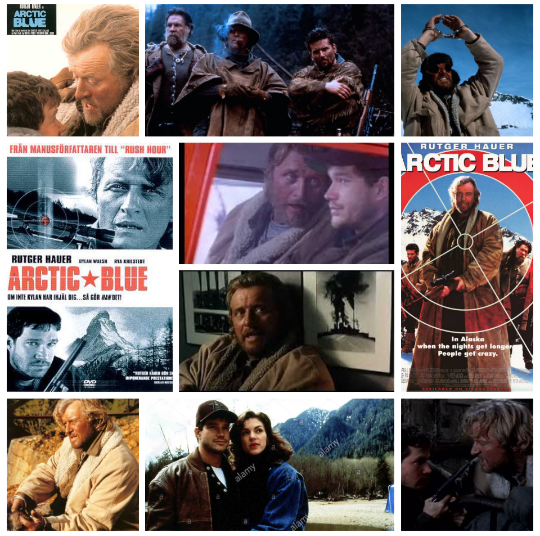
Arctic Blue is as eccentric and loopy as I’d imagine such unique climate conditions make people behave up there. Indeed, instead of a straight up action adventure, they’ve gone for something a little more meandering and amusing, sort of like Midnight Run under the midnight sun. In a sea of direct to video flicks that Rutger Hauer has done, it’s tough to weed the gems from the turds, but this one is gold, especially if you’re a fan of him, as well as gorgeously photographed scenery. As Ben, he’s not quite hero, not quite antagonist, a wildman of a trapper who functions on instinct and has no use for the rule of law. When an altercation with a park ranger leads to murder at his own hand, Ben is set to be escorted to judgment by a local sheriff (Dylan Walsh). Walsh is green around the ears though, and Ben is determined to escape, aided by his familiarity with the land and climate, as well as his bawdy fellow trappers, who are hot on their trail. what follows is almost genre defying; it’s just this side of adventure, with the slightest hint of buddy comedy and even a few mournful notes to Ben’s backstory that give it that dramatic weight. I love an ambiguous character, one who makes real choices and has capacity for both compassion and viciousness in their spirit, seemingly free from the constriction of conventional plot development. Ben is his own man, and approaches both his environment and his fellow man on his own terms, which granted can lead to trouble, but is an endlessly attractive character trait to have. I think having grown up in such a rugged, untethered corner of the globe, people like Ben run on their own clock, and hum with the delirious atmosphere of such a far removed existence. The entire film has that going for it too, like everyone involved is running off of no sleep and whatever is in the water way up there in the north. A true undiscovered gem of a film, if you can find it anywhere. 

B Movie Glory with Nate: Split Second

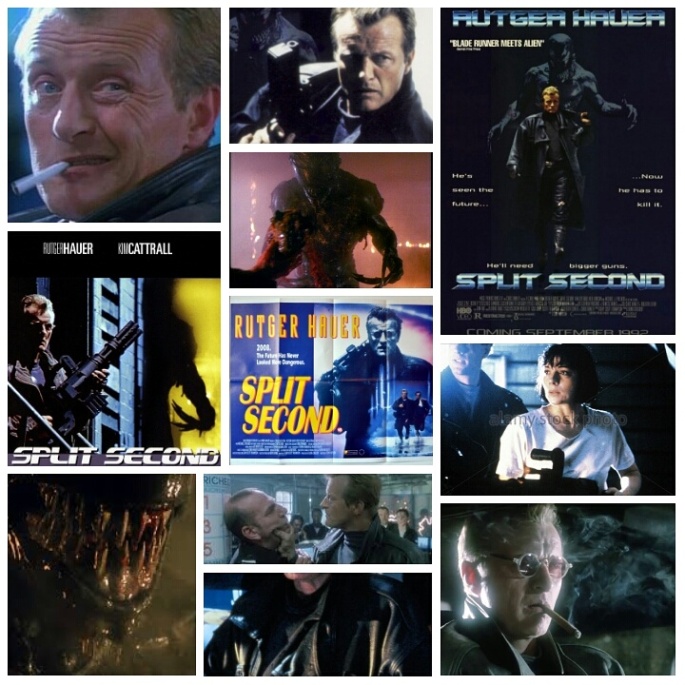
One of the better entries in a long and tedious career of B movies that Rutger Hauer has inexplicably slaved in, Split Second is actually a solid, enjoyable little flick with terrific action, atmosphere to rival any of the big budget films he did and a stoically deadpan performance from the legendary badass. The year is 2008 (lol the future), the place is London, and the sea levels have been rising fpr years, causing a few feet of water everywhere, leading to a stall in infrastructure growth. Hauer plays police detective Harley Stone, a gruff, take no prisoners shit kicker with a big gun who is searching the dank streets and shadowy clubs of London, looking for a killer who dispatched his poor partner a few years before. Only thing is, this ‘killer’ isn’t actually human, as Stone finds out in a series of well staged, murky shootouts in which the muzzle flares and smoke machines combine efforts (with hidden help from the low budget) to ensure we never get a good look at this beast until the bloody finale. Hauer is the perfect lone hero, a physically imposing presence with the laconic wit and unshakable charisma to match it. His Stone is world weary, laid back but dogged, and not without a bleak sense of humour. “I’m a cop” he sarcastically barbs, flashing his badge to a nightclub guard dog who wouldn’t know it from a hole in the ground. Kim Cattrall plays the female counterpart to the fight, and watch for Pete Postlethwaite in an early role as a pesky bureaucratic swine who gets in Stone’s way a few times. If you picture the hard hitting brutality of Predator, combined with the smoky ambience of Blade Runner you’ll have some idea. Admittedly it’s on a far lower budget and as such has to make do with it’s resources, but it does that just fine. Memorable little action creature feature. 

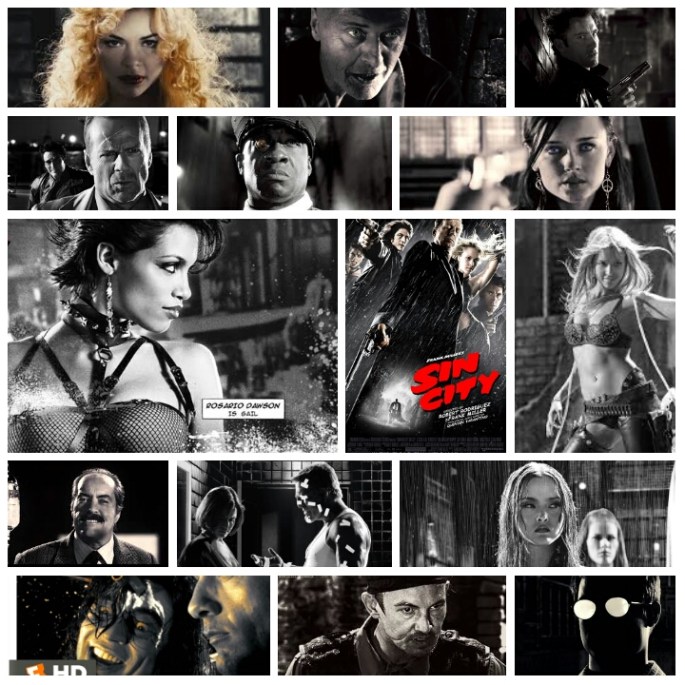
Sin City: A Review by Nate Hill 

I remember seeing the edgy character posters for Robert Rodriguez’s Sin City hanging on the movie theatre wall when I was younger, having no idea what Sin City was or any knowledge of the books, but thinking they looked incredibly cool and enticing. Then the trailer came out, and it was all I could think, talk or breathe about for months leading up to its release. I was obsessed. When opening weekend arrived I got my dad to take me, and spent two unforgettable hours of cinematic nirvana in a dark auditorium that was packed to the gills with fans old and young alike, each basking in the delectable black, white and colour speckled glow of the piece unfolding in front of us. I had never seen anything like it, and it blew my system into sensory orbit like nothing had before. Around this time I was just discovering a lot of Rodriguez’s and Tarantino’s career, poring over pulp and crime thrillers from all across the decades as my love for cinema expanded, and this was something I just knew would be special as soon as I saw that first provocative teaser poster. The innovation and artistic ambition used by the ever resourceful Rodriguez and his team led to gleaming critical reception, a massive box office hit and one of the most gorgeous pieces of art in the motion picture realm. His decision to simply lift the still frames out of Frank Miller’s graphic novels was something that not every director would be able to go along with, let alone wrap their minds around (director’s are a finicky lot who always have thir own bright ideas, even when the source material is already gold). Rodriguez was so in love with the books that he envisioned them onscreen just the way they were drawn, and that’s pretty much what you get in the film. The pre-credit sequence sets the dark, vibrant, moody and impossibly lurid setting of Basin City, a rotting heap of corruption  where almost everyone is either corrupt, sleazy or just outright evil, and even the ones that aren’t deal out some pretty heinous bouts of violence themselves. The prologue involves girl in in a red dress (Marley Shelton) conversing with a mysterious, well dressed man (Josh Hartnett). The scene takes a turn for the dark and tragic, we zoom out as Rodriguez’s self composed gutter lullaby of a score grinds into motion, and the glowering opening credits trundle by, a moment of a pure joy for anyone watching. The film is separated into three central vignettes, each from a different volume of the comics. The first, and strongest, features a sensational Mickey Rourke as Marv, a hulking bruiser built like six linebackers and basically impervious to anything that could kill a human being. After a heavenly night with hooker Goldie (Jaime King), he wakes up to find her lying dead next to him, not a mark on her. This gives his set of talents a purpouse beyond bar fights and roughing up abusive frat boys, and he wages a war of ultraviolence in her name, to his grave if he must. There are some villains in these stories that seem to be dredged up from the very bottom of the last pit of hell, just the worst of humanity’s many deplorable qualities. Marv eventually runs into evil arch bishop Cardinal Roark (a devious Rutger Hauer) and insane cannibal ninja sicko Kevin (Elijah Wood will haunt your nightmares)., on his bloody quest. Rourke’s genius even shines out through 12 pounds of prosthetic makeup slapped all over his mug, and he captures the wayward warrior soul in Marv, a restless anger and old school, Charles Bronson esque charm by way of Frankenstein’s monster. His work is a great way to kick off the first third of the film, and the gravelly narration hits you right in the film noir nostalgia. The second segment is a lot more lively, with far more people running around, sans the melancholy of Rourke’s bit, and instead emblazoned with a war cry of a story starring Clive Owen as Dwight, a hotshot tough guy who gets on the wrong side of seriously scummy dirty cop Jackie Boy (a growling Benicio Del Toro having a ball) who likes to beat up on waitress Shelley (Brittany Murphy). Dwight pursues him to Old Town, a district run by lethal militant prostitutes lead by no nonsense Gail (Rosario Dawson can use that whip and chain on me anytime). Then everything goes haywire (I won’t say why), and Michael Clarke Duncan gets involved as a weirdly articulate, golden eye sporting otherworldly mercenary named Manute. This middle section is the one that feels most like a comic book, where as the other too have more of a noir flavor, like their old Hollywood roots. The third and most depraved chapter (which is no light statement in this town), sees aging Detective John Hartigan (Bruce Willis) lay his life down in order to protect young Nancy Callahan from a terrifying pedophile child killer (Nick Stahl) who is the spawn of despicable US Senator Roark (Powers Boothe sets up a cameo of the pure evil he would go on to exude with his much larger role in the sequel). Jessica Alba plays the adult version of Nancy, now an exotic dancer and once again in danger from Stahl, who now has some… interesting changes to bis appearance, courtesy of genital mutilation from Hartigan years before. It’s one demented set of stories that would be almost too much to take in the real world, but this is Sin City, a realm that exists in the darkest dreams of Raymond Chandler and his ilk, a seething netherworld of stunningly beautiful women, ghastly corruption and terror,  and good deeds that go unheralded in the night, bloody retribution perpetrated by antiheros and tragic scapegoats who know damn well what a pit of hell their town is, and that nobility is but a drop in the bucket of injustice they wade through on their way to violent exodus. The cast list goes on for miles longer than I’ve mentioned so far, but look out for Alexis Bledel, Carla Gugino, Michael Madsen, Jude Ciccollela, Nicky Katt, Nick Offerman, Tommy Flanagan and Devon Aoki as Miho, a deadly little hooker assassin who can turn you into a pez dispenser with her razor sharp katana. The level of violence on display throughout the film is so far over the top that after a while it seems almost Looney Toons in nature. Throats are slashed, heads are removed, testicles are ripped off, skulls are crushed and all manner of maiming and murder inflicted. What made it acceptable with the ever gay MPAA though is the fact that mic of it exists in the black and white mode of visual storytelling, and only a few instances of actual red blood seen.  That goes for more than just the violence though in terms of color. Amid the sea of stark black and white there are beautiful hidden gems of colour that you have to train your eye to find. A pair of green eyes, a crimson convertible cadillac, the sickly yellow pallor of Stahl’s mutated skin. That’s but a taste of the patchwork quilt of visual artistry you are treated to here, and has constantly been emulated in either work since, but never quite effectively as here. That’s the idea of it though, a heavily stylized piece of hard boiled neo noir that exists simply to plumb the very depths of darkest genre territory, do justice to Miller’s books with a laundry list of wicked actors, a bonus scene directed by Quentin Tarantino and a story that’s pure noir to its bloodstained bones.
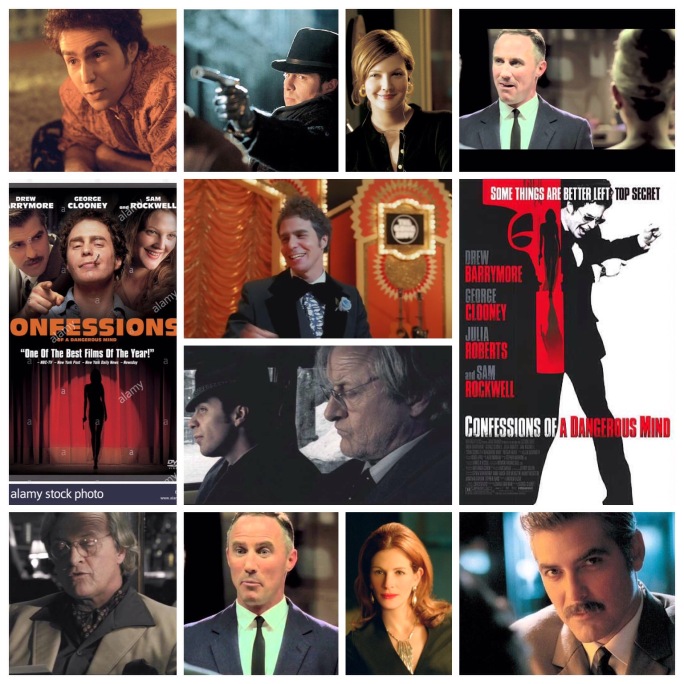
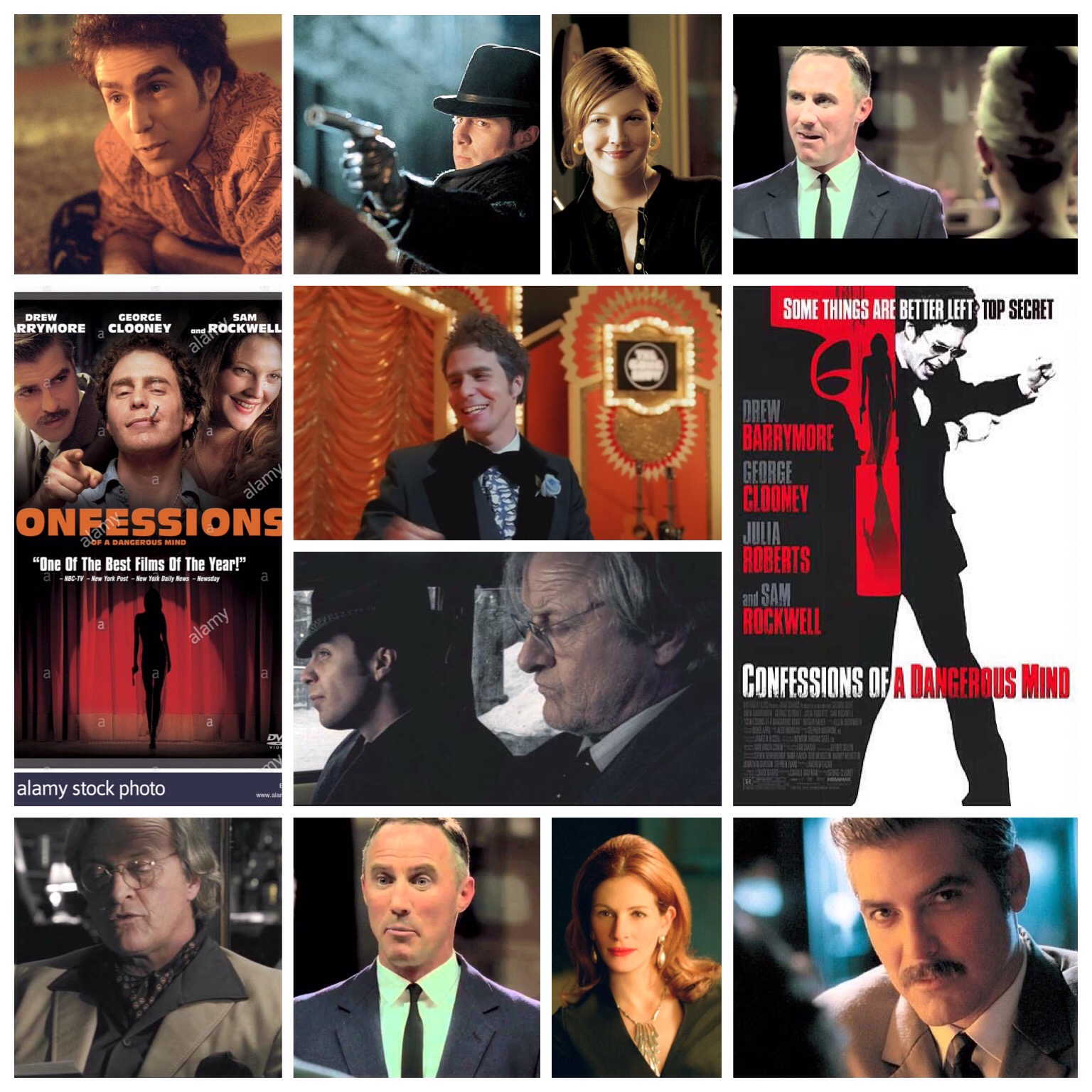
Confessions Of A Dangerous Mind: A Review By Nate Hill


As soon as George Clooney built up enough clout and reputation in the industry to a point where he could make his own projects, he started to send some unique and refreshing stuff down an assembly line that needed some shaking up. Confessions Of A Dangerous Mind is such a curiosity, but it’s so specific and idiosyncratic that I can barely say what makes it so special. I can go over the plot, performances etc. and give the reader a general idea, but to get it you had to be there. I suppose that’s the case with all movies, this one just sort of has its own frequency that you have to be tuned into. For a square jawed leading man, Clooney sure busted the box open with this directorial effort, as well as a few others, all just as distinctive. A screenplay by Mr. Abstract himself, Charlie Kaufman, helps with making an impression as well. Sam Rockwell, who continues to prove himself as one of the best actors of his generation, plays Chuck Barris. Chuck was the brain child behind numerous gaudy television game shows in the 60’s, including the infamous ‘Dating Game’. Flippant creative output was his brand, but there was another side to him as well, a darker period in which he claimed to be recruited by the CIA to carry out cloak and dagger assassinations. Whether or not this was ever a factual part of his life is murky, but he certainly believes it to be true and has written extensively about it in the novel which Clooney based this on. The film deftly intersperses his life at the television network and the genesis of the programs with his training and eventual missions for the Company. It’s an odd contrast, but when you’re treated with Clooney’s dutiful storytelling and an extremely committed turn from Rockwell, it’s hard not to be drawn into it. Not to mention the supporting cast. Julia Roberts is cast against type as a lethal, sociopathic femme fatale who crosses paths with Barris more than a few times. Rutger Hauer mopes about as a loveable alcoholic operative who covers Barris’s back on a few assignments. Drew Barrymore spruces things up as a ditzy love interest, Michael Cera plays Chuck as a young’in, Clooney himself underplays his CIA handler, letting an epic moustache do the talking, and there’s cameos from Maggie Gyllenhaal, Brad Pitt and Matt Damon. At one point the film stops dead in its tracks for the funniest performance which hijacks a scene briefly, in the form of Robert John Burke as a maniacal censorship board hyena. Burke pulls the ripcord and delivers roughly 40 seconds of pure comedic genius that I could watch on loop, and is the only moment of its kind in the film. You’d think it’d offset tone, but in a film this organic and quirky, it simply serves as a garnish of hilarity. The whole thing has a Soderbergh feel to it (perhaps due to Clooney), a sharp, crystalline precision to the burnished cinematography from Newton Thomas Sigel, who previously wowed us with similar work on Blood & Wine, The Usual Suspects and Gregory Hoblit’s Fallen. His lens captures the melancholy accompanying Barris’s very strange path path in life with moodily lit frames, and pauses for the brilliant moments of absurd black comedy which seem to follow him around like the spooks he was always running from. A film with dual aspects that never tries to prove or disprove Chuck’s claims, but loyally tells the story the way he told it, guided by Clooney all the while. A little stroke of genius.