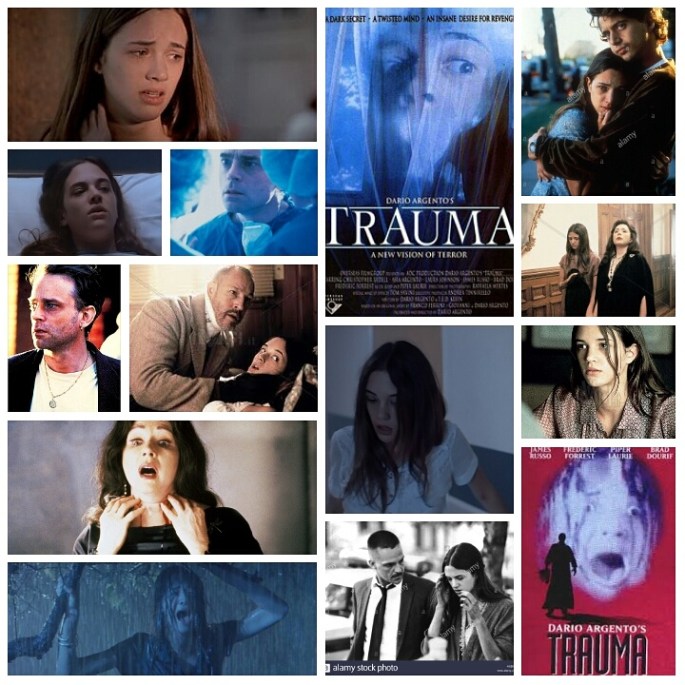
Dario Argento’s Trauma: A Review by Nate Hill 

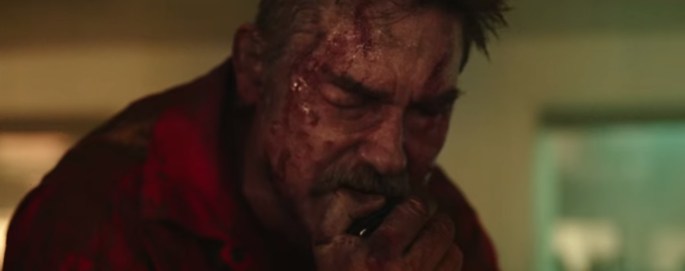
Dario Argento’s Trauma is simultaneously one of the most loopy and coherent efforts from the maestro. Most of his earlier work is pure sensory and atmospheric bliss, detached from things like logic and story. While this one does in fact have a discernable narrative to go along with its giallo splendor, it’s still as whacked out as anything else in his ouvre. This was the first of many times he would cast his exotic beauty of a daughter Asia in a lead role, here playing troubled Romanian teenager Aura Petrescu, on the run from dark forces that seem to plague her family. Her lunatic mother (a terrifying Piper Laurie) has her commited and examined by a freaky Doctor (Fredric Forrest in a glorious train wreck of a performance), meanwhile a mysterious serial killer called the headhunter is out there somewhere, decapitating people with a piano wire. It all gets a bit overwhelming for poor Aura, and she runs off, straight into the protective arms of an ex drug addict (Christopher Rydell) who becomes her guardian and eventual lover. Argento is terrific in the role, exuding dark beauty and burnished resilience in the face of many terrors. Brad Dourif has an intense extended cameo as a doctor with icky ties to the origin of the headhunter as well, adding a welcome bonus horror flavor. Also watch for another intense actor, James Russo, playing a police detective determined to nab the killer for good. As far as Dario’s stuff goes, this is about as complete and cohesive a narrative as you will find. Granted it’s not the garish psychedelia of classics like Suspiria, Phenomena and Inferno, but a little more subdued and clinical, a dark fairy tale that gets geniunly scary in several excellently staged scenes and provides loads of uneasy atmosphere. 

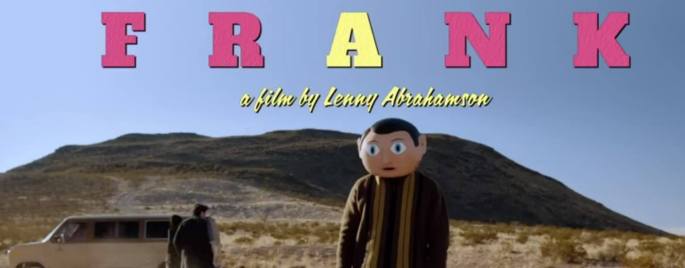
LENNY ABRAHAMSON’S FRANK — A REVIEW BY NICK CLEMENT

3

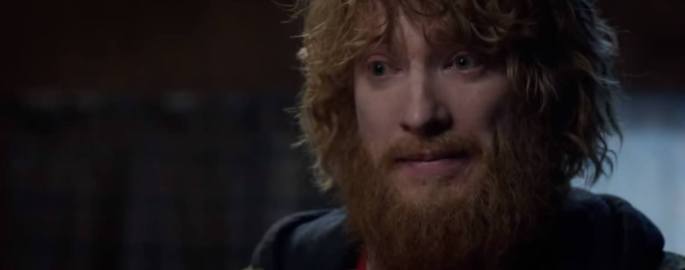
Lenny Abrahamson’s odd, willfully eccentric little movie Frank, starring the brilliant Michael Fassbender under a massive paper mâché mask, is a sneakily poignant study of mental illness and our desire to be noticed and recognized. It’s not until the final act of this bizarre black comedy that you fully realize what’s been going on, and the initial frustrations that you may have had with the narrative fade away because everything has come into strange but clear focus. Co-written by the team of Jon Ronson and Peter Straughan (The Men Who Stare at Goats), the film has a tone that constantly juggles many dimensions, hinting at so many things and presenting a story that feels strangely familiar despite the odd visual flourishes and eccentric character beats. Domhnall Gleeson is very good as a regular guy sucked into a unique life situation, Scoot McNairy continues his amazing run of character actor work, and Maggie Gyllenhaal is all bottled rage and passion (as usual).

1

But it’s the Fassbender show all the way, with this most intense of actors giving a highly internalized performance, and even under this big, goofy head-piece, elicits empathy and sympathy despite being very hard to read on a physical level. There’s definitely a hint of Wes Anderson-flavored whimsy meets sadness that pops up in the narrative at times, but Abrahamson’s worldview and aesthetic style aren’t as dollhouse-precious as Anderson, and while surreal at times, Frank feels very much rooted in the here and now. James Mather’s sharp cinematography never calls massive attention to itself, while the extremely fluid editing by Nathan Nugent keeps a pace that feels almost dreamlike at times; this film has an internal rhythm that’s very hard to accurately describe. And of course, for a movie about music, the tunes heard all throughout are excellent, with an offbeat, punkish spirit that feels perfectly suited to the fragile story. I can almost guarantee you that you’ve never seen a music-movie quite like this one.

2

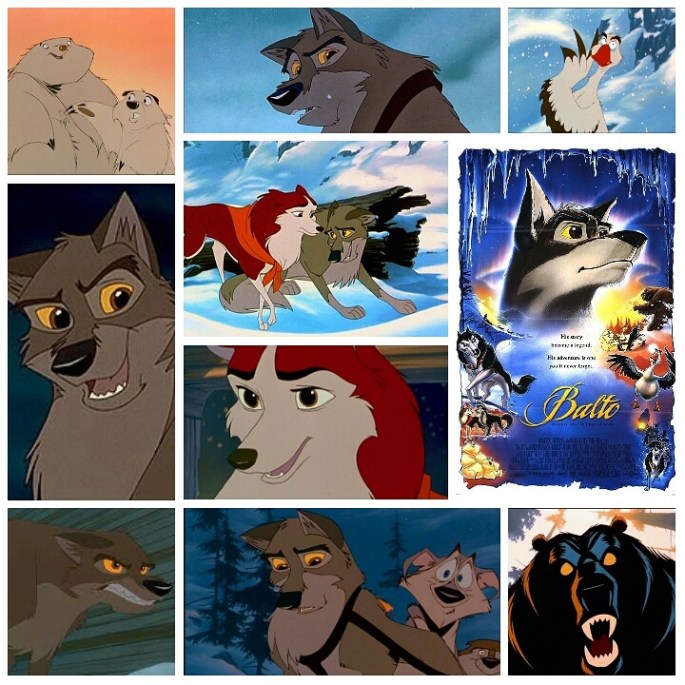
Balto: A Review by Nate Hill 

Anyone remember Balto? I remember Balto. Pepperidge Farm remembers Balto too. How can you not, when it was one of the most charming, beautifully done non Disney animation films we saw as kids. I think the fact that it was not made by Disney threw it into obscurity a bit, but there’s the odd copy floating around out there in the Arctic snow. It’s an underdog story (built in pun there eh) about half husky, half wolf Balto (Kevin Bacon having a blast) who hangs around Nome, Alaska and is ridiculed by the local sled dogs for being a mudblood. Every dog has his day though, and Balto gets his when a deadly epidemic breaks out in town during a storm, and he courageously volunteers to make the perilous journey to a far away outpost that has the required medicine. Joining him are his lovable goofy goose friend Boris (Bob Hoskins trading in his jovial cockney accent for a jovial russian accent), ant two adorable polar bears called Muk and Luk. Watching out for him is the only purebred dog in town who cares about him, Jenna the husky (Bridget Fonda), determind to muster a rescue party when he gets in over his head. Balto must brave raging blizzards, treacherous fellow sled dogs and the world’s biggest grizzly bear (seriously that thing is like 15 feet tall) to save the town’s population, and he does it all with bravery, charisma and a winning attitude that’s essential in any animated film. His sidekicks are endearing, his efforts intrepid and the film a winner. 

Stephen King’s Sleepwalkers: A Review by Nate Hill 

Stephen King’s Sleepwalkers has a reputation as one of the lesser quality adaptations of his work, which led me to put off watching it for years. Well I don’t know what film the critics saw, cause the one I watched was wicked good. Nestled in that perfect area of 80’s horror where the blood was corn syrup, the flesh was latex, there wasn’t a pixel or rendering in sight and atmospherics mattered more than excessive violence, this is one serious piece of horrific eye candy with the backbone of King’s wicked imagination to hold it steady. The story tells of a small Midwestern town (is there any other kind in the man’s work?) That falls prey to a pair of vampire werewolf hybrid creatures who subside off the blood of virgins and morph into slimy behemoths that conveniently show off the impressive prosthetics. Brian Krause is one of said creatures, drifting into town with his creepy mother (the wonderful Alice Krige) and setting his sights on severely virginal schoolgirl Madchen Amick, by dialing up the charm past eleven. People and animals start to die all over town and the suspicions arise, but the pair are cunning and have most likely been doing this for centuries almost unnoticed. It’s nothing too unique as far as the concept goes, but the fun of it lies in the gooey special effects and one demon of a performance from Krige, a veteran stage actress. She is one part beautiful seductress (even to her son, in one unsettling scene) and one part volatile banshee, setting your nerves on edge time and time again throughout the film. Krause does the demonic James Dean thing nicely and Amick shows blossoming reilience beneath the required mantle of terrified cream queen. The three of them run amok in a beautifully realized fever dream of psycho sexualized terror, small town atmospherics and a classic old school horror climate. This film loves it’s cameos, so watch for Clive Barker, Ron Perlman as a grouchy state trooper and King himself as the world’s dumbest graveyard caretaker. Baffles me why this was panned upon release. It’s actually one of the best films I’ve seen based on King’s horror work, and there’s a lot to compete with. 

FRANCOIS TRUFFAUT’S JULES AND JIM — A REVIEW BY NICK CLEMENT

3

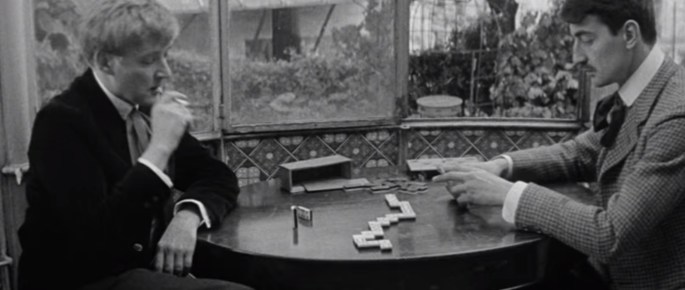
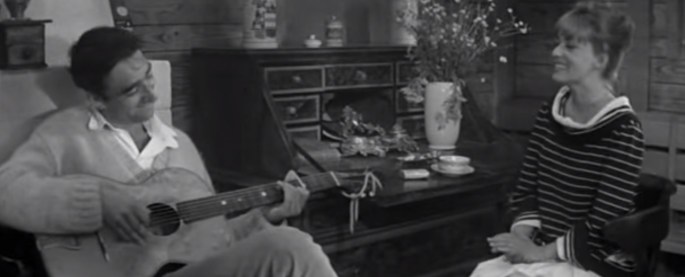
At this point, what can one really add to the discussion concerning Jules and Jim from legendary director Francois Truffaut? A movie of this sort is a product of its time, as this was made by a filmmaker exploring the medium with the zeal of a child, and telling a story that’s uniquely European and a clear reflection of a different era and society. It’s remarkable to observe Truffaut’s camera style in Jules and Jim; his aesthetic is a textbook example of the French New Wave movement in cinema, very ahead of its time, seemingly obsessed with momentum and kineticism, as fully alive as the passionate characters that consume the narrative. The various forms of imagery that Truffaut incorporated into his storytelling during Jules and Jim sort of feels like a precursor to the more extreme, kaleidoscopic aesthetic of 90’s-era Oliver Stone, with Truffaut opting for stock/newsreel footage, freeze frames, rapid-paced dolly shots, voiceover, and a seemingly freewheeling style. Jeanne Moreau, Henri Serre, and Oskar Werner basically projected every single emotion on screen during the course of this film; there’s vulnerability about each one of them that makes them all so empathetic despite some of the decisions that they all make throughout the poignant, funny, and finally tragic story.

1

The film’s energetic cinematographer, Raoul Coutard, had previously worked with Jean-Luc Godard, and was famous for using the lightest cameras possible at the time, in order to approximate a very organic and loose filmmaking approach. And because of this, there’s a nimble quality to the aesthetic, with the camera bouncing from one place to the next, and in tandem with the jaunty editing patterns provided by cutter Claudine Bouché, Jules and Jim radiates with a fizzy sense of life that runs up against honest sadness and moments of personal uncertainty. The gorgeous swirls of music came courtesy of master composer Georges Delerue; this film wouldn’t be all that it is without his uncanny melodic sense. The story, which involves a passionate love triangle between two men and one very free-spirited woman, is timeless romantic material, with an appropriately downbeat ending that feels justified and emotionally cathartic. The Criterion Collection Blu-ray is as crisp and clean as one could ever ask, with the beautiful black and white film stock perfectly capturing all of the emotions and thematic shadings on display. I’ve never seen a movie that feels as lighthearted as this one while still exploring deep, intimate, very dramatic life challenges that could hardly be described as easy-going.

2

James Wan’s Death Sentence: A Review by Nate Hill 

Charles Bronson ain’t got nothing on the level of grit seen in this revenge story. James Wan’s Death Sentence is obviously inspired by the endless Death Wish films, which by their end had gone from classy exploitation (sounds like an oxymoron, but trust me, it’s a thing) to lazy spoofs. This one goes back to the gritty roots, as well as udating the setting to our present time and laying on the gloomy, oppresively violent atmosphere so thick you’ll want a shower and some cartoons after. Kevin Bacon is Nick Hume, a mild mannered advertisement executive living an idyllic life with his wife (Kelly Preston) and two young sons. All that changes one night when one of his boys is murdered in cold blood by some punk in the midst of a gas station robbery. The thug gets released on a technicality, and Nick gets shafted of both justice and peace of mine right at the start of his grieving process. Making one of those penultimate crossroad decisions that alter both his life and the fate of the film’s narrative, he takes it upon himself to murder the perpetrator in a grisly display of vigilante justice. Only problem is, that ain’t where it stops. The murderer has a brother who makes him seem like tweety bird, a terrifying urban scumbag named Joe Darley (Garrett Hedlund) who puts Nick and his family directly in the crosshairs of revenge. Nick is forced to become a one man army to protect his family and eradicate the evil that has entered hiss life once and for all, assisted by a wicked arsenal of nasty weapons provided by sleazeball arms dealer Bones Darley (John Goodman). If you look up ‘scene stealer’ in the dictionary you’ll find a picture of Goodman’s jolly visage grinning back at you. No matter who he plays, he’s the life of the party, and his Bones is a fast talking gutter-snipe who jacks up every scene he’s in with scuzzy dialogue. He plays an integral part in Nick’s brutal and often disturbing quest for justice, a hard R urban bloodbath that pulls no punches and aims to shock. Bacon often plays morally questionable pricks, walking a fine line between upright heroes and corrupt nasties. In one character arc he gets to traverse that whole spectrum here, a regular guy who is pushed to criminal extremes until he’s barely recognizable, even to himself. Intense stuff that heads down a dark alley of human unpleasantness. 

Creep: A Review by Nate Hill 

Everyone has, at some point, wondered what lurks in dark corners and abandoned tunnels within a city’s underground subway system. Well Franka Potente gets to find out exactly what’s down there in the murky and atmospheric horror flick Creep, and trust me it ain’t pretty. Potente plays Kate, a girl on her way home from an office party in the heart of London. Harassed and stalked by a no good coworker, she dips into a derelict train, and her attacker follows. Suddenly, somethin crawls out of the dark, murders him and drags his corpse off into the night. Kate goes from the frying pan into the fire as she realizes that whatever this thing is, it’s really not something you want to be stuck in a labyrinth of desolate subway tunnels with. I won’t spoil too much, but the Creep himself is a repulsive deformation whose origin I’ll let you see for yourself. The actor who plays him is terrific though, admittedly a maniacal monster, but almost a little bored and jaded by his situation and just dryly going through the motions, which proves to be oddly amusing. That’s not to say he’s not dangerous or smart though, as Kate repeatedly finds out, fleeing through the dark accompanied by a terrified homeless couple. Potente is riveting in anything, and she seems to seek out more intense fare to star in, always taking her performance to the extreme without ever losing that gravity that I love so much in her work. This one will put you through a wringer, all across the board. It doles out gross out horror, eerie chills and suspense in equal measures. Solid horror. 

PETER BERG’S DEEPWATER HORIZON — A REVIEW BY NICK CLEMENT

1

Deepwater Horizon is an absolute tour de force of action filmmaking, and one of the most gargantuan physical productions that I’ve ever witnessed on a movie screen. Seeing this film in the IMAX format is a must; the experience is damn near overwhelming. I am predisposed to being interested by true life, topical stories that define our lifetime, and the BP oil spill is one such event. There are any number of ways that one could fashion a story around this monumental disaster, but what director Peter Berg, screenwriters Matthew Sand and Matthew Michael Carnahan, director of photography Enrique Chediak production designer Chris Seagers, and the rest of the insanely committed crew and cast did was put the audience on the middle of an exploding oil rig for nearly an hour, after some very effective character intros coupled with almost unbearable tension building. Berg, a director mainly drawn to projects either based in truth (Friday Night Lights, Lone Survivor) or inspired by the world around us (The Kingdom), has been one of the most continually underrated filmmakers for the last 15 years, inspired by the work of cinematic greats like one-time mentor Michael Mann, Tony Scott, and Michael Bay, and seemingly always hard at work on something new and exciting. Deepwater Horizon has been made on a scale that would make James Cameron blush, and is a testament to heroism, and the idea of sudden, catastrophic loss, and similar to this year’s superb Clint Eastwood film Sully, a study of doing one’s job and doing it extraordinarily well, and in some instances, going above what could ever be expected.

3

After setting some quick and skillful character introductions into motion during the first 25 minutes, Sand and Carnahan’s script gets right to business, showing the formation of the rig’s various crew members that span multiple companies, with a handful of them being taken away to the station off the Louisiana coast, to commence their work. Ever reliable Mark Wahlberg, who really shines in these types of roles, is our entry point into the story, a rig technician named Mike Williams who experienced first-hand the incompetence being demonstrated by BP officials and other station members. His boss, played with true salt-of-the-earth grittiness by the great Kurt Russell, is revered by the rest of the crew for his commitment to safety; in an ironic twist, on the night of the devastating explosion, he was honored with a corporate safety award by his callous superiors. John Malkovich sports an amazing accent and excels as the chief villain of the piece, Donald Vidrine, a man who clearly could have cared less about anything other than the bottom line and making a profit at any cost. In a sly cameo, Berg even shows up during the first act, as a BP exec who relays important information to his workers under the deafening whirring of helicopter blades; this is a film that nobody at BP is going to appreciate on any level, as it took smart measures to crush them as an organization while still staying focused on the riveting events on board Deepwater Horizon. Gina Rodriguez is also excellent as one of the few women on board; it’s insane to think that anyone survived this event but without her actions and the actions of Harrell and others, the death toll would surely have been higher than 11 souls.


2

Berg and his team recreated the Deepwater Horizon to 85% scale, and in doing so, produced a film that feels 100% authentic at every turn. Had this film been shot on a closed stage with wrap-around green screens, it would be nowhere near as effective. Whatever CGI that was used has been brilliantly and seamless integrated into each shot; there are so many moments of “How they do that?” movie magic that a second viewing is definitely in order. Chediak’s breathtaking hand-held cinematography is appropriately rough yet extremely coherent, with the camera trying to make sense of the devastation, but no more so than how any member of the crew would have experienced it. The individual acts of heroism are too frequent to list in a review; let’s just say that a huge number of people are still alive because of the sacrifices of a few. And even at a relatively lean 100 minutes, Berg and his screenwriters rather hauntingly suggested at the environmental devastation that took place in one horrifying sequence that will make you cry so long as you have a heart. This is an utterly massive film to take in as a viewer, as the visual are overwhelming in their ferocity and power, and the dialogue took great pains to accurately depict the on-the-job jargon that these people have to spew while operating some extremely dangerous equipment. And the sound work should also be mentioned as it’s truly electrifying, amplifying every moment with extreme intensity. Deepwater Horizon is the sort of film that produces dread one moment, excites the next, crushes you emotionally for a long period, and then sends you out of the theater angry and disturbed by the actions of one of the world’s biggest and most profitable companies. The film is an action masterwork for Berg, and easily one of his grandest, most fully realized pictures to date, and while it might not have the intimacy or societal examination of Friday Night Lights, which for me is still my favorite work of his, it’s the epitome of a “big-screen experience” and it’s not to be missed.

4

Summer’s Moon: A Review by Nate Hill 

Summer’s Moon, also given the slightly less exotic title Summer Blood, is a fascinating little family centered psycho sexual treat, starring an actress who previously hadn’t ventures into such intense territory. Ashley Greene is a porcelain beauty best known for those Twilight train wrecks, and its that marketing style these filmmakers have latched onto because of her involvement. The poster has a hazy hue that almost hints at the dreaded vampiric sparkle we’ve come to loathe. It’s picturesque to be sure, but doesn’t really provide any warning to the disturbing, gritty and uncomfortably intimate nature ofnthe story. Greene plays Summer, a wayward drifter who arrives in a small bucolic burg, out to find the father she never knew. Enter the Hoxeys, an I’ll adjusted family of serial killers claiming to be her long lost family, and beckoning her into depravity with all the charm and hospitality that small town folks can muster. Her brother Tom (Peter Mooney) keeps a kidnapped girl in the basement as a plaything and sleeps with his unstable mother (Barbara Nixon), and that’s but a taste of the horror that Summer has waded into. The film takes on new virility when the resident patriarch Gant Hoxey blows back into town, played with visceral ferocity by veteran tough guy Stephen Mchattie. Intense is the word for this guy (ever catch his cameo in A History Of Violence? Christ), and he’s a beast as Gant, Summer’s estranged father, a man who functions on violence and feeds of fear. The film examines how a clan of murderers might indeed function, right down to twisted lover’s spats and drama right out of an R rated Addams Family special. Greene nicely shatters her teen image by bringing us a broken protagonist who finds her dark passenger through resilience and torment, the blackness that sweeps over her soul clearly visible, loomed over by Mchattie’s grim reaper influence. Murder and the desire to do so is regarded as a genetic trait in this film, passed along the line of kin, generation to generation, wreaking havoc in the process. A film that I underestimated going in, a terrific horror entry that takes its it’s with character and suspense, slow burning up to a spectacularly gory third act filled with tension, blood and Mchattie, that icy voiced devil who steals every scene he’s in. Well worth your time. 

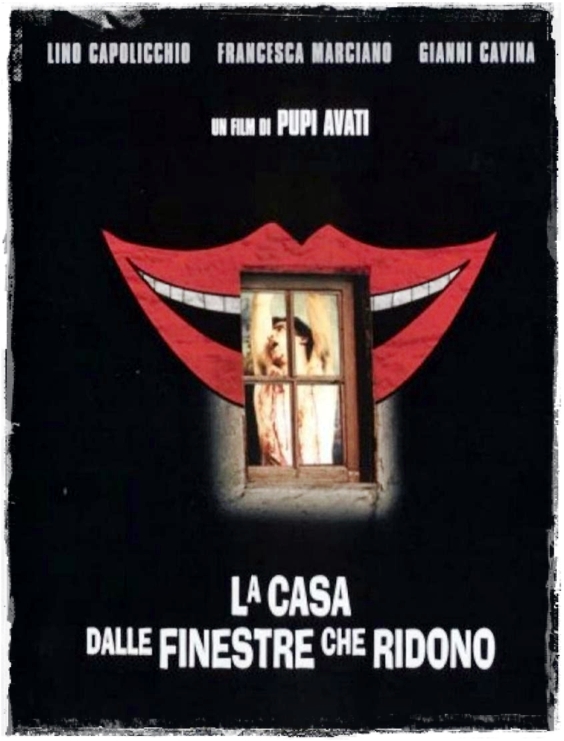
THE HOUSE WITH THE LAUGHING WINDOWS (1976) – A REVIEW BY RYAN MARSHALL

vlcsnap-2016-10-01-08h10m11s101.png

I must have been thirteen or fourteen at the time, and I don’t remember too much about what my world was like then, with the exception of it being a lesser variation of what it is now. If Argento, Fulci, and Bava are the more obvious names who introduced me to the black leather and brighter blood which would eventually shape my definitive creative conscious, director Pupi Avati opened up different doors entirely with his magnificent THE HOUSE WITH THE LAUGHING WINDOWS, a brilliant subversion of the Giallo formula with heavy doses of folk horror and genuine social-political subtext.

The Gialli that I am particularly fond of have more in common with THROUGH THE LOOKING GLASS than the standard crime narratives of the yellow paperback novels from which they derive their title, and as such, this is as important an entry as SUSPIRIA, Fulci’s THE PSYCHIC, or Sergio Martino’s delectably psyched-out masterpiece ALL THE COLORS OF THE DARK. What is perhaps most immediately intriguing is the placement of this particular rabbit hole in a twisted, though ultimately familiar semblance of reality. By association, the Giallo is a heightened affair, but Avati is skillful in how and where he engages with the fantastical.
vlcsnap-2016-10-01-08h06m37s379.png

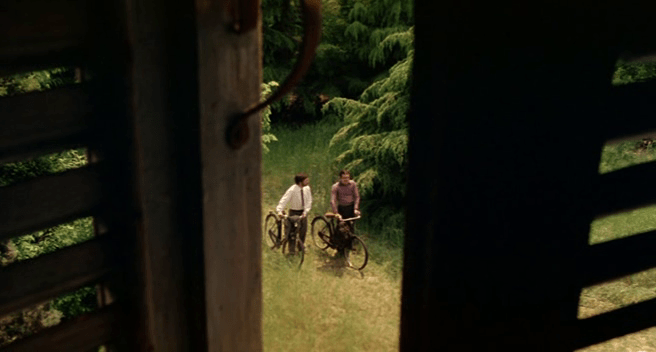
The log-line for this one is refreshingly simple: a man, Stefano (Lino Capolicchio) arrives at a small, seemingly quiet villa on business, tasked with restoring a fresco of (what at least appears to be) Saint Sebastian in the town’s church. Soon after arriving, however, things take a sharp turn for the macabre as our hero receives anonymous threatening phone calls and gets kicked out of his hotel to make room for another guest; a guest who never shows up, and was never booked to begin with. He then moves into an old house in the woods which he shares with only an elderly woman upstairs and although she never seems to leave her bed, movement is explicitly heard at all hours of the night. A dark secret seems to hang over the village, one the locals would prefer to keep from the knowledge of the general public. After the sudden murder of a friend who seemed to have some answers, Stefano decides to do some amateur detective work of his own which will ultimately drive him to madness.

But will curiosity kill the cat? When one is watching a Giallo – and a good one, to boot – all cards are on the table. As a long-time admirer of films that depict the deterioration of a mind in unison with depicting an industry, culture, or world at large on its way out, I find Avati’s film to be utterly fascinating. Here we have the classic descent-into-madness narrative, a staple of the genre, unfolding beside a positively post-apocalyptic landscape; the villa, with all its abandoned ambitions and lost souls, is most likely intended as a commentary on post-War Italy and how certain communities struggled to escape their past. Stefano’s various romantic flings with school teachers and conversations with drunks, bat-shit crazy altar boys, and of course the old woman upstairs reveal a tight circle of damned spirits, only a handful of whom dream of escape, though most only wish to keep a vicious cycle going for as long as it possibly can.

vlcsnap-2016-10-01-08h07m48s091.png

It’s quite interesting, or at least it might be to certain readers, to note that in the course of a career spanning nearly half a century, Avati only made (to my knowledge) about half a dozen features that could be branded as horror films, the most widely-acknowledged of which are this one and the equally exceptional ZEDER (aka REVENGE OF THE DEAD). Skimming through an extensive filmography such as this, it seems Avati has covered just about every base he can, returning to the realm of the macabre time and time again, but mostly at the helm of much lighter, though I’m sure no less thoughtful fare. It is clear that while he is not technically a “genre” director, Avati has a penchant for brooding phantasmagoria; a dark side that only shows itself when deemed absolutely necessary – which in turn makes for some of the most consistently engaging tales of terror on the market.

Pasquale Rachini’s photography is a real treat; I have always loved how the camera finds raw beauty early on, and throughout, in the wide lavish wetlands and partially destroyed old houses featured around the villa. A sense of purest reality is created, and then soon shattered, as day becomes night and lighting becomes more evocative, locating what lurks behind and between the shadows as well as what creates them in the first place. And yet, it will seem rather understated to those for whom “Giallo” is defined only by 70’s-era Argento (DEEP RED, SUSPIRIA, etc.), but alas, I believe it is as stunning as anything the genre has to offer. And who could forget to mention Amedeo Tommasi’s score, which swings effortlessly between nail-biting tension and fleeting romanticism, and remains shamefully unavailable to the general public to this day. One can only hope somebody, anybody, will rectify this sooner than later; it really is fantastic.
vlcsnap-2016-10-01-08h10m51s237

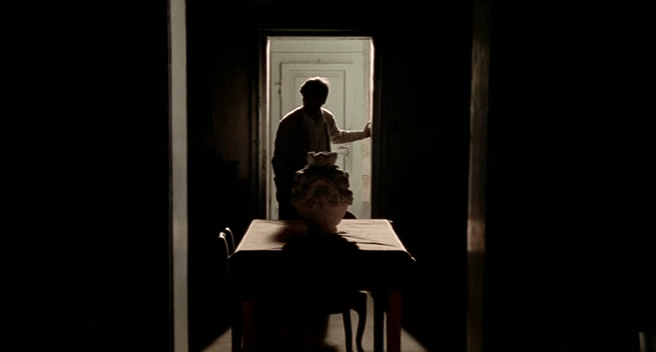
Some films just feel as if they were made for you, and at their best, Gialli have that precise effect on me. THE HOUSE WITH THE LAUGHING WINDOWS, for all its WICKER MAN-esque outsider horror, nevertheless feels like home. This may seem like a bit of an odd notion to those who seldom dance with the devils of celluloid, but if it happens that you do so more often than not, you will know exactly what I mean. Danger and mystery alike can be so invigorating, and Avati has conjured an atmosphere of dread so palpable that a knife (of any kind) simply wouldn’t cut it. Further proof that some of the genre’s best offerings come from those who don’t necessarily specialize in but nonetheless retain an honest appreciation for its seductive allure; one of many horror films that is more or less about watching horror films, and luckily, we are spared the usual contradictory moralism and regrettable air of superiority. Nothing but love emits from these frames. Love, blood, sweat, tears, purple flowers, tape recorders, and architecture with eyes and ears acute enough to catch even the lowest whisper.