CITY OF INDUSTRY – A Review by Frank Mengarelli

CITY OF INDUSTRY is that seedy noir where men treat their own gunshot wounds with whisky and cigarettes in a rundown bathroom of a motel, talk in short and blunt alpha male code, and live by a code of honor and revenge. The film has a fantastic cast led by Harvey Keitel giving his archetypal tough guy performance. Supporting Keitel is Timothy Hutton, Famke Janssen, Lucy Liu, Michael Jai White, Stephen Dorff, and Elliot Gould.

City of Industry Keitel.jpg

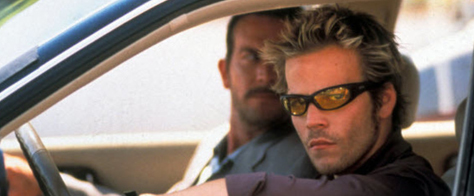
The film’s premise is the Richard Stark esque caper/revenge story of four men robbing a jewelry store, and then one of them (Dorff) kills off two (including Keitel’s younger brother played by Hutton) and then Harvey Keitel spends the rest of the film tracking him down and killing anyone in his way.

City of Industry Hutton.jpg

The film thrives on its minimalist approach. It knows exactly what it is, and it does not try to be anything more. Keitel commands the screen with his scowls and his pistol whipping anyone who stands between him and Dorff. Along the way, Keitel befriends the widow (the always great Janssen) of one of his slain crew members, and of course finds solace and redemption in helping her while tracking Dorff.

City of Industry Dorff.jpg

The film is what it is. For those who enjoy the heavy B movie revenge genre, this film was made for you. Keitel’s stoic performance is solid as ever, Dorff and his blonde highlights is sleazy as ever, and Elliot Gould makes a brief yet groovy turn as a sweaty and smooth crime boss. CITY OF INDUSTRY is one of those gems that stand out among the best of the 1990’s straight to VHS crime films.

JAMES FOLEY’S AFTER DARK, MY SWEET — A REVIEW BY NICK CLEMENT

1.jpg
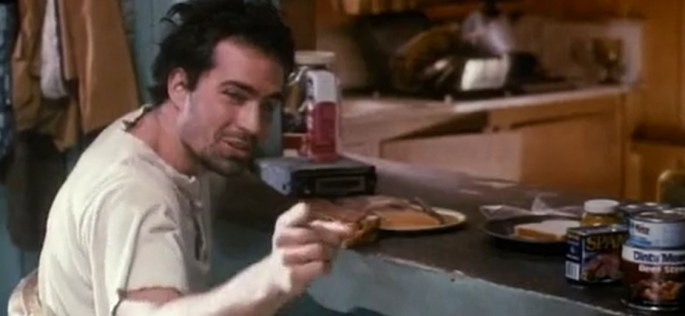
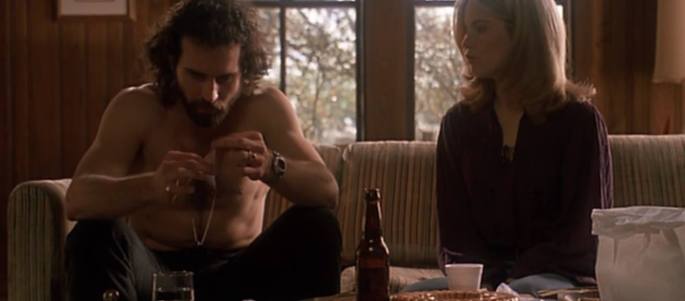
I can see why everyone continually raves about James Foley’s 1990 neo-noir crime film After Dark, My Sweet – it’s one of the most brilliant genre exercises that quietly slipped under the cinematic radar when it was first released. Grossing under $5 million during its entire (albeit limited) theatrical run, critics did back-flips (Ebert most notably), but maybe it was the lack of huge star power or the intrinsic nature of the genre that relegated this one to the sidelines. I’ve seen this film a few times now, but on first glance, I knew nothing about the plot of this twisty suspense piece before viewing, and I’d encourage anyone who hasn’t seen After Dark, My Sweet to avoid any spoilers and just check it out with as little knowledge as possible. Starring Jason Patric (also see Rush for another wildly underrated gem from the 90’s), Bruce Dern, and Rachel Ward and based on the 1955 Jim Thompson novel of the same name, the action is set outside of Palm Springs, and involves an ex-boxer (Patric), his new and mysterious lover (Ward), and an ex-cop turned criminal with a kidnapping scheme (Dern) that of course goes wrong but not in the ways you’d expect. Foley’s visceral direction keeps the suspense at a tight coil, resulting in a film that never fails to excite.
 2
That’s all I will say about the mechanics of the story. What I will say is that Patric delivered yet another exceptional, deeply internal performance, Dern was fantastic as an odd sleaze-ball, and Ward, an actress I’m not incredibly familiar with, was all sorts of sultry and intense, delivering a laser focused performance that plays with the notion of the femme fatale while also embracing her character as a full-fledged individual. Maurice Jarre’s score is wonderful, suggesting temptation at almost every turn, and Mark Plummer’s measured and controlled cinematography heightens the anxiety and dangerous atmosphere at all times, and is in perfect tandem with Howard E. Smith’s tight editing. There’s an epic sex scene between Patric and Ward that is shot and cut in a most unique manner, resulting in one of the most erotic spectacles of cinematic lovemaking that I’ve ever seen in a film, and as usual for Foley, the film exists outside of the normalized margins, with a rough and dirty aesthetic that fits perfect with the fatalistic narrative. The film premiered at Cannes, was released in late August 25 years ago, and it barely made a blip. This is one to track down on DVD (it’s a $10 purchase) or via streaming providers as it’ll completely knock you out.
3

JUSTIN KURZEL’S MACBETH — A REVIEW BY NICK CLEMENT

1

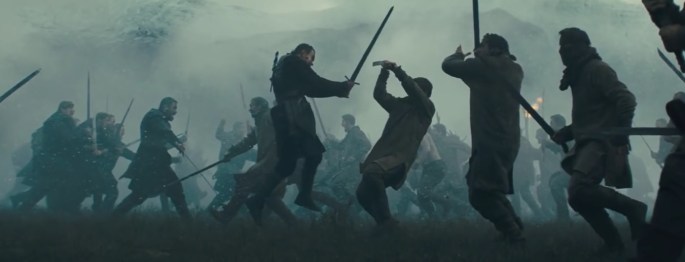
Ultra-atmospheric and wildly stylish, Justin Kurzel’s unique interpretation of Macbeth is an aesthetic powerhouse, containing some of the most gorgeous individual shots that I’ve seen in an any movie in recent memory. Cinematographer Adam Arkapaw delivered some insanely detailed and lushly realized images all throughout this stunning motion picture, utilizing time-heightening slow-motion in a way that would make Zack Snyder proud, and concentrating on natural light and a heavy use of filters and smoke. The film looks to have been shot at the end of the Earth, recalling the eerie vibe that was presented in Nicolas Winding Refn’s Valhalla Rising, with striking location work, evocative production design, and a thundering musical score that’s as propulsive as the visceral filmmaking. Kurzel and Arkapaw and the rest of the creative team stress grit, muck, and mud while focusing on crimson reds, deep blacks, and various shades of amber and gold; this is a simultaneously warm and cold feeling and looking movie, one that feels damp one moment and lit-by-fire-cozy the next.

2

Michael Fassbender is power mad and drunk with bravado, delivering an all-stops-out performance, while Marion Cotillard is every bit his equal in a more restrained but no less engrossing turn as his long suffering companion. This is Macbeth as historical action film, complete with elaborately staged battle sequences that are more interested in hallucinatory style than overly bloody carnage; it’s brutal yet oh-so poetic. This is pure cinema, exactly the sort of thing I want to see when I sit down to watch a movie, a work made by a supremely confident and talented filmmaker. It was clear after watching Kurzel’s magnetic yet extremely disturbing debut, The Snowtown Murders, that he was someone to look out for in the future. I cannot believe how no attention was paid to his bold and breathtaking reimagining of Macbeth, as he took classic material and did something different and modern with one of history’s most classic pieces of literature.

4

Margin Call: A Review by Nate Hill

image

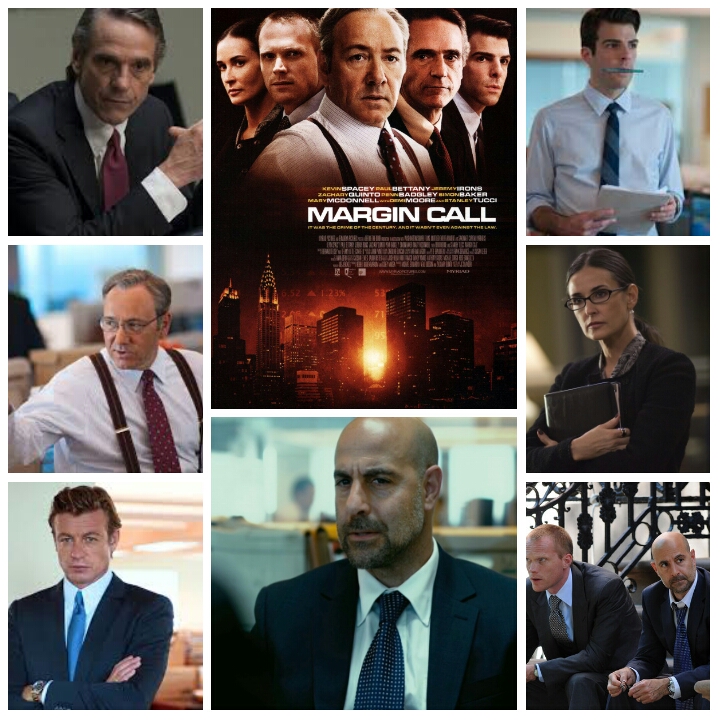
J.C. Chandor’s Margin Call sustains a laser focused, wilfully meticulous look at the days leading up to the 2008 financial crash, showing us life within one wall street office building during a nervy period which now no doubt is remembered as the calm before the storm. Various characters in different positions of the hierarchy anxiously brace themselves as the jobs begin to get cut and the dread looms towards them like the inevitable rising sun at dawn. It’s set all in one afternoon and night, compacting a far reaching event which spanned years into the microcosm of a single 24 hour window, a tactic which sits through the larger world implications and brings it in for something a little more intimate. Zachary Quinto plays a young trader who discovers a rip in the lining of the economic infrastructure, a precursor to the eventual disaste. I’m not being purposefully vague and cryptic with that, I just don’t personally understand all the exact ins and outs of what went wrong back then, and having not the slightest knowledge of wall street jargon, that’s the best I can do. He brings this knowledge to his superiors who react in varying ways. Kevin Spacey is a disillusioned big shot who sees his life going off the rails alongside the country’s market, and mopes in his swanky office. Paul Bettany is a cocky young upstart who uses casual indifference to shade the bruises he’s got from knowing what will happen. Demi Moore is a company head who looks out for herself while others in the company. Jeremy Irons provides scant moments of humour as a bigwig fixer who arrives on a chopper to set things straight, or at least assess the damage. The best work of the film comes from Stanley Tucci (surprise, surprise) as a jilted employee who has been laid off in the confusion, and is seething about it. His melancholic monologue about what it takes to propel America’s industry and economy forward resonates with a humanity that cuts deep. The film ticks along with a pace that’s both measured and swift, with little time for introspect, yet showing it to us anyway amid the chaos. Watch for appearances from Penn Badgley, Al Sapienza, Simon Baker and Mary McDonnell as well. Chandor let’s the proceedings thrum with an inevitability that hangs in the air as the promise of the impending crisis, a feeling that serves to impart not why it happened, not how it happened, but the fact that it did happen, to each and every individual person who was affected, as opposed to the country as a whole.
 

MONEY MONSTER: A Review by Joel Copling

Rating in Stars: *** (out of ****)
Cast: George Clooney, Julia Roberts, Jack O’Connell, Caitriona Balfe, Giancarlo Esposito
Director: Jodie Foster
MPAA Rating: R (for language throughout, some sexuality and brief violence)
Running Time: 1:38
Release Date: 05/13/16

Money Monster wishes to place the financial crisis of 2008 into the spotlight and subsequent microscope of a hostage situation with an audience. That decision is a surprisingly effective one on the parts of screenwriters Jamie Linden, Alan DiFiore, and Jim Kouf because the apparent madman with a gun is actually a person with whom the real audience (the ones watching the film in a theater) and the fake one (those witnessing it as it unfolds over an eventful afternoon onscreen) can empathize. The victims of the situation, then, are the sleazy, conniving people against whom, it is easy to believe, those audiences would definitely side. The least effective stretch of the film, then, is during and after the process by which those roles are reversed.

But I’m getting ahead of myself. The wielder of the gun (and a bomb) is Kyle Budwell (Jack O’Connell, whose solid performance outshines the two movie stars with whom he shares the screen), who forcibly overtakes “Money Monster,” a financial news program hosted by the arrogant and charismatic Lee Gates (George Clooney), in order to find out why I.B.I.S., a program that handles the people’s finances, lost more than three-quarters of a billion dollars overnight. He himself had a pretty penny invested in the company on Lee’s own, problematic advice on-air a couple of weeks previously, so as Kyle demands that Lee, the various crew onset and in the control room, and show-runner Patty Fenn (Julia Roberts) remain where they are and live on the air, investigations are launched into the “glitch” that lost I.B.I.S. CEO Walt Camby (Dominic West) a considerable fortune.

There are three modes in which the film operates here. The first is as a comedy, though not as the satire it has been labeled in the days leading to its release. There are satirical elements, such as the argument regarding censorship when Kyle begins to utter a string of four-letter profanities and variations on them in front of and at the cameras. It’s more of a comedy of human nature featuring wealthy, sarcastic people in their element, stubborn, wealthier people refusing to bend, and the employees of the news station, one of whom, it is heavily implied, might be standing at attention for the entire duration of the events. It’s funny stuff until it isn’t, and that kind of control of tone is crucial.

The second mode is the foremost one, and that is as an indictment of corporate culture without much in the way of exposition, although there is a fair amount of explanation regarding the “glitch,” which of course turns out to be something else entirely of the corrupt variety. The CCO for I.B.I.S., Diane Lester (Caitriona Balfe, who wins every award for Awesomest Name), is at first merely a parrot for the company lines involving a “mistake” and a weak explanation without any answers or solutions. There is a bit of information involving Kyle’s character kept close to the chest that kind of comes off as cheating, and the ultimate motivation of the sort-of-antagonist seems fairly rote in the big picture.

But when Money Monster works, it works very well, and that is largely due to the third mode in which the screenwriters and director Jodie Foster (who, along with cinematographer Matthew Libatique, takes great advantage of making a moderately sized studio feel cinematic) are working: that of a thriller from the 1990s that happens to be set in today’s world. The police are brought in, standoffs ensue, and the whole thing reaches quite the level of genuine tension (A suspension of disbelief is also required, although that should be assumed immediately). The point might be unsubtle, but that means the point is clear: If there are greater fools, there have to be lesser ones, too. It only makes sense, right?

B Movie Glory with Nate: The Box

image

The Box is a moody little crime drama thriller starring James Russo, whose appropriately brooding persona lends itself to grim neo noir films such as these. He’s an actor who has almost entirely worked in B movies for a long time, and while you have to watch out for most as they are usually geniune piles of dog shit, this one is a jewel amongst the rubbish. Russo plays Frank Miles here, an ex con trying to go straight, sticking with the dead end job his P.O. has given him to stay out of trouble. Soon he meets beautiful waitress Dora (Theresa Russell) who falls in love with. The two of them try to start a new life together, but as we all know sometimes it’s very hard to run from your past, and soon enough trouble comes looking for them. Frank tries to get some money owing to him from his sleazebag of an ex-associate Michael Dickerson (a detestable Jon Polito) and things go wrong. Violence ensues, and Frank finds himself in the possession of a mysterious box which he can’t open and hasn’t a clue about. Dora has a scumbag boyfriend in club owner Jake Ragna (a terrifying Steve Railsbac) who I’d dangerous, volatile and obsessive about her. Soon, an evil corrupt Police Detective named Stafford (Michael Rooker) makes their lives hell as he searches for the box. Frank and Dora take refuge at the home of Stan (Brad Dourif, excellent), Frank’s former cell mate,  friend who is now a weed dealer. Even this may not be enough to keep them safe, as the long arm of the crooked law probes, and Stafford gets closer and closer. It’s a depressing situation forged by bad decision and the perhaps inescapable knack for trouble that some people tend to have, whether it’s coincidence or a measurable character flaw is eternally up for debate. The pair try so hard to fix their lives and still seem to be headed for a tragic dead end. Russo has sadness in his eyes in every role, as well as a boiling anger to match it, he fills out his protagonist very well. Rooker and Railsback make scary work of the two villains, especially Rooker who uses the kind of blatant brutality and abuse of power that are essential ingrediants in very dangerous men. Dourif is Dourif, which is never not mesmerizing, and Russell does the wounded angel thing down to the bone. A sad story, with a dream cast (for me, at least), a downbeat reflection on lives gone down the wrong path, a diamond in the rough noir thriller of the best kind.

PTS Presents Artisan Workbench with RYAN WARREN SMITH

RWS POWERCAST

unnamedPodcasting Them Softly is extremely excited to present our latest Artisan’s Workbench chat with special guest Ryan Warren Smith, who served as production designer on this spring’s indie sensation Green Room! Our love for Green Room is seemingly endless, so it was a special honor to speak with the guy responsible for making that film look and feel so scuzzy and nasty! Some of Ryan‘s other fantastic credits as production designer include the brilliant and heartfelt indie Wendy and Lucy with Michelle Williams, The Motel Life from the Polsky brothers, and the Sundance film For Ellen, wich was directed by So Yong Kim, and stars Paul Dano. Ryan got his start in the industry as an on-set dresser on films like Sean Penn’s Into the Wild, which we’re both massive admirers of, Gus Van Sant’s Restless, the intense drama The Burning Plain, and he served as property master on the phenomenal if underseen western Meek’s Cutoff. We also get a chance to hear about his upcoming projects which sound very exciting. We hope you enjoy this terrific conversation!

CAPTAIN AMERICA: CIVIL WAR – A REVIEW BY J.D. LAFRANCE

la-et-hc-first-captain-america-civil-war-trailer-black-panther-iron-man-20151124

It has been said that 2016 marks the deconstruction phase of the comic book superhero genre what with Deadpool turning it on its ear with a healthy dose of postmodern irreverence. It also saw two movies that addressed the very heroic nature of these larger than life characters, first with Batman v Superman: Dawn of Justice and then Captain America: Civil War. Both movies featured iconic superheroes in conflict with each other while also addressing the effect they have on the world. How does the general populace react to them and, more importantly, how do those in positions of authority react to them? The latter in both movies – not so well. Should superheroes be governed and if so by whom? Should they be held accountable for the massive destruction incurred from their world-saving battles? These two movies address these questions in very different yet intriguing ways.

Civil War
takes the basic story from the 2006-2007 Marvel Comics limited series of the same name, written by Mark Millar and penciled by Steve McNiven, and uses it as a springboard to address narrative threads introduced in Captain America: The Winter Soldier (2014) and Avengers: Age of Ultron (2015). Civil War intertwines two primary storylines: Steve Rogers a.k.a. Captain America (Chris Evans) and Falcon (Anthony Mackie) track down elusive assassin the Winter Soldier (Sebastian Stan), and the continuing animosity between Cap and Tony Stark a.k.a. Iron Man (Robert Downey Jr.), which finally reaches a critical mass when they disagree over the creation of an international governing body to watch over and control the Avengers, splintering the team into two camps – those on Cap’s side and those on Iron Man’s. This culminates in an epic battle between both sides.

Civil War
starts off with a bang as Cap and his new Avengers team comprised of Scarlet Witch (Elizabeth Olsen), Falcon and Black Widow (Scarlett Johansson) as they track down and stop Brock Rumlow (Frank Grillo), the Hydra agent who has now become supervillain Crossbones, from stealing a biological weapon in Lagos. For Rumlow, it’s a personal vendetta as he blames Cap for almost dying in the collapse of the S.H.I.E.L.D. headquarters in The Winter Soldier. This is a recurring theme throughout the movie: deeply personal motivations for why characters do what they do.

Meanwhile, the individual human cost of battles like the one in Sokovia at that climax of Age of Ultron weighs heavily on Tony as do the people that died during the Crossbones mission on Cap. To make matters worse, United States Secretary of State Thaddeus Ross (William Hurt) meets with the Avengers to inform them that the United Nations is preparing legislation that will sanction their future actions. He considers them all dangerous and is concerned that they continue to operate unchecked, showing them a greatest hits montage of carnage that ensued during their battles. He gives them a choice: come on board with this legislation or retire.

Tony feels guilt over the ramifications of his actions – what with helping to create Ultron and all – and that of the Avengers and backs the sanctions along with Vision (Paul Bettany), War Machine (Don Cheadle), and Black Widow. Cap argues that signing this legislation will take away their right to choose. What if the U.N. sends them somewhere they don’t want to go or shouldn’t go? Where does it all end? Things for Cap only get more complicated when the Winter Soldier, who is actually Cap’s childhood friend Bucky now a brainwashed killer, is responsible for the death of T’Challa a.k.a. Black Panther’s (Chadwick Boseman) father. Meanwhile, the mysterious Helmut Zemo (Daniel Bruhl) is quietly plotting something big and it involves the Winter Soldier.

While this movie seems plot-heavy, it moves along briskly, punctuated with kinetic action sequences, like an exciting chase through the streets of Bucharest as Cap tries to capture Bucky alive while preventing Black Panther from killing him. It starts off as a dynamic foot race and then ramps up to vehicles that rivals the chase early on in The Winter Soldier. Much like with that movie, directors Anthony and Joe Russo have a real knack for orchestrating kinetic action sequences that create an almost palpable sense of danger for our heroes because so much is at stake. It doesn’t hurt that they wisely enlisted the help of Chad Stahelski and David Leitch, directors of the dynamic action revenge thriller John Wick (2014), to choreograph some of this mayhem.

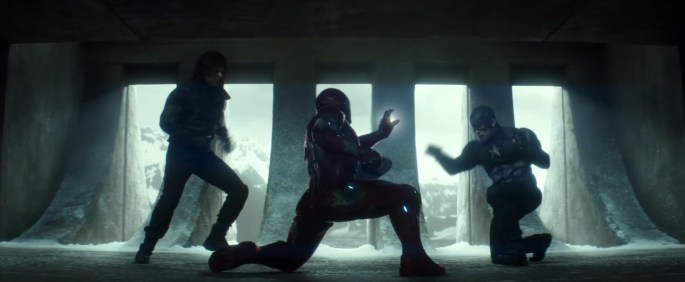
This culminates in the epic airport battle teased in all the movie’s trailers and ads. It is everything they promised and more. This is easily the best action sequence in any of the Marvel movies since The Avengers (2012). It’s epic, visceral and loaded with several mini-battles as hero fights hero. We also get to see the new Spider-Man (Tom Holland) and he’s everything you’d want him to be – full of funny quips, nerdy and more than capable of holding his own with the likes of Cap and co. only he lacks the battle-hardened experience. This is easily the best cinematic incarnation of the webslinger since Spider-Man 2 (2004). On Cap’s side, Ant-Man (Paul Rudd) pops up to lending a helping hand and offer a slew of his own funny one-liners and a cool surprise in the heat of the battle.

There are deeply personal stakes for several of the characters in Civil War, from Black Panther’s desire to get revenge for the death of his father, to Tony’s guilt over the death of a young man in Sokovia, to Cap and his friendship with Bucky. All of these things are powerful motivators for what they do in the movie and supersede accords and sanctions. Initially, there was some concern that the inclusion of all these characters would create an overly stuffed movie but on the contrary the Russo brothers found a way organically integrate newcomers like Black Panther and Spider-Man and use their appearances as a springboard for their upcoming standalone movies.

In a nice contrast to past Marvel villains, Zemo is a more cunning, understated menace whose endgame isn’t readily apparent and only reveals itself towards the end at a crucial moment just before the exciting climax where Cap and Tony have it out one last time. The filmmakers mess around with the formula on this one. Whereas Age of Ultron featured yet another super baddie bent on world domination, Civil War features a villain that wants something that isn’t on an epic scale. He wants revenge and has a very definite agenda that only gradually reveals itself over the course of the movie in a wonderfully understated way that makes quite a gut-punching impact when it is finally unveiled to our heroes.

DC – this is how you do a battle with superheroes. Once again, Civil War demonstrates how far behind DC is from Marvel in terms of superhero movies on every level. Unlike Batman v Superman and even their own Age of Ultron, the filmmakers of Civil War do a great job of juggling this large cast of characters, giving everyone their moment to say something cool/funny and do something cool or significant without forgetting that the movie is ultimately about Cap and the arc of his character so that he goes from being a patriot in The First Avenger (2011) to an insurgent in Civil War. It’s his story and it’s a personal one. It is really a marvel of narrative juggling that succeeds where even the overstuffed Age of Ultron came precariously close to collapsing under its own ambitions. It is quite an accomplishment and screenwriters Christopher Markus and Stephen McFeely should be commended on a good job.

So many movie trilogies tend to end a weak third installment that tries to tie up all the loose narrative threads created in the previous incarnations while going bigger in scale while losing sight of what made them so good in the first place (i.e. Return of the Jedi, Spider-Man 3 and The Dark Knight Rises). At the heart of Civil War is Cap’s friendship with Bucky. It’s a thread that has run through all of the Captain America movies, culminating with this one where it is put to the ultimate test. This relationship is also the most satisfying aspect of this excellent movie because it is also the most compelling thing about it. Civil War manages to be simultaneously epic in scale in terms of how what happens affects so many characters and intimate in the sense of Cap’s journey over these movies. The filmmakers never let us forget that at its heart, the movie is about Cap and Bucky’s lifelong friendship. That gives us something to care about amidst all the carnage.
LILI FINI ZANUCK’S RUSH — A REVIEW BY NICK CLEMENT

1

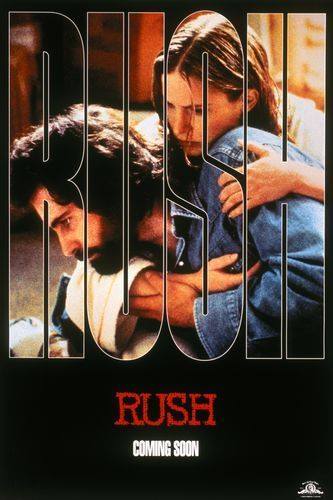
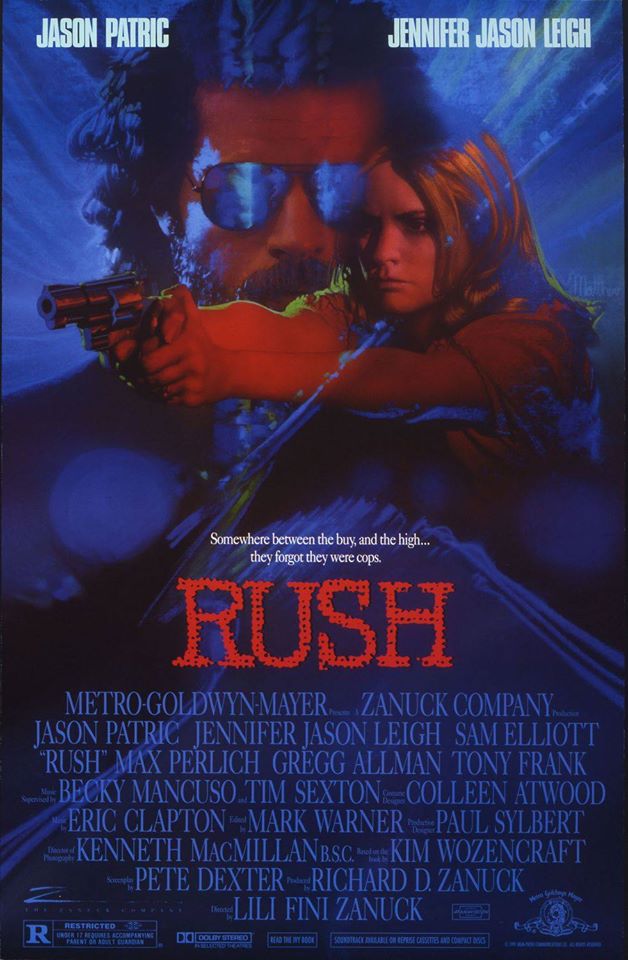
Wow. I had totally forgotten about the blistering and intense and raw 1991 undercover cop film Rush. It’s positively insane to think that this was the debut film for a filmmaker (Lili Fini Zanuck, wife of famed movie producer Richard Zanuck) and the ONLY(!) film that she ever made. It had to have been a personal choice not to direct again, because Zanuck displayed so much inherent greatness as a filmmaker that it boggles the mind to think that she only felt the need to direct one feature film. After this film the scripts had to have been piling in. From the opening stedicam shot all the way to the amazingly nihilistic ending, this is one of the best cop films I’ve ever seen, sitting right next to The French Connection and Narc as one of my absolute favorite genre entries.

2

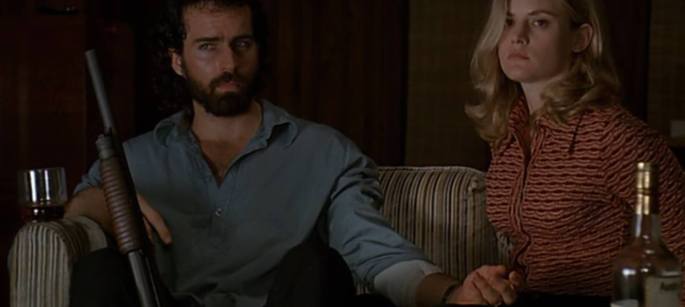
Based on the novel by Kim Wozencraft and adapted for the screen by Pete Dexter (Mulholland Falls), this cut-from-reality suspenser stars an outstanding Jason Patric as an ultra-committed, morally ambiguous, and likely in-too-deep narc who recruits a young rookie (Jennifer Jason Leigh, absolutely fantastic in this film, conveying both naïveté and grit, sometimes in the same scene) straight out of the academy to assist him on long-lead undercover work. Their goal: Bring down a local Texas drug lord (musician Gregg Allman, exuding sleazy menace in a nearly wordless performance) by scooping up various scores from the underlings in the area, with the aim of mounting enough evidence to topple the local empire. The time period is the early 70s, and the two officers become romantically involved and hooked on the drugs they’re trying to take off the streets, and the film slowly becomes a story of addiction and withdrawal while still being a riveting policier with terrific twists and turns embedded into the believable and organic plot.

3

With a sensational score by Eric Clapton and featuring a slew of fantastic classic rock hits on the soundtrack, Rush possesses a druggy aroma and atmosphere at all times, especially through the use of the great music and the vivid, heated imagery from cinematographer Kenneth MacMillan (Henry V, Of Mice and Men), which makes smart use of space within the frame, and which relies on some extremely effective close-ups and camera placement for maximum dramatic effect. Sam Elliot, Max Perlich, and William Sadler all show up for memorable supporting turns, and the cast is generally filled with realistic looking druggies and sleaze-balls who all seem way too comfortable portraying these nasty people. The final, overwhelmingly awesome and powerful moments of this hard-core movie are the stuff that quickens the pulse and raises your internal core temperature.

4

The film was a flop in theaters, grossing less than $10 million domestically, despite solid critical notices from Roger Ebert, Janet Maslin, Owen Gleiberman, Variety, and The Washington Post, to name just a few. It’s yet another film that was overshadowed by more “important” films at the time, and now that some years have elapsed and we’ve been given so few truly great cop films, it’s fascinating to look back at something as harrowing and disturbing as Rush, where a filmmaker took bold chances and told a gripping story about two fractured people who have an intensity that never lets up for one moment during the two hour runtime. And after watching Patric give a devastating performance in this film, his casting in Joe Carnahan’s Narc feels all the more inspired and meaningful. Kino Lorber thankfully released this neglected piece of cinema on the Blu-ray format last year.

5

Moscow Zero: A Review by Nate Hill

image

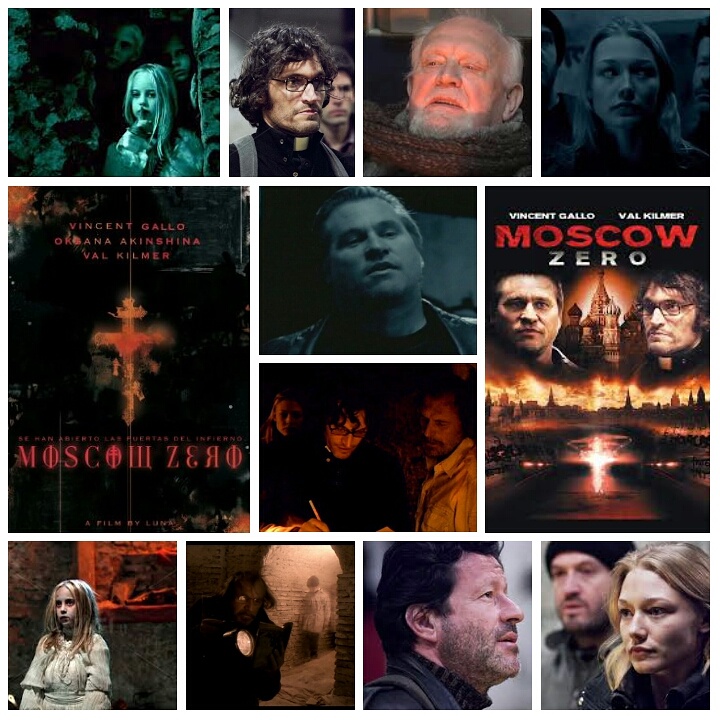
Moscow Zero is a chilly little subterranean ghost story, and a favourite for me. It god critically shredded by the few people who did see it, and quickly forgotten. I think this may be because of odd marketing,and the cultural rifts in different areas of both the world, and cinema. It was marketed in North America as a supernatural shocker starring Val Kilmer, which was a cheap shot to fans and in fact false advertising. Kilmer is in it, for maybe ten minutes, and is very good, but the story isn’t his. It’s also supernatural, but in a far more subtle, ambiguous and inaccessible way that the ADHD-ridden audiences over here just aren’t used to. In short, it’s very European, and they just seem to have a better handle on the intuition it takes to make an atmospheric chiller than anyone else, also seeming to be more connected with ghost lore and the spirit realm. The story concerns a priest named Father Owen (hollywood’s resident alien Vincent Gallo, playing it dead straight here). He has traveled to Moscow I hopes of finding his friend Professor Sergey (Rade Serbedzija), who has descended into ancient catacombs and endless tunnels below the surface of the city in hopes of finding a lost artifact hidden during wartime. He joins up with a group of guides and Moscow natives including the beautiful Lubya  (Oksana Akinshina) and a tracker named Yuri (Joaquim De Almeida) to traverse the underside of the city and find his friend. There are long, eerie scenes of Sergey wandering around the dimly lit labyrinth, pursuing his scholarly goal and talking to himself as strange shadows and far away whispers follow him around, gradually letting the viewer know that he’s not alone. Owen and his team rendezvous with Tolstoy (Joss Ackland) the elderly leader of a tribe of tunnel dwellers who won’t go below a certain level of the catacombs, who provides a map. Then they go deeper. Kilmer plays Andrey, a Russian dude who runs a gang that are in control of opening and closing a deep fissure gate that is said to lead to a hell like place. He’s relaxed, in both demeanor and the Russian accent, but he’s clearly having fun in one of his more character type roles. The catacombs have a haunted feel to them, and indeed there are ghosts, but not presented in the way you might think. The way the human characters see them is quite different from how they see themselves, and how the audience sees them, which is a nice touch. The story keeps itself mysterious, right up until it’s puzzling, creepy conclusion, buy I prefer that open ended, almost experimental style over desperate attempts to scare us. It’s atmospheric, strange, unique, thick with ideas and altogether a bit of brilliance. Definitely an aquire taste, though.