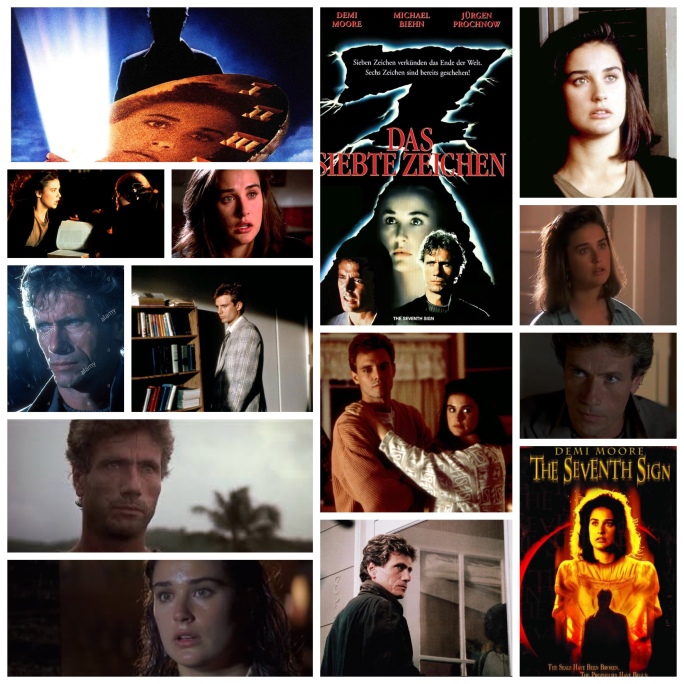
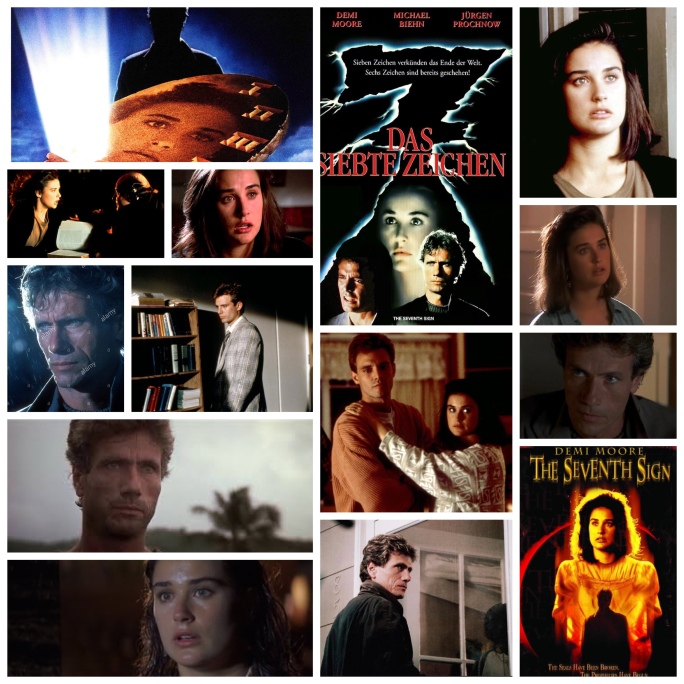
There are religious films that are faith based preachy garbage (anything Kirk Cameron makes) and there are religious films that are fiction based and just happen to be structured around theology like that (The Omen, End Of Days). I can’t stand the former, but the latter has made for an interesting sub-genre in Hollywood, mostly horror centric but sometimes otherwise. Carl Schultz’s The Seventh Sign is one that carefully and delicately walks the line between these two types, but because it’s so atmospheric, well made and acted it works on any level including the religious themes.
Demi Moore and Michael Biehn play a young couple who rent their laneway house out to a mysterious stranger (Jurgen Prochnow) who isn’t who or what he says he is. Moore is expecting her first child, but there seems to be complications with the pregnancy and Prochnow shows a suspicious amount of interest in the child. Coincidentally, scary apocalyptic signs start showing up around the world like storms, dead fish in the sea and a blood moon, heralding some sort of widespread cataclysm. There’s also a sinister Vatican priest (Peter Friedman) wandering around getting in people’s business too.
The plot itself is essentially just your standard end of days gobbledygook, but that’s not what matters anyways. Moore is fantastic here, soulfully embodying a mother’s love coupled with mounting depression and making you feel for her character strongly. Biehn shows the same fierce charisma he did in The Terminator and this time brings on even more emotion to his role, particularly in the final minutes of the film that could be his best work. Prochnow has had a long and consistent career playing all kinds of nasty terrorists, crime bosses, nazis, poachers, pimps and any other kind of asshole you could imagine. It’s really rare to see him in a non villain role let alone one where he gets to show such grace and subtlety, he nails it and I won’t say much about the character except that it’s a tricky balancing act of shadowy portent and compassion that he deals with wonderfully. Watch for a quick, lively cameo from John Heard as well.
The atmosphere here is so well done that you often forget about story and get lost in the dreamy scenes that flow into each other in an almost subconscious way. The way the ambience lingers in the filmmaking reminds me, of all things, of A Nightmare On Elm Street. Odd comparison and this is by no means a horror movie but the two share the same sort of elongated, off kilter aesthetic that seems removed from reality, helped a lot here by journeyman composer Jack Nitzsche and his score. The third act brings the narrative to an affecting close and lets the three leads land their arcs on a quiet, sorrowful note, it’s the key sequence in making this a great film.
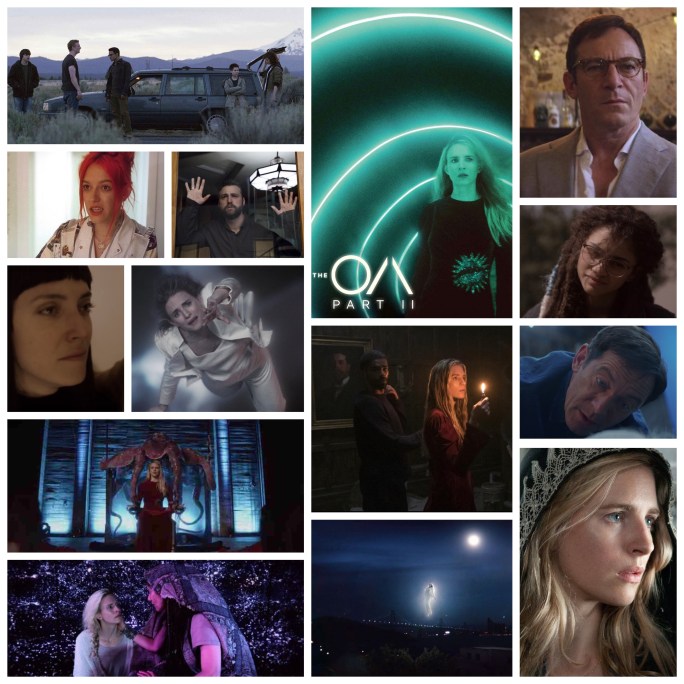
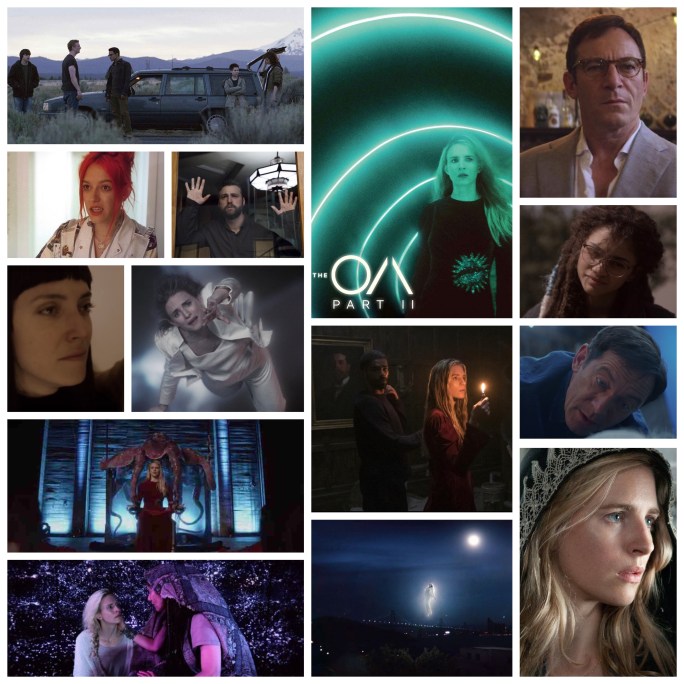
When season one of Netflix’s The OA aired back in 2016, it went by largely unnoticed. This was due to the network doing little to no marketing, fanfare or ads and it kind of just attracted its own little fan base without creating the whirlwind that say, Stranger Things has. It’s sort of a shame and sort of not, because it’s by far the best original content that Netflix has produced and one of the most intricate, challenging and cosmically investigative pieces of storytelling out there (with an emphasis on ‘out there’). Season 2 has recently aired, again with little hubbub surrounding it, and the leaps, jumps and creative epiphanies that series creators Brit Marling and Zal Batmanglij have made in the three years since are both staggering and revolutionary in the SciFi/fantasy genre.
Anyone who isn’t caught up should heed a spoiler warning regarding Season 1 right about here and stop reading as I’d like to discuss certain story beats. When we left our characters after the ambulance chasing cliffhanger of S1, we weren’t sure what became of The OA/Prairie Johnson when the school shooter got her and she seemingly died. S2 opens with a slow burn episode as we follow a gruff ex FBI private detective (Kingsley Ben-Adir, phenomenal) as he searches for a missing girl in a version of San Francisco that’s just a bit removed from the reality we know. This is the reality that Prairie has travelled to after dying in the dimension she came from, for the Movements related to near death experiences explored in the first season are a gateway to endless parallel dimensions and subsequent travel between them. Confused? That’s nothing, I’ve barely described the season opener so far. This new dimension is a fascinating one, full of futuristic tech, underground ‘games’ ruled over by an unseen force and even more intangible metaphysics that we got the first time around. Prairie is stuck in this new plane with Dr. Hunter Percy, the unorthodox rogue scientist played with startling compassion and chilling resolve by the great Jason Isaacs, who is just wonderful here in a role that lets him flex his talents. Prairie leaves her friends in the previous dimension behind to wonder where she went, including Steve (Patrick Gibson), Buck (Ian Alexander), Betty (Phyllis Smith), French (Brandon Perea) and Jesse (Brendan Meyer). The new reality thrusts her forth into a frightening situation with her old friends Will (Scott Brown), Renata (Paz Vega), Rachel (Sharon Van Etten) and Homer (Emory Cohen) the love of her life. It’s a ton of characters to keep track of, each playing at least several versions of themselves and there’s even more new additions that show up for this part of the story including The Florida Project’s Bria Vinaite and an appearance from Zendaya as a mysterious girl with ties to the forces around all of them.
Marling and Batmanglij are light years beyond most artists writing original content right now, their level of storytelling and drive is sort of unparalleled in the sense that they reach out to ask questions that are difficult in the context and boundaries of television, or any filmed medium. The first season hinted at life beyond death and took its time getting to the initial breach between worlds that might open up new possibilities. This season dives headlong into the implications and ripple effect of what came before, has no patience for laggers and hurtles along at a sonic pace, blasting us with ideas, emotion, tricky concepts, psychological labyrinths, new wave cyber software, bizarre biological phenomena, a rose stained glass window with untold power and a telepathic Octopus named Old Night. This is either a show that is ‘too weird’ for most who aren’t open to unconventional thinking or have no capacity for abstraction or it will be the favourite thing out there for those of us that eat this stuff up. Prairie says of her travels and revelations that she’s ‘looking for a border’ that’s hard to define, and the same can be said about the show itself. This isn’t something that is just SciFi or just fantasy or even both, it’s an organic piece that feels like elemental forces at work rather than constructed artifice spin for entertainment.
With this story, all the creative forces work together to open the doors of perception and stretch the nature of what is possible in storytelling. Brilliant characters abound who we care about, are funny and seem like genuine, fleshed out human beings, a specifically distilled visual aesthetic that Sci Fi lovers will go gaga for, fantastic original music by multiple artists including Danny Bensi, Saunder Juuriens and Van Etten herself, haunting complexity in narrative arcs and an overall desire to strive for something new, something we haven’t seen before and that may expand our perspective on the world around us, and those beyond. I’m hooked on this and can’t wait until we get a Part III.
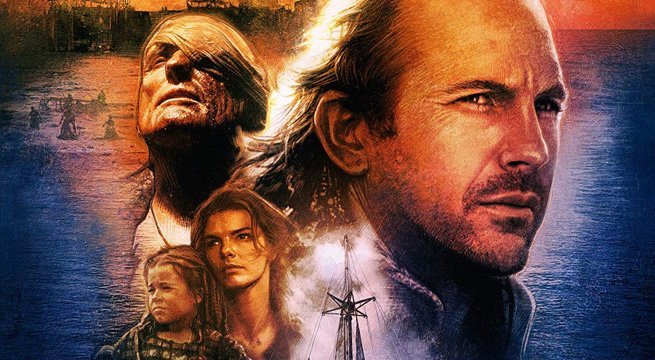
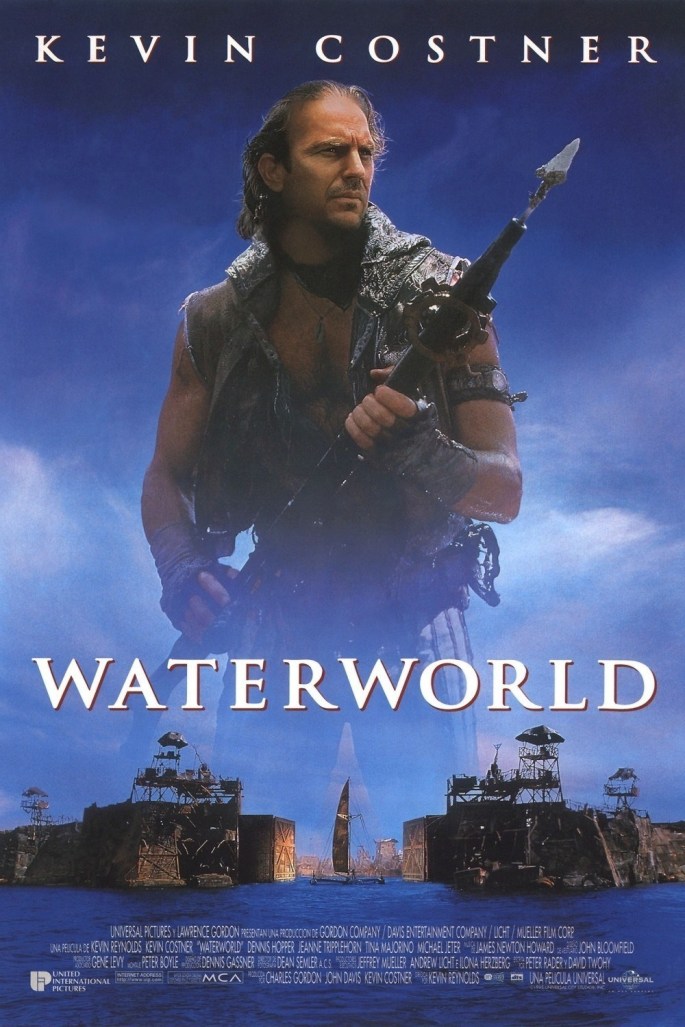
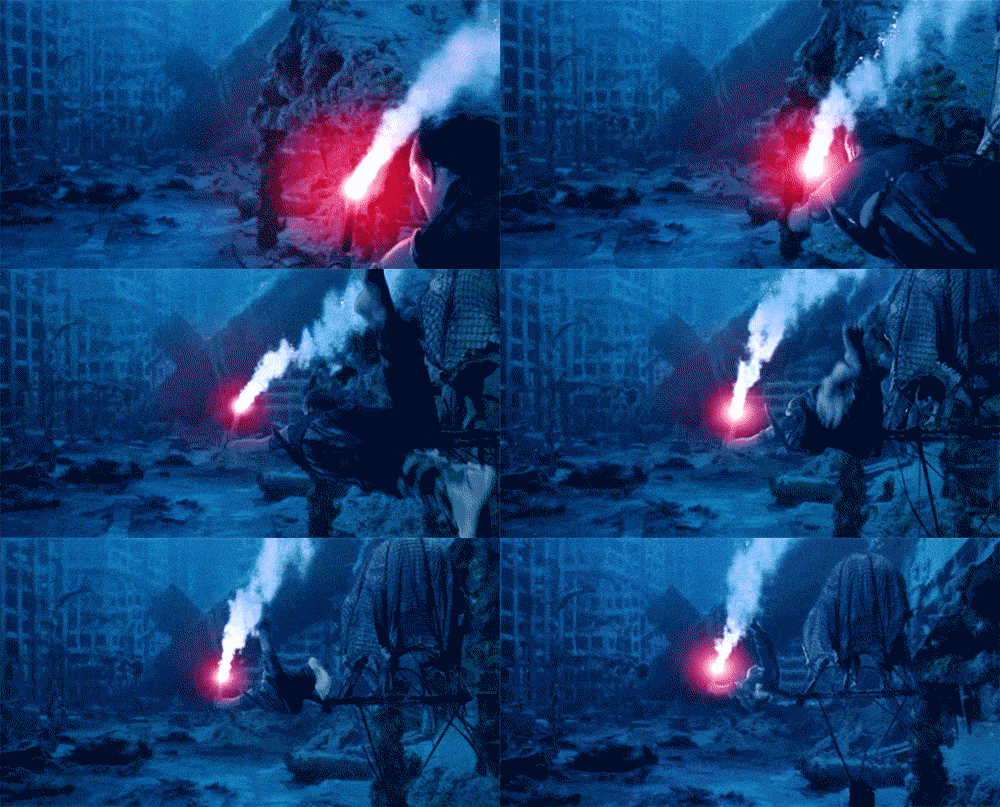
The future. The polar ice caps have melted covering the earth with water. The Universal logo spins as we watch the world change as the camera descends, through the atmosphere, and eventually we find the ‘new world’ where those who have survived have adapted. We are now in Waterworld.
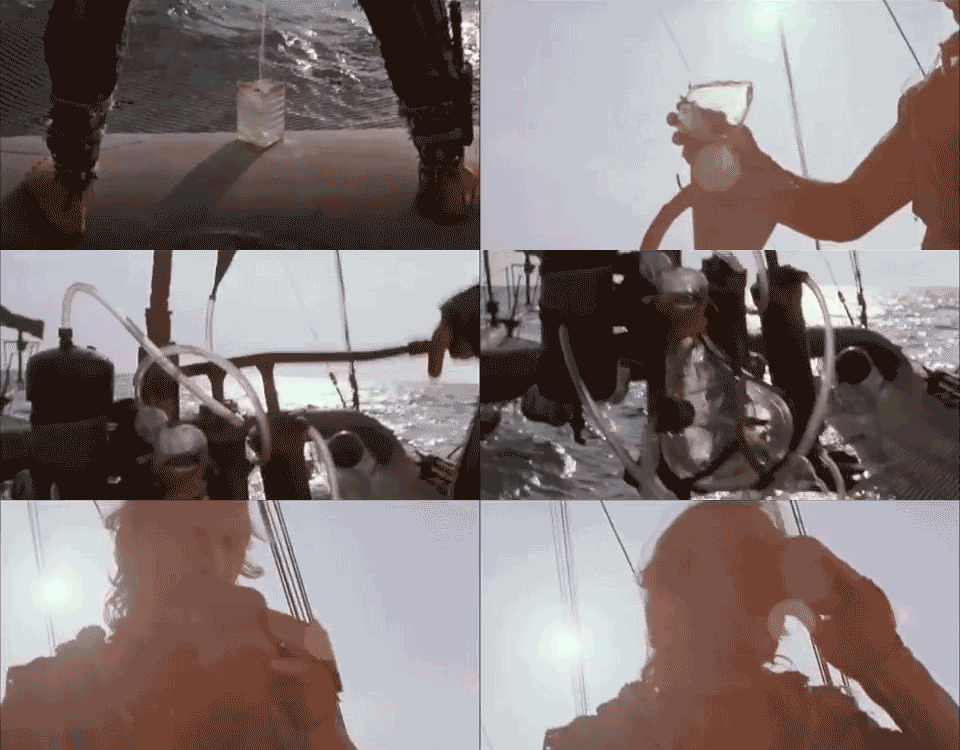
Then Costner takes a whiz and, after a pass through his handy filtration system, drinks it. Regardless, it was at this point of the movie my Mother checked out. See, in Australia, the term getting on the piss is connected with getting together with mates and drinking an inordinate amounts of cold beers. But it is Waterworld that took the phrase to a whole new level.
I was just about done with my high school years – and whilst on a family vacation – when I first saw Waterworld. And I came to it, as I often did in those days, as an innocent, in a time before the ice caps melted and a media torrent covered the globe. I had no concept of the vortex of negative press that Waterworld carried with it like a cargo hold full of dirt ready for the traders. It was, at that time, the largest theatre I’d been to. This rendered Kevin Reynolds’ epic feat of film-making monolithic in scale. Of course Waterworld really doesn’t need the big screen for you to witness just how incredible the production is. It’s, aside from a few computerized flourishes, real for real. The action, the set pieces – CGI wasn’t quite there yet – so this monumentally impressive picture carries the imposing span of the ocean, which is its stage, and the blinding brilliance of sun, pouring its radiance over this bold new vision of the post-apocalyptic future.
I’m sure by this point dear reader, that there are few that are not acquainted with this out and out classic. But for those for whom the picture is a stranger like Costner’s Mariner, sailing out of the horizon, then you have picked the right time to stop and check it out – the common courtesy extended when two drifters meet. From Arrow, the home of splendid re-release packages of some of the more famous/infamous cult classics of the age, comes the definitive, limited edition Blu-ray extravaganza that is the tale of the search for Dryland. Here at Water’s End you’ll find the three restored versions of the film, a loaded treasure trove of extras; the crown jewel being Maelstrom: The Odyssey of Waterworld, an enthralling documentary feature chronicling the birth, rise, fall and ultimately redemption of one of the truly awesome adventure movies in cinema history. It may be fortuitous that this release surfaces in the wake of another sea-going fantasy – the billion dollar triumph that is Aquaman. And while the DCEU’s latest opus is no Mad Max on water, they share the same enduring quality films of this type have in common. The world building is awe-inspiring, the joy experienced while watching them infectious and they both leave the stage set for voyages of astonishing proportions to be explored.
I love this movie. Think of me how you will. But Waterworld is outstanding in my book and I am thrilled, not only that this release exists, but that its supplementary material finally sets the record straight – as well as allowing fans and first-timers alike to really marvel at what it took to cover the earth with water and allow we, the movie-loving audience, to take a ride that you’ll never see made this way again. Such a magnificent event as this calls for an equally impressive effort on my behalf.
That being the case I have a trio of insightful interviews with my guests David J. Moore (co-author of the supplementary booklet), Daniel Griffith(the filmmaker behind the documentary I’ve waited for, Maelstrom: The Odyssey of Waterworld) and, get ready for it, the man without whom the film would not exist, the film’s creator and initial screenwriter, Peter Rader. So stretch out in your deck hammock with an extra-large cup of hydro and stare at the majesty of the horizon, where the land meets the sea and watch in wonder as Waterworld engulfs you in a wave of splendor; this Everest’s peak of action/adventure cinema you can’t help but sink into.
DAVID J. MOORE
David J. Moore has written articles for Fangoria, Filmfax, Ultra Violent, VideoScope, Lunchmeat, Flickering Myth, and L’Ecran Fantastique. Interviews he’s conducted can be found on OutlawVern.com. He has worked as a freelance film journalist, visiting movie sets around the world. His next book is called The Good, the Tough, and the Deadly: Action Stars and Their Movies, and it will be published in 2015. He lives in Rancho Cucamonga, California.
DANIEL GRIFFITH
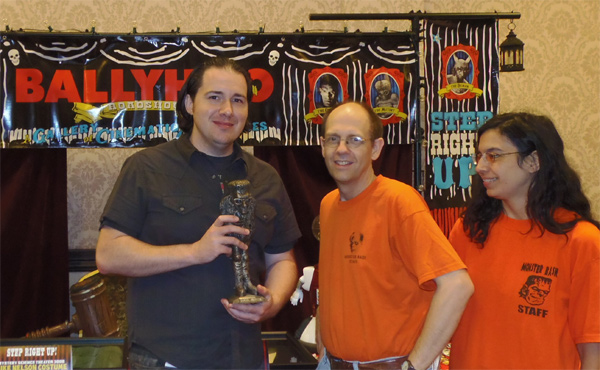
Daniel Griffith has produced and directed more than 35 bonus feature productions, as well as five feature-length documentaries, including “LET THERE BE LIGHT: THE ODYSSEY OF DARK STAR” and “THE FLESH AND THE FURY: X-POSING TWINS OF EVIL”. He is also the documentarian for Shout! Factory’s “MYSTERY SCIENCE THEATER 3000” DVD boxed sets. Recently, he produced and directed the one hour documentary on the legacy of Rod Serling’s celebrated TV series, “THE TWILIGHT ZONE”, for CBS Films. Griffith won the 2012 Rondo Award for best DVD Bonus Feature for his biography on Universal B-movie actor, Rondo Hatton. He is the owner/founder of Ballyhoo Motion Pictures.
PETER RADER
Peter Rader is a director and writer, known for Waterworld (1995), The Last Legion (2007) and Grandmother’s House (1988).
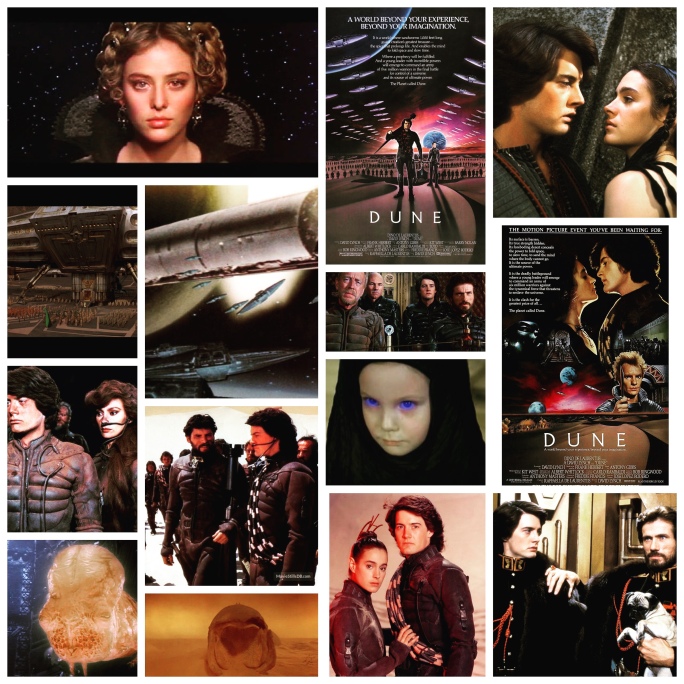
David Lynch’s Dune is a great film despite what critics, moviegoers, the general consensus and Lynch himself would have you believe. It’s obvious that heavy editing turned it into something of a pacing quagmire, scenes are truncated, oddly conceived voiceovers are added, and yadda yadda. Doesn’t matter. This is still an exquisitely crafted, beautifully atmospheric space opera that takes full advantage of production design, casting, special effects and music, I loved every damn minute of it. I’ve recently been reading Lynch’s semi autobiography and it seems clear that that money shark producer Dino De Laurentiis had final cut and just couldn’t reconcile letting the runtime go past two and a quarter hours. Shame, as there was no doubt way more that we could have seen, but what’s left is still magnificent. I haven’t read the books so I can’t speak for any lapses as far as that goes, but what we have here is a sweeping science fiction fantasy saga about warring royal families, shifting alliances and metaphysical forces all revolving around the desert planet Arrakis, where an invaluable spice is mined and fought over by all. Duke Leto Atreides (Jurgen Prochnow), his wife Lady Jessica (Francesca Annis) and their son Paul (Kyle Maclachlan) travel far across the universe from their home world of Caladan to oversee Spice harvesting and production. Buoyant, herpes afflicted fatso Baron Harkonnen (the inimitable Kenneth McMillan takes scenery chewing to a whole new level) seeks to usurp and steal the operation for his house. So begins a series of wars, betrayals and no end of staggeringly staged set pieces and baroque, abstractly conceived production design that Lynch & Co. slaved over for years to bring us. The sand worms are a visual marvel, as are the gold and silver spaceships, the interiors of which feel both lushly industrial and gleamingly regal. Maclachlan and Lynch had their first team up here, the first of many, and the young actor is a magnetic lead, handling the arc well from a naive prince to a desert outlaw who wins over the leader (Everett McGill) of the indigenous tribe of Arrakis and falls in love with their princess (Sean Young, somehow *even* sexier here than she was in Blade Runner). Lynch has amassed an unbelievable cast here, an epic laundry list of names including Patrick Stewart, Max Von Sydow, Jose Ferrer, Linda Hunt, Virginia Madsen, Alicia Witt, Dean Stockwell, Brad Dourif, Freddie Jones, Jack Nance and more, all excellent. Sting is in it too and I have to say that his is the only performance that’s campy in a bad way instead of good, you should see him leering at the camera like he’s in a second grade play. One of the film’s greatest strengths is the original score by Toto, who dial back their trademark rock vibe and produce something atmospheric and elemental in the vein of Vangelis or Tangerine Dream. Their main theme is distinct and oddly melancholic and the rest is synthesis style, beautiful work. I don’t know what to tell you about the whole editing debacle, I mean I guess if De Laurentiis hadn’t have had to swing his dick around Lynch may have had his three plus hour cut, but would that really have been better, or would there have then been a complete lack of pacing and progression ? Who knows, but the way it is now, admittedly there’s a lack of complete coherency and one can tell certain scenes are missing while others languish and take up too much running time, but the issues are nowhere close to as disastrous as the swirling reputation around this film suggest. I’m just so stoked on it now because I avoided it for years thinking it was some giant cinematic mistake a lá Battlefield Earth. Not a chance, and I think many people are just being a bit dramatic, because this is a showstopper of a fantasy epic and I loved it to bits. Just bought the Blu Ray off Amazon a minute ago, excited for many revisits.
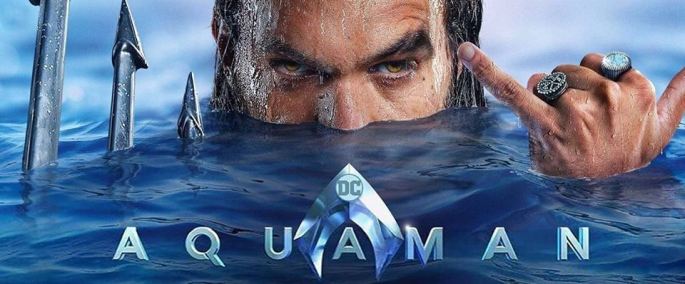
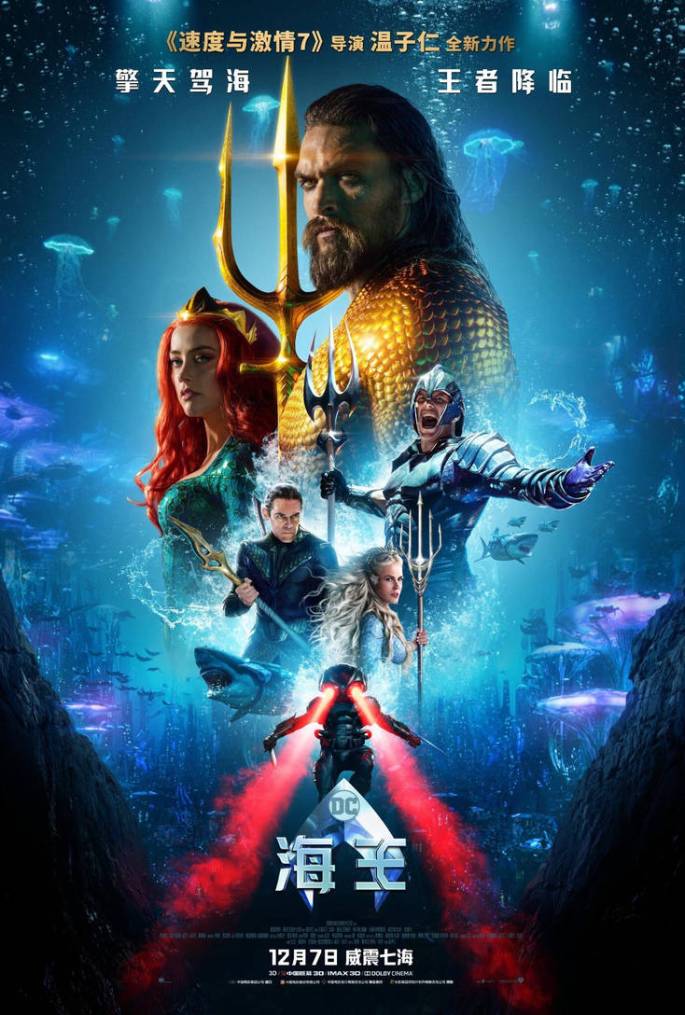
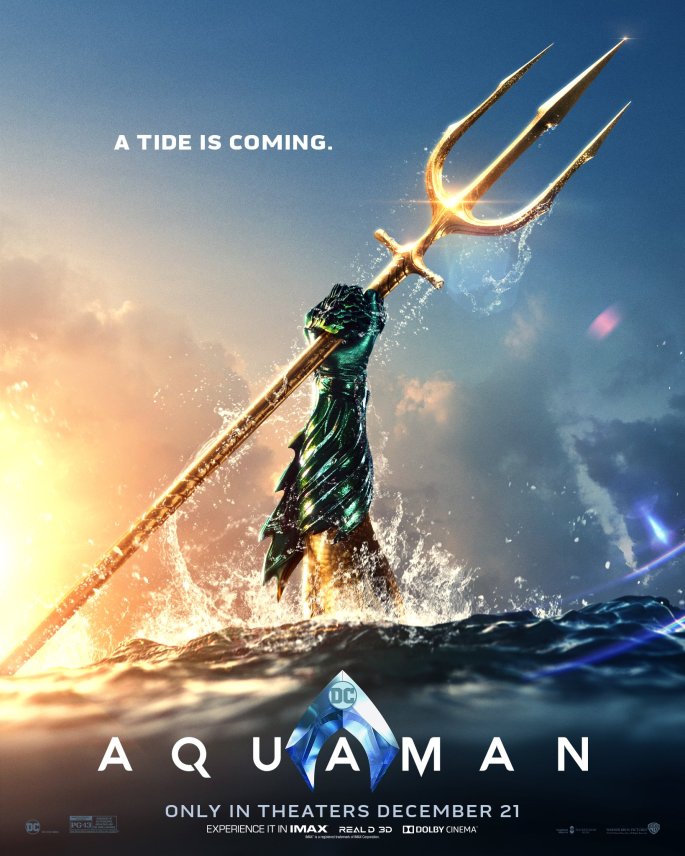
Now the dude in the video above isn’t singing about the movie I caught today (and I’m not denying the fact that that is a damn tasty burger he has there) but his song along in the words of the film’s charismatic lead: “That was awesome,” is kinda how I feel right now. Yes folks, despite any negative press you’ve heard, read, whatever – Aquaman is a feast – a thrilling adventure that really transported me. Not merely into the sumptuous and glorious undersea kingdoms created by the filmmakers involved – but back to the fun, exuberant times I ‘used’ to have at the movies – before the dark clouds engulfed us, trapping us in the forgotten seas where the dark creatures of the trench started forcing us to feed on one franchise after the next. Dark, moody, brooding, shit. That is not the joy I remember in that magnificent dark place we call the cinema – where worlds merge and the magnitude of the movie-maker’s vision takes me into it’s care, placing me, willingly, under it’s spell.
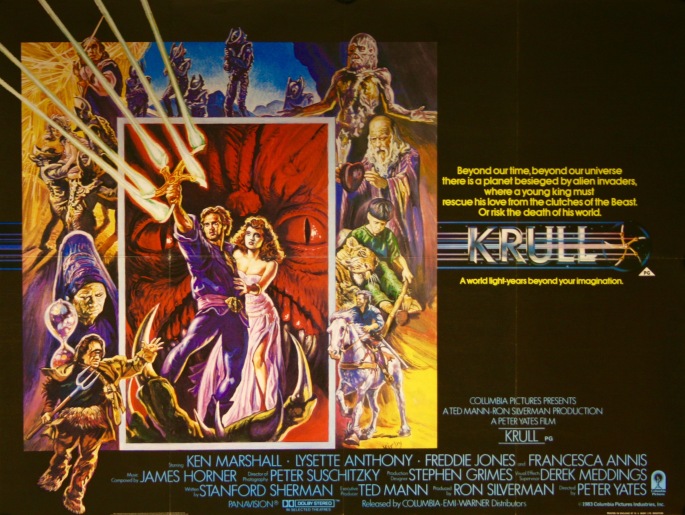
What a spell indeed, let me tell you. James Wan had me when I read his response to a question regarding the tone of Aquaman: “I’m a film fan, I’m a product of the 1980s and 1990s, and a lot of people have said that Aquaman has a very 1980s quality to it. Especially the high-fantasy of the 1980s, like Flash Gordon and Krull.”
Flash Gordon meets Krull! Vibrant, fantastical, magical world building on a big canvas. I don’t chiefly give to much of a fiddler’s fart about the MCU or the DCEU and their never ending cavalcade of chicanery, but, when I read Wan’s response to that question I was, hands down, not missing this picture. And it’s become a common phrase of late – “see it on the biggest screen possible” – but, meh, they’re right. Aquaman is a big picture, so that’s the best advice I can give.
The cast are wonderful in their parts, and I get the feeling they understand the kind of ride they’re crafting. The exposition is fluid like the oceans that dominate the movie. You feel carried along on a current if excitement and wonder as the story advances. But, one the best parts truly, in terms of constructing this film which Wan did so masterfully, is that he simply shunned the Marvel formula of tying it together with all that has come before – a line of dialogue sorted that out. It’s a freeing maneuver that allows this exciting director to do what he does best, which is to flex is visual muscles and take us into a world that makes anything James Cameron has done thus far seem a little flaccid. The production design, the gliding camera, the effortless action. Oh my God – I love it.
Momoa brings a grand juxtaposition of the boy unwilling to take up his trident, mixed with a guy just playin’ it cool. His nonchalant approach is great, and I caught myself smiling at his delivery more than once. He is supported by strong players all. Patrick Wilson’s power-mad dictator, Dolph Lundgren on his seahorse (sorry, sea dragon). Willem Dafoe, always dependable, Nicole Kidman, getting better with age (love that fish suit), Amber Heard, feisty-sexy, badass Black Manta and hell, his dad is Jake ‘the Muss’ for Christ’s sake – and he can drink Fishman under the table.
It’s a whale of a tale I tell you lads, a whale of a tale that’s true. ‘Bout the flappin’ fish and a mother’s love – stoppin’ a deep sea war with the shores above. I’d swear by my tattoo if I had one but put simply – scintillating, sensational, spectacular. Home might be calling, but they’ll need to leave a message ’cause I’ll be out . . . watching Aquaman . . . again. GO SEE IT NOW!
Harry Potter & The Prisoner Of Azkaban is my favourite film of the series for several reasons. There’s a scene early on where Professor Dumbledore (Michael Gambon does his best to step in for Richard Harris, who was pretty much perfection in the role) addresses the students of Hogwarts at the start of the year, imparting to them how they must beware of darkness residing in their world, but not to forget the power of light, especially that of finding it in even the darkest of places. This is an important moment because with this film and the arrival of director Alfonso Cuarón to the franchise, there’s a distinct change in many aspects of the story, mainly a much darker tone than the first two which were helmed with orchestral gloss by Chris Columbus, which wasn’t necessarily a bad thing as I love those ones too. But with Cuarón there was not only a focus on the scarier, spookier aspects of the wizarding world, but an attention to detail, time spent on world building instead of breathlessly rushing from set piece to set piece, plus a deeper and more complex emotional core as Harry, Ron and Hermione become teenagers. Voldemort takes a bit of a vacation from terrorizing their world and is substituted by the shadowy, soul sucking dementors, as well as Gary Oldman’s sinister and omnipresent escaped convict Sirius Black. Oldman brings a haunted, unstable edge to Black in his initial scenes and a scrappy gravitas later when we learn the truth about his past. David Thewlis is a fantastic Professor Lupin, spiritual guide and mentor to Harry through some tough times, him and Oldman really class up the joint. There’s a playful inventiveness to this one that the first two just didn’t have, and it stems from the atypical approach often taken in adapting children’s books into films: the darkness, the unknown, the mature elements are often glossed over and the very palette of the story is somehow… simplified. That’s not to say that Philosopher’s Stone and Chamber Of Secrets weren’t dark, scary or mysterious.. they just lacked a certain maturity, genuine menace and pause to reflect on this arresting world and drink in every detail before the next action sequence. Prisoner Of Azkaban is the real deal, an entry with a standalone atmosphere that also sets the tone for some ‘dark and difficult times’ that indeed lie ahead for the rest of the story.
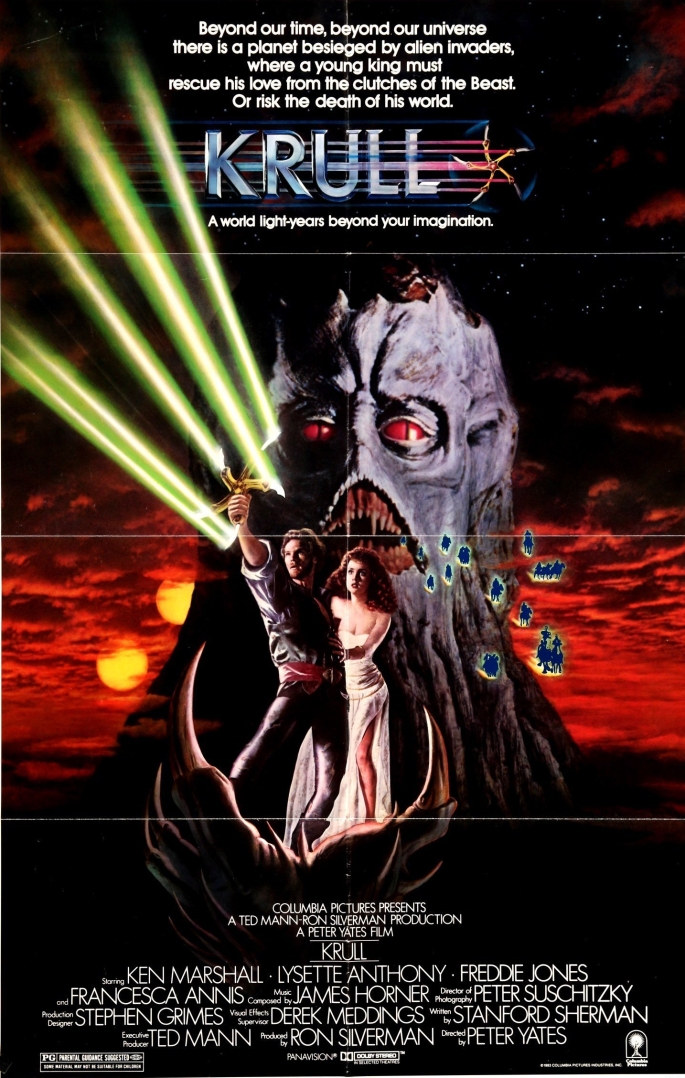
They say the mark of a good writer is their ability to distill the essence of their story into one or two sentences. Now, it is very easy to distill the plot of Krull into a summary or a logline of that length. However, it is entirely another matter for me to briefly encapsulate for you, dear PTS listener, how much I love this movie.
All I can say is, from the moment I saw it, I loved it.
Why?
Well Krull, for me, is the embodiment of the perfect movie. It harkens back to those great adventure novels I had read prior. Tales that primarily involve a hero on a quest to: rescue the princess, defeat the bad guy and save the day. A tried and true formula if ever there was one.
That’s broad-stroking it sure – but at the heart of it – that is Krull.
At the same time you have a movie that is part science fiction, part fantasy/adventure, part traditional hero’s journey. Combined with the elements of impressive scope, danger, excitement, laughs, thrills, spills, chills – I could gush for days, if given the opportunity.
It is also a film with remarkable talents on display, both in front and behind the camera. A cast made up of phenomenal veteran performers and vibrant newcomers – which in some cases would go on to have individually storied careers and achieve great heights of fame. Yes Liam Neeson, I’m talking about you.
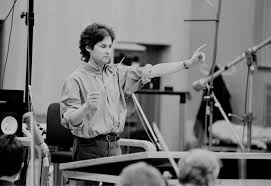
The production team mirrors the cast. A mixture of seasoned craftsmen with future icons – none more so than a young man named James Horner, eventual Academy Award winner, who composed, for my money, one of the greatest scores in cinema history.
And so to my guest…
I have long wished to speak to someone, anyone , who worked on my favorite picture of all time, so, as I often do, I reached out and after a long stretch I was surprised to have a reply from producer Ron Silverman. What joy! Naturally, I had thousands of questions, but, being gracious and appreciative for the time my guests grant me, I narrowed the list down to the essentials – this being both efficient timewise and satisfying enough for my curiosity. And trust me, though our time was brief – there were many revelations and delights to be had.
Many people have looked at me funny when I tell them Krull is my favorite picture. I guess they assume it would, more likely than not, be one of the big ones like JAWS, STAR WARS or SUPERMAN. All of these are vital and I do have a resounding love for them true, but, when you find a picture you can watch over and over – a film which delights as much on the thousandth viewing as it did the very first – well Krull is that for me. I hope you’ll enjoy listening to some insights from this – my favorite movie.
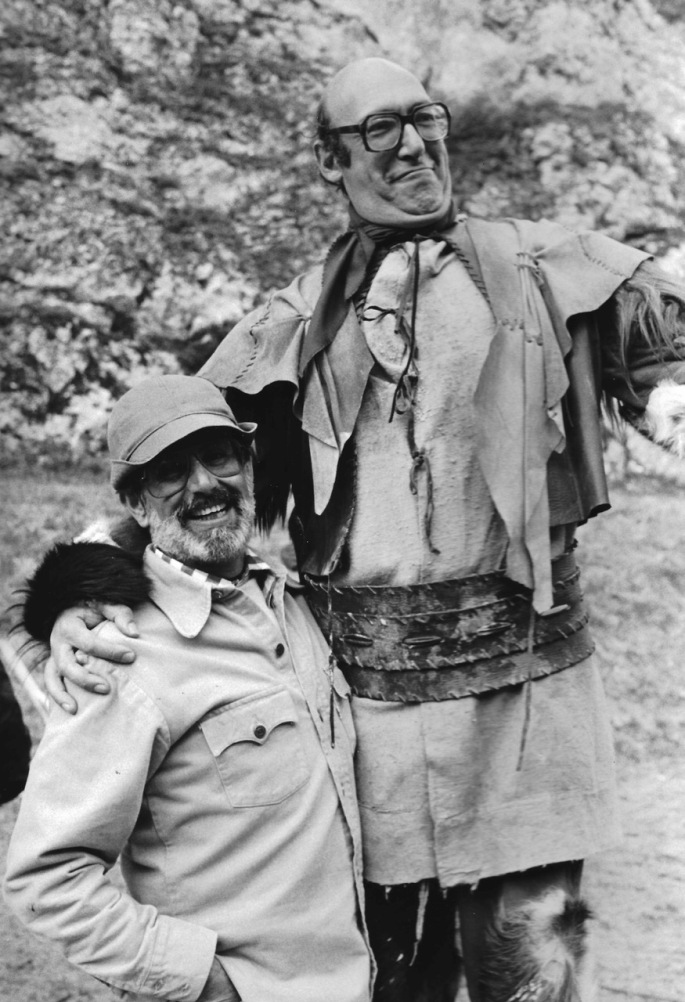
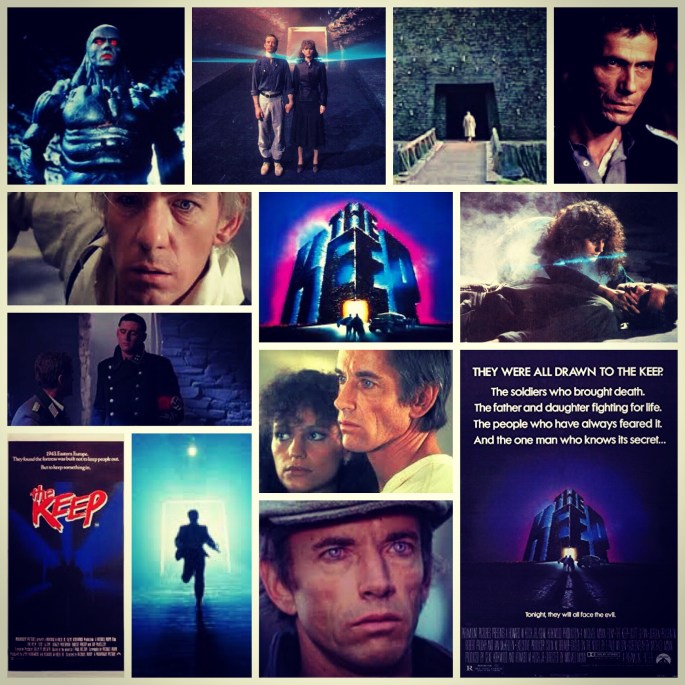
It’s a shame that Michael Mann feels the way he does about The Keep, and although I can’t really blame him after the Leatherface worthy hack job the studio inflicted on his original three plus hour cut, it’s a heartbreak and a half that we may never see a director’s version because what is left is still one of the most haunting, beautifully done Lovecraftian horror fever dreams one can find in VHS-land. Based on a brilliant novel by F. Paul Wilson, Mann employs a legion of smoke machines, a troupe of eclectic character actors all cast against type and giving marvellous work, and a drop dead gorgeous original score from Tangerine Dream that remains in my top OST’s to this day. Somewhere deep in the Romanian mountains, a squadron of German soldiers led by weary Captain Woerman (Jurgen Pröchnow) comes a across a tiny hidden village that harbours a dark secret: just beyond the township is a looming, mysterious structure built to keep something locked inside, and has lain dormant for centuries. Their gravest mistake is setting up camp in this unholy basilica, for soon they’ve awoken whatever resides within, and it really wants out. Cue the arrival of sadistic SS officer Kaempffer (a very young Gabriel Byrne) and his Nazi bastard crew, as well as a professor of ancient languages (Ian Mckellan) with his daughter (the late Alberta Watson). Elsewhere in Europe, otherworldly stranger Glaecken (the great Scott Glenn) is stirred by the happenings at the Keep and treks across the war torn continent towards an unknown end. What follows is an entrancing supernatural fusion mixup of old school prosthetic effects, genocide metaphors, lovingly creaky production design and synth music that will scorch your soul. Glenn plays the shadowy warrior better than ever here, with a paranormal gleam in his eyes and the stone-faced, gravel voiced resolve to see his strange quest through to a brutal conclusion. McKellen emotes fiercely both in and out of some well done old age makeup, sometimes almost unrecognizable but always spirited and present. Pröchnow rarely gets non villain roles with depth but this might be his best ever, early in his career too. He turns the Captain into a sorrowful picture of regret and compassion that one doesn’t often see in Hollywood based German army roles from WWII. Watson is a doe eyed beauty whose loss of innocence and discovery of love is portrayed wonderfully by the actress, who sadly passed away long before her time. Byrne is evil incarnate, with a startling cropped haircut that would be right at home in this day and age it seems. Mann favourite Robert Prosky also shows up as a local priest with knowledge of The Keep. Somewhere out there in someone’s garage there lies a full cut of this film, just waiting for an extended Blu Ray transfer, complete with tweaks on sound design (its fuzzy commotion at times), special features and the redemptive treatment that a sterling genre addition like this deserves. There’s so much quality to be found in it, from the alluring atmosphere that’s so thick it finds its way into your dreams after, to the aforementioned Tangerine Dream soundtrack that haunts the film’s visual landscape like an auditory phantasm to the silver and purple hued neon production design, resplendent in its tactile, tangible glory, it stands as a flawed classic with the potential to be so much more, if Mann mans up and makes the effort to give one of his very best efforts that care and time it deserves to rise from the void and soar again. If only. Oh and one more thing: there’s one more scene before the credits that isn’t in the actual cut, but go find it on YouTube because it’s really worth it and adds a lot to the story.
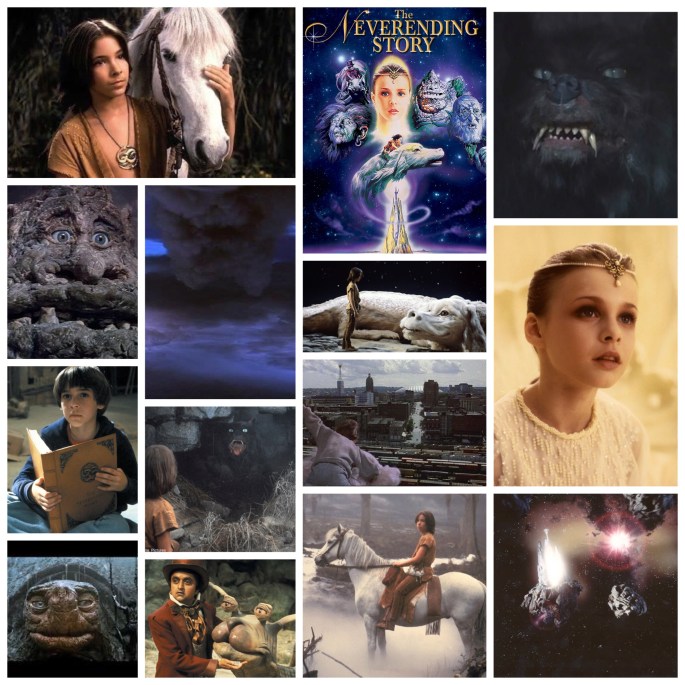
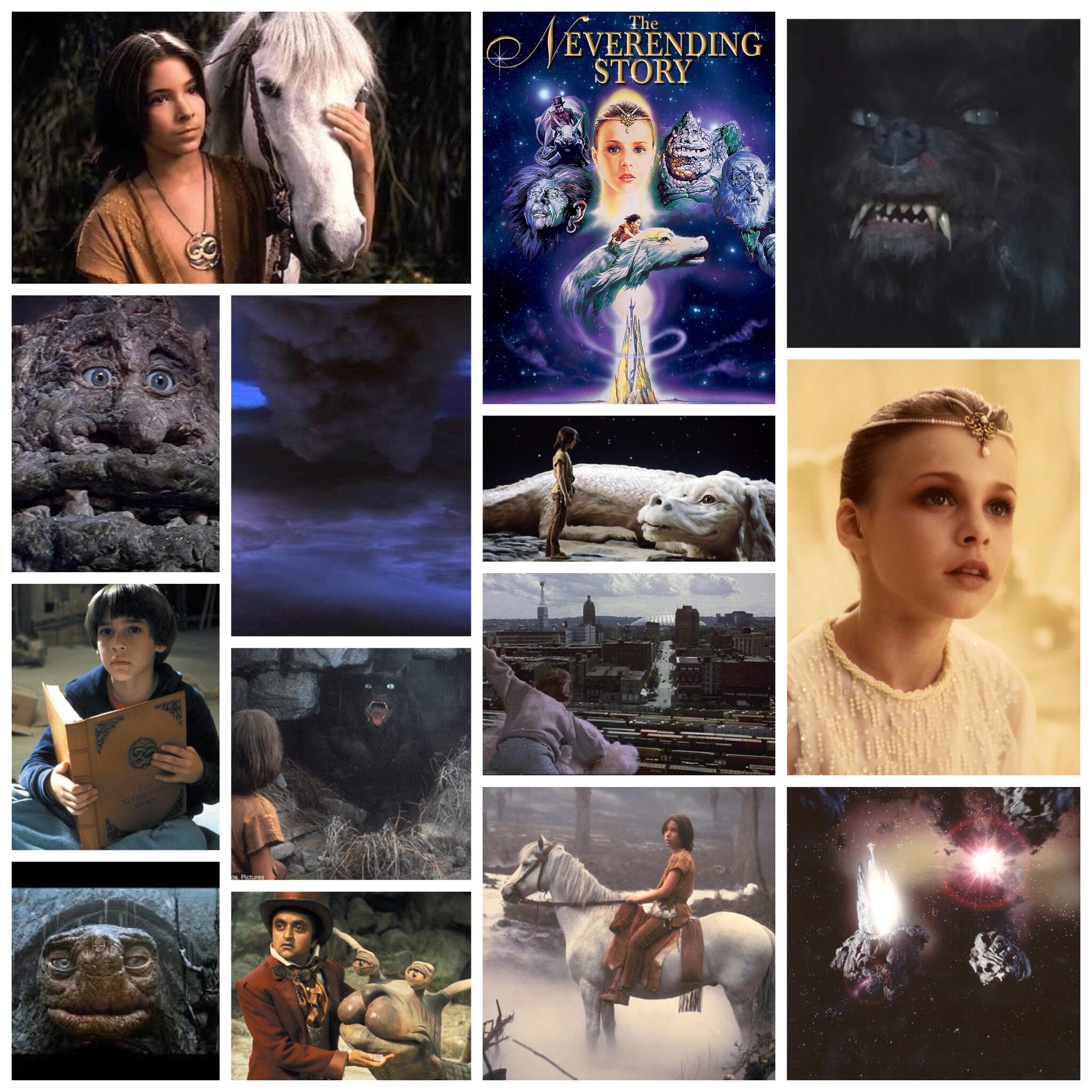
Although admittedly not quite as dense or thoughtful as Michael Ende’s classic novel, Wolfgang Petersen’s The Neverending Story is a stunning film full of imagery that has stuck with me for years. Petersen usually guns for sprawling adult oriented fare (Troy, Air Force One, Das Boot, The Perfect Storm, Enemy Mine), so this stands out as the one children’s story he’s done that still has that same epic magic he puts elsewhere, on a more whimsical scale. In a land called Fantasia, a threatening dark force called The Nothing is swallowing up real estate faster than Chinese investors, and many peaceful creatures are losing their homes to it. It lives up to it’s name in the sense that it is quite literally nothing, replacing tangible vistas with eerie black void, a spooky enough antagonist for any fable. It’s up to young prince Atreyu (Noah Hathaway) to journey across Fantasia, find the princess who is the origin of the land’s life force and restore balance in the universe. This is all in a dusty old storybook of course, eagerly read by a lonely kid (Barrett Oliver) holed up in some attic. I’ll admit I haven’t seen the film in a while, so I’m not up to speed on every little twist and crook in the story, but this one is kind of more about images and impressions than analytical narrative anyways, especially once Atreyu finds the Princess (Tami Stronach) and things get beautifully, cosmically surreal, then fairly meta as the world of Fantasia leaks out of the book’s pages into our own realm, and Oliver is treated to a flying escapade over the Vancouver skyline atop adorable dragon-doggo Falkor, a lovingly creaky reminder of the wonders of animatronic effects. I’ll always remember the council meeting between the rock biting giants, pint sized Willy Wonka looking dude and a sentient snail, all debating what course of action to take against The Nothing. The one primal element that stands out in my subconscious is the ongoing chase Atreyu finds himself in with a terrifying, ghostly direwolf that just won’t quit. For pure eerie suspense you can’t beat the seat grabbing moment where it ruthlessly pursues him through a haunted looking forest towards an escape so narrowly made that breathing isn’t an option while viewing it. Dark, scary stuff for a kids movie, but that should be the idea anyway. A wee bit dated on today’s terms, but all is forgiven considering the lasting impact it’s had on my generation, and the imprint on our dreams. I’d be wary of the two sequels, as I remember not a thing from the second, and only recall that the third is an abysmal thing that should have been left to the Nothing. Stick with this beauty instead.
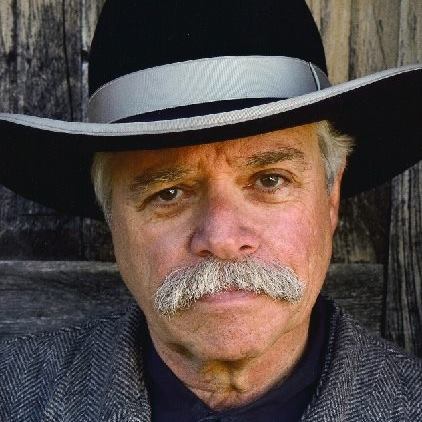
Edward Khmara grew up in California and had the desire to become an actor when he sold his first script and his career was set in motion.
It was not the first script he’d written, but he was the one that got him noticed. It was a little film called Ladyhawke. But, as all first-time screenwriters know, once you make that sale, you have very little input into the journey your film will take from there.
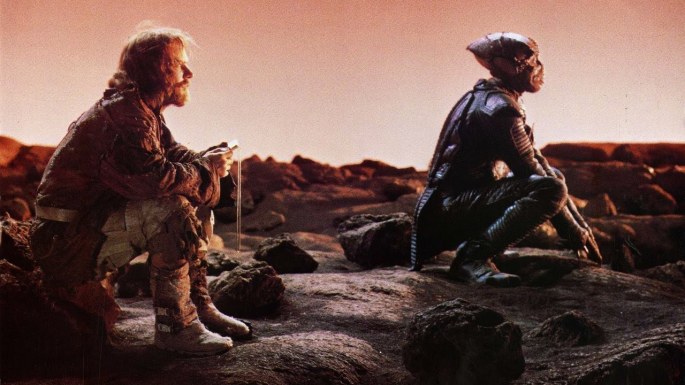
Still, now a screenwriter, Edward would go on to pen one of the truly great, often forgotten gems of the eighties, Hell in the Pacific in outer space: Enemy Mine. This time he would right in the middle of it all. From being on set, to being invited to watch dailies, to having to comfort his daughter after her terrifying encounter with a completely transformed Louis Gossett Jr. in his Drac make-up.
Like most folks who have worked in show business, Edward has known the lows as well as the highs. But those negative experiences didn’t discourage him as he charged ahead, tackling to legends. One in the form of a lavish television production with an all-star cast; Merlin would be the telling of Arthurian days solely from the perspective of the mythical wizard. Then of course there would be his work on the retelling of the life of another legend, one who achieved this status during his own lifetime, Bruce Lee.
But one of the truly heart-warming moments of our conversation was chatting with Edward about him finally getting his shot at the profession he sought after before he took to the typewriter – his part in Gore Verbinski’s Lone Ranger.
A true gentleman of the old school, full of great tales and tremendous experiences – it was a real pleasure to interview him and now to present to you my conversation with the legendary screenwriter (and sometimes actor) Edward Khmara.
 It was, at that time, the largest theatre I’d been to. This rendered


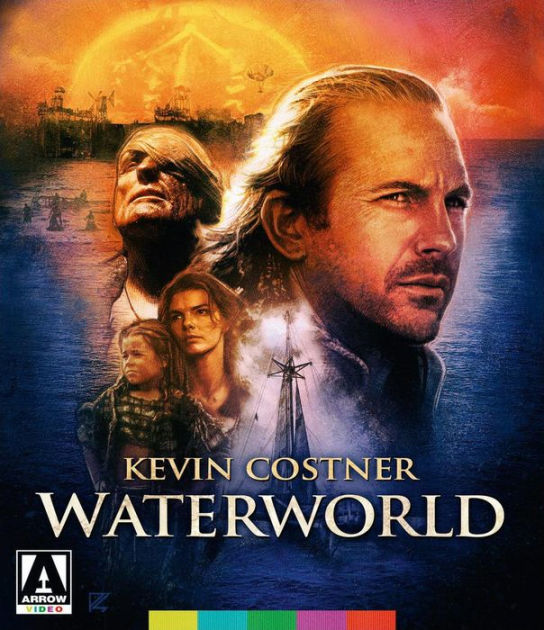 From Arrow, the home of splendid re-release packages of some of the more famous/infamous cult classics of the age, comes the definitive, limited edition Blu-ray extravaganza that is the tale of the search for Dryland. Here at Water’s End you’ll find the three restored versions of the film, a loaded treasure trove of extras; the crown jewel being Maelstrom: The Odyssey of Waterworld, an enthralling documentary feature chronicling the birth, rise, fall and ultimately redemption of one of the truly awesome adventure movies in cinema history. It may be fortuitous that this release surfaces in the wake of another sea-going fantasy – the billion dollar triumph that is













 Podcasting Them Softly