Absentia: A Review by Nate Hill 

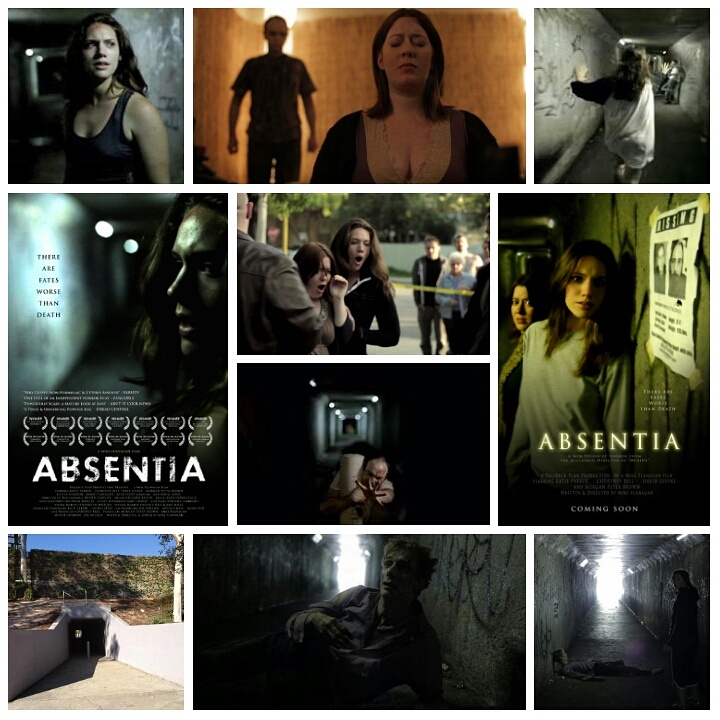
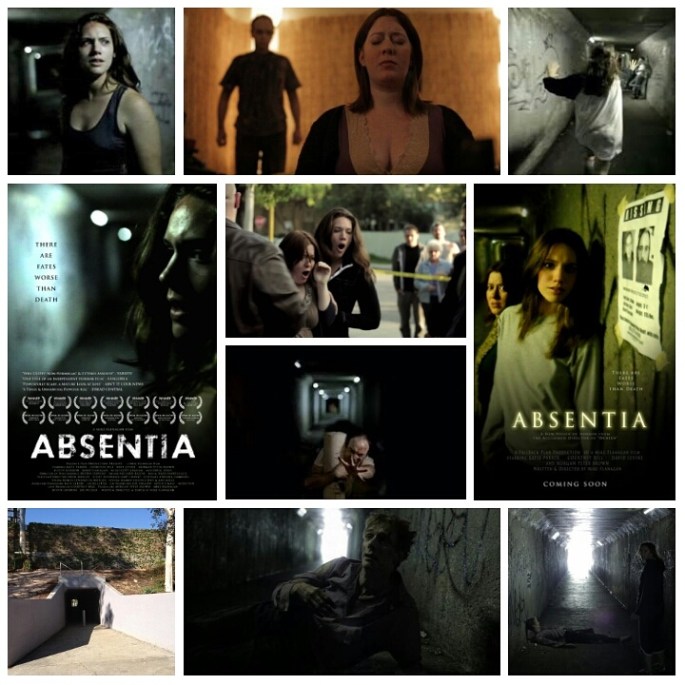
You’ll think twice about taking that shortcut through through the tunnel on your way home from work after watching Absentia, a spooky little indie with its heart in the right place and the filmmaking talent to back it up. There’s a tunnel that’s home to some unspeakable scuttling fiend in a local neighborhood, and two sisters who live nearby, as well as a few unfortunate other folks, stray directly into it’s path. Pregnant Tricia (Courtney Bell) and her younger sister Calley (Catherine Parker) are just trying to get by, literally and figuratively, but every routine trip into this hellish part of the neighborhood ends in disappearances, freaky apparitions from a spindly Doug Jones, this time not playing the monster, and tragic loss of life. I won’t give away what the threat is or what it even looks like (you’ll piss your pants), and such is the beauty of a minimalist scarefest like this. You go in not knowing much beyond the hype or word of mouth, and have your pants scared off. There’s a wonderfully atmospheric score at play here, no psycho strings of operatic swells, the film instead favoring a quiet, emotional melody that contrasts the extremely bleak story arc and grim happenings rather nicely. Jones is the only prolific actor we see here, but his work amounts to not much more than a cameo anyway, the brunt landing on our two protagonists, and a local detective (Dave Levine) who assists them, and they all give very solid efforts. The tunnel is a pure unbridled nightmare though, the fates of those who wander in something that you pray never happens to anyone ever, as you cling to whoever is closest to you on the couch (or bed, preferably). Horror should illicit some empathy from viewers as well as scare them, which will in turn be more disturbing for all. This little baby does just that with it’s characters, truly making you feel sorrow and dread for these poor people and their predicament, adding to the creep factor. A gem. 

SEASON OF THE WITCH (1973) – A REVIEW BY RYAN MARSHALL

untitled-1_12673281701

George A. Romero is – or at the very least once was – the kind of socially conscious filmmaker the horror genre is in dire need of these days. His early films are the most blunt, angry, and effective in his oeuvre; though few would deny they are rough around the edges, their energy and ambition is nonetheless infectious. Sandwiched between NIGHT OF THE LIVING DEAD, Romero’s little-seen sophomore effort (1971’s THERE’S ALWAYS VANILLA, a romantic comedy), and 1973’s THE CRAZIES is SEASON OF THE WITCH (known as JACK’S WIFE when it was in production, and before the distributor excised half an hour from its run-time), a surprisingly thoughtful musing on contemporary witchcraft, repressed sexuality and the patriarchy; an endlessly fascinating, mostly successful marriage of talky, sleazy soap opera aesthetics and surreal psych-out horror.

Joan Mitchell is a bored housewife facing a mid-life crisis. Her husband Jack has little time for intimacy, there’s a considerable distance she feels between herself and their daughter Nikki, and she has recurring nightmares in which Jack aggressively pays her no mind and she envisions herself as a pale-faced old hag. The psychotherapist she’s been regularly seeing feeds her the same old crap in response to her attempts to understand these dreams (“The only one imprisoning Joanie…is Joanie.”), Nikki’s seeing more action in her week than Joan surely has in years, and things are just overall rather drab.

595

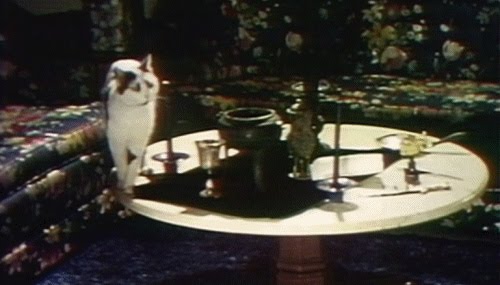
If nothing else, Joan’s got her circle of friends – a tightly knit community of fellow housewives who seem to share many of her anxieties. One evening at a dinner party, there’s talk of a new woman on the block that practices witchcraft. Joan, along with her closest friend Shirley, seeks her out and gets a Tarot reading, which surely opens up a couple of doors for them both. As Jack goes away on business, leaving her to her own devices, and terrible nightmares – in which a masked assailant breaks into the house and rapes her – continue to plague Joan’s mind, she dabbles in the occult as a way of reclaiming her sanity.

It wouldn’t be revealing too much to say that this is a film about – many things, but most importantly – a woman transcending her role in the household and discovering a new identity that has, in fact, been with her all along. Sexual identity, as is the case when Joan starts an affair with a teacher at Nikki’s school who had previously seduced her daughter as well and finds solace in the young man’s spirit, and personal identity go hand-in-hand. There’s also an emphasis on the pointlessness of the so-called “necessities” of life when one doesn’t truly believe in them, and at the beginning of this tale, Joan doesn’t believe in much of anything.
witchtools1

As evidenced in the opening dream sequence, Romero gives it you straight in regards to what the themes are here – to a fault, it could be argued, as Joan wearing a leash and collar, led on by Jack, and being locked inside a cage is a bit much – but regardless of how obvious they may be, they remain as relevant now as they were then. There’s a lot more dialogue than action, to be sure, but this is the kind of film where all the talking somehow manages to get us somewhere in the end, somewhere that feels on a whole satisfying and even intellectually stimulating. Audiences didn’t embrace the film upon its initial release, though Romero can hardly be faulted; marketed as some of kind of softcore porno in its severely cut form as HUNGRY WIVES, it would be difficult to make something this smart and genuinely challenging seem exciting to purveyors of provocation. Romero’s original 120-minute version may have been left on the cutting room floor but what resurfaced in 2005 with the help of the good folks at Anchor Bay seems like a damn fine representation of his intentions in its own right. We’ve changed with the times, and the time for SEASON OF THE WITCH is now. Better late than never, as they say.

At the very least, this is an ambitious cinematic cocktail, and for the most part it works. No doubt most people won’t find it to be all that visually stimulating, but if it really is about what you do with what you’ve got, Romero is a miracle worker. As cinematographer and editor as well as writer/director, he establishes an intoxicating rhythm early on that luckily remains consistent throughout – there are some really neat tricks employed during the post-production stage, as well as some creative camera movements which keep the proceedings from becoming mundane, even when the story doesn’t seem to be moving forward. This is a chilly film, perfect for viewing during the Fall season, and once Donavan’s titular song blares over an occult shopping spree, Romero’s unique alchemy has all but won you over. It’s very much of its time – the fashion, the unquestionably ugly décor, the hep terminology – and appreciation may vary based on one’s tolerance of this kind of stuff, but a thoughtful viewer will surely find plenty to chew on here, if not even more to swallow.

2632699948_ff45f27beb1

Hush: A Review by Nate Hill 

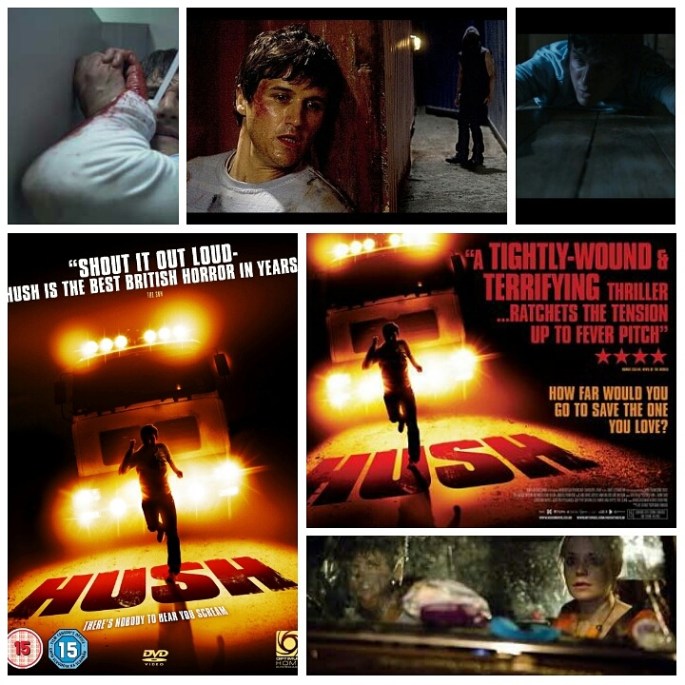
Hush is a pulverizing little exercise in extreme suspense. I’m not talking about this year’s Hush, a sleek little home invasion shocker that’s worth your time too. No, this Hush is a little seen British flick from back in 2008, and it’s a proper nerve jangler. In the tradition of Duel, The Hitcher, Joyride and others, it takes place on a bustling motorway somewhere in great Britain. A young couple trundle through the night on a highway, and find themselves behind  a great big creepy semi truck. In one split second, the doors of it’s trailer come unstuck and open just a crack, allowing the to see what’s inside. It’s only a glimpse, but it’s unmistakable: a girl, badly hurt and tied up, screams for help before the motion of the vehicle causes the doors to slam shut again. What would you do? This couple bravely pursues the truck and it’s villainous driver across many miles of road, trying to rescue the girl inside, avoid getting killed themselves and put an end to whatever is going on. It’s one merciless ride into gut churning suspense, and I marveled at the film’s ability to keep such high tension up for a streamlined ninety minutes of pure horror nirvana. It’s not too lenghthy, never sags or drags and always keeps the vibe as taut as the ominous chain holding those truck doors in place. Swift and sensible in resolution, stylish as all hell and scary in spades. Any horror fan owes it to themselves to take a look. 

Sam Raimi’s Evil Dead 2: A Review by Nate Hill 

Sam Raimi’s Evil Dead 2 is similar to Robert Rodriguez’s Desperado in the sense that it takes what was already there, in this case Evil Dead, and tells the same story once again, simply smoothing out edges, ramping up certain areas, using more money than it had before and generally giving the story a tune up. It also gets quite a bit funnier than Evil Dead, which although schlocky was pretty much outright horror. The sequel emphasizes comedy far more, and is the more definitive of the two in terms of the franchise’s legacy. The story is more or less the same: Ash (the eternal Bruce Campbell) and a group of friends venture to that creepy, archetypal cabin in the woods and foolishly set loose a rambunctious horde of unholy demons, zombies, cackling fiends, rapey trees and a mountable deer head with a disconcerting case of the giggles. This marks the first time Ash donned his now iconic chainsaw hand and picked up that ol’ boom stick to give the nasties a good whupping. And whup he does, like the smooth talking badass that he is. I love the aesthetic in these films; the monsters all have a devilishly mischievous attitude that provides endless laughs, always trolling, taunting and teasing the poor victims. Nothing beats the sight of Ash’s severed hand flipping him off before it scuttles off into the corner like an angry facehugger. That’s one key element which the 2013 remake ditched: I liked what they did in terms of special effects, but the pissy humour wasn’t there, the decayed, sarcastic ADHD madness that I came to love so much was replaced by something far too grim and somber. Bad move. No, kids, this is the ultimate Evil Dead flick, the most complete and entertaining entry into a franchise that has influenced every facet of the horror genre for decades. Ash is now a household name, a beloved halloween costume, a celebrated pillar of pop culture and still one of the most enjoyable protagonist’s to spend time with, as we now get to see with Starz’s terrific Ash Vs. Evil Dead. The original Evil Dead spawned it all, but this baby turned the dial up past eleven, tossed on the buckets of gore and has more than earned it’s place both in our hearts, and horror infamy. 

Neill Marshall’s The Descent: A Review by Nate Hill 

Don’t watch Neil Marshall’s The Descent if you suffer from claustrophobia. Just… don’t. This film does for caves what Alien did for derelict space stations and what The Ring did for videotapes. Cleverly combining close quarters panic, the gnawing fear of losing your way in a near infinite set of tunnels and some visceral, throat ripping terror, it’s one horror package that will leave you reeling. I believe this is the one that put Marshall on the map, and since then he’s been doing mostly medieval style action adventure (he helmed the pilot for Game Of Thrones). This is his first, and most effective outing in a really solid career. The premise is simple: a group of girls decide to go on an excursion deep within a cave system in Eastern Europe. They run into a string of bad luck though, as they first find themselves hopelessly, sickeningly lost. Then the real fun begins as they realize they’re not alone down there, and that something is hunting them. Terrifying subterranean creatures emerge like Gollum on bathsalts, fast, wiry, agile terrors from the deep that know the system inside out and prey on these poor girls one by one. Once they show up its a chaotic bloody free for all that will shred your nerves, but I almost found everything leading up to that even more scary. The slow buildup where they realize they are just so lost and may be stuck down there forever just puts a knot in your stomach and instills a hopeless dread that can’t really be equalled by any monster or gory scene. Still, those things are pretty gnarly and provide more than a few wicked scares, especially when the girls first catch fleeting glimpses of them around corners and between cracks, dismissing them as tricks of the light. Marshall also employs cunning narrative tricks to perpetuate the lack of any kind of way out, one in particular that just curdles the blood in its ruthless, resolute sense of doom. The scariest film you will ever see set in a cave, and one of the premier fright fests ever made.  

Mark Pellington’s The Mothman Prophecies: A Review by Nate Hill 

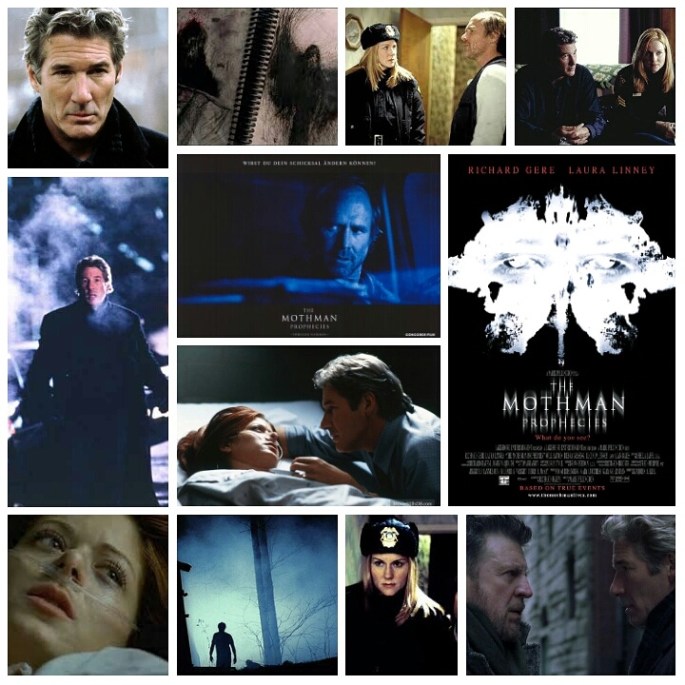
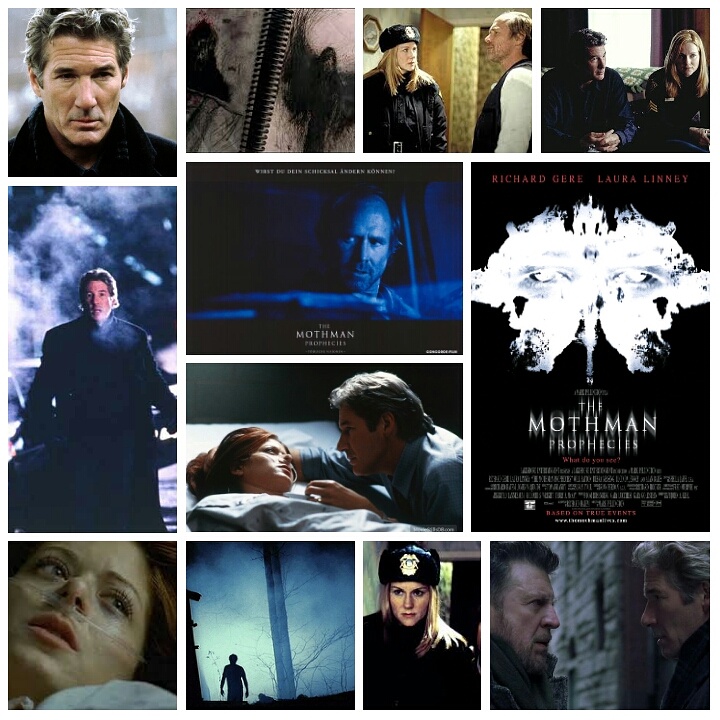
Mark Pellington’s The Mothman Prophecies takes a harrowing look at a curious set of events that did indeed occur for real in the rural West Virginia area. Now, just how much of what we see in the film actually happened is eternally unclear, but I’ve read up on a lot of it and there’s enough testimonials, independent of each other, to both justify the film and shiver your spine. A myriad of unexplainable phenomenon plagued those poor people for some time back then, including visions, eerie phone calls and a mysterious red eyed creature in the shape of a giant moth. Businessman Richard Gere and wife Debra Messing come face to face with what appears to be this entity one night on a lonely stretch of highway, causing a grisly car crash and leaving Messing in a dire psychological state. With the help of a local policewoman (Laura Linney), Gere unwisely tries to figure out this terrifying mystery by putting himself way closer to the occurances than I would ever go, experiencing the stuff of nightmares along the way. Pellington comes from a music video background and as such he is incredibly adept at creating style and atmosphere (his opening credits for Arlington Road are almost as foreboding as anything in this film), two key elements in successfully telling a tale such as this. Gere wanders around in a daze most of the time, distraught over his wife’s condition and obviously influenced by forces unknown. Whatever is out there remains blessedly unseen save for a few hurried glimpses, say, behind a tree or at a kitchen window momentarily, spurring heart attacks from both audience and the poor sods stuck in this brooding bad dream. Rounding out the cast is Alan Bates as the obligatory historian who has seen this all unfold previously in some far corner of the world, and an excellent Will Patton in a frightening turn as a rural farmer who comes who becomes tragically influenced these dark forces. No one plays disturbed quite like him, a jittery, resolute calm always playing around in his eyes, the perfect presence to set anyone on edge. The finale sort of emerges from the chrysalis of dark atmospherics into large scale disaster mode, a choice which didn’t really work for me. I would have preferred to have it kept intimate and creepy right up until some kind of moody end, but they went with fireworks instead. Not enough to hurt the film of negate what came before though, it’s just too good of a time in the haunted house to be dragged down by anything, really. Chilling stuff. 

Cherry Falls: A Review by Nate Hill 

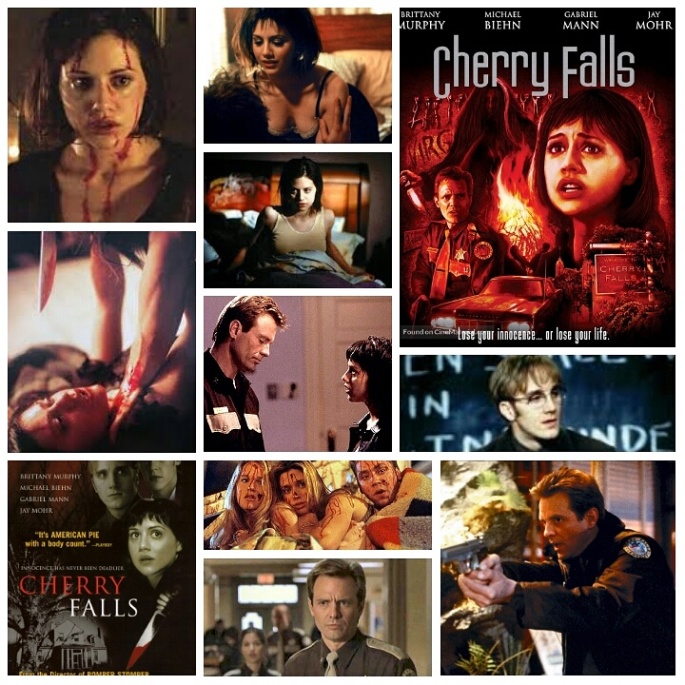
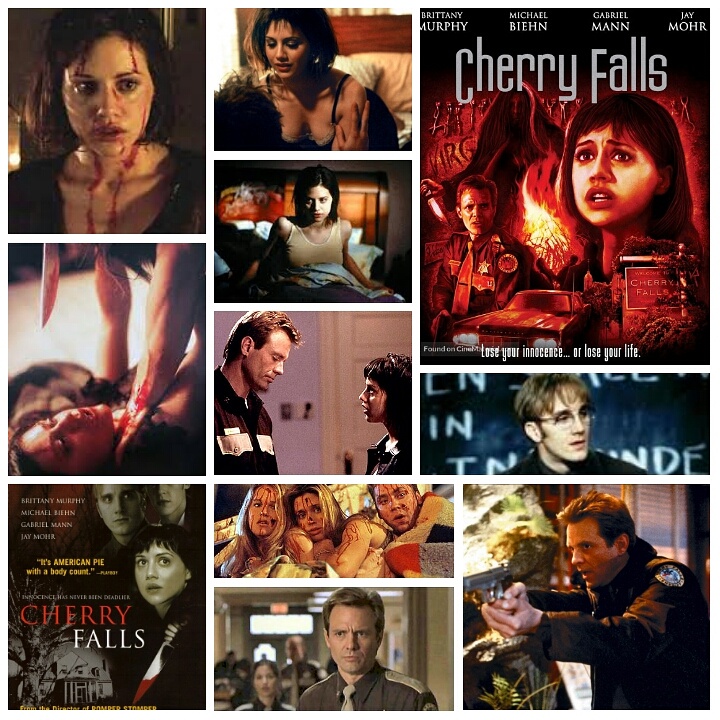
The slasher genre never got a tune up quite like it did with Cherry Falls, a tongue in cheek satire that while hilariously high concept and silly, can actually be pretty frightening, especially during it’s intense climax. Here’s the premise: Cherry Falls is a small town in Virginia that has fallen prey to a masked serial killer. The twist? Said killer is only targeting virgins, which causes quite the uproar. As the high school kids all scramble to get laid before they get laid six feet under, the prudish townsfolk become unhinged and disgusted by the whole affair, and a decades old secret involving some of the town’s best and brightest comes to light, a scandal to rival tr sleazy parade of flesh this murderer has set into motion. Young Jody Markum (Brittany Murphy) has yet to have her cherry popped, and fears for life in between bouts of teenage angst. Her father (Michael Biehn), who also happens to be the town sheriff, wrestles with demons in his past, as well as his own. A schoolteacher (Jay Mohr) scours the town archives for clues before it’s too late. And every horny adolescent tries to desperately get their freak on, providing some of the funniest moments you’ll see in a fright flick. Gymnasium orgies, rampant fornication and all kinds of naughty antics ensue. Nothing beats the faculty meeting where parents violently argue as to who has the sluttiest offspring. Full of in jokes, innuendo and sly sexy humour, this is one of the great overlooked horror comedies out there. 

Dario Argento’s Trauma: A Review by Nate Hill 

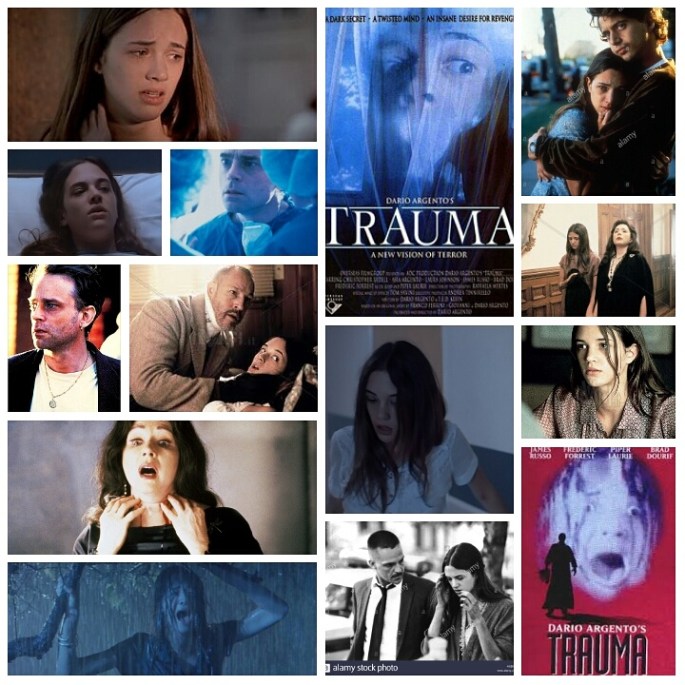
Dario Argento’s Trauma is simultaneously one of the most loopy and coherent efforts from the maestro. Most of his earlier work is pure sensory and atmospheric bliss, detached from things like logic and story. While this one does in fact have a discernable narrative to go along with its giallo splendor, it’s still as whacked out as anything else in his ouvre. This was the first of many times he would cast his exotic beauty of a daughter Asia in a lead role, here playing troubled Romanian teenager Aura Petrescu, on the run from dark forces that seem to plague her family. Her lunatic mother (a terrifying Piper Laurie) has her commited and examined by a freaky Doctor (Fredric Forrest in a glorious train wreck of a performance), meanwhile a mysterious serial killer called the headhunter is out there somewhere, decapitating people with a piano wire. It all gets a bit overwhelming for poor Aura, and she runs off, straight into the protective arms of an ex drug addict (Christopher Rydell) who becomes her guardian and eventual lover. Argento is terrific in the role, exuding dark beauty and burnished resilience in the face of many terrors. Brad Dourif has an intense extended cameo as a doctor with icky ties to the origin of the headhunter as well, adding a welcome bonus horror flavor. Also watch for another intense actor, James Russo, playing a police detective determined to nab the killer for good. As far as Dario’s stuff goes, this is about as complete and cohesive a narrative as you will find. Granted it’s not the garish psychedelia of classics like Suspiria, Phenomena and Inferno, but a little more subdued and clinical, a dark fairy tale that gets geniunly scary in several excellently staged scenes and provides loads of uneasy atmosphere. 

Stephen King’s Sleepwalkers: A Review by Nate Hill 

Stephen King’s Sleepwalkers has a reputation as one of the lesser quality adaptations of his work, which led me to put off watching it for years. Well I don’t know what film the critics saw, cause the one I watched was wicked good. Nestled in that perfect area of 80’s horror where the blood was corn syrup, the flesh was latex, there wasn’t a pixel or rendering in sight and atmospherics mattered more than excessive violence, this is one serious piece of horrific eye candy with the backbone of King’s wicked imagination to hold it steady. The story tells of a small Midwestern town (is there any other kind in the man’s work?) That falls prey to a pair of vampire werewolf hybrid creatures who subside off the blood of virgins and morph into slimy behemoths that conveniently show off the impressive prosthetics. Brian Krause is one of said creatures, drifting into town with his creepy mother (the wonderful Alice Krige) and setting his sights on severely virginal schoolgirl Madchen Amick, by dialing up the charm past eleven. People and animals start to die all over town and the suspicions arise, but the pair are cunning and have most likely been doing this for centuries almost unnoticed. It’s nothing too unique as far as the concept goes, but the fun of it lies in the gooey special effects and one demon of a performance from Krige, a veteran stage actress. She is one part beautiful seductress (even to her son, in one unsettling scene) and one part volatile banshee, setting your nerves on edge time and time again throughout the film. Krause does the demonic James Dean thing nicely and Amick shows blossoming reilience beneath the required mantle of terrified cream queen. The three of them run amok in a beautifully realized fever dream of psycho sexualized terror, small town atmospherics and a classic old school horror climate. This film loves it’s cameos, so watch for Clive Barker, Ron Perlman as a grouchy state trooper and King himself as the world’s dumbest graveyard caretaker. Baffles me why this was panned upon release. It’s actually one of the best films I’ve seen based on King’s horror work, and there’s a lot to compete with. 

Creep: A Review by Nate Hill 

Everyone has, at some point, wondered what lurks in dark corners and abandoned tunnels within a city’s underground subway system. Well Franka Potente gets to find out exactly what’s down there in the murky and atmospheric horror flick Creep, and trust me it ain’t pretty. Potente plays Kate, a girl on her way home from an office party in the heart of London. Harassed and stalked by a no good coworker, she dips into a derelict train, and her attacker follows. Suddenly, somethin crawls out of the dark, murders him and drags his corpse off into the night. Kate goes from the frying pan into the fire as she realizes that whatever this thing is, it’s really not something you want to be stuck in a labyrinth of desolate subway tunnels with. I won’t spoil too much, but the Creep himself is a repulsive deformation whose origin I’ll let you see for yourself. The actor who plays him is terrific though, admittedly a maniacal monster, but almost a little bored and jaded by his situation and just dryly going through the motions, which proves to be oddly amusing. That’s not to say he’s not dangerous or smart though, as Kate repeatedly finds out, fleeing through the dark accompanied by a terrified homeless couple. Potente is riveting in anything, and she seems to seek out more intense fare to star in, always taking her performance to the extreme without ever losing that gravity that I love so much in her work. This one will put you through a wringer, all across the board. It doles out gross out horror, eerie chills and suspense in equal measures. Solid horror.