The Chronicles Of Narnia: The Lion, The Witch & The Wardrobe

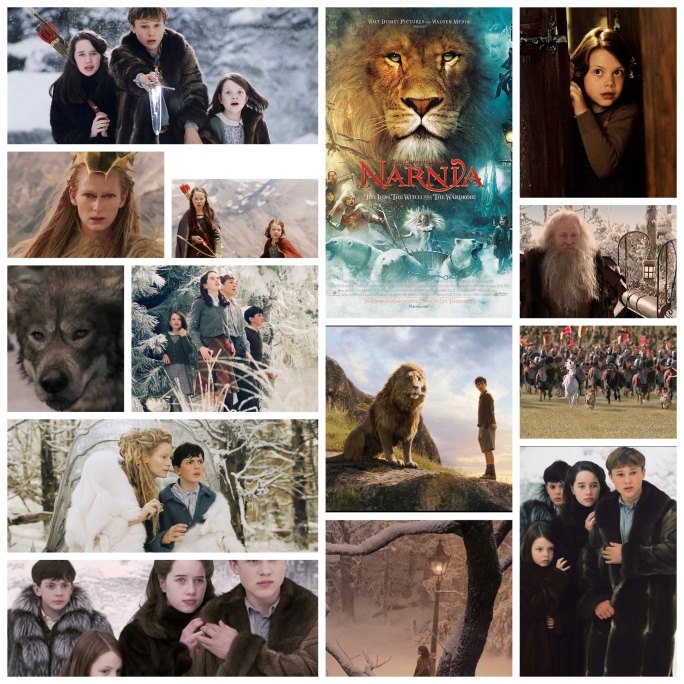
The Chronicles Of Narnia: The Lion, The Witch And The Wardrobe is a dazzling, indisputable success, as both a standalone film and when viewed next to its literary counterpart. It stands as a milestone for me, in the sense that it’s pretty much the only film adaptation of a book that was very special to me growing up to not only do the story justice, but to come out a winner as the best cinematic vision of it possible. It’s a feast for the eyes, ears and spirit, and remarkably, a lot of it plays out exactly how my memories of the book do. Having said that, I would advise avoidance of the sequels, one of which I’ve seen and it put me off going any further. Prince Caspian felt lazy, rushed and cheap, all the mystery and wonder found here was gone, not to mention they fudged up the progression of the series and completely skipped The Horse And His Boy, one of my favourites. This one is the real deal and hits the right notes, and from the opening frame when a rattling POV shot of bombs descending on a WWII ravaged London, the film assures us that it means business, and isn’t going to slip into the pandering, glossy, watered down Young Adult world of adaptations. The Pevensie children, four precocious English youngsters, are sent away from the conflict to live with a distant relative in the country. There, they find a desolate old mansion, populated only by a starchy old goat of a housekeeper and the eccentric Professor Kirke (Jim Broadbent, brief but memorable). They also stumble upon a magical wardrobe leading to a vast kingdom called Narnia, filled with talking beasts, castles, forests and more legendary creatures than you can shake a stick at. Lucy (Georgie Henley is the perfect, darling Lucy I imagined), the youngest and most intuitive of the four, is first to venture through, meeting kindly fawn Mr. Tumnus (James Macavoy) who tells her that Narnia has fallen on hard, wintry times. Her siblings back in our world don’t believe her, until they too are whisked through into the land, unknowingly thrust into an adventure to save Narnia, which will well likely put them in more danger than anything WWII has to offer. The four are uncannily well cast: William Moseley brings the humbled nobility and budding leader in Peter magnificently, Anna Popplewell shows the compassionate warrior’s heart in Susan, and Skandar Keyes expertly handles the arc of Edmund, the black sheep of the group with lessons to learn, both bitter and sweet. They are pit against Narnia’s resident villain and warlord, the malicious White Witch Jadis (Tilda Swinton will freeze your heart), with the help of many a talking animal, including friendly Mr. Beaver (Ray Winstone), and the messianic lion and all around badass Aslan (Liam Neeson, because who else would you cast?). Michael Madsen provides his raspy growl to the voice of Maugrim, the Witch’s top wolf lieutenant in her lupine secret police force, and other hidden Easter eggs of voiceover work can be heard from Dawn French as Mrs. Beaver and Rupert Everett as a Fox. Scope and spectacle are paramount in bringing the world of Narnia to life, and the filmmakers spared no expanse here: The children delve into chases, battles, betrayals, icy encounters with the witch, sword fights and all sorts of wonder, including a surprise visit from Father Christmas himself, warmly intoned by James Cosmo. Equally important as the razzle dazzle are the quiet, contemplative conversations that flourish into important character beats and lessons for all involved. The four are at a crux of human development, and vulnerable to stimuli both internal and external. Even though the story takes place in a magical, heightened world of fantasy, the interactions and human behaviour couldn’t feel more real. It’s beautifully carried over from the book, violent darkness and uplifting light included and born on the gilded wings of a stirring musical score from Harry Gregson Williams that swells to near transcendent heights when we reach that climactic battle. Swinton switches up the traditional theatrics that Barbara Kellerman brought to the BBC production (that version is a whole other story) in favour of a vicious, unrelenting and at times almost extraterrestrial portrayal of the witch, she’s cunning, manipulative and oh so evil. Director Andrew Adamson brings magisterial beauty to it visually and stages the battles with kinetic but focused energy. I love this film, not a note felt false to me when keeping the book in mind as I sat in the theatre, and that is incredibly rare if the source material means something to me.

-Nate Hill
Richard Curtis’s Love Actually

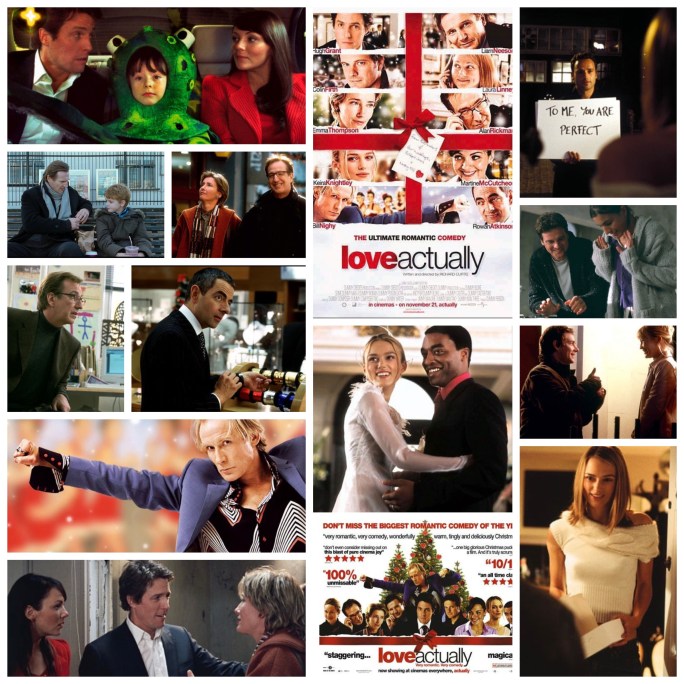
Who doesn’t love Love Actually? I know I do. It’s such a sentimental, goofy, overblown pile of mush and I love it even more for being so. It can be sappy, but a lot of the situations and character interactions it entails are blunt, awkward truths made even more hilarious by an even more awkward cast, and encapsulate the meaning of Christmas. Not all the couples work out, not all of the individual stories end well or in satisfaction for characters or audiences. But that’s life, and they make the best out of what they have at this time of year, which is what it’s really about. Some turn out splendidly for the characters, leaving them beaming. Some learn tough lessons that are necessary for growth, some find love in storybook fashion and others are simply there for comic relief. What comedy and tearful drama we get as too, delivered by an astoundingly massive cast of British legends, speckled with a few familiar Yankee faces just to garnish the giant British figgy pudding. Liam Neeson plays a grieving father whose son (Thomas Bodie Sangster) is sick with love. Neeson’s sister (Emma Watson, grounded, real, heartbreaking) deals with her irresponsible husband (Alan Rickman, incapable of a false note). The newly elected Prime Minister (Hugh Grant in full flustered, fumbling glory) is attracted to his cute secretary (Martine Mcutcheon) and aloof writer Colin Firth feels pangs for his Portuguese housekeeper (Lúcià Moniz) who speaks not a word of English. Laura Linney has a steamy office romance with Rodrigo Santoro whilst dealing with an ill sibling, Bill Nighy is hysterical as a cynical Grinch of a pop star with a jaded facade, Keira Knightely, Chiwetel Efjor and Andrew Lincoln are involved in a subtle love triangle, and there’s all kinds of interwoven vignettes including Martin Freeman, Elisha Cuthbert, Ivana Milicevic, January Jones, Claudia Schiffer, Shannon Elizabeth, Denise Richards, Joanna Page, Sienna Guillory, Billy Bob Thornton as the sleazy US President and a priceless Rowan Atkinson as the world’s weirdest jewelry salesman who gives new maniacal meaning to holiday gift wrapping. It’s a big old circus of Christmas spirit with all kinds of different desires, motivations and relationships that reaches a festive fever pitch before erupting into a joyous finale of giddy Yuletide melodrama and cathartic good times that is impossible not to smile at. An annual watch for me.

-Nate Hill
The Man behind The Dark Knight rises by Kent Hill

CuQh_UoXEAAzFpe

How did this wonderful film slip through the cracks? There was little to no word about this utterly enthralling and compelling story about the ‘other’ man behind the bat.

I admit to you now – I was in the dark. While comics were a staple of my formative years, as that time receded, my interest had diminished to ‘casual’  by the early 2000’s. Even then I was far from what you would refer to an an aficionado. Comics were flame bursts in the dark. Most of mine were not pristine, and I collected them by the bundle when my Grandmother would take me along with her to the Book Exchange and allow me to parlay a stack of her used paperbacks for a pile of superhero awesomeness.

But, back to the topic at hand. I read comics without much regard for who created them (that attention to detail I reserved for my first obsession, the movies). I was there to indulge, pure and simple. Still, as our awareness grows, so do we seek out ever greater detail – the mechanics that make our preferred mode of escapism tick and thus our experience is enriched and the depths of our interest continue to descend into the pop culture sea that abounds, seemingly fathomless.

Such is the story brought to life by Don Argott and Sheena M. Joyce. Like the equally incredible Searching for Sugar Man before it, Batman & Bill traces the steps of the elusive Bill Finger – the man who, in case you didn’t know, co-created Batman with Bob Kane. And, like Sugar Man, the plot, which on the surface might seem to have a logical conclusion, just keeps unraveling as the real life seeker of justice, Marc Nobleman, tracks down and lets the sun shine brightly on the life, labors and legacy of Finger.

MV5BYjYzZjc2ZTQtYmQyYy00NTk5LThmMTItNWQyNzk3MjNkYzEwXkEyXkFqcGdeQXVyMzYxOTQ3MDg@._V1_

Now I’m not going to spoil this at all. You must, must, must seek out this glorious unfolding of a sad, arduous, but ultimately triumphant saga which is predominantly about rewriting history, but at its heart there is a drum that beats and reminds us to stand tall in the face of adversity, and the film depicts this, in the form of the mammoth uphill battle to place Finger’s name next to Kane’s as a creative force behind one of the truly monolithic heroes from the realms of illustrated storytelling.

All I will say is that the end broke me up like Field of Dreams always manages to. Yes, strong men also cry, to quote The Big Lebowski, but you’ll walk away from this film ever changed and with a sense of pride having seen honor restored, a name reclaimed and a final note so satisfying it’ll touch your heart.

Read the book, see the film, and as for right now enjoy my chat with the extraordinary team who have captured beautifully this tale of a watchful protector who fought with a pen mightier than any sword to see the ‘other’ man behind the Dark Knight, rise…


https://www.hulu.com/press/show/batman-and-bill/

https://www.sbs.com.au/ondemand/video/1360261187749/batman-and-bill (for Aussie viewers only)

https://www.amazon.com/Bill-Boy-Wonder-Secret-Co-Creator/dp/1580892892


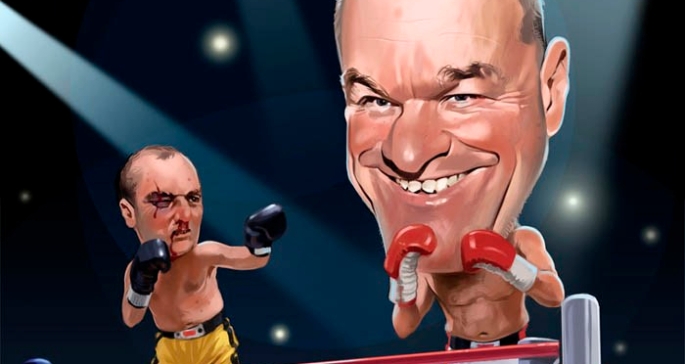
FUCK YOU ALL: The UWE BOLL Story Interviews by Kent Hill

https://youtu.be/4vIbflVSLyA

I love the cinema of Uwe Boll. How you ask? Haven’t you read the reviews – don’t you know the stories? My answer: Yes.

I have read the press, I know all the stories. I watched as mindless degenerates hiding in their mother’s basements hurled shit across the web, and into the face of one of cinema’s most prolific, most passionate, fiercely independent figures. A man who needed, not a studio, but his own incredible knowledge and production savvy to make movies . . .

. . . all Uwe Boll ever wanted to do.

But I’m getting ahead of myself. Let’s set the ‘way-back machine’ for the late 90’s, and I’m tending the counter at the local video store – back when it was really its namesake – and they bring in a new coin-op to keep the punters in the store and spending money. That video game was called House of the Dead.

Supposedly so graphic and horrifying – as well as being literally rated R – HOTD was a shoot ’em up in the best, most fun sense of the genre. Behind the black curtain that was there to frivolously attempt to shield the eyes of the innocent from the mayhem, the masochistic, bullet-shredding magnificence, was a really cool world where the aim of the game was to blast your way through hordes of the undead with merciless glee.

So being a fan, and sneaking off to play while I should have been at the desk – when a friend of mine said, “I hear they’re going to make a movie based of this” – I was like, “take all my money man – this is gonna rock!” (And that was prior to The Rock  giving video game adaptations a shot)

UWE-BOLL-POSTER_24x36_FULLTITLE-WEBRES

I remember going to the cinema to see it, and soon being one of only a handful of people still watching after a good number of folks had walked out. So – why did I stay I can hear you ask? Well there are two reasons. One is simple – I enjoyed the movie on many levels. Yes it wasn’t the game, nor could it have been. I think people operate under the fallacy  that just because a video game has a backstory or mythology on which it is based, then it must be simple to adapt into a movie. I believe precisely the opposite to be true. I think truly solid adaptations rely more on the wit and invention of the filmmaker. To combine a good narrative with recognizable elements from the game to appease the faithful.

And, love him or despise him, that is exactly what Uwe Boll could do – and do well. For if he couldn’t dear reader, then those multitudes of investors that he went back to time after time, movie after movie would not have entertained him. If he were not commercially successful, the career of Uwe Boll would not exist, nor could it be captured in the brilliant, candid and touching portrait of a film about a filmmaker, a man, who refused to remain silent whether he was being applauded or damned.

Unlike Dan Lee West’s RAGING BOLL, which deals more with the sensationalist side of Boll’s career, S.P. Shaul’s picture meanders down the quite roads and sheds light on the personal figure behind the media circus, the private man, the family man, the man who in spite of those basement dweller’s vitriol – followed his dreams and fought many a battle to bring them into the cold light of reality.

FUCK YOU ALL, is not a gratuitous middle finger in the face from the man dubbed the worst filmmaker of all time. No dear PTS listener – it is about the pursuit of what inspires, the burden of making visions come alive as well as the reminiscences of a man who worked with and alongside the cream of the Hollywood crop while smiling at the absurdity of it all.

When and wherever you can see this, The Uwe Boll Story, I urge and hasten you. It is filled with insults and hatred but that is always counterbalanced by the friends and collaborators of Dr. Boll, speaking words of praise, constructive criticism, and overall of a man with whom it was always fun to go to work with – and as it is said best, by Brendan Fletcher (a long-time Boll collaborator), and I’m paraphrasing here: but he speaks to the haters of Boll and says . . . “when have they ever risked anything?”

It is a great film about a fascinating artist and I am most excited to present my chats now, not only with the filmmaker responsible for the documentary, but with the filmmaker who inspired him to make the journey . . .

. . . enjoy

UWE BOLL

uwe7_1.328.1

As a child, Uwe produced a number of short films on Super 8 and video before beginning his studies as a film director in Munich and Vienna. He also studied literature and economics in Cologne and Siegen. Uwe graduated from university in 1995 with a doctorate in literature. Uwe has since directed, written and produced over 30 movies with such stars as Ben Kingsley, Jason Statham, Ray Liotta and Ron Perlman. Uwe also runs and owns the BAUHAUS Restaurant in Vancouver alongside Michelin Star chef Stefan Hartmann.

(Courtesy of:http://uwebollraw.com/)

SEAN PATRICK SHAUL

Uwe and Sean

Sean is a Canadian Documentary Filmmaker who became aware of Uwe Boll whilst working on the production, Assault on Wall StreetHis first encounter the wild, unchecked hullabaloo of an Uwe Boll movie. Sean would then go back and watch a number of the master’s films before lightning struck – Uwe would be the subject of his next documentary. Boll never one to have a problem with being candid – Shaul received and all access pass to the life behind the great director – enough to construct this, his definite portrait of the man, the myth, the mouth . . . the man named, BOLL!

PLEASE VISIT: http://prairiecoastfilms.com/


Steve McQueen’s Widows

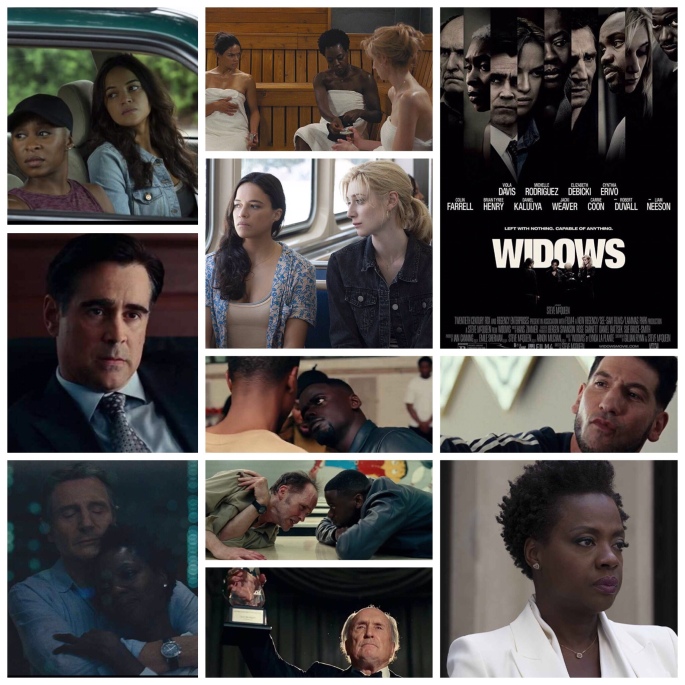
Ever heard the expression ‘trip over your own ambitions’ ? That applies in full force to Steve McQueen’s Widows, a film that doesn’t have half the time needed to nurture, juggle or resolve the nebula of plots, twists, sub plots and sub-twists it tries to throw out there. That’s not to say that it isn’t a valiant effort; this is a film that tries a lot of things, is very innovative and engages often, but ultimately it’s just not enough and feels more like a running start without the follow through of flight. In the opener we see a heist that goes about as incredibly wrong as it could: cops hunt down a crew of high stakes robbers led by career criminal Harry Rawlins (Liam Neeson), gunning them all down. Viola Davis is his wife Veronica, left to pick up the pieces when thuggish wannabe politician Jamal Manning (Brian Tyree James) and his sociopathic brother Jatemme (Daniel Kaluuya is a beast) come looking for money he owed them before he died. That’s when she gets the idea to carry out the plans for his would-be next heist, joined by the other widowed women of his crew. There’s also an overarching subplot involving corrupt electoral candidate Tom Mulligan (Colin Farrell), his racist, old-money prick of a father (Robert Duvall with fire n’ brimstone mode activated) and others in both low income and Ivy League Chicago, which aren’t as far apart as you think, as McQueen shows us in an all too obvious extended shot of a car ride. There are aspects I loved; the opening heist, shot mostly POV from the back of the van, is a whiz banger, taut and packed with adrenaline. The performances are excellent all round, from Michelle Rodriguez and Elizabeth Debicki as other wives of the fallen robbers to memorable supporting turns from Jacki Weaver, Garrett Dillahunt, Jon Bernthal, Carrie Coon, Kevin J. O’Connor, a quietly scene stealing Lukas Haas, the most excellent Cynthia Erivo and many more. The narrative encapsulates the heists themselves with ongoing conflict including racism, urban politics, interracial romance, low income versus filthy rich, nepotism and everything in between, and this ambition to explore many avenues in one go is where the film fatally falters. The widow’s heist, when we finally come around to it, is brazen and impactful but blares by too quick for the payoff leading up to it. Hans Zimmer’s score echoes stuff like Heat but seems to only really show up now and again instead of being a prominent presence. At two hours and nine minutes, McQueen just didn’t leave himself enough time to properly cultivate relationships, build enough tension, explain his narrative fluidly or develop the characters that he clearly loves. It’s unfortunate because the guy is one hell of a director, both with his actors and his camera, he knows how to tell a story and make it feel fresh, unpredictable and just spontaneously offbeat enough to seem like real life as opposed to a story that obviously works within the parameters of script. He’s a thoroughbred, but he didn’t leave enough track to run on with this one, and I almost feel like he would have been better off going the episodic route here, as it would have had way more space to breathe and audiences far more time to ruminate on the events. Worth watching to see everything cascade by like a parade in fast forward, but don’t expect to be satisfied with wrap ups or conclusions.

-Nate Hill

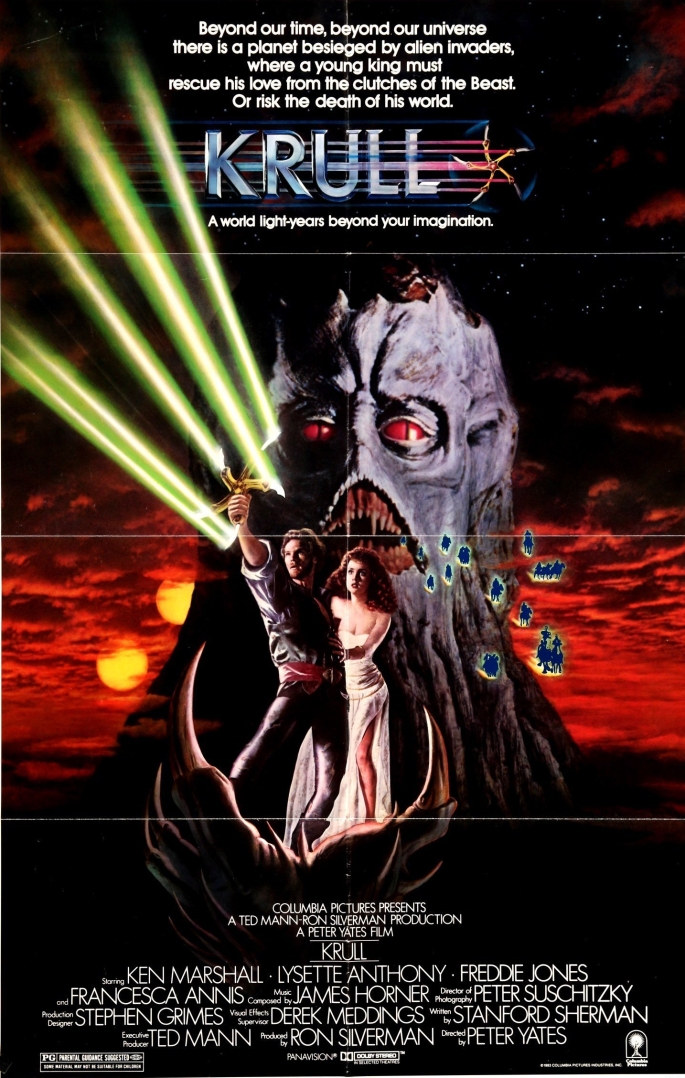
“This, it was given me to know…”: Remembering KRULL with Ron Silverman by Kent Hill

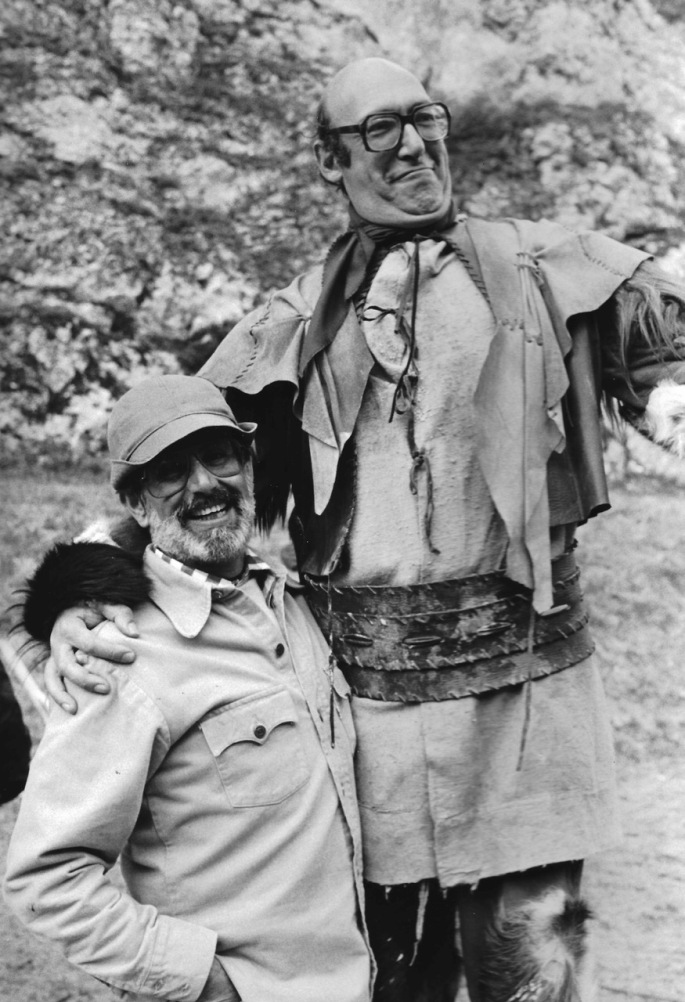
Krull Ron & Cyclops

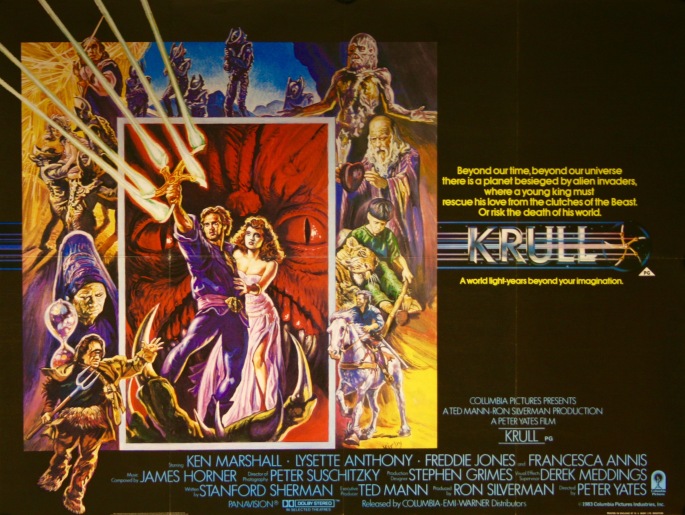
They say the mark of a good writer is their ability to distill the essence of their story into one or two sentences. Now, it is very easy to distill the plot of Krull into a summary or a logline of that length. However, it is entirely another matter for me to briefly encapsulate for you, dear PTS listener, how much I love this movie.

All I can say is, from the moment I saw it, I loved it.

Why?

Well Krull, for me, is the embodiment of the perfect movie. It harkens back to those great adventure novels I had read prior. Tales that primarily involve a hero on a quest to: rescue the princess, defeat the bad guy and save the day. A tried and true formula if ever there was one.

IMG_0952

That’s broad-stroking it sure – but at the heart of it – that is Krull.

At the same time you have a movie that is part science fiction, part fantasy/adventure, part traditional hero’s journey. Combined with the elements of impressive scope, danger, excitement, laughs, thrills, spills, chills – I could gush for days, if given the opportunity.

krull_1983_original_film_art_2000x.jpg

It is also a film with remarkable talents on display, both in front and behind the camera. A cast made up of phenomenal veteran performers and vibrant newcomers – which in some cases would go on to have individually storied careers and achieve great heights of fame. Yes Liam Neeson, I’m talking about you.

index

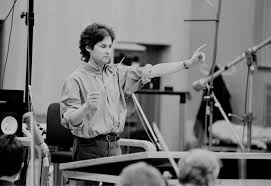
The production team mirrors the cast. A mixture of seasoned craftsmen with future icons – none more so than a young man named James Horner, eventual Academy Award winner, who composed, for my money, one of the greatest scores in cinema history.

And so to my guest…

I have long wished to speak to someone, anyone , who worked on my favorite picture of all time, so, as I often do, I reached out and after a long stretch I was surprised to have a reply from producer Ron Silverman. What joy! Naturally, I had thousands of questions, but, being gracious and appreciative for the time my guests grant me, I narrowed the list down to the essentials – this being both efficient timewise and satisfying enough for my curiosity. And trust me, though our time was brief – there were many revelations and delights to be had.

Many people have looked at me funny when I tell them Krull is my favorite picture. I guess they assume it would, more likely than not, be one of the big ones like JAWS, STAR WARS or SUPERMAN. All of these are vital and I do have a resounding love for them true, but, when you find a picture you can watch over and over – a film which delights as much on the thousandth viewing as it did the very first – well Krull is that for me. I hope you’ll enjoy listening to some insights from this – my favorite movie.


Dirty Harry: The Dead Pool

The Dead Pool is a a slick entry in the Dirty Harry franchise, also capping off the series as the fifth and last one. Clint Eastwood had come a long way since he first stepped into the shoes of no nonsense, persistently violent San Francisco super cop Harry Callahan to do battle with the Zodiac Killer, and in this one things get a little bit more meta and witty than they ever have in the canon, but none less violent or tough. After the murder of a junkie rockstar played by none other than a young Jim Carrey, San Francisco is on high alert after the discovery of an underground game called the dead pool, where people bet on celebrities to die (I myself have never engaged in such behaviour). The chief suspect is an asshole horror film director played by Liam Neeson, sporting a greasy ponytail to match his greasy attitude, but each clue seems to lead nowhere, and Harry keeps getting attacked by unseen assassins from both the mob and the killer’s arena. The fun in these flicks is observing his zero tolerance policy for bureaucracy, red tape or rules and the flagrant defiance in the face of any social niceties, not to mention his enthusiasm for cheerfully excessive force, behaviour that has made him such a beloved character. The 44. Magnum gets a ton of exercise here and before the opening credits are nearly up he’s already blasted holes in like six people. My favourite scene has to be the unique car chase action sequence in which the killer employs a tiny, bizarrely fast remote control car rigged with a bomb and chases Harry all up and down the famous hills of San Francisco, it’s absolutely hysterical and looks as if a family of Borrowers decided that they needed to wiped out Clint Eastwood and are hunting the poor guy down. Eastwood is a little older and a bit more grizzled here, and his hair has the refreshing metamorphosis aesthetic of the late 80’s emerging from the dust of 70’s poof/mullet nightmares (also observable with Nick Nolte between 48Hrs and Another 48Hrs), which adds to the character. Good stuff.

-Nate Hill

Christopher Nolan’s The Dark Knight Rises

Christopher Nolan’s The Dark Knight Rises faced a tricky maneuver: providing a follow up to the earth shattering, delirious success that was 2008’s The Dark Knight. The film was never going to be as good as or better than that lightning in a bottle stroke of genius. However, the film we did get is one epic, operatic sonic boom of a Batman film, and if there’s one area where it does in fact outdo The Dark Knight, it’s in scope. The action set pieces here have an earth shattering, monumental quality to them, mainly thanks to Tom Hardy’s Bane, a full on monster who brings biblical destruction to Gotham City with some calculated, maximum impact attacks that almost blow the speakers of any system they’re shown on. Despite the apocalyptic blitzkrieg, Nolan loses none of that precious philosophy that has made this franchise glow so far, the sharp-as-a-tack dialogue and moral complexities of existing in a world of vigilantes and terrorists. It’s been eight years in Gotham since Batman took down the Joker and, somewhat controversially, the fallen angel that was Harvey Dent. Bruce Wayne has become a crippled recluse while the city more or less flourishes quietly, but there’s nothing that’ll roust a burg out of tranquil slumber like the arrival of a seven foot tall, highly trained psychopath bent on chaos. In a vertigo inducing opener set atop the clouds, Bane triumphantly crashes a CIA aircraft and makes off with its cargo, a mere taste of his brutality to come. Bruce is forced out of hiding to do battle with him, and before you know it they’re all thundering around Gotham’s tunnels and edifices, pursued by hordes of snarky GCPD, who no doubt have missed this kind of action for a near decade. The new commissioner (Matthew Modine) is a hotheaded nimrod, while Gordon (Gary Oldman, the gravitas is real with this guy) still hurts from the tragedy years before. Anne Hathaway throws a wicked curveball of a performance as Selina ‘Catwoman’ Kyle, and although no one will ever, *ever* top Michelle Pfeiffer’s brilliantly kinky turn years before, she’s a deadly force to be reckoned with both for Bruce and the criminal factions vying for power. Hathaway seems like a sanitized choice for the cat, but she’s deft, sexy, formidable, competent and looks damn good in that outfit careening around on Bruce’s batbike. Marion Cotillard is great as the mysterious Miranda Tate who may be more dangerous than she seems, a shtick which Cotillard unnervingly perfected first in Inception. Morgan Freeman and Michael Caine are top notch as Alfred and Lucius once again, Ben Mendelsohn plays up a sleazy business rival for Bruce, Juno Temple is cute as Selina’s off again, on again lover, Joseph Gordon Levitt’s intrepid detective gets a whole lot of plot momentum and crazy good dialogue, and the jaw dropping lineup of supporting work includes Brett Cullen, Burn Gorman, Desmond Harrington, Chris Ellis, Robert Wisdom, Tomas Arana, Aiden Gillen, Brent Briscoe, William Devane, Nestor Carbonell, Reggie Lee, Wade Williams, Christopher Judge, a brief reprisal from Liam Neeson and Cillian Murphy as that pesky Scarecrow, the only villain who appears in all three films. The story goes to places the other two films never ascended to, and if the Joker thought his antics aspired to anarchy, he’d do flips when Bane literally starts blowing up the city on a massive scale, an extended sequence that’s delirious in it’s armageddon worthy panic. On a more personal scale, Batman deals with being broken, the cost he must pay to ultimately save his city, and the unknowable matter of when to cash out as a superhero, or forever give up your soul to a fight that has neither end nor reason. My only issue with the story is how a certain third act revelation pretty much neuters Bane’s character arc and renders his whole fearsome nature somewhat too human and redundant when all is said and done, it’s a narrative decision Nolan should examine closely for his own sake, and avoid such an impotent cop-out when writing his next arch villain. The cinematography is aces, the cgi blending seamless, Hans Zimmer’s score gives us the classic thunderstorm passages we’ve come to love while adding a rhythmic chanting for further depth and flavour. There’s not much that can be said that’s negative about the film, it’s one hell of an achievement and doesn’t let up until the Big Bang of an ending provides release for the franchise and every character in it, an expository epilogue in which loose ends are tied, and some semblance of peace is found. A near perfect third act to the trilogy, and a superhero flick for the ages.

-Nate Hill

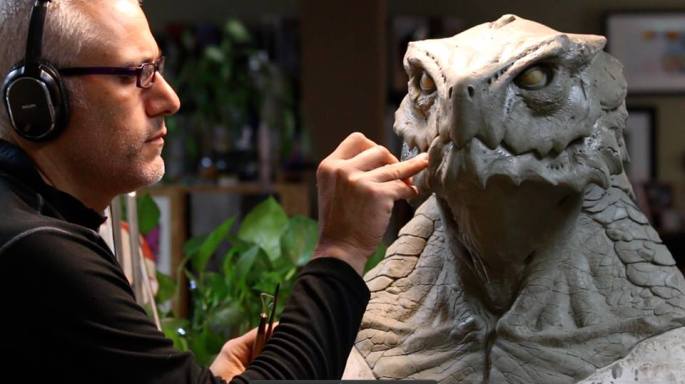
Out of the Shallows: An Interview with Sandy Collora by Kent Hill

Error
This video doesn’t exist

“Why weren’t you in the pros making stacks of cash and getting your toes licked by beautiful women?”

This line of dialogue from Shyamalan’s Signs always springs to mind when I think of the man and the career of Sandy Collora – and I told him as much. I have watched as filmmakers of lesser skill, passion and moxie rise and rise again with relative ease through the ranks of the Hollywood system.

But, while it boggles the mind as to why a man of Sandy’s talent has thus far been denied a shot to bring his truly awesome visions to fruition – his career has not been without triumphs. He has worked on some truly cool pictures like The Abyss, The Crow and Men in Black; along the way enjoying the benefits and encouraging tutelage of such luminaries like Stan Winston and Henri Alvarez.

Then came that little fan film you may have heard of, Batman: Dead End. Not only was it a game-changer, but it was also a life-changer, propelling Sandy into a league of his own and catapulting him toward the attention of the Hollywood players.

I referred to this period as Sandy being romanced by the industry. He refers to it differently. But he concedes that mistakes where made, and what might have been is anyone’s guess had he played the game by their rules.

Still the testament of all great artists that we applaud still, no matter the length of time it has been since they delivered unto the world their masterworks, is a resolve born of (in some ways) uncompromising vision and unshakable self-confidence. And, while Sandy freely admits the art of compromise will be necessary, if he hopes to realize his works on a larger scale, he (I hope) shall not lower his standards below that which work of his quality richly deserves.

Hunter Prey gave us a taste of feature-length Collora, and now he is at it again with his dynamic and compelling short, Shallow Water.

A new beast emerges, and with it comes the prospect of the reawakening of a genre made famous by its creatures like Alien and the Predator. It also marks the opening of another door for Sandy to, at last, the big time – a place in which he has fought hard to attain and worked tirelessly to offer some exuberance and, no doubt, something extraordinary.

There are so many great stories of great stories that have been a part of the life and cinema of Sandy Collora. I encourage you to check out the link below; find yourself a copy of, not only his incredible art books, movies and merchandise, but also the inspiring documentary: Behind the Mask.

Grand adventures, heartbreaking turmoil; this is the agony and the ecstasy, but also the the wisdom and the wonderment of the Collora cinematic universe. Dear listeners, it is my pleasure to present . . . Sandy Collora.

VISIT SANDY’S OFFICIAL SITE:

http://montaukstudios.com/

AND DON’T FORGET:

https://www.youtube.com/watch?v=TBSm6ZDY7n0

“Don’t be afraid.” – A review of The Grey by Josh Hains

You’re watching the opening titles click along, Open Road, Scott Free, the works all rolling through their frames in eerie silence. You think for a fraction of a second that maybe something bad will happen, maybe one of those wolves you’ve seen advertised will erupt into the frame and tear someone’s throat out and perhaps scare the hell out of you. It would be a most opportune time for a jump scare. Instead, wolves bay at the moon, their howls long and bone chilling. I think the howling is more frightening.

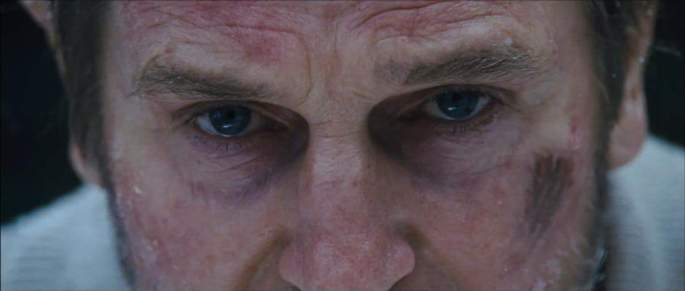
John Ottway (Liam Neeson) narrates the opening scene, conveying a “I-don’t-give-a-damn” no nonsense, cynical mindset. He drifts through the cold night like the ghost of someone who died with unsettled demons. A hopeless, broken man. So broken is he that Ottway contemplates and nearly commits suicide, his mouth firmly around the barrel of his rifle until the baying of wolves cuts his actions short. This understandably drawn out sequence is juxtaposed with marksman Ottway shooting a lone wolf that charged some oil drillers, a job he seems born to execute. Ottway respects the animal enough to stay with it until death, almost comforting the creature until its final breath.

A plane ride to Anchorage for oil rig workers on leave (Ottway amongst them) reveals seven more characters of worth, each one playing a significant role in the plot of the film. Flannery (Joe Anderson), the young reckless hick, scared out of his mind, nervous, panicky. Diaz (Frank Grillo) the cynical ex con with a penchant for the f-bomb and bar fights, and his pal Hernandez (Ben Bray). Lewenden (James Badge Dale), presumably a family man. Hendrick (Dallas Roberts), the sympathetic and rational religious mind of the group. Talget (Dermot Mulroney), the gutsy father. Burke (Nonso Anozie) the welcomed comedic relief in several key scenes. The plane they’re travelling in crashes, delivering easily one of the most terrifying on-screen plane crashes you’ll ever encounter on film; it’s the stuff of nightmares and fever dreams.

Ottway soon takes charge, seemingly the most experienced man in the group, making the decision to leave the crash site after Hernandez’s mangled body is found the morning after the sudden and brutal wolf attack that led to his death. The forest a few miles away will provide richer shelter against the harsh, unrelenting winter weather, and might work in the group’s favour against the wolves. Superficially,  The Grey is about a group of men the world seems to have discarded, “men unfit for mankind”, struggling against unfathomable odds. It’s a classic action adventure with elements of horror, but there’s more to this movie than just teeth and death.

The surviving men find opportunities for conversations that bring to light their wants and desires in life. Obviously, we learn the most information about our hero John Ottway, some though deep philosophical thoughts he seems to have been holding onto for ages, and some throughout the movie in the form of brief flashbacks with his wife. Though they are depicted as group at nearly all times, director Joe Carnahan (and co-writer Ian MacKenzie Jeffers, who also penned the short story Ghost Walker that The Grey is based on) understand perfectly how to treat each character as an individual guided by their own unique desire to survive this horrific ordeal, and live to tell about it. The performances across the board are all great, though Grillo and Neeson seem the most natural, helping maintain the grounded atmosphere the movie carries. Neeson deserved more praise upon release than he ever received for giving such a moving, raw performance.

At the end of the movie (*spoiler alert* for those who haven’t seen The Grey over the past five years) Ottway is alone, freezing, desperate, and significantly more broken than he was when we first encountered him, reflecting on those who fell before him by looking through their collected wallets (the real wallets of the cast). Soon realizing to his dismay that he has found the den belonging to the wolves that have relentlessly hunted him, he reflects upon the passing of his late wife, told through one last heartbreaking flashback, her final words giving him the strength to press forward and fight for his life. After taping a knife and broken bottles to his hands as the alpha wolf approaches him, he delivers the lines to an anonymous poem he mentioned to the group earlier that sat in his father’s office when he was a boy. The screen cuts to black, and we’re left stunned and profoundly moved.

Our only clue as to what went down between man and beast lies in promotional material, a brief glimpse of which is shown in a nightmare Ottway has and nowhere else, not even on the Blu-Ray’s deleted scenes. A post credits scene shows Ottway is alive, resting on the presumably dying alpha wolf, though it remains unclear if he is mortally wounded or just worn out, exhausted.

While the misrepresentation of the final product in the promotional materials irked many, it didn’t bother me like I thought it would because I still understand that the sequence (as awesome as it likely is) didn’t fit the tone of the rest of the movie. Liam Neeson slashing and stabbing a territorial wolf sounds like an epic fight for the ages, but that makes about as much sense as having Roy Scheider repeatedly stab the behemoth shark in Jaws to death while clinging to its dorsal fin. In a movie built on a foundation of callous logic and reasoning, that ending just wouldn’t have sat right in our stomachs, and I’m content with that.

poem1