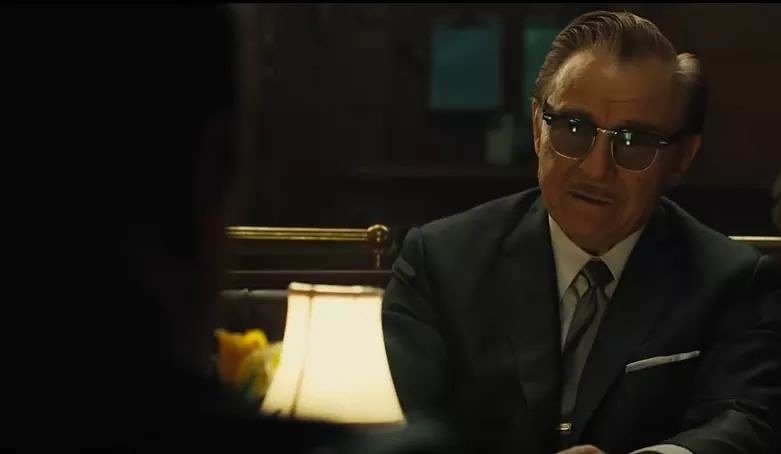
We are honored to present our latest conversation in our Actor’s Spotlight series. With this episode, Frank and Raymond Benson have a conversation with poet and actor Harry Northup who is living film history. Harry was featured in Martin Scorsese’s first six films WHO’S THAT KNOCKING AT MY DOOR, BOXCAR BERTHA, MEAN STREETS, ALICE DOESN’T LIVE HERE ANYMORE, TAXI DRIVER, and NEW YORK NEW YORK. Harry was also a frequent collaborator with maverick filmmakers Jonathan Demme and Jonathan Kaplan. Harry has been featured in SILENCE OF THE LAMBS, THE MANCHURIAN CANDIDATE, TOM HORN, and OVER THE EDGE amongst many others. Harry recounts his very rich filmography, along with stories of working with actors Harvey Keitel, Richard Farnsworth, Billy Green Bush, Peter Boyle, and Steve McQueen.
The first person we see is Sidney Westerfield, a grinning, amiable tavern owner in “Mongaup Valley, New York State.” He is a man who has seen no small amount of years, so much so that he’s still calling movie theaters “the moving pictures.” The look on his face is both awed and grateful. His tone sets the table. “The kids were wonderful,” he says, almost wistfully. “Nobody can complain about the kids.” He also promises that whoever does see the film that has documented this phenomenon “will really see something.”
It’s a little hard to fathom Woodstock in this day and age. In a time where everything from casual meetups to nationwide protests can be organized over a social media app on a phone, the thought of half a million kids caravanning from all over the lower 48 just to descend on the otherwise unremarkable town of Bethel, New York for a music and arts festival is kind of mind-blowing. Almost more astonishing than that was that so many of them just went on blind faith that they would somehow be able to get into the festival without tickets. And there were so many of these that, within hours, the fences were torn down and anyone who wanted in, got in.
But I suppose the only thing in any of that that’s unfathomable is that it occurred in a time of AM radio, three network channels, and, usually, two editions of the daily newspaper. If my WiFi is down for an hour, I feel like I’m Henry David Throreau. But somehow these folks came from all over for a festival that was more or less pitched to residents of New York only.
Woodstock, the documentary film that was released in theaters in 1970, is the grand spectacle from the ground floor; a sunkissed narrative of a small nation-state of fired up young people who were doing their best to change the system for the good with peace, love, and music. And, indeed, director Michael Wadleigh (Wolfen) and editor Thelma Schoonmaker (and, to some degree, co-director and co-editor Martin Scorsese) assemble the film as a beautiful ode to the power of communal spirit which netted an Oscar for Best Documentary and earned Schoonmaker her first Oscar nomination (a competitive technical Oscar nomination for a documentary is a RARE bird). From the opening montage of the unspoiled farm of Max Yasgur as the advance team arrives and begins to assemble to stage to the final moments of a very much changed landscape that has been worn down to its muddy foundation, Woodstock is an ode to lightning in a bottle; a monumental bacchanal that, despite the anniversaries and spin-off/knock-off festivals that actually eclipsed it in terms of attendance (the Watkins Glen Festival with the Grateful Dead, the Band, and the Allman Brothers drew a bigger crowd), remains its very own special chapter in American history.
The film more or less follows the three days of the festival, doing a masterful job of mixing the musical performances with the captured moments with festival goers and the citizens of Bethel. The practical concerns of the people who actually live there and are then forced to live through what turned into a disaster area butt up against the encroaching hippies who seem to wander in and out of the frame like the living dead in Romero’s rural Pennsylvania. But this is in the service of being even-handed. Woodstock, the film (and, by extension, its soundtrack), needed to be a hit to help offset the losses from the actual show and these folks weren’t going to make a bucket of money bumming people out by showing a three hour movie about a bunch of pissed off townies and farmers and their economic hardships during the Woodstock festival. No, Woodstock had to be first and foremost a concert film because, after all, that’s what was at the backbone of the festival in the first place.
And as for the performances in Woodstock, they’re mostly all pretty terrific. Standout moments belong to Richie Havens having the unenviable task of opening the whole affair and setting the tone with the electrifying “Handsome Johnny” and “Freedom;” a pregnant Joan Baez bringing the vocal lumber to “Joe Hill” and “Swing Low, Sweet Chariot” in the middle of a very cold night; Crosby, Stills and Nash pulling off a flawless “Suite: Judy Blue Eyes;” Joe Cocker overcoming his backing singers who seem to be lost in the sauce of a different key during a powerful, career making cover of “With a Little Help From My Friends;” Sly and the Family Stone mostly setting the stage on metaphoric fire with a version of “I Wanna Take You Higher” that will get you pregnant; and Santana’s rendition of “Soul Sacrifice” which contains a jaw-dropping and borderline ridiculously sublime drum solo by Michael Shrieve, then just barely 20 years old and the second youngest performer at the whole festival that will get you even pregnant-er.
And not completely undersold is the darker side of Woodstock. As mentioned before, it touches on the community unrest and the conflicts between the conservative mentality with the more progressive and lax townsfolk. And the film famously includes the inconvenient rainstorm which created a disgusting swamp of mud which, occurring on day three, was probably the last straw for some. There are folks on bad trips, people emotionally overwhelmed by the situation on the ground, and then Sha Na Na shows up for some fucking reason.
And a film as sprawling as Woodstock is going to be bound to be as famous for what DIDN’T make it as it is for what did. The end of Abbe Hoffman’s street cred was famously delivered by Pete Townshend when the former climbed up on stage to go on a typical rant about John Sinclair and the latter knocked him off of the stage. That’s not included. Credence Clearwater Revival, the first band contracted to play, drew such a lousy play time (12:30 a.m on Sunday following a set by the Grateful Dead that was capped with a fifty minute rendition of the Pigpen-fronted “Turn on Your Lovelight”) that John Fogerty disallowed the band’s appearance in the film or on the subsequent soundtrack citing a substandard performance. And touched upon but not really explored is just what a financial disaster all of it was. If organizers Artie Kornfeld and Michael Lang’s “Far Outs” and “Outta Sights” were currency, then they might have broken even. But as they stand around with dopey grins on their face as their capitalistic venture gives way to socialism when the fences come down with a quickness and the paid festival becomes a free one, Lang and Kornfeld’s eyes look glazed over and in a certain kind of shock that belie their supposed antiestablishmentarianism.
Even more perfumed in nostalgia is the longer director’s cut which was released in 1994 to coincide with the festival’s 25th anniversary as it incorporates sets from Canned Heat, Jefferson Airplane, and Janis Joplin. In a lot of ways, these are mostly backwards glancing as the presence of Janis, who would die within two years of her performance, seems necessary if only to remember that, yes, Woodstock had an edge of loss that was felt a year after the film came out in the theaters. As joyous as the Canned Heat set is (most especially when a fan bounds onto the stage and bums a cigarette from singer Bob Hite), it lacks the dazzle of Schoonmaker’s split-screens and multi-angled coverage feeling more like raw footage thrown into the pool for a bigger party. And the longer cut also adds back to Jimi Hendrix’s performance, elongating the electrifying but incredibly sad end of the festival, forcing the viewer to perhaps reconsider the film’s denouement in the shadow of Altamont which, in 1970, didn’t mean the same thing to the Boomers as it did in 1994.
But, honestly, it’s probably best to remember Woodstock as a golden memory and not as the realistic, muddy sump hole that left starving hippies gnawing out the last bit of watermelon as if they had been banished to a weird kind of hell on earth. No. The kind of grim reckoning that was upon America was but weeks away on the other side of the country when The Rolling Stones would get over their skis. On the contrary, Woodstock drives most scenes to an upbeat ending and presses the point by focusing on the goodness of everyone (the Port-O-San Man is a national treasure). And it’s in this spirit that, before snapping back to the pristine Yasgur farm to begin a recap montage over which the closing credits will roll, the last moment we see in Woodstock is an aerial view of the festival at its most swollen; a massive and unthinkable dream come true. It actually happened and you’ll always have the memories. It’s a beautiful snapshot of the determination and boundless energy of the young.
Regardless of the sociological ramifications of the Woodstock generation and the kind of cynical thought process that naturally occur when one luxuriates into middle age, my mind still likes to think about Woodstock in terms of the open-faced, plaid-clad girl who pops up to talk about being asked to tell a stranger about his wild eyes. Her revelation that she has to get her sister back home in time for court seems like quite a task but her follow-up that reveals that her sister got lost somewhere in the crowd during Richie Havens makes one’s eyes widen. After all, this is now a sea of people and Richie Havens was the first performer. How in the world will this even realistically happen? Will the communal spirit that drove all of these people to Woodstock in the first place be the thing that will draw these two siblings back together through the thick of the throng? Perhaps that’s the most fitting thing that can be said about the prevailing spirit of Woodstock. Regardless of its inherent naïveté, somehow, someway you kind of figure that she’s going to find her sister and, as John Sebastian said, “everything is gonna be all right.”
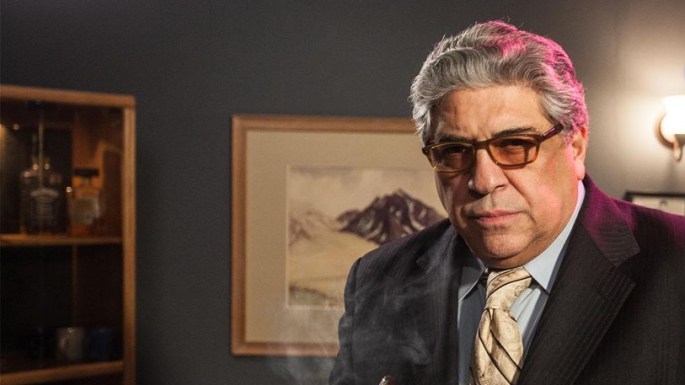
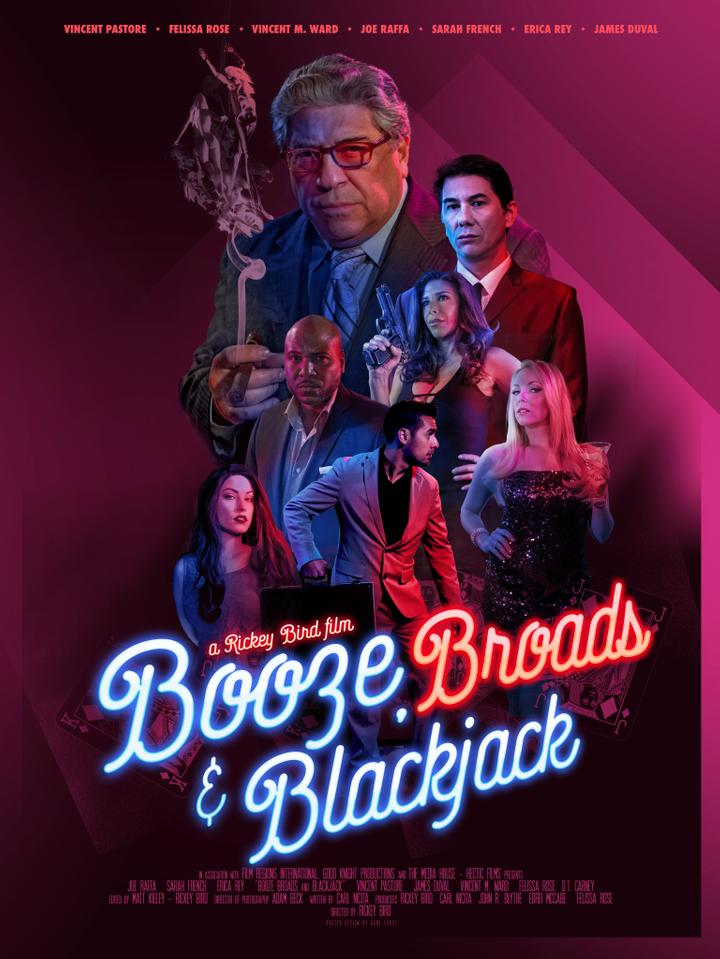
I’m guilty of not reading Carl Nicita’sbook which kicked this whole thing off…but I plan to remedy that as soon as humanly possible. Because, from the campaign art (pictured above), I thought I might be in for the stock standard gangster offering. I’d already swallowed the hook, ’cause like directorRickey Bird Jr. told me, “That’s a great title,” and indeed it is. Still, as is often the case with the gigantic strides being taken in the field of low budget film-making nowadays, like Transformers, they are increasingly becoming more than meets the eye.
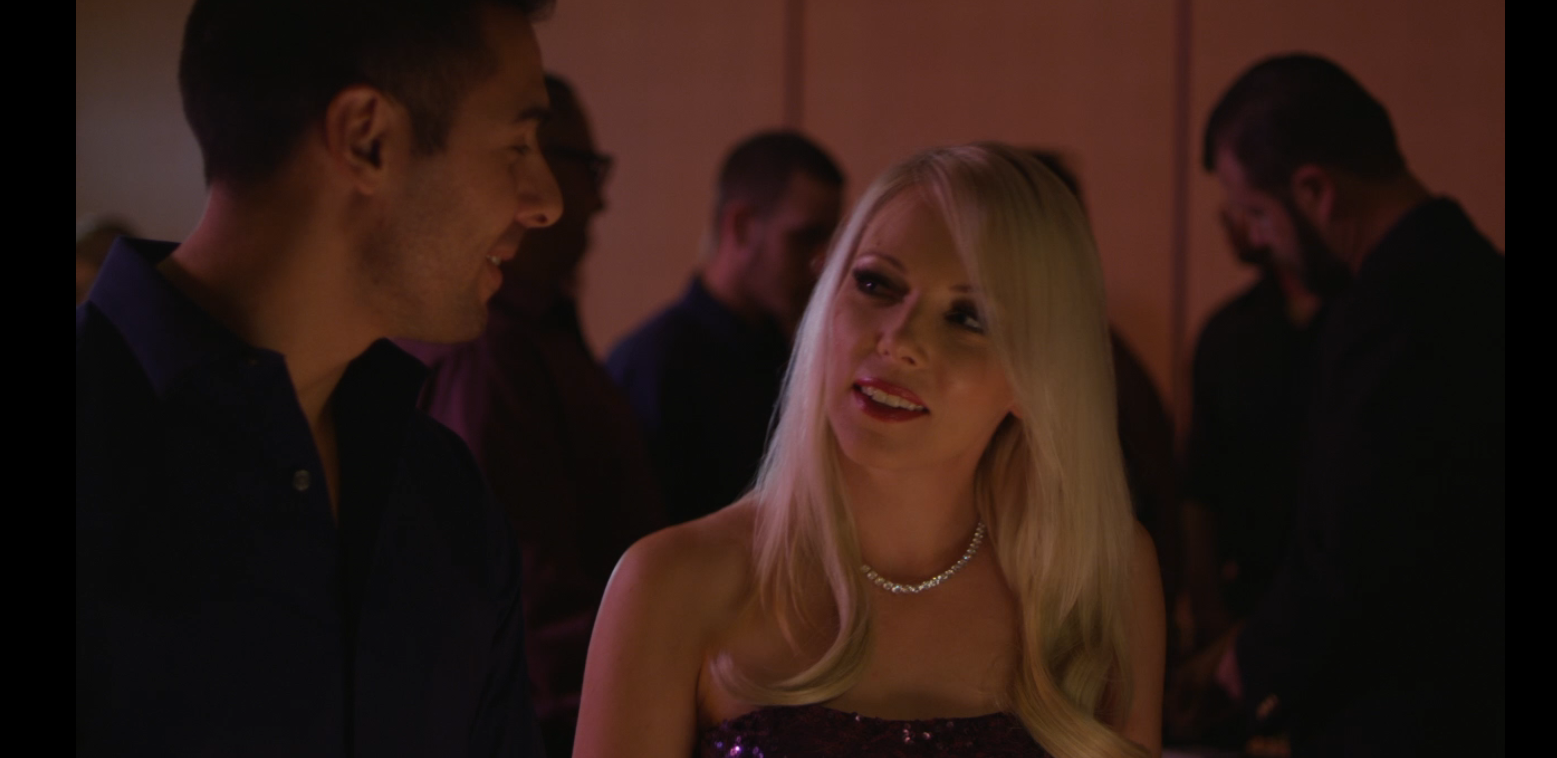
What happens in Vegas, doesn’t always stay in Vegas. So when Jack King (Joe Raffa, “Portal”, “Dark Harbor”) decides to try his luck at a blackjack tournament – with a little somethin’ on the side to handle for his mob boss Uncle Vinny, Vincent Pastore(HBO’s “The Sopranos”) , this tale transforms into a vodka martini shaken by an earthquake and stirred by a maelstrom. Jack’s Vegas weekend descends from one hell to the next when he is targeted by the mob after his girlfriend witnesses a murder
“Booze, Broads and Blackjack,” received a release on Amazon Prime Video on July 24th, 2020 in the United States and United Kingdom after racking up several awards despite being sidelined by COVID-19. The mob thriller, nominated for Best Picture in both the Los Angeles and New York Film Awards, won Best Crime Film in both festivals. In the Actors Awards Los Angeles 2020 competition – Pastore was nominated as Best in the ‘Fest and garnered Best Actor in a Crime Film. Co-star Sarah French (“Rootwood”) won Best Actress in a Crime Film.
The film was produced by a joint venture between Film Regions International (FRI) the company behind the acclaimed groundbreaking documentary “My Amityville Horror” Hectic Films Productions, best known for “Machine Gun Baby” and Good Knight Productions.
In addition to Pastore, Raffa and French, the film also stars Felissa Rose (“Sleepaway Camp”), Vincent M. Ward (AMC’s “The Walking Dead”) and James Duval (“Independence Day”, “Donnie Darko”).
The film is available on Amazon Prime Video for rental or purchase and will also receive subsequent VOD platforms to follow in the near future.
It is impossible to convey to those who weren’t there when STAR WARS was new – what it used to be like. For the third time since my existence began, I find myself faced with the end of yet another trilogy – the end of the Skywalker saga . . . ?
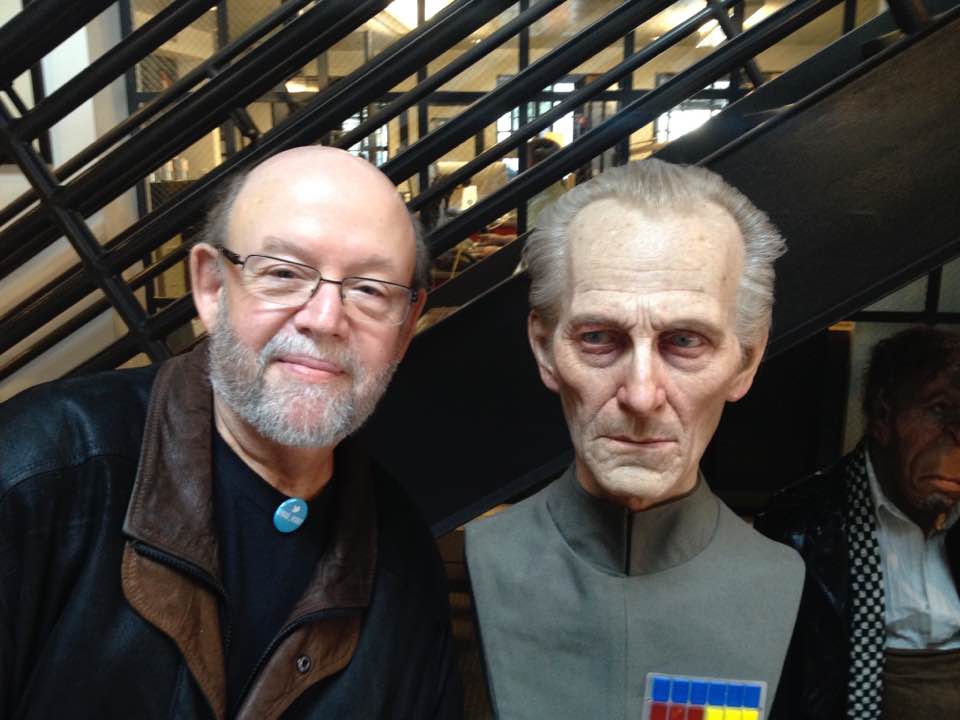
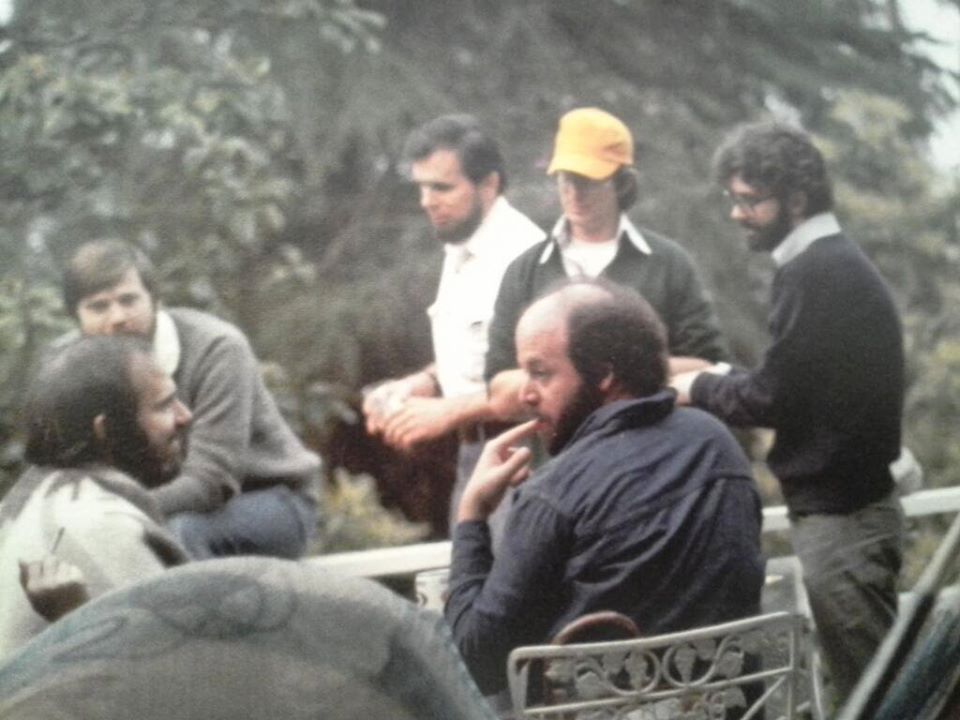
So it was with incredible nerves thundering tremulous throughout my body, that I sat down to talk with the man, and I want you to really think about this, who cut the scene in which Luke and Ben Kenobi discover the message hidden in R2. He cut Luke’s run, part of the final assault on the Death Star. He is even the man who suggested to George Lucas that Vader’s lightsaber be red and Obi-Wan’s be blue. As a STAR WARS fan . . . think about that. Think about the contributions of Paul Hirsch on the images that permeated our dreams and in some cases . . . shaped our destinies.
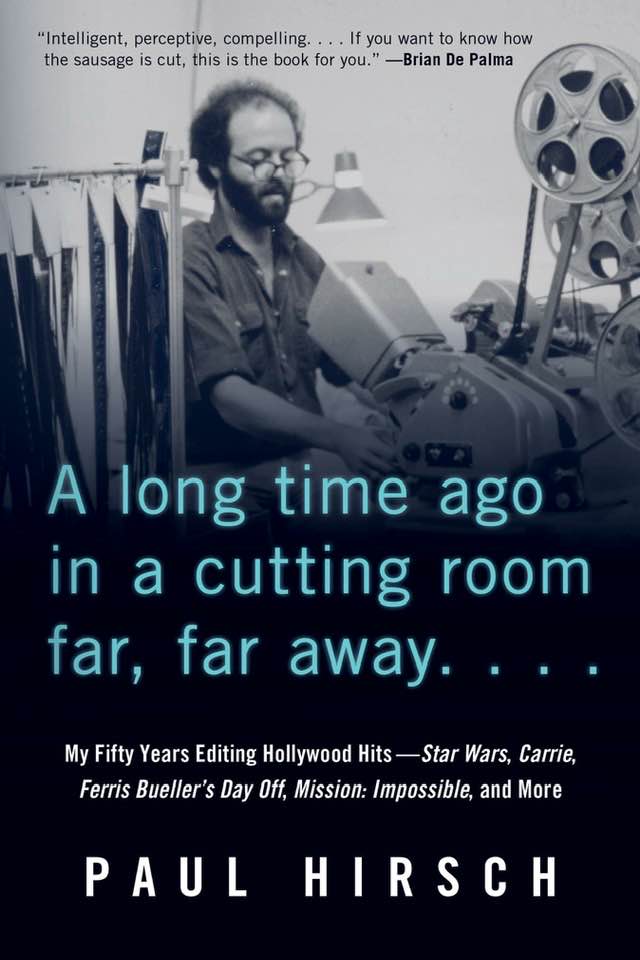
On the eve of the Rise of Skywalker, it was a trip indeed to speak to and the read of the cinematic legacy of Mr. Hirsch. With his book A LONG TIME AGO IN A CUTTING ROOM FAR, FAR AWAY, Paul takes you back in time to a place when editors held the iconic images that flash before us on the silver screen…between their fingers.
My beloved Empire Strikes Back. Yes Paul came back for the sequel, but this is not merely an ode to the realm of Jedi’s and Rebels – it is a look inside the mind of a skilled craftsman of his art, and the journey which saw him mingle among the mighty company of the heavyweights of that last glorious era of Hollywood . . . the 70’s.
In a time when the men we would come to define as masters began their adventures in the screen trade: George Lucas, Steven Spielberg, Brian De Palma (with whom Paul cut frequently), Francis Coppola – oh, what a time. And it is not only the holy trilogy that has passed beneath the keen eyes of Hirsch – the work of other magnificent filmmakers like John Hughes, Joel Schumacher, George Romero,Herbert Ross, and Charles Shyer have all benefited from Paul’s expert touch.
It took George’s clout to get him into Kubrick’s editing room. James Cameron boasted to him (referring to Titanic) that he made more money than the ‘WARS’ and didn’t have to make a sequel. He cringed at the idea of editing the helicopter sequence in Apocalypse Now for six months when Francis suggested it . . . yes folks . . . the cinema that has moved us to tears and had us on our feet cheering, has been before the eyes of my guest. And may the force be with him . . . always.
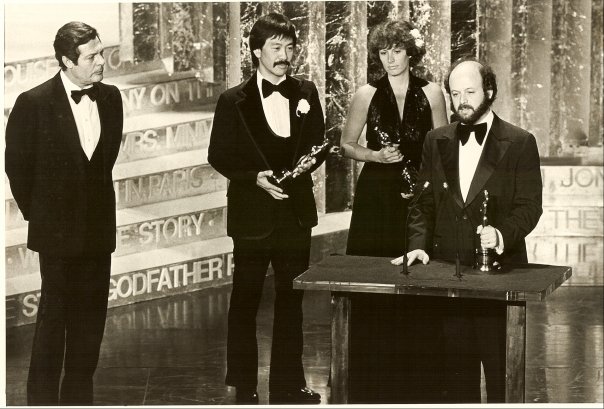
Ladies and Gentleman, please seek out the book, but until you do join me and Academy Award Winner . . . Paul Hirsch.
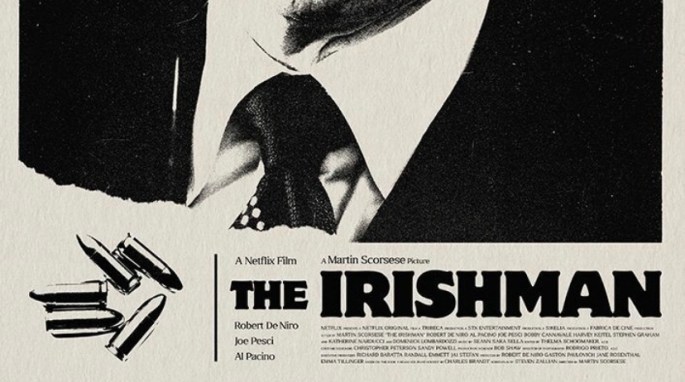
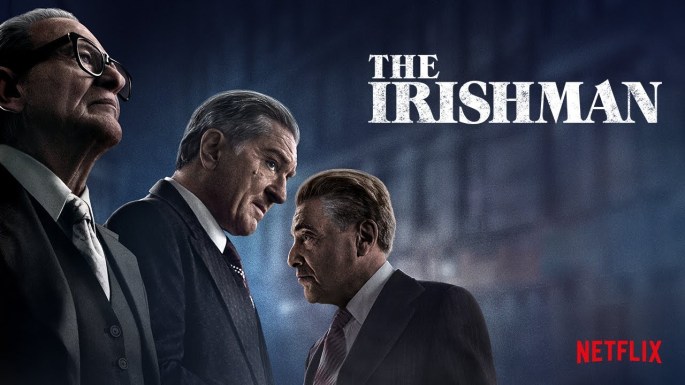
Remember when VHS was a thing and epic films like Titanic, Lord Of The Rings and Doctor Zhivago took up two tapes, twice the shelf space and therefore further branded their larger than life perch in cinema by doing so? Well, Martin Scorsese’s I heard You Paint Houses aka The Irishman would have likely taken up three tapes and thrice the shelf space, and will surely go on to leave a similar mark as aforementioned films. We will of course never see a VHS let alone a DVD as it’s a Netflix original film but none of that diminishes the monolithic power of this brilliant, vast and mesmerizing piece of work. It’s not just a mob epic, historical treatise, characters study or interpersonal drama, although it is all those things in top form. Scorsese is 77 years old, his actors in similar range. They are all on the far side of the hill in terms of their careers and with that comes a certain rumination on everything, a parting of the clouds, quietening of thought and deep introspection on one’s own life, and what it all means at the end. It’s a powerful yet fiercely inward look at a man throughout most of his life and then, seemingly snuck up on him as I imagine it does to us all, nearing its end.
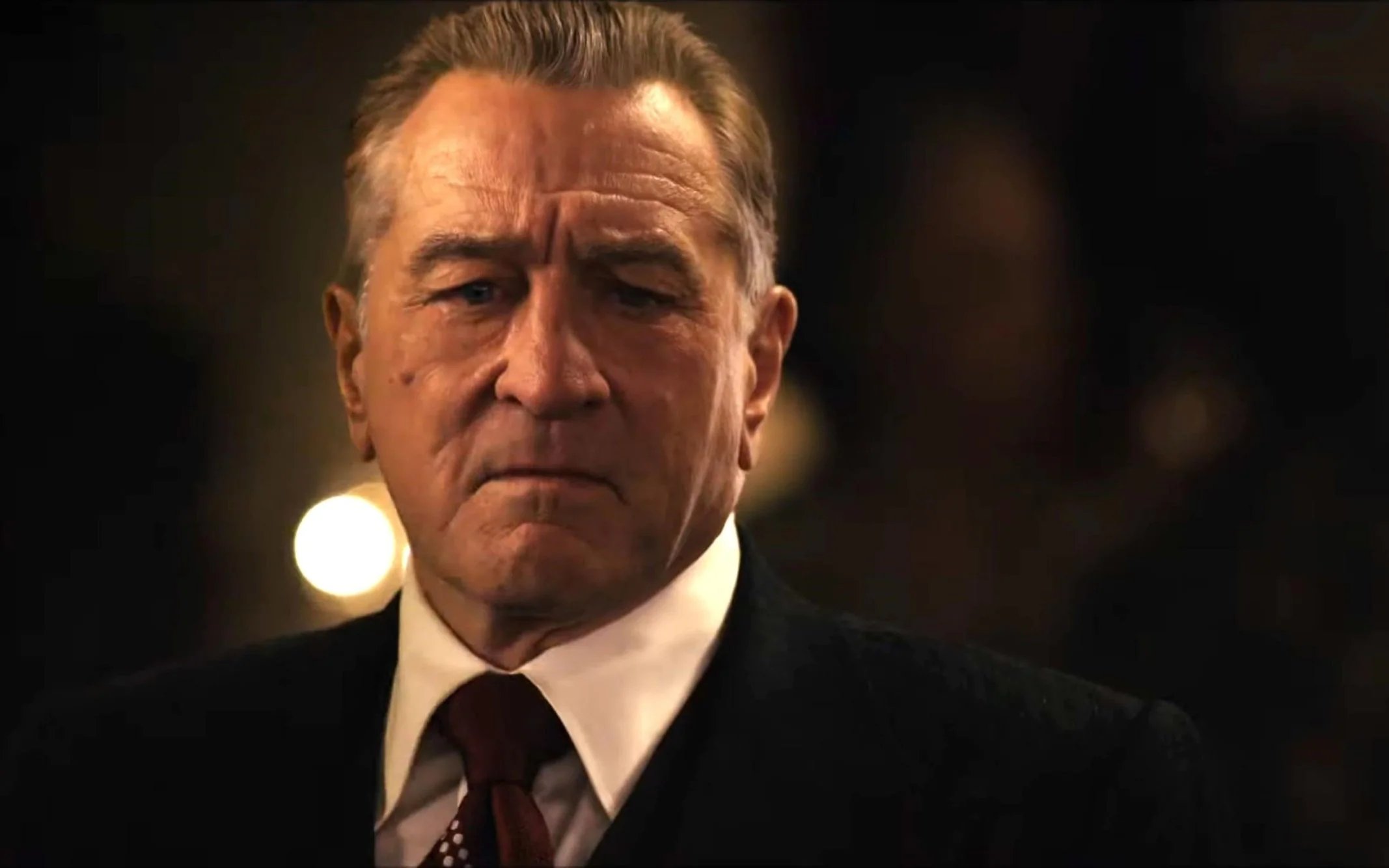
Robert DeNiro is stoic, guarded Frank Sheeran, a man who learned loyalty and brutality in the military and has brought it home with him to implement in a fearsome career as a mafia hitman, union boss and confidante to Al Pacino’s gregarious Jimmy Hoffa, a man synonymous with American history. Joe Pesci is Russell Bufalino, the entrepreneurial crime boss who takes Frank under his wing and eventually forges a lifelong yet often stormy friendship with him that is eventually upended by Hoffa. The tapestry of American lore and incident flows fluidly with Scorsese’s talent for music, montage, beautiful sound design and always reliable editing from the great Thelma Schoonmaker. De Niro plays Frank as a guy whose loyalty goes seemingly beyond his own understanding sometimes and when he reaches that final bend in the road and observes the choices behind him and what little light he has before him, is somehow bewildered how it all went down, like he was on autopilot or didn’t see the big hits coming. Pacino is a fucking tornado of scene stealing gusto as Hoffa, the only actor here to really let it rip and shoot for the moon. Pesci disarms is by being quiet, calm, observant and showing none of the piss n’ vinegar, coked up squirrel mannerisms he is infamous for, it’s a brilliantly counterintuitive piece of work and it was so worth the wait for him to come out of retirement. Harvey Keitel is superb in a cameo as crime boss Angelo Bruno and the supporting cast is densely seasoned with excellent performances from Bobby Cannavale, Stephen Graham, Stephanie Kurtzuba, Ray Romano, Jesse Plemons, Jack Huston, Katherine Narducci, Dominick Lombardozzi, Paul Herman, Paul Ben Victor and more. Anna Paquin gives a brief but devastating turn as Frank’s daughter Peggy, his anchor point and one of the key ways we see his actions affect his environment over time.
I won’t pretend to be a Scorsese completist as I’ve still not seen some of his best regarded films and tend to gravitate towards the ones that hardcore fans place lower in his canon, but this has to be one of the finest by anyone’s count. It feels like a goodbye, even if all involved go on to make some work here and there before the end, this is the last ‘getting the gang back together’ picture for them, and they make the most out of it. DeNiro’s Frank candidly and occasionally wistfully recalls the story from a humdrum retirement home common room, speaking pretty much directly to the audience. Scorsese too, although always unseen behind the camera, speaks out to his audience and gifts us this beautifully crafted package with all the tricks, talent, passion and devotion to filmmaking he has in store. This can almost be seen as a companion piece of sorts to Quentin Tarantino’s Once Upon A Time In Hollywood; both are late career magnum opuses heavily stocked with a rogues gallery of their friends and cinematic family, both are sprawling epics that take place in our world but speculate heavily and rearrange history to bring a vivid, enthralling and important story to life. Whether or not you believe that what went down here with Hoffa, Sheeran et al is true or not is irrelevant to this film. It’s a story set in an America of yore and one that isn’t necessarily always about the apparent events on display, but what they will lead to and how they will be looked back upon by these characters decades later. A masterpiece.
We are completely honored to bring you our chat with actress Stephanie Kurtzuba. Stef recently stars alongside Robert De Niro, Al Pacino, Joe Pesci and Harvey Keitel in Martin Scorsese’s THE IRISHMAN which is currently streaming on Netflix. Her other credits include THE WOLF OF WALL STREET, ANNIE, and the upcomig film BAD EDUCATION with Hugh Jackman. Her television credits include CHICAGO PD, BLUE BLOODS, THE LEFTOVERS, and THE GOOD WIFE. Stef speaks about her early beginnings in Nebraska to attending NYU, working on stage, and meeting Martin Scorsese and working on one of the best films of the new century, THE IRISHMAN.
Martin Scorsese closes a decade, much like he opened the 70s; crafting and birthing a deeply personal film that instantly stands to be marveled at, and is cause for celebration. The names Martin Scorsese, Robert De Niro, Al Pacino, Joe Pesci, and Harvey Keitel are all what legends are made of and once they are gone, they are instantly irreplaceable and each of them will become an idol of a time in human history where movies became cinema, and each one of them will become an iconic footnote of the lasting impression of art.
There is so much to take away from this picture. Yes, it is a cumulative capstone of a generation of artists who have become the living embodiment of cinema, while also revolutionizing computer generated de-aging to a point where it is not a gimmick, it becomes reality. It pushes past the boundaries of tentpole fatigue and allows these four actors to move fluidly throughout four decades, all the while teaching the viewer about the passage of time where the final destination is death.
The entire film is underplayed and painstakingly low key. Thelma Schoonmaker’s editing glides at a steady pace, the performances are all somber as they are sublime, with the exception of Al Pacino who gives a magnetically hammy turn as James R. Hoffa. Robert De Niro’s transformative performance marks a new high as what it is to be stoic, and Joe Pesci gives such an anti-Pesci performance, he will linger with the audience long after the credits roll.
And then there is Harvey Keitel. It has been thirty-one years since Scorsese worked directly with Keitel and fifty-two years since the two first worked together on WHO’S THAT KNOCKING AT MY DOOR. Scorsese bestows the David Bowie in THE LAST TEMPTATION OF CHRIST or Paul Sorvino in GOODFELLAS role to Keitel; the extended cameo that is so powerfully singularly due to casting, his presence hangs throughout the duration of the picture. It is an overly emotional re-teaming of the two strange bedfellows – the former Marine and devout Jew coupled with the anxious and hyper-obsessive artist whose Catholic guilt is worked out over the course of over fifty fruitful years of being the father of modern-day cinema. It is an absolute joy to bear witness as these two cinematic icons work together again in what will forever be Scorsese’s most seminal and grandiose work.
Inside the film, Scorsese sticks with the original title of I HEARD YOU PAINT HOUSES. And within it, he made his most self-aware picture that subtly references his career through music, atmosphere, location, and casting. He pulls in a cast representative of the many eras of his canon. His HBO era cast of Bobby Cannavale, Ray Romano, Stephen Graham, Jack Huston, and Dominick Lombardozzi to his gangster-era casting of Paul Herman and Welker White to the new guard of Stephanie Kurtzuba, Bo Dietl and J.C. MacKenzie all play a prominent role of merging Scorsese’s entire career into one three and a half-hour film.
There is a moment in the film where De Niro is gifted a ring by Pesci, where the ring in question is only worn by three people: Keitel, Pesci, and now De Niro; signifying Scorsese’s three boys, and the ones who are most representative of cinema’s most important auteur and solidifying their status as cinematic titans.
Netflix has truly outdone themselves with putting all their support and money behind Scorsese and letting him do whatever he wants. There isn’t another entity in existence that would have let Scorsese do what he did with this picture, and their protection of not allowing a massive theatrical run is absolutely just.
I HEARD YOU PAINT HOUSES, is Scorsese’s most import and cathartic work; and shows the audience about the embracement of death in a way that has never quite been conveyed on film. This is not a gangster film populated with slow-motion kill shots cued up to the Rolling Stones or Eric Clapton; it is a deeply personal picture that is a goodbye from Scorsese, De Niro, Pacino, Pesci, and Keitel.
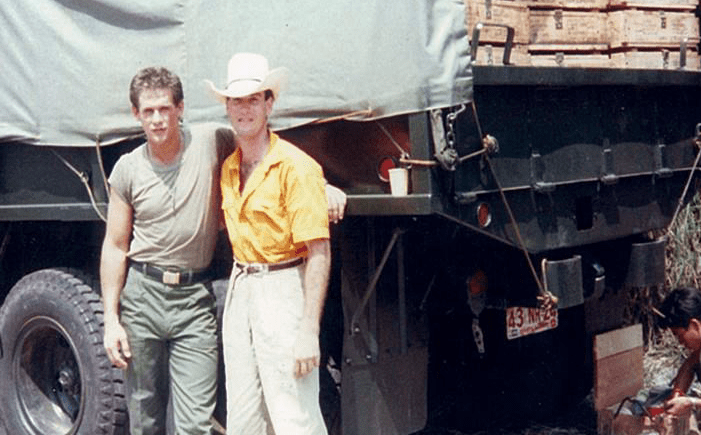
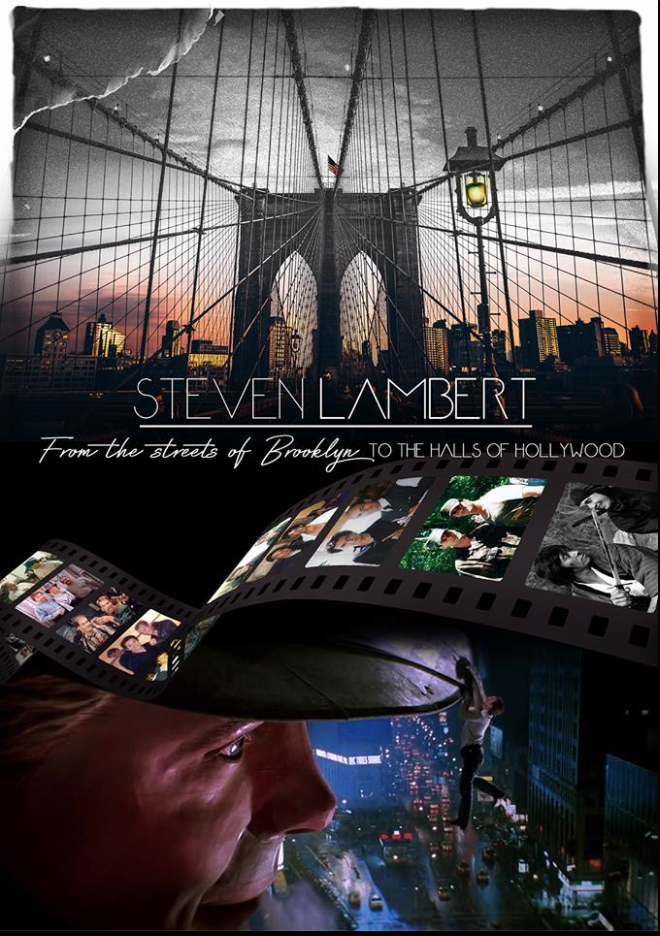
Steven Lambert has crafted what is, the apotheosis of a war chest of cinematic tales, told in such a vivaciously detailed manor . . . you crave each and every page. It was staggering to read this man’s life and his journey from the neighborhoods of Brooklyn, to the Mount Olympus of the movies.
Buckle up for what has to be the wildest tell-all, behind the scenes peek into movie history, bursting at the seams with an incredible life, never before told. A self-proclaimed “punk kid”, Lambert trained in the martial arts before becoming an in-demand stuntman in the final golden age of Hollywood, rising from glory to glory, working with and beside screen legends such as Arnold Schwarzenegger, Sylvester Stallone, Jean-Claude Van Damme, Harrison Ford, Al Pacino and James Woods.
Lambert relates such staggering exploits – putting his life on the line for death-defying stunts in films such as Remo Williams: The Adventure Begins, where he literally hung from the Statue of Liberty without a harness, doubling Sho Kosugi, the original screen ninja, in films such as Revenge of the Ninja and Ninja III: The Domination. He witnessed the meltdowns and bad behavior from Nicolas Cage and Sean Penn on Racing With the Moon while doubling Penn. And, last but not least, “THE TRUTH” behind the Gene LeBell and Steven Seagal showdown on the set of Out for Justice.
He’s heard and seen it all – from Chuck Norris to Charlton Heston. I personally could chat to Steve for days, but I’m honored to have been given the time I had, and was humbled to read his utterly absorbing tome that is so packed with awesomeness, you just gotta get out there and get it! From the Streets of Brooklyn, to the Halls of Hollywood – NOW!
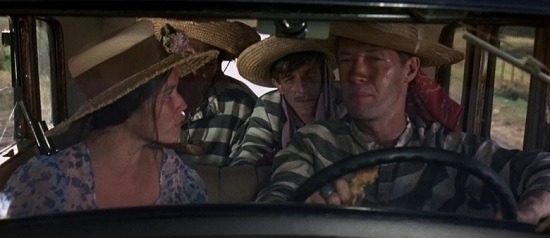
BOXCAR BERTHA is not only an aesthetic precursor to Martin Scorsese’s seminal picture, THE LAST TEMPTATION OF CHRIST but also a thematic one. It is equal parts a love story between the lead, Barbara Hershey, and man, David Carradine but also Scorsese’s most Americana film that encompasses the life of the 1930s through craps games, bank robberies, and our heroes riding the rails.
The film is very low budget and not as polished as those of us who have followed Scorsese’s career are used to. It’s rough and hard, playing less like a Scorsese picture and more like a less tuned version of BADLANDS or some early Malick movie that time forgot; yet the film plays more like an exploitation than something whimsical.
In typical Scorsese fashion, he has his core ensemble of actors who would again appear in later works, Hershey, Carradine, Barry Primus, Harry Northrup, and Victor Argo. And naturally, the film features a cameo by Scorsese himself. Bernie Casey is also featured in an excellent turn, who brutishly rounds out the gang.
In the film’s less than ninety minute runtime, a lot of ground gets covered, and the plot devices and the pacing is slightly out of sync but works towards the film’s advantage. Through it’s exploration of sex and violence, this was the first “studio” film where Scorsese honed his skills as one of cinema’s most important auteurs.
Hershey gives a marvelous performance as a young woman who accidentally gets ensnared in a fight between the railroad and its workers, becoming the eye of Carradine’s storm. Big Bill Shelley is his name, and busting up the railroad is his game. Carradine is such a magnificent bastard in the film, and wonderfully chews each scene he is in. John Carradine, his father, gets a very fun, albeit, brief role as the railroad tycoon determined to bring Big Bill Shelley down. And of course, Scorsese gives us one scene between the two.
It is not Scorsese’s most important film, nor by any means is the film a masterwork. It plays like a thesis film he’s making as so he can graduate and blossom into the filmmaker he is known for today. It is sexy and dangerous, it is rough around the edges, and has such a grandiose ending; one that is one so striking and powerful, both thematically and practically made, that any serious viewer of film cannot help but absolutely admire how audacious it is.
BOXCAR BERTHA is available on blu ray from Twilight Time and to stream on Amazon Prime.
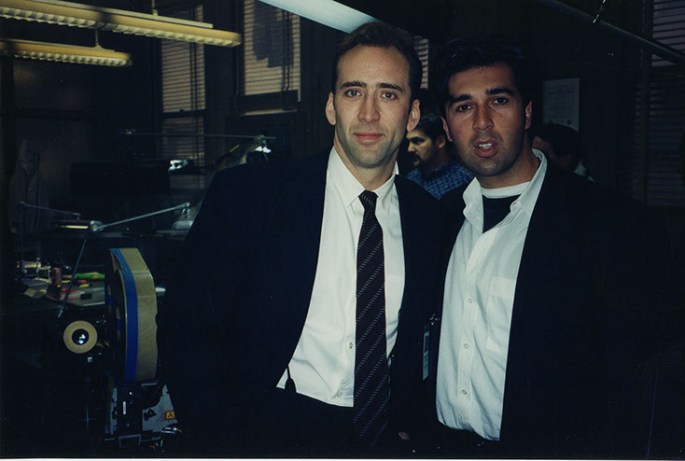
I feel like I’m somehow getting closer to Nicolas Cage. I’ve spoken to a man who has directed him – a man who has “Nic-polished” his scripts. So, you can image my delight when Marco Kyris, Cage’s stand-in from 1994 till 2005, agreed to not only have a chat, but also to give me a preview of his new documentary, UNCAGED : A Stand-in Story.
EPSON MFP image
EPSON MFP image
EPSON MFP image
EPSON MFP image
EPSON MFP image
EPSON MFP image
People ask me, “What’s with this Cage obsession?”
My answer is always…I think he’s a genuinely smart actor, with eclectic tastes and a wide repertoire which has seen him enjoy Oscar glory, big box office success and become a champion of independent film.
EPSON MFP image
EPSON MFP image
EPSON MFP image
EPSON MFP image
EPSON MFP image
The son of August Coppola (nephew of Francis Ford), but with a name lifted from the pages of his comic book heroes, Cage is at once both an actor and a movie star. With a legion of devoted fans worldwide and, heck, even a festival that bears his name – celebrating the wild, the weird, and the wonderful of the cinema of Nicolas Cage. From the genius of Con Air to the brilliant subtlety of Adaptation, the exceptional character work of Army of One to the gravitas of Leaving Las Vegas – Cage is a ball of energy that needs only to be unleashed on set.
EPSON MFP image
EPSON MFP image
EPSON MFP image
EPSON MFP image
EPSON MFP image
It was my sincere pleasure to talk with the man who stood in for the man when the man wasn’t on set. Marco’s tales are a fascinating glimpse – another angle if you will – in the examination of one of the movie industry’s true originals. I know you’ll find his story and his film, UNCAGED, compelling viewing – for both those curious as to the life of a stand-in, and also those looking for a unique look at the life of a superstar.
I’ve been privileged to chat with the people who made the rough stuff look easy for Arnold Schwarzenegger and Rene Russo…






















 Podcasting Them Softly