David Lynch’s Twin Peaks Fire Walk With Me: A Review by Nate Hill

  
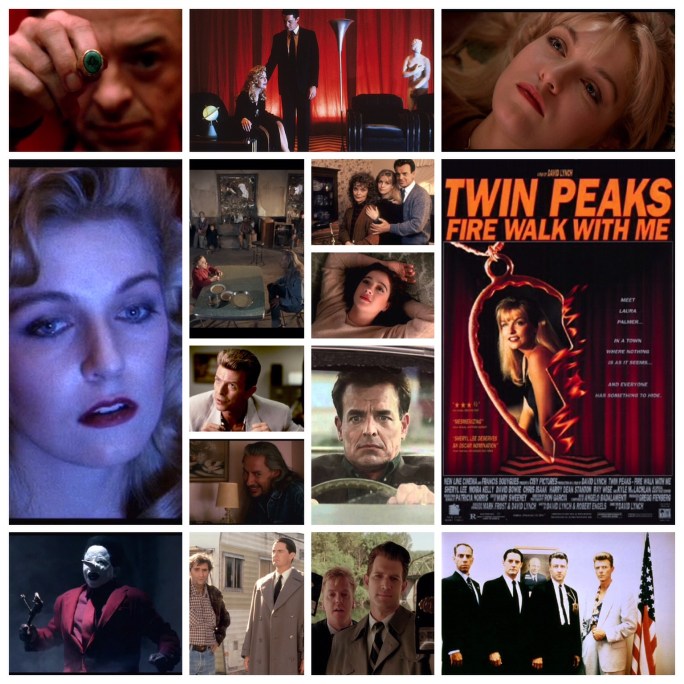
David Lynch’s big screen prequel/sequel to his television phenomenon Twin Peaks departs from the shows light, kooky and benignly eccentric sensibilities. It starts at the more surreal, dark atmosphere which sometimes materialized in the show, especially in the last episode, and plunges headlong down a rabbit hole of sex, murder, mysteries, federal agents, parallel universes, psychological torment, otherworldly spirits, supernatural phenomena, incest, more cups of coffee (Im not even kidding, there’s a scene where a stressed out looking Harry Dean Stanton makes a ‘cup of good morning America’), and above all, Laura Palmer. The beautiful, mysterious homecoming queen we only saw as a corpse in the series comes to wild, screaming life in this film, and what a performance from the gifted Sheryl Lee. She perfectly captures the menace, hurt, confusion, hope, torment and wild desperation of Laura, in a towering, stunning performance. Ray Wise is equally magnificent as Leland Palmer. Angelo Badalamenti switches up the tone as well, letting the beautiful Laura theme and the classic Twin Peaks tones only play in limited, selective fashion. His theme for the film is a powerfully dark, otherworldly melody which lulls you right into the film’s deep velvet grasp and haunts you in ways you can’t describe. The angel of the Roadhouse, Julee Cruise, gets another tune to croon as well, and it might just be my favourite of the bunch. Laura tearfully looks on as Cruise intones ‘Questions In A World Of Blue’, a transfixing lament that seems to be meant for her alone. Lynch is a true master of the subtle touch, and you’d have to read many an online forum as well as watch the film and the show several times to pick up on all the hidden implications and shrouded ideas that aren’t readily presented to you in a traditional narrative. That inaccessibility and refusal to play by the rules by serving things straight up is difficult for many people to get their heads around. To me though it’s such a fascinating way to tell a story. He doesn’t necessarily leave everything open to interpretation, he just hides the answers in a bewitching blanket of surreality, subtlety and dream logic, challenging the viewer to think using the unconscious mind and intuition to feel your way through the story, as opposed to tallying up facts and plot turns to analytically arrive at your cinematic destination. Perhaps this is why he meticulously oversees many of the DVD releases for his films, leaving out scene selections and unnecessary bells and whistles. The story matters most to him, in singular, unbroken form, a segment of his soul encapsulated on film in one cohesive effort, like a dream caught unawares by the lens. Fire Walk With Me was unfairly bashed, booed and downright critically clobbered for its stark and outright changes from the shows lighter tones, as well as its leaving out of some of the more popular characters that fans loved. Although this is jarring, I feel like Lynch has distilled all the elements in the show that mattered the most to him, and woven a gorgeous, seductive tapestry of pure Twin Peaks ‘feel’ and spectacle, as a loving gift to the fans who truly get it and are open to the wilder ideas explored briefly in the show. The film expands greatly on the ominous Black Lodge, and it’s dwelling spirits, including the strange Tremonds, the one armed Mike, and the little red suited Man From Another Place. The killer demon Bob is very prevalent in this film, and if you thought he was scary in the show, well.. His scenes in this are downright soul shatteringly. Moira Kelly makes a softer, doe eyed version of Donna Hayward, which I quite liked. Miguel Ferrer returns as the cynical wise-ass Albert, Lynch as the hard of hearing FBI boss Gordon Cole, as well as Heather Graham, Grace Zabriskie, Eric DaRe, Madchen Amick, Peggy Lipton, etc. Newcomers to the Twin Peaks mythology are great as well, including Chris Isaak and Kiefer Sutherland as more FBI agents investigating the case of Teresa Banks in Deer Meadow, Jurgen Prochnow as a trapped soul in the spirit world, and a confused looking David Bowie as an agent who has been mired in the time bending fog of the spirit world long enough to render him brain fried. It’s a love letter to the fans, really, but one that doesn’t compromise an inch and is every ounce a Lynch picture, capturing the director at his most creative adventurous. He strives to plumb the depths of human behaviour and the forces beyond our perceptions which govern and influence from other planes. Seeing these tricky themes explored so rawly in a film based upon a TV show that had heavy roots soap opera and an often lighthearted tone only garnished with the disturbing elements in the film can be hard to swallow, which is no doubt the reason for the sour reception upon release. The film has stood the test of time and aged wonderfully though, seen by many grateful, loving fans as a dark dream straight from the heart, and a perfect film. If one is willing to accept the changes in tone and ambiguous, challenging nature of Lynch’s storytelling (which I love!) then Fire Walk With Me is a sumptuous, gorgeous looking, vital piece of the Twin Peaks world, and in my mind Lynch’s masterpiece. 
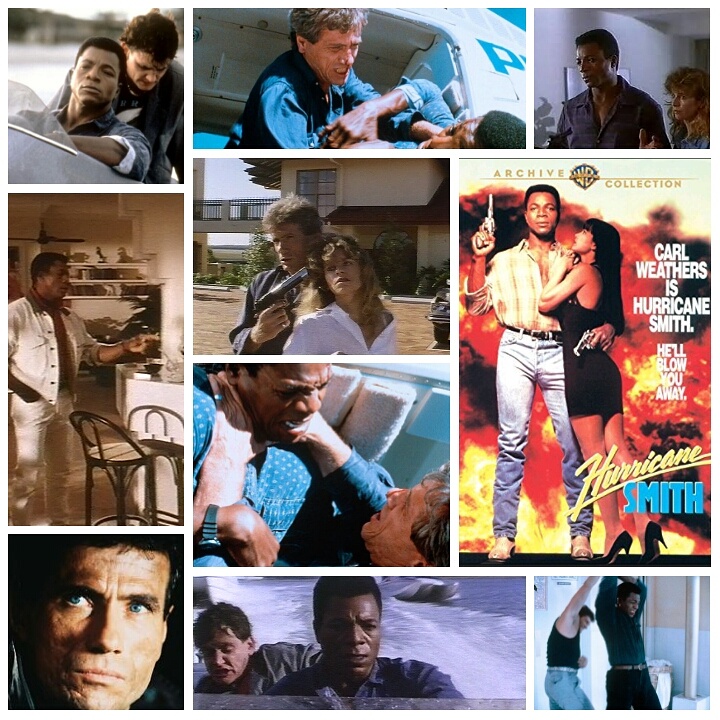
B Movie Glory with Nate: Hurricane Smith

image

Buckle up and watch built badass Carl Weathers head down under to take on vicious Australian criminals in Hurricane Smith, a blast of saxophone laced, trashy 80’s cheese that hits every beloved cliche in perfect chiming key. Weathers is an valued staple to the action genre, a memorable part of Predator and of course his thundering turn as Apollo Creed in the Rocky films. Along with his obvious commanding physicality, he has a likeability that lends itself nicely when it comes to playing heroes out for retribution. His character got the nickname Hurricane after he pulled a friend out of a falling building during the titular meterological event, cementing him as a tough guy worthy of carrying a ninety minute action flick on his shoulders. Hurricane is off to Australia, in search of his sister who has recently gone missing. He stumbles right into the midst of a hornet’s nest of a criminal organization, led by Charlie O Dowd (Jurgen Prochnow), a stunningly evil pimp and drug runner. Prochnow loves to paint his villains in broad, garish strokes and he downright outdoes himself here, careening through a performance of wanton carnage and positively dripping malice. Hurricane is a massive thorn in his side, dismantling his operation in every attempt to learn what happened to his sister. He gets romantically involved with a kindly hooker (Cassandra Delany) leading to the obligatory 80’s slow dance sex scene that everyone waits for in these type of flicks. There’s bullets, car chases, an action scene on a helicopter and all kinds of trademark B movie lunacy. Weathers makes a damn good hero. Prochnow is one hell of a wicked villain. Fun stuff.

The Big Empty: A Review by Nate Hill


The Big Empty is a quirky, off kilter little flick that packs a backpack full of borrowed elements from the Coen brothers and David Lynch, before embarking on a perplexing outing into the Twilight Zone. That’s not to say it rips any of these artists off, and indeed it’s got a style and cadence all its own. It just loves other oddballs before it and wants to wear it’s influences proudly. Everyone’s favourite lovable schlub Jon Favreau plays John Person, a flailing, out of work actor. He’s presented with a dodgy proposition by his whacko neighbour Neely (eternally bug eyed Bud Cort). Transport a mysterious blue briefcase to a remote town in the Mojave Desert called Baker. There he will meet a much talked about, little seen individual called The Cowboy (Sean Bean), who will take the case off his hands. He agrees, as he must in order for us to have a film to watch, and heads out to the back end of nowhere. In any respectable piece like this, the town our hero visits must be populated by weirdos, eccentrics, dead ends, missed encounters and an abiding, ever present atmosphere of anomalous peculiarity. Right on time, he meets a host of charming characters, including Grace (Joey Lauren Adams), her sensual daughter Ruthie (Rachel Leigh Cook), Indian Bob (Gary Farmer), grouchy FBI Agent Banks (Kelsey Grammar), and a bunch of others including Daryl Hannah, Melora Walters, Jon Gries, Brent Briscoe, Adam Beach and Danny Trejo. He’s led from one head scratching interaction to the other, each step of the way proving to be a step behind the elusive Cowboy, with no form of coherence appearing to ease poor John’s bafflement. I was reminded of Jim Jarmusch, particularly his masterpiece Dead Man, perhaps because Gary Farmer appears in both, but most likely mainly due to the fact that both films follow a hapless Joe on a journey that doesn’t seem to be going much of anyplace, but holds interest simply by being bizarre enough. Favreau is the only one that doesn’t fit, the outsider whose laid back suburban affability creates friction with almost every individual he meets, all who seem to have wandered in from the outer limits of some other dimension. Sean Bean is relaxed, mercurial with just a dash of danger as The Cowboy, quite possibly the strangest person John meets. The film has unexpected jabs of humour too, which occasionally breach the surface of its tongue in cheek veneer of inaccessibility. Upon meeting Indian Bob, John inquires: “Are you Bob The Indian?”. Bob jovially retorts “No, I’m Lawrence the fuckin Arabian.” Gary Farmer brings the same cloudy, sardonic cheek he brought to the role of Nobody the Indian in Jarmusch’s Dead Man, which had much the same type humour as this one: little moments of hilarity buried like treasures amongst the abnormal. Sometimes I muse that films like these which seem to really go nowhere in high style are there simply to give your brain a workout in odd areas that it wouldn’t normally play in. Set up a voyage like this, lead the audience down a yellow brick road and arrive at.. well basically nowhere in particular, just to chuckle at your efforts to figure it all out, jab you in the ribs and say “Don’t take this shit too seriously, man!”. Or maybe not. Maybe there’s deeper meaning behind the meandering, that will reveal some holy significance. This one, though, I doubt it. It’s pure playtime.

B Movie Glory with Nate: Guns, Girls And Gambling

image

Guns, Girls And Gambling is an absolute doozy of a film. The term ‘so bad it’s good’ was invented for slapdash mockeries such as this, and with every stylistic cliche and ridiculous tactic, it owns the moniker vigorously. The filmmakers are obvious disciples of the neo noir crime thriller, as we see countless hard boiled walking stereotypes prance across the screen. Whenever a character shows up, a garish font announces them in writing below, which is crime genre 101. This happens so many goddamn times though, that eventually I felt like I was watching Mel Brooks’s attempt at a heist flick. It’s silly beyond words, derivitive enough to give you the onset of dementia and admirably dumb. But… I still had fun, at least in parts of it. It concerns the theft of a priceless Native American artifact from a tribal casino. The perpetrators? A gang of Elvis impersonators with, let’s say, interesting characteristics. There’s gay Elvis (Chris Kattan), midget Elvis (Tony Cox), Asian Elvis (Anthony Wong) and Gary Oldman Elvis, played by Gary Oldman who looks like he was dared into taking the role at a frat party. The bumbling Elvises break ranks post heist and the plot thickens, or should I say befuddles, with the arrival of every kooky, sassy assassin and archetype under the sun. Now from what I could make out: Christian Slater plays a dude called John Smith, a ‘wrong place at the wrong time’ type of guy who is swept up into the intrigue and is in way over head. He’s pursued by all kinds of unsavory people, and joined by the girl next door (Heather Roop). There’s The Cowboy (a salty Jeff Fahey), a gunslinging hitman who claims to never miss but literally misses upon firing the first bullet. The Indian (Matthew Willig) is a hulking tomahawk sporting badass. The Chief (Gordon Tootoosis) is the casino owner, muscling in on everyone to get back his artifact. The Sheriff (Dane Cook) is a corrupt lawman out for anything worth a buck. Best of the bunch is a snarling Powers Boothe as The Rancher, a good ol’ southern gangster who languishes in a white limo longer than the cast list of this movie, chewing scenery as vigorously as his cigar. There’s also a sexy blonde assassin called The Blonde (Helena Mattson) who wanders around quoting Poe right before she blasts people’s heads off. Its inane, mind numbing eye candy, with a cast that seems to have been blackmailed into participation. There’s even a last minute twist ending that seems to have wandered in from a much more serious film. It’s quite literally one of the most stupefyingly odd flicks I’ve ever seen. It’s earnestness in aping countless Pulp Fiction style films before it is beyond amusing, and the only thing that will make you laugh harder is how spectacularly and epically it flounders. It’s truly B movie gold, and one that demands a watch simply because it’s a sideshow unto itself.

Ca$h: A Review by Nate Hill

image

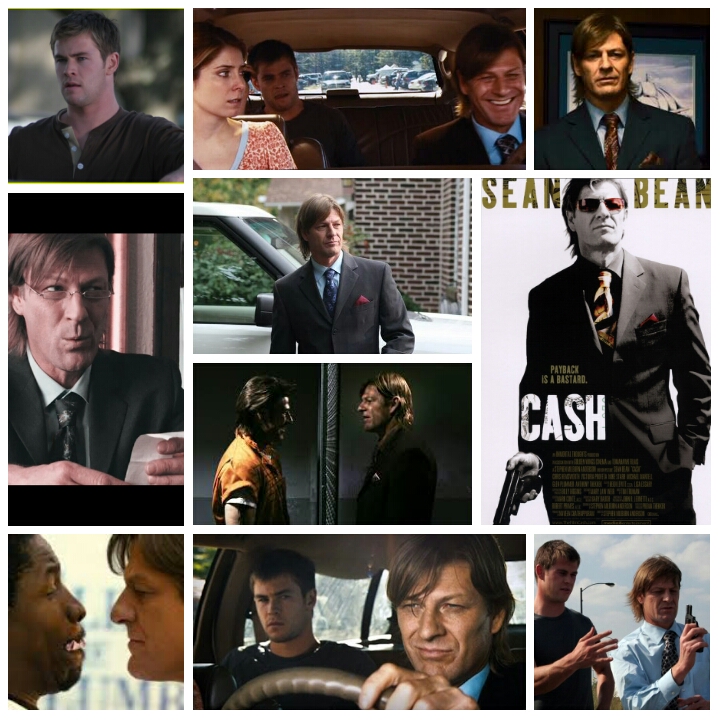
Ca$h has an obnoxiously tongue in cheek title, and a premise that could have easily run off the rails into the silly zone. But rejoice: It knows how to create a tense, unpredictable environment accented by the slightest bits of naturally occurring humour here and there, a winning combination indeed. Sean Bean doesn’t often get a movie to himself, or at least get to play the lead. Here’s he’s the top dog, and while most would argue that he’s the antagonist as well, I’m in the opposite corner on that one. Yes he’s a criminal, yes he goes to extreme lengths to get his money back, but he’s a rigidly disciplined and staunchly fair bloke, driven by a set of principles and operational tics that reek of Obsessive Compulsive Disorder, and trust me, it takes one to know one. Oh, and he gets to play identical twins as well, pulling a Parent Trap and acting opposite himself which is a delight to see. When reckless career criminal Reese Kubrick (Bean) dicks up a robbery, loses a bunch of money and gets apprehended, a young couple think they have hit the jackpot. Played by Chris Hemsworth and Victoria Profeta, they find the money and make that fateful cinematic mistake of trying to keep it for themselves. Before they know it, Reese’s brother Pyke (also Bean) comes looking for them, and believe me when I say that this guy is a dude who finds what he’s looking for. Fast. The young couple has already begun to indulge, and as Pyke barges into their lives he finds a great deal of the amount spent. He then buckles down and calmly,  coolly forces them to come up with every remaining cent of the ‘deficit’, as he calls it, even if it means doing a bit of illegal stuff themselves. Bean has a ball as the icy cool, ruthlessly efficiant prick who plays hardball with a glint in his eye. He’s karma manifest, a very real and very dangerous metaphor for the perilous risk of excessive currency and ill gotten gains. It’s a terrific role for him, both in the moments of dangerous serenity and the few rare instances where he loses his cool streak, which sting like daggers. Hemsworth and Profeta play their standard roles very nicely. An arbitrary bit of fun: the actor Glenn Plummer shows up for a hysterical cameo as a dude named, I shit you not, Glenn The Plumber, who receives a whollop of a verbal beatdown from Bean that serves as the film’s most lighthearted moment, and is a riot for anyone who gets the reference. Snuck into limited DVD release back in  2010, this one deserves more than the small shelf space it’s gotten. Fun stuff.

Alien Resurrection: A Review by Nate Hill

  
To this day it still amazes me how under appreciated and misunderstood Alien Resurrection is. The four films in the series are a quartet of vastly different stories, due to the fact that the torch was passed to four very diverse directors over the course of the legacy. Ridley Scott crafted a tense, claustrophobic catalyst. James Cameron made a rootin, tootin Wild Bunch set in a galaxy far far away where no one can hear you scream. David Fincher gave us an odd, inaccessibly disturbing thriller where the real monsters lurked inside the humans, literally. French Maestro Jean-Pierre Jeunet, best known for his own charmingly surreal quartet of distinctly European wonders Amelie, A Very Long Engagement, City Of Lost Children and Delicatessen, made the final film in the franchise. I once saw a post on IMDB which prompted users to describe each of the Alien films in one word. The one response that stuck with me was: Alien-suspense, Aliens-action, Alien3-unpleasant and Alien Resurrection-weird. Is this accurate? Depends on your opinion of the series. Resurrection is my second favourite, after Aliens. To some it was weird, to many a failure, but to me it’s a bona fide, rip roaring odyssey of gorgeous, gory design and offbeat ideas fleshed out by an absolutely legendary cast, headed up by Sigourney Weaver as Ripley. Two hundred years after she died, she is cloned using parts of the Xenomorph’s DNA, and kept sequestered on a titanic pseudo military ship run by whackos who have never heard of a certain expression involving curiosity and a cat. She awakens, the alien genes giving her a decidedly heightened awareness which Weaver plays with giddy, sinister glee. This ain’t the stalwart Ripley we are used to. Her eyes dance with an unearthly fire that pronounces ‘here be dragons’, in the spaces beyond science that humans foolishly venture into. The station is run by creepy, power hungry Dr. Mason Wren (underrated J.E. Freeman is almost ickier than the monsters themselves), and his sidekick Gediman, played by Brad Dourif in his final form, resembling a demented Pokemon who also raises more goosebumps than the aliens. The good doctor has commissioned a ragtag troupe of space pirates to bring him kidnapped humans in cryogenic sleep to be forcefully impregnated with alien fetuses. Lovely, right? This is where it gets interesting. Joss Whedon penned the script, and the crew of intergalactic badasses in this film are in fact the prototype for his endlessly successful TV series Firefly. Now, he claims that everything about the tone, delivery and execution of this film is wrong, and that the end result butchered his work. Here’s my take: I’ve seen Firefly. It’s good. But the team of space pirates in this movie are eternally more fascinating and worth spending time with. I feel that he really abandoned part of a great premise here, opting for a chipper, watered down version of a vision which presented itself to him and begged for further exploration. Firefly is fun, and it’s characters are a veritable Partridge Family of interplanetary characters to chill with, but it lacks the steel edged nastiness and grit that he began with here. Michael Wincott is a blast as the captain, Frank Elgyn, in a role that’s cut entirely too short but is aces while it lasts. Ron Perlman is a primate on earth and proves the same in space as Johner, the lovable lug of the crew. Gary Dourdan, the only black dude I know with blue eyes is Christie, with more than a few high powered tricks up his sleeves. Jeunet disciple Dominique Pinon plays wheelchair bound Riess, a tougher cookie than one might imagine. Lastly, Winona Ryder is Call, a doll with a pixie cut who takes an immediate shine to Ripley, leading them both to dark and dangerous places. Dan Hedaya makes lively work of Perez, the military honcho in charge, with Raymond Cruz, Kim Flowers and a shrieking Leland Orser rounding out the dream cast. As one might expect, all hell breaks loose in outer space as the creatures breed and hunt anything in their proximity. This provides loose cannon Jeunet with reason to fire off many a special effect that will give your gag reflex a workout and your pulse a solid pounding. There’s seriously gnarly stuff here, especially near the end with a certain fucking monster of an alien hybrid that acts as pure nightmare fuel while also being a bucket of fun at the same time. One of Whedon’s complaints was that his lighthearted script was given the heavy treatment, which obviously clashed with the vision he had. Fair enough. It was his baby after all. But for me though, it works bettering he ever planned. The characters maintain a sense of gallows humour laced with very real danger, garnished with cheeky levity in the face of unimaginable horror. That’s a good recipe to follow in any book I can think of. This one is ripe for redemption, certainly in the eyes of many who panned it upon release, and always ready for a revisit from myself.  

B Movie Glory with Nate: Catch 44

image

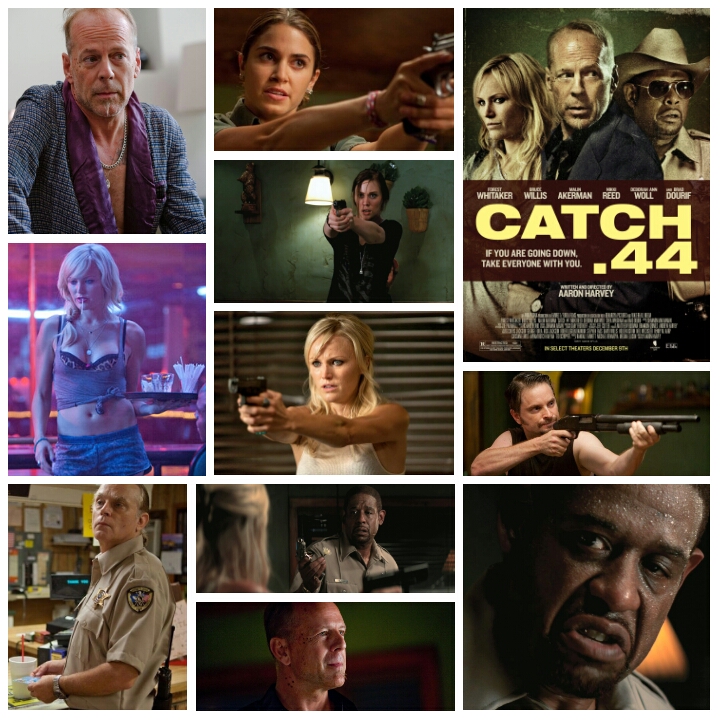
Catch 44 lives in that lurid interzone of direct to video crime thrillers that have the budget for the bare boned minumum: guns, a few big name actors stopping by for a paycheck, and a hard boiled, often ludicrous tale of criminals, cops and sexy chicks knocking each other off for some unnatainable trinket of wealth. Here we meet three lively femmmes fatale: Malin Ackerman, Nikki Reed and Daredevil’s Deborah Ann Woll, the angel’s to Bruce Willis’s Charlie, in this case a sleazy criminal kingpin named Mel. He tasks them with intercepting a mysterious package that passes through a lonesome truckstop diner. All hell breaks loose when the shotgun toting owner (Shea Wigham) takes them off guard,  and blood is shed. From there it all spirals into a mess of chases, strange pseudo artsy setups and the entire cast hamming it up royally as they essentially go nowhere fast. There’s Forest Whitaker who seems to have wandered in from the loony bin, playing a psychotic Sheriff who switches up his accent from scene to scene until we realize we are sitting there watching an Oscar winner warble out a choppy Tony Soprano impression and have to chuckle at the absurdity of it all. Willis has fun doing his nonchalant smirk to kingdom come and sporting a soul patch that steals his scenes before he gets a chance. There’s also an underused Brad Dourif as a confused highway patrolman who wanders in and out of the story. A lot of pulpy outings like this get accused of aping Quentin Tarantino’s style, and while that is often a lazy, bullshit critic’s cliche, here the claim is understandable and not necessarily a bad thing. The soundtrack is appropriately offbeat, the trio of girls have a Death Proof type cameraderie and Willis ambles through his scenes with a verbosity reminiscent of Pulp Fiction. The story is a little haywire and one wonders what the ultimate outcome even means, but it sure has a ball getting there in violent, kooky fashion.

Michael Mann’s Thief: A Review by Nate Hill

image

With Thief, Michael Mann distilled his crime film style into an archetypal, haunting aura that would go on to influence not only his excellent later work, but other filmmakers as well, everything from Refn’s Drive to the police procedural we see on television today. A style that consists of kaleidoscope neon reflections in rain slicked streets, Chrome cars bulleting through restless urban nocturnes and a lyrical, pulsating score, here provided by underrated German electronic maestros Tangerine Dream, who would go on to provide their dulcet tones for Mann’s phenomenal 1983 The Keep. Thief weaves the age old tale of a master safe cracker(James Caan in a beautifully understated performance) the high stakes at risk of him performing one last job to escape, with said stakes represented as his angelic wife (Tuesday Weld) and newborn son. Robert Prosky in his film debut is a serpentine wonder as Leo, Caan’s boss, whose chilling metamorphosis from paternal employer to domineering monster is a joy to watch. The jewel heist scenes are shot with a researched, assured and authentic feel, spurred on by Tangerine Dreams cosmic rhythms and are especially dynamic points of the film. Thief, for me, belongs that special subcategory of Mann’s career along with Heat, Miami Vice and Collateral, (Public Enemies doesn’t get to come in this elite cinematic treehouse club, it didn’t do anything for me) that are very special crime films. They possess an intangible, ethereal quality of colour, metal, music, and shady people moving about a thrumming urban dreamscape, professionals at what they do, cogs in the ticking clock of crime that inexorably drives toward the narrative outcome, be it bitter confrontation and violence (of which Thief has an absolute gorgeous, poetic revenge sequence) or cathartic resolution (like the conventionally satisfying way Collateral ends). Mann has captured neon lightning in a bottle with Thief, and against the odds of people saying you can’t catch lightning twice, he has spark plugged a good portion of his career with that same lightning, creating an artistic aesthetic all his own. To me that is the ultimate outcome of filmmaking, and art as a medium.

Haunted: A Review by Nate Hill

image

Haunted is an atmospheric, valiant yet frustratingly uneven ghost story effort, in the tradition of stuff like The Awakening and The Haunting. If the plot seems close to last year’s Crimson Peak, it’s because it is, and I’d bet that Del Toro had this forgotten entry in mind when he embarked on that journey. I say frustrating because there’s a certain few absolutely terrific moments of gothic horror that truly shiver your timbers, but they’re hopelessly mired in a mucky moor of a plot that unfortunately is not as effective as those key scenes. You David Ash is rough housing around wit his sister in the English countryside when she hits her head on a rock, and drowns in the pond below. He grows up soaked in guilt, dedicated to disproving the existence of paranormal phenomena. As an adult he’s played by Aiden Quinn, who is an average dude with slightly wild looking eyes who is always effective in the sense that he seeks out challenging, odd projects which test his everyday aura nicely. In the early 1900’s he is summoned back to rural Britain by an elderly woman (Anna Massey) who is convinced that she is surrounded by ghosts. He is greeted there by the luminous, attractive Christina (Kate Beckinsale), a friendly young thing with a distinct untrustworthy vibe and a penchant for getting creepy close with her two strange brothers (Anthony Andrews and Alex Lowe). She lives out there in isolation with them as well as their disturbed mother, and one gets the sense right off the bat that something is wonky. I suppose that’s the point though isn’t it? Beckinsale has carved a path of playing either somber, distraught women or tough, silent warrior chicks. This is the most animated work I’ve ever seen from her, and the most radiant she’s ever looked as well. It’s aslso to date the only nude scenes she’s ever put forth, and I don’t use the term lightly… she really bares it all here. The middle portion of the film meanders around with these characters, not revealing enough to push the plot forward enough, until the curtain  is whisked away jarringly in the third act, cementing it’s pacing issues for good. It’s a picturesque enough journey, I just wish we had something to latch onto besides that, some substance and a consistency in the creepiness factor to keep us invested. Alas. It’s got a spookily wonderful beginning, and an electric, full blooded ending, the only two instances where it shows true feeling and commitment. The rest is, well… stale. It’s worth a peek for a few reasons though, including Beckinsale’s solid performance and that one uber-scary scene in the opener.

The Killer Inside Me: A Review by Nate Hill

image

Michael Winterbottom’s The Killer Inside Me is one of the most flat out disturbing films ever made under the sun, even if only for a few brief, harrowing sequences encased in a lurid, laconic, southern fried oddity of a story that defies genre confinement while still planting vague roots in crime drama. When the sequences I speak of show up, and you’ll know exactly when, it takes you right off guard and immediately notifies you that the film has no intentions of towing a line within anyone’s comfort zone. It’s an odd story for someone to strive to tell, and one wonders what inky black corners of the psyche that Jim Thompson was spellunking in when he scribed the novel on which this is based. It starts off conventionally enough, under the prosperous sun of the West Texas desert in the heat of the 1950’s. Sheriff’s Deputy Lou Ford (Casey Affleck) is a regular enough guy, tasked with rousing a local prostitute (Jessica Alba) living in nearby suburbia. He also deals with the dodgy real estate kingpin  Chester Conway (a blustery Ned Beatty) and his cronies. He’s also got a cute fiance (Kate Hudson). He’s calm, cool and connected, right up until the part where he turns out to be a certifiable grade murdering psychopath. Affleck let’s the authoritarian composure bleed away and reveal the layers of eveil beneath, until we begin to wonder if the film we are watching has been interrupted by someone taping over it with something far darker. But no… it’s the same movie. It just veers into territory we didn’t expect and may be taken aback by. Affleck discovers the psychopath within himself, and fits inside the characteristics like a glove. The first person to stray into his path is Alba, and there’s a sequence where he gives her a royal, merciless, and bloody beatdown that will shiver your spine in its blunt, head-on realism. It’s seriously stomach churning shit, and levels off both the film and Affleck’s role in pure stone cold seriousness. He’s a budding lunatic, made all the more dangerous by bis position of power within law enforcement and shielded by his trustworthy reputation. The film resists generic story beats, and instead meanders about, diligently following Affleck from encounter to macabre encounter, discovering his dark interior nature without much rhyme or reason as far as conventional plot goes. This has a wickedly prolific cast for such a risky film, with fine work from Bill Pullman, Brent Briscoe, Tom Bower, Simon Baker and the ever reliable Elias Koteas who adds to the cumulative unease. It’s Affleck’s  shown though, and he splinters nerves with his unpredictable, hollow and fascinating portrait of a psychopath. Soon we begin to wonder what he sees and heats is real,   as characters he interacts with seem to come back from the dead and knowingly coach him towards trouble in trademark indications of serious mental distrbance. This one arrives at it’s end severely south of where it started from, taking the viewer off guard. Those who appreciate the tantalizing, prickly nature of a thriller that isn’t afraid to seriously shake up your shit and take you places you’ve only been to on clammy nightmares will appreciate it. Just mentally psych yourself up for that scene I mentioned, because it will scar you and then some.