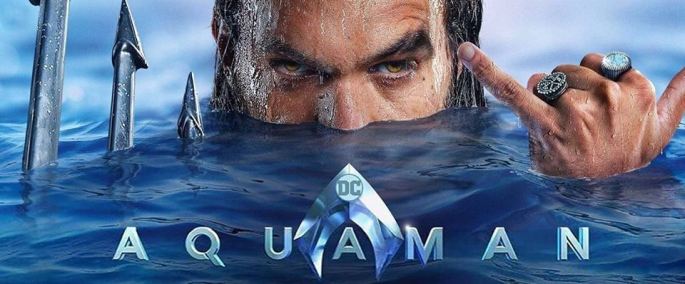
The King has risen: A Joyous Appraisal of AQUAMAN

Now the dude in the video above isn’t singing about the movie I caught today (and I’m not denying the fact that that is a damn tasty burger he has there) but his song along in the words of the film’s charismatic lead: “That was awesome,” is kinda how I feel right now.  Yes folks, despite any negative press you’ve heard, read, whatever – Aquaman is a feast – a thrilling adventure that really transported me. Not merely into the sumptuous and glorious undersea kingdoms created by the filmmakers involved – but back to the fun, exuberant times I ‘used’ to have at the movies – before the dark clouds engulfed us, trapping us in the forgotten seas where the dark creatures of the trench started forcing us to feed on one franchise after the next. Dark, moody, brooding, shit. That is not the joy I remember in that magnificent dark place we call the cinema – where worlds merge and the magnitude of the movie-maker’s vision takes me into it’s care, placing me, willingly, under it’s spell.

What a spell indeed, let me tell you. James Wan had me when I read his response to a question regarding the tone of Aquaman: “I’m a film fan, I’m a product of the 1980s and 1990s, and a lot of people have said that  Aquaman has a very 1980s quality to it. Especially the high-fantasy of the 1980s, like Flash Gordon and Krull.”

DSC_9698.dng

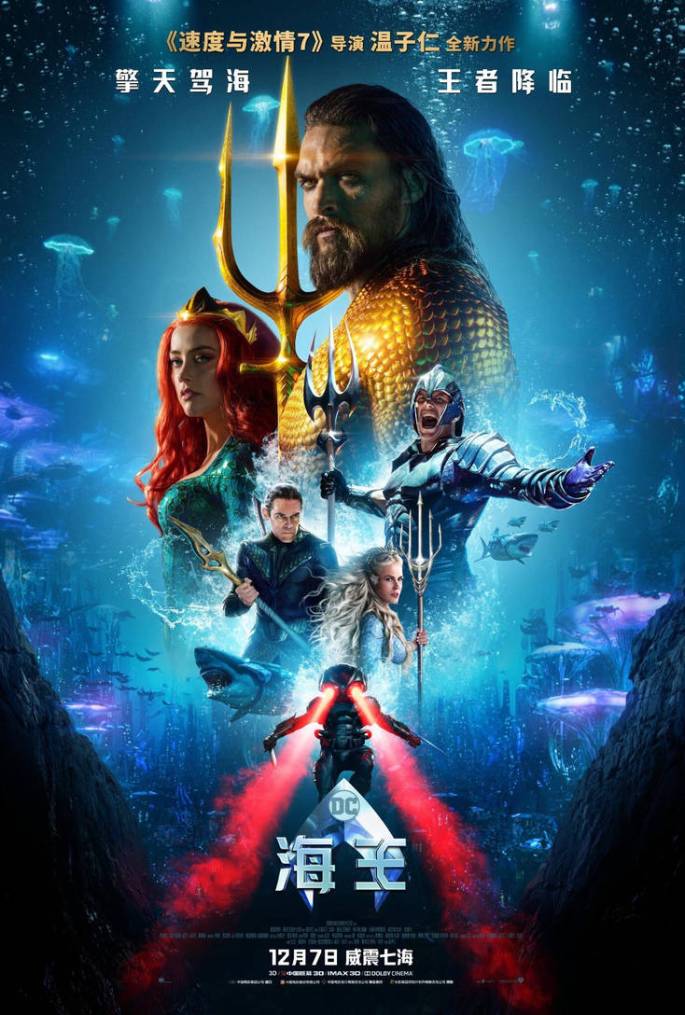
Flash Gordon meets Krull! Vibrant, fantastical, magical world building on a big canvas. I don’t chiefly give to much of a fiddler’s fart about the MCU or the DCEU and their never ending cavalcade of chicanery, but, when I read Wan’s response to that question I was, hands down, not missing this picture. And it’s become a common phrase of late – “see it on the biggest screen possible” – but, meh, they’re right. Aquaman is a big picture, so that’s the best advice I can give.
aquaman__2018____japanese_poster_by_williansantos26_dct9sqg-pre

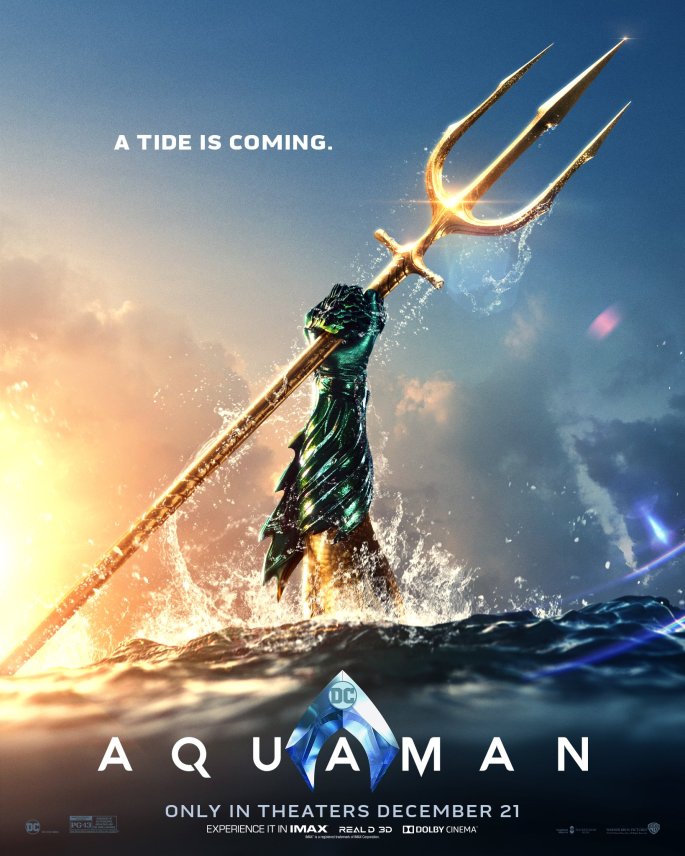
The cast are wonderful in their parts, and I get the feeling they understand the kind of ride they’re crafting. The exposition is fluid like the oceans that dominate the movie. You feel carried along on a current if excitement and wonder as the story advances. But, one the best parts truly, in terms of constructing this film which Wan did so masterfully, is that he simply shunned the Marvel formula of tying it together with all that has come before – a line of dialogue sorted that out. It’s a freeing maneuver that allows this exciting director to do what he does best, which is to flex is visual muscles and take us into a world that makes anything James Cameron has done thus far seem a little flaccid. The production design, the gliding camera, the effortless action. Oh my God – I love it.
aquaman-poster

Momoa brings a grand juxtaposition of the boy unwilling to take up his trident, mixed with a guy just playin’ it cool. His nonchalant approach is great, and I caught myself smiling at his delivery more than once. He is supported by strong players all. Patrick Wilson’s power-mad dictator, Dolph Lundgren on his seahorse (sorry, sea dragon). Willem Dafoe, always dependable, Nicole Kidman, getting better with age (love that fish suit), Amber Heard, feisty-sexy, badass Black Manta and hell, his dad is Jake ‘the Muss’ for Christ’s sake – and he can drink Fishman under the table.

It’s a whale of a tale I tell you lads, a whale of a tale that’s true. ‘Bout the flappin’ fish and a mother’s love – stoppin’ a deep sea war with the shores above. I’d swear by my tattoo if I had one but put simply – scintillating, sensational, spectacular. Home might be calling, but they’ll need to leave a message ’cause I’ll be out . . . watching Aquaman . . . again. GO SEE IT NOW!

As always, dig your movies . . .
flat,750x1000,075,t.u1

That Dude in the Audience.

David Lynch’s Wild At Heart

David Lynch’s Wild At Heart can be given the nutshell description of ‘Lynch does Bonnie & Clyde’, but that doesn’t even begin to scratch the surface of this twisted, surreal, beautifully scarring piece of bizarro cinema cunningly disguised as a love story. It is a love story, first and foremost, but that’s also only a blueprint onto which all sorts of other dreams, visions and nightmares are painted. It’s very, *very* loosely on a book by Barry Gifford, but what Lynch whips up makes the source material seem grey and unrecognizable in comparison. Gifford’s book is the black and white prologue to The Wizard Of Oz and Lynch’s version is the dazzling yet unnerving technicolour dream world that follows, and indeed he uses imagery and gives shout outs to that film any chance he gets here. Nicolas Cage and Laura Dern are Sailor Ripley and Lula Pace Fortune, lovers on the run from the Deep South and Lula’s tyrannical monster of a mother Marietta, played by Diane Ladd in an Oscar nominated turn that doesn’t just chew scenery but devours it with the force of an imploding neutron star that eats galaxies. Marietta is intent on keeping the two of them apart for reasons slowly and subtly unveiled, and she sends everyone and their mother after them including mopey private detective Johnnie Farragut (Harry Dean Stanton) and dangerous mobster Marcellos Santos (the late great J.E. Freeman). Sailor and Lula’s journey is a deranged yellow brick road through 50’s infused Americana, perverse apparitions abound and literally almost everyone they meet ranges from deeply disturbed to outright psychotic to marginally quirky. Santos sends a cabal of weirdo assassins headed up by ghoulish sadist Perdita Durango (Grace Zabriskie in a pants shittingly scary performance) and her cronies (David Patrick Kelly and Calvin Lockhart). In Texas they run into reptilian scumbag Bobby Peru, brought to life by Willem Dafoe in a skin crawling portrait of sexual menace and warped glee that would scare off Frank Booth. Lula tells tales of her delusional cousin Dell (Crispin Glover) putting cockroaches on his anus and of being raped at age thirteen by her father’s business friend (actually shown in a brief but upsetting cutaway). Why all this unpleasantness, you ask? Well… I don’t know, but Lynch seems to and he isn’t sharing the coordinates of his moral compass with anyone, he’s simply storytelling and holding nothing back of the weird or wild variety. Amongst all the violence and monstrosity there’s an undercurrent of tenderness and love that pulses via Sailor and Lula’s relationship, cultivated in an ebb and flow tide of simple, candid pillow talk and unbridled passionate sex that mirrors their frequent and feverish visits to sweaty dance clubs. This is their story, and every ghost, goblin and witch they meet along the way is simply a dark passenger or otherworldly day player in their tale, plus they often make for hilariously off colour vignettes, like Jack Nance’s deranged 00 Spool or Freddie Jones’s gnomish pigeon expert. My favourite sequence is a sobering, haunted diversion off the side of a freeway where they discover a distraught girl (Sherilyn ‘Audrey Horne’ Fenn) rambling through a bout of brain trauma from a car accident. Angelo Badalamenti’s score sings through this to the point of chills, as it does throughout the film. Also traversing down this dark yellow brick road are William Morgan Sheppard, Frances Bay, musician John Lurie, Nicholas Love, Pruitt Taylor Vince, Frank Collison, Ed Wright, Isabella Rossellini and Sheryl ‘Laura Palmer’ Lee herself as Glenda the Good Witch. As proclaimed by Lula at one point, “this whole world is wild at heart and weird on top..” It is indeed, and we’re lucky to have a filmmaker like Lynch to do his part in keeping it that way by making unique, bizarre films like this to remind us just what is possible in cinema with a little invention, a whole lot of colour, splashes of horror and a love of storytelling. Maybe not Lynch’s most prolific or instantly recognizable work, but a full on classic for me and high up on his filmography list.

-Nate Hill

Bad Country

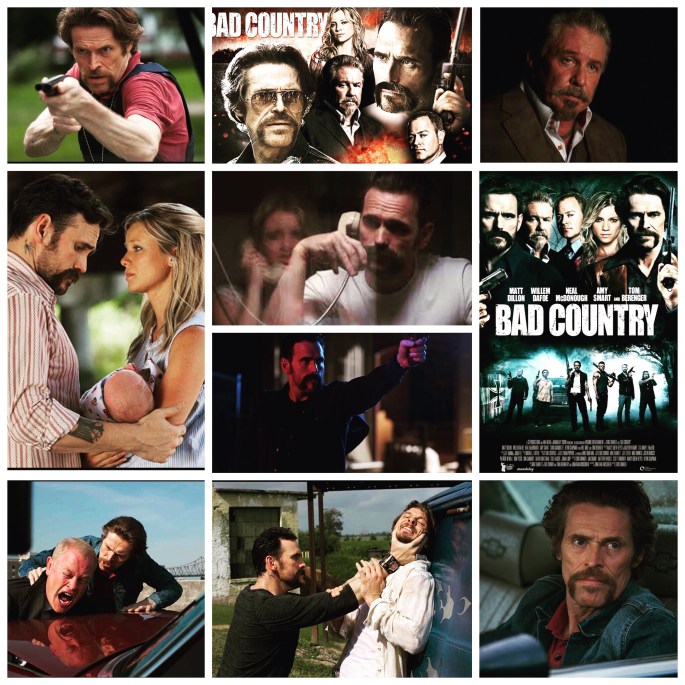
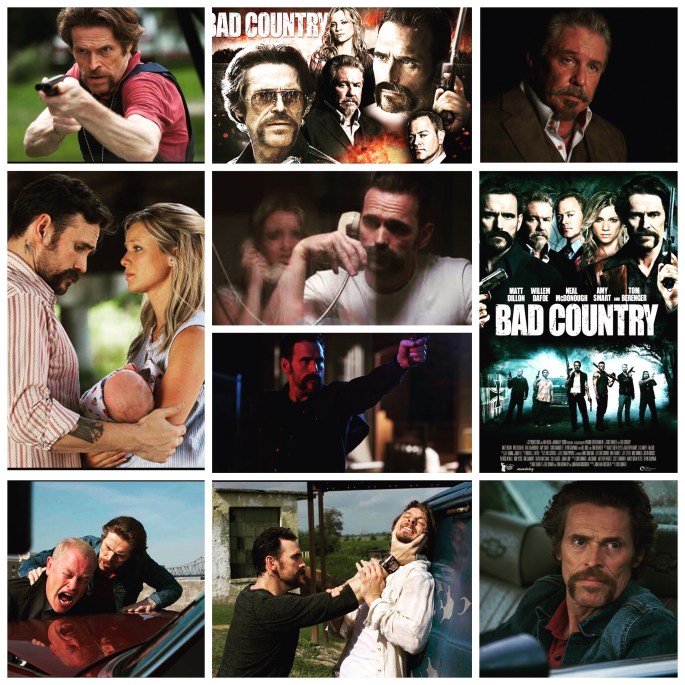
Bad Country is a fairly low budget, bayou set noir/crime flick, and while it doesn’t have the resources to pull of something intricate and mythic like The Departed or something, it succeeds with what it has in being a brutal, downbeat crime thriller with a heavy blanket of gloom over it and some brooding tough guys engaged in gang warfare in deepest Louisiana. It’s sort of like the type of extreme crime films you’d see in the 70’s, where every character has an anger and a violence to them and there’s no good guys or sweet resolution. Willem Dafoe is aces as gruff police detective Bud Carter, a rule breaking loose cannon who arrests mob contract killer Jesse Weiland (a scary Matt Dillon) in hopes of using him as leverage to take down Lutín (Tom Berenger, looking like an evil, Nazi Colonel Sanders), Louisiana’s fearsome underworld kingpin. This involves betrayals, shoot outs, lots and lots of swearing, sweaty bayou sex, tattoos, tragedy, depravity and many other hard boiled tropes, all done really well. I especially enjoyed Dillon’s character and his arc; he’s a man who has spent most of his life being a heinous villain, and is trying to turn it around in the eleventh hour by protecting his wife (Amy Smart, soulful and excellent) and infant child from Berenger and his hordes. But is it enough, after a lifetime of atrocities? The deep set sadness and hulking brutality is conveyed wonderfully by Dillon and it’s some of the best work he’s ever done. Berenger is monstrous and just a tad campy as the big boss, playing with his swamp drawl accent hilariously and having fun being cheerfully mean. The great Neal McDonough shows up as his crooked mob lawyer too. This one pulls no punches and gets about as dark and violent as you can, not to mention having one of those gutsy endings where nothing ends up fine and these characters are worse off than they started, a powerful choice especially in the haunting choice of resolution for Dillon’s character. Oh, and it’s fun seeing Dafoe and Berenger have a bloody, man to man smack-down brawl as well because it calls back fond memories of Platoon, and the two acting titans butting heads back then too.

-Nate Hill

PHILLIP NOYCE: An Interview with Kent Hill

534074_2

One of the great things Phil told me – aside from passing through my hometown to play footy in his youth – was that Queensland had a big part to play in convincing the studio powers that Blind Fury (my personal favorite of Phil’s pictures) could be a hit.

After a regime change – as often is the way in Hollywood – the new brass didn’t have much faith in a film the previous caretakers saw fit to green-light. Phil knew he had a good picture and thus persuaded the powers to let him take it to the far side of the world and release it in the Sunshine State, where, with the help of a publicist, they sold the heck out of Blind Fury and brought in $500,000 buckaroos.

So Phil went back to the blokes in suits and told them if the movie can do that kind of business 7,510 miles from Hollywood, I think we have a shot. See that’s the Phil Noyce touch ladies and gentlemen, remaining Dead Calm in the face of Clear and Present Danger. If you believe that there is even a Sliver of a chance your movie can Catch a Fire, you can’t just sit there like The Quiet American and take it with a grain of Salt. You need to fix your courage to the sticking place, follow the Rabbit Proof Fence all the way home and for your hard work they’ll call you The Saint for being the The Giver of great cinematic entertainment. You can play Patriot Games till the cows come home, but if you attack them on the Newsfront then you’ll be The Bone Collector and bring home the receipts.

I’ve watched many a great interview and read many a great book about the life and career of Phillip Noyce – never thinking that one day I might catch a moment’s grace and be able to have a chat with him. I have to thank (again) a top bloke by the name of Nick Clement for putting in a good word for me – without Nick I’d still be dreamin’.

https://youtu.be/rgnlJ38ntQw

Phillip Noyce is a marvelous chap of the old school and the maker of some truly wondrous pictures. He really needs no introduction from me for his reputation speaks for itself. Without further adieu . . . the master . . . Phillip Noyce.

B Movie Glory: Control

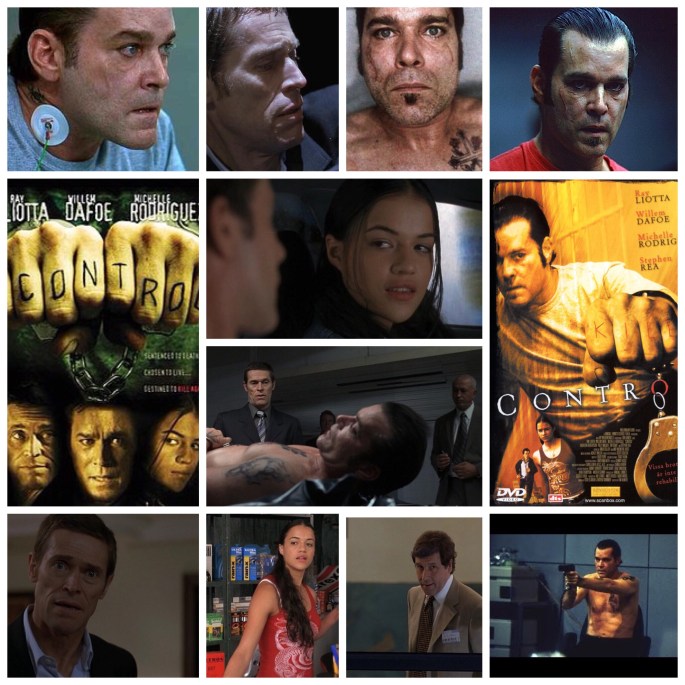
Control is a clunky psychological thriller that gets away with feeling realistic by the skin of its teeth thanks to four terrific actors who are so good that they somewhat cloak the incredibly silly narrative. Built around a high concept psychiatry experiment, Ray Liotta plays a vicious career criminal psychopath who is recruited into a secret government program by hotshot Doctor Willem Dafoe. Dodgy mood altering pharmacology is used to try and augment Liotta’s antisocial, violent behaviour and increase empathy levels, thus making him a productive and well adjusted member of society. It seems to work at first, he gets a steady job and meets a nice girl (Michelle Rodriguez cast wonderfully against type). But demons catch up with al of us, and the drugs start having side effects, which complicate the whole thing. Liotta is combustible in the role and gives it his all, he has few genuine lead roles but whenever they throw him one he always shines. Dafoe is incapable of a false note and makes his character work, while Irish veteran Stephen Rea makes creepy work of Dafoe’s sinister superior doctor. They’re all great, it’s just the story that falls into silly territory, especially with a huge WTF twist right at the end that takes the wind right out of the film’s sails and feels completely unwarranted. Come for the actors, stay awhile for the actors, make of the script what you will.

-Nate Hill

Cutting on the Train: A Chat with Mick and Me by Kent Hill

csm_audsley_4_7ac800b436

Those learning the craft of film-making nowadays shall have little to no experience with cutting film the old fashioned way. True – it was timing consuming, sometimes messy and fraught with peril – depending on your mastery. It was, however, also romantic. The trims at your feet, the smell of celluloid, the tactile nature of editing a movie . . . one splice at a time.

My guest, the distinguished editor Mick Audsley, has indeed been on Podcasting Them Softly before (https://podcastingthemsoftly.com/2016/11/25/pts-presents-editors-suite-with-mick-audsley/), and the lads did a bang-up job covering the breadth of Mick’s storied career. But, the doesn’t mean I can’t have a chat with him about a film that was not out at the time (Murder on the Orient Express), as well as the changing nature of the editing process, the evolution of the way people are enjoying their movies away from the confines of the cinema, plus our mutual admiration for the cinema of Kenneth Branagh . . . and much, much more.

murder-on-orient-express-1200-1200-675-675-crop-000000

2679

Mick’s a gentleman, aside from being and exceptional craftsman, and please do check out all the great work he is doing over at his family owned and operated venture Sprocket Rocket Soho. Mick is continuing to contribute, educate and bring together all those with a passion for telling stories via the moving image.

…hope you enjoy.

The Fault In Our Stars

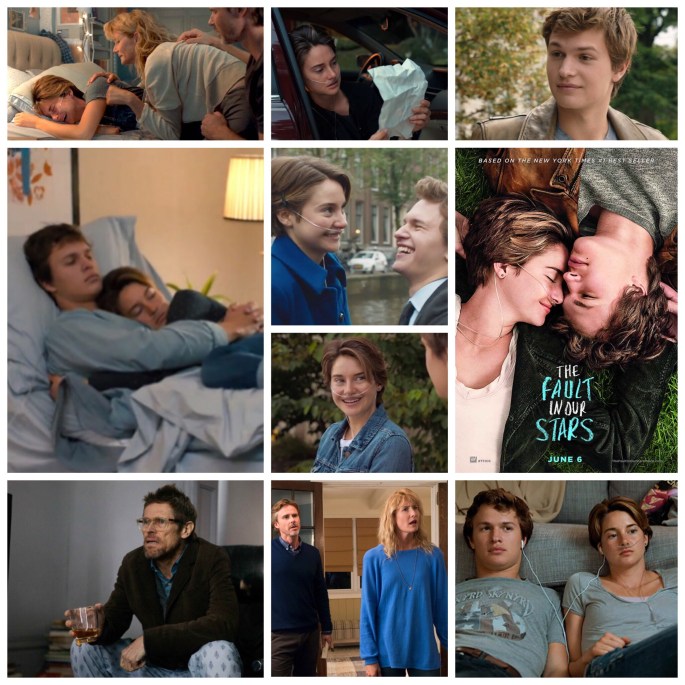
Anyone who dismisses The Fault In Our Stars as sentimental teen sap has just got their head in the wrong place. Although built around the same general formula as countless other flicks based on young adult novels, this one bucks the trend and actually tells a blunt, realistic love story that gets cut short by death, and doesn’t have the kind of garden variety storybook ending you can find anywhere else. This also isn’t the kind of sugar coated Walk To Remember type thing that doesn’t showcase how an illness or tragedy affects someone in favour of Hollywood gloss, either. In telling the story of Hazel Grace (Shailene Woodley) and Gus (Ansel Egort), director Josh Boone is lovingly dutiful to the details of the novel by John Green, and pretty much doesn’t change much of anything to pander our way. This is a story that could have happened to anyone: she’s sick, he’s sick, they both might not have long. Everyone around them behaves like they’re made of fine china and could break at any moment. All they really want is to live lives of some normalcy, and hold onto each other for as long as they can. Woodley is absolutely sensational and will break your heart with a performance that comes straight from the gut, while wearing her heart subtly on her sleeve with every glance and gesture. Egort displays the same glib facade he’d later use in Baby Driver, but carefully shows you the bruised soul underneath. There’s a truth to their journey, a willingness to focus on things like death and impermanence, which are often glanced over lightly in films that are geared towards younger audiences, as if such things are taboo. These two are faced with an impossible situation and it’s both fascinating and heartrending how they deal. They’re perfectly matched and when life gets in the way, it’s almost unbearable to see. Boone deliberately casts intense, committed cinema veterans to act alongside these brilliant newcomers including Laura Dern as Hazel’s soulful mother and Willem Dafoe as a cantankerous old fucker who’s hurting in his own way, and imparts some unconventional wisdom to her, when he’s not being a royal prick and listening to Dutch house music on full volume. Soundtrack choices include the likes of Charli XCX, Grouplove, Jake Bugg, The Radio Department and more, and are carefully woven into the tale to really bring it alive. It’s a hard, tragic thing to see unfold though, and the fact that it maintains such an unblinking, frank gaze at grief and loss makes it all the tougher, but it’s necessary to explore these things and put ourselves in the shoes of these people for a couple hours, if anything it’s like empathetic therapy for the viewer. Also, who doesn’t just love a raging tearjerker once in a while to flush the old ducts out.

-Nate Hill

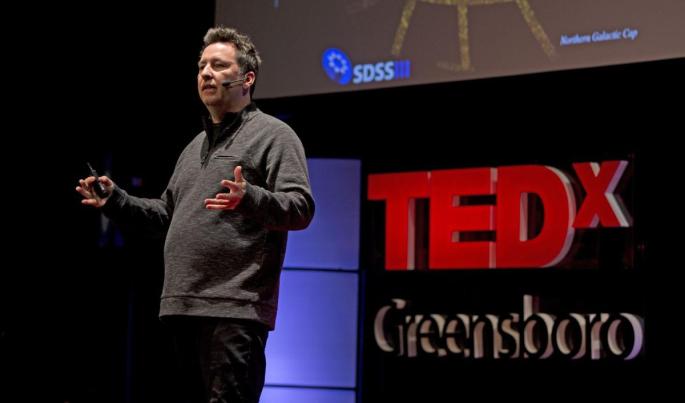
Space Operatic: An Interview with Stephen van Vuuren by Kent Hill

5ab434c5f2d77.image

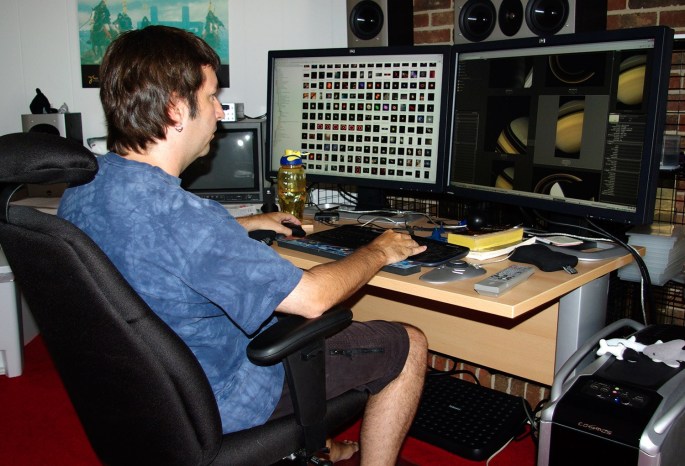
I applaud anyone who makes their way on this crusade, some might say foolish crusade, to make a film. It can be a long, arduous, laborious. And thinking on that word laborious, now consider making a film that has to be stitched together using over 7 million photographs with animation techniques pioneered by Walt Disney on Snow White and the Seven Dwarves. No CGI. And I know that sounds sacrilegious in this day and age where a film without CGI is like a day without sunshine.

However, the film that Stephen van Vuuren has, albeit laboriously, constructed In Saturn’s Rings, is a unique master-work that is as beautiful and immersive on the small screen I watched it on as I can imagine it being played in its large format form.

Sparked by Cassini‘s arrival at Saturn in 2004 and the media’s lack of coverage, van Vuuren produced two films. Photos from space missions — including images of Saturn taken by Cassini — were included. But van Vuuren was not satisfied with the results so he did not release them.

stephen-working-studio-1

While listening to the Adagio for Strings by Samuel Barber one day in 2006, van Vuuren conceived the idea of creating moving images of Saturn based on a pan-and-scan 2.5-D effect. The technique involves creating a 3-D perspective using still photographs.

After discussion with audiences at IMAX conferences, van Vuuren decided the film title Outside In (the title of the short version) was not a good match for the film’s sensibility. The Giant Film Cinema Association had been publicising the film and surveys it conducted supported this. It was during a discussion in 2012 about the film’s climax where he was describing Earth “in Saturn’s rings” that van Vuuren realized he had found his new title.

Although narration had originally been removed in 2009, by 2014 van Vuuren realized that a sparse narration was necessary for the film. This amounted to 5 pages and about 1200 words in total. After listening to many voice actors one stood out and he asked LeVar Burton (Star Trek: The Next Generation) to be the narrator for the film.

The culmination of these elements, plus a lot of hard work, has resulted in something that is essentially more than a film. Like Kubrick’s 2001 which inspired him, van Vuuren has crafted an experience of what it may by like to drift through the far reaches of space to the planet that has always been the physical embodiment of his childhood fantasies. And I for one am grateful he stuck to his guns and made a movie that, even though it’s not a tale from a galaxy far, far away, it is the universe at its most wondrous…

“God wants you on the floor.” : Remembering Hoosiers with Angelo Pizzo by Kent Hill

3c05cbcd25d647509480b2fb6c04b151

It’s hard not to be romantic about the sports film. From classics like The Natural and Bull Durham to more modern efforts like The Blind Side and Moneyball. They range across all genres and all sports. Football (Rudy, Any Given Sunday), Golf (Tin Cup, The Legend of Bagger Vance), of course, Baseball (Field of Dreams, For Love of the Game) and in the case of Hoosiers, Basketball (Blue Chips, He Got Game). But Hoosiers, and I happen to share this sentiment, is one of the finer examples of the sports genre and is, for my money, the best basketball film ever made.

559438377_o.jpg

Now, I use the term sports film very loosely. Yes all of the aforementioned contain the listed sports as part of their narratives. But, the games are not really what lies at the heart of these tales. The true centerpiece are themes like redemption, romance, the search for self, the search for acceptance – all these things within the characters either as player, coach, fan etc.

1933d997c12688e5647d03693629694a

So why do I think Hoosiers is the best example of this genre? Well, it’s simple. Hoosiers has all of these working within it. Comedy, romance, drama, redemption, the search for self, the search for acceptance. Okay, so it doesn’t have a crazed Bobby De Niro terrorizing any of the players to feed his grossly misguided obsession and distorted view of the world – but that doesn’t mean that it lacks thrilling, intense and impactful moments that keep you watching and ultimately cheering for the underdog, the little team that could. One could argue that this is a key ingredient in these kinds of films. A down-on-his-luck former golf pro, a disgruntled former player trying to manage a failing team, a boxer with all the odds stacked against him or a basketball team from a town in the middle on nowhere that couldn’t possibly take on the big schools and win.

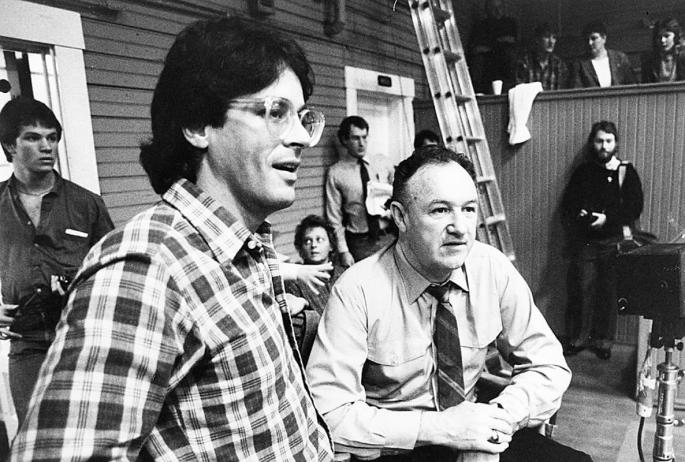
Then there are the characters – all looking for second chances. Hackman’s coach, Hopper’s alcoholic father, Hershey’s teacher. They all have something to prove, something to gain from the victories the home team are accumulating. And, they are all masterful turns by each of the three principals. Indeed from all concerned with the production. None more so than that of first-time screenwriter and my guest Angelo Pizzo.

The man who was headed for a career in politics eventually ended up going to film school. After graduating, and spending sometime working in the arena of television, Angelo felt the need, at last, to make a film about a subject he was passionate about – basketball. And, being unable to find writer for the project . . . well . . . he decided to have a crack at it himself.

This wonderful film, under marvelous direction, David Anspaugh, from a great script with a stellar cast and punctuated by a phenomenal Jerry Goldsmith score is a small miracle that has, not unlike the team portrayed in its story, taken on the giants and carved out its place in cinema history.

If you haven’t seen Hoosiers, I urge you to do so. Don’t get caught watchin’ the paint dry…

33rd Santa Barbara International Film Festival Podcast

SBIFF 2018

It’s time again for our annual Santa Barbara International Film Festival podcast! Frank and Tim recap Frank’s journey this year at the festival, including seeing Emilio Estevez’s new film, ‘the public’ and Susan Kucera’s LIVING IN FUTURE PAST which was presented and narrated by Santa Barbara’s own Jeff Bridges. This year, Frank’s red carpet interviews included on this podcast are with Executive Director of the festival Roger Durling, Gary Oldman, producer Doug Urbanski, Willem Dafoe, Emilio Estevez, Martin Sheen, Leonard Maltin, Academy Award-nominated editor of I, TONYA Tatiana Riegel, Academy Award-nominated VFX supervisor of BLADE RUNNER 2049 John Nelson, Academy Award-nominated sound editor of THE LAST JEDI Matthew Wood, GET OUT’s Daniel Kaluuya, Jordan Peele, Guillermo del Toro, and lastly Frank talking to Ben Mendelsohn about Podcasting Them Softly’s namesake, KILLING THEM SOFTLY.