The Most Dangerous Jaws: William Girdler and Grizzly (1976)

David Sheldon, who had been a producer for Bill Girdler starting on the Louisville-bound Combat Cops, AKA The Zebra Killer, AKA The Get Man, three whole films and two mere years before Grizzly — if that tells you anything about the furious productivity of Girdler and the dollar signs floating within his eye sockets — wrote a script with one-time Girdler alumni Harvey Flaxman, based on a terror-induced encounter with a bear on a camping trip Flaxman had taken with his family years prior. (Jaws also happened to have come out a few weeks before the two actually wrote the script… but I’m sure that had nothing at all to do with it… nothing at all.) Girdler, always looking for the next big money-maker, spotted the screenplay on Sheldon’s desk, read it, and nicely offered to help finance the beat-by-beat Jaws-in-the-woods extravaganza… on one major condition… he gets to direct the movie, of course.

Lee Jones, who had served as assistant director and production manager on Bill’s first local film, Asylum of Satan, and upgraded to producer on his second Kentucky-fried Psycho rehash, Three on a Meathook, helped Girdler find financing within a week’s time — and just as Warner Brothers themselves were about to reach out to Sheldon and Flaxman to make the movie, Bill and Lee quickly swept in with the financial backing of one Edward Montoro, an unstable former airline pilot from Cleveland whose air career had been cut short by a major plane crash, which he survived, and whose life was subsequently shifted and promoted to serve as Georgia’s Film Commission by then-Governor, Jimmy Carter. Montoro, now a sexploitation and b-horror maestro, backed the film independently with $750,000, locked everyone into production contracts, and eventually… took the money and ran, a pattern that arises all too often in the strange tale of Montoro’s film producing career.

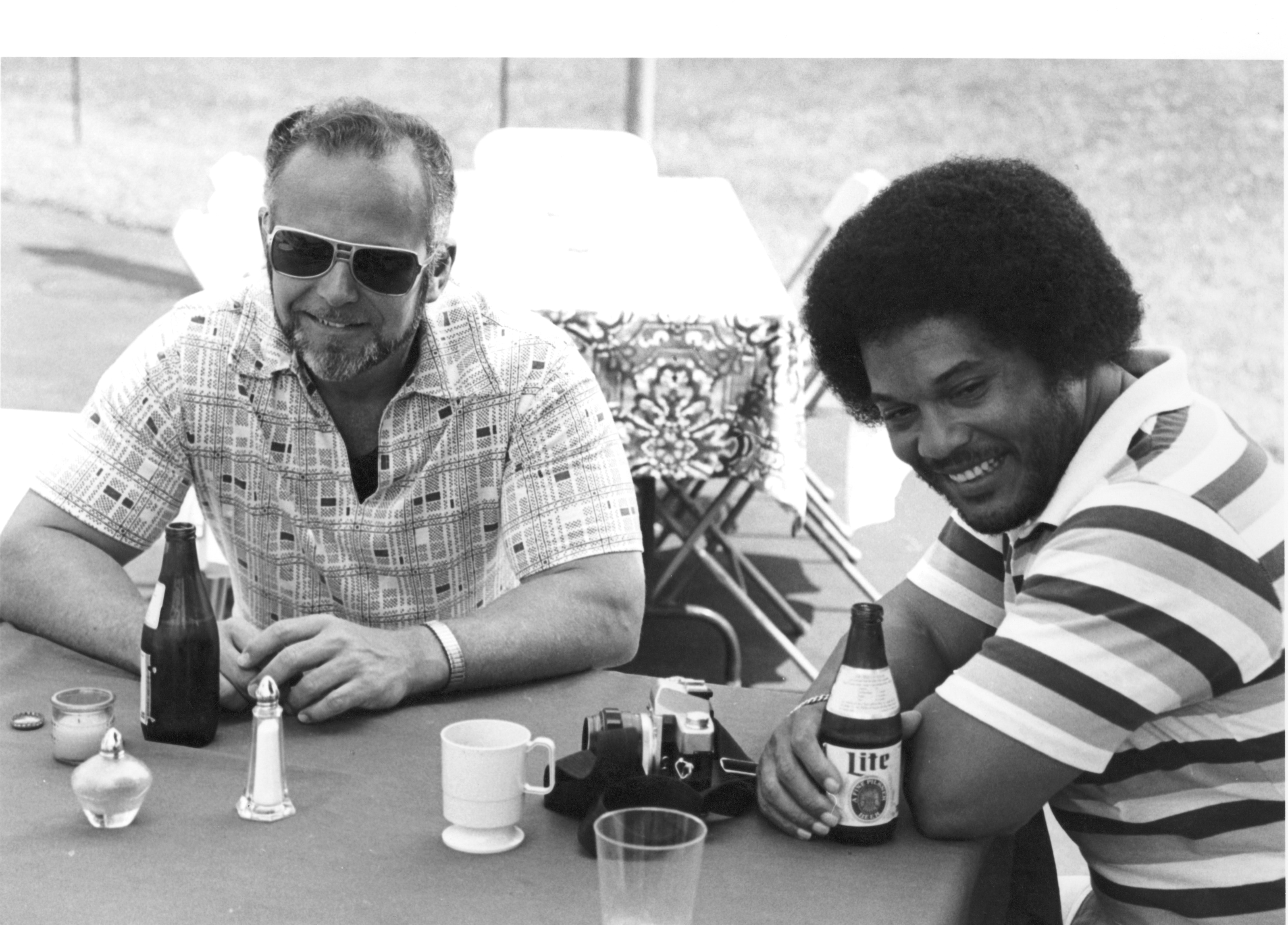
Montoro (right), soon to escape into the ether of the unknown, promoting the release of Bill Girdler’s film, Day of the Animals.

Grizzly would become the highest grossing independent film of 1976, beating out even Monty Python and the Holy Grail in box office proceeds, but Montoro had bigger and better ideas. He kept all the profits to himself, leading Girdler and others to file suits against him. Despite being left destitute, living out of Leslie Nielsen’s guest house for a period of time after production, clearly Girdler had nothing against Montoro, seeing as he’d come back as producer on Day of the Animals the following year. But Montoro’s saga in Bill’s life would end there and carry on into bizarre, obscure legend. Grizzly wasn’t the last Jaws rip-off Montoro would make. He was sued by Universal Pictures in 1981 over The Last Shark and, after a string of unsuccessful b-movies in the early 80’s, truly nothing is known about Montoro or his whereabouts after the year 1984 when he mysteriously vanished, never to be seen again, with the millions of dollars he had stolen from the account books of his production company, FVI, which would end up bankrupted less than a year later.
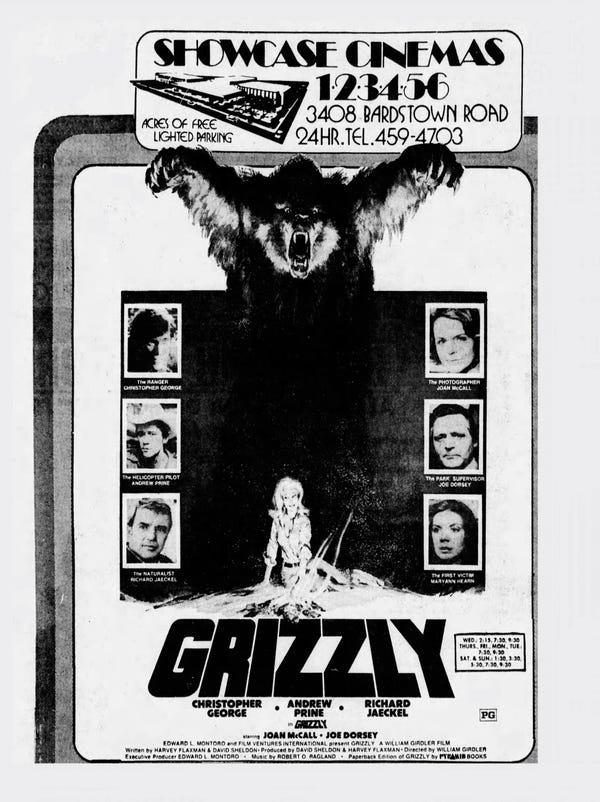
Grizzly as advertised in the Courier Journal, Girdler’s hometown paper. Friday, May 14, 1976.

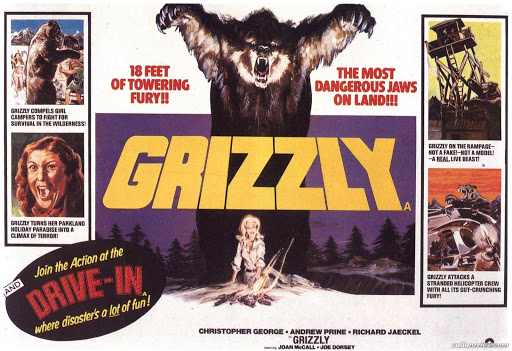
The film itself that ended up being cobbled together by these lunatic men is indeed a blast. A campfire gorefest that follows the exploits of the most frustrated, cynical department of park rangers you’ll ever meet as they try to halt a murderous bear and wage battle with the state officials who refuse to close the park down. To call it campy would be too puntastic and on-the-nose, but it’s the only valid description. Promotional materials say the bear is 18-feet tall, the characters say the bear is 15-feet, and reality says the bear — Teddy, as he was known on set — was 11-feet, close to hibernation, irate and prone to bursts of anger. Oh, and did I mention the bear was mostly untrained and the cast had to stay far away from him? That’s about right.

Meanwhile, Girdler directs with a certain accelerated type of gravitas when compared to his previous films. This is very much a case of Billy Goes to Hollywood. The gore sequences have a fun, lean, mean-spirited, European flavor to their jarring nature. Girdler gives us the flip-side of the Spielbergian experience. We don’t watch Jaws and cheer on Bruce the Shark. We genuinely care for Brody, his family, his men, and even the townsfolk like the Kintners and Ben Gardner. That’s because Spielberg is the ultimate empathy artist. But Bill Girdler? He’ll make you cheer on the bear. Whether it’s punching its way through the roof of a house, swiping the camera with its furry claws matted in blood, or mauling a poor, innocent child to death in purely horrific fashion — you just can’t help but clap your hands together and howl to the heavens.

There’s an ironic, authentic heartbeat to the madness here, just like in every other cheap Girdler film, but it’s manifest in a different way than Spielberg’s type of heart. You can feel the sterling ingenuity, the love of making films, and a locally-born fervor at every turn. (And keep your eyes peeled, by the way, for Louisville’s own late, great Charlie Kissinger, Girdler veteran and Fright Night “Shock Theater” host, the Fearmonger himself, as the doctor after the initial bear attack.) Girdler’s empathy was always rooted in money — which he definitely didn’t have after the revenue of this sleeper hit was stolen from him — but he was smart and knew that even if you were to rip-off all the bigger-budget films in the world, you wouldn’t make any money unless you won the audience on to your side. Or, in this case, the grizzly’s side…

Grizzly is now available on Blu-Ray from Severin Films, including a behind-the-scenes documentary entitled Movie Making in the Wilderness offering the rare opportunity to see Girdler working on-set. Order it here.

______

Tyler Harris is a film critic, English teacher, and former theater manager from Louisville, Kentucky. His passionate love for cinema keeps him in tune with his writing.
Kentucky’s Ed Wood: William Girdler and the Asylum of Satan

It’ll just be a matter of time before William Girdler has his own reconsideration — or reckoning, if you will — in the history of cinema. If the blood feaster, Herschell Gordon Lewis, can get a section on the Criterion Channel, then look for Girdler’s one day. He was a prolific, guerrilla-filmmaking veteran of war who set out to start his own film production company with his brother-in-law, ended up in Hollywood making what is maybe the most successful Jaws ripoff to date, and over a six year period, directed nine features and wrote six, only to die a martyr at the hands of the cinema itself in a helicopter wreck in the Philippines as he was location scouting for his next film. As he fostered his obsession, he found his place, working with the likes of Tony Curtis, Leslie Nielsen, and Pam Grier. To this day he’s relatively unknown, generally under-appreciated by the late-night TV horror crowd, and yet persists as an underground, underdog hero, especially in the state from which he hailed, Kentucky.

Screen Shot 2020-07-24 at 10.29.36 AM
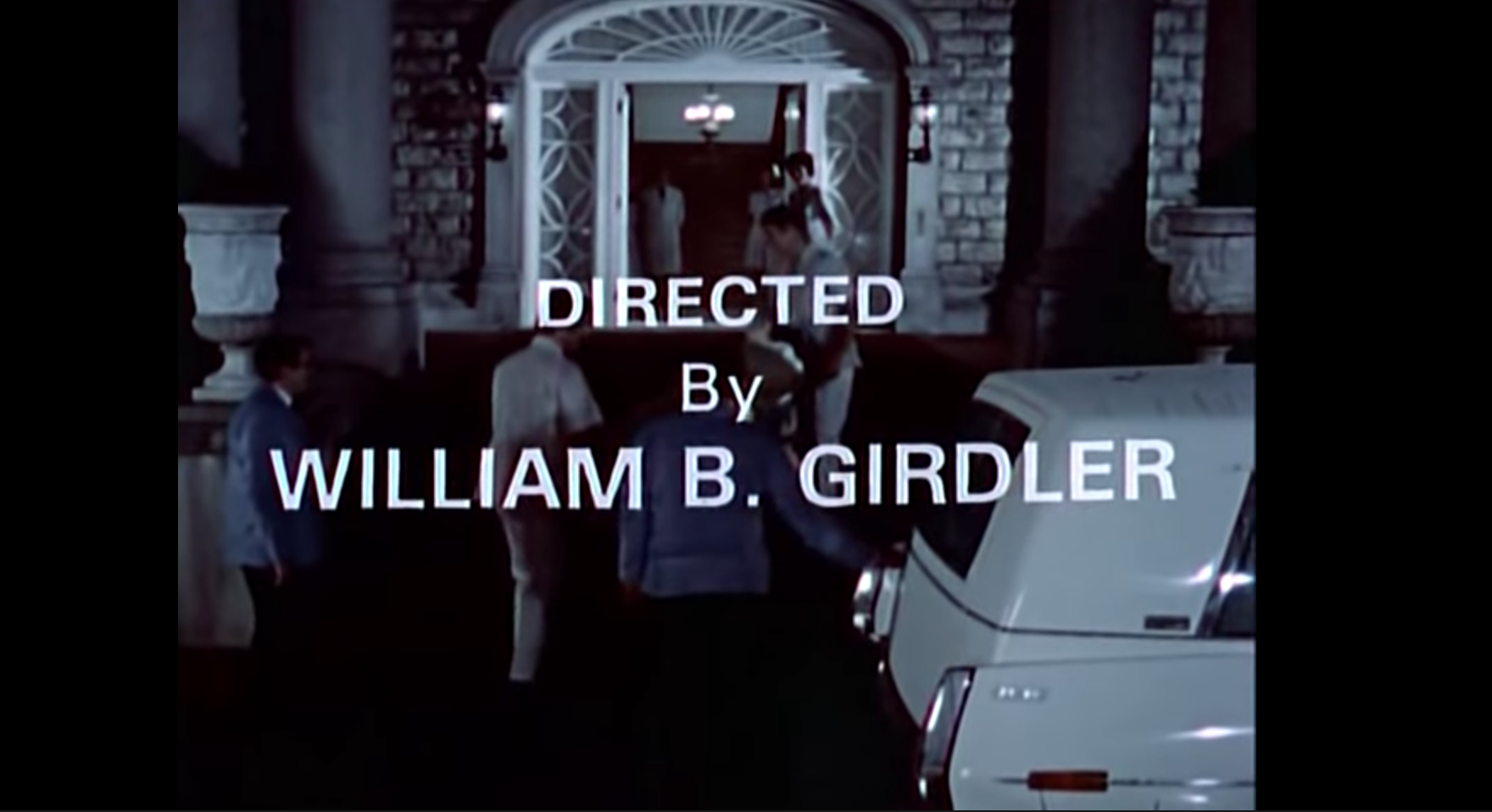
Exteriors of the asylum in the film were shot at a mansion in Glenview, while the interiors were shot in a warehouse off the Ohio River.

And a quick personal note: Perhaps I’m biased on the Bill Girdler front, given so many of my two-to-three degrees of connection to the filmmaker’s history. As a former manager who programmed midnight features at a local theater in the very town Girdler was from, I was bound to connect to a few folks who consider themselves experts on the local low-budget midnight grindhouse king of Louisville, so I’ve heard his name for years from folks who really do know a lot about the matter. My many thanks to my own personal Girdler aficionados, and former theater managers themselves, Dave Conover and Beau Kaelin, for finally making me sit down to watch his first film.

And who would’ve guessed it, Asylum of Satan might just be as definitively Louisville as it gets — and not just because Louisville around this time of year is a real-life asylum for Satan, being wedged right in the center of the hot, humid Ohio Valley — but rather the “relatively small potatoes, with a big heart, and lots of charm” appeal oozes the same charisma as the city itself. (And, hey, you want a little tour of the 1971-set cityscape? Check out all the scenes of TV-commercial-extraordinaire-turned-leading-man Nick Jolley driving Girdler’s cute, tacky, yellow 914 Porsche around town!)

Screen Shot 2020-07-24 at 10.31.18 AM
Nick Jolley, one-time leading man, driving past the Big Four Bridge, which connects Louisville to Jeffersonville, Indiana over the Ohio.

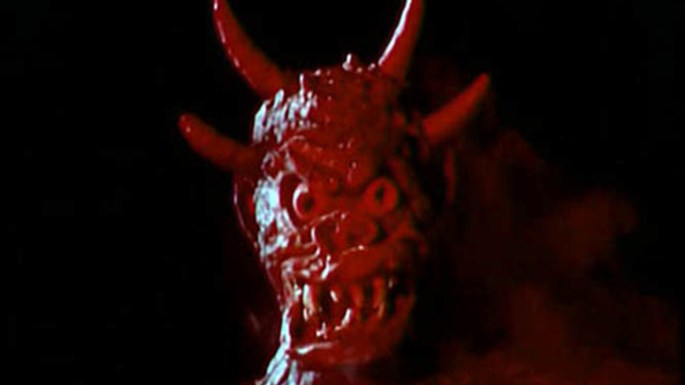
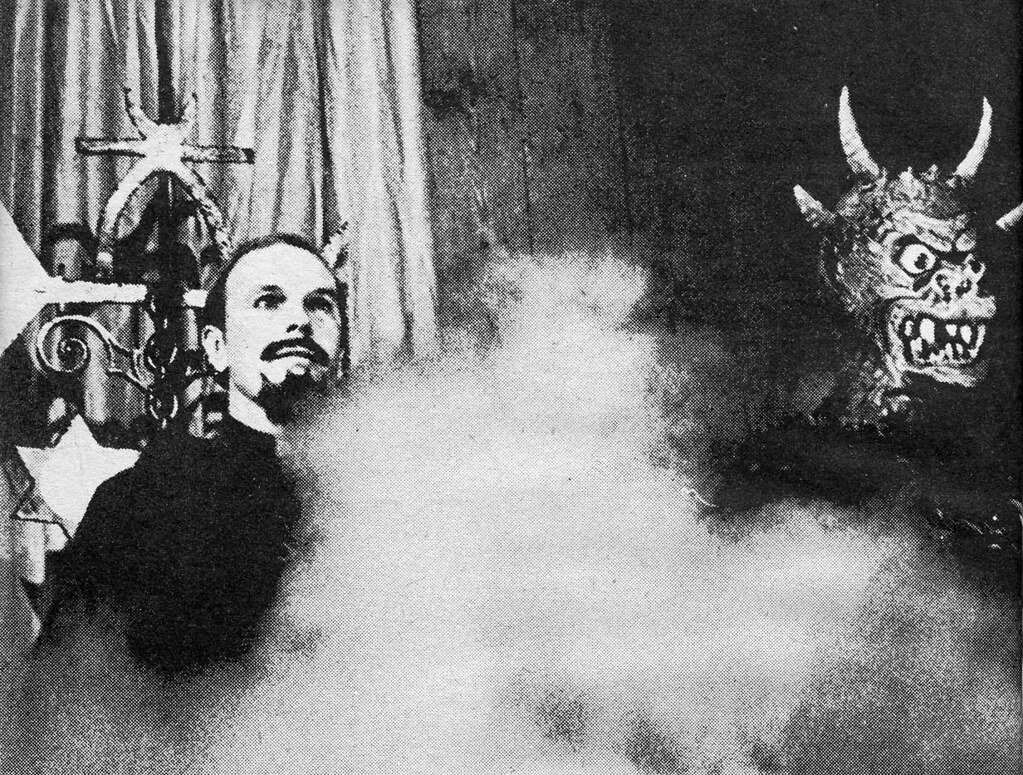
Asylum of Satan is indeed, just as the title suggests, an asylum horror flick; perhaps akin to the Amicus-produced Asylum from the same year, but less anthology-based, it feels more like Shock Corridor meets Rosemary’s Baby. Simple in premise, dirt cheap in budget, but surprisingly effective with certain scare tactics and wholesome in its cheese. The gorgeous Carla Borelli is our entrapped damsel, the victim of a Satanic conspiracy (supervised on set by the Church of Satan itself, who sent an advisor to serve for Girdler on the set) which is headed by the evil Dr. Specter, a hilariously goatee’d Charles Kissinger, a regular for Bill (and Louisville’s own years-long Fright Night host, the Fearmonger, on our local FOX-affiliate, WDRB), who comes across as a deliciously villainous, Rust Belted version of Hammer-era Peter Cushing or Christopher Lee, willing to do ham only with the utmost class and style… and not afraid of a little Hitchcockian cross-dressing either! It’s ultimately up to our leading lady’s boyfriend, who doesn’t exactly ooze protagonistic sex appeal, to annoy the police into searching the asylum in which she’s trapped — ultimately revealing the asylum’s direct connection to Satan himself.

of

Don’t get it wrong — this is cheap, low-grade, and was meant to be made for money (but don’t call it bad!) At one time or another, it was probably a heart-stopping name to speak around a wealthy Louisville investor, causing Vietnam-like flashbacks of money wasted. As one of the film’s investors noted in the Courier Journal in 1975, “[The film] was a training ground, and we paid the price.” The investors did eventually gain the rights to the film after it bombed, and after Girdler signed the rights away, so they could make their money back. (Today, it’s hardly available on DVD and is free on YouTube… great work, guys!)

A fantastic interview with Don Wrege, the then-17-year-old kid who served as the set’s clapperboard operator, reveals Girdler as a businessman first, filmmaker second. He was interested in making money and films, in just that order. It’s an assertion that ties Girdler directly to the genre’s other great “businessified” passion directors — think of the infamously budgeted Ed Wood, or the gimmick-master, ticket selling guru, William Castle — and there’s truly a great charm in that, ultimately revealed in the oddly oxymoronic, haphazard dedication on display, which grew that retrospective legend I’ve come to respect.

IMG_4355
Billy Reed, the legendary sports writer who covered Ali’s fights, the Kentucky Derby, and the World Series, apparently pulled the short straw at the office on this day.

When the film premiered worldwide at the now-closed, sadly vacant Vogue Theater in St. Matthews, my city-within-the-city (the Vogue is right around the corner from my old house, the school at which I teach is right down the street), Billy Reed wrote that the actors wore tuxedos as if they were in Hollywood and “it was not Graumann’s Chinese, but it was a worthy try.” That seems to tap directly into the soul of the movie. Amidst the mix of occasionally phony, occasionally effective horror, lined along all the fake water snakes and crawling bugs and devil make-up falsely purported to have been stolen from the set of Rosemary’s Baby, there really is heart. And there’s merit. And there’s love.

And that’s clearly the Girdler touch.


Tyler Harris is a film critic, English teacher, and former theater manager from Louisville, Kentucky. His passionate love for cinema keeps him in tune with his writing.

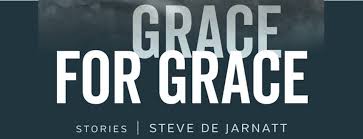
Steve De Jarnatt’s Grace For Grace

Steve de Jarnatt 2

Some 40 odd years ago, Steve De Jarnatt put pen to paper and started to craft what would be his cinematic masterpiece and final film (so far), Miracle Mile. The 80s classic was spiked with romance, conspiracy, violence and ultimately the end of the world as we know it thanks to a fictional nuclear annihilation everyone lived in constant fear of during the Cold War. As the poster boasted, it was a welcome blast, a genre smashup that keeps an audience guessing until the final reel because it juggled so much with such expertise. Some have stated the film achieved cult status instead of Oscar gold because its lengthy trip from screenplay to screen ended at the same time the Berlin Wall was coming down; in 1989, everyone was in the midst of a deep exhale as the animosity between world powers was on the wane and perhaps few felt they needed the reminder of how close we’d all been living to oblivion.

Fast forward to now and you’ll discover De Jarnatt’s timing couldn’t be more perfect. He’s dropped his first set of short stories on the literary world, and they’re a stinging balm for this planet, thrown into tumult the way it hasn’t seen for a century. Grace For Grace (a phrase taken from a standout story involving a whale, Her Great Blue) shows the writer remains fascinated with the edge of chaos we as a species exist on at all times, and how we as clumsy, mean, beautiful, messy and loving people handle it. The randomness of the universe, the many apocalypses hiding around every corner, are on full display here—a detoxing soldier fights a hurricane, an earthquake interrupts a mob hit, and in what could be the most De Jarnatt moment in all of his work, a little girl gaily skips over the heads of a theater full of people who are about to burn in a theater fire. And that’s just scratching the surface of the beautiful chaos revealed herein. The writer throws us into the middle of these nightmares and dreamscapes with little warning about what’s going on and certainly what’s going to happen next; the scenarios slowly but surely reveal themselves and almost always hinge on what direction human nature will drag his protagonists in when faced with challenges created by decades of their own behavior or the random cruelty of the universe—or, more often than not, the combination of both.

The delightful news? Far from some Ligotti style depression fest over how empty our existence is, De Jarnatt’s globe trotting tales celebrate his characters and their faults, deformities and mistakes.  He does indeed, time and again, find the grace in humanity. Through these stories he shows a complicated but pure love for his fellow men and women. We fight, lie, fuck and fail, but we get up and try to do a little better the next day, and maybe even rise to the occasion when things go south—and things always go south. Perhaps one of the best in the collection, Escharotomy, highlights this complicated dance, as a supposed victim of a terrible crime seeks out her supposed assailant, a man burned head to toe not once but twice, who now roams forests decimated by flame to help nurse the wounded survivors back to health. It encapsulates the chaos we cannot control, the damage we inflict on ourselves and others, and the complicated, almost unknowable process of healing and loving despite it all. De Jarnatt delivers these fables with lively prose, equally as comfortable weaving wild tales as he is taking chances with language. Characters and moments bolt off the page and come to life in the reader’s mind, almost as if a great filmmaker is orchestrating a series of loosely connected cinematic vignettes before our very eyes. I don’t know if he’ll get behind the camera again, but no matter what creative endeavor he launches next, it’ll be well worth looking out for. Grace for grace, deed by deed.

Grace For Grace

On Andrzej Zulawski’s On the Silver Globe: The Greatest Film Never Made

“Don’t forget what we escaped, just to repeat with impunity what we believe in.” 

The life of man in nature, as Hobbes tells us, is brutish, poor, and short. Cruelty seems to be our only virtue. Violence is inherent. Built into our being is the all-pervasive need to tribalize, to colonize, and to kill. The principle of human exceptionalism holds humanity in the highest regard and, of course, human exceptionalism is a concept created by… you guessed it… humans. Selfishness emanates from us; our species is forcibly meant to be the galaxy’s shining hill. With On the Silver Globe, Zulawski crucifies any remaining notion of human exceptionalism that may remain within your naive soul.

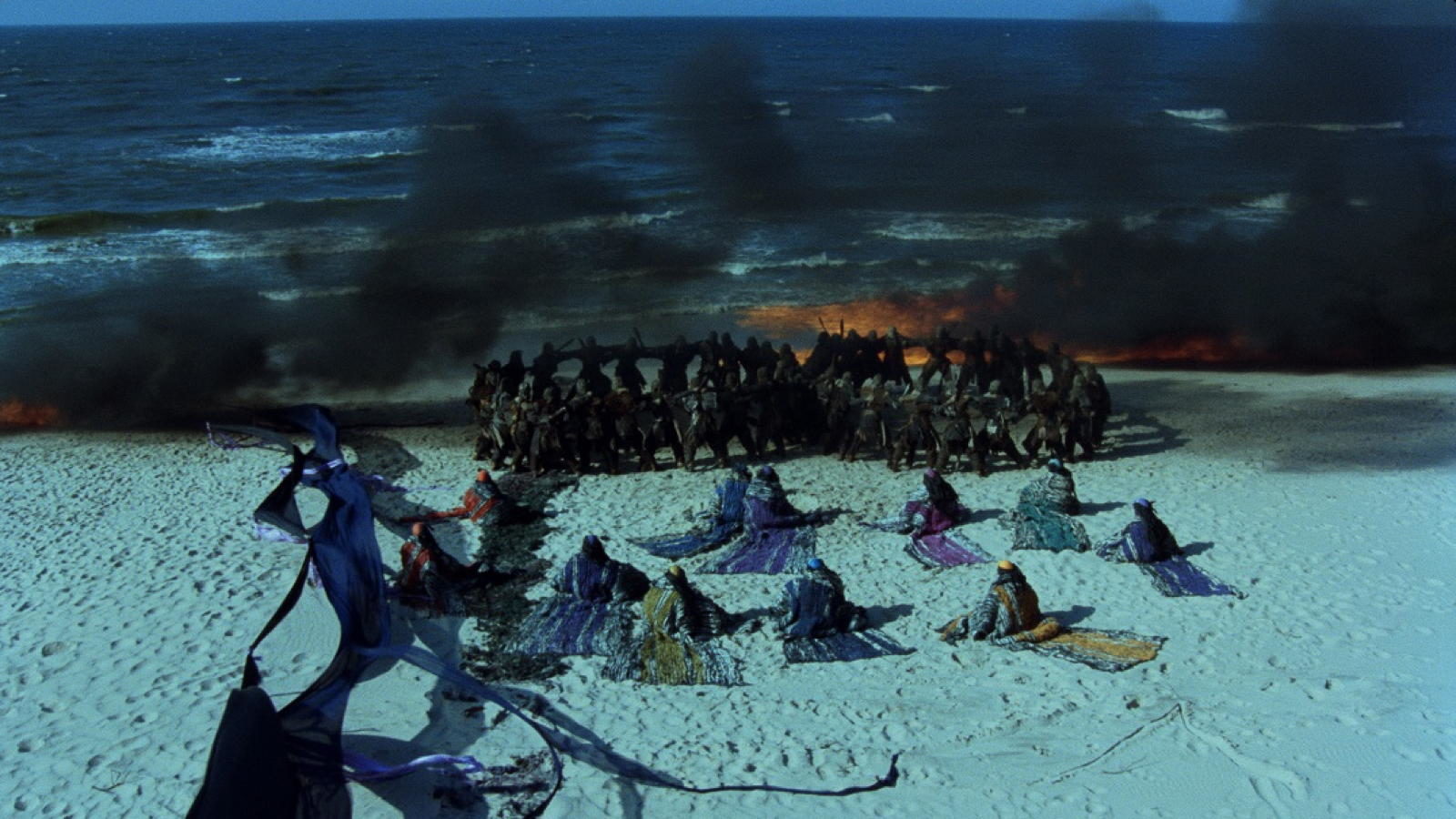
onthesilverglobe3-1600x900-c-default

Notoriously difficult in production and known for being, unfortunately, an unfinished product due to Poland’s government shutting down the film’s creation mid-stroke, Zulawski’s sci-fi sand punk philosophical scribe is a daunting, exhausting experience. About 1/5 of the film was unfilmed as the Vice Minister of Poland’s Cultural Affairs forced production to a halt and had the sets and props destroyed. Ten years later, Zulawski would return to The Silver Globe and finish it, inserting into the missing sections a narration of what otherwise would have taken place in the narrative. Where it suffers from being unfinished, it benefits in acting as an enigmatical, broken transmission from the cosmos beyond.

The film is split between a deeply subjective, POV-oriented narrative of a new Eden and an omniscient, wandering grotesquerie of the dark ages in a newfound world. This new world is founded by a group of astronauts who have left Earth, presumably to escape man’s political constraints and form a colony of freedom. These astronauts postulate philosophies about freedom for the majority of their young time on this new planet, which drives home even further the restrictions of humanity’s abilities, the fact that we, collectively, are trapped in this hellscape because of ourselves. Zulawski posits the question at the beginning — can humanity be successfully restarted without our very worst qualities hindering the species from further development and evolution? With the rest of the film, from the entrance of Marek, our new world’s fated messiah, Zulawski answers his own question with a resounding, haunting display of war, organized religion, death, and destruction. You already know the answer. So does he.

You can watch On the Silver Globe as part of Exmilitary’s current Eastern European Apocalypse series here.


Tyler Harris is a film critic, English teacher, and former theater manager from Louisville, Kentucky. His passionate love for cinema keeps him in tune with his writing.
ONCE UPON A TIME IN…2019

I have always been hesitant about writing in the first person when it comes to anything analytical, one thing instantly comes to mind; Robert Prosky in BROADCAST NEWS saying “who the hell cares what you think?” after watching William Hurt, a network anchor, say “and I think we’ll all sleep better tonight.” At the risk of sounding like a flippant fanboy (which I am), I think what I have to say about this topic, and this auteur, in particular, is important. When it comes to the minority of naysayers and torchbearering wokaholics, Quentin Tarantino and his latest and most seminal film, ONCE UPON A TIME IN…HOLLYWOOD has become an easy target. Violence against women, Margot Robbie doesn’t have enough lines, it glorifies toxic masculinity – no, no, and NO – the film surely does not.

Image result for once upon a time in hollywood

Tarantino is fundamentally important to me as not just a cinephile, but as a person. I wore out my used VHS copy of RESERVOIR DOGS when I was in middle school. My mother forbid me to watch it, and my Dad embraced it. One of the benefits of being a child of divorce. It was cool, sexy, violent, and overly masculine. It made me feel empowered yet cautious. Would I want to be a Reservoir Dog in a black suit and carrying a big gun? Kind of, yes. But did I really want to live that life, where less than one percent of that life is glorified in encapsulated moments on screen? No. No, I did not. Tarantino has a fanbase that isn’t so much a cult as it is an organized religion, and QT will always be our cinematic lord and savior.

My pallet of film was already starting to get diverse. My father brought me up on John Wayne and John Ford, Errol Flynn, Burt Lancaster, Gary Cooper, Martin Scorsese, Francis Ford Coppola, and my namesake, Frank Sinatra. My Mother’s contribution was ROCKY, TO KILL A MOCKING BIRD, INDIANA JONES, and STAR WARS. Then, I experienced Quentin Tarantino. It was that cool fucking name that introduced me to Harvey Keitel, John Travolta, Steeler’s Wheel, Harry Nilsson, Tim Roth, Michael Madsen, Sam Jackson, Uma Thurman, Dick Dale, Kool and the Gang, Robert Forster, The Delfonics, Pam Grier, Bridget Fonda, Michael Fassbender, Christoph Waltz, David Carradine, Michael Parks, Sid Haig, Larry Bishop, Ennio Morricone, Franco Nero, DJANGO – I would love to keep going, believe me, I really would, but you get the point.

Image result for once upon a time in hollywood

Not only were these musicians, films, and actors all put on my radar, so were genre pictures, and sub-genres. His films are not only an encyclopedia of all that, but also a chose your own adventure. After seeing ONCE UPON A TIME IN…HOLLYWOOD, I instantly ordered C.C. & COMPANY and THE ILLUSTRATED MAN and watched both instantly upon arrival. Anyone who knows me well knows that was an incredible feat I pulled off: watching a movie as soon as I bought it. Not only does Tarantino’s films make me feel good, they send me on a quest of an actor or band’s catalog and I immerse myself into everything I can in microbursts that send me to buy bootleg DVDs of Michael Parks’ movies on eBay, or scouring record stores for cassettes of The Delfonics.

Quentin Tarantino and everything he’s created, curated, and recommended – everything that is Quentin Tarantino is important to me. I hold him and everything that comes with him sacred. Which is why I was so deeply moved by the haunting beauty of ONCE UPON A TIME IN…HOLLYWOOD. Sure, it is a jovial bromance between a fading star and his stuntman, as well as portraying Sharon Tate as this beautiful showboat of purity and everything that was once good in the world, and revising the wrongs that history should have gotten right. There is a multitude of takeaways from this film, and that’s one of the reasons it so rewatchable and so fucking alluring. The film is an experience. You get immersed by it; you become lost in a place where there is no space and time.

Image result for once upon a time in hollywood

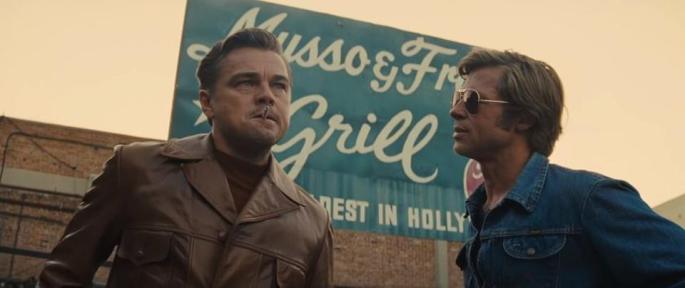
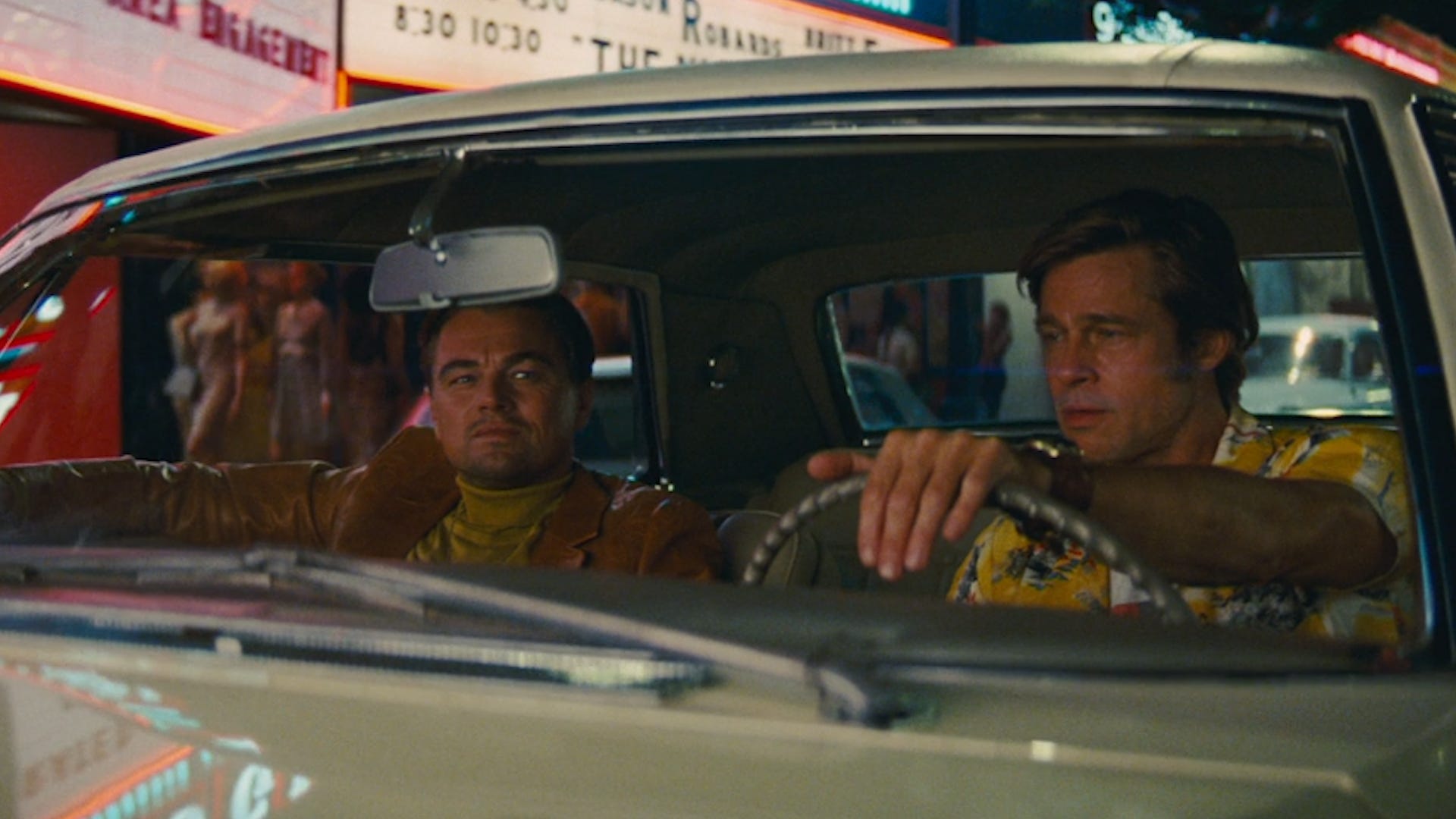
For me, the film plays like a Sam Peckinpah picture. Leonardo DiCaprio and Brad Pitt are two men who are coming to the realization that the world, their world, has progressed past them. There really isn’t a place for a fading TV star who fucked up his movie stardom, and his faithful, wife killing, war hero stuntman who is the epitome of loyal, who will stand by him when everyone else has abandoned him. And then there’s Margot Robbie as Sharon Tate, who is portrayed as a goddess of fertility and good, whose performance is ever more powerful because everyone knows her fate. The three of them have no place in the world anymore.

Are you the fading movie star who comes to the realization that his previous transgressions coupled with cultural advancements have left him as the bad guy on prime time tv? The one who doesn’t even know who he is? His phonies and insecurities have boiled to the surface, and he’s become a fragile and emotional being? Or are you the stuntman? The anthesis of stoicism; the rocksteady one who deals with problems on their own terms; right or wrong, it gets handled and the problem is over. Are you the one that carries the load? Does the heavy lifting?

This is not singular to men. These are two people that have broad strokes that encompass any individual and are as relatable as Bill and The Bride, and Jackie Brown and Max Cherry. Yet, the ending of the film, the saving of Sharon Tate elevates not just these two characters and the film, but Tarantino himself to a rung of uncertainty. Tarantino is surely an amalgam of both Rick Dalton and Cliff Booth, and one thing is for sure, he knows his days as a final cut artist are numbered. He’s become an artist without a means to an end. With the downfall of Harvey Weinstein, he became a filmmaker without a studio. The #MeToo movement had nearly dragged him down to the point of no return until he signed Leonardo DiCaprio, Brad Pitt, and Margot Robbie to his next picture after Sony beat all the other studios into submission over a bidding war for QT’s ninth film.

Image result for once upon a time in hollywood

Tarantino had always been a problematic filmmaker. His excessive use of the word “nigger”, he “glorified” violence and drug use; and then when THE HATEFUL EIGHT came out, to a hostile environment of the beginnings of Donald Trump’s America. Tarantino was caught in the crosshairs of the alt-left and their faux outrage over violence towards Jennifer Jason Leigh’s character (who was the villain, mind you) and cartoonish racism aimed at Sam Jackson’s character. If you stayed until the end of the movie, you’d find that the racist and the black guy come together to hang the evil bitch, coming together to serve not just justice, but retribution.

AND THEN Tarantino decided to march in a Black Lives Matter protest in New York City, that quickly eroded any support and counter support that he had from the “silent majority”. He was in a lose/lose situation. There was no way out of this. So what does he do? He crafts a fucking masterpiece that is ONCE UPON A TIME IN…HOLLYWOOD as not just an ode to the era, and himself, but to who he is as a filmmaker.

The Atlantic and The New Yorker and even Time Magazine, fucking TIME MAGAZINE, released half baked and lazy think pieces on Tarantino and how he’s “problematic” with the way he treats women. What those three analysis had in common is they had a lazy argument for a shit opinion. Tarantino loves women. LOVES women. Sure, some of his characters have hilarious demeaning deaths, but so do male characters. He has created bold and empowering female characters that are worshiped by both the world inside the film and the audience themselves. The Bride, O-Ren, Jackie Brown, Mia Wallace, Sharon Tate, Jungle Julia, Broomhilda, and Santanico Pandemonium are just a few.

Image result for once upon a time in hollywood margot robbie

And while I can understand perspectives, and am empathetically in tune with how violence against women can be a breaking point for audience members, who the fuck are you, me, or anyone else to tell an artist what they can and cannot do with their own work? The world can be evil, ugly, and bad – and at times, art and artists are a direct reflection of that. At the time this “editorial” was written, Donald Trump is trying to buy Greenland, children are being taken from their families and locked in cages, and people are walking around carrying weapons designed for maximum carnage killing school kids, and mothers, and fathers, and friends, and neighbors, and lovers – and you want to use your corner of the internet and complain about Manson Family hippies getting torched and graphically killed? You’re not helping. At all. All your nuance is temporarily going to stick to the landing. Once we make it through and the pendulum swings back to a President who gives a fuck, then absolutely no one is going to give one single fuck that Brad Pitt broke the face of a hippie girl with a thirty-two ounce can of dog food.

Quentin Tarantino doesn’t make films for me, even though it feels that way for me, he doesn’t make them for you, and he sure as shit doesn’t make them to offend people’s delicate sensibilities; he does what any great artist does. He makes art for himself because he has to.

Walking with Titans by Kent Hill

ff175c72b2

Alexander Nevsky – мой друг суперзвезда. What can I tell you? He is a dynamic performer with a physically commanding presence. He is a champion bodybuilder. He is a writer, director and producer whose films I find not only entertaining, but also made in a fashion which speaks to my love of the great action movies from the 80’s. 

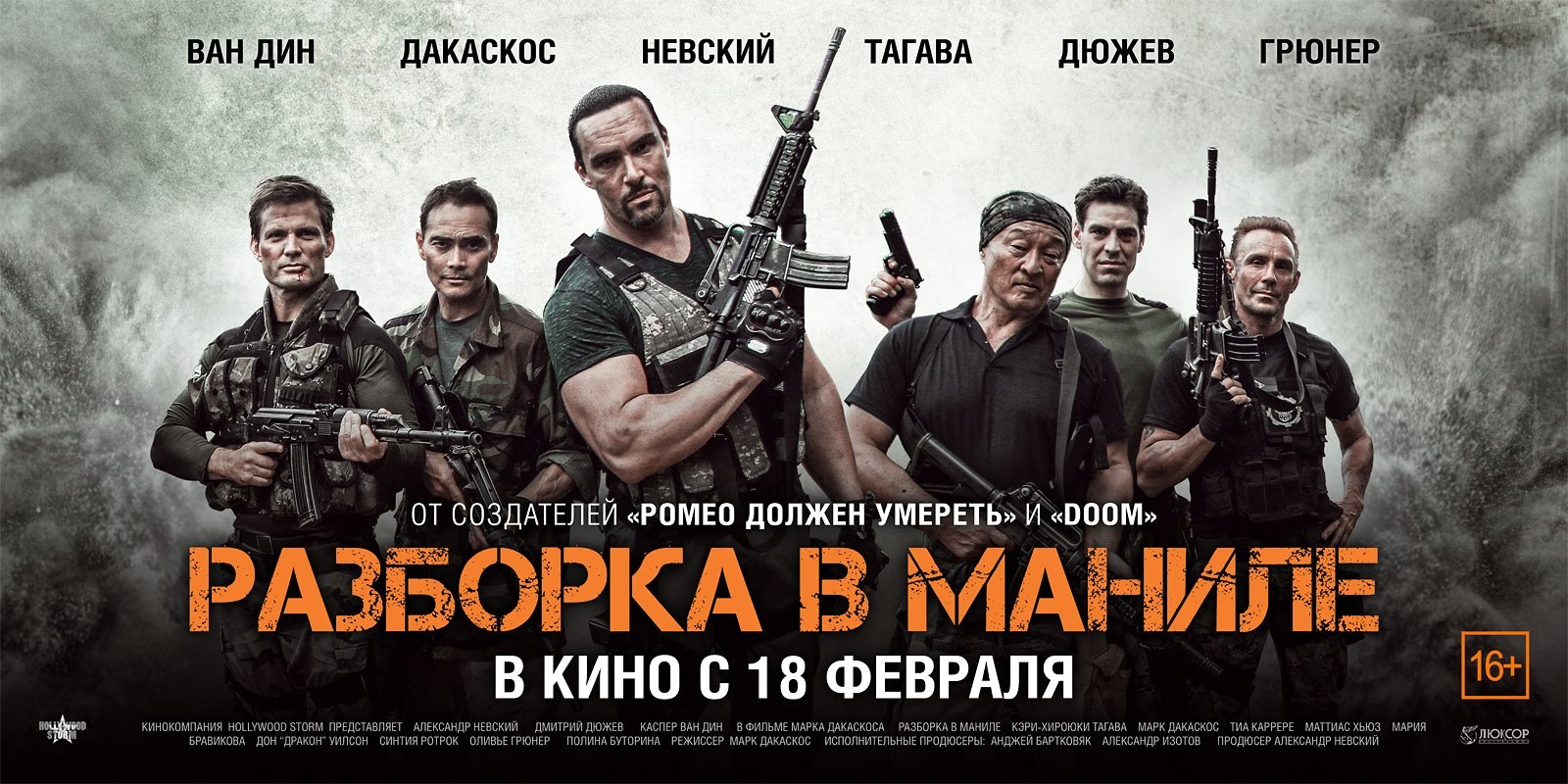
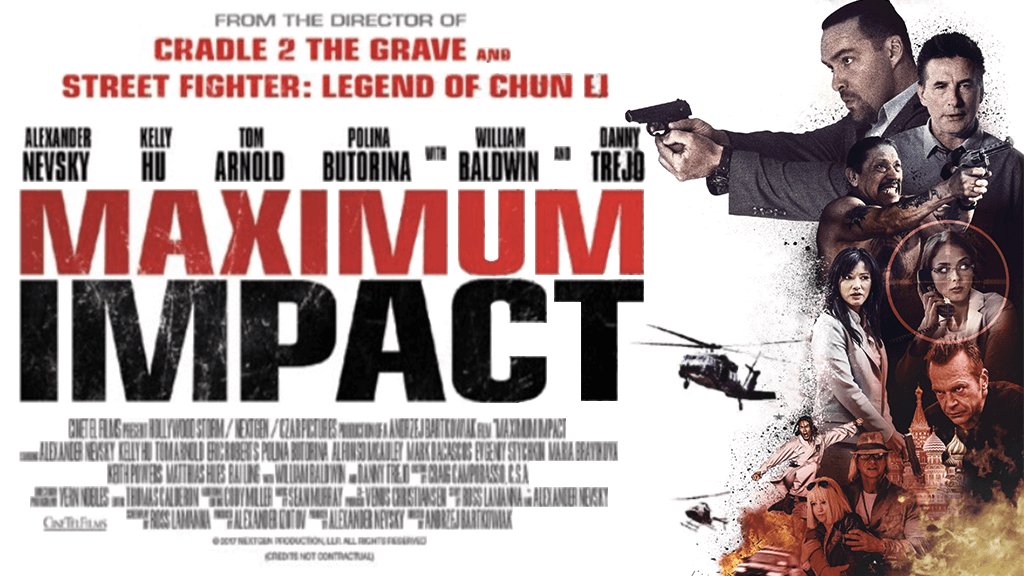
[To listen to my previous chats with Alex on his films, click on these posters below]

Showdown-in-Manila-Russian-Poster

DkZwcQQUwAACO82

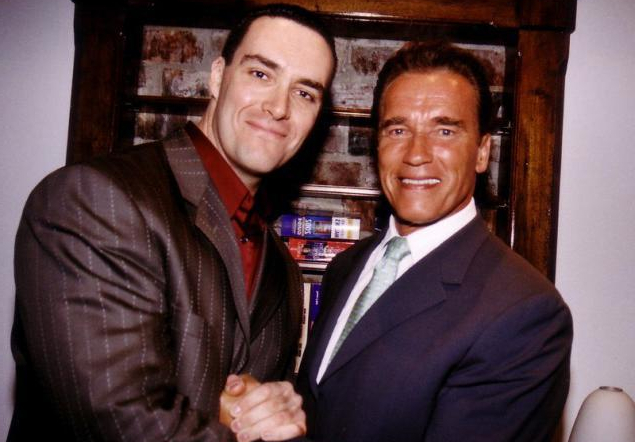
I could go on or simply type you out a list of this man’s accomplishments, but I’m not going to. Because you see, the work and work ethic of Alex Nevsky speaks for itself. He is an extraordinary gentlemen who by diligence, persistence and focus has not only emerged as a national treasure in his Russian homeland, but also as an international superstar with a rise to prominence that can only by compared to another superstar, and Alex’s mentor and friend, the Austrian Oak himself, Arnold Schwarzenegger.

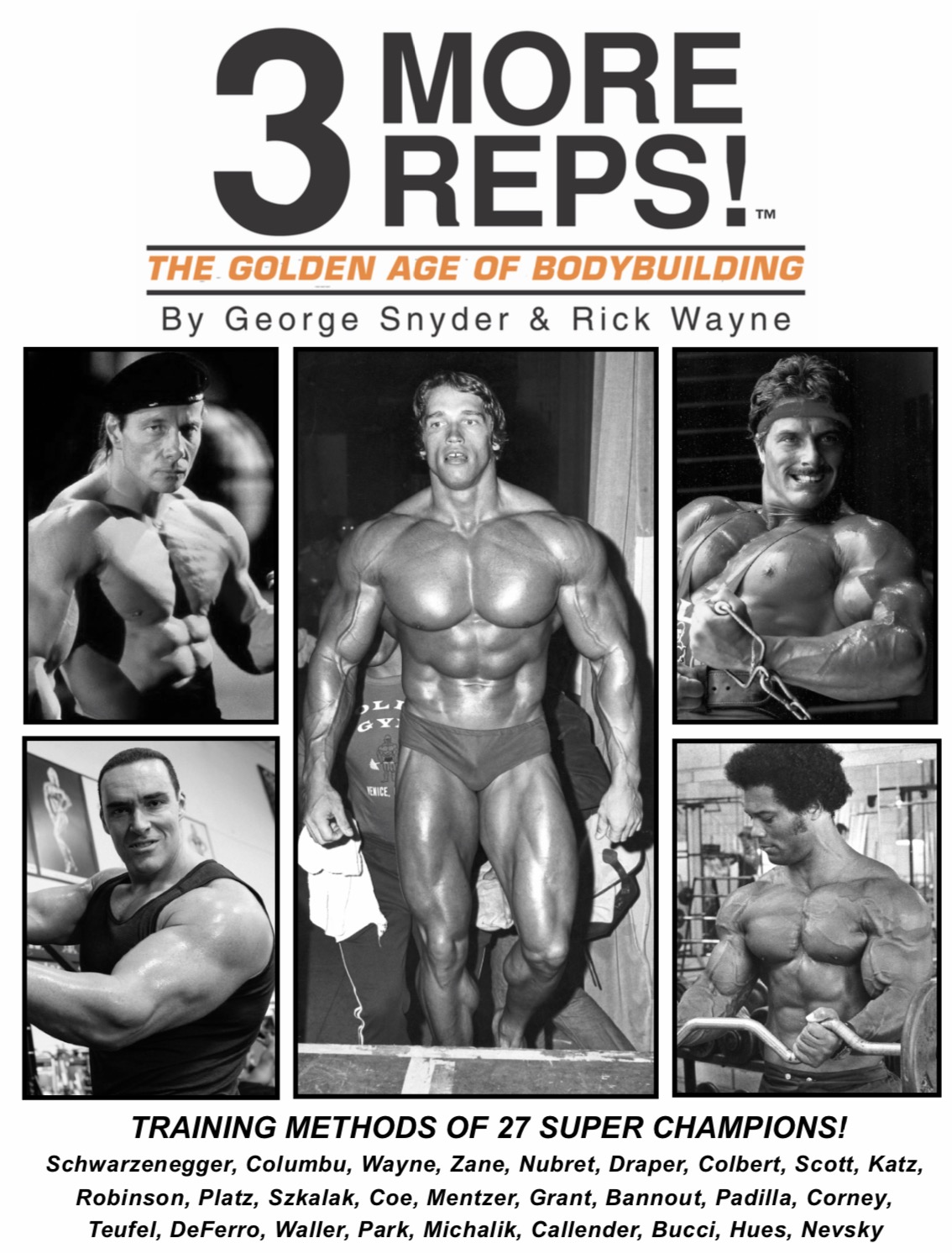
And now the two, along with the legends of the Bodybuilder’s Olympian halls of honor, are featured together in the newest edition of:

3 More Reps: The Golden Age of Bodybuilding

photo(1)

 Courtesy of Amazon:

Like pumping iron, it gives you an inside into the world of Joe Weider’s top bodybuilders and their training routines for the Mr. Olympia stage and their lives as bodybuilders in the golden age of bodybuilding. Enjoy first-hand interviews with Arnold Schwarzenegger and learn more about your other favorite golden age bodybuilders like Frank Zane, Franco Columbu or Mike Mentzer, Tom Platz to name just a few. Read about the humble beginnings of Joe and Ben Weider the godfathers of the Bodybuilding industry and the Mr. Olympia contests. The author George Snyder’s name is practically synonymous with the health and weight training industry. He has been an integral force in the world of bodybuilding. He is the creator of the training camp concept and is also an innovative and highly successful promoter, having conceived and created both the highly publicized and popular Miss Olympia Contest and the Galaxy Competitions the first two milestones for women in the fitness world. In 1990, Snyder impacted the industry with the publication of his Freestyle books.

photo
George Snyder and Mr. Universe Rick Wayne

These books outlined the tenants of a program Snyder has created and perfected for over 40 years. Snyder has published freestyle Methods in some of his earlier books and magazines as well as in his recent magazines over the past 30 years. Snyder has been an active force in the world of strength training and physical culture for most of his life. He opened his first health club in 1965 and was the first progressive gym owner to allow women to train at his club. He organized and held the first bodybuilding training camps in the early 1970s and today contains a series of fitness training camps geared for women and men. Over the years he has authored several books on physical fitness and a veritable library of popular magazines. Today he is involved in several books and magazine publishing ventures, contest promotions, plus new product and program development as it pertains to Freestyle. Snyder has republished 3 More Reps!

This book is a must-own for collectors, enthusiasts and certainly aficionados of this sport which sees the transformation of ordinary men into Earthly Gods. It is an arena that has forged many an international icon, of which, my buddy Alex is certainly now finding himself among such lofty company.

3 More Reps is another pinnacle that Alex as secured in his ascendancy as he continues to walk with the titans, both on and off the big screen. From being a very skinny kid before changing his life completely, becoming Mr. Universe and starting career in Hollywood, it remains important for Alex to promote natural drug free bodybuilding and continue to inspire others. Which he never fails to do.

So c’mon folks, check it out: https://www.amazon.com/Three-More-Reps-Bodybuilding-interviews/dp/109341488X

David Bowie’s Missing Pieces

Image result for david bowie


There was something about David Bowie. He wasn’t just worldly, he was out of this world. It was as if he knew something the rest of us didn’t. Bowie died on January 10th, 2016. More than a year and a half later he is not only missed by many, but he’s constantly being talked about. He was a rock star first and foremost, but he was also an actor. He wasn’t prolific, he was selective. He weaved in and out of some of the strangest films and some of the very finest. As Renny Harlin said in our podcast with him, Bowie was attached to play the villain in CLIFFHANGER opposite Sylvester Stallone, but Bowie couldn’t commit due to his concert schedule. That was a very big what if. What would it have been like to see Bowie face off against Sly?

Magnificent.

TWIN PEAKS: THE RETURN

One of the many burning questions that circled the unraveling mystery of David Lynch and Mark Frost’s phenomenon of TWIN PEAKS: THE RETURN was did David Bowie film a secret cameo reprising his FIRE WALK WITH ME role as Philip Jeffries? He was mentioned heavily throughout the show. It was obvious Jeffries played a huge part in the main narrative of the show. He first showed up in archived footage from FWWM, but his voice was overdubbed by actor Nathan Frizzell. Lynch later said that Bowie gave them permission to use the footage, but not his voice. Lynch had guessed that he didn’t like his faux Louisiana accent he used.

Instead, Philip Jeffries came back as a machine with a spout that puffed steam and GPS coordinates once again voiced by actor Nathan Frizzell. We never got Bowie, and after the show finished, David Lynch was asked about it and said that Bowie declined to reprise without a reason, and that the reason was quickly known thereafter. At the very least, the legend of David Bowie was introduced to an entirely new generation of Twin Peaks fans.

GUARDIANS OF THE GALAXY VOLUME 2

Once the film was released, and all the cameos were exposed, James Gunn quickly came out in a Facebook Q&A with fans and said that he originally sought David Bowie for one of the original Guardians members who show up at the end of the film. Had Bowie been alive and appeared in the film, it would have kept the door open for him to have an expanded role in the next phase of the Marvel Cinematic Universe.

BLADE RUNNER 2049

Recently director Denis Villeneuve said that Bowie was his first choice as the role of the villain that ultimately went to Jared Leto. Needless to say, Bowie would have been fabulous in the much-anticipated sequel. Jared Leto is a fair supplement, but wouldn’t it have been incredible to see Bowie in the Blade Runner universe?

As time marches on, and more and more people discover and devour everything that Bowie left us with, there will certainly be more stories, more “what ifs”, and as sad as that may come, it is also more than welcomed. Because thinking about David Bowie makes most of us very happy.


Mel Gibson is the Absolute Best Choice to Direct SUICIDE SQUAD 2

3072

The Hollywood Reporter broke the news that Mel Gibson is in early talks with Warner Brothers to direct SUICIDE SQUAD 2.  While this may seem like a bizarre and odd choice to a lot of people, it makes perfect sense and is a rather brilliant move if Gibson ends up taking the job.  Gibson is hot off of HACKSAW RIDGE which yielded him a Best Director nomination, as well as a bounty of other nominations.  Warners is very happy with Gibson.

Considering how anti-PC the first SS film was, and considering Gibson’s off color past, this is an epic decision by Warners.  Gibson is one of the very best visual and world building filmmakers working today, and considering the foreshadowed darker tone of the upcoming DC films post JUSTICE LEAGUE, I think it is fair to say that if Gibson does, in fact, direct the film, it most certainly would be rated R.

The Year was 2016, and Warner Brothers Dared to Be Different.

neakzmkrnpeteh_3_b

With recent news of Ben Affleck’s directorial departure from the tentatively titled, THE BATMAN, the state of the DC cinematic universe is a bit uncertain, personally, I have full faith in Snyder and company because I think a lot remains to be seen.  One thing is for certain; the rabid echo chamber is loud as ever.  There are a lot of people who HATE the DC films.  Hate them with a fiery passion.  Hated them before they came out, and once the films came out, they acted as if someone set their Facebook page on fire.

In 2016, Warner Brothers took a huge gamble.  They set out to make films for adults, in their own way.  Sure, they had a lot of catching up to do in regards to the near flawless template that Marvel created, but Warner Brothers made a clear decision; they were making films by adults for adults.  Batman was a blood lusting killer.  Harley Quinn was the epitome of over-sexualization.  Jared Leto took the Joker to an almost unrecognizable level.  Jesse Eisenberg played the anti Lex Luthor.  Both films were so anti-PC, it was a cinematic revelation.

Perhaps there is some trouble at DC, but then again, maybe there isn’t.  The internet has birthed an overpopulated mass of film websites (PTS included) that are a constant trove of clickbait headlines (PTS NOT included).  It seems as if every day for the past year, the state of the DC universe was on the verge of collapsing.  The second JUSTICE LEAGUE film was canceled.  SUICIDE SQUAD 2 isn’t happening.  Early word is WONDER WOMAN is as big of a “mess” as the previous two films.  If there’s one thing I can tell you that I know for certain, no one really knows what’s going on other than the executives at WB/DC.

Here’s the bottom line.  BvS and especially SUICIDE SQUAD made a ton of money.  Sure, BvS underperformed a bit, but it still made a lot of money.  And both films made A LOT more money than the second and third installments of Marvel’s cinematic universe.  Worldwide, SUICIDE SQUAD made 746.6 million dollars, and that was WITHOUT opening in China, which is the biggest market next to America.  SUICIDE SQUAD was a flat-out hit, and Warner Brothers were so happy with it, they signed Margot Robbie to an exclusive deal, which includes the pseudo follow up Harley Quinn film directed by David Ayer.  Will Smith is getting his own Deadshot film, there will be an official sequel to SUICIDE SQUAD at some point, and the FLASH and AQUAMAN films are in the pipeline.

DC Films does not want to be Marvel Studios.  They want to be better, and they still can be.  They have the two most valuable superhero properties; Batman and Superman.  There could be any number of reasons why Ben Affleck decided not to direct THE BATMAN.  It could be the underperformance of LIVE BY NIGHT, it could be that he doesn’t feel comfortable directing a CGI-heavy film, or it could be something completely plausible that will surely be silenced by whatever website decides the real reason is.  Basically, it does not matter.  Ben Affleck is still the Batman, and he still developed the script and is still producing the picture.  If I had to venture a guess as to what’s going on with Affleck is that he’s struggling with whether he wants to be a movie star or an auteur, because realistically, he cannot be both.