
Martin McDonough’s Three Billboards Outside Ebbing Missouri

Irish writing/directing guru Martin McDonough has pulled a miraculous hat-trick with Three Billboards Outside Ebbing Missouri, a pitch perfect follow up to his other two black dramedies, In Bruges and Seven Psychopaths. He’s an unbelievable talent who specializes in caustic, vigorously sharp dialogue and comic moments organically drawn from real life situations, not to mention a heap of earned emotional moments and narratives that, try as the viewer might, are impossible to predict. This is a near perfect bookend to the trilogy, with a late career encore turn from Frances Mcdormand, who cements an oddly Coen-esque vibe that’s welcome. She plays Mildred Hays here, a fiery single mother whose frustration and rage at the rape and murder of her teen daughter is fuelled into the purchase of three advertising billboards on the outskirts of town, calling out the Sheriff (Woody Harrelson) and his department for their lack of arrests or convictions. Needless to say, this brazen act causes a hailstorm Of events both funny and sad, strange and mundane, but never boring. Harrelson is a blast of potent poignancy as Chief Willoughby, a stern family man who laconically protests the Billboards, but understands the poor woman’s intentions. His arc is one that leaves you puzzled and tugs at the heartstrings unexpectedly, especially when it comes to his relationship with his beautiful wife (Abbie Cornish, most excellent). Sam Rockwell is the height of hilarity as Dixon, a certifiably nuts, volatile man-child of a deputy who violently takes matters into his own hands and exacerbates the whole deal wonderfully with his antics. Rockwell was a dynamo enough in Seven Psychos, and here he takes that loony persona into the stratosphere, a whirling dervish of bizarre, idiosyncratic wonderment. Other standouts include Peter Dinklage as a love-struck dwarf that everyone refers to as a midget, John Hawkes as Mildred’s troubled ex husband, Lucas Hedges as her traumatized son and Caleb Landry Jones as an oddball local advertising mogul. McDonough’s calling card is his defiant refusal to tell a story in Hollywood’s glossy, surface level terms, deliberately punctuating his tales with vagueness, eccentricity and constant reminders that people, emotions, characters and narratives are complex, weird concepts which are seldom black and white or clear cut in any direction. The arcs here are broad, surprising and beautifully drawn, with the same deep set sadness he brought us In Bruges, accented by the acidic, dysfunctional and cheerfully profane writing that showed up in Seven Psychos. This is a film that ducks the pesky limbo bar of standards set by the Hollywood machine in favour of something more unique, a road less travelled when it comes to comedy dramas, but one that anyone seeking fresh, alive and different material would be much rewarded trekking down. One of the best films of the year.

-Nate Hill

Paint Your Wagon

I’ve never understood the cloud of negativity surrounding Paint Your Wagon, a terminally eccentric, raucously bawdy musical western epic in which old school tough guys Lee Marvin and Clint Eastwood get to sing, or at least do their best. Sure it’s a giant unwieldy spectacle, not all of the songs make a three point landing and it runs on far too long, but it’s such an interesting piece from many perspectives, it doesn’t deserve even half the shade thrown on it by critics over the years. I like it specifically because of how odd and random it is at times, how it meanders and lingers across the gold rush frontier town it takes place in, following the paths of it’s strange characters diligently. Marvin is the life of the party as Ben Rumson, a booze soaked, misanthropic prospector idling his way through the west in a haze of hangovers and hijinks. Eastwood is Pardner, a soft spoken stoic type whose life is saved by Ben, and the two strike a bond that’s eventually tested by Elizabeth (Jean Seberg), the beauty who loves them both. The trio makes the best of life in a rough n’ tumble settlement called No Name City, a feverish shantytown on the precipice of nowhere, populated by scoundrels, miscreants and hooligans. And that’s pretty much it, the story punctuated by a whole gallery of songs, some brilliant and others excruciating. The best is a haunting, melancholy melody by Marvin called ‘Wandering Star’, which is so good it could be listened to on repeat. ‘They Call The Wind Mariah’ is a gorgeous tune belted out by a young looking Harve Presnell as Rotten Luck Willie, a slick kingpin who basically runs the township. ‘There’s a Coach Comin In’ rouses spirits, and the titular theme is well staged too. Unfortunately all of the songs sung solely by Eastwood are a slog through the mud, as he bleats like a goat and gets saddled with the most boring tracks like ‘I Talk To The Trees’, the sappy ‘Elisa’ and ‘Gold Fever’, a musical sleeping pill. Whenever Marvin is around it’s a banger of a party, he goes the extra mile to keep the energy levels unbridled, while Eastwood is a little sleepier. There’s no way the film deserves the dodgy reputation it’s been slapped with though, a lot of it is fun as all hell, the big budget is spent well on fantastic production design, epic sets and big names who earn their keep, Marvin in particular.

-Nate Hill
Home Alone 3

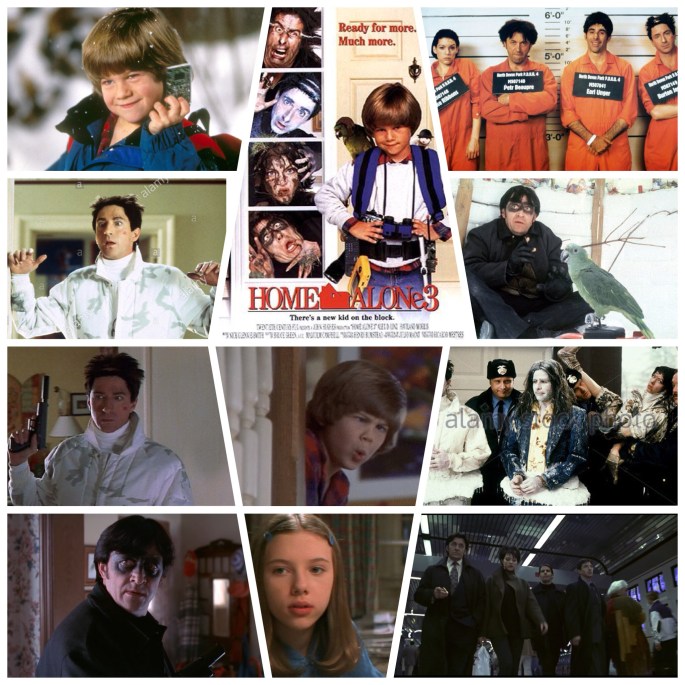
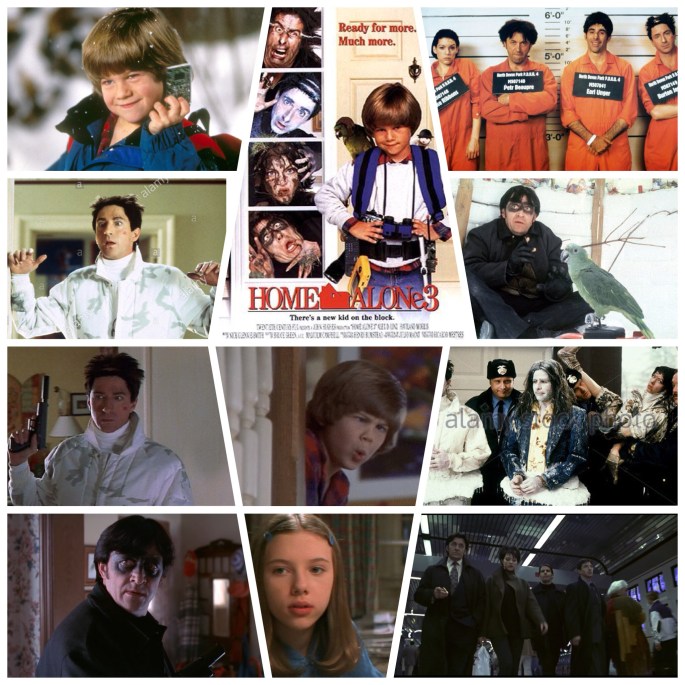
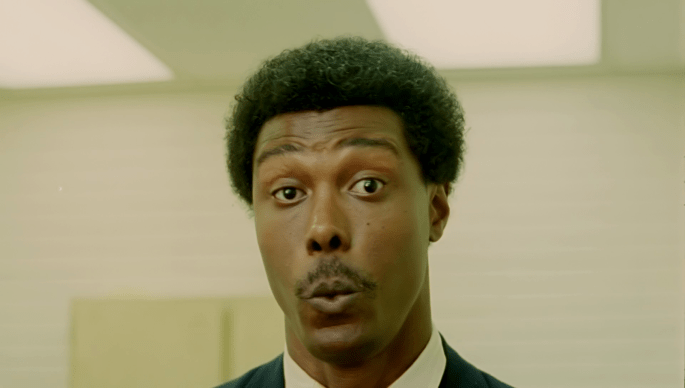
Home Alone 3 takes everything that was overblown and cartoonish about the first two and triples the excess in every area. The criminals are arch-villains instead of low rent cat burglars, the booby traps are next level, over elaborate funhouse nightmares instead of the blunt simplicity of paint cans on ropes, and generally the vibe strives for bigger, crazier, more more more. It actually works on its own outlandish terms, with a healthy helping disbelief suspension. The film seems to take place either in some parallel offshoot dimension where the Macaulay Culkin stuff never existed, because let’s be real, how many time could such events happen in one country. Either that or they just expect us to believe that this could keep happening to the same family again and again like some hilarious purgatorial curse, which is actually an amazing concept now that I’ve spelled it out. Anywho, the kid this time is young Alex Linz, whose family has routinely left him home alone, and he has unwittingly come into the possession of a super top secret weapons grade microchip hidden in a toy car. The quartet of criminals searching for it are led to his neighbourhood, and wouldn’t you know it, an endless tirade of ultra-violent, slapstick, severely booby trapped shenanigans ensue. The pranks and pratfalls here are seriously convoluted and freakishly well timed, not to mention brutal enough to be borderline horror movie material and so over the top you’d need a team of stuntmen just to get em’ on paper. The silly kid even uses a John Deere tractor to set up a giant trampoline/swimming pool snare. Sequels always feel the need to ramp up everything past eleven on the dial though, and this one cranks it til the speakers blow. Surprisingly, the villains are played by a distinctive and competent bunch of character actors, namely Olek Krupa, John Thornton, Lenny Von Dohlen and Rya Kihlstedt, interesting folks who can usually be found in obscure indie fare and off the wall projects. They get pummelled nearly to death here, by everything from electricity, nail guns, turpentine, murderous rogue lawn mowers, firecrackers and one psychotic parrot with attitude to spare. It’s one entertaining blitzkrieg though, like the first two Home Alone flicks on crack. Oh, and Scarlett Johansson has an early career role as the kid’s sassy sister too.

-Nate Hill

The New Daughter

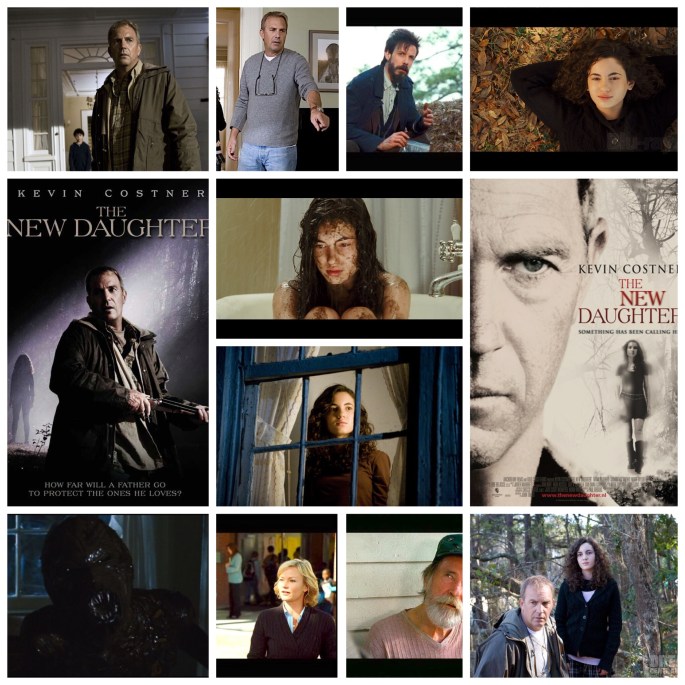
The New Daughter is an odd one, a creepy Kevin Costner vehicle that almost seems like an M. Night Shyamalan idea that didn’t quite take flight from the drawing board. Nevertheless it’s a good enough time at the movies, and there’s genuinely skin crawling moments too. Costner, in solemn mode, plays a father who relocates to South Carolina with his kids. As if an obligatory adjustment period isn’t bad enough, soon his teenage daughter (Pan’s Labyrinth’s Ivana Baquero, skillful but an odd choice to play all American white boy Kevin’s daughter) starts acting strange, and I mean Stranger than your usual garden variety brand of pubescent restlessness. There’s something out there in those rural woods, something that’s drawing the girl’s attention and slowly start possessing her. Father Costner is creeped out and desperate, seeking help from anyone he can, including a professor of far flung urban legend mythology (Noah Taylor), the creepy previous owner of his new home (screen legend James Gammon in his last living film role) and his kid’s foxy local schoolteacher (Samantha Mathis). It’s a spooky enough little flick, albeit cobbled together from several other better movies. There’s creature effects later on that score some points, and atmospheric cinematography, but ultimately it’s average, middle ground material.

-Nate Hill

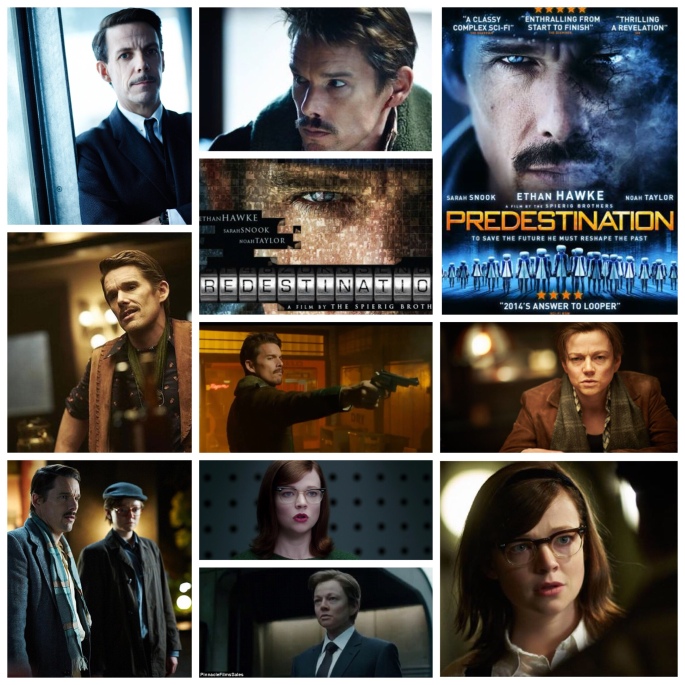
The Spierig Brother’s Predestination

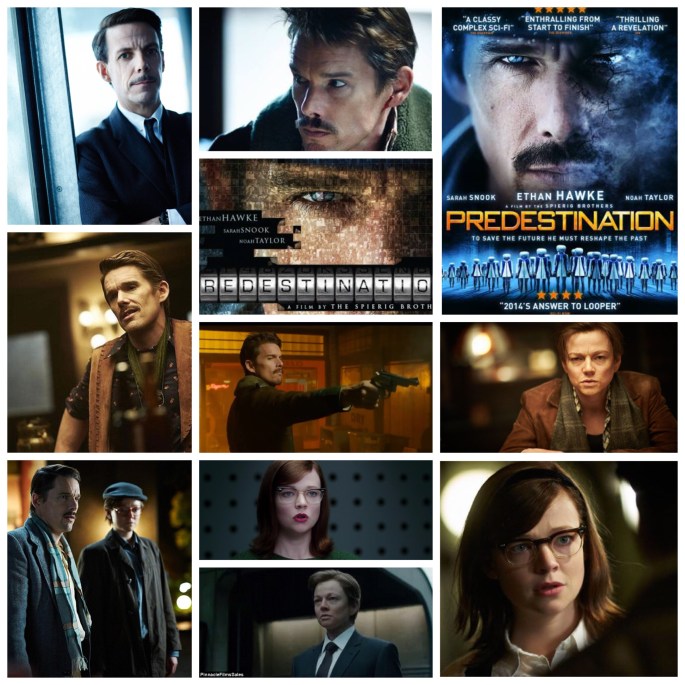
It’s tough to say much about Predestination without giving away the tantalizing, thinking man’s dream of a story, but I will say that I’m sorry it flew under my radar until now, because it’s one of the most thought provoking, intelligent and wicked sharp films to come along in decades. There’s a special place in my collection for each and every movie in the time travel sub-genre, I love those thematics to death and imagine my surprise when I finally caught up to this one two years after it’s release and discovered it’s my favourite in the genre by a mile. Innovative. Beautifully made. A guessing game for the ages. Plot revelations that glue your jaw to the floor. Two staggering central performances from Ethan Hawke and mesmerizing newcomer Sarah Snook. Hawke plays a temporal agent working for a mysterious handler (Noah Taylor doing an even slier rift on his Vanilla Sky character), his job being to jaunt through time and stop murders before they happen. If that sounds generic, familiar or a path well trodden, therein lies the irony because it is anything but. Any preconceived notions of a flashy, slick thriller will be decidedly dismantled once you chow down on this beauty of a story, unwrapping each twist and turn of the narrative like a present. Hawke is an actor I never used to take seriously, I always just thought of him as the kid cop from Training Day. He’s surprised me in recent years though, deliberately picking fascinating scripts and knocking it well out of the park with his performances. Sarah Snook is an Aussie up and comer who does an absolute encore here in a heartbreaking, multifaceted performance that should have gotten her awards recognition. This is the first film on record to tackle some previously taboo subjects regarding the concept of time travel, ideas that everyone has no doubt thought about but Hollywood has been too chicken to explore thus far, so props to these storytellers. Also, if you thought time travel flicks were elliptical and paradoxical until this point, you ain’t seen nothin’ til you’ve seen this one. It’s also just a brilliant, emotional, daring story told in a soaring cinematic fashion that stirs thoughts and pulses throughout.

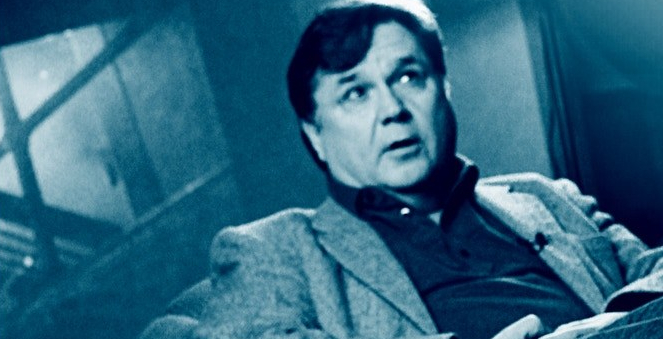
20,000 Leagues of Cinema and Literature: An Interview with C. Courtney Joyner by Kent Hill

51A1E+schsL._UX250_

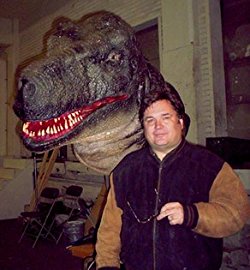
C. Courtney Joyner is a successful writer/director/novelist. He was a zombie in a Romero movie, he hangs out with L.Q. Jones and Tim Thomerson, he was once roommates with Renny Harlin and made the breakfasts while Harlin got the girls. It makes me think of Steve Coogan’s line from Ruby Sparks, “how do I go back in time and be him.”

Truth is we are the same in many instances. We’re just on different sides of the globe and one of us is in the big leagues while the other is at the scratch and sniff end of the business. But we both love movies and fantastic adventures. We both wrote to the filmmakers we loved long before the director became celebrity. We both longed for more info from behind the scenes – long before such material was in abundance.

He grew up in Pittsburgh, the son of a doctor and a reporter. He came of age in the glory days of monster movies and adventure fiction. Then he headed west and after college it wasn’t long before his writing caught the attention of producers and thus a career was spawned.

Spending those early years working with Charles Band and his company, Empire, Joyner was prolific, and soon the writer became a director. All the while he was working on a dream project, a work we all have in us, that he was fighting to bring into the light.

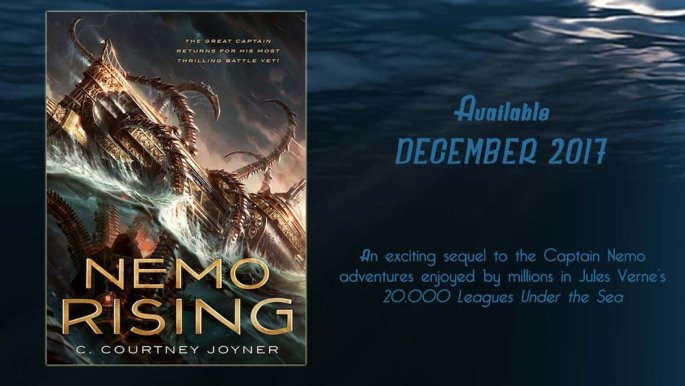
It was a love of Jules Verne and the “what if” type scenario that gave birth to the early version of the story that would become his current masterwork Nemo Rising; a long-awaited sequel, if you will, to 20,000 Leagues under the Sea.

His story would go through several incarnations before finally reaching the form into which it has now solidified. Swirling around him were big blockbuster versions which never quite surfaced. Names like Fincher and Singer and stars like Will Smith were linked to these big dollar deals.

trancers-3-deth-lives-movie-poster-1992-1000231140

Unfortunately even Joyner’s long-form TV version came close, but didn’t get handed a cigar. So at a friend’s insistence he wrote the book and his publisher, in spite of the property being linked at that time to a screen version that fell apart, agreed to still put the book out.

Thus Joyner’s Nemo has risen and at last we can, for now, revel in it’s existence. I believe it is only a matter of time before it shall acquire enough interest – and the new major playing field – the field of series television may yet be the staging ground for Courtney’s long-suffering tribute to the genius of Verne and the thrilling enigma of a character known as Captain Nemo.

nemo4

Long have I waited to chat with him and it was well worth the wait. So, here now I present my interview with the man that director Richard Lester (The Three Musketeers, Robin and Marion, Superman II)  once mistook for a girl that was eagerly interested in film.

Ladies and Gentlemen . . . C. Courtney Joyner.


The Way of the Samurai Cop: An Interview with Matthew Karedas (Hannon) by Kent Hill

samurai_cop_sd3_758_426_81_s_c1washington_joe

You’re all familiar with the concept “so bad, it’s good” I’m guessing? If you’re not then I’m here to tell you that there is a thriving sub-genre enjoying the hell out of life just beyond the fringes of your current viewing tastes. Now, some might say that these are the lands where bad films go to die – but I say it is not so. You just have to look a little harder, you have to look with better eyes than the ones in your head that only see the mainstream and everything that floats down it. Remember shit rolls down hill too.

And you’ll be told that films like Space Mutiny, Troll 2 and The Room are only enjoyed by small minded juveniles that still think farts are funny. You’ll be told to stick with the cinema of the Golden Age, heck even the Silver Age – but what ever you do – stay away from the counterfeit Peso Age.

199131ca71d81b1e05dcd3778d9a3c2bimage-1-e1457863617363

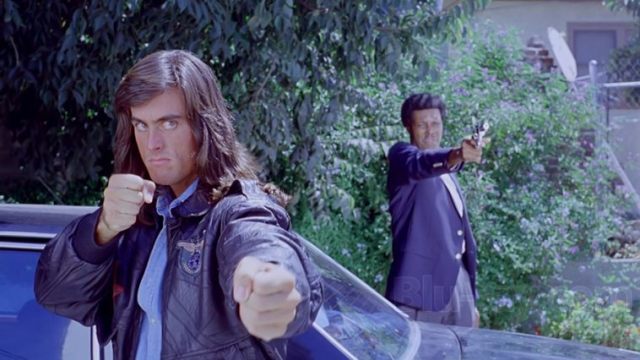
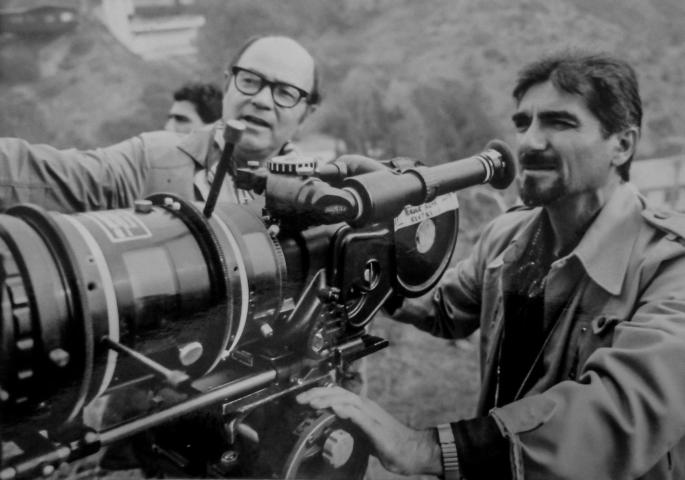
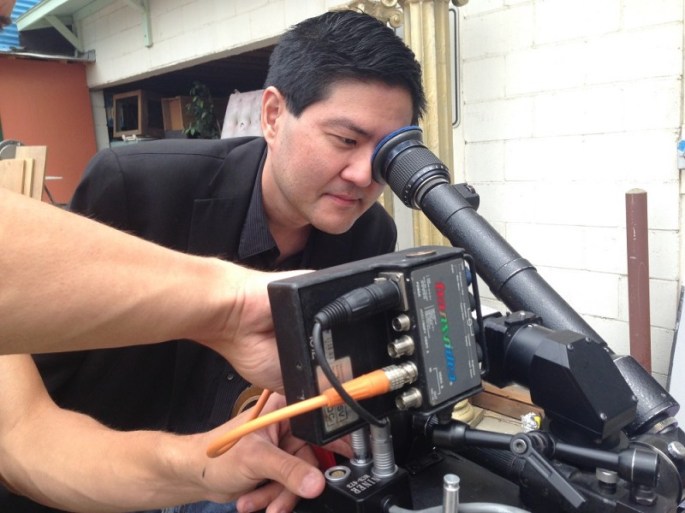
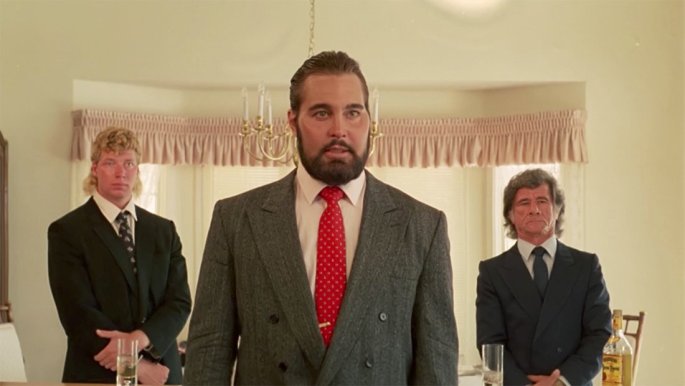
If these are the voices that dictate your viewing pleasure then you best take off. This story ain’t for you. The cinema of Amir Shervan (top) and Gregory Hatanaka (bottom) is beyond your realm of understanding. For these guys play in the sandbox where bad is beautiful and lunacy equals legendary. These are the men who created the Samurai Cop.

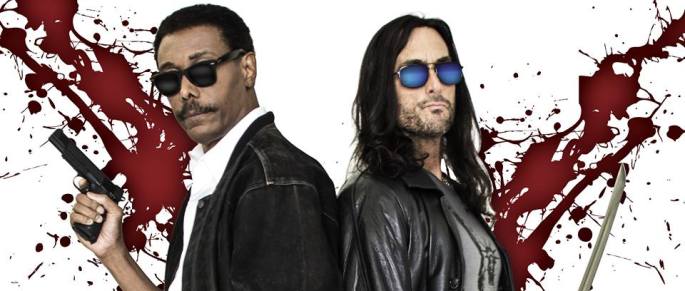
In 1991 a ex-Stallone body guard and a trained New York actor strapped on the guns and a bad wig and took their place in cinema history. The film was Shervan’s tribute, some might say, to the American action film. What he made had bad acting, stilted action, a whole lot of tits, ass and Robert Z’Dar, blended with a mighty helping of stupid courage.

Then – just like that – the film vanished, along with its star.

1100x620_mullets-noscale

vlcsnap-3203-01-25-07h44m19s518

Cut to 25 years later and a new filmmaker, inspired by the newly uncovered brilliance of Samurai Cop, decides to get the old band back together and make a sequel. Only problem being . . . the Samurai Cop is missing, presumed dead.

But Matthew Karedas (formerly Hannon) was just chillin’. He’d grown tired of jumping through Hollywood’s hoops and so, he got a real job and took the time to raise his young family. It was one of Matt’s daughters that saw the word on the web of her father’s supposed death and told him he should post word – tell the world the Samurai Cop Lives!

So he did, and the rest dear friends is history. Samurai Cop 2 : Deadly Vengeance was released around the world to adoring fans and took its long-awaited seat beside the awesome original. Nearly all the cast returned, along with some new faces. One genius stroke was the casting of fellow “so bad, it’s good” megastar Tommy Wiseau (The Room). The meeting of Karedas (Hannon) and Wiseau on screen being equaled only by the scene from Michael Mann’s Heat, which saw the powerhouses of Pacino and De Niro square off.

So, kick back with me now as we sit down with the Samurai Cop himself to learn about the past, chat about the future, shoot the breeze on the subjects of bad acting and equally bad wigs . . . and of course hear all about rubbing shoulders with Tommy Wiseau. Ladies and Gentlemen I proudly present . . . Matt Hannon (Karedas), The Samurai Cop.

The Day of Reckoning: An Interview with Andrew David Barker by Kent Hill

ANDY-11-of-31-small

Andrew David Barker was born in Derby, England in 1975. He grew up with a love of films and writing. I suppose this is a common thread among those of us who seek to express ourselves through these mediums. Hoping against hope that it will be either one or the other that strikes first – one or the other that shall propel us out of obscurity and into the stratosphere in which we are allowed to create for a living.

A-Reckoning

It was horror films (the Video Nasties), but also the bombastic, high concept and blockbuster works of the 80’s that further fueled the young Barker to carry on his quest. Spielberg, Lucas and Scorsese, but also Romero and Raimi fed him with images and blasted on the big screen the seemingly endless possibilities which lay in wait, destined to be unearthed by the daring dreamer.

Like all those that had come before, young Barker cut his teeth making short films and writing books and short stories – at times with friends. Then the time came – the time which calls to the fledgling auteurs and beckons them into the fray – time to put all accumulated knowledge to the test, and make that first film.

Thus A Reckoning was born. But through no fault of his own, young Barker was forced to sit by and see his film languish in obscurity. So, he took up the pen, and began to tell his stories on the printed page. Soon, he produced two fine works (see pictured above) and interest from the film industry power brokers soon came knocking.

Andrew is an eclectic storyteller whose visions are at once personal and profound. To talk to him about his journey, his influences and aspirations was a thrill. He is definitely a talent to watch, and, I for one, will be watching with great anticipation as to where his journey will take him next.

Ron Howard’s Backdraft

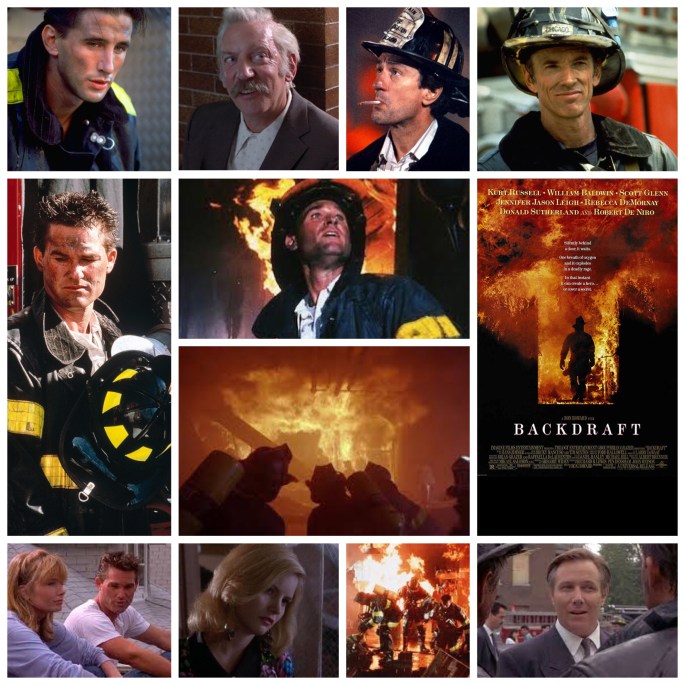
Ron Howard’s Backdraft is all you could want in a big budget Hollywood picture, and more in the sense that it combines a handful of genres for one big opus that’s bursting at it’s seams with family drama, romance, mystery, psychological thrills (of the deliciously heavy handed variety) and no shortage of shit blowing up. As far as firefighter films go, this is probably where the buck stops as far as I’m concerned. Stuff like Ladder 49 came and went without much lasting impression as I’m sure the Josh Brolin one from this year will too, but Backdraft man, it’s an action classic that’s endured and aged remarkably well over the years. It opens with a bang as a Chicago team thunders into action set to a score by Hans Zimmer that could wake the dead. This intro serves as a showcase moment for what’s to come, as we meet two brothers who are fiercely competitive, each scarred by there fireman father’s (Kurt Russell) untimely demise. The older (also Russell) is a headstrong bull with self destructive tendencies, while the younger (William Baldwin) does his best to live up to the family name by struggling through the academy. That’s the framework for a story that’s brimming with characters and subplots, as any Hollywood epic should be. Robert Deniro steals the show as a gruff, old school arson investigator who’s seen a few deadly fires in his time, and keeps a close watch on psychopath firebug Donald Sutherland, who himself gives a thoroughly chilling performance. Scott Glenn is rough ‘n tough as veteran fireman Axe, Jennifer Jason Leigh is Baldwin’s flame in a role that’s uncharacteristically safe for the daring actress, while Rebecca De Mornay is terrific as Russell’s ex-wife. Ohh and J.T. Walsh steals every scene as a dubious politician. What a cast. The film is big, bold and noisy, with a visual and auditory aesthetic that will give any home theatre system a pounding. Zimmer’s score is seriously awesome, a grandiose, emotional, booming concoction that stands as both one of his best and most underrated. This is one of the old fashioned, pure bangers of unbridled cinematic escapism that can’t be beat, replicated or watched too many times.

-Nate Hill

It’s time to see The Last Jedi . . . again: A Review by Kent Hill

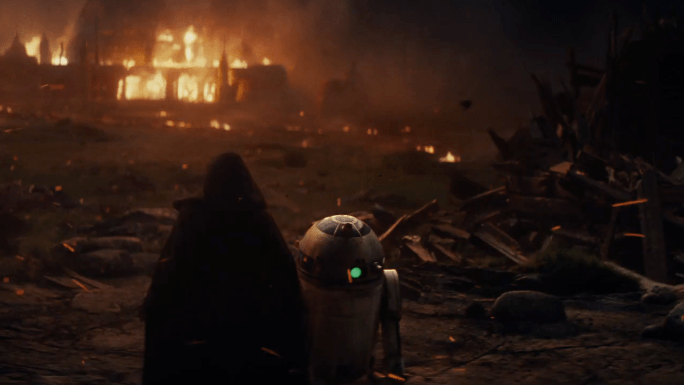
I am stunned. I am still. I am at a loss for words. I have just come from seeing The Last Jedi, and really all can muster is . . . it is a miracle.

I am going to try and avoid spoilers but I may fail, so, if you haven’t seen the movie stop reading now.

lastjedi17

A long time ago in a galaxy far, far away, I was young and Star Wars was new. I don’t think I came out of that dark room in which I saw the first film, and the person that did – he certainly wasn’t the same kid who walked in. A long time have I watched, looking away, to the future, to the horizon, watching, what we who were there from the beginning will come to remember as, the saga of the Skywalkers.

I had read other reviews, seen teasers and trailers. The clever thing is though . . . this movie doesn’t go the way you think. Throw all the theories out of the window, forget all you know – or think you know. Breathe, just breathe. Now, sit back and watch The Last Jedi.

last-jedi-luke-lightsaber

We begin in a fury, in the heat of battle. Good versus evil, a staple of the Star Wars movies. Then it goes wrong and the good guys will lose. Because, as you’ll discover, this time round, it isn’t about winning and losing. It’s about existing. It’s a beautiful sentiment at the heart of this picture. Saving, indeed savoring, the things we love the most.

After all, what have we all been doing since 1977. Savoring this thing we love right? Mr. Johnson captured that so well. In fact, when it was all over, Bill Pullman’s line from Independence Day popped into my head, “He did it – the sonofabitch did it.”

Star-Wars-The-Last-Jedi-000025

Abrams had the easy assignment if you think about it. He had to wake the force up. That’s not hard when you’ve got legions of fans awaiting to listen. The hard task is the difficult second album – trying like hell to be the one that strikes back. And, for my money, for this trilogy, for this time round – this is the new Empire Strikes Back. It can’t be the original – nothing will top that, but TLJ stands shoulder to shoulder with it.

landscape-1509112223-luke-skywalker-this-is-not-going-to-go-the-way-you-think-star-wars-the-last-jedi-trailer

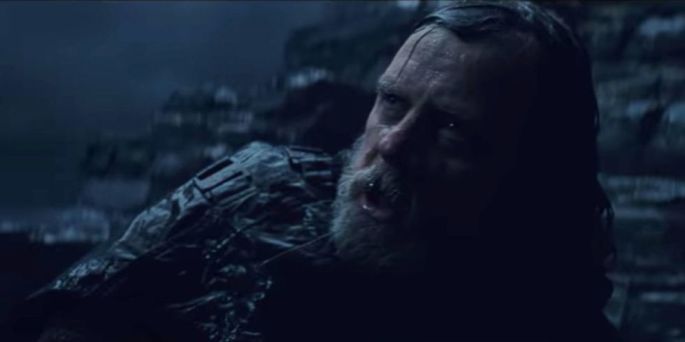
I think I have remarked a number of times to friends and family about what I thought the first words might have been out of Luke’s mouth back where Mr. Abrams left us in 2015. What he does retort with is better than a line or a speech, and it’s one of many moments of levity that the movie needed. I heard the voice of Irvin Kershner in my mind, talking about injecting humor into Empire. He was right then, as Mr. Johnson was right now. It is all about balance – the dark rises and the light to meet it.

leia-poe

Two reviews I read prior to going in brought up two interesting points. One which I thought was kinda confirmed, whilst the other was dispelled. The first was that TLJ was almost like Empire in reverse. I found this to be, for me, delightfully true, and I’m surprised at how well that formula worked. Where Abrams was criticized for leaning to heavily on the crutch of A New Hope, Johnson seems to have avoided the problem by simply changing direction, which he does quite often. Be prepared.

Abrams surprisingly followed this theory to success with the first of the new Star Trek films, however grossly ignoring it for his own sequel. But it is well, not only if he stepped away from the director’s chair for fear of this, but that fresh eyes often make all the difference. I enjoyed Looper, but when they said that guy is going to not only write but direct Episode VIII, I was like half interested, half fearful.

45e55b_e19b8e0d44e046c798091435487695d9~mv2

But we shouldn’t fear, should we. Fear leads to anger, anger leads to hate and hate leads to suffering.

Another element I like about TLJ is the fact that, more so than The Force Awakens, this felt like not only handing over the torch, but just throwing it away. I love how in the backgrounds of these movies we see the remnants of Star Wars past. From Rey’s junkyard home, to Luke’s X-Wing beneath the waters surrounding his fortress of solitude – even in Rogue One there is that giant fallen statue of a Jedi; the only true way to keep something going in this life is to keep it fresh and expose it to constant reinvention.

There’s lots of fun new creatures. LOVE THOSE PORGS! There’s some fun new locales. Mr. Williams musical voice sings a few new tunes and lovingly reminds us of a few old ones. The action is breathless, the reversals effective and plentiful. There are great revelations and many new questions.

Oh Look. You see what’s happened? I started off wanting to write a review and here I now find the need to be silent again. There is nothing I can tell you that you should ultimately listen to, except this: I have never seen a more beautiful journey that does as each new day does for us all; beginning and ending, staring off to the horizon, watching the rising and or setting of that bright sphere at the center of our galaxy.

When I was younger than I am now, I felt like Luke Skywalker, gazing off into those twin suns and longing for the next day, for the journey ahead. It is fitting then that TLJ comes now, and I am a much older man. You’ll know the moment when it comes. The twin suns will set and maybe, just maybe, your heart will swell as mine does even now, and I am at a loss for words. TLJ has touched me in a way I’ve not experienced in the cinema for a while now – and I am the better for it.

The-Last-Jedi-Landscape-Poster-

So if you have seen the movie, I hope you enjoyed it – were thrilled by it. For those of you for whom this is their first Star Wars experience, rejoice, there’s more out there to discover – more still to come. For those who haven’t seen it – man, get away from this screen and get down to your local theatre real quick – what’s the matter with you?

It is fitting that the last line belongs to a certain character, and speaking of said line, it echoes my sentiments exactly:

In The Last Jedi, “We have everything we need – right here.”

Star-Wars-The-Last-Jedi-Behind-The-Scenes-0975-2