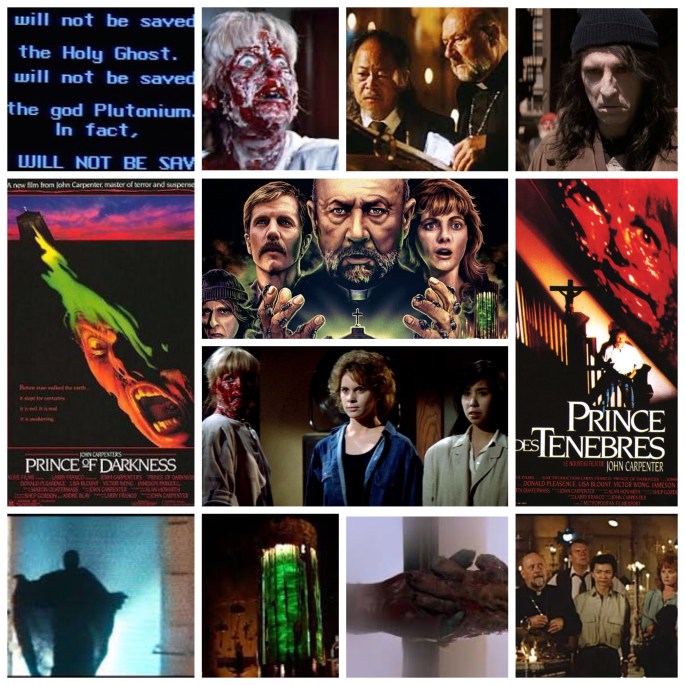
John Carpenter’s Prince Of Darkness

Trust John Carpenter to constantly subvert expectations, aim for innovation and simply just please the crowds throughout his career. Prince Of Darkness is, at first glance, a creaky ol’ fright fest, and it is that, but there’s also a cheeky little irreverent streak to it as well, a borderline atheist flourish that you wouldn’t normally find in a flick about summoning up the devil. Carpenter lays the atmosphere on thick, especially with a reliably spooky electronic score and a pace that burns slow and steady. Deep in the crypt of a church there lies a large glass vial containing swirling green matter, a pseudo scientific/spiritual cocktail that contains the “anti god”, a denizen composed of backward atoms that wants to break out and raise a little hell. Grim faced priest Donald Pleasence will prevent this at any cost, and hires a team of underpaid undergrads led by a crusty professor (Victor Wong) to research it, camping out in the church for kicks. You can imagine how this goes, and there’s a refreshingly old school ‘Body Snatchers’ vibe as various characters fall victim to the creeping dark forces. There’s also mind-stimulating, sci-fi ideas at work too though, including an intriguing time travel prospect and a deft little jab at religion via the story’s trickier elements. Carpenter, although hailed as a master of horror, is no simpleton when it comes to ideas, and he flexes his cerebral muscles nicely here. Ambient, gooey, smart, provocative, a terrific little fright fest that leaves you wanting more. 

-Nate Hill

mother! – a reaction by Jason Callen

mother!

Art is the most selfish act of all, and the most consumptive.  The artist, compelled to create, consumes all around them. No one, and nothing, is safe. Nature, industry, culture, politics…all are ingested and processed in the desperate need to express that inner voice. Love too. Love is the tastiest morsel of all. With love, with a muse, the artist can transcend, reach heights once thought unattainable. Unfortunately for the muse they don’t always survive the process, as the artist is prone to discard them once they’ve served their purpose. The muse’s needs are of no concern to the artist in the midst of creation. The muse does not control its own power. The muse is activated when necessary, otherwise lying dormant. Their heart crystalized and preserved until the next desperate need strikes the artist. Sometimes the muse malfunctions, provides no fruit for consumption. These are dangerous moments for the artist, who must now distract themselves while waiting for the return of their inspiration. At these times the artist can become aware of their own selfishness, their gluttony.  This may trigger a spasm of altruism. In an attempt to balance hour upon hour of forced isolation, the artist may open themselves up, inviting people into the process and sharing with them their passion. But the artist is compulsive and often doesn’t realize when this “altruism” again becomes a part of their consumption. Soon the artist begins to feed again on those they have brought close, turning their lives into part of the work. A side effect of this is adulation. Feeling connected to the artist, the mob begins its own feeding. The artist can thrive on this adulation as much as they do the muse’s love. Sometimes it supplants it entirely. Having claimed partial ownership of the artist, the mob feels threatened by the muse. They fear its ability to return the artist to isolation. And so they destroy it, pummel it, dissect it. The artist is impotent to act. “It’s all because they love me,” he chants as his love dies and ego grows. The muse’s attempt to reignite the artist’s passion cause sparks that ultimately just burn everything to the ground. Undeterred, the artist simply changes medium. Now they work in ash.

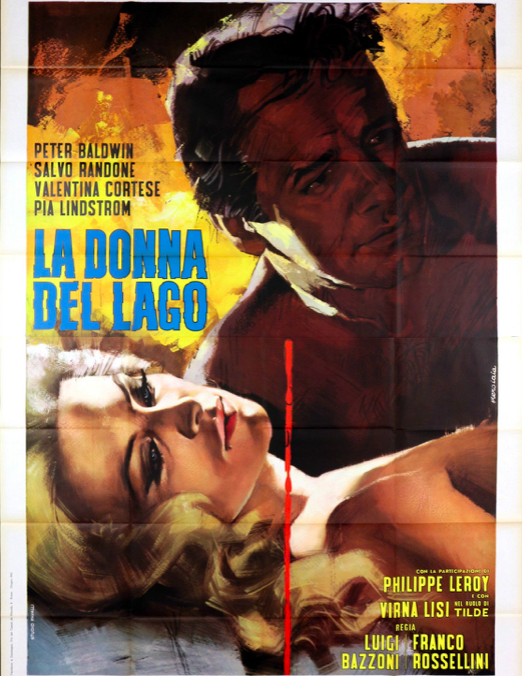
THE POSSESSED aka THE LADY OF THE LAKE(1965) – A REVIEW BY RYAN MARSHALL

Small towns, wherever they may be, tend to carry with them a rather distinctively suffocating burden. Those who have visited such places, either extensively or not, know the feeling; sensory awareness seems to have been filtered out with any discernible definition of time and space upon arrival. You either go with the flow or get caught up in its aggressive vortex, in which case surrendering to your surroundings seems to be the easiest path to contentment.

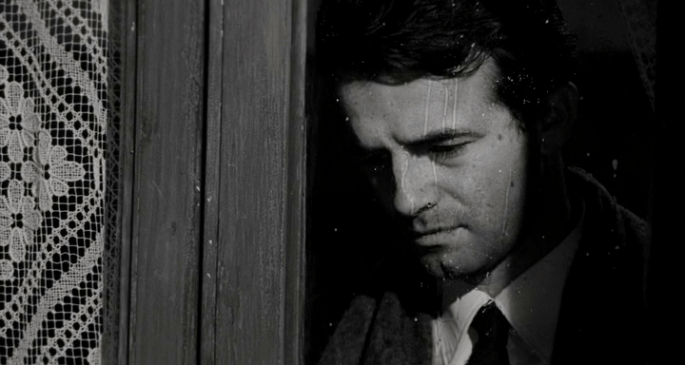
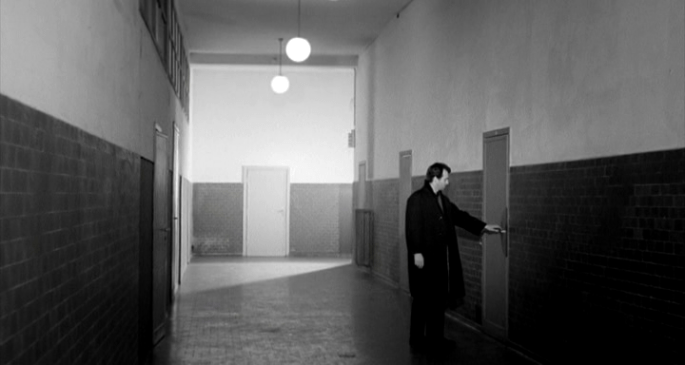
This particular sensation has enjoyed its share of cinematic representation in the past, though few have captured it as purely as THE POSSESSED (aka THE LADY OF THE LAKE), the haunting debut from Luigi Bazzoni and Franco Rosselini (the same pair behind genre-bending phantasmagoria FOOTPRINTS ON THE MOON and boozy Franco Nero-starring giallo THE FIFTH CORD). The coastal village which serves as the duo’s muse is one of exquisite and often unseen (or unspoken of) secrets, home to the same lost souls that it lures into its eternally intoxicating web from the outside. The existential dread exhibited isn’t so much inspired as it is painfully extracted and inseparable from the setting, tightening its grip on the audience until they no longer have ample room to squirm.
vlcsnap-2017-09-23-14h19m04s161.png

vlcsnap-2017-09-23-14h18m26s027

Like many a weary traveler walking directly into the jaws of death, the unlikely hero in this ghastly tale is a writer in search of a lost lover. Bernard (Peter Baldwin) finds himself chasing repressed guilt and ruminating over potentially misleading memories in a place where clear consciences appear to be in rather short supply though, as he makes very clear throughout his unorthodox journey, he is among familiar faces.

This isn’t to say that his obsession is any easier to transcend as a result; almost immediately after setting foot in town, the residents inform Bernard that his woman has committed suicide under some disconcertingly mysterious circumstances, and they don’t wish to elaborate any further on that. Proving himself to be a determined and self-sufficient fellow, the outsider fails to abandon his personal agenda in favor of preserving the nastier secrets festering just below the surface, even when the townspeople threaten its stability. The unwelcoming unease slowly creeps in from the dimly-lit streets to the musky hotel where most of the subconscious digging takes place, in no time obscuring the line between reality, delusion, and dream.


vlcsnap-2017-09-23-14h18m57s205

vlcsnap-2017-09-23-14h16m00s655

Although he’s been here before, the writer feels no less alienated by his circumstances or disturbed by the colorful characters that he encounters during his trek towards the truth. A faceless woman in white strolls by the shimmering lake as if bound to its magnetism, the local butcher leers impassively from beneath his enveloping wooden canopy, the innkeeper’s hospitality is quite obviously one built around artifice, and the local drunkard’s abyssal cries in the witching hour may in fact be far less insignificant than they at first appear.. Everyone harbors a perversion that they’re not keen to speak of, and the only “real” people are those not pretending.

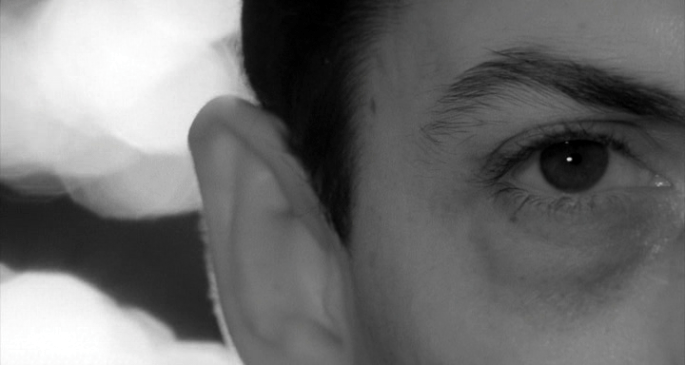
When all else fails, and he realizes that those around him won’t be of much help, Bernard decidedly probes his own imperfect perception, rendered beautifully in either piercingly white light or with softer, no less exceedingly hallucinatory intimacy. Leonida Barboni’s appropriately detached yet – when absolutely necessary – delectably invasive cinematography effectively draws more than a few connections between the darkest recesses of a creative mind and the environment it embraces, with the town’s exteriors evocatively photographed in what feels a lot like the twilight. Such as it is, this is a lot like a zombie movie without the zombies, or a giallo thriller without the killer, wherein the deep shadows and snow-covered cemeteries feel so much like home.

vlcsnap-2017-09-23-14h16m42s332

vlcsnap-2017-09-23-14h17m08s211

Baldwin makes for an exceptional protagonist, bringing a great deal of introspection and genuine vulnerability to a seemingly cultivated exterior; so much more so than his charismatic demeanor would initially suggest. The commitment to his point-of-view is commendable while simultaneously proving to be one of the film’s few genuine faults; for example, we certainly could do without some of the on-the-nose narration, and towards the end the story gets a little wrapped up in Bernard’s mania for its own good, thus diminishing its dramatic impact.

Even so, these are minor quibbles; this is a hypnotic monochrome nightmare that sucks you in and spits you out entirely at its own will. Some films politely invite us into their headspace whereas this is one that pushes you into it, headfirst. We wander, we wonder, we pace, we lose faith – all to the faint sound of an unloving breeze. It’s a compelling and ultimately hopeless cycle; perhaps not everyone’s cup of (black) tea, but when writhing in such formally arresting melancholia, the experience itself can hardly be equated with misery. Much like the small-town ambience which provides such consistent inspiration, it’s a kind of purgatory  on Earth that one feels almost inexplicably compelled to revisit immediately upon departure. Call it supernatural separation anxiety – as familiar as it is frighteningly unfathomable.

vlcsnap-2017-09-23-14h13m39s392

vlcsnap-2017-09-23-14h13m22s737

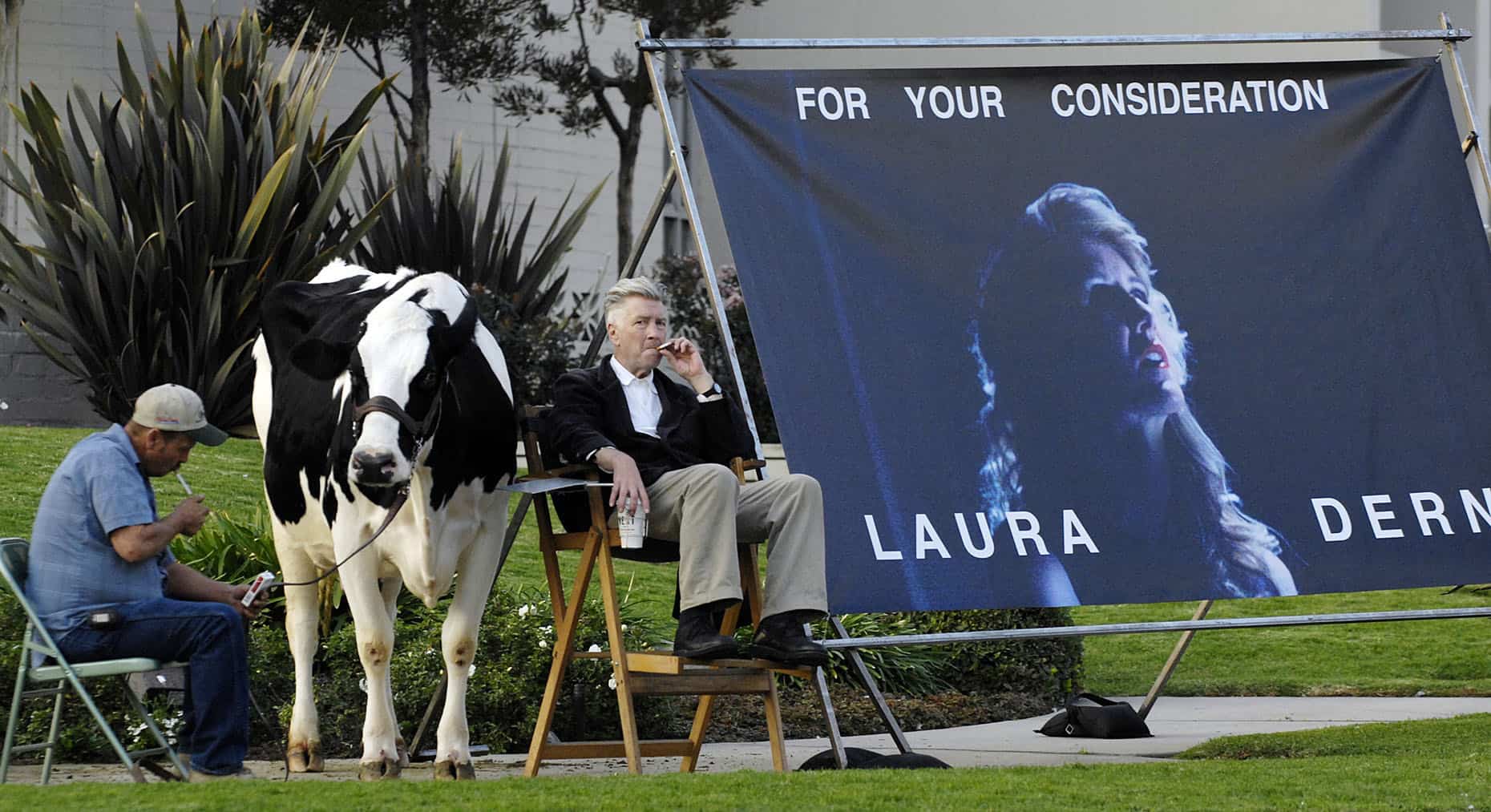
PTS Presents the Raymond Benson Auteur Series: DAVID LYNCH Volume 1

Image result for david lynch cow

Podcasting Them Softly is incredibly excited to continue our Raymond Benson Auteur Series with our first of a two part chat about the works of David Lynch. Frank, Tim, and Raymond discuss Lynch’s early works continued through his features ERASERHEAD, THE ELEPHANT MAN, DUNE, BLUE VELVET, and the first two seasons of TWIN PEAKS. The three of them will be back soon covering Lynch’s filmography from WILD AT HEART to TWIN PEAKS: THE RETURN. For those local listeners, please check Raymond’s website for upcoming book signing appearances for Raymond’s new novel, THE SECRETS OF CHICORY LANE.

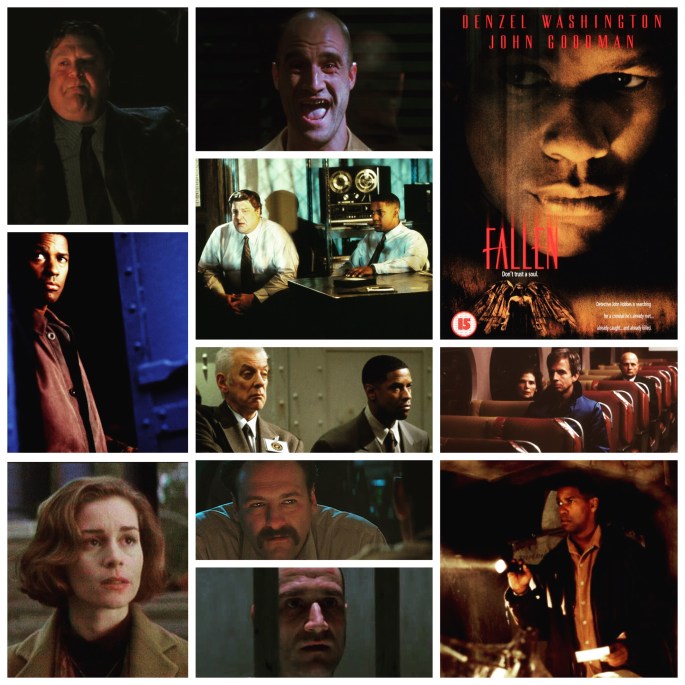
Gregory Hoblit’s Fallen


A demon angel. A Badass Denzel Washington. Tony Soprano singing the Rolling Stones. Creeping psychological dread. Browned, burnished production design. A deliciously mean spirited, ballsy twist ending. All this and more can be found in Gregory Hoblit’s Fallen, an atmospheric spook-house of a flick that gets tone, fright and suspense just right. Nestled in that sweet spot of the 90’s where detective stories often had a neat supernatural twist (The Prophecy is another dope one), it’s a film that demonstrates the power of storytelling and atmosphere done right, like a campfire tale that cops tell their youngsters. Denzel is Hobbs, a detective who oversees the graphic execution of serial killer Edgar Reese (Elias Koteas, terror incarnate), a monster he once caught. Case closed, right? Not so much. Soon after he kicks the bucket, one or more copycat killers show up, and once again the crimes happen under Hobb’s watch. Coincidence? Paranormal? It’s a neat, eerie game of cat and mouse with an antagonist who possesses a few unearthly methods of skulking around in the dark. Hobbs is helped by his two colleagues, salt of the earth John Goodman and hothead James Gandolfini, bumps heads with the obstinate police captain (Donald Sutherland), and runs into his foe at every turn, each time in a new vessel which gives the actors, right down to extras, an opportunity to have some devilish fun. Embeth Davidz is her usual withdrawn self as a woman with ties to the killer’s past, and watch for Robert Joy and Gabriel Casseus as well. Composer Dun Tan’s unearthly drone of a score compliments the drab shadows, oppressive nocturnes and threatening frames of the film eerily as well, creating a mood-scape that drips ambience. The end is an acidic kick in the nuts, and I admire a film that has the stones to chuck in such a shock tactic, embracing the dread that has been built up to that point with one last sardonic, hopeless cackle. Film noir to it’s roots, subtly mystical, a perfect one to settle down with as we move into the Halloween season. 
-Nate Hill

Just wild about Larry: An Interview with Steve Mitchell by Kent Hill

Error
This video doesn’t exist

Steve Mitchell has been on quite a ride. Having begun in the world of comics, he has the distinction of inking the very first book by a guy you might have heard of . . . Frank Miller. But being in New York with all his friends heading west, Steve, after forging an impressive beginning to his career, took a phone call one night from his another friend and filmmaker Jim Wynorski. Jim wanted an opinion on an idea that, if he could make it work, they might be able to get the picture made. From that conversation a film would be born. It was the cult classic Chopping Mall.
Steve-Mitchell-1-600x671

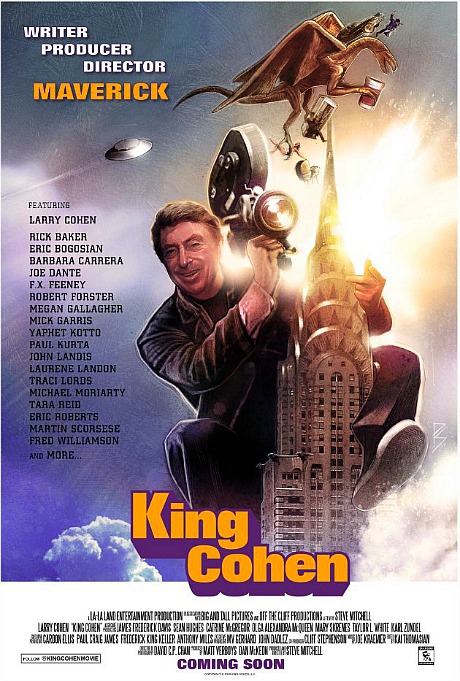
So like Horatio Alger before him, he went west and continued writing for both the worlds of film and television. The fateful moment would come one day while looking over the credits of the legendary maverick auteur, Larry Cohen, on IMDB.  Astounded by the length and breadth of Cohen’s career, Steve saw an opportunity to possibly make a documentary that would chronicle the life and exploits of the successful filmmaker.

kingcohenposterB

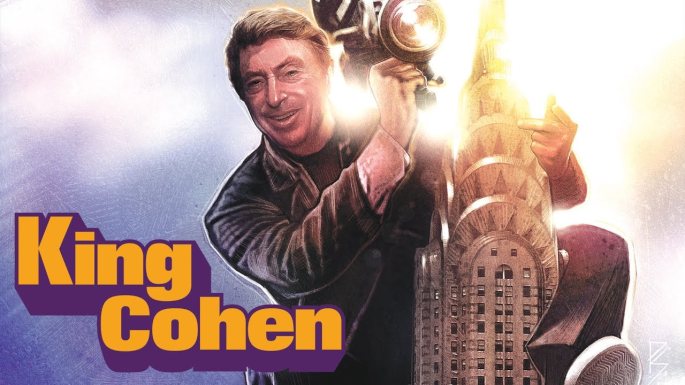
After receiving a blessing from the man (Larry) himself, Steve set about the mammoth undertaking of  not only pulling together the interviews with Cohen’s many collaborators, all of the footage of his many works , but also the financing to bring these and the countless other elements together to form KING COHEN: The Wild World of Filmmaker Larry Cohen.

This truly insightful and utterly entertaining look at the, thus far continuing, career of Cohen is the passion project of a man with whom I share a kinship. Not only for the stories behind the men who make the movies, but also how the films we know and love were pieced together with money, dreams, light, shadow and the technical tools which help capture and refine the many wondrous adventures we as cinema goers have been relishing since our very first experiences.

King Cohen Fantasia 2017-thumb-430xauto-67916

KING COHEN is a great film made by a really great guy, and it is my hope, as it is Steve’s hope, that you enjoy the story of Larry Cohen, but also come away from watching the film wishing to then seek out and discover the movies contained within that you may have only experienced for the first time as part of the documentary. The films of the filmmaker that inspired Steve’s film in the first place. (that’s a lot films)

Enjoy…

The Puppet Master: An Interview with Kevin McTurk by Kent Hill

Error
This video doesn’t exist

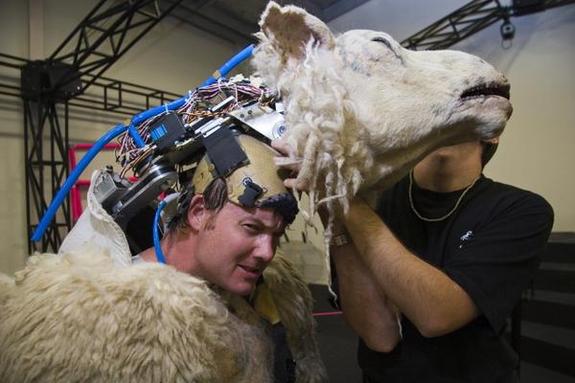
They say in the film business, never work with children or animals. Of course you may find yourself working with dinosaurs, aliens, lions, beast-people, scrunts, kothogas, ghosts, morlocks, Batman, Spiderman, Hellboy, kaijus, wolfmen, clones, cliffhangers, vampires, giant crocodiles, homicidal maniacs, killer sheep, Predators, cowboys and mysterious brides out to Kill Bill.

Sounds ominous, doesn’t it? But that’s just some of the astounding creations and magnificent beasts that Kevin McTurk has encountered in his eclectic career in the realms of special effects.

Kevin_McTurk_2014_800px

Working under the banners of legends like Stan Winston, Jim Henson and the new titans like Weta Workshop, Kevin has had his hand in erecting and simulating everything from the real world as he has from empires extraordinary. And, while I could have spent the entirety of our chat talking about his adventures working on the countless films, which are favourites of mine, he has in his CV, his impressive effects background is only part of the story.

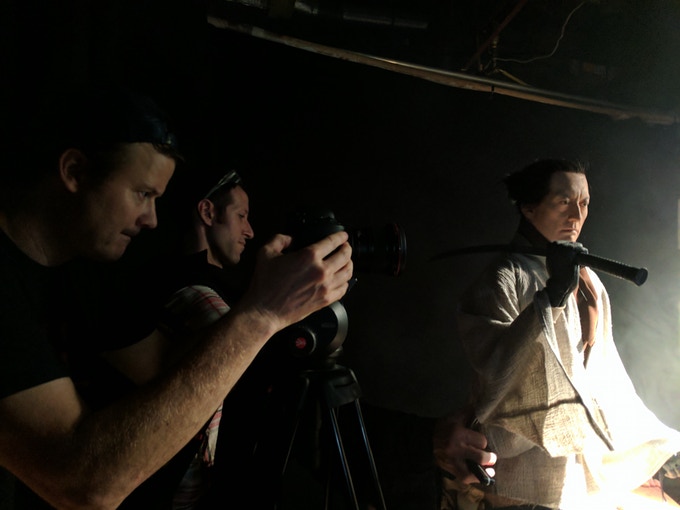
For Kevin McTurk is a bold and visionary filmmaker in his own right. His puppet films, The Narrative of Victor Karloch, The Mill at Calder’s End and now The (forthcoming) Haunted Swordsman are exercises in capturing a style from a bygone era with modern filmmaking techniques. The results are beautiful, not only in their aesthetic quality, but in the level of excellence from the many different disciplines on display.

There is still time for you to join Kevin in his latest cinematic offering (https://www.kickstarter.com/projects/935772123/the-haunted-swordsman-a-ghost-story-puppet-film), and to listen in now to the man himself talk about his movies, influences and career.

I give you the talented Mr. McTurk.

Visit Kevin’s website for more: http://www.thespiritcabinet.com/

content_l

It’s good to be the King: An interview with Larry Cohen by Kent Hill

There is a quote attributed to Robert Rodriguez (another independent maverick filmmaker) that states:

“If you are doing it because you love it you can succeed because you will work harder than anyone else around you, take on challenges no one else would dare take, and come up with methods no one else would discover, especially when their prime drive is fame and fortune. All that will follow later if you really love what you do. Because the work will speak for itself.”

It is the always interesting, ever-changing, always inventive, ever professional life and work of Larry Cohen that really personifies the above quotation. King Cohen has been out there in one form or another in an impressive career spanning multiple decades. He has been the director of cult classics; he has been the writer of hot scripts that have incited Hollywood bidding wars. His work has been remade, imitated, venerated.

These are the hallmarks of a man and his movies whose personal voice rings out loud and clear, high above the commercial ocean of mainstream cinema that carries, beneath its shiny surface, schools of biodegradable blockbusters that are usually forgotten about only moments after having left the cinema.

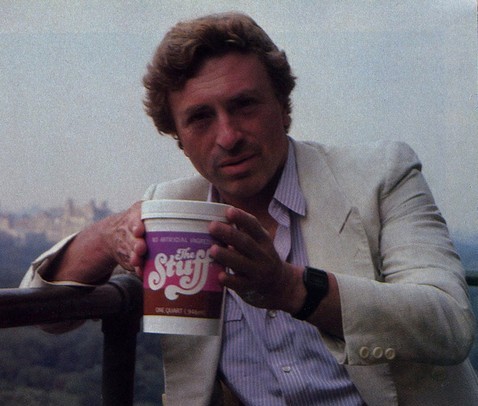
This is not true of the films of Larry Cohen. For his work is the stuff (pardon the pun) that came before, the stuff the imitators latch on to, the stuff from which remakes and re-imaginations are conceived. This is the fate of the masters. The innovators come and bring forth art through trial and error. They are followed by the masters who take the lessons learned from the innovators and make them, shape them by sheer force of will. But, then there comes the imitators who stand on the shoulders of these giants and take home the glory.

Still, when there is an artist that is in equal parts innovator and master; this causes the imitators to stand baffled.

behind-the-scenes-the-stuff-larry-cohen-1985-2

Rather than accepting my humble oration, I urge you to seek out Steve Mitchell’s most excellent documentary KING COHEN. Watch it, marvel, rejoice, and remember that there are great filmmakers out there. They may not be coming soon to a theatre near you, but they did once, and their work still stands, silently, waiting to be discovered.

Until you get to see KING COHEN please, feel free to bask in my little chat with the king himself, Larry Cohen, a gentleman of many parts, many stories and of course . . . many movies.

Ladies and Gentlemen . . . Larry Cohen.

IMG_0691

David Bowie’s Missing Pieces

Image result for david bowie


There was something about David Bowie. He wasn’t just worldly, he was out of this world. It was as if he knew something the rest of us didn’t. Bowie died on January 10th, 2016. More than a year and a half later he is not only missed by many, but he’s constantly being talked about. He was a rock star first and foremost, but he was also an actor. He wasn’t prolific, he was selective. He weaved in and out of some of the strangest films and some of the very finest. As Renny Harlin said in our podcast with him, Bowie was attached to play the villain in CLIFFHANGER opposite Sylvester Stallone, but Bowie couldn’t commit due to his concert schedule. That was a very big what if. What would it have been like to see Bowie face off against Sly?

Magnificent.

TWIN PEAKS: THE RETURN

One of the many burning questions that circled the unraveling mystery of David Lynch and Mark Frost’s phenomenon of TWIN PEAKS: THE RETURN was did David Bowie film a secret cameo reprising his FIRE WALK WITH ME role as Philip Jeffries? He was mentioned heavily throughout the show. It was obvious Jeffries played a huge part in the main narrative of the show. He first showed up in archived footage from FWWM, but his voice was overdubbed by actor Nathan Frizzell. Lynch later said that Bowie gave them permission to use the footage, but not his voice. Lynch had guessed that he didn’t like his faux Louisiana accent he used.

Instead, Philip Jeffries came back as a machine with a spout that puffed steam and GPS coordinates once again voiced by actor Nathan Frizzell. We never got Bowie, and after the show finished, David Lynch was asked about it and said that Bowie declined to reprise without a reason, and that the reason was quickly known thereafter. At the very least, the legend of David Bowie was introduced to an entirely new generation of Twin Peaks fans.

GUARDIANS OF THE GALAXY VOLUME 2

Once the film was released, and all the cameos were exposed, James Gunn quickly came out in a Facebook Q&A with fans and said that he originally sought David Bowie for one of the original Guardians members who show up at the end of the film. Had Bowie been alive and appeared in the film, it would have kept the door open for him to have an expanded role in the next phase of the Marvel Cinematic Universe.

BLADE RUNNER 2049

Recently director Denis Villeneuve said that Bowie was his first choice as the role of the villain that ultimately went to Jared Leto. Needless to say, Bowie would have been fabulous in the much-anticipated sequel. Jared Leto is a fair supplement, but wouldn’t it have been incredible to see Bowie in the Blade Runner universe?

As time marches on, and more and more people discover and devour everything that Bowie left us with, there will certainly be more stories, more “what ifs”, and as sad as that may come, it is also more than welcomed. Because thinking about David Bowie makes most of us very happy.


Indie Gems: Prisoner


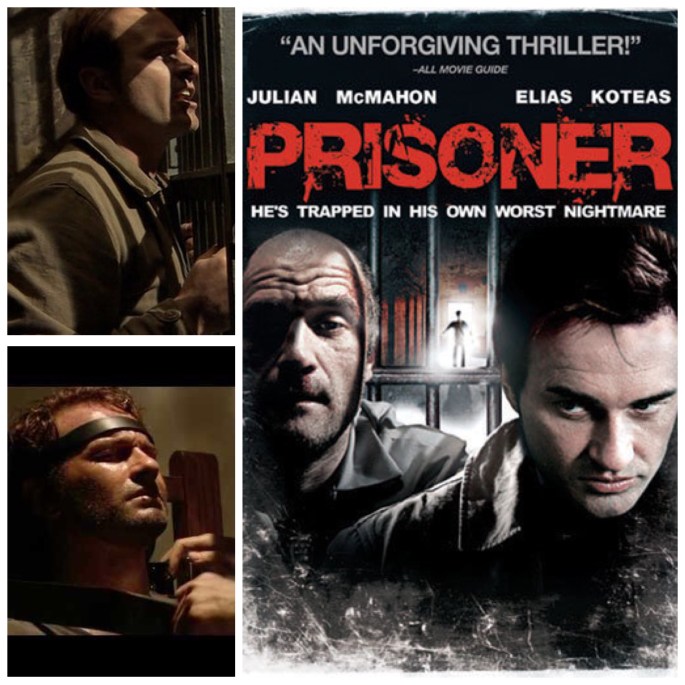
Prisoner is a rough, disturbing little psychological thriller about a potential prison film, or rather the lonely location scouting sessions of controversial, much disliked Hollywood auteur director Derek Plato (Julian McMahon). He’s an arrogant prick of a dude whose newest film has him scouring abandoned penitentiaries for that perfect location. He’s alone, curiously, until all of a sudden… he’s not. Out of nowhere appears the mysterious Jailor (Elias Koteas), a frightening man who forcefully imprisons Plato, mentally berates him and forces the man to look back upon his long and quite unpleasant past in both the film industry and his disaster of a personal life, prodding him with intimate questions and accusations. This is essentially a chamber piece with the two actors being the only ones who appear in the present timeline, which is punctuated by hazy flashbacks to his life before. McMahon carries himself nicely, handling a well worn arc with charisma and giving off an authentically unlikeable vibe early on. Koteas is a beast of an actor and could scare the pants off of real life convicts, as such he steals the show with a brutal, galvanizing performance. Now, these types of films usually head towards conclusions we’ve seen before, and I won’t spoil anything except to say that although I was satisfied with the way the ending did rise up to meet the rest of the film, some won’t be and may find it cliched, but hey, that’s life. Nevertheless, it’s a taut little mind game by way of a character study, clocking in well under ninety minutes, a sleek little piece that leaves the viewer no time to lag or lolly-gag as it trundles along through it’s intense story beats. Cool stuff. 

-Nate Hill