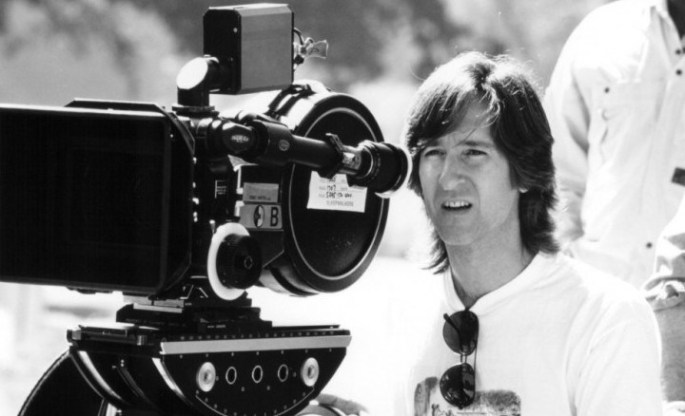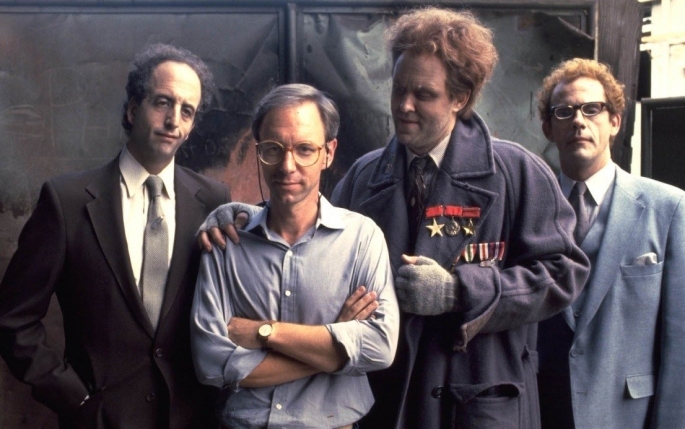
“I’m not scared at all. I just feel kind of … feel kind of invincible.” : An Interview with W.D. Richter by Kent Hill

kinopoisk.ru

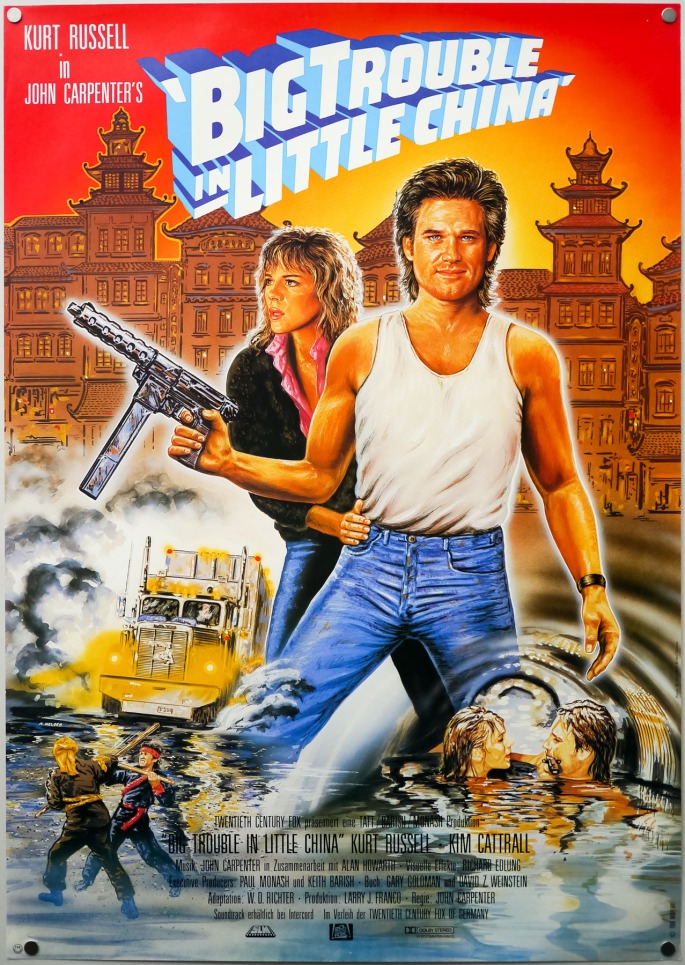
To talk about W.D. (Rick) Richter, is to talk about one of my all-time favorite films, Big Trouble in Little China. It is, to put it simply, one of those films that comes along (not so much anymore) once in a generation. As we know in this age of remakes, reboots and re-imaginations, there is a very good chance that this film, because of its staying power and built-in fan base, will more than likely resurface with Dwayne Johnson playing Jack Burton. Just like Hansel in Zoolander he is, as far as the Studios are concerned, so hot right now!
BigTroubleInLittleChina_A1_Germany_AHelden-1

And you can be your bottom dollar that it will try like hell to recapture the magic of what was – and more than likely – crash ‘n’ burn in its attempt to do so. I might be wrong. Because, BTILC, was and is what is often referred to as a “happy accident”. What began as a seemingly awkward combination of a western with a plot that involved Chinese black magic became, thanks to my guest, a glorious blending of genres that there is really no recipe for.

invasion_of_the_body_snatchers_xlg

I rarely get nervous doing interviews, but I was glad to be sitting down for this one. When the person on the other end of the line had a hand in creating a couple of the seminal film of one’s existence . . . it is tough to play it cool, plus for the first time in a long time, I found the need to have my questions written, rather than merely see what the conversation would provoke. Primarily because I knew I was only going to have a limited time, and secondly because during our email exchanges prior to the chat, I found Rick to be extremely matter-of-fact and, wishing not to have the interview published in audio form, he merely wanted to be concise and not ramble on as, he says, has happened in the past.

So I sat and pondered questions. Having read other interviews with him in the past, before he’d stepped away from the business, the focus was on the films he had released at the time and didn’t really get below the surface. Off the record, we spoke about a few of the things that were beneath the polished exterior of the press kits, but that was not all that interested me. There have been many books and articles on his films, as well as many having excellent special features and commentary tracks which mine their depths – so I wasn’t going to waste time there.

MPW-20191

In the end I waited till the last minute and scribbled down the first questions that popped into my head. Some of course are elementary, but one or two I’ve had on my mind for a while.

Well, it took a long time, but sometimes, good things do. It was well worth the wait and the frustrating silences in between messages from Rick’s friend who very graciously made the introductions, and I, as a fan first, was humbled, honored and thrilled at the prospect of speaking to yet another film-making idol of mine.

While Rick, early in our email exchanges said, “I prefer to let he films, for better or worse, speak for themselves.” I am and will be forever grateful he took the time to talk a little about his work. In the end I wasn’t nervous or scared at all . . . I felt kind of invincible.


KH: Did you always want to work in movies and if so what were the films which influenced you?

WDR: First I wanted a paper route.  Then I wanted to run a circus.  Then I thought about pursuing a career as an English teacher.  Then I thought, “Why not aspire to become an actual tenured English professor?”  But, by the time I got to college, graduate film programs were springing up here and there.  Having loved movies since childhood, but never imagining there was a route available into the business, I suddenly saw a way to pursue a career in film in a structured, sensible way.

I went to a lot of movies of all kinds as a kid, but mostly B horror films from the mid-fifties through the mid-sixties.  In 1964, I saw DR. STRANGELOVE and in 1965 THE LOVED ONE.  They suggested a new direction and deeply influenced me.

KH: How did you break in to the business?

WDR: I wrote screenplays at USC, and one of them secured me an agent.  I then worked as a reader for Warners and wrote on the side and continued to do so when Warners and Irvin Kershner let me work as his assistant while he was prepping DIRTY HARRY for Sinatra.  That project fell apart, but a spec script I’d written, SLITHER, got to the director Howard Zeiff, and he set it up, odd as it was, and we shot it.  Presto!  I was a produced screenwriter.

KH: Your early career was full of greats like Dracula, Body Snatchers and your Oscar nod for Brubaker. How much does momentum play a factor in one’s career (films coming out and performing well) as well as recognition for one’s talent?

WDR: Actually, none of those films did perform well, but they were respected, and, as a result, I was respected as a young writer with perceived potential.  You must remember that during the seventies and eighties eccentric characters in unusual, small stories were nothing Hollywood ran screaming from.  That came later.

KH: You are a part of two of my favourite films of all time with Banzai and BTILC. How do you feel as an artist to be remembered for singular works rather than your entire body of creativity?

WDR: I’ve never given much thought to being “remembered”.  After all, sooner or later, this whole planet is going to be forgotten.

KH: If people want the skinny on Banzai, you have already provided an excellent commentary. What I would ask is, did you ever see Kevin Smith’s Q & A whose guests were Weller and Lithgow, and how did you feel about possible versions of the continuing story of Banzai?

WDR: I thought Kevin did a spectacular job that evening, and it was nice to learn how much the movie shaped him.  As long as Mac Rauch is involved, I feel quite confident that a “new” BUCKAROO could be as startling as the original.

KH: BTILC was ahead of its time, in my opinion. What I’ve always wanted to know is, what the “western version” was like prior to your work on the script, and how much of the finished film remains your work?

WDR: The “western version” just didn’t work for anybody, sad to say.  It all seemed too distant…the Old West and the Asian occult, etc.  So I proposed moving it to a modern, familiar setting and swapping the hero’s horse for a big rig.  The pitch went over well, and, with a writers’ strike looming, I dug into the challenge of creating a contemporary script in about seven weeks, choosing to do that with a somewhat dim but hopefully lovable hero at the center.  The finished film stayed absolutely true to my screenplay, apart from the inevitable ad libs here and there.  Jack Burton’s John-Wayne cadences, though, are definitely nothing I wrote or endorsed.  John and Kurt settled on that themselves.

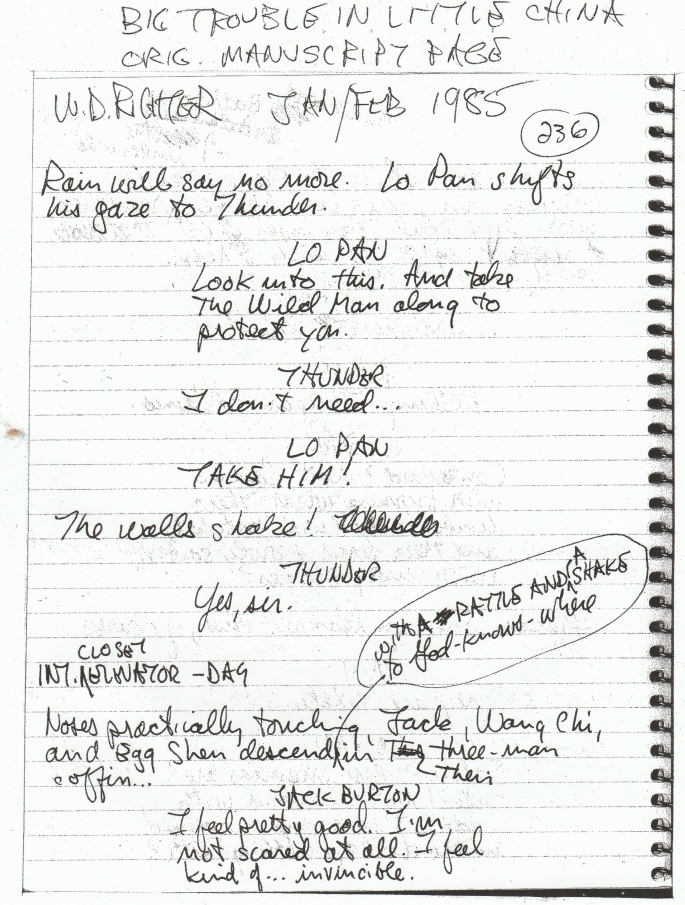
You asked me prior to this conversation: “Did you write the line or was it improvised: I feel pretty good. I’m not, uh, I’m not scared at all. I just feel kind of… feel kind of invincible?”

Turns out I did write it.  I wrote the whole script furiously in longhand in several spiral notebooks, and a typist transcribed them into script format.
IMG_20180410_0001

KH: There was a significant gap between Home for the Holidays and Stealth. I have interviewed many writers who talk of these periods. They say, it’s not that I wasn’t writing, it’s just my scripts weren’t getting made. Was that true of your career at the time?

WDR: Definitely.  I had movies actually green-lighted then cancelled when directors went over budget in pre-production.

KH: I understand Stealth was a troubled production.

WDR: STEALTH was just a bizarre and massively unpleasant experience.  Directors and location scouts shouldn’t rewrite writers, if you want my opinion.  Kind of like Presidents shouldn’t tweet.

KH: Did your involvement end after the writing?

WDR: The “writing” never really stopped.  I was removed from the picture several times when my revisions failed to please the director.  But I was repeatedly brought back by the studio to pull the script back from the brink after the director (who shall remain nameless) had worked it over again in his spare time.  It’s the only film I’ve had made that, with great care, I kept my distance from during production and through release.

KH: I also love Needful Things. What was it like to adapt King?

WDR: Crazy.  The book is 690-pages of single-spaced prose.  My script was 124 pages, and you know how much “air” there is on a script page.  I figured that if one were to retype the novel in a crude screenplay format, it might easily hit 1000 pages.  So I lost roughly 876 pages while trying to keep King’s story and mood intact.  I have no sense of how that worked out because I’ve never reread the book, but I always imagined a looser, grittier, less-arch movie.

KH: Any advice you would give to a struggling screenwriter – not unlike myself?

WDR: Write.  Write.  Write.  But always try to imagine the movie itself playing to paying strangers.  Why would they — or you! — want to watch it?

KH: Sir it has been a profound honor to converse with you. I cherish the moment and humbly thank you.

WDR: Thank you, Kent. Take care.
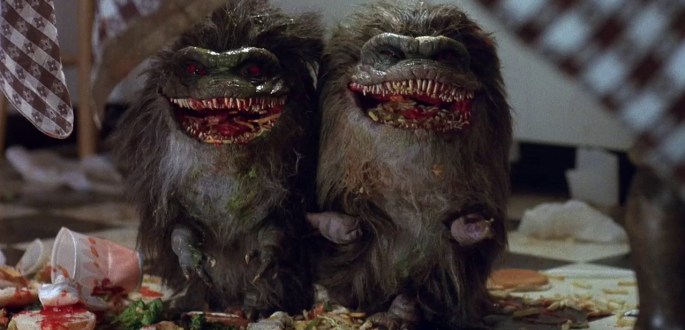
“CHEESEBURGERS, NO BONES!” : An Interview with Mick Garris by Kent Hill

Garris1

It took a while to get a hold of Mighty Mick – but I’m glad I had the patience. See Mick Garris is one helluva talented man. His passage through the movies is a veritable plethora of Amazing Stories – apart from the show-of-the-same-name where he achieved career lift off.

Since those early days he has gone on to become a prolific writer, director, producer, author, podcaster – the list goes on. He made me laugh with Critters 2, he was the writer of The Fly 2, which was one of the only times a film has forced me bring up my lunch, and he has conducted wonderful and insightful interviews with fellow filmmakers – some, sadly, that are no longer with us.

Through it all Mick remains the soft-spoken gentleman with a passion for his work and cinema in total. He has had a long successful run of adapting the works of Stephen King for the screen. I have vivid memories of sitting through, night after night, his extraordinary adaption of The Stand. This he beautifully followed up with further adaptions of Bag of Bones and The Shining, in which King adapted his own book, and which Mick credits as one of the best screenplays he’s ever read.

He was instrumental in bringing together the Masters of Horror as he was composing the elements which formed great movies either under his pen, or benefiting from his exquisite direction. Follow this link ( https://www.mickgarrisinterviews.com/  ) to Mick’s site and check out the bona fide feast of delights for cineastes he has on offer. As I said to the man himself, “You have a lot of fingers in a lot of pies, and I can’t wait to cut me a slice of whatever you serve up next.”

So, without further ado,  it is my privilege to present to you . . . the one, the only . . . Mick Garris.

John Carpenter’s Escape From New York

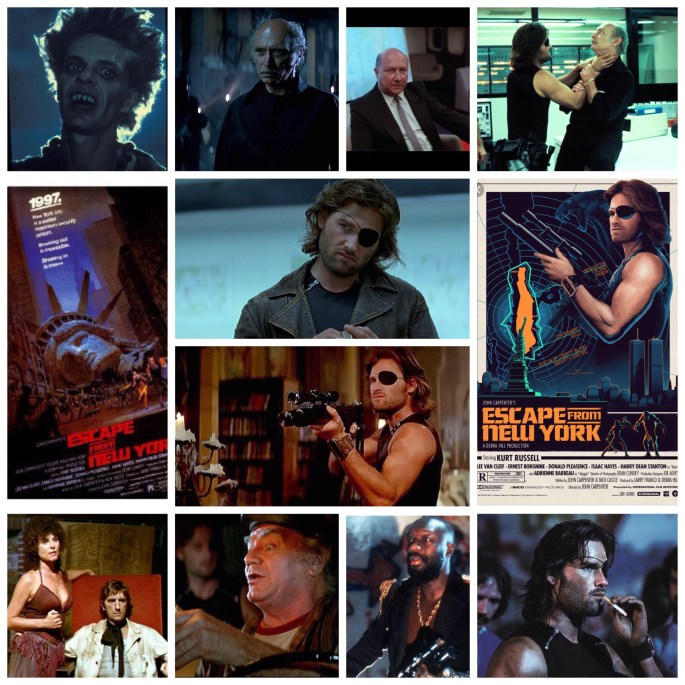
John Carpenter’s Escape From New York is lean mean, brawny and one of the director’s best efforts, one of his leaps into non horror territory and a high concept, exploitation template that has become so iconic that he’s had to sue one production for literally copying and pasting. More iconic still is growling Snake Plissken, a nasty, uncooperative, maladjusted piece of work that has calcified into both a genre titan and one of Kurt Russell’s most instantly recognizable, badass characters. Plissken is basically a villain transplanted into the protagonist’s seat, where he gets to shake up the formula and push the boundaries of being an antihero nicely. By now everyone knows the story. The President (Donald Pleasence) ejects out of Air Force One and crash lands in futuristic NYC, now a giant penitentiary housing unwanted criminals from all over, cordoned off from the rest of the world. Snake is sent in by General Hauk (Lee Van Cleef is a sadistic snake in his own right) as a ‘fight fire with fire’ ditch effort, given twenty four hours to retrieve POTUS at an extraction point and implanted with a microchip that will blow him into hamburger helper if he doesn’t make his deadline. Cue explosions, car chases, wicked stunts and set pieces galore, done in Carpenter’s careful, tactile, authentic and slightly non-Hollywood manner. The guy just has a knack for taking formulaic premises and giving them a just-south-of-normal spin, his own flavour and one that makes cult classics that are built to last. Adrienne Barbeau, Isaac Hayes, Ernest Borgnine, freaky Frank Doubleday, Charles Cyphers, Tom Atkins and good old Harry Dean Stanton all provide standout support. My favourite aspect of the film is the original score, composed by Carpenter himself, of course. It’s a spooky, atmospheric riff that’s akin to the music in The Thing, and just has this synth-y way about it that transports you to the specific time and place of the film flawlessly, it’s a showcase example of an auditory mood board. No remake could ever touch this, it’s too idiosyncratic and special to be updated, and the sooner studios realize their never ending goose chase to capture lightning in a bottle twice is a fool’s errand, the sooner we’ll get back on track and make original contemporary films that will becomes genre classics in the future, just like this. I love Plissken’s final act of brutal rebellion, a reminder that this is not a nice guy we’re dealing with here, but one who plays by his own rules and shirks the standards, much like Carpenter himself. I imagine Plissken’s reaction to news of a remake would be similar, if not more hotheaded, than that final, lethal sleight of hand prank he pulls on a government that stabs him in the back. Solid gold.

-Nate Hill

THE ‘SHOWDOWN’ TRIPLE FEATURE by Kent Hill

This film might not seem like a big deal to you. It could merely appear as another throwaway action flick on your regular streaming service – one that you glance at out of curiosity, and then move on. But I really loved SHOWDOWN IN MANILA, and here’s the reason why . . .

Once, a long time ago, in the age of wonder, they were these glorious palaces that we called, Video Stores. They were a veritable treasure trove for cineastes of all ages to come and get their movie-fix. They housed the cinema of the ages and best of all, there would be movies you could find there, that hadn’t played at a cinema near you.

kN5geD7jzQMys9ikhNetzAhacnw

These were the titles that were made specifically for this new medium of VHS. Like the drive-in before it, these stores needed product. Thus a new genre was born, and it was called Straight-to-Video. What arose were glorious movies, some of which, sadly,  died along with their era. Awesome were the sci-fi, the horror, and specifically speaking now, the action movies that would appear on the shelves. And such action. Real, intense, dynamic and always in frequent supply. It was good versus evil in all its glory – the villains wore dark shades and the heroes carried big guns. So, it was while watching SHOWDOWN that I was hit by this wave of nostalgia, engulfed by memories of the golden age of home entertainment.

The plot of the film is simple. But isn’t that true of the best action flicks? The package is a beautiful cocktail of old and new, peppered with filmmakers wishing to deliver a splendid throwback, mixed with the stars that climbed to the dizzying heights of VHS stardom.

For those who know what I’m talking about, and even those that don’t, I say, go check out this little gem that is cut from the past, and at the same time, is polishing by the future. So, here now, I present a trio of interviews with the film’s stars Alexander Nevsky (The man on the rise), Matthias Hues (The action legend), and the man responsible for that important seed from which all great cinema grows, the script, Craig Hamman (the veteran screenwriter).
26994916_2003478956334522_1713502892_n.jpg

Alexander Nevsky is a Russian bodybuilder, actor, writer, producer. His life changed when he saw Arnold Schwarzenegger in Pumping Iron and that spark would light the fire which continues to burn bright. In 1994 Nevsky graduated from State Academy of Management (Moscow). In 1999 he moved to California. He studied English at UCLA and acting at the Lee Strasberg Theatre Institute. He has risen from a bit-part-player to an international action star the cannot be ignored. With his imposing intensity, versatility and personal drive, Alex, I believe, is poised to enter the arena of formidable action superstars – its only a matter of when.
DEi4u7XUMAAmOiE

Matthias Hues is a German-born actor and martial artist as well as being an action movie icon. He came to L.A. not knowing how to act or even speak English. The fateful moment would come when he joined Gold’s Gym and the establishment’s manager received a call from a producer who had just lost Jean-Claude Van Damme for his movie and needed a replacement. Matthias tested for the role, and he managed to convince the producers to give him the part despite having no prior acting experience. The movie, No Retreat, No Surrender 2, was a moderate success, but it opened the door. He is, of course, most recognized for Dark Angel, but has also played everything from a gladiator turned private investigator in Age of Treason to an aging hit-man in Finding Interest to a bumbling idiot trying to kidnap a rich kid in Alone in the Woods to a dancing lion tamer in Big Top Pee-wee. He’s even played a Klingon general in Star Trek VI: The Undiscovered Country.

MV5BMmFhNjY0MDYtMTNmNC00MjJmLTkxZTMtOWU4NzNjYWU3MTM4XkEyXkFqcGdeQXVyMTAzMjk1Ng@@._V1_UX214_CR0,0,214,317_AL_

Craig Hamann came up alongside another young aspiring filmmaker whose work would go on to define a generation. When he and Quentin Tarantino embarked upon the journey to make their own movie, My Best Friend’s Birthday, there was no telling then, where the road would lead. Well we all know where Quentin ended up, but Craig too has enjoyed a long and prosperous career that has been anything but ordinary. He’s a writer, former actor, that has watched the industry ebb and flow. He’s directed Boogie Boys, had encounters with Demonic Toys and of course, of late, he’s been a part of an action-thriller in Manila. Craig has other projects in the works, and with the company he keeps, these efforts are, I’m sure, set to explode and entertain. Yet he remains a humble gentleman with a passion for his work and a dedication that has seen him endure as a great veteran of the movie business.


Indie Gems: The Art Of The Steal

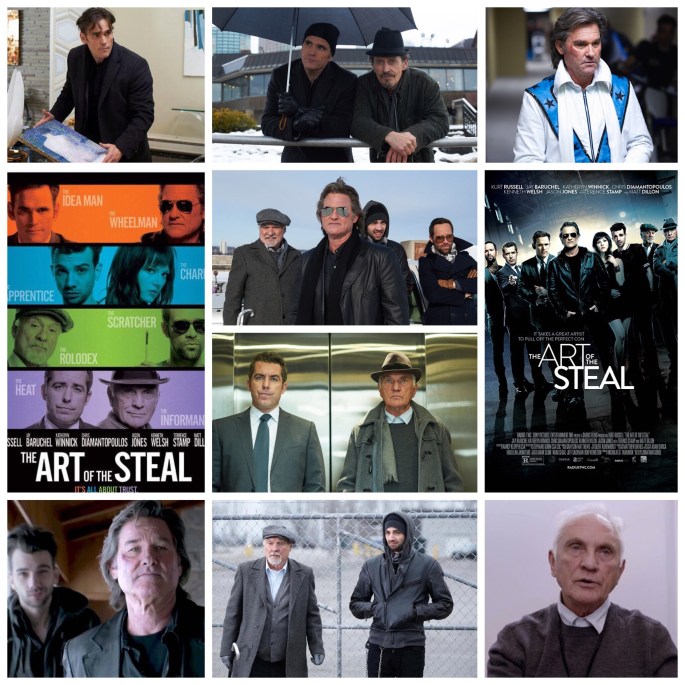
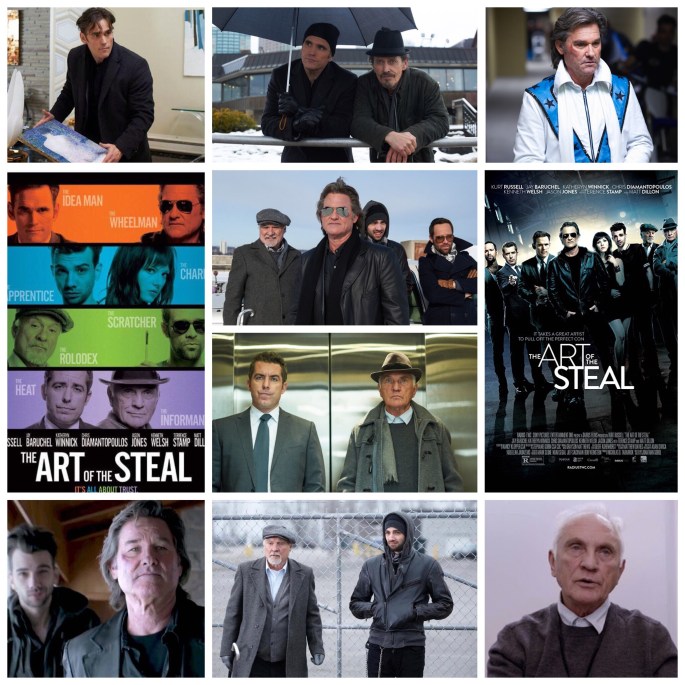
I’ve reviewed The Art Of The Steal before, but it constantly kills me how underrated this banging heist comedy is, so here goes again. Imagine a wickedly funny, smartly written all star art thievery caper starring Kurt Russell, Matt Dillon and a host of others at the top of their game and you’ll have some idea. It’s strange that it’s so unheard of with this pedigree of actors involved, but it’s a joint Canadian production so that may have had an effect on marketing, or lack thereof. In any case, it’s the funniest, smartest heist flick since Ocean’s Eleven, and maybe tops it too. Russell is Crunch Calhoun, an Evel Kneval type ruffian who moonlights as a driver for a crew of fine art pilferers he leads. He’s hard up for cash and fresh out of a stretch in polish jail after his brother and second command Nicky (Matt Dillon, sleazy as ever) rats him out as a fall guy. Now back in Canada, he reluctantly agrees to work with brother dearest, as well as his old crew, for one last job, the theft of an obscure gospel manuscript. Their plan involves swerves, dekes, double-crosses, cons, conniving, hysterical fuck ups, roper dopes and double entendres, so much so that one marvels all that’s in this goody bag of a narrative can fit into a ninety minute film, a testament to both editing and direction. Crunch’s crew is is a roll call of varied talent, including twitchy rookie Jay Baruchel, wily old dog Paddy (Kenneth Welsh), Crunch’s sexy wife (Kathryn Winnick) and their flamboyant French forger (Chris Diamantopoulos). The real treat is Terence Stamp as a weary ex thief working with an Interpol snot-rag (Jason Jones) to lift time off his sentence. Stamp doesn’t show up too often in films these days but he’s comic gold here and has a surprisingly touching bit that brings a bit of reverence and gravity to the world of grand-theft-art amidst the mostly madcap tone. It’s sad that films like this don’t get a theatrical run anymore these days, because they end up on Netflix or wherever and the only way they get mass exposure is through word of mouth, chance or crazed cinephiliac zealots like me shamelessly plugging them on blogs. So go fucking watch it..now.

-Nate Hill

The Way of the Samurai Cop: An Interview with Matthew Karedas (Hannon) by Kent Hill

samurai_cop_sd3_758_426_81_s_c1washington_joe

You’re all familiar with the concept “so bad, it’s good” I’m guessing? If you’re not then I’m here to tell you that there is a thriving sub-genre enjoying the hell out of life just beyond the fringes of your current viewing tastes. Now, some might say that these are the lands where bad films go to die – but I say it is not so. You just have to look a little harder, you have to look with better eyes than the ones in your head that only see the mainstream and everything that floats down it. Remember shit rolls down hill too.

And you’ll be told that films like Space Mutiny, Troll 2 and The Room are only enjoyed by small minded juveniles that still think farts are funny. You’ll be told to stick with the cinema of the Golden Age, heck even the Silver Age – but what ever you do – stay away from the counterfeit Peso Age.

199131ca71d81b1e05dcd3778d9a3c2bimage-1-e1457863617363

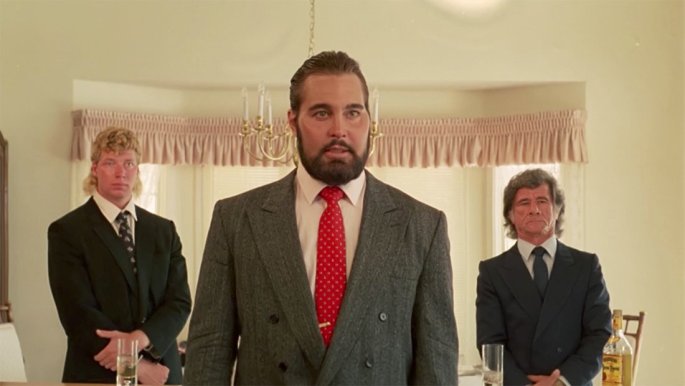
If these are the voices that dictate your viewing pleasure then you best take off. This story ain’t for you. The cinema of Amir Shervan (top) and Gregory Hatanaka (bottom) is beyond your realm of understanding. For these guys play in the sandbox where bad is beautiful and lunacy equals legendary. These are the men who created the Samurai Cop.

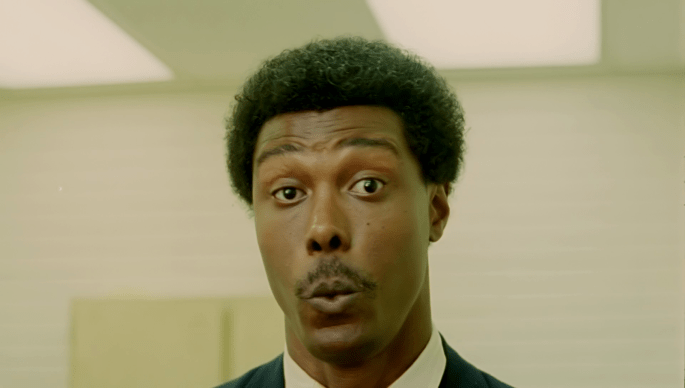
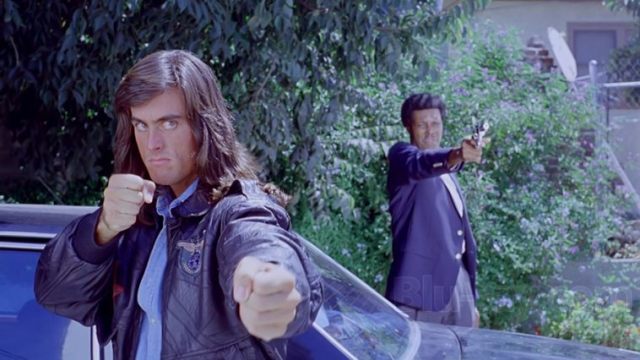
In 1991 a ex-Stallone body guard and a trained New York actor strapped on the guns and a bad wig and took their place in cinema history. The film was Shervan’s tribute, some might say, to the American action film. What he made had bad acting, stilted action, a whole lot of tits, ass and Robert Z’Dar, blended with a mighty helping of stupid courage.

Then – just like that – the film vanished, along with its star.

1100x620_mullets-noscale

vlcsnap-3203-01-25-07h44m19s518

Cut to 25 years later and a new filmmaker, inspired by the newly uncovered brilliance of Samurai Cop, decides to get the old band back together and make a sequel. Only problem being . . . the Samurai Cop is missing, presumed dead.

But Matthew Karedas (formerly Hannon) was just chillin’. He’d grown tired of jumping through Hollywood’s hoops and so, he got a real job and took the time to raise his young family. It was one of Matt’s daughters that saw the word on the web of her father’s supposed death and told him he should post word – tell the world the Samurai Cop Lives!

So he did, and the rest dear friends is history. Samurai Cop 2 : Deadly Vengeance was released around the world to adoring fans and took its long-awaited seat beside the awesome original. Nearly all the cast returned, along with some new faces. One genius stroke was the casting of fellow “so bad, it’s good” megastar Tommy Wiseau (The Room). The meeting of Karedas (Hannon) and Wiseau on screen being equaled only by the scene from Michael Mann’s Heat, which saw the powerhouses of Pacino and De Niro square off.

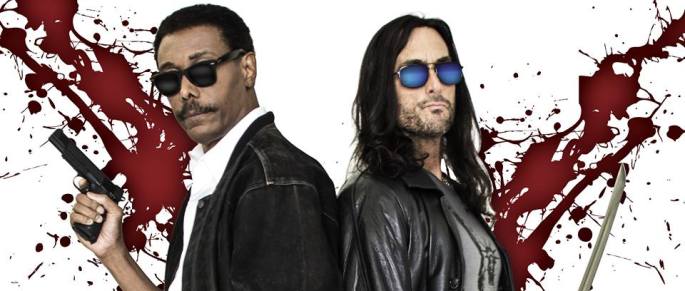
So, kick back with me now as we sit down with the Samurai Cop himself to learn about the past, chat about the future, shoot the breeze on the subjects of bad acting and equally bad wigs . . . and of course hear all about rubbing shoulders with Tommy Wiseau. Ladies and Gentlemen I proudly present . . . Matt Hannon (Karedas), The Samurai Cop.

Ron Howard’s Backdraft

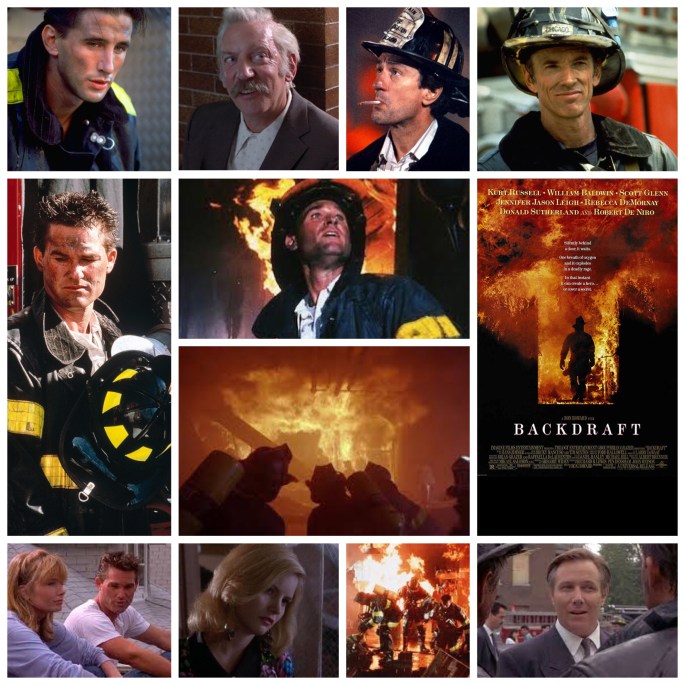
Ron Howard’s Backdraft is all you could want in a big budget Hollywood picture, and more in the sense that it combines a handful of genres for one big opus that’s bursting at it’s seams with family drama, romance, mystery, psychological thrills (of the deliciously heavy handed variety) and no shortage of shit blowing up. As far as firefighter films go, this is probably where the buck stops as far as I’m concerned. Stuff like Ladder 49 came and went without much lasting impression as I’m sure the Josh Brolin one from this year will too, but Backdraft man, it’s an action classic that’s endured and aged remarkably well over the years. It opens with a bang as a Chicago team thunders into action set to a score by Hans Zimmer that could wake the dead. This intro serves as a showcase moment for what’s to come, as we meet two brothers who are fiercely competitive, each scarred by there fireman father’s (Kurt Russell) untimely demise. The older (also Russell) is a headstrong bull with self destructive tendencies, while the younger (William Baldwin) does his best to live up to the family name by struggling through the academy. That’s the framework for a story that’s brimming with characters and subplots, as any Hollywood epic should be. Robert Deniro steals the show as a gruff, old school arson investigator who’s seen a few deadly fires in his time, and keeps a close watch on psychopath firebug Donald Sutherland, who himself gives a thoroughly chilling performance. Scott Glenn is rough ‘n tough as veteran fireman Axe, Jennifer Jason Leigh is Baldwin’s flame in a role that’s uncharacteristically safe for the daring actress, while Rebecca De Mornay is terrific as Russell’s ex-wife. Ohh and J.T. Walsh steals every scene as a dubious politician. What a cast. The film is big, bold and noisy, with a visual and auditory aesthetic that will give any home theatre system a pounding. Zimmer’s score is seriously awesome, a grandiose, emotional, booming concoction that stands as both one of his best and most underrated. This is one of the old fashioned, pure bangers of unbridled cinematic escapism that can’t be beat, replicated or watched too many times.

-Nate Hill

Jonathan Mostow’s Breakdown

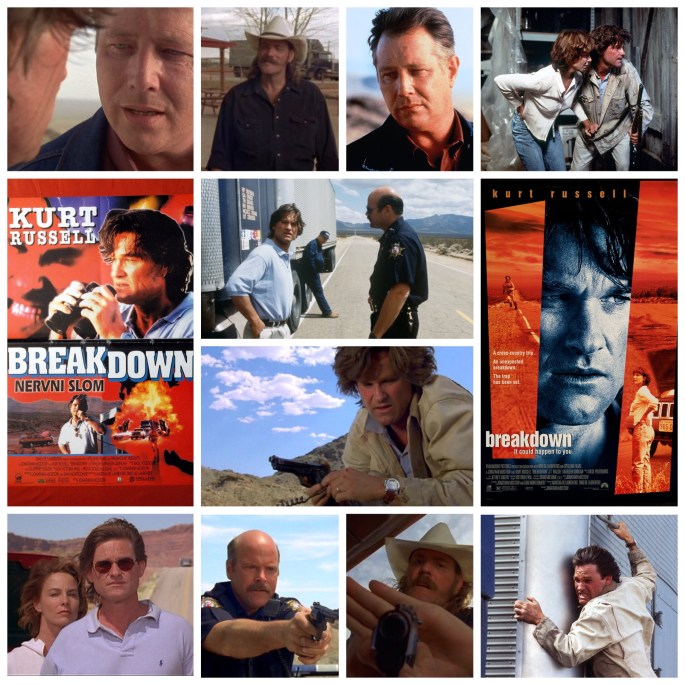
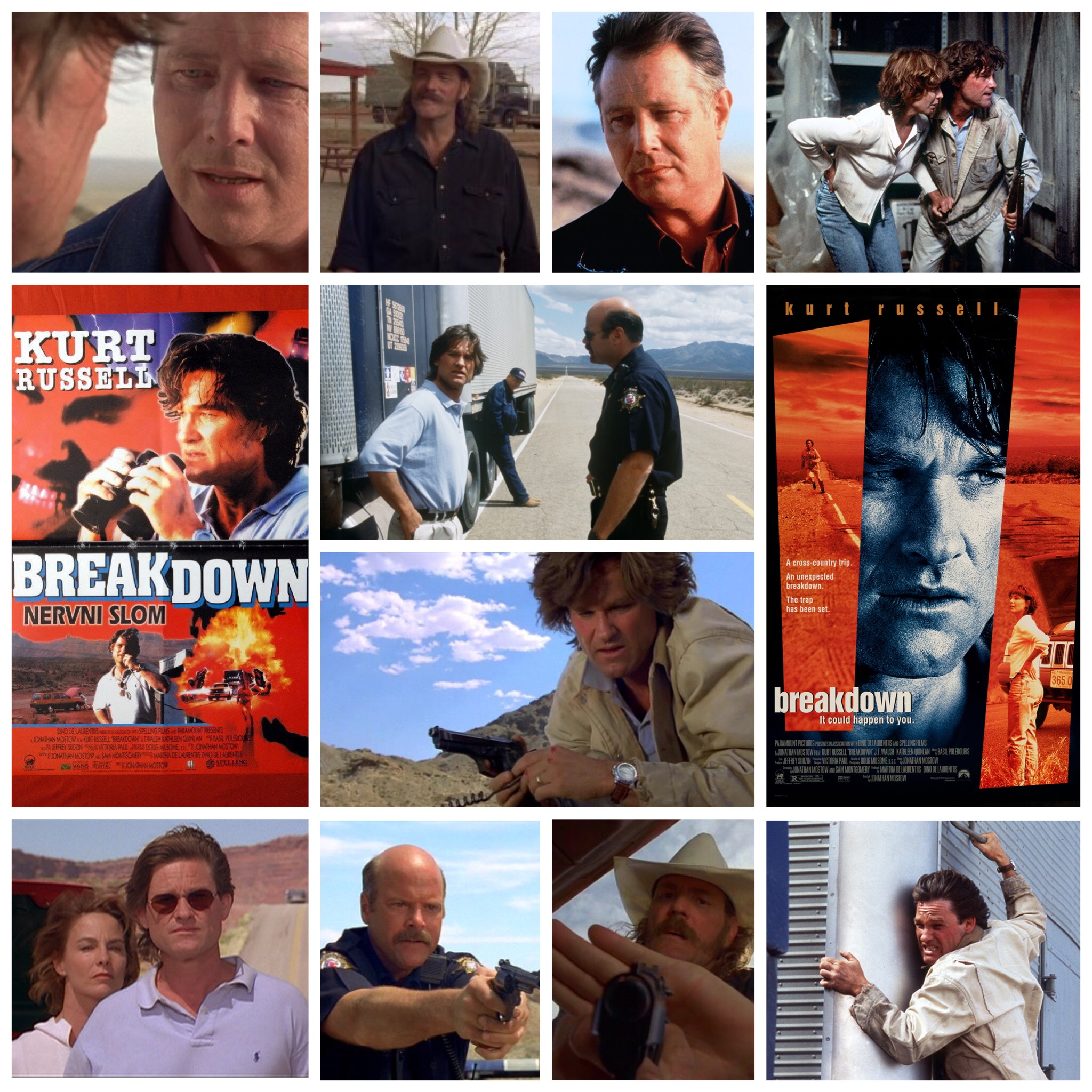
Jonathan Mostow’s Breakdown is one hellcat of a thriller, a nitrous injected highway nightmare scenario that doesn’t quit until the tanks empty, quite a few people are dead and Kurt Russell has burned off umpteen carbs running about the southwest searching for his missing wife (Kathleen Quinlan). In the tradition of great road pictures like Steven Spielberg’s Duel and Robert Harmon’s The Hitcher, this one know ms to keep the speedometer revved for maximum effect, the best method for these types of films. Russell and Quinlan are your average American couple, driving from A to B along some forgotten stretch of freeway out there. After a brief stop, she vanished, he panics and so begins his breathless crusade for the truth. The local cops are useless, no one seems to have witnessed her vanish, and he’s pretty much on his own, not to mention hunted by some nefarious truck drivers who probably know more than they should. J.T. Walsh, king of businesslike scumbag roles, gives what may be his nastiest here as Red Barr, a long-haul semi driver who knows exactly where Russell’s wife has gone, and ain’t telling, no sir no how. Similarly, big old M.C. Gainey, another Hollywood thug, is in high evil gear as just one more backroad asshole Russell has to deal with, and the two have a crackling showcase of a high speed standoff, one in the driver’s and one in the passenger seat, playing close quarters mortal kombat to see who comes out on top, and who comes out dead. The Fast and The Furious has nothing on these types of films, for it’s less about bombarding an audience with a stunt a second, and more about rhythmic pacing, then knowing when to open up and let the ripcord fly. Taut, precise, unrelenting little flick.

-Nate Hill

Jonathan Mostow’s Breakdown

Jonathan Mostow’s Breakdown is one hellcat of a thriller, a nitrous injected highway nightmare scenario that doesn’t quit until the tanks empty, quite a few people are dead and Kurt Russell has burned off umpteen carbs running about the southwest searching for his missing wife (Kathleen Quinlan). In the tradition of great road pictures like Steven Spielberg’s Duel and Robert Harmon’s The Hitcher, this one know ms to keep the speedometer revved for maximum effect, the best method for these types of films. Russell and Quinlan are your average American couple, driving from A to B along some forgotten stretch of freeway out there. After a brief stop, she vanished, he panics and so begins his breathless crusade for the truth. The local cops are useless, no one seems to have witnessed her vanish, and he’s pretty much on his own, not to mention hunted by some nefarious truck drivers who probably know more than they should. J.T. Walsh, king of businesslike scumbag roles, gives what may be his nastiest here as Red Barr, a long-haul semi driver who knows exactly where Russell’s wife has gone, and ain’t telling, no sir no how. Similarly, big old M.C. Gainey, another Hollywood thug, is in high evil gear as just one more backroad asshole Russell has to deal with, and the two have a crackling showcase of a high speed standoff, one in the driver’s and one in the passenger seat, playing close quarters mortal kombat to see who comes out on top, and who comes out dead. The Fast and The Furious has nothing on these types of films, for it’s less about bombarding an audience with a stunt a second, and more about rhythmic pacing, then knowing when to open up and let the ripcord fly. Taut, precise, unrelenting little flick.

-Nate Hill

One Bloody Good Actor: An Interview with Steve Le Marquand by Kent Hill

540127155

Steve is a top bloke, he’s an Aussie, he’s a top Aussie bloke. He hails from Western Australia but after spending some years on the road and gathering valuable life experience, he found his way over to Sydney where he took up his apprenticeship studying performing arts – an apprenticeship, Steve will tell you, is still going on.

Early in an acting career, beggars can’t be choosers, so Steve took a stab at just about anything that came his way. One of his launching pads was a, determined after the fact, rather sacrilegious commercial in which The Last Supper had, or was depicted as having, a rather different outcome from that set down in the biblical text.

two_hands

It, though removed from television, got him some notice and a part in the Australian cult hit Two Hands in which Steve starred and began a friendship with fellow Perth-born actor, the late Heath Ledger. It was radically different from the films being made locally at the time and also launched the career of Rose Byrne (Troy, X-Men: First Class).

vertical-limit-movie-poster-2000-1020208849

He was disgruntled and ready to throw in the towel on his career when, unexpectedly, a big Hollywood movie came knocking at his door. The film was Vertical Limit, directed by Bond and Zorro director Martin Campbell and starring Scott Glenn and the late Bill Paxton among others. Steve was one half of a two man comedic relief package in the film alongside Ben Mendelsohn who would go on to international fame and appear in Rogue One: A Star Wars Story and next year you’ll see him in Ernest Cline’s big screen version of Ready Player One, directed by Steven Spielberg.

From those high snowy mountains in New Zealand (where Vertical Limit was filmed), Steve has since enjoyed a long a fruitful career in film, television and his first stomping ground, the theatre. He remains a humble, salt-of -the-earth sort of fella who calls it like it is and won’t act in something that he himself wouldn’t be interesting in watching.

In an era when most of our country’s talent is swept across the pond with the promise of maximum exposure and ridiculous amounts of money, Steve has stayed, content to be an actor who is allowed the freedom to collaborate fully on the projects he chooses to be a part of.

He is a man of many parts, a teller of great and funny tales from a life and career spent being just what he is: A bloody good actor.

So, put your hands to together, for Steve Le Marquand…