Bradley Cooper’s A Star Is Born

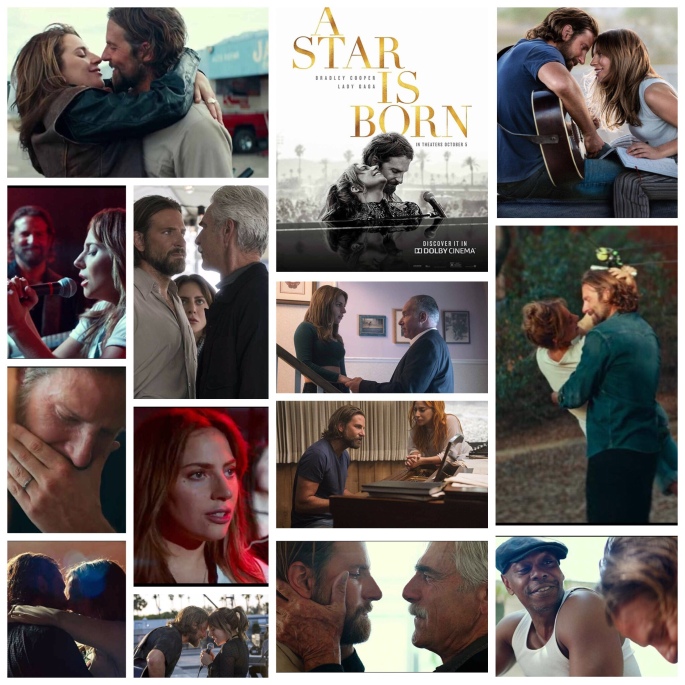
My first thought a few moments after seeing Bradley Cooper’s A Star Is Born: Isn’t it so cool that one of the most poignant scenes in cinema this year is shared between Lady Gaga and Sam Elliott, two artists who couldn’t be more far flung from each other or born of different backgrounds within the industries. That’s a testament to the eclectic cast Cooper has rallied for this absolute fucking diamond of a film and as assured a director’s debut as ever. Filled with many more poignant scenes, instant classic songs, heartbreak that will have you bawling, beautiful direction, believable characters, naturalistic free flowing writing and at least three mega Oscar worthy performances, this is the best film of the year so far and will no doubt sweep said awards.

This story dates back a few versions to the 50’s, but Cooper makes the story seem so fresh and organic that one can hardly even call it a remake, especially when you consider how much brand new, totally inspired music composed and sang live. Cooper is Jackson Maine, an Eddie Vedder-esque rocker who discovers and falls in love with Lady Gaga’s Ally, a young waitress with the voice of an angel and a firebrand of a personality. While her star is on the rise with songwriting, performance and poise, Jack’s is falling from the heavens of fame due to alcoholism and drug addiction, fast approaching the nadir and eventual exodus of his career. Cooper and Gaga have chemistry that fills up every frame until it leaps off the screen, a warm, conflicted and symbiotic relationship blossoms, is put to the rest and weathers a very heavy storm as Jack drifts in a sea of his demons, struggling to hold on. They both give the kind of immersive performances that some actors strive their whole career towards; watching the film I believed that here was Ally and Jackson onscreen, two fully formed, human characters and not simply Cooper and Gaga in their respective roles. Their voices are magic too, especially in an earth shattering duet of one of Ally’s original compositions, a gorgeous tune that practically demands the Oscar for original song.

Cooper has carefully chosen his supporting cast and the result is some moving, interesting work from a troupe who are all cast refreshingly against type. I can’t speak highly enough of Sam Elliott’s work here as Jack’s older brother Bobby, a stormy yet compassionate fellow, this film gives the quintessential cowboy something to actually do with his role, the result being the best, most vulnerable work I’ve ever seen from the guy. Andrew Dice Clay is resurrected to play Ally’s father and brings both warmth and jovial comic relief, Dave Chapelle has a brief but very sweet bit as Jack’s friend and voice of reason. Even the smaller roles are brought to life well, from Greg Grunberg as Jack’s trusty driver to character actor Ron Rifkin, excellent as a kindly rehab counsellor.

Cooper should be proud of his work onscreen, and prouder still of that behind the camera. There is no showboating, no gimmickry, no bells and whistles or arbitration in his direction here, he’s crafted a passionate, heartbreaking, streamlined and beautifully character driven piece of work, full to the brim with love, music, conflict and ideas without seeming overstuffed or cacophonous. Coasting on the heights of the original music, sailing through the rivers of torment and turmoil between the two characters and walking the paths they walk through their relationship, Cooper’s eye captures this tale adeptly, doing things with the camera that seem fresh and different but never taking us out of the story. This is a film that will no doubt go down in history and, despite being one of several iterations, become a classic in cinema for generations to come.

-Nate Hill

Mamma Mia: Here We Go Again

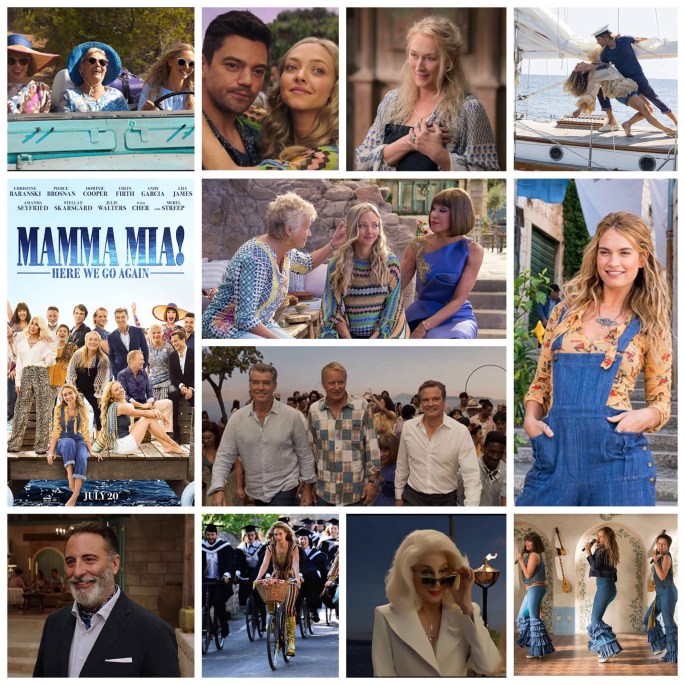
Mamma Mia: Here We Go Again is a blast of serotonin in cinematic form, a pure ‘happy’ movie that may be even more fun than the first. I’ll level with you though: to enjoy it you’ll need to a) love the music of Abba, and b) not be one of those stiffly stiffersons who puckers their sphincter at the very mention of the word ‘musical.’ Both those boxes are heartily checked off for me, so it’s nothing but a glowing review on this end. Sunny Mediterranean skies, an unbelievable all star cast clearly having some of the most fun of their careers, all the glorious Abba music you want and a heartbreaking poignancy that both blindsides you and wasn’t quite all the way there the first time around, what’s not to love? Sure, it’s gimmicky, ditzy, silly beyond compare, but like Mrs. Mia Wallace would say, don’t be a 🔲. Staged as both sequel and prequel, this one zooms back to the raucous 70’s to show us just how Meryl Streep’s Donna found her way to that idyllic Greek island and stumbled into the hotel business. She’s played by Lily James here who is a true find, a charismatic beauty with a singing voice that could clear a cloudy day right out. The amazing, uncanny thing here is how they’ve managed find young actors who really do emulate their older selves, in the case of the three famous potential fathers she meets, and her two hilarious best friends, played again in the present by scene stealing Christine Baranski and Julie ‘Mrs. Weasley’ Walters. Amanda Seyfried has really come into her own as an actress, I’m always looking forward to whatever she does next because I know she’ll do it with grace and gravity, and her character blooms here as a strong pillar of the story as opposed to the fresh faced bride role she got in the first. Colin Firth, Pierce Brosnan and Stellan Skarsgard return and give the film a shot of humour and warmth, while Andy Garcia charms everyone in a role which ties into a hit Abba song later in a way that’s so funny you don’t know whether to clap or roll your eyes. And yes, Cher is in it, her voice is still a powerhouse but she must have had so much work done that she’s more synthetic that organic these days, she’s gotta be in her early 70’s and looks like she just got done recording like her second album, it’s slightly terrifying. If you’re a true Abba buff you’ll appreciate two wicked cameos from founding members cleverly added. The film is fluff and sunshine for the most part, with emotion being relayed by the not always deep or resonant lyrics of Abba, let’s face it, they were a playful disco band. Curiously, there’s one song that really plumbs depths and reaches the most grounded and emotionally truthful height from both actors and audiences that these films have ever ascended to, and, not surprisingly, it’s the one song we get from Meryl Streep, who sadly has no more than a hyped up cameo, but five minutes of Meryl is enough to turn anything gold, really. This seems like an unreleased Abba song, one from mother to daughter sung to Seyfried, and anchors the film right into lucid pathos that I didn’t think was possible with a jumping bean of a flick like this. Like I said before, it’s love it or hate it. I grew up listening to Abba on vinyl, and these songs are a part of me. Every actor in the cast is someone I love to see, it’s set in one of the most beautiful locations in the world, uses the power of music to literally give nutrients to the soul, and is the perfect recipe for summer escapism.

-Nate Hill
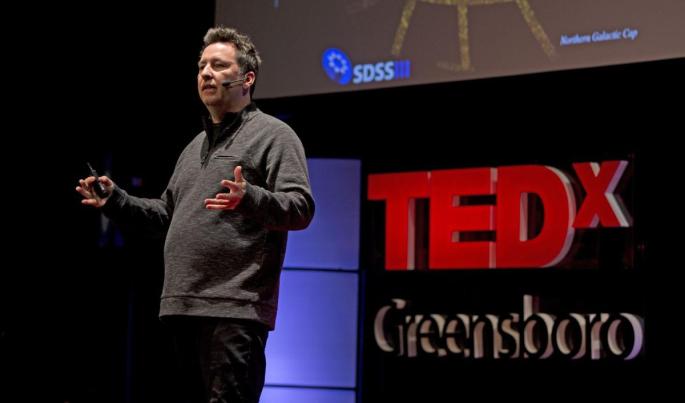
PHILLIP NOYCE: An Interview with Kent Hill

534074_2

One of the great things Phil told me – aside from passing through my hometown to play footy in his youth – was that Queensland had a big part to play in convincing the studio powers that Blind Fury (my personal favorite of Phil’s pictures) could be a hit.

After a regime change – as often is the way in Hollywood – the new brass didn’t have much faith in a film the previous caretakers saw fit to green-light. Phil knew he had a good picture and thus persuaded the powers to let him take it to the far side of the world and release it in the Sunshine State, where, with the help of a publicist, they sold the heck out of Blind Fury and brought in $500,000 buckaroos.

So Phil went back to the blokes in suits and told them if the movie can do that kind of business 7,510 miles from Hollywood, I think we have a shot. See that’s the Phil Noyce touch ladies and gentlemen, remaining Dead Calm in the face of Clear and Present Danger. If you believe that there is even a Sliver of a chance your movie can Catch a Fire, you can’t just sit there like The Quiet American and take it with a grain of Salt. You need to fix your courage to the sticking place, follow the Rabbit Proof Fence all the way home and for your hard work they’ll call you The Saint for being the The Giver of great cinematic entertainment. You can play Patriot Games till the cows come home, but if you attack them on the Newsfront then you’ll be The Bone Collector and bring home the receipts.

I’ve watched many a great interview and read many a great book about the life and career of Phillip Noyce – never thinking that one day I might catch a moment’s grace and be able to have a chat with him. I have to thank (again) a top bloke by the name of Nick Clement for putting in a good word for me – without Nick I’d still be dreamin’.

https://youtu.be/rgnlJ38ntQw

Phillip Noyce is a marvelous chap of the old school and the maker of some truly wondrous pictures. He really needs no introduction from me for his reputation speaks for itself. Without further adieu . . . the master . . . Phillip Noyce.

Space Operatic: An Interview with Stephen van Vuuren by Kent Hill

5ab434c5f2d77.image

I applaud anyone who makes their way on this crusade, some might say foolish crusade, to make a film. It can be a long, arduous, laborious. And thinking on that word laborious, now consider making a film that has to be stitched together using over 7 million photographs with animation techniques pioneered by Walt Disney on Snow White and the Seven Dwarves. No CGI. And I know that sounds sacrilegious in this day and age where a film without CGI is like a day without sunshine.

However, the film that Stephen van Vuuren has, albeit laboriously, constructed In Saturn’s Rings, is a unique master-work that is as beautiful and immersive on the small screen I watched it on as I can imagine it being played in its large format form.

Sparked by Cassini‘s arrival at Saturn in 2004 and the media’s lack of coverage, van Vuuren produced two films. Photos from space missions — including images of Saturn taken by Cassini — were included. But van Vuuren was not satisfied with the results so he did not release them.

stephen-working-studio-1

While listening to the Adagio for Strings by Samuel Barber one day in 2006, van Vuuren conceived the idea of creating moving images of Saturn based on a pan-and-scan 2.5-D effect. The technique involves creating a 3-D perspective using still photographs.

After discussion with audiences at IMAX conferences, van Vuuren decided the film title Outside In (the title of the short version) was not a good match for the film’s sensibility. The Giant Film Cinema Association had been publicising the film and surveys it conducted supported this. It was during a discussion in 2012 about the film’s climax where he was describing Earth “in Saturn’s rings” that van Vuuren realized he had found his new title.

Although narration had originally been removed in 2009, by 2014 van Vuuren realized that a sparse narration was necessary for the film. This amounted to 5 pages and about 1200 words in total. After listening to many voice actors one stood out and he asked LeVar Burton (Star Trek: The Next Generation) to be the narrator for the film.

The culmination of these elements, plus a lot of hard work, has resulted in something that is essentially more than a film. Like Kubrick’s 2001 which inspired him, van Vuuren has crafted an experience of what it may by like to drift through the far reaches of space to the planet that has always been the physical embodiment of his childhood fantasies. And I for one am grateful he stuck to his guns and made a movie that, even though it’s not a tale from a galaxy far, far away, it is the universe at its most wondrous…

“God wants you on the floor.” : Remembering Hoosiers with Angelo Pizzo by Kent Hill

3c05cbcd25d647509480b2fb6c04b151

It’s hard not to be romantic about the sports film. From classics like The Natural and Bull Durham to more modern efforts like The Blind Side and Moneyball. They range across all genres and all sports. Football (Rudy, Any Given Sunday), Golf (Tin Cup, The Legend of Bagger Vance), of course, Baseball (Field of Dreams, For Love of the Game) and in the case of Hoosiers, Basketball (Blue Chips, He Got Game). But Hoosiers, and I happen to share this sentiment, is one of the finer examples of the sports genre and is, for my money, the best basketball film ever made.

559438377_o.jpg

Now, I use the term sports film very loosely. Yes all of the aforementioned contain the listed sports as part of their narratives. But, the games are not really what lies at the heart of these tales. The true centerpiece are themes like redemption, romance, the search for self, the search for acceptance – all these things within the characters either as player, coach, fan etc.

1933d997c12688e5647d03693629694a

So why do I think Hoosiers is the best example of this genre? Well, it’s simple. Hoosiers has all of these working within it. Comedy, romance, drama, redemption, the search for self, the search for acceptance. Okay, so it doesn’t have a crazed Bobby De Niro terrorizing any of the players to feed his grossly misguided obsession and distorted view of the world – but that doesn’t mean that it lacks thrilling, intense and impactful moments that keep you watching and ultimately cheering for the underdog, the little team that could. One could argue that this is a key ingredient in these kinds of films. A down-on-his-luck former golf pro, a disgruntled former player trying to manage a failing team, a boxer with all the odds stacked against him or a basketball team from a town in the middle on nowhere that couldn’t possibly take on the big schools and win.

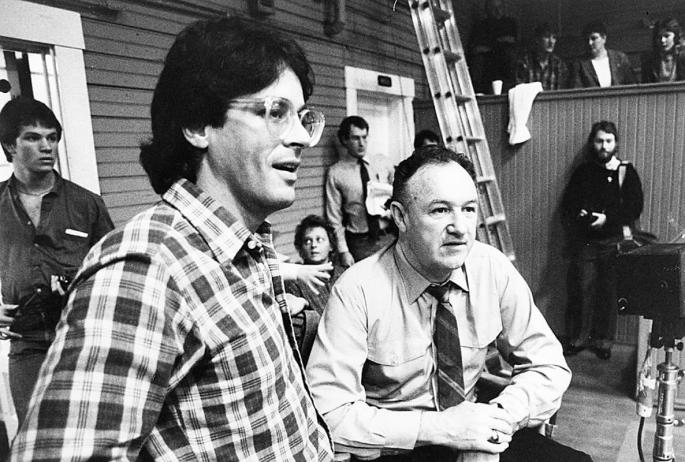
Then there are the characters – all looking for second chances. Hackman’s coach, Hopper’s alcoholic father, Hershey’s teacher. They all have something to prove, something to gain from the victories the home team are accumulating. And, they are all masterful turns by each of the three principals. Indeed from all concerned with the production. None more so than that of first-time screenwriter and my guest Angelo Pizzo.

The man who was headed for a career in politics eventually ended up going to film school. After graduating, and spending sometime working in the arena of television, Angelo felt the need, at last, to make a film about a subject he was passionate about – basketball. And, being unable to find writer for the project . . . well . . . he decided to have a crack at it himself.

This wonderful film, under marvelous direction, David Anspaugh, from a great script with a stellar cast and punctuated by a phenomenal Jerry Goldsmith score is a small miracle that has, not unlike the team portrayed in its story, taken on the giants and carved out its place in cinema history.

If you haven’t seen Hoosiers, I urge you to do so. Don’t get caught watchin’ the paint dry…

Bill Pohlad’s Love & Mercy

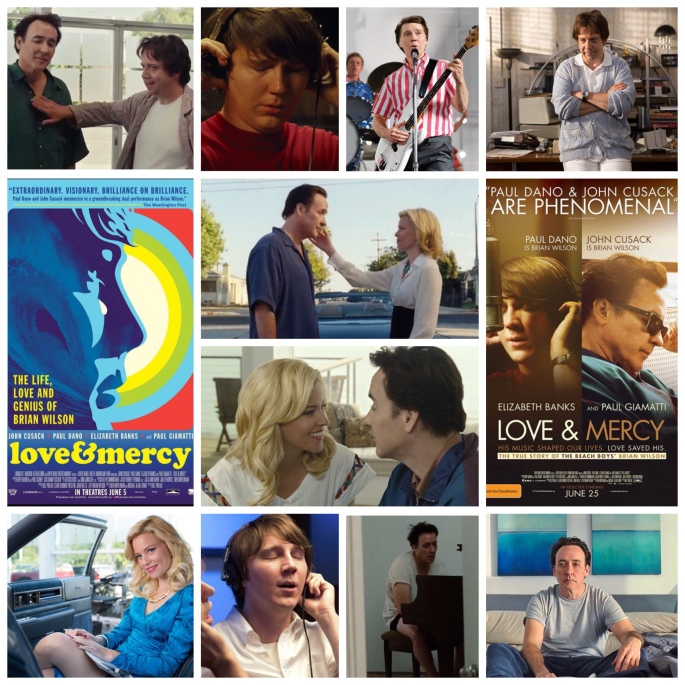
I’m not what’d you’d call a Beach Boys fanatic other than loving their most recognizable hits since I’ve listened to music, but Bill Pohlad’s Love & Mercy tells a story that just needs to be told and could grip anyone with its love, suffering, perseverance and genius, genius in the form of the band’s troubled but brilliant lead singer Brian Wilson, played here in a duo of encore performances by Paul Dano and John Cusack, both giving what may be the finest work of their careers. For those who are unaware (like myself before watching this), Wilson suffered a lengthy psychotic break that ran alongside a good portion of his career, brought on by many things including stress, fame and the ongoing psychological/physical abuse from his father (Bill Camp here), who did double duties as the group’s manager. Getting fully acquainted with rock bottom and finding himself alone later on in life, he was thrown from the frying pan into the fire when he went under the care of unconventional, deranged psychiatrist Gene Landy (Paul Giamatti, terrifying), and found himself victim not only to his own demons, but a new external one trying to take advantage of him. By chance he met kind Cadillac salesgirl Melinda Ledbetter (Elizabeth Banks), the two seem to have fallen in love almost instantly, and it took her kindness, patience and determination to save him from almost certain death in Landry’s nefarious hands. I’m going on the assumption that what we see here in the film is as close to the true story as possible, because the events are too specific and jarring to have been made up. Early scenes show Dano as a young, vibrant Wilson, hard at work on an experimental opus project that would eventually drive somewhat of a wedge between him and his band mates. The later segments with Cusack, interspersed via meticulous editing, are both a love story and a horror story, as we witness Melinda and him fall for each other, while lecherous Landy does everything he can to keep them apart. Giamatti plays the guy full tilt crazy, a dangerously obsessed scumbag whose actions are so damaging to Wilson that you want to cave his head in with a rock. Cusack is wonderful, putting quiet soul into the work and keeping the heartbreak and hurt of his former years on a dimmer so we don’t forget, but see a new, brave soul try to rise from the ashes. If this might be their best work, it’s certainly the case for Banks, I’ve never felt more connected to a piece of her work. She’s attentive, playful, compassionate and low key brilliant as Melinda, Brian’s rock, guardian angel and eventual love of his life. There are gaps in the story, as many of the no doubt horrific times are either left to our imagination or only suggested at, but that gives this unbelievable, all too true story all the more power. It’s inspiring, to see someone go through all that heartache and strife and come out of it still kicking. It’s also one of the most intelligent and empathetic movies to address the subject of mental illness in some time, using a compassionate, frankly implemented lens to tell Brian’s story and illustrate his complicated condition. Along with the obvious inclusion of many Beach Boys hits, some mid-composition, there’s a gorgeous original score by Atticus Ross that accents the emotional scenes between Brian and Melinda perfectly. One for the biopic books, and a story worth taking the time to listen to.

-Nate Hill

“Your name’s Baby? B-A-B-Y Baby?” – A Review of Baby Driver by Josh Hains

“You’ve never seen anything like Baby Driver before”, the major critics say, and everywhere you look online the average movie goer agrees to the tune of a $30 million dollar opening weekend haul. They’re right you know, you really haven’t seen *anything* (and I do mean a-n-y-t-h-i-n-g) like Baby Driver before. Don’t believe me? Keep reading.

Sure, we’ve all seen countless of westerns and crime thrillers where the main protagonist claims they’re done with that brutal life after the fateful “one last job”, only to get sucked back into that world like Michael Corleone in the Godfather Part III. “Just when I thought I was out…they PULL me back in.” That storyline seems to have been done to near death, hell, even Logan used it earlier this year, and yet here it is once again in a totally refreshed way.

We’ve seen intricate car chases before, like Frank Bullitt roaring down the streets of San Francisco with sly hitmen on his tail, or “Popeye” Doyle weaving through chaotic traffic trying to keep up with a a sniper aboard an elevated train (The French Connection), or Ryan O’Neal’s the Driver outrunning cops in hot pursuit of the thieves in the back seat of his getaway vehicle (The Driver). Don’t worry, I may not mention about a dozen other worthy titles, but they’re here in spirit. We’ve seen plenty of amazing car chases, but have you ever seen one synchronized to a song before? I didn’t think so.

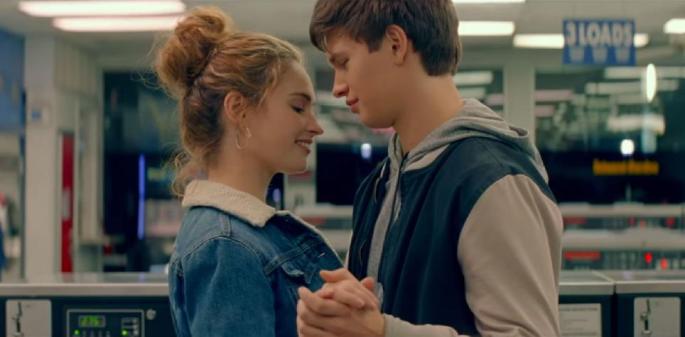
And we’ve seen many an A-list cast deliver snappy dialogue that Quentin Tarantino could bathe in, and the kinds of edgy, tongue planted firmly in cheek performances one might expect from a pulpy neo-noir fantasy conjured up by Tarantino himself. But just when we think we’ve seen it all, someone like Edgar Wright shows us we haven’t. baby_driver_ver15_xxlgBaby Driver follows the titular Baby (Ansel Elgort), a young getaway driver who works for Doc (Kevin Spacey) to pay off a debt he owes him for trying to steal his car years ago. Baby lives in a crappy apartment with his deaf-mute foster father Joseph (CJ Jones) while Doc makes a pretty penny using different crews to rob banks and post offices, including the unpredictable psycho Bats (Jamie Foxx), sexy couple Darling and Buddy (Eiza González and Jon Hamm), and Griff (Jon Bernthal), and Baby is always his lucky charm getaway driver. Baby has severe tinnitus from a childhood car accident which gave him a hum in the drum that he drowns out with an endless barrage of ear-worm inducing catchy songs, from The Commodores’ Easy, Barry White’s Never, Never Gone Give Ya’ Up, to Queen’s Brighton Rock, and yes, even a song or two with Baby in the title. I happen to have no less than six of the songs stuck in my head including Tequila by The Button Down Brass and Golden Earring’s Radar Love, thanks to a viewing of Baby Driver last night. I’m not complaining. Baby meets Deborah (Lily James), a sweet waitress working a cozy diner he frequents, and of course falls head over heels in love with the girl and vice versa. Baby wants out and fast, but alas, dirty work calls and he goes, but before he knows it things have gone south and fast, thrusting Baby into a desperate race to get outta dodge before things go from bad to way, way worse.

To say anything more about the plot would be downright stupid of me for obvious reasons, but especially because Baby Driver is definitely one of those “the less you know, the better” type movies, though not because of plot twists (though there are quite a few, and you probably won’t see all of them coming from a mile away), but because of the way Wright lets the entire movie unfold completely synchronized to that catchy, finger snapping, foot tapping soundtrack. Yes, the visuals timed with the music and how that affects you as a viewer overall is best left to the imagination, the surprise well worth the admission cost. The film opens quite magnificently with a heist that moves to the eclectic beat of The Jon Spencer Blues Explosion’s Bell Bottoms (Spencer himself has a brief cameo), with Baby singing and wildly groovin’ along in the car to the stellar tune before he pedals to the metal for the next several minutes to evade a rather large entourage of cops. It’s a fine example of the synchronicity I’m talking about, the masterfully blended fusion of stylish visuals, raw 100% practical stunts, and perfectly picked songs. It sounds good on paper, but it plays as wonderfully as any musical number in La La Land, and immediately sets the tone for the rest of the movie. A foot and car chase later in the film nearly had my jaw on the floor as I tried to wrap my mind around how Wright had so perfectly choreographed the entire thing. Of course, simply talking about this stuff doesn’t do it any justice, you truly have to see it to believe it. 

landscape-1491917013-screen-shot-2017-04-11-at-142420

By now you’ve noticed I haven’t critiqued Baby Driver in any way, and there’s a good reason for that: I can’t think of a single thing worth complaining about. I’ve run over the entire movie in my mind and there’s not one thing I saw in the movie that would register as a flaw of some magnitude. Nothing, not a single thing. A death sequence felt just a tad bit too silly, but is that a big enough complaint to warrant my bitching about it? Hell no, I forgot that ultra minor quibble while writing this review, so that can’t be that important to me. Does that mean Baby Driver is what you might call a perfect movie? Not necessarily, I know some people wish it allowed a deeper look into the psyche of the totem pole-esque Baby, some dislike the brief screen time of a beloved actor, and I’m sure others have nitpicks I don’t even want to think about…but from where I’m standing I don’t see why it couldn’t be classified “perfect”.  

Support original film making and go see Baby Driver the first chance you get, and don’t forget to buckle up, it’s one helluva wild ride from the very first second until the final frame snaps to black. baby-driver-movie-5.png

The Phantom Of The Opera: A Review by Nate Hill
image

I’ve never seen The Phantom Of The Opera on stage, so so I have nothing to really compare Joel Shumacher’s 2004 cinematic vision to, but I know that it was one of the most glorious and formative theatre going experiences for me, so much so that I think I probably went and saw the thing like eight times when it came out. I had never heard a single of Andrew Lloyd Webber’s music before then and had not a clue as to what the story was. My extant of Phantom knowledge at that point was only of a chalky faced, emaciated Lon Chaney Jr. skulking around a silent black and white frame.
   I was cosmically blown away by the magic of it, the story, the songs, the rich production design and especially the two elemental lead performances from Gerard Butler and Emmy Rossum. Again, no idea how the stage actors compare to these two, but Gerard and Emmy’s take on the Phantom and Christine are now scorched into my psyche as the definitive versions. Butler nails the formula perfectly: scary when he needs to be, tender when he wants to be and always a formidable force of dark romanticism and tragic damnation. Rossum is like an angelic comet as Christine Daae, with the best singing voice of the cast and a presence that will bring the viewer to tears and make you instantly fall in love with her.
   Christine works in the prestigious Opera Populaire as a chorus girl, until she is shunted into the limelight when their prima donna of a star singer (a flat out brilliant Minnie Driver) walks off in a huff. Rossum then proceeds to move heaven and earth with her rendition of ‘Think Of Me’, accompanied by some of the most incredible camera work I’ve seen, sweeping through the elegant halls along with her crystal clear voice.
   The mysterious Phantom watches her from dark alcoves and hidden buttresses, entranced by her talent and brimming with love sickness. He has love in him no doubt, but we all know there is hate there too, catalyzed by an unfortunate deformation and a cruel past that has left him in exile. He basically runs the show from the shadows though, with utmost class and heaps of theatrical menace.
   Christine also has eyes for her childhood friend Raoul (Patrick Wilson). Wilson is the only player who seems a bit out of his depth, perhaps because he hadn’t yet found the assurance in stride and charisma he has in his roles these days. Miranda Richardson is excellent as ever in an understated turn as Christine’s aunt and teacher. Jennifer Ellison is her friend and fellow singer Meg. Ciaran Hinds and Simon Callow are inspired as the comic relief duo who purchases the opera house, and watch for Kevin R. McNally as well.
  Every song is a winner, every frame composed of grandiose ambition and every ounce of vocal strength thrown forth by the cast, particularly Rossum and Butler who go a mile and then some, holding their own individual presence as well as pulling off the sorrowful chemistry between the Phantom and Christine. There’s a few key sequences that should go down in the history books on how to stage a scene, including a dazzling masquerade ball, a wintry swordfight in a cemetery, the aforementioned Think Of Me, and my personal favourite: a mournful black and white prologue set decades after the story, kicking the film off with a rousing flourish of motion and music. I’m sure there are scores of people who swear by the stage production and want nothing to do with this, or simply weren’t wowed to the levels I was. That’s fine. For me though, I don’t see any version ever topping this jewel of a film, and the classic two disc dvd sits proudly on my shelf, daring any other rendition, cinematic or otherwise to give it a run for it’s money.