Rob Reiner’s The Princess Bride


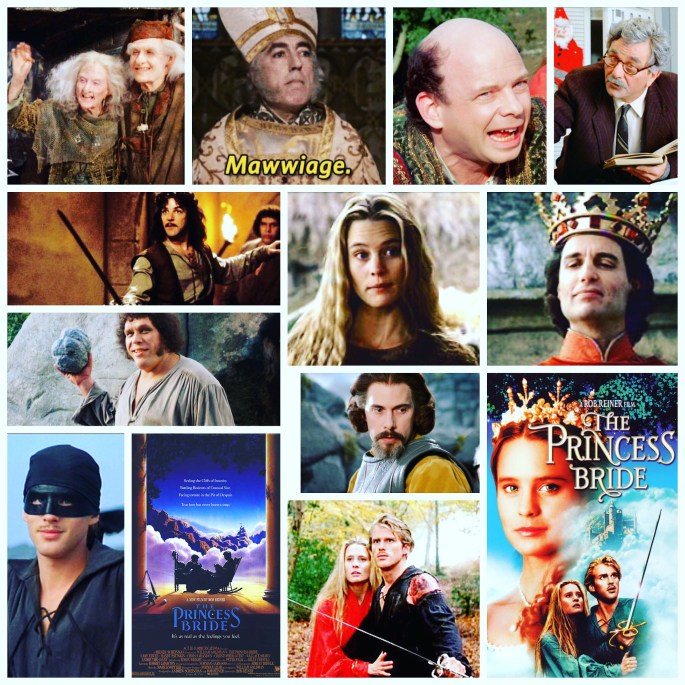
Rob Reiner’s The Princess Bride is so beloved and intrinsically bedded into our collective cinematic psyche that it’s almost less of a film these days than it is a lifestyle or cultural flourish, something that comes up in conversations as a given, an immediately relatable phenomenon in any dinner table banter or house party scenario. It also happens to be a great film in itself, full of instantly iconic idiosyncrasies and sincere storytelling that harkens back to the days of Grimm’s brothers and such. Populated by a pithily eclectic cast, and more than a few cameos, it’s a film one can watch as a kid all starry eyed at the fairytale intrigue, then revisit again as an adult and treat oneself to the raunchy bits we missed as youngsters. We all know the story so I won’t rehash it except to say that it’s the classic storybook fantasy given a decidedly more modern twist, especially with the dialogue. I’ll also add that it’s one of the few Hollywood fairytales to retain the grim, often perversely violent and scary elements that fables of olden times were known for. That water torture thingy (how does that work anyways?) used to scare the shit out of me as a kid, and who could forget the gruesome rodents of unusual size? Cary Elwes and Robin Wright light up the screen as Princess Buttercup and Wesley (he’s a lot more fun as the Dread Pirate Zorro Roberts though, isn’t he), on the run from evil Prince Humperdinck (lol) played by a preening Chris Sarandon, and his nefarious six fingered henchman (Christopher Guest) who slew the father of ruthless Spaniard Inigo Montoya (Mandy Patinkin), as we’re reminded sixty million times throughout. Damn, I said I wasn’t going to go all into plot, didn’t I? There’s just such a delicious host of characters running about the place, it’s hard not too. Andre The Giant scores as, well, a giant of course, Wallace Shawn is a scheming little shit who gets his comeuppance (inconceivable!!), Billy Chrystal shows up as a sort of goblin, looking like a walnut with cotton candy taped to it, and all this hooplah is read to a youngster (Fred Savage) home sick from school by a snarky Peter Falk, a la Neverending Story. It takes a special kind of film to earn endless revisits from us, the viewer, and be ushered into the exclusive classics club. This one should be used as example of how to flawlessly achieve those things though, via an engaging, smartly written story with actual tangible stakes, just the perfect amounts of humour and silliness, some darker aspects to pluck away at the morbidness in all of us, and of course a romance right at it’s core. Timeless. 

-Nate Hill

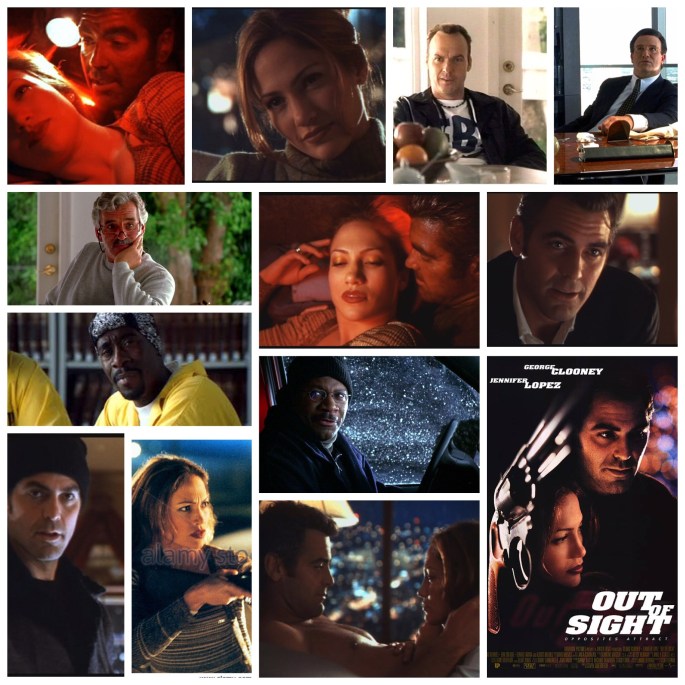
Steven Soderbergh’s Out Of Sight


No one does the breezy, goodnatured crime drama like Steven Soderbergh, and after rewatching his 1998 romantic caper Out Of Sight, I’ve realized it’s my favourite of his films by a mile. The easygoing love story between George Clooney’s hapless career criminal Jack Foley and Jennifer Lopez’s feisty federal Marshall Karen Sisco is a pairing for the ages, and the two not only smoulder up the screen with their obvious presence, but have effortless chemistry in spades and know how to sell the romance until you feel that tug on the ol’ heartstrings when the stakes are raised. It doesn’t hurt that cinematographer Elliott Davis beautifully frames each encounter with them, the best being a gorgeous airport dinner where the two croon out Elmore Leonard’s savoury, measured dialogue against a snow laden Tarmac outside, the perfect romantic ambience. Foley is a trouble magnet, embroiled in scheme after scheme with his older, wiser partner Buddy (Ving Rhames). After their dipshit pal Glen (a stoned Steve Zahn) gets them mixed up in a plot to rob a pompous Wall Street millionaire (Albert Brooks) via some truly nasty jailbird thugs from their collective past (Don Cheadle provides the film’s only true dose of menace amongst the charm), all hell breaks loose and against odds, Jack and Karen find themselves falling in love. Elmore Leonard’s scripts always seem to find their way to great directors (Barry Sonnenfield made magic with Get Shorty), richly varied casts (Jackie Brown is an ensemble for the time capsule) and end up as films that are simply timeless. Dennis Farina mellows out as Karen’s concerned ex-cop father, Luis Guzman does his grimy cholo rat shtick, and watch for Catherine Keener, Nancy Allen, Isiaah Washington, Paul Calderon, Viola Davis, an uncredited Michael Keaton playing none other than his Jackie Brown character (an Elmore Leonard cinematic universe!) and a surprise cameo right at the end that I won’t spoil except to say it sets up any potential sequels nicely. The whole deal rests on Lopez and Clooney’s shoulders though, and they’re nothing short of mesmerizing. It’s a rag tale romance, classy but down to earth, two beautiful souls from very opposite sides of the tracks who generate sparks and circle each other like cosmic magnets. Stuck together in the trunk of a speeding car, they discuss life, love and films, reminding us that no romance is alike to another and the best way to start off something like that is perhaps on the wrong foot and in the least imagined circumstances possible. Like any love story it knows that a pinch of sadness is necessary to balance the bittersweet recipe and tweak our emotions just right. A career best for George, Jennifer and Steven and a film worthy of classic status. 

-Nate Hill

In the footsteps of Schwarzenegger: An Interview with Peter Kent by Kent Hill

Error
This video doesn’t exist

Ever been mistaken for somebody famous? Someone ever come up to you sayin’, “Hey you know, you look a hell-of-lot-like (insert famous actor here). You could be his stunt double.”

peter

Peter wasn’t in Hollywood long before he heard about a little film being made called The Terminator. He went down and met with the film’s director, this young guy named James Cameron. Then, he met the film’s star, a chap named Arnold Schwarzenegger. Peter bore a striking resemblance to the man who would ever be Conan. It was after this encounter that would secure Peter a gig for the next 13 years as guy who made Arnie look as though all the rough stuff he endured on screen looked like a cakewalk.

Of course, along the way, Peter became a star in his own right; not only playing small roles in Schwarzenegger movies, but amassing an impressive list of credits in both film and television alongside his stunt work.

Peter_Kent-1200x687

Nowadays however, Peter is a contented family man and is equally as dedicated to training the next generation of stunt performers. And who better to learn from than one of the best. This was a great interview with tales of life with Arnold, fighting over the channel changer with Jesse Ventura and having a beer with Charlton Heston.

So dear PTS listeners I give you a chat between two Kents. And no, I’ve never been mistaken for Peter.

Enjoy . . .

$T2eC16N,!zEE9s3!Wpb9BSC1PBFbfQ~~60_35

(FOR MORE ON PETER’S STUNT SCHOOL FOLLOW THIS LINK: http://peterhkent.com/1school.shtml )

Tales of Enchantment, Aliens, Arthurian Legend and the Lone Ranger: An Interview with Edward Khmara by Kent Hill

Error
This video doesn’t exist

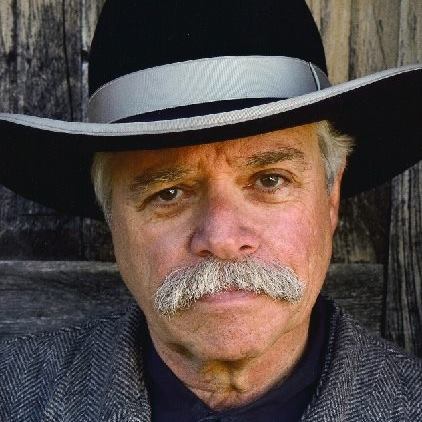
Edward Khmara grew up in California and had the desire to become an actor when he sold his first script and his career was set in motion.

20953522_10155553866626092_7928168128293857562_n

It was not the first script he’d written, but he was the one that got him noticed. It was a little film called Ladyhawke. But, as all first-time screenwriters know, once you make that sale, you have very little input into the journey your film will take from there.

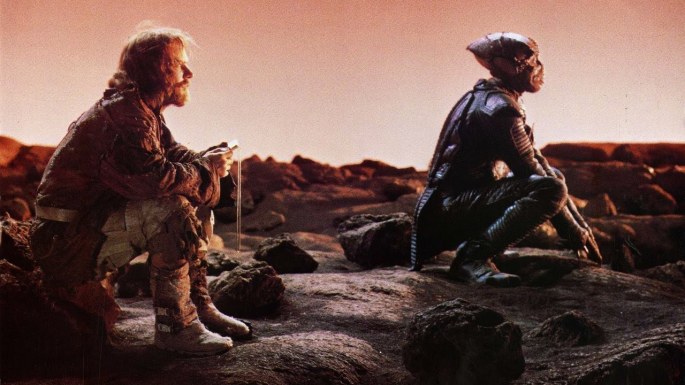
Still, now a screenwriter, Edward would go on to pen one of the truly great, often forgotten gems of the eighties, Hell in the Pacific in outer space: Enemy Mine. This time he would right in the middle of it all. From being on set, to being invited to watch dailies, to having to comfort his daughter after her terrifying encounter with a completely transformed Louis Gossett Jr. in his Drac make-up.

Like most folks who have worked in show business, Edward has known the lows as well as the highs. But those negative experiences didn’t discourage him as he charged ahead, tackling to legends. One in the form of a lavish television production with an all-star cast; Merlin would be the telling of Arthurian days solely from the perspective of the mythical wizard. Then of course there would be his work on the retelling of the life of another legend, one who achieved this status during his own lifetime, Bruce Lee.

But one of the truly heart-warming moments of our conversation was chatting with Edward about him finally getting his shot at the profession he sought after before he took to the typewriter – his part in Gore Verbinski’s Lone Ranger.

A true gentleman of the old school, full of great tales and tremendous experiences – it was a real pleasure to interview him and now to present to you my conversation with the legendary screenwriter (and sometimes actor) Edward Khmara.

HE IS NED: An Interview with Max Myint by Kent Hill

2015 was the year. I was in Brisbane, Queensland, Australia at our version of San Diego’s Comic Con: SuperNova. I was there peddling my books but, in the booth next to mine, something amazing was afoot.

A giant banner held the image of the famous, or perhaps infamous Australian bush-ranger Ned Kelly; transformed and repackaged as vigilante, looking battle-damaged and bad-ass holding the severed head of a zombie in one hand and a loaded pistol in the other.

21462269_523374954669770_8595548598230947278_n

That image invoked more than history and cultural iconography. It spoke to me as a concept so simple, yet compellingly cinematic. He is one of our country’s most treasured pieces from the past in a fresh guise and pitted against a dark, futuristic dystopia where the undead have evolved and formed a society in which humanity is not only a minority, but is being systematically wiped out.

Max Myint leads the creative team, spearheading, if you will, the rise of this epic saga of the man called Ned. A talented writer, sculptor and world-builder, the gutsy, gritty dark realm that he has helped usher in is about to explode on November 10. In the midst of the stench of rotting flesh and the searing of metal is something that commands attention. I for one can’t wait to see Ned’s rise and rise continue, and Max and his talented team blast this thing out into the masses . . . and watch it catch fire.

The living have surrendered…

Except for one man…

They call him Ned!

https://www.facebook.com/Iamnedcomic/

https://podcastingthemsoftly.com/2016/08/04/not-yet-a-major-motion-picture-but-hopefully-one-day-an-interview-wit-the-creators-of-the-man-they-call-ned-by-kent-hill/

Encore’s The Take 


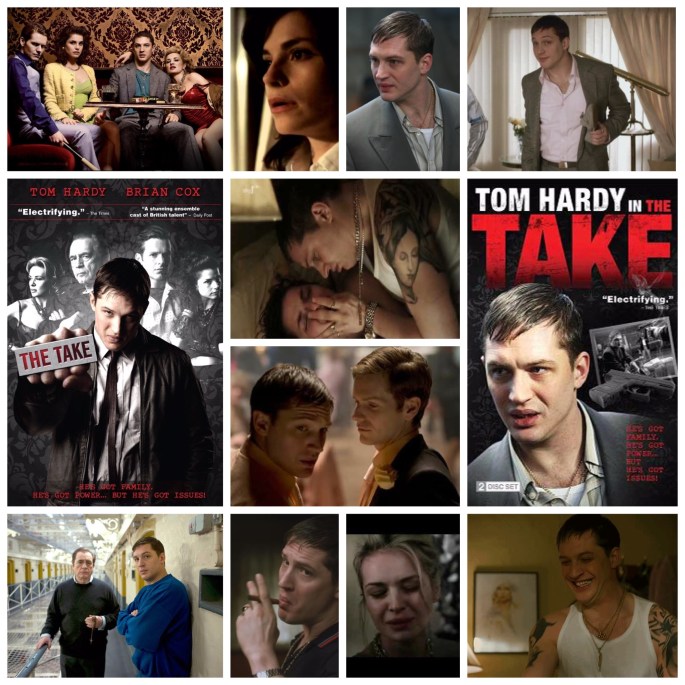
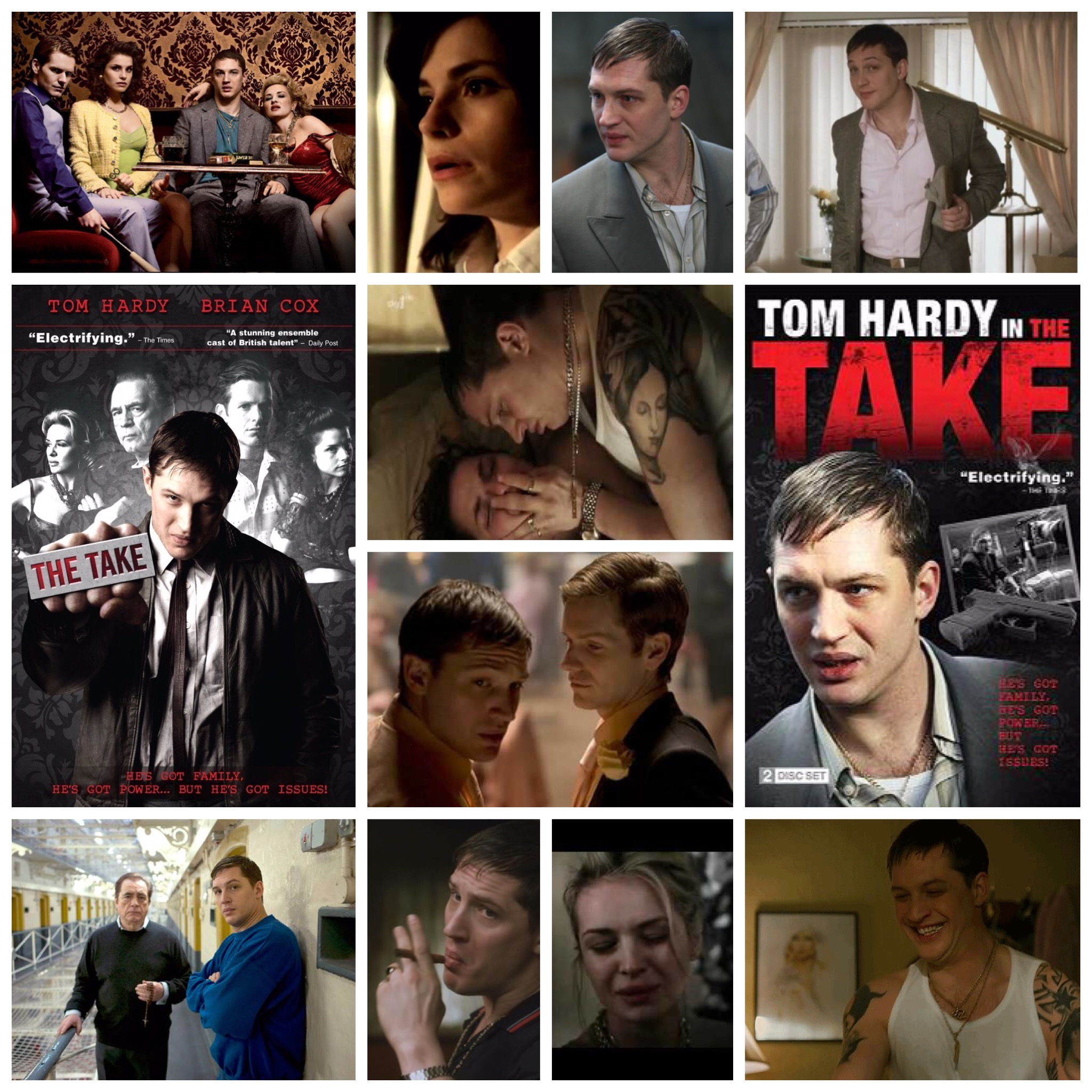
If you’re like me and were a fan of Tom Hardy before he blew up on the front page of Hollywood (I’ll willingly don the hipster mantle for certain areas of film), you’ll know about The Take, a brutal British produced miniseries chronicling the fall from grace of a severely dysfunctional London crime family. Hardy is Freddie, a sociopathic freak fresh out of the joint and ready to wreck havoc whilst the clan’s nasty patriarch (Brian Cox, never not a scene stealer) remains locked up. Freddie’s younger, more timid brother Jimmy (Shaun Evans) gears up to seize the reins of the ol’ family business, but the biggest obstacle in his path is Freddie, who seems intent on soaring down a violent path of self destructive, damaging behaviour, lashing out at friends, enemies and even family until the whole deal resembles some Macbeth-esque family showdown. Their two respective wives (Charlotte Riley and Kiersten Wareing are pure dynamite) get caught up on this unholy mess and it soon becomes clear that no one will make it out on top. It’s a nihilistic piece that exists seemingly as a dark, misanthropic soap opera or an instruction manual on how to fuck up everything in one’s life, and in that luridness it succeeds brilliantly. Hardy showed continuous sparks of budding talent early in his career, and his work here rivals even that of his heralded turns these days, his Freddie is truly a rotten bastard and a sadistic no good monster who brings death to all around him. A beatdown and a half of a watch, but worth it for lovers of tough, thoroughly downbeat crime television. 

-Nate Hill

JJ Abrams’ STAR WARS: THE FORCE AWAKENS

There are three types of people. Those who have an undying love for anything and everything Star Wars, those who have a legitimate beef with the unintentional ramifications that Star Wars brought to the fertile era of 70s cinema, and then there are the overly pompous people who parade around “liking” the original trilogy yet scoffing at minute aspects of THE FORCE AWAKENS. The third type of person is a fictitious amalgam of what people loathe about other people.

What JJ Abrams, Lawrence Kasdan, and Kathleen Kennedy did with the seventh entry into the Star Wars saga was establish a whole new world of Star Wars films. Some arguments against TFA are understandable, but after decades Abrams was able to construct, shoot, and assemble a film that looks and feels like it belongs, wholeheartedly, in the saga canon. Ultimately the job of directing a Star Wars film isn’t that sexy, their artistic freedom is monitored, but it’s up to that person to hit the marks that George Lucas set with the first film, and JJ Abrams achieves that in a way makes it hard to think anyone else could do a better job.

THE FORCE AWAKENS follows a template, just like THE PHANTOM MENACE before it. It’s A NEW HOPE but in a different era with some of the same characters. Anyone who walked into the film expecting something other than a Star Wars Saga film would be better off searching the deep web for some obscure Russian film from the 1970s that they can discuss in a vapid and obtuse way. Star Wars is Star Wars is Star Wars. There’s the light side. There is the dark side. There are TIE fighters and X-Wings, and there are space aliens that make witty zingers. Oh yeah, and there’s a Death Star.

Abrams assembles a diverse cast that is inspired organically. There wasn’t a mission to check boxes of ethnicity or gender. He found the right people that were born to play that part. The new cast is simpatico with returning cast members of Mark Hamill in his ultra brief turn, Carrie Fisher in what is now a very bittersweet performance, and of course Harrison Ford as the ultimate space cowboy.

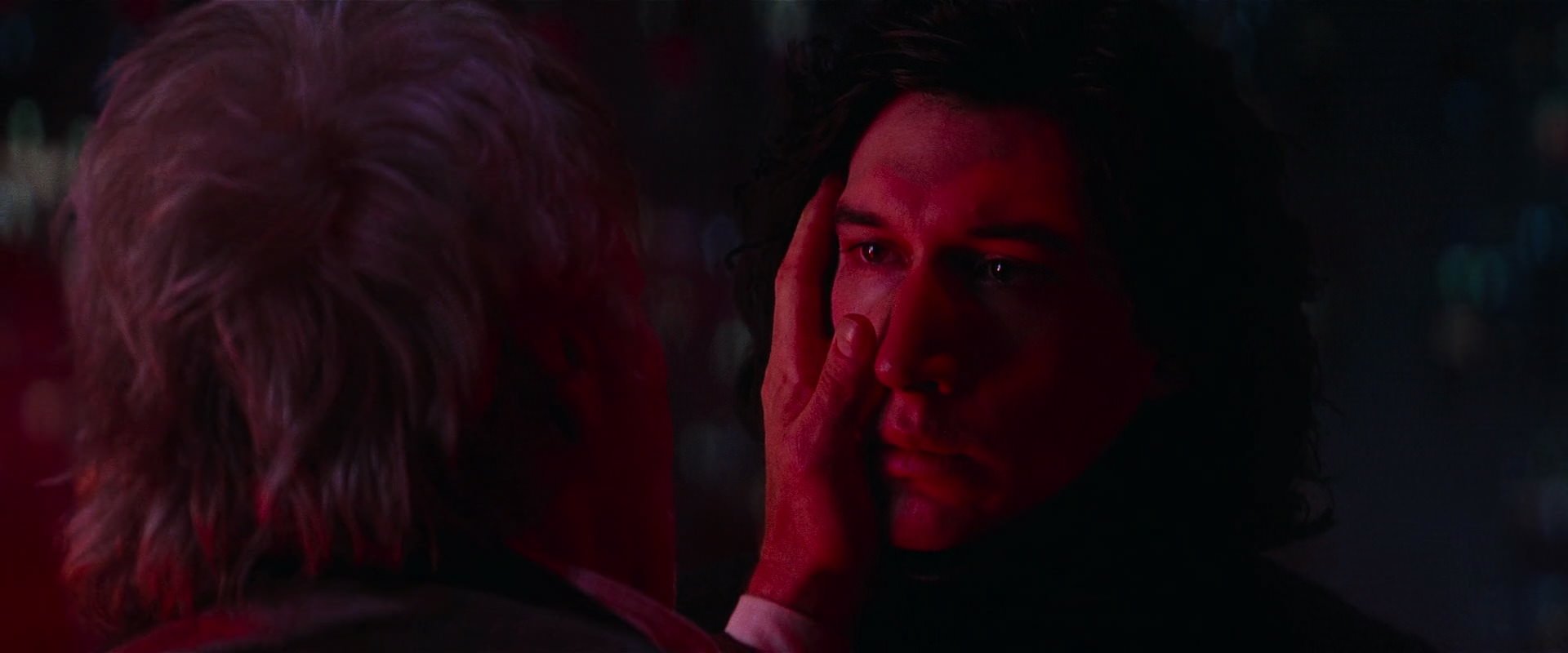
Ford brings everything as he has to his final turn as his seminal character in a career stocked to the brim with so many memorable characters and franchises. With help from Abrams and Kasdan’s script, Ford takes on the Obi-Wan esque role. Ford is perfect. He’s funny, he’s smarmy, he’s hopeful, and he’s everything you’d want Han Solo to be all these years later and more. For those who fall into the first group of people, watching Han Solo die is one of the most heartbreaking moments in cinema history. Ford’s build up; his gruffness wrapped in his sentiment and nostalgia completely sells his demise in the most beautifully tragic way possible. It’s near maddening that Ford wasn’t nominated for Best Supporting Actor.

There is a mixture of practical effects and CGI, much like the prequels. And then there’s BB-8. The new fan favorite that is an encompassment of R2-D2’s sassy personality and an ultra cute design and color scheme. It’s rather impressive how instantly beloved and welcomed BB-8 was, and after seeing the film, it’s incredibly hard not to fall hard for that little whirling dervish of love.

The picture excels on nearly every level, and if it weren’t so quickly followed up by the excellent ROGUE ONE, there wouldn’t be as much shelf wear on the film. The film is vibrant as it is dreary. Abrams not only acknowledges the prequels, he embraces the aesthetic. He mixes the original trilogy with the prequel trilogy to create his own, and predominantly new world of Star Wars. The film isn’t without some minor hiccups and narrative issues, but this isn’t the new film by Martin Scorsese. It’s Star Wars.

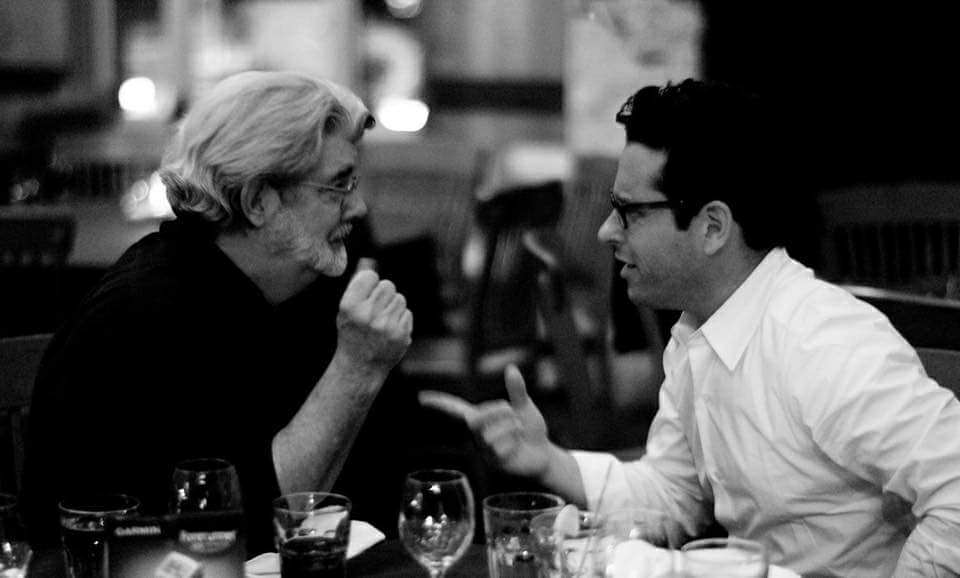
Star Wars saga films are built on nostalgia. Star Wars is nostalgia for many. And while Lucas isn’t part of the Star Wars universe moving forward, Abrams has more than proved himself as a worthy supplement. He’s inherited the mantle of Lucas, and he’s helped construct the joy of Star Wars for generations to come. What’s so ironic are those who hold such an obnoxious contempt for Lucas, yet are rabid for the new dawn of Star Wars. Those who consistently beat the drum of talking in circles to those who are as like(narrow)minded as them, that will bend over backwards to suck any joy they can out of anyone who praises Lucas. You know, the guy who created everything in the first place. Leave George Lucas alone, without him you’d have nothing to complain about and would have saved a lot of money.

NICK’S NOTES: JOHN MADDEN’S MISS SLOANE

2

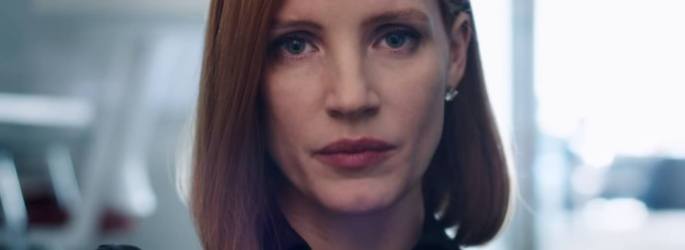
Miss Sloane is an entertaining movie, despite the fact that I never fully believed all of what debut writer Jonathan Perera and veteran director John Madden were selling. Jessica Chastain anchors the cast, with a more robotic performance than I’m accumstomed from seeing from her; maybe it was the (purposefully?) stilted dialogue that felt awkward? The film felt Sorkin/Mamet-lite, and while I definitely admired the abundance of intense sociopolitical speechifying that was on display, the entire piece played more like a Hollywood concoction than the morally ambiguous insider-politics drama that was likely intended. Still, the film has some brains, it’s got some icy-cool style, and Chastain looks striking in her hard-red make-up, heels, and business suits. The strong supporting cast including Mark Strong, Sam Waterston, John Lithgow, Gugu Mbatha-Raw, and Michael Stuhlbarg all help to push the material over with class and integrity. Madden has had an odd career, definitely inconsistent but peppered with some strong efforts (I really like The Debt and Mrs. Brown, and his adaptation of Proof is underrated), and while Miss Sloane is eminently watchable, it never blossomed into the movie that I was hoping it would. Available on Blu-ray/DVD and via various streaming providers.

1

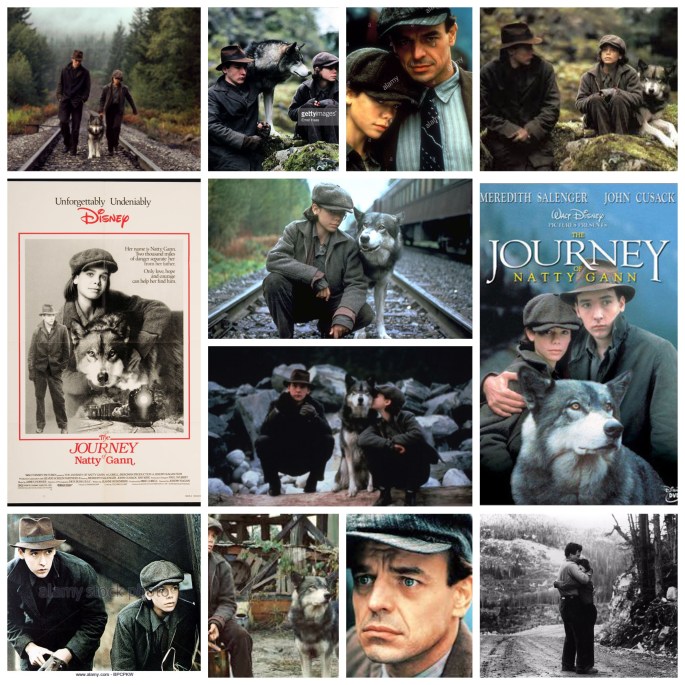
Disney’s The Journey Of Natty Gann


It’s neat to think that Disney would take a chance on something as grim and risky as The Journey Of Natty Gann, but they green-lit it and allowed a wonderful story to come alive. Set during the Great Depression and focusing on themes of abandonment and loss, it’s hardly the studio’s milieu, but they’ve proudly stamped their seal on it and I consider it to be one of the best amongst their live action output to date. Starring a terrific Meredith Salenger, it tells the tale of a young girl who’s separated from her father (Ray Wise, brilliant as ever) after he takes off to a logging job elsewhere in the country. Faced with life as an orphan or worse, Natty makes an epic trek across the dilapidated, economically gutted states to find him. It’s got all the trappings of a syrupy, run of the mill Disney outing: dog/wolf cross sidekick etc, but it really manages to find the danger, fear and loneliness she faces in a country that has gone to all hell everywhere she looks, and let the pathos come naturally out of how she fights her way through each new situation. John Cusack is great as a train hopping rambler who joins her here and there, his mopey doglike visage fitting right into the 30’s hobo shtick uncannily well. Salenger is a strong and fierce leading lady, the strife she sees around her echoed in her haunted face, emblazoned also with hope for the future. Filmed entirely in my home province of British Columbia, the film is beyond gorgeous to look at, the sooty grime of a looming industrial wave accented by the burnished greens and crystal waters of the region. This is sort of a forgotten Disney film, it wouldn’t be right up there on someone’s collection shelf or sitting near the front of the rental queue online, but it’s more than worth checking out, and considered a classic by me. 

-Nate Hill

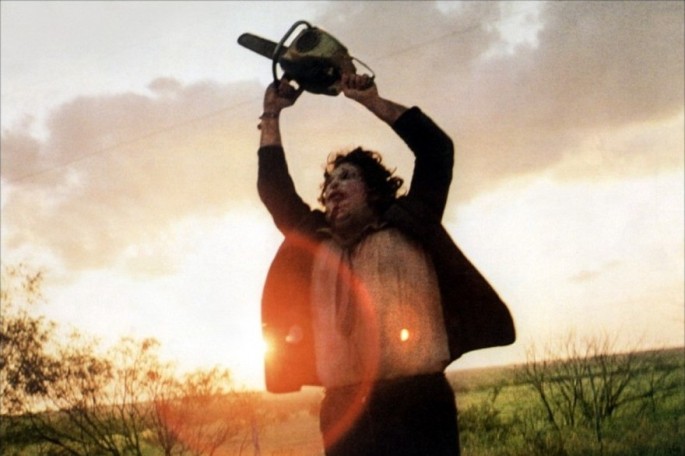
In Memoriam: Tobe Hooper’s The Texas Chain Saw Massacre

7779506870_leatherface-le-tueur-terrifiant-de-massacre-a-la-tronconneuse

The cinematic world was deeply saddened by the passing of Tobe Hooper in late August.  Responsible for some of the most iconic American films in the horror genre, Hooper’s legacy will always be remembered for pushing boundaries and using ours fears as a means of self-reflection.  This week, Ben and Kyle sat down to discuss Hooper’s masterpiece, The Texas Chain Saw Massacre.

BEN:  Like many classics, I’m sad to say that this is yet another film that I had not previously seen. Despite it being the father to so many other films, whether horror, sci-fi, thriller or a combination there of, Hooper’s film looks every bit his $300,000 budget and even more.

KYLE: Wait, you’d never seen it until now?  Why did you wait so long!?

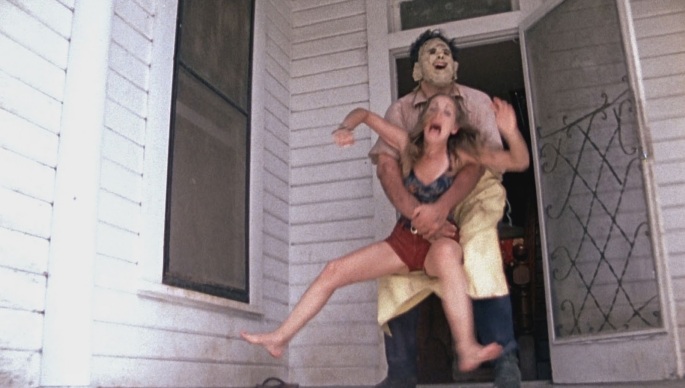
Ben:  I can’t honestly answer that.  I really didn’t gravitate towards horror films when I was a kid.  Even as an adult, slicing people with knives or razors still creeps me out.  Which is why the sequence in the van when they pick up the hitchhiker works so very well.  Edwin Neal played ‘freaked out’ to the hilt, but it was the close quarters of the van and Daniel Pearl’s camerawork that really make the magic happen.  And that was Tobe Hooper’s gift. His film is shot and edited in such a way that it makes you think you’re seeing more than you actually are; the mind plays tricks on you.

KYLE: Absolutely.  It’s part of the film undeniable charm.  From the first shot, you know you’ve waded into a greasy pit of hell.  I love that you mentioned the close quarters.  Paranoia is an important part of this film, both from the experience the characters endure and in how America was feeling at the time.  The country was still reeling from Vietnam and I think that is why it was so popular.  That and the outstanding cinematography and editing.
la-matanza-de-texas-2

BEN: The technical achievements aside, this film is torture porn with bits of voyeurism if I’m not being too blunt. Sally’s screams uttered from Marilyn Burns were ear piercingly jarring, but they were effective.  Paul Partain probably had the more difficult roles as a paraplegic, but his acting got on my nerves towards the end of the film.

KYLE: I like how it switches between presumed violence and voyeurism depending on the situation.  It’s somewhat tame by today’s standards and yet, it’s unrelentingly bleak without being a complete downer.  A lot of modern horror comments on the darkness within everyone where Hooper was more interested in exploring a darkness that is almost inhuman.  Again, perhaps it is a comment on the place where the nation was at during filming?

BEN:  Oh, I very much liked the framing using the graphic news clips to place you in the middle of everyday life throughout the United States in the mid-1970’s.  More specifically, the use of a grave robber was creepy enough.  Young college-aged kids were more apt to be adventurous, which is why they picked up the hitchhiker with such ease.  And yet, they were skeptical.

KYLE: That is a great point.  It’s interesting how this is the proto-slasher and yet, it has a lot of qualities that are outside the niche genre, specifically with respect to the kids being skeptical.  I also enjoyed how sexuality was underplayed.  It is part of the world, but not the focus.  While the 80’s was filled with a lot films who used sexually charged victims as bait for the underage VHS generation, this is a smart film, both in its handling of violence and treatment of its subject matter.
TTCSM-2

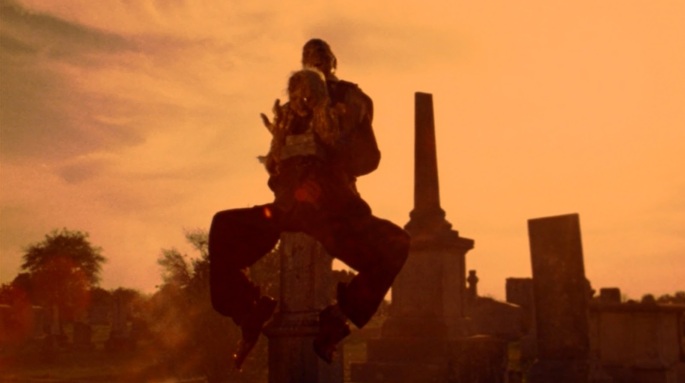
BEN: Alan Danzinger as Jerry, William Vail as Kirk and Teri McMinn as Pam were effective at helping to convey the free-spirited nature of the times; it was almost like looking at a time capsule.  It helped that Hooper and Kim Henkel’s script incorporated the news clips I mentioned earlier.

Despite the marketing and the opening monologue by John Larroquette, this was not a true story. Hooper admitted that his inspiration for the story elements reflected the distrust of the government including Watergate, the 1973 oil crisis, and Vietnam. The character of Leatherface and some of the plot details were based on serial killer Ed Gein.

KYLE: This is the heart of the film and the reason I think it retains its legendary status decades later.  The best films are often reflections of their time and TCM is a great example of one of the many things that can be birthed in the midst of a counterculture revolution.

BEN: Gunnar Hansen had the unenviable task of playing Leatherface, someone who had to thrash about the frame while trying to project his character’s intentions at the same time.  One might think it would be easy to use a chainsaw to point in a direction. Without motivation, there’s no pointing.

KYLE: And the chainsaw almost killed one of the cast members!  Almost every cast member was injured during production.  Marilyn Burn’s costume was so drenched with blood it had completely stiffened by the time they wrapped.  It’s details such as this only enhances the film’s notorious mystique.

Marilyn-Burns-texas-chain-saw

BEN: I found it interesting that Hansen took the time to get his inspiration from special needs children, learning their movements, which Hooper keyed in on.  The house in Round Rock, Texas plays as much as role in the film as the other characters.  Who ever thought that a farmhouse with a white picket fence could be so menacing?  Robert A. Burns’ art direction added the textures that bring the house to life.

KYLE: Absolutely. The film presents an idea of a hidden, haunted American backwoods filled with all manner of horrors, all of which are human.  Fear, when distilled through our own world is the most potent brand imaginable because the audience already knows the world is a dark place.  Hooper’s masterful understanding of this and using it as a weapon against the unsuspecting is just one more ingredient in a perfectly tainted recipe.

BEN: The local Alamo Drafthouse here in Phoenix screened it, in honor of the late Tobe Hooper.  They had a DCP, but it looked like I was watching a 35mm print, it looked that good. I was surprised to learn that Hooper used 16mm film, which explains the harsher look. Massacre is a stunning technical achievement for its budget. Between the editing by Larry Carroll and Sally Richardson, Burns’ use of real rotting carcasses, and Pearl’s stunning cinematography, Tobe Hooper’s film is a tribute to the cast and crew’s dedication.  I would definitely revisit this film again.

KYLE: It’s one of my favorite films of all time because it shows that a big budget isn’t required to make an influential film that continues to hold up.  Hooper’s guerilla tactics behind the camera congealed with a thrilling ensemble and unspeakable visuals to create one of the most important horror films ever made.

Ben and Kyle would like to thank you for continuing to follow their conversations.  Join them next week as they discuss their favorite Jennifer Lawrence performances in honor of the release of Mother!.
tcm-title