Martin Scorsese’s The Departed

Martin Scorsese’s The Departed is like being at a frat party where you slowly begin to realize that every other person there is an irredeemable asshole, but they’ve somehow strung you along with charm and charisma thus far. Like a nihilistic den of wolves where everyone involved is out to get each other, its quite simply one of the most hellbent, devil may care, narratively self destructive crime flicks out there. I admire that kind of reckless abandon in a huge budget Hollywood picture with a cast so full of pedigree it’s almost like The A list agencies just packed up all their talent in a clown car, drove it to South Boston and turned them loose on the neighbourhood. By now you know the fable: Two roughnecks, one a mobster (Matt Damon) who has infiltrated the state police, the other a deep cover operative (Leonardo DiCaprio) who is posing as a crime figure. Both are are intrinsically connected to Boston’s most fearsome gangster Frank Costello, played by Jack Nicholson in a performance so balls to the wall one almost feels like his 89’ Joker ditched the makeup and left Gotham for Southie. He’s a calculating maniac who openly mocks the veteran sergeant (Martin Sheen) putting in every effort to take him down, and rules over his vicious soldiers (Ray Winstone is a homicidal bulldog and David O’ Hara gets all the best comic relief) like a medieval despot gone mad. At well over two hours, not a single scene feels rushed, drawn out or remotely dawdled, there’s a breathless tank of violent machismo and wicked deception that never runs out, as the artery slashing editing reminds you every time it cuts to a new scene before the soundtrack choice has made it past the intro. The supporting cast has work from the gorgeous Vera Farmiga as a sneaky cop shrink, Anthony Anderson, James Badge Dale, Kevin Corrigan and more. Mark Whalberg also shows up to do the bad cop routine in a role originally meant for Denis Leary, and as solid as he is I kind of wish old Denis took a crack at it because you can obviously see how perfect he would have been, and is the better actor. As much as Jack Nicholson eats up the spotlight and chews more scenery than the T-Rex from Jurassic Park, my favourite performance of the film comes from Alec Baldwin as the head of the police tactical team. Spouting profanity like a fountain, slamming Budweiser as he swings his 9 iron and kicking the shit out of his employees, he’s a mean spirited, violently comical force of nature and I fucking love the guy. Scorsese has clearly set out to not deliver a heady message or lofty themes here as some do with crime epics; the characters all operate from the gut, use animal instinct and never pause to ponder or pontificate. The only message, if any, is the oft spouted ‘snitches get stitches’ as you can clearly see by the film’s final shot, also the only frame containing anything close to a metaphor. I admire a film like that, and certainly enjoyed the hell out of this one.

-Nate Hill

Bob Rafelson’s Blood & Wine

Bob Rafelson’s BLOOD & WINE operates as the capstone at the end of a neo-noir resurgence in the 90s. Cut from the same whiskey and blood-soaked cloth as James Foley’s AFTER DARK, MY SWEET and CITY OF INDUSTRY the hard-lined revenge vehicle for Harvey Keitel; BLOOD & WINE is about lust, greed, and revenge set in the smoky backrooms and emptiness of decaying wealth.

Image may contain: one or more people and closeup

Rafelson assembles a marvelous cast that is able to navigate in and out of the faux royalty and seedy underbelly of Miami. Jack Nicholson, in his fifth and more than likely final collaboration with Rafelson, plays Alex who is a high-end wine salesman with maxed out credit cards and a marriage that is imploding. Nicholson brings gravitas and menace and he transitions it in a very low key way, he’s a stalled out businessman and worn out salesman who is looking for a way out.

Stephen Dorff and Judy Davis are his packaged deal, makeshift family. Dorff as his stepson, and Davis his codeine induced wife who is self-medicating her way through the last rung of their marriage. Jennifer Lopez, in one of her earliest performance, plays the love interest to both Nicholson and Dorff, which creates a rather rich and perverse subplot.

Image may contain: 2 people, outdoor

Michael Caine gives one of his most underappreciated performances as Victor, a tuberculosis-ridden master thief who pairs with Nicholson to rob his most affluent wine client. Caine is remarkable in this picture, playing a man with little left to lose, who springs to life with terrifying intermittent bursts of rage who refuses to die without pulling others down to Hell with him.

Rafelson, whose career never quite rebounded from his landmark 70s pictures, constructs a very moody and treacherous film that lives in a world of double and triple crossing, a film plentiful of smoke absorbed pastels and cutthroat men navigating a world that has left them behind. The film can be frustrating for some because the ax never falls from the shadow, it stays in its place the entire film, even though the final frame. Which is the trick of the film, the ax doesn’t fall, it stays tightly in its place, and allows the story to continue even after it is over.

Tim Burton’s BATMAN

Image result for batman 89 poster

Frank is joined with filmmaker and recurring Podcasting Them Softly co-host, Derek Wayne Johnson to discuss one of their favorite films, Tim Burton’s BATMAN. Derek also speaks on his current projects in post-production, STALLONE: FRANK THAT IS and his documentary on the original ROCKY.

Tim Burton’s Batman

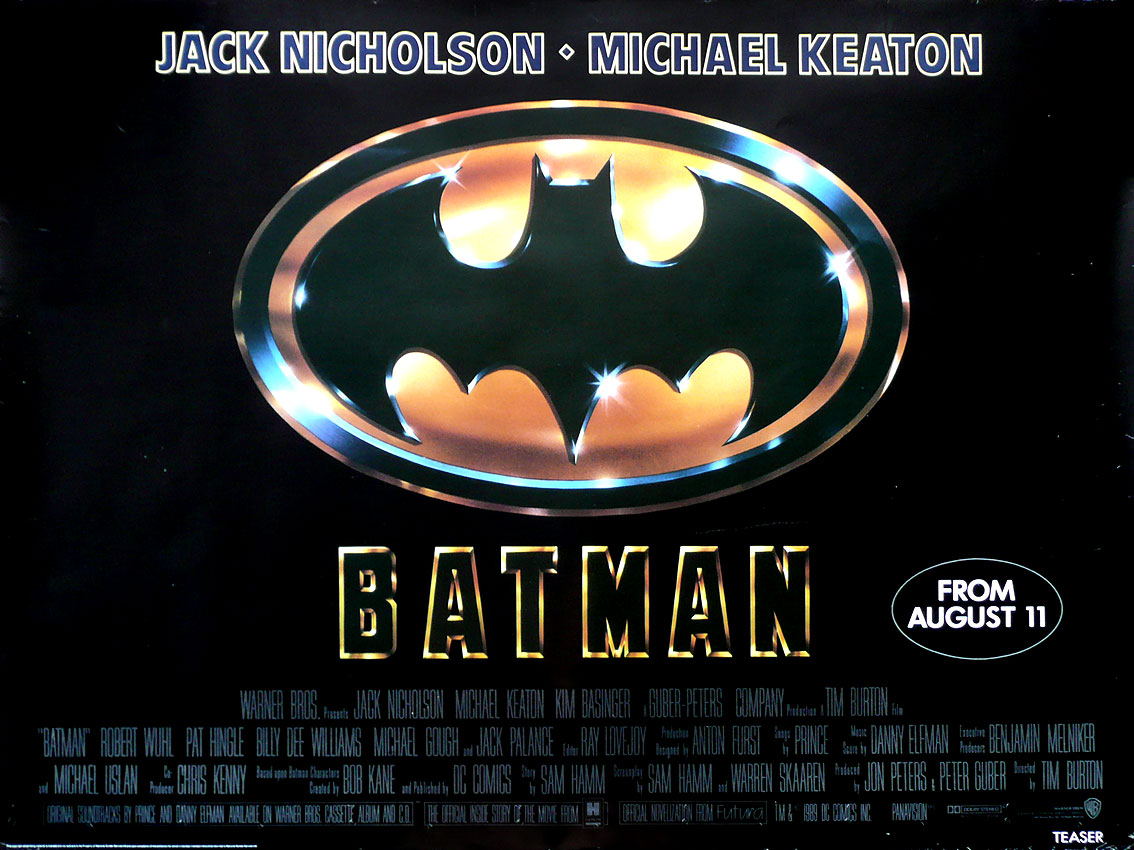
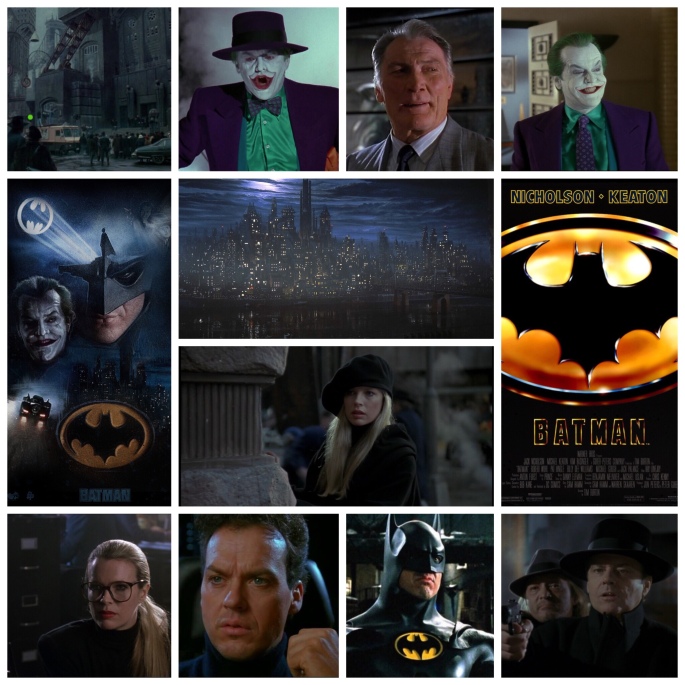
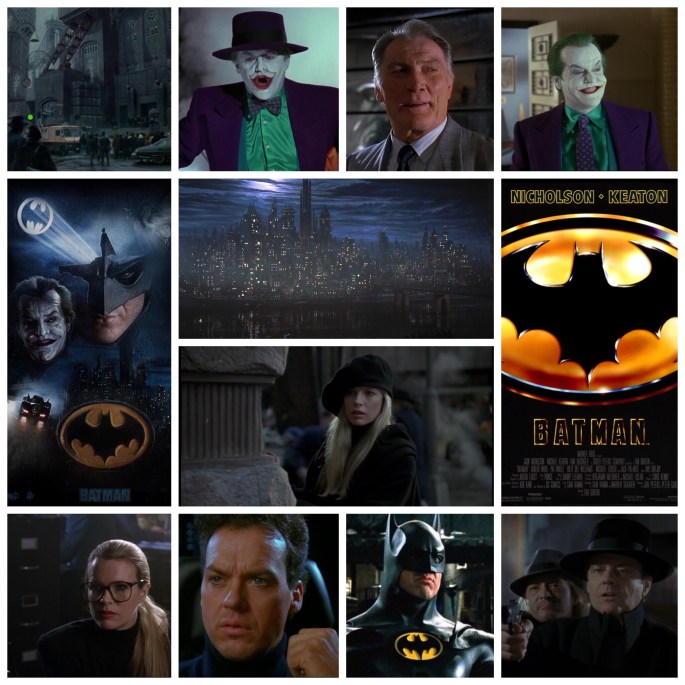
Tim Burton’s Batman has to be of one of the most unique caped crusader films ever made. One villain, where in every other outing there’s a handful. A Prince soundtrack. The craziest gothic production design this side of Fritz Lang’s Metropolis. It’s one of my least favourite in the string of cinematic Batman films, probably falling somewhere under Nolan’s efforts and Burton’s superior sequel Returns, but that doesn’t mean much because on it’s own terms, it’s really something special. The aesthetic employed here is important not just in comic book films but in the realm of special effects in general. Burton carefully composes a world that reminisces on the grainy Hammer horror movies of the 50’s and infuses that with the stark trench coat noir from 30’s gangster flicks. He’s a director who has always understood that atmosphere is key above most other things in a production and it’s thick as a fog bank here. Then there’s the casting of Michael Keaton, a physically unassuming choice for Batman who seized the moody aspects of the character and took them to new introspective heights, barely uttering three words as both Bruce and Bats. The hook of this film was obviously meant to be Jack Nicholson’s rowdy, boisterous Joker, so much so that he got billing above Keaton. In a subdued, musty Gotham city, he’s the one splash of psychotic colour that stands out, a relentlessly cartoonish yet very scary ignoramus who cements the aforementioned old school gangster vibe, especially in an origin prologue where he’s just Jack Nicholson sans makeup and fanfare, which is when we see some of his best work of the film no less. Kim Basinger feeds off of Bruce’s sullenness as Vicki Vale, a news reporter and obligatory love interest, but Basinger dodges the cliche a bit and simmers underneath the sex appeal, especially when she falls into the Joker’s clutches and we see past trauma burning in her eyes, whether it’s Vicki’s or Kim’s, we’ll probably never know. Robert Wuhl, Billy Dee Williams as a pre Two Face Harvey Dent, Pat Hingle, and Michael Gough all make vivid appearances, but I especially enjoyed Jack Palance as a nastily corrupt kingpin/politician who’s partly responsible for Nicholson’s epic caterpillar into sociopathic butterfly metamorphosis. The real star of the show here though is Gotham City itself, seemingly conjured up from the darkest shared dreams of Count Dracula and James Cagney. It’s a monumental achievement in set design that has influenced countless other projects since and serves as one of the textbook urban hellholes in cinema. This may not be my favourite Batman flick as it is for some, there’s a few things that stand out. The celebratory score by Danny Elfman, although brilliant in it’s own right, seems to clash a bit with the dingy, cobwebbed vibe of Gotham and I’m always curious how the atmosphere would have been if they went with something a bit darker. A minor quibble in an overall picture that’s a stroke of genius though. From that baroque Batmobile catching air through a giant waterfall to the inky black and deep purple silhouettes of Bats and Joker atop a cathedral loft, this film has since been engraved into legend and stands as one of the most iconic comic book flicks.

-Nate Hill

“CHEESEBURGERS, NO BONES!” : An Interview with Mick Garris by Kent Hill

Garris1

It took a while to get a hold of Mighty Mick – but I’m glad I had the patience. See Mick Garris is one helluva talented man. His passage through the movies is a veritable plethora of Amazing Stories – apart from the show-of-the-same-name where he achieved career lift off.

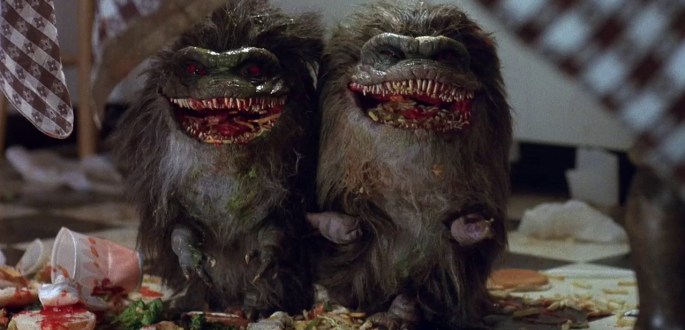
Since those early days he has gone on to become a prolific writer, director, producer, author, podcaster – the list goes on. He made me laugh with Critters 2, he was the writer of The Fly 2, which was one of the only times a film has forced me bring up my lunch, and he has conducted wonderful and insightful interviews with fellow filmmakers – some, sadly, that are no longer with us.

Through it all Mick remains the soft-spoken gentleman with a passion for his work and cinema in total. He has had a long successful run of adapting the works of Stephen King for the screen. I have vivid memories of sitting through, night after night, his extraordinary adaption of The Stand. This he beautifully followed up with further adaptions of Bag of Bones and The Shining, in which King adapted his own book, and which Mick credits as one of the best screenplays he’s ever read.

He was instrumental in bringing together the Masters of Horror as he was composing the elements which formed great movies either under his pen, or benefiting from his exquisite direction. Follow this link ( https://www.mickgarrisinterviews.com/  ) to Mick’s site and check out the bona fide feast of delights for cineastes he has on offer. As I said to the man himself, “You have a lot of fingers in a lot of pies, and I can’t wait to cut me a slice of whatever you serve up next.”

So, without further ado,  it is my privilege to present to you . . . the one, the only . . . Mick Garris.

Mike Nichol’s Wolf


Mike Nichol’s Wolf cleverly combines comedic character study, spoofs the high profile business scene and whips it together with a far more literal lycanthropic horror story than I’d ever imagined before I watched it. It’s neat that dry metaphor went full on genuinely real monster flick, while losing none of it’s smarts along the way. Jack Nicholson, that old devil, plays an aging publisher whose livelihood is threatened by the arrival of a roguish young upstart (James Spader laying down that smarm) with designs on his job. It doesn’t help that he’s worn out, weary and not as sharp as he once was. Cue a werewolf mauling, which fixes those things right quick and turns him into a new man, in more ways than one. He’s fiercely competitive, virile and on the ball, but he also has to keep his hairy secret, well, a secret. Christopher Plummer is great as his fiery tempered boss, whose daughter (slinky Michelle Pfeiffer) begins to have eyes for the old dog, and the supporting cast has well coloured turns from Kate Nelligan, Ron Rifkin, Om Puri, David Hyde Pierce, Eileen Atkins, David Schwimmer and Richard Jenkins as a wily detective who begins to sniff the rat. The Wolf effects by Rick Baker and team are refreshingly old school, practical prosthetics and nice and gooey too. It’s also a tongue in cheek examination of male potency and territorial behaviour, so what better avenues of exploration than instinctual canine interaction and the politics of the workplace? Cool stuff, neat genre blending, a wicked cast and cool horror elements. 

-Nate Hill

The Puppet Master: An Interview with Kevin McTurk by Kent Hill

Error
This video doesn’t exist

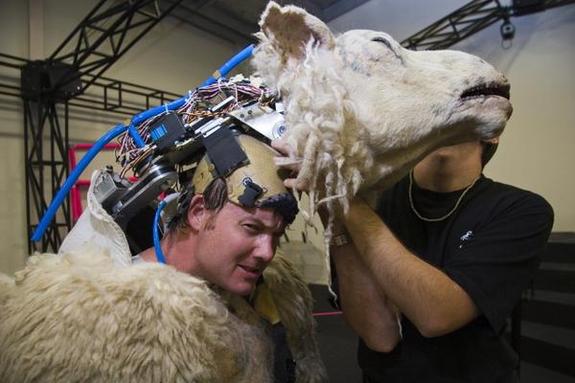
They say in the film business, never work with children or animals. Of course you may find yourself working with dinosaurs, aliens, lions, beast-people, scrunts, kothogas, ghosts, morlocks, Batman, Spiderman, Hellboy, kaijus, wolfmen, clones, cliffhangers, vampires, giant crocodiles, homicidal maniacs, killer sheep, Predators, cowboys and mysterious brides out to Kill Bill.

Sounds ominous, doesn’t it? But that’s just some of the astounding creations and magnificent beasts that Kevin McTurk has encountered in his eclectic career in the realms of special effects.

Kevin_McTurk_2014_800px

Working under the banners of legends like Stan Winston, Jim Henson and the new titans like Weta Workshop, Kevin has had his hand in erecting and simulating everything from the real world as he has from empires extraordinary. And, while I could have spent the entirety of our chat talking about his adventures working on the countless films, which are favourites of mine, he has in his CV, his impressive effects background is only part of the story.

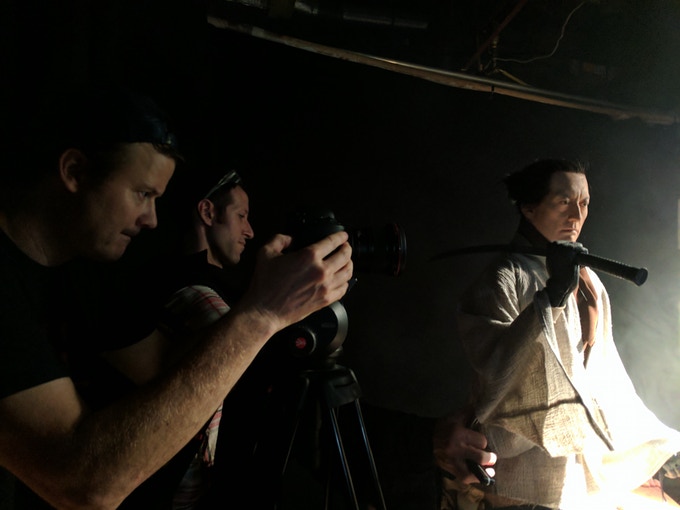
For Kevin McTurk is a bold and visionary filmmaker in his own right. His puppet films, The Narrative of Victor Karloch, The Mill at Calder’s End and now The (forthcoming) Haunted Swordsman are exercises in capturing a style from a bygone era with modern filmmaking techniques. The results are beautiful, not only in their aesthetic quality, but in the level of excellence from the many different disciplines on display.

There is still time for you to join Kevin in his latest cinematic offering (https://www.kickstarter.com/projects/935772123/the-haunted-swordsman-a-ghost-story-puppet-film), and to listen in now to the man himself talk about his movies, influences and career.

I give you the talented Mr. McTurk.

Visit Kevin’s website for more: http://www.thespiritcabinet.com/

content_l

HE IS NED: An Interview with Max Myint by Kent Hill

2015 was the year. I was in Brisbane, Queensland, Australia at our version of San Diego’s Comic Con: SuperNova. I was there peddling my books but, in the booth next to mine, something amazing was afoot.

A giant banner held the image of the famous, or perhaps infamous Australian bush-ranger Ned Kelly; transformed and repackaged as vigilante, looking battle-damaged and bad-ass holding the severed head of a zombie in one hand and a loaded pistol in the other.

21462269_523374954669770_8595548598230947278_n

That image invoked more than history and cultural iconography. It spoke to me as a concept so simple, yet compellingly cinematic. He is one of our country’s most treasured pieces from the past in a fresh guise and pitted against a dark, futuristic dystopia where the undead have evolved and formed a society in which humanity is not only a minority, but is being systematically wiped out.

Max Myint leads the creative team, spearheading, if you will, the rise of this epic saga of the man called Ned. A talented writer, sculptor and world-builder, the gutsy, gritty dark realm that he has helped usher in is about to explode on November 10. In the midst of the stench of rotting flesh and the searing of metal is something that commands attention. I for one can’t wait to see Ned’s rise and rise continue, and Max and his talented team blast this thing out into the masses . . . and watch it catch fire.

The living have surrendered…

Except for one man…

They call him Ned!

https://www.facebook.com/Iamnedcomic/

https://podcastingthemsoftly.com/2016/08/04/not-yet-a-major-motion-picture-but-hopefully-one-day-an-interview-wit-the-creators-of-the-man-they-call-ned-by-kent-hill/

Tim Burton’s Mars Attacks


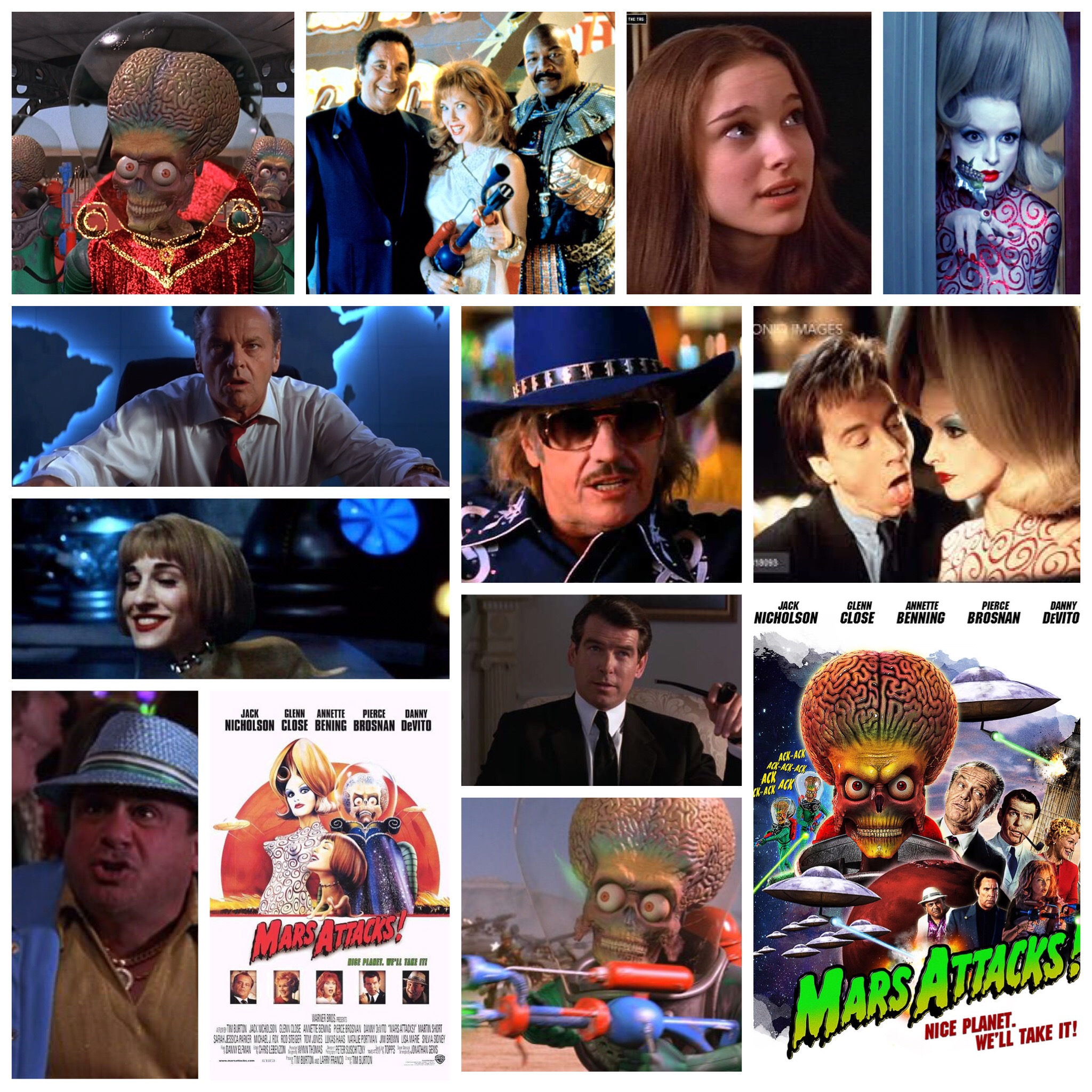
Tim Burton’s Mars Attacks is a spectacular howling good time, a 50’s inspired gumball machine packed with schlock, satire and more star studded send ups than you can shake a stick at. It’s so silly and overstuffed that one just has to give in to it’s fisher price brand of mayhem and just watch the wanton hilarity unfold. Martians are indeed attacking, and they’re evil little rapscallions with giant brains, buggy eyes and lethal ray guns. Humanity’s best are left to fight them, and let’s just say that’s not saying much with this bunch of morons. Jack Nicholson does a double shift as both the hysterically poised, rhetoric spewing US President and a sleazeball casino tycoon. Annette Bening is his hippy dippy wife, while Rod Steiger huffs and puffs as a war mongering potato head of a general. Over in Vegas, prizefighter Jim Brown and his estranged wife (Pam Grier) fight against hordes with little help from obnoxious gambler Danny Devito. Pierce Brosnan is a bumbling tv expert who sucks on a pipe that he apparently forgot to fill or light, a subtle yet precious running joke. The only people with sense are trailer dwelling youngster Lukas Haas and Natalie Portman as the President’s daughter, and the method they finally find to destroy these nasties has to be seen to be believed. The cast seems padded simply so we can watch famous people getting dispatched by slimy aliens, and also contains Tom Jones as himself, Lisa Marie, Jack Black, Paul Winfield, Michael J. Fox, Christina Applegate, Glenn Close, Joe Don Baker, Barber Schroeder, Sylvia Sydney, Martin Short and Sarah Jessica Parker’s head on the body of a chihuahua (don’t ask). There’s little story other than Martians attack and kill shitloads of obnoxious people, but therein lies the big joke, and it’s hilarious. Aaack !

-Nate Hill

EASY RIDER – A REVIEW BY J.D. LAFRANCE

easyrider1

The critical and commercial success of Easy Rider (1969) scared the hell out of the Hollywood studios at the time of its release. Executives thought that they knew what the public wanted to see: safe comedies like Pillow Talk (1959) or the Frankie and Annette beach party movies. Along came this counter-culture movie that featured contemporary rock ‘n’ roll music, two hippie protagonists and a nihilistic ending. And audiences loved it. All bets were off on what audiences wanted to see and so the studios began hiring young producers and directors who in turn cast their friends and contemporaries in their films. As a result, Easy Rider ushered in the last great decade of American movies in the 1970s.

After selling their stash of cocaine, Billy (Dennis Hopper) and Wyatt (Peter Fonda) decide to ride their motorcycles from California to Florida (by way of the South) where they plan to live off the money. They travel the back roads of America and encounter all sorts of people: suspicious small-townsfolk, an oppressive sheriff and a rancher and his large family who invite them to a meal. The deeper they go into the South, the more resistance they meet because of how they look.

Easy Rider is a fantastic snapshot of the times. It signaled the end of the not-so idyllic 1960s, where having long hair could deny you a room in a motel because the manager didn’t like the way you looked. The hippie commune that Billy and Wyatt briefly stop at is not all peace and love. Some of them are suspicious of the duo. There is conflict among the members and it becomes obvious that they suffer from many of the same problems that plague the outside world.

Time running out is a constant theme throughout Easy Rider. When Billy and Wyatt start their journey, Wyatt throws away his watch. Later on, he finds a discarded pocket watch just before they leave the commune. Also, as they are leaving, the hitchhiker they pick up warns Wyatt that time is running out. It eerily foreshadows the film’s disturbing finale and gives a feeling of impending doom that hangs over the entire film.

Peter Fonda plays Wyatt as the quiet, more introspective character, while Dennis Hooper’s Billy is a talkative, let-it-all-hang-out type. Wyatt is more trusting of people and Billy is more paranoid and guarded — he is constantly thinking of the money they have stashed in their bikes and is very protective of it. They make a good team with their strengths and weaknesses complimenting each other. However, their dynamic is given a jolt once Jack Nicholson appears as George Hanson, an ACLU lawyer who gets Billy and Wyatt out of jail. Nicholson showcases his trademark easy-going charm in all of the scenes he’s in. His stoned rap (during one of the camp fire scenes) about UFOs and “the Venusians” is funny and oddly poignant. Later on, he talks about how the country has been divided and says, “It’s real hard to be free when you’re bought and sold in the marketplace.” His speech anticipates the greed-obsessed ‘80s. People forget that Easy Rider really put Nicholson on the map and led to an impressive string of film roles in the ‘70s.

Laszlo Kovacs’ beautiful cinematography really does a stunning job of showcasing the expansive landscape of the U.S.: the imposing mountains in California, the vast canyons of Arizona at sunset with pink and red hues in the sky and the deep green foliage as Billy and Wyatt get closer to New Orleans. Kovacs would go on to shoot such great films as Five Easy Pieces (1970), Shampoo (1975) and Ghostbusters (1984).

easyrider2Easy Rider’s nihilistic ending would go on to inspire similar-minded road movies in the ‘70s, like Monte Hellman’s Two-Lane Blacktop (1971), Vanishing Point (1971), and Terrence Malick’s Badlands (1973). Easy Rider’s legacy is impressive. It paved the way for the Movie Brats (Coppola, Lucas, Scorsese, et al) in the ‘70s, which was the golden age of American filmmaking where the director was king.